
Introduction: The Crucial Role of Towel Dyeing Methods
For hospitality, gym, home, and promotional buyers, towel color isn’t just decoration—it’s a promise of durability, softness, and brand consistency. How towels are dyed shapes everything from vibrancy to environmental footprint. Two advanced techniques stand out: reactive dyeing and vat dyeing. Understanding their differences helps procurement teams, designers, and facility managers choose the right approach for colorfast towels that delight guests and withstand heavy washing cycles. As leading towel manufacturers hone their processes, brands like Circe Towel integrate sustainable dyeing and finish technologies to meet evolving demands for performance and responsibility.
Reactive Dyeing vs. Vat Dyeing: Which Produces Longer-Lasting Color?
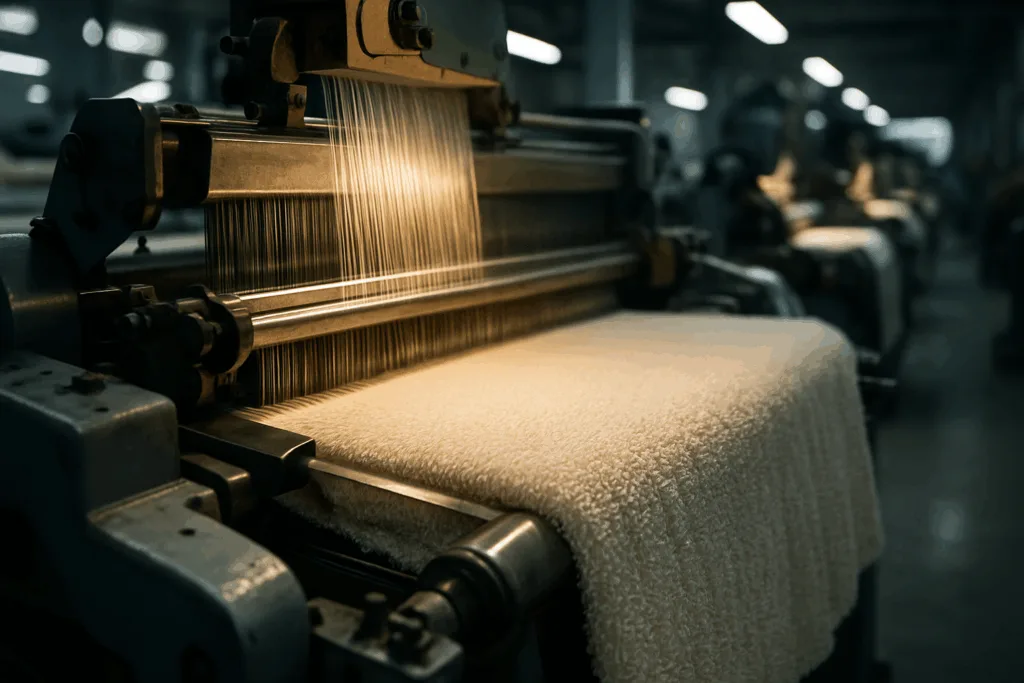
Both reactive and vat dyeing are premier methods for coloring cellulosic fibers such as combed cotton, Egyptian and Turkish cotton, and bamboo viscose blends. Each imparts specific benefits in colorfastness, softness, and environmental sustainability. Making a precise selection requires insight into not just chemistry, but end-use performance, handfeel, and compliance with international standards.
Overview of Key Dyeing Techniques for Cotton Towels
- Reactive Dyeing: Dyes form covalent bonds with cellulose, delivering vibrant hues and exceptional wash-fastness.
- Vat Dyeing: Uses water-insoluble dyes (e.g., indigo) reduced to soluble form, then oxidized, offering legendary durability but a denser, sometimes stiffer handfeel.
- Other Methods: Direct dyeing, pigment printing, and sublimation (for microfiber/poly towels).
Bedding, bath, and hospitality brands favor reactive dyeing for its balance of softness, economic scalability, and color retention. Vat dyeing, renowned in denim and workwear, is used when maximum rub- and light-fastness outweigh handfeel.
How Each Method Works: Step-by-Step Process
Reactive Dyeing
- Preparation: Cotton towels are pre-scoured and bleached to remove natural waxes, optimizing dye uptake.
- Dyeing: Reactive dyes are introduced in an alkaline bath. Chemical bonding occurs between dye and fiber, ‘locking’ color into the cellulose matrix.
- Fixation and Washing: Multiple rinsing stages neutralize residual chemicals, ensuring minimal dye runoff and soft texture.
- Finishing: Options include enzyme washes for smooth handfeel, silicone softeners for plushness, and low-VOC agents for sustainability.
Vat Dyeing
- Reduction: Vat dyes are reduced to a soluble leuco form using alkaline, reducing agents.
- Dyeing: Towels absorb dye in this state before oxidation.
- Oxidation: Exposure to air or oxidants restores dye insolubility, trapping color inside fibers.
- Extensive Soaping: Critical for removing loosely bound dye. Final finishing may result in firmer hand.
Comparative Table: Reactive vs Vat Dyeing for Towel Manufacturing
| Characteristic | Reactive Dyeing | Vat Dyeing |
|---|---|---|
| Colorfastness (Wash) | Excellent (Grade 4–5, per AATCC 61) | Superior (Grade 4–5) |
| Colorfastness (Light) | Good (Grade 4, AATCC 8) | Best-in-class (often Grade 5) |
| Softness / Handfeel | Very soft, plush | Denser, sometimes firmer |
| Eco Impact | Lower water/energy usage with new formulas (OEKO-TEX certified) | Traditional vat dyes may require more chemicals, water |
| Shade Range | Wide, brilliant | Limited, especially in pastel shades |
| Cost Efficiency | Highly scalable for OEM/ODM production | Higher cost for lab-intensive process |
| Best Use Scenarios | Bath, baby, hotel towels; promotional runs | Denim, industrial-grade, work towels |
Colorfast Towels: Defining True Performance
Colorfast towels maintain vibrancy and clarity after dozens of washes. This is measured via standardized testing—wash, rub, light, and chlorine exposure. For bath, hand, face towels, and high-turnover hospitality linens, Grade 4–5 colorfastness (per AATCC methods) is the gold standard. Reactive dyeing delivers this performance for nearly all cotton fibers, while Circe Towel’s process control ensures bulk shades remain consistent from PP sample to final delivery.
Testing Protocols and Results
- Washing: AATCC 61 simulates repeated laundering. Circe Towel batches routinely test at Grade 4.5–5.
- Crocking (Rubbing): AATCC 8 scores stable color transfer rates, avoiding the risk of dye transfer to skin or other fabrics.
- Chlorine Resistance: AATCC 162 measures pool-use suitability—a critical metric for beach/spa towels.
- Light and UV: Ensures promotional/beach towels maintain tone under sunlight.
Expert takeaway: “For hotel and spa towels, reactive dyeing balances plush handfeel with lasting color—ensuring towels look fresh and inviting long after the first use.”
Environmental Sustainability in Towel Dyeing
Modern textile dyeing must prioritize low-impact processing, water stewardship, and minimal chemical runoff. Circe Towel only uses dyeing systems compatible with OEKO-TEX STANDARD 100 and supports GOTS certification on organic cotton projects.
How Circe Towel Leads in Sustainable Dyeing
- Closed-loop recycling of dye bath water
- Low-salt, low-temperature reactive dyes minimize energy and emissions
- No use of heavy-metal or azo-containing dyes
- Compaction and enzyme finishing reduce resource consumption
Compared to conventional vat dyeing, which historically requires multiple reduction and soaping stages (increasing chemical/water use), Circe Towel’s approach limits ecological footprint while meeting global compliance requirements (GOTS, BSCI, SEDEX audits).
Softness and Handfeel: Why Buyers Choose Reactive Dyeing
The molecular bond formed in reactive dyeing preserves the surface integrity of cotton, Egyptian, Turkish, and blended fibers. Towels remain plush and supple—critical for premium hotel/luxury spa brands, baby towels, and promotional items. Vat-dyed towels, while supremely durable, may have a firmer touch due to dye penetration and extensive soaping.
Balancing Texture with Absorbency
Loop height, GSM, and fiber twist variants further influence how dyeing impacts tactile comfort. Reactive dyeing ensures even coverage, preserving terry loop softness and vertical wicking (per AATCC 197)—ideal for high-absorbency bath sheets, face cloths, and beach towels.
Circe Towel’s Advanced Dyeing: OEKO-TEX & GOTS Certified Colorfast Towels
Circe Towel combines eco-formulated reactive dyeing with precision finishing—such as enzyme washes and low-VOC softeners. This process, compatible with combed cotton, bamboo-cotton blends, organic cotton, and even long-staple Egyptian/Turkish cotton, produces towels rated at Grade 4.5 or above for wash durability with plush handfeel and radiant color. Custom color matching and bulk shade control utilize laboratory spectrometry and TOP sample verification for international OEM/ODM clients.
- Cotton GSM ranges: face/hand 350–550 gsm, bath 500–700 gsm, bath sheets 700–900 gsm
- Finishing: tumble/steam conditioning, anti-pilling
- Sustainability: all dyes and finishes REACH/Prop 65 compliant
Towel Dyeing Methods: Choosing the Right Solution for Your Business
Whether supplying for hotel, gym, spa, baby care, or promotional programs, the choice between reactive dyeing and vat dyeing should consider the expected longevity, required softness, environmental ethos, and color requirements.
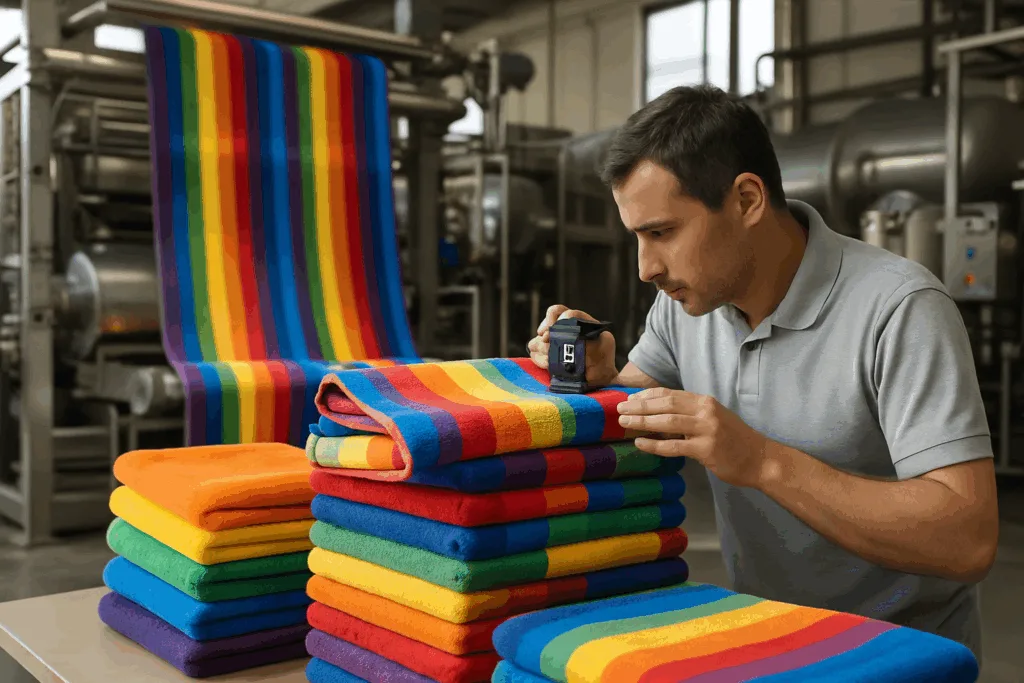
OEM/ODM Considerations for Bulk Programs
- Reactive dyeing recommended for bath sheets, face towels, hand towels, baby towels, spa/hotel sets, and color-intensive promotional codes.
- Vat dyeing best used for industrial-grade work towels, robust beach towels, and select uniform programs with legacy shade requirements.
- Customize with jacquard, dobby, velour shearing—dyeing impacts shadow, border detail, and durability.
Sampling, PP, and TOP verification allow for bulk consistency and minimize the risk of lot-to-lot shade drift.
From Fiber to Finished Towel: Manufacturing Insights
Fiber & Blend Selection
- Long-staple combed cotton: Maximizes dye absorption, yielding bright and long-lasting color.
- Egyptian/Turkish cotton: Suited for luxury, absorbs dye intensively while maintaining silk-soft handfeel.
- Bamboo viscose blend: Eco-fiber, compatible with low-impact reactive dyes for sustainable colorfast towels.
- Microfiber: Not compatible with reactive/vat dyeing; uses digital print or sublimation.
Weaving Techniques and Impact on Dyeing
- Terry loop (single/double): High surface area for dye uptake; loop height influences vibrancy and drying time.
- Waffle/honeycomb: Textured surface, takes dye evenly but absorbs differently.
- Velour/Sheared: Dyeing affects shadow play and softness.
Bulk Quality Assurance: Colorfastness and Compliance
Circe Towel employs certified labs to conduct comprehensive colorfastness testing—washing, light, crocking, chlorine, and dimensional stability per international standards. Every batch is flagged for QC, lint shedding, and absorbency per AATCC and ASTM guidelines. This guarantees towels retain their function, color, and shape through demanding laundering cycles typical in hospitality and lifestyle applications.
Packaging, Logistics, and Buyer Guidance
For OEM/ODM towel buyers, dyeing choice influences not just colorfastness, but also packaging and final delivery. Circe Towel offers belly bands, ribbon wraps, polybags, vacuum packing, and carton specifications tailored to meet international logistics and Incoterms requirements (EXW/FOB/CIF/DDP).
Sampling and Bulk Workflow
- Pilot sampling based on Pantone shade selection
- PP sample for process control
- TOP approval pre-shipment
- Bulk manufacturing and QC
Color control from lab dip to bulk shipment reduces risk of mismatched shades and ensures end-user satisfaction.
Conclusion: Maximizing Towel Value with the Right Dyeing Method
Choosing between reactive and vat dyeing hinges on your priorities: supreme softness, brilliant color, and sustainability favor reactive dyeing, while industrial durability and legendary fastness lean toward vat dyeing. Circe Towel’s eco-driven approach ensures your towels meet global compliance, brand quality, and user expectations for years to come.
Frequently Asked Questions
Which dyeing method is best for hotel towels?
Reactive dyeing is typically preferred for hotel towels due to its superior colorfastness, softness, and eco-friendly profile, ensuring towels stay vibrant and plush through frequent laundering.
Are reactive dyed towels more environmentally sustainable?
Yes, modern reactive dyeing uses less water, energy, and salt, and is compatible with eco-certifications like OEKO-TEX and GOTS, making it more sustainable than traditional vat dyeing processes.
How is towel colorfastness tested before bulk shipment?
Towel colorfastness is evaluated using standardized wash, crocking, and chlorine exposure tests (AATCC 61, 8, 162) to ensure lasting vibrancy and performance in real-world conditions.
Can Circe Towel match custom Pantone shades with reactive dyeing?
Absolutely. Circe Towel utilizes spectrometric color matching and rigorous sample controls to deliver bulk towels consistently in any Pantone shade required for branding or hospitality use.
Do vat dyed towels feel different than reactive dyed towels?
Yes. Vat dyed towels can have a denser, sometimes firmer feel, while reactive dyed towels remain softer, plusher, and better suited for bath, spa, and luxury applications.
What compliance standards do Circe Towel’s dyed towels meet?
Circe Towel’s towels are dyed to meet global standards including OEKO-TEX STANDARD 100, GOTS (organic cotton), REACH, and pass all relevant AATCC and ASTM quality tests.