
Understanding Sustainable Towel Manufacturing
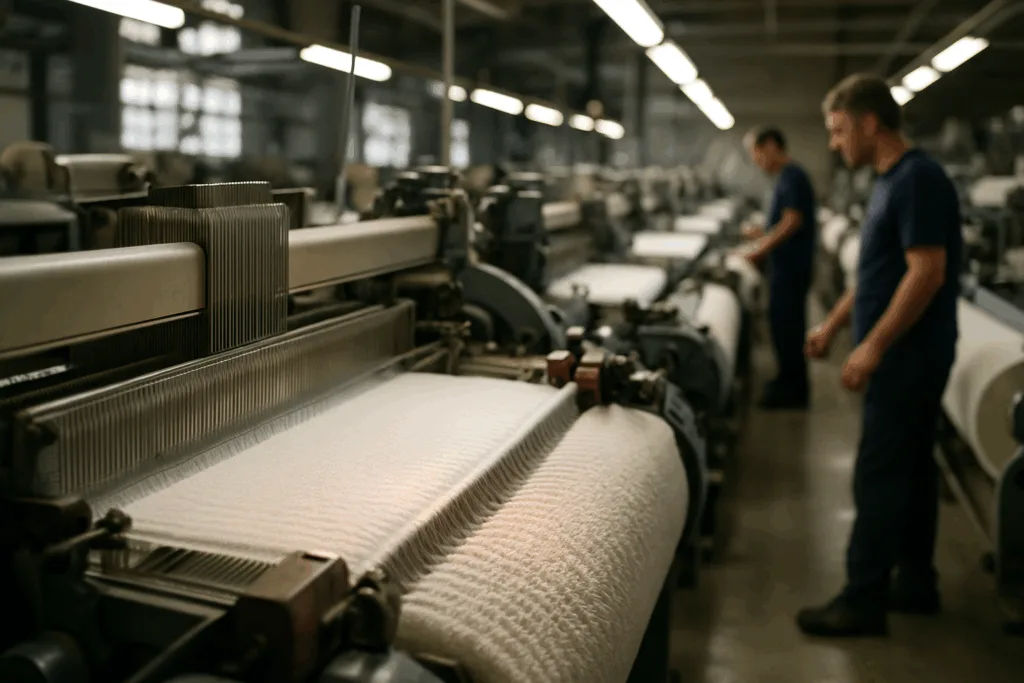
Sustainable towel manufacturing is more than a buzzword—it’s a set of transparent, measurable practices that prioritize planet and people at every stage. Choices like organic GOTS-certified cotton, recycled cotton or PET yarn, resource-efficient dyeing, and closed-loop water cycles are hallmarks of the eco towels sector. Leading towel makers such as Circe Towel integrate these processes for absorbency, colorfastness, and long-lasting performance.
Organic Cotton: Certified Purity from Field to Fiber
Organic cotton is the cornerstone of sustainable towel production. Certified by standards such as GOTS, organic cotton is grown without synthetic pesticides or genetically modified organisms. Crops are often rotated, supporting soil health and biodiversity while reducing water usage by up to 30% compared to conventional cotton farms.
Recycled Yarn: Closing the Fiber Loop
Recycled cotton and polyester yarns are spun from textile cuttings, pre-consumer remnants, and post-consumer waste. Advanced sorting and mechanical recycling processes separate fibers while minimizing resource output. This circular approach lessens landfill impact and conserves virgin material.
The Environmental Impact of Raw Materials
- Organic cotton: Reduces chemical runoff, conserves water, and supports smallholder farmers.
- Recycled polyester: Repurposes plastic bottles, diverting waste and reducing greenhouse gas emissions.
Innovative Weaving and Spinning for Eco Towels
Fiber selection, yarn spinning, and weaving techniques define the tactile feel, absorbency, and longevity of each eco towel. Whether using combed, long-staple organic cotton, or recycled blends, sustainable towel manufacturing tailors yarn parameters to optimize resource use and guest experience.
Yarn Spinning: Efficiency Meets Softness
Ring-spun yarn offers a uniform, durable base, perfect for hotel and spa towels demanding repeated laundering. Open-end spinning can further reduce energy, though may result in a coarser finish. For premium eco towels, Circe Towel employs ultra-fine, combed cotton ring-spun yarn for a luxe handfeel and superior pilling resistance.
Weaving Constructions: Terry, Waffle, and Velour
- Terry loop: Maximizes absorbency with high pile density and loop height. Single or double loops depend on end-use.
- Waffle and honeycomb: Increases air circulation, quick-dry properties, and reduces raw material consumption.
- Velour: Sheared surface for silky softness, best for promotional and bath towels.
Reducing Waste in Manufacturing
Circular towel production leverages automated selvage control and precision pile ratios to reduce off-cuts and lint shedding. Recycled yarn is reintegrated into the yarn dye and loom process to minimize landfill output.
Comparing Eco-Friendly Towel Fibers and Weaves
| Fiber/Blend | Typical GSM | Absorbency | Best Use | Dry Time |
|---|---|---|---|---|
| Organic Combed Cotton | 450–700 | High | Bath, Facial, Hotel | Medium |
| Recycled Cotton/Poly Blend | 400–650 | Medium | Beach, Promo, Gym | Fast |
| Bamboo Viscose/Cotton | 350–600 | Very High | Baby, Spa | Slow |
| Microfiber (Poly/Nylon) | 180–300 | Moderate | Sports, Quick-Dry | Very Fast |
Responsible Dyeing, Printing, and Color Management
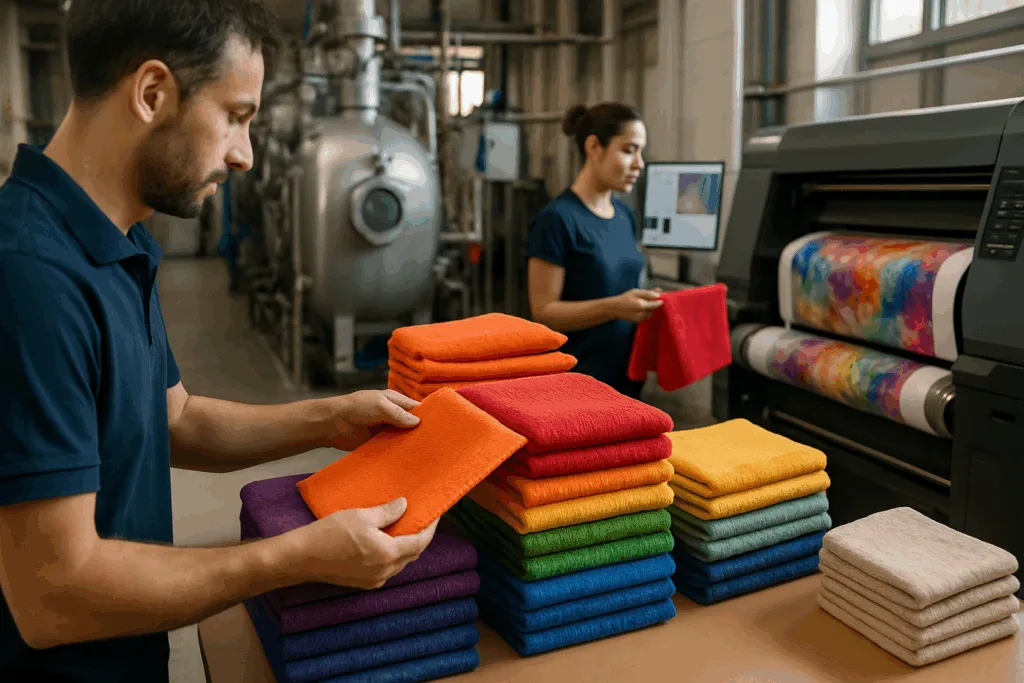
Water-saving dyeing is a pillar of eco-friendly towel production. Advanced machinery recycles process water, while dyes and auxiliaries are selected for low chemical content (OEKO-TEX STANDARD 100, REACH compliance). Piece dyeing is preferred for its efficiency; yarn-dyed jacquards and digital printing lines provide vibrant, colorfast results ideal for promotional and branded towels.
Reactive Dyeing: Deep Color, Less Water
Reactive dyeing chemically bonds dyes to cotton fibers, ensuring lasting vibrancy while using less water and fewer rinse cycles. Shade control is maintained through batch and bulk color approval, reducing rework and wastewater.
Digital Printing for Custom Eco Towels
High-resolution digital printing achieves rich, multi-color designs with minimal resource input. Fast pigment fixation and precise ink application reduce off-gassing and water demand, creating vivid beach and spa towels with eco-friendly credentials.
Finishing Processes for Sustainable Performance
After dyeing, towels undergo finishing for enhanced softness, dimensional stability, and eco traits. Enzyme washes replace harsh chemicals, silicone softeners offer smooth handfeel, and low-VOC agents support cleaner air and water. Tumble conditioning and steam compaction further set final dimensions, promoting longevity and consumer satisfaction.
Anti-Pilling and Antimicrobial Formulations
Non-trademark, generic antimicrobial finishes, free of heavy metals, are used to reduce bacteria and enhance towel hygiene, especially in hotel and baby towel ranges. Eco anti-pilling protocols maintain plushness through repeated laundering cycles.
Quality Testing and Certification for Eco Towels
Sustainable towel manufacturing includes robust quality testing to meet high B2B and consumer expectations. Common protocols:
- Absorbency & vertical wicking: AATCC 79/197
- Colorfastness: AATCC 61 (washing), 8 (crocking), 162 (chlorine)
- Dimensional change/shrinkage: AATCC 135/150
- Pilling, snagging: ASTM D3512/ISO 12945, ASTM D3939
- Tensile and seam strength: ASTM D1683/D5034
Certified eco towels display compliance marks (OEKO-TEX STANDARD 100, GOTS) for international buyers and retailers.
Audits and Social Responsibility
Facilities undergo regular BSCI, WRAP, or SEDEX audits to verify labor practices and supply chain transparency. Water stewardship efforts—such as rainwater harvesting and closed-loop cooling—are increasingly standardized.
Eco-Friendly Packaging and Distribution Logistics
Packaging is critical in sustainable towel manufacturing. Compostable polybags, recycled carton specs, ribbon wraps, and belly bands made from post-consumer paper minimize environmental footprint. Logistics follow responsible Incoterms (EXW, FOB, CIF)—and Circe Towel offers tailored bulk workflows for sampling, pre-production, and top-of-production (TOP), ensuring precise color, fiber, and finishing specs are met from prototype through delivery.
Fiber Selection and Buyer Outcomes
Material choices directly impact absorbency, softness, drying time, colorfastness, durability, MOQ, cost, and lead time. Whether specifying organic combed cotton for softness or recycled cotton blends for cost and environmental savings, buyers can optimize towel portfolios for luxury hospitality, gym, spa, and promotional programs, balancing sustainability with performance.
- Luxury hospitality: Long-staple organic cotton, high GSM, double terry construction
- Promotional towels: Recycled blends, digital printing, rapid bulk turnaround
- Sports & beach towels: Microfiber or honeycomb cotton, quick dry, lightweight, vibrant digital prints
Embroidery and Branding Options
Eco towels can be finished with organic GOTS-certified thread for embroidered logos or motifs. Seam placements and hanger loops are engineered for strength and convenience, with stitch counts and placements adjusted for dense towel pile fabrics.
Sustainability Standards and Circe Towel’s Commitment
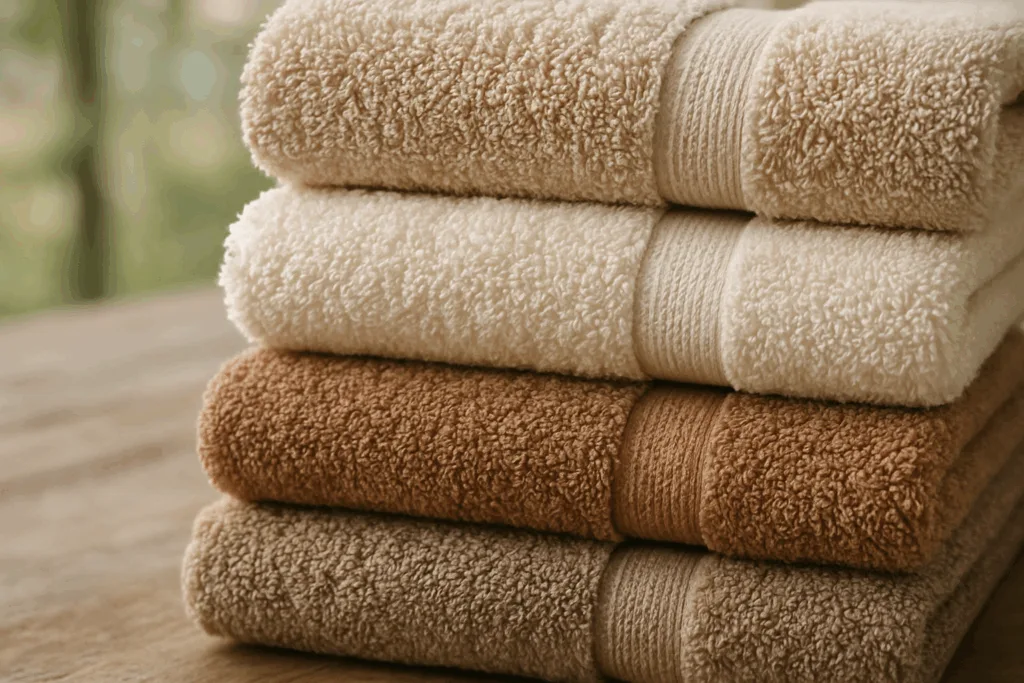
All eco-friendly towel production is benchmarked to OEKO-TEX, GOTS, and REACH standards for chemicals, safety, and traceability. Manufacturers such as Circe Towel lead OEM/ODM production by delivering rigorously tested towels with premium absorbency, enduring softness, and proven durability—while minimizing water and resource inputs throughout the process.
Continuous Innovation in Eco-Friendly Towel Manufacturing
R&D teams explore new plant-based fibers, waterless dyeing, and advanced recycling initiatives, paving the future for even more sustainable towels. Buyers gain supply chain confidence and enhanced brand image by choosing certified eco towels for hotels, spas, gyms, and retail programs.
Frequently Asked Questions
What defines an eco-friendly towel?
An eco-friendly towel uses sustainably sourced fibers such as organic cotton or recycled yarn, water-saving dyeing processes, and minimal-impact packaging to reduce environmental footprint while maintaining high absorbency and softness.
Is organic cotton better for towels than conventional cotton?
Organic cotton supports healthier soil, requires fewer pesticides, and typically uses less water, making it a superior choice for sustainability and comfort in towel manufacturing.
How are recycled cotton towels made?
Recycled cotton towels are produced by collecting and reprocessing pre- or post-consumer textile waste, spinning it into new yarns and weaving functional, durable towels without the need for virgin cotton.
What is water-saving dyeing in towel production?
Water-saving dyeing uses advanced machinery, low-impact reactive or pigment dyes, and recycled rinse water to cut both chemical and water consumption during towel coloration.
Are eco towels as durable as regular towels?
Eco towels, when made to high standards with quality organic or recycled fibers, perform on par with or better than conventional towels in absorbency, softness, and durability.
What sustainability certifications should I look for when sourcing towels?
Key certifications include OEKO-TEX STANDARD 100, GOTS for organic cotton, REACH for chemicals compliance, and audit standards like BSCI or SEDEX ensuring ethical manufacture.