
Understanding Towel Shrinkage: Causes and Buyer Impact
Shrinkage is a key concern in towel manufacturing. It directly affects product fit, durability, and user satisfaction—especially in commercial settings like hotels, spas, and gyms where replacement costs can escalate. Towels, made primarily of high-absorbency fibers like combed cotton, Egyptian/Turkish cotton, bamboo viscose blends, or microfiber, are naturally prone to dimensional change if not processed and finished correctly. Uncontrolled shrinkage leads to distorted shapes, rougher handfeel, and reduced lifespan. Managing towel shrinkage isn’t just a technical challenge; it’s a mark of professional manufacturing and service reliability. Circe Towel leverages advanced control measures to deliver stable, customer-ready towels every shipment.
Towel Shrinkage Control: Pre-Washing and Finishing Treatments
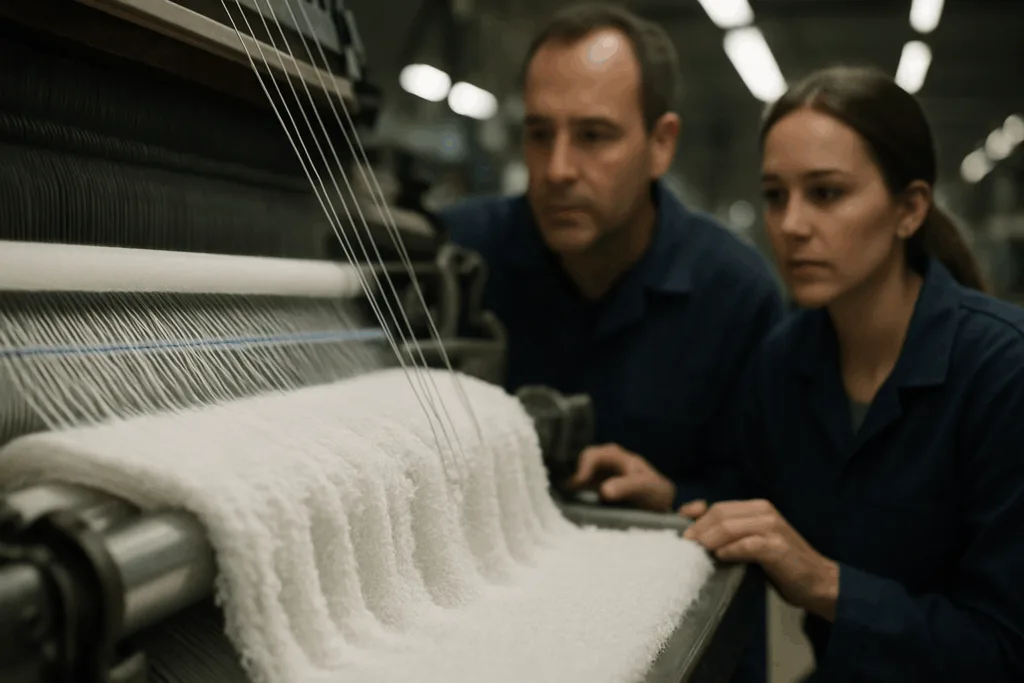
Effective towel shrinkage control begins long before the product reaches the shelf. The combination of pre-washing and precision finishing stabilizes fiber structure, minimizes residual tension, and ensures towels maintain their size after multiple consumer washes. Circe Towel’s process exemplifies best-in-class dimensional control, balancing absorbency, softness, and durability in each run.
Why Do Towels Shrink? Fiber Science and Processing Factors
- Hydrophilic Fibers: Cotton and bamboo are highly absorbent, swelling during washing and contracting as they dry, leading to shrinkage.
- Loose Weaves: Terry loop constructions and low-twist yarns have more open structure, amplifying dimensional instability without proper treatment.
- Thermal Shock: Exposure to heat during dyeing or laundering can rapidly relax fibers, causing permanent size change.
- Mechanical Stress: Loom tension and handling can stretch fibers, which snap back when stress is released, contributing to shrinkage.
Pre-Washing: The First Line of Shrinkage Defense
Pre-washing—or wet processing—removes sizing agents, loose dye particles, and residual chemicals from raw towels. This step also preshrinks the fabric, expelling excess fiber tension. For Circe Towel, pre-washing employs a controlled cycle of water and mild detergents, sometimes with neutralizing solutions, at temperatures tailored to fiber type (typically 40–60°C for cotton).
- Tumble Conditioning: Towels are tumble-dried in calibrated batches to further relax and set pile loops, adjusting final pile height and minimizing later shrinkage.
- Dimensional Testing: Finished towels undergo AATCC 135/150 testing for dimensional change, ensuring shrinkage stays within client spec (<4% is luxury benchmark).
Finishing Treatments: Heat-Setting, Enzyme Washes, and Advanced Processes
After pre-washing, towels enter a stage of physical and chemical finishing that ‘locks in’ size and improves performance. The goal is to create a textile matrix resilient to consumer use and repeated laundering.
- Heat-Setting / Compaction: Towels pass through thermal chambers or calenders (up to 120°C for cotton) that tighten fibers and loops, stabilizing the fabric’s width and length. For microfiber blends, lower temperatures prevent synthetic melting (<80°C).
- Enzyme Wash: Enzyme baths remove micro-fibrils, reduce pilling risk, and promote consistent recovery after washing.
- Softener Application: Low-VOC silicone softeners enhance handfeel while supporting fiber elasticity—crucial for high-end spa or hotel towels.
- Steam Conditioning: Towels exposed to controlled steam cycles relax residual stresses, further stabilizing size.
Comparison of Key Technical Parameters in Towel Shrinkage Control
| Fiber/Blend | Weave Construction | GSM Range | Absorbency | Dry Time | Best Use Scenario | Shrinkage Control Effect |
|---|---|---|---|---|---|---|
| Long-Staple Combed Cotton | Terry (Single/Double Loop) | 450–700 gsm | High (AATCC 79) | Moderate | Luxury Bath/Hotel | Excellent with pre-wash & heat-set |
| Egyptian/Turkish Cotton | Zero-Twist, Jacquard | 600–900 gsm | Superior | Longer | Premium Spa, Bath Sheet | Excellent with compaction/steam |
| Bamboo Viscose/Cotton Blend | Terry, Honeycomb | 400–650 gsm | Very High | Fast | Eco Hotel, Baby | Good—enzyme/steam vital |
| Microfiber (Poly/Nylon) | Suede, Waffle | 180–300 gsm | Fast Wicking | Very Fast | Sports, Gym, Beach | Stable—low-temp heat-set |
Circe Towel’s Approach: Masters of Shrinkage Resistance
Circe Towel employs multi-stage quality protocols, blending precise pre-washing, heat-setting, and post-production conditioning tailored to each fiber and weave. All towels undergo sampling and production testing in line with AATCC standards for dimensional stability, absorbency, and colorfastness. This hands-on expertise allows Circe Towel to offer stable sizing—even after 20 wash cycles—meeting international hotel, hospitality, and promotional program expectations.
- B2B Customization: Circe Towel specs are flexible for OEM/ODM buyers: select compaction level, GSM, and finishing chemistry to suit brand standards and end-use.
- Compliance Commitment: All processes meet OEKO-TEX and BSCI/WRAP environmental/social standards. Chemical management is REACH/Prop 65 aligned for safe, sustainable production.
Advanced Pre-Washing Techniques: Detailing the Process
Pre-washing at Circe Towel starts with batch weighing and tension control. Fabrics are cycled through industrial washers with pH-neutral detergents and water calibrated to fiber-recommended levels, followed by hydro-extraction. Microfiber towels receive additional rinses to eliminate loose filaments. Dimensional checks are performed on wet and dry states, referencing AATCC 135/150 tolerances. The data guides downstream compaction and heat-set conditions, virtually eliminating shrinkage surprises at end-use.
Key Parameters in Pre-Washing Programs
- Water temperature profile matched to fiber
- Detergent dosage and type
- Mechanical action and agitation settings
- Precise cycle time and load batching
Finishing Treatments for Ultimate Stability
Final finishing at Circe Towel includes the following steps:
- Heat-Set & Compaction: Roller pressure and temperature are calibrated by lot. Cotton towels typically set at 110–120°C.
- Enzyme and Softener Optimization: Enzyme baths foster pile resilience, while softeners improve recovery.
- Steam Relaxation: Controlled steam reconditions towel shape without affecting pile density.
- Anti-Pilling Treatments: Select chemical finishes guard against fiber breakage and shedding.
- Final Testing: Dimensional change, absorbency, and tensile strength are validated post-finishing. Failures are isolated before shipment.
Weave and Fiber Choices: Influence on Shrinkage Control
Fiber and weave selection play a decisive role in shrinkage behavior:
- Long-staple combed cotton offers stability thanks to fiber length and tight twist.
- Zero-twist constructions favor softness but require more aggressive pre-shrink to minimize dimensional drift.
- Bamboo blends may need dual enzyme cycles for optimal stability.
- Microfiber’s low-shrink nature depends on weave (e.g., suede, waffle).
Circe Towel provides buyers with technical charts and test reports to make informed decisions about fiber, GSM, and finishing choices—ensuring towels remain true to size and feel after every wash.
Testing and Quality Assurance: Standards for Shrinkage Control
Quality assurance is paramount. Key standards at Circe Towel include:
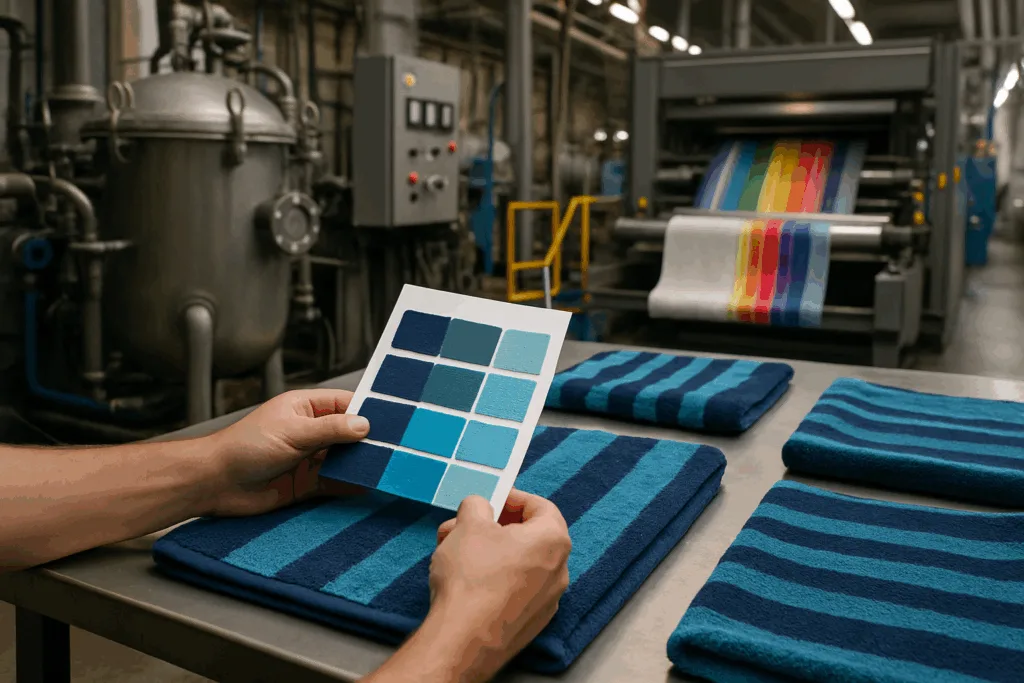
- Absorbency: Measured via AATCC 79 vertical wicking tests.
- Dimensional Change: Assessed with AATCC 135/150 protocols to monitor shrinkage.
- Pilling Resistance: Evaluated via ASTM D3512 or ISO 12945.
- Colorfastness: Checked through AATCC 61/8/162 (washing, crocking, chlorine) for lasting appearance.
- Seam Strength & Snag: Verified with ASTM D5034 and D3939.
Production runs are validated at lab and bulk scale, with PP samples and TOP approval before shipment.
Production Logistics: Packaging and Buyer Experience
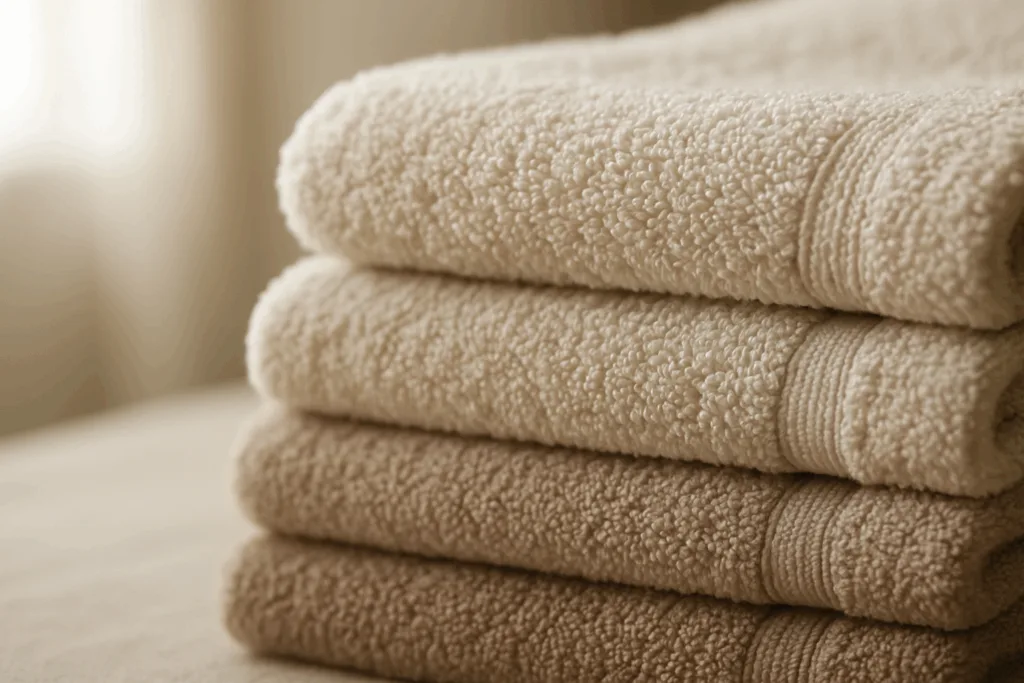
Once towels pass shrinkage control, they proceed to packaging. Options include belly bands, ribbon wraps, and eco-friendly poly/composite bags; carton specs match buyer logistics needs. Circe Towel works to EXW, FOB, CIF, or DDP Incoterms, offering sampling workflows and professional B2B support at every stage.
Buyer Guidance: Specifying Shrinkage Control in Towel Orders
For hotels, spas, or retail buyers:
- Request documented shrinkage testing reports.
- Specify pre-washing and finishing requirements on PO.
- Select GSM, fiber, and construction suited to your laundering frequency.
- Review colorfastness and absorbency outcomes for your environment.
Circe Towel provides transparent, test-backed recommendations keyed to each application—from luxury bath sheets to rapid-dry beach towels.
Frequently Asked Questions
What causes towels to shrink after washing?
Towels shrink primarily due to fiber swelling and contraction during exposure to water and heat, combined with residual tension from manufacturing processes. Proper pre-washing and finishing treatments can minimize this effect.
How does pre-washing help prevent towel shrinkage?
Pre-washing uses controlled water temperature and agitation to relax fibers and remove chemicals, pre-shrinking the towel so it maintains stable dimensions throughout its lifecycle.
What finishing treatments are most effective for shrinkage control?
Heat-setting, enzyme washes, and steam conditioning are key finishing treatments. They tighten and stabilize both natural and synthetic fibers, reducing post-wash size change.
How can buyers ensure their towels meet shrinkage control standards?
Request absorbency and dimensional change testing reports from suppliers, specify GSM and fiber, and require finishing details in the PO to confirm compliance with shrinkage benchmarks.
Does Circe Towel offer custom shrinkage control for different applications?
Yes, Circe Towel customizes pre-washing and finishing protocols to fit fiber, weave, GSM, and application needs, ensuring stable sizing even for high-use environments.
What quality standards are followed for shrinkage control in towels?
Key standards include AATCC 135/150 for dimensional change, AATCC 79 for absorbency, and ASTM/ISO tests for pilling, colorfastness, and seam strength.