
The Science of Towel Absorbency: Loops, Twist, and Fiber Type
Modern towel design leverages a spectrum of microstructural innovations to achieve exceptional absorbency, softness, and durability. This article explores the precise mechanisms underlying towel absorbency, with a special focus on towel loop structure, yarn twist, and fiber composition. We’ll reveal why leading manufacturers, including Circe Towel, invest deeply in technical process control and material selection to produce superior products for hospitality, wellness, and promotion.
Towel Absorbency: The Microstructural Drivers
Absorbency is not simply a function of material; it’s dictated by intricate interactions between fiber type, yarn spinning, loop configuration, and finishing technologies. At the microscopic level, water uptake occurs through surface wicking, capillary action, and internal fiber migration.
Key Factors Controlling Absorbency
- Fiber selection (cotton, bamboo, microfiber blends)
- Yarn spinning methods (ring-spun, open-end)
- Twist level (zero-twist, low-twist, classic)
- Loop height and density (terry, velour, jacquard)
- Surface treatments (enzyme wash, silicone softener)
Fiber Type: Foundation of Water Management
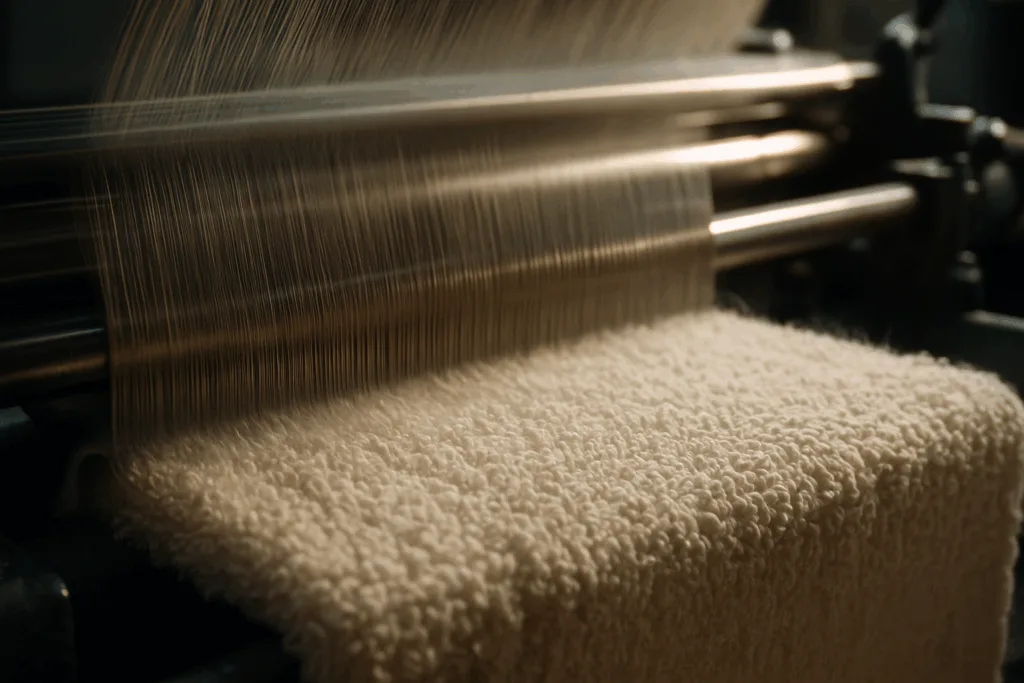
The raw material determines the fundamental absorbency ceiling of any towel. Circe Towel manufactures across a wide range—from extra-long staple Egyptian cotton to bamboo viscose blends and engineered microfiber—that offer distinct water-handling capabilities.
Natural Cellulosics: Cotton and Bamboo
Long-Staple Cotton
Long-staple cotton fibers, such as Egyptian or Turkish cotton, have reduced ends and larger lumen sizes, driving higher capillary uptake and plush handfeel. Typical for luxury bath and hotel towels, these fibers support high GSM constructions (600–900 gsm for bath sheets).
Bamboo Viscose Blends
Bamboo viscose, often blended with cotton, presents a round, ultra-smooth fiber profile, which increases surface area for rapid moisture absorption and antimicrobial benefit.
Engineered Microfibers
Microfiber towels—in sports or promotional settings—leverage split polyester/nylon filaments (1.0–1.5 denier) for hyper-wicking and extremely fast dry times at lower GSM (180–300 gsm).
Yarn Twist: The Gateway to Softness or Absorbency
Twist determines the tightness and exposure of fibers at the yarn surface. Less twist means open, fluffy yarns with greater water-holding capacity. However, excessive untwisting can reduce pile pull resistance and increase linting.
Zero-Twist and Low-Twist Yarn Technology
- Zero-twist yarns (typically spun from long-staple cotton) yield ultra-soft towels but require robust pile management.
- Low-twist construction enhances absorbency while maintaining strength—ideal for high-end spas and five-star hotels.
- Classic tight-twist towels provide superior durability and longevity, trading off some initial softness for resilience.
Spinning Methods
Ring-Spun vs. Open-End
Ring-spun yarns deliver longer, smoother, and finer loops, while open-end spinning favors cost-effective, bulkier piles suitable for everyday use and promotional programs.
Towel Loop Structure: The Micro-Engineered Surface
The iconic terry loop is a stroke of engineering brilliance. Loop height, density, and pattern—controlled by loom tension, pile ratio, and selvage setup—define both instant absorbency and long-term performance.
Loop Geometry
- Single vs. double terry: double construction improves plushness and longevity
- High, open loops: maximize surface area for water capture
- Short, dense loops: improve wicking and resistance to pile pull
| Fiber Type | Weave/Structure | GSM Range | Absorbency Rating | Dry Time | Best-Use Scenarios |
|---|---|---|---|---|---|
| Long-staple Egyptian Cotton | Zero-twist, High loops | 600–900 | Excellent | Moderate | Luxury Hotel, Spa |
| Bamboo/Cotton Blend | Low-twist, Dense loops | 550–750 | Very Good | Fast | Eco Boutique, Baby |
| Microfiber | Suede, Waffle | 180–300 | Good | Very Fast | Sports, Gym |
| Classic Combed Cotton | Standard terry loops | 400–650 | Reliable | Balanced | General Hotel, Promo |
Dyeing and Finishing: The Final Touch for Absorbency
Chemical processes, dyeing choices, and finishing steps are critical for water uptake and textile longevity.
Dye Technology
- Reactive/Vat Dyeing: Deep coloration with minimal impact on absorbency, ideal for cotton towels. OEKO-TEX STANDARD 100 compliance ensures safety and eco-friendliness.
- Sublimation: Applied to microfiber (polyester); maintains vibrancy for promotional beach and sports towels.
- Yarn-Dyed Jacquard: Multicolor patterns with stable colorfastness and high wicking.
Finishing Methods
- Enzyme wash: Removes loose fibers, reduces linting, preserves absorbency.
- Low-VOC silicone finishing: Enhances softness, minimizes residual chemicals.
- Steam/tumble conditioning: Stabilizes dimensions, ensures consistent loop performance.
- Antimicrobial treatments: Non-trademarked general methods to suppress bacteria in bamboo-blended towels.
“Absorbency starts with fiber selection, but it’s maximized by precision in spinning, looping, and finishing.” – Circe Towel Manufacturing Team
Towel Absorbency Testing and Standards
Leading brands like Circe Towel employ standardized absorbency and durability protocols. AATCC 79 measures water uptake, while AATCC 197 evaluates vertical wicking—both critical to hotel and spa performance benchmarks. Durability testing includes snagging resistance (ASTM D3939), pile pull, and colorfastness to multiple wash conditions (AATCC 61).
Compliance Frameworks
Towels destined for international markets undergo OEKO-TEX STANDARD 100, GOTS (organic), BSCI/WRAP audits, and chemical controls via REACH and Prop 65 where necessary.
Innovation in Manufacturing: Deep Process Control
Circe Towel and other advanced manufacturers align every microstructural decision to outcome metrics: absorbency, drying speed, color resilience, softness, and cost. Latest loom technologies fine-tune pile ratio and selvage for minimal pile pull. Spinning lines monitor twist gradation via real-time sensors to ensure every batch matches bulk approval samples.

Process Example: Luxury Bath Sheet Workflow
- Long-staple Egyptian cotton sourced & combed.
- Ring-spun yarns spun with precisely calibrated low-twist profile.
- Warping & weaving on high-speed terry looms (double terry loop).
- Bulk batch dyeing—reactive vat, shade control with digital readout.
- Enzyme washed, tumble conditioned, dimensional tests (AATCC 135).
- Final quality: AATCC 79 absorbency, lint shedding, tensile seam strength.
- Packaged in recycled belly band, boxed per Incoterms CIF or DDP.
Practical Guide: Selecting Absorbent Towels
For buyers, towel absorbency choices depend on specific use, maintenance constraints, and desired lifespan.
Key Buying Parameters
- GSM & fiber type: Choose higher GSM for plush absorbency; select long-staple cotton or bamboo blends for eco-premium applications.
- Loop structure: Opt for high, dense terry for maximum absorbency; velour or waffle for aesthetics and handfeel.
- Twist level: Zero-twist for softest touch (shorter lifespan); low-twist for balance; classic twist for cost-effective resilience.
- Dyeing/finishing: Look for OEKO-TEX certification and enzyme-washed towels.
- Compliance: Verify standards for health and sustainability.
The Science of Towel Absorbency: Loops, Twist, and Fiber Type
At its core, towel absorbency is a cascade of material science and process engineering. Textile manufacturers tightly control the length, fineness, and hydrophilicity of each fiber, then translate these properties into yarns spun to exact twist levels. Looms erect loops at calibrated heights and densities, locking in surface area and wicking power. Through dyeing, finishing, and quality testing, the ideal towel is not a coincidence—it’s the result of the science behind every strand, every twist, and every loop. Circe Towel continues to innovate by optimizing every variable for maximum absorbency performance and B2B reliability.
Applied Absorbency: Scenario-Based Recommendations
Luxury Hospitality & Spa
Select zero- or low-twist, long-staple cotton towels at high GSM (700+), with double terry loop construction and enzyme-wash finishing.
Eco-Friendly & Baby Products
Bamboo/cotton blends, dense low-twist terry, OEKO-TEX labeled, fast-dry and antimicrobial options.
Sports & Gym Towels
Microfiber (polyester/nylon) with suede or waffle construction, sublimation printed, low GSM (180–300) for rapid dry and minimal bulk.
Promotional Programs
Open-end spun combed cotton, classic twist, standard terry, bulk color or digital print, targeted cost and brand decoration options.
Packaging, Logistics, and OEM/ODM Opportunities
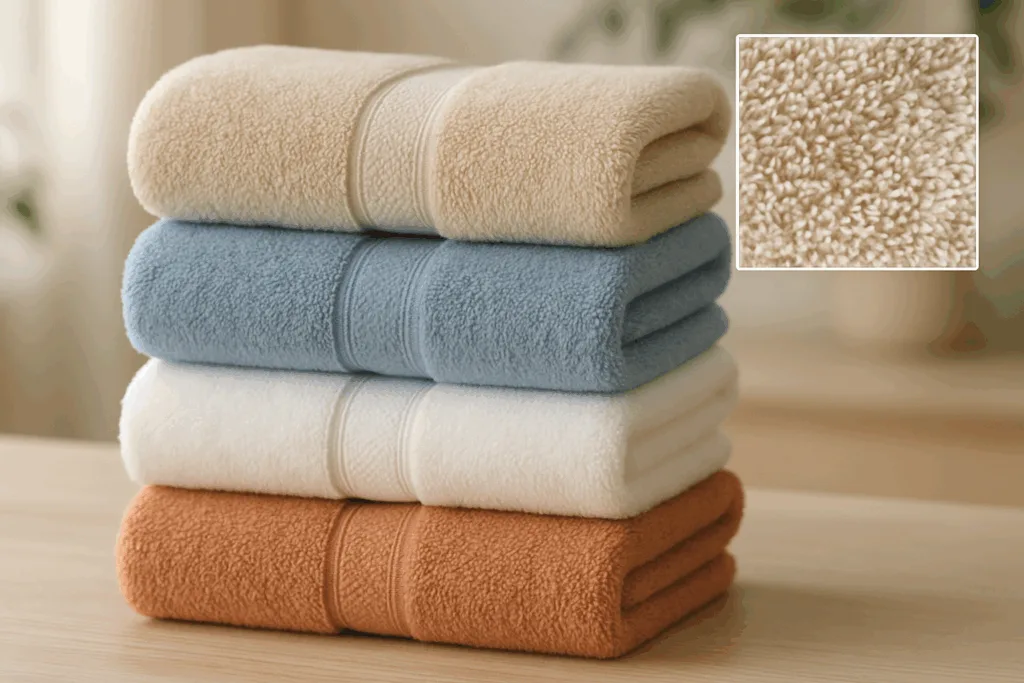
Absorbency-focused towels require packaging to preserve handfeel and avoid compression. Circe Towel’s B2B logistics cover belly bands, recycled sleeves, vacuum-packing for bulk shipment, and per-carton specs. Incoterms EXW, FOB, CIF, or DDP available; workflows are streamlined from lab sampling to PP sample, TOP, and bulk delivery.
Frequently Asked Questions
How does yarn twist affect towel absorbency?
Lower yarn twist exposes more fiber surface for water capture, increasing absorbency; higher twist improves durability but can reduce softness and uptake.
Why do loop structure and height matter for towel performance?
Taller, less dense terry loops offer superior surface area for wicking and capturing moisture, while denser, shorter loops improve durability and fast drying.
What fiber types deliver the best absorbency in towels?
Long-staple Egyptian and Turkish cotton excel for plush, absorbent towels; bamboo blends offer rapid moisture uptake and eco-credentials; microfiber suits sports for quick-dry traits.
What quality tests confirm towel absorbency and durability?
AATCC 79 tests water absorption; AATCC 197 measures vertical wicking; ASTM D3939 assesses snagging resistance; colorfastness and tensile strength are also verified.
How can buyers verify sustainable, safe towel production?
Look for OEKO-TEX STANDARD 100, GOTS, BSCI, or WRAP certifications, as well as declared compliance with REACH and Prop 65 for chemical safety and sustainability.
Which towel construction suits hotels, spas, gyms, and promotions?
Hotels/spas need high-GSM, low-twist terry towels; gyms prefer lightweight microfiber; promotional programs use cost-effective cotton with classic terry weave and branded decoration.