
Custom Logo Towels: Embroidery, Jacquard, and Printing Methods
When it comes to custom logo towels, choosing the right manufacturing method is crucial for both aesthetic appeal and functional performance. Whether you need embroidered towels for luxury guest suites, jacquard towels for high-profile branding, or digitally printed towels for vivid promotional runs, understanding each process empowers you to select the ideal solution for your use case. In this comprehensive guide, we explore how embroidery, jacquard weaving, and advanced printing techniques bring logos to life on towels, highlighting production steps, technical considerations, and best-use scenarios—all with insights from industry leaders like Circe Towel.
The Importance of Custom Logo Towels
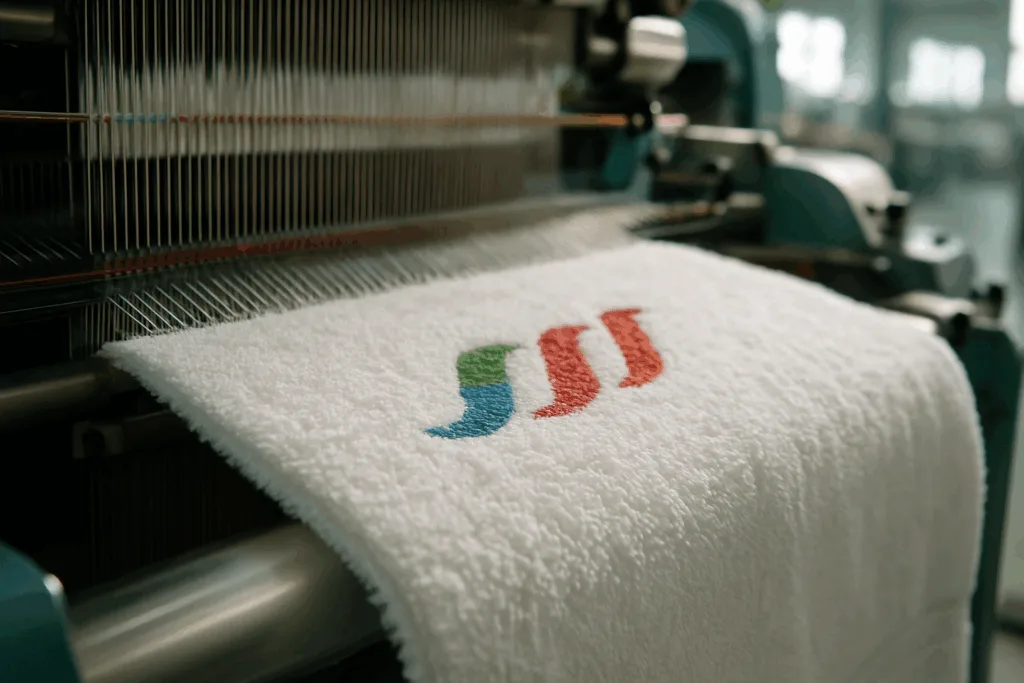
Custom logo towels serve much more than promotional purposes—they’re tangible ambassadors of a brand’s quality and ethos. Whether gracing hotel bathrooms, athletic clubs, spas, or retail shelves, a personalized logo enhances perceived value, unifies branding, and fosters customer loyalty. Selecting optimal logo application methods ensures towels retain eye-catching appeal while delivering performance—absorbency, softness, durability, and colorfastness.
Embroidery: Crafting Raised, Durable Logos
Embroidery is a classic method for custom logo towels, offering unmatched durability and tactile luxury. Designs are stitched directly into the towel using high-twist polyester or rayon threads, chosen for shine and resilience across repeated laundering cycles.
Manufacturing Workflow
- Design Digitization: Logo artwork is digitized for embroidery with stitch mapping tailored to towel fiber/GSM.
- Material Selection: Choose base towels in long-staple combed cotton or Egyptian cotton, typically 450–700 GSM for bath towels to ensure a thick, stable canvas.
- Loom Setup & Cut: Towels are woven with durable selvages, ready for logo placement on borders or central panels.
- Thread Matching: Embroidery thread colors undergo shade approval for consistent branding; threads are tested for colorfastness and abrasion resistance.
- Embroidery: High-speed, multi-needle machines apply the digitized logo with optimal tension and loop height control.
- Finishing: Towels undergo enzyme washing and low-VOC softeners to stabilize fibers and enhance softness.
Strengths and Ideal Applications
- Exceptional logo longevity—threads withstand commercial laundry and chemicals.
- Embossed feel—premium tactile experience.
- Best for hotels, spas, gyms, and premium gifts where durability is paramount.
Jacquard: Integrated Logos Woven into the Fabric
Jacquard weaving creates custom logo towels by incorporating the logo pattern directly into the towel’s structure with multi-color yarns. This yields sharp, multi-tonal motifs with zero risk of peeling or fading—the logo is part of the fabric itself.
Jacquard Production Steps
- Artwork Digitization: Logo is separated into color channels and programmed for the jacquard loom.
- Yarn Selection & Dyeing: Use long-staple combed cotton, Turkish cotton, or bamboo viscose blends. Yarn dyeing allows vibrant, colorfast shades; dye lots follow bulk approval protocols.
- Loom Preparation: Advanced jacquard looms weave loop heights, pile ratios, and logo textures precisely. Selvage edges are reinforced for bulk processing.
- Weaving: Logos are woven using programmed warp and weft arrangements, often accenting borders or entire towel surfaces.
- Finishing: Shearing creates velour textures or maintains classic terry loops. Softener and enzyme treatments ensure plush handfeel and dimensional stability.
Key Benefits and Use Cases
- Maximum durability—logos won’t wear off, peel, or fade.
- Ideal for high-volume promotional programs, athletic clubs, resorts, and retail brands.
- Supports large or complex logo designs with intricate shading.
Printing: Vivid, Versatile Logo Applications
Logo printing on towels offers the highest fidelity for intricate, multi-color designs and photographic effects. Multiple methods are used, each optimized for specific towel types, fiber blends, and intended use.
Printing Techniques
Reactive Dye Printing (Cotton)
- Best on combed/Egyptian cotton terry or velour.
- Logo artwork is screen-printed or rotary-printed with reactive dyes, producing vibrant, wash-resistant colors.
- Bulk lots pass colorfastness (AATCC 61/8) and dimensional change (AATCC 135) tests before shipping.
Digital Printing (Beach and Promotion Towels)
- Direct-to-towel digital printing enables full-color gradients and photo logos.
- Microfiber towels undergo sublimation or pigment print, tested for color vibrancy and fastness.
- Ideal for quick-turn promotional campaigns, events, or retail runs with low MOQ.
Pigment Printing
- Cost-effective for bulk branded towels with simple logos.
- Suited for hand towels, gym towels, and giveaways.
Suitability and Limitations
- Best for maximum detail, shaded colors, or photo-realistic logos.
- Limited abrasion resistance compared to embroidery/jacquard.
Comparative Table: Logo Towel Techniques
| Method | Fiber/Weave | Logo Max Size | Colorfastness | Durability | Dry Time | Best Uses |
|---|---|---|---|---|---|---|
| Embroidery | Combed/Egyptian cotton, 450–700 GSM, terry loop | ~20×20 cm | High (AATCC 61/8/162) | Excellent (thread wear) | Standard (thicker) | Hospitality, spas, premium gifts |
| Jacquard | Combed/Turkish cotton, bamboo blend, 500–900 GSM, terry/velour | Full towel | Highest (yarn-dye) | Exceptional (woven logo) | Standard (dense pile) | Branding, resorts, clubs, retail |
| Printing | Cotton, microfiber; velour, suede, 180–700 GSM | Full towel | High (reactive/digital) | Good (wear depends on method) | Fast (microfiber) | Promotions, events, quick-turn retail |
Fiber, GSM, and Weave: Towel Anatomy for Logos
Fiber Choices
Long-staple combed cotton ensures low lint, high durability, and maximal softness for luxury embroidered towels. Egyptian and Turkish cotton offer plush pile for premium jacquard and embroidered logo applications. Bamboo viscose/cotton blends bring sustainable softness and rapid wicking, ideal when eco-values matter. Microfiber (80% polyester/20% nylon) excels for digitally printed sports and quick-dry logo towels.
GSM: Weight Sets the Stage
- Face and Hand: 300–550 GSM (lightweight for fast drying, small logo zones).
- Bath and Bath Sheet: 600–900 GSM (thicker, plush canvas for large logos).
- Beach/Sports: 180–300 GSM microfiber (quick dry, vivid prints).
Weave and Construction
- Terry loop (single/double): Most common for embroidery and jacquard.
- Velour (sheared): Smooth surface for digital printing and pigment logo transfers.
- Waffle/honeycomb: Lightweight, textural option, typically for printed gym or spa towels.
Logo Placement and Size Considerations
Logo size and positioning have a direct impact on visual impact and brand recall. Common placements include:
- Border/Corner: Discreet yet sophisticated, especially for embroidery.
- Central Panel: High visibility for printed or jacquard logos.
- Full-Surface: Jacquard and digital print methods enable all-over branding effects.
For hospitality and spa towels, embroidered logos are usually placed on a dobby border, ensuring comfort and durability. Promotional beach towels often feature full-width digital prints for dramatic effect.
Quality Control and Compliance in Logo Towel Manufacturing
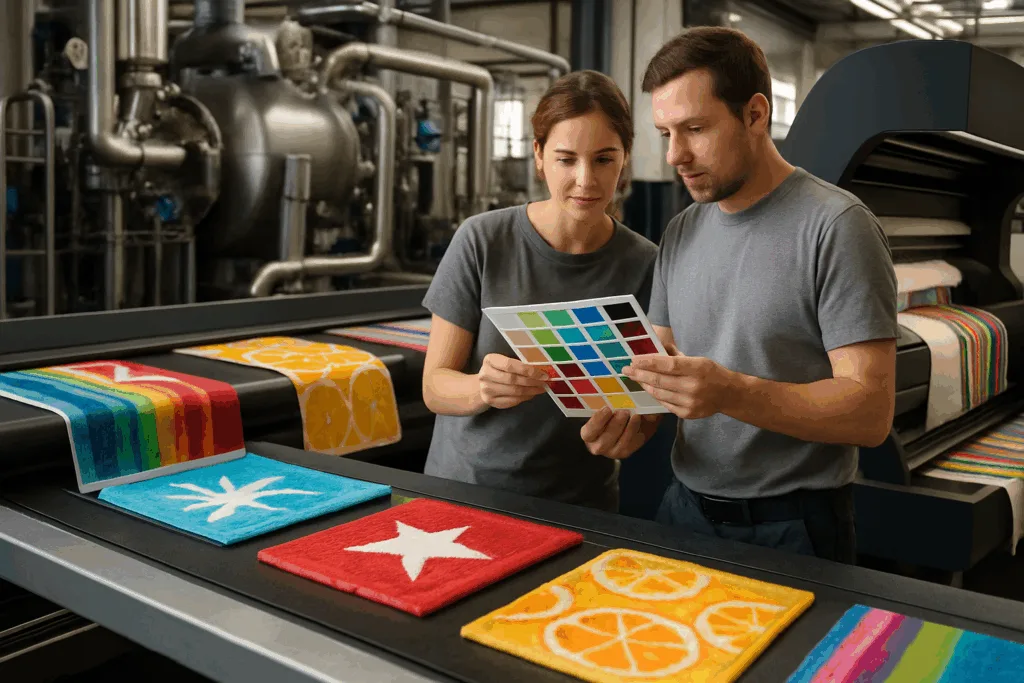
Leading manufacturers like Circe Towel implement strict quality systems to ensure every logo towel exceeds performance benchmarks. Absorbency rates are validated using AATCC 79, while colorfastness is checked against AATCC 61/8/162 and chlorine resistance standards. Pilling and snag tests (ASTM D3512, ASTM D3939) assure longevity. Towels destined for the EU and North America meet OEKO-TEX STANDARD 100 and, when organic, GOTS certs. Sustainable dyeing, low-VOC finishes, and ethical audits (BSCI/WRAP/SEDEX) complete responsible production workflows.
Packaging, Sampling, and Logistics Workflows
Packaging Options
- Belly bands, sleeves, and ribbon wraps for retail aesthetic.
- Polybag and compostable alternatives for eco-friendly brands.
- Vacuum packing for bulk logistics.
Sampling and Bulk Production Steps
- Sample Approval: Logo placement and color matched to client brief.
- Pre-Production Sample (PP): Full-size towel for functional and logo testing.
- TOP Sample: Final approval before mass run, validating bulk parameters.
- Bulk Shipments: Incoterms negotiable (EXW/FOB/CIF/DDP).
Circe Towel’s streamlined OEM/ODM workflows ensure each logo towel order—whether bath, beach, or promotional—meets design and delivery expectations at every stage.
Custom Logo Towels: Embroidery, Jacquard, and Printing Methods
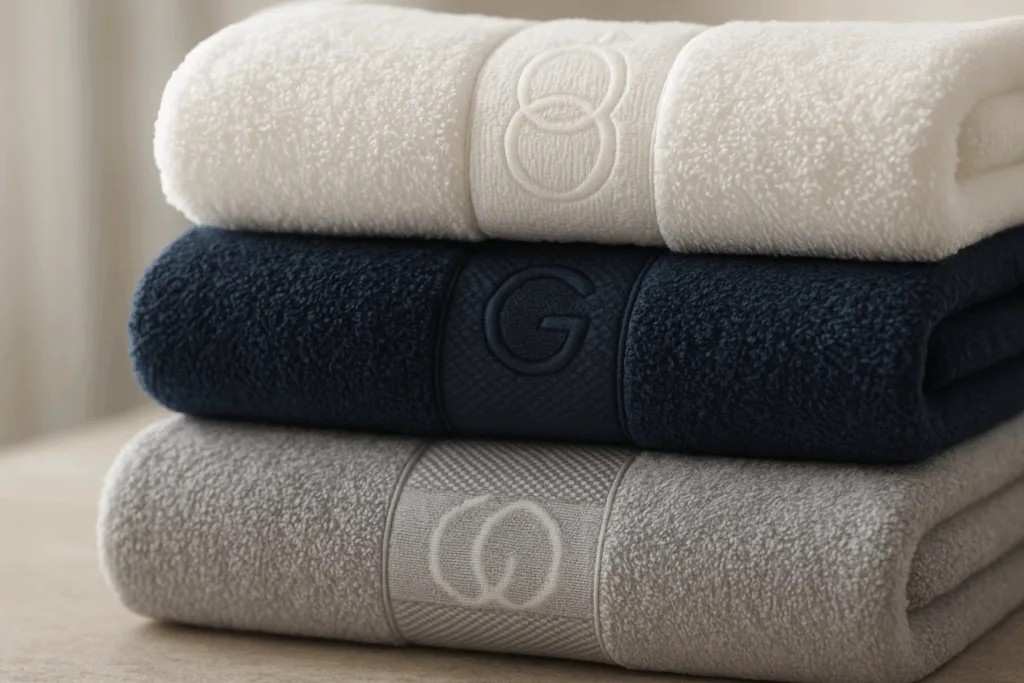
In summary, the choice between embroidery, jacquard, and printing for custom logo towels hinges on your priorities:
- Seeking ultimate durability and luxury? Opt for embroidery or jacquard-woven logos on plush, long-staple cotton towels.
- Want vibrant, photorealistic branding for events or retail? Choose digital or reactive dye printing on microfiber or velour towels.
- Require speed and cost-effectiveness? Pigment-printed towels suit high-volume promotions.
Each technique leverages specific fibers, weave structures, and finishing treatments, aligned with brand image, tactile expectations, and budget. Industry specialists like Circe Towel deliver comprehensive options, ensuring B2B buyers achieve absorbency, softness, colorfastness, and long-term logo presence tailored to end-use needs.
Frequently Asked Questions
What are the best fibers for embroidered custom logo towels?
Long-staple combed cotton and Egyptian cotton offer soft, durable surfaces ideal for embroidery due to their strength and low lint.
How does jacquard weaving differ from printing logos on towels?
Jacquard logos are woven into the towel with colored yarns for maximum fade resistance, while printing applies color to the surface using dyes or pigments.
Are printed logos as durable as embroidered ones?
Printed logos offer more detail and color options but typically have less abrasion resistance and may fade faster than embroidered logos in heavy use conditions.
What tests ensure logo towels maintain absorbency and color?
Absorbency is measured by AATCC 79; colorfastness to washing and chlorine is checked with AATCC 61/8/162 standards; these validate performance over time.
Can I order custom logo towels with sustainable fibers and packaging?
Yes, options like organic cotton, bamboo blends, and compostable packaging are increasingly available from manufacturers, including Circe Towel.
What is the typical MOQ and lead time for custom logo towel orders?
Minimum order quantity and lead time vary by method; commonly, embroidery requires 300+ towels and 30+ days, with printing allowing lower MOQs and faster delivery.