
The Shift from Conventional to Digital Printing
Limitations of Traditional Towel Decoration
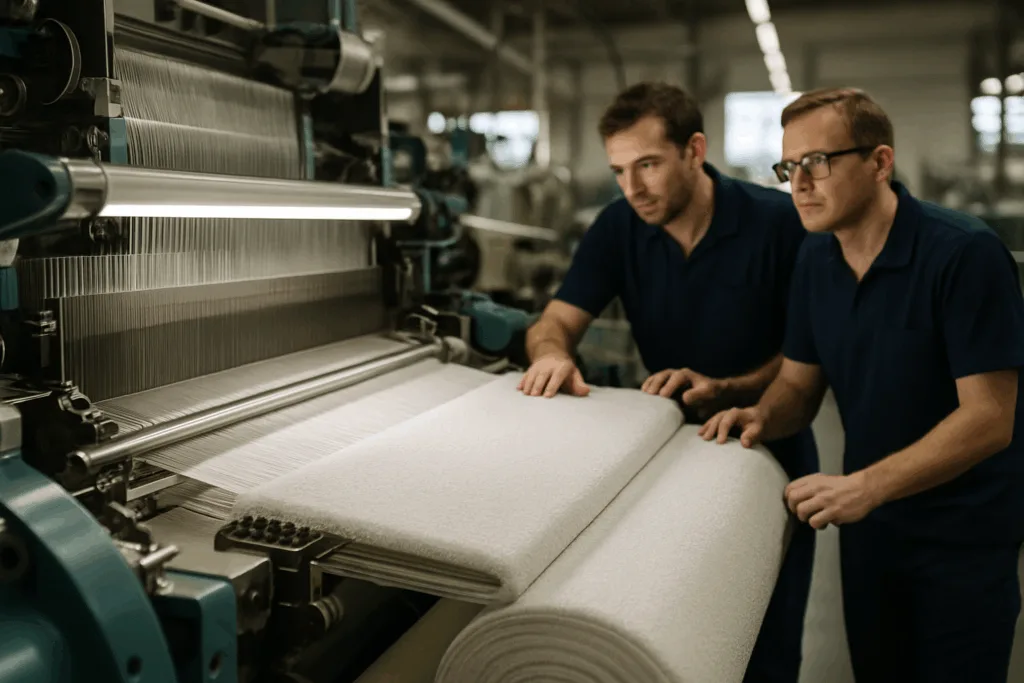
Previously, towel decoration relied on methods like yarn dyeing, rotary screen printing, and embroidery. These approaches, while effective for solid colors and stripes, posed constraints for multicolor patterns, photographic detail, and complex gradient effects. High minimum order quantities (MOQ), wasteful setup processes, long lead times, and limited colorfastness further restrained customization, especially for smaller brands or rapid runs.
Digital Printing: Unlocking Full-Color Customization
Digital printing methods—including direct inkjet and sublimation—have transformed the game. Automated workflow, virtually unlimited color choices, and the ability to print directly onto finished towels reduce waste and speed sampling. Most importantly, designers and OEMs may precisely control placement, scale, and resolution, opening doors to truly unique towel products.
Key Advantages of Digital Printed Towels
- Fast sampling and prototyping: Clients receive realistic product mockups in days, shortening development cycles.
- Extreme design flexibility: Photorealistic images, logos, and multi-gradient patterns are standard, not special order.
- Low minimums: Producers accept smaller orders, ideal for boutiques or promotional runs.
- Sustainable production: Targeted ink coverage and digital workflow save water, energy, and chemicals compared to batch dyeing.
- Improved colorfastness: Modern digital dyes and inks, such as fiber-reactive and disperse dyes, meet industry standards for wash and light fastness.
- On-demand personalization: Towels featuring names, team logos, or event-specific artwork ship rapidly, facilitating customization at scale.
Digital Printing Technologies in Towel Manufacturing
Reactive Inkjet Printing for Cotton Towels
Direct inkjet printing using reactive dyes on cotton is gaining momentum for bath towels, hand towels, and promotional items. The process involves pre-treating towel surfaces, printing high-resolution graphics, steam fixation, and thorough washing. Resulting prints exhibit bright, durable colors on long-staple combed cotton or Egyptian/Turkish blends.
Sublimation Printing for Microfiber and Blends
Sublimation relies on disperse dyes transferred to polyester-rich towels under heat and pressure. This technique produces stunning, edge-to-edge designs on beach towels, sports towels, or hooded baby towels. With inherent resistance to fading, sublimation towels thrive in environments with high UV exposure and frequent laundering.
Special Considerations for Bamboo Viscose Blends
Bamboo/cotton blends combine the absorbency and softness of natural fiber with the printing adaptability of synthetics. Digital print lines adapt by optimizing ink chemistry and fixation settings for best artwork brilliance and durability.
Modern Towel Printing: Trends and Applications
Personalized Branding for Hospitality and Promotion
Hotels, gyms, spas, and promotional brands increasingly request digitally printed towels with custom artwork, logos, and messaging. Digital printing supports sharp color logos and intricate design placement, enabling luxurious hotel bath sheets, branded beach towels, and event giveaways—all with minimal setup.
Artistic Beach and Sports Towels
Sublimation and high-resolution digital techniques enable panoramic photo prints, artistic motifs, and gradient patterns suited to beach and sports towels. Microfiber towels, spun in 180–300 gsm weights and adorned with sharp, fast-drying prints, are favored for athletic and travel segments.
- Edge-to-edge artwork for beach towels
- Team logo prints for sports towels
- Seasonal themes for promotional gifts
Eco-Conscious Manufacturing
Digital printing minimizes water use, reduces dye effluent, and decreases energy needs via shorter fix/wash cycles. Leading manufacturers such as Circe Towel increasingly leverage OEKO-TEX Standard 100-compliant inks and energy-efficient print lines for sustainable output (OEKO-TEX Standard 100).
Technical Insights: Fiber, Weaves, GSM, and Print Quality
Impact of Fiber Selection and Weave Construction
The quality of digital printed towels is fundamentally shaped by fiber choice and towel weave construction. Long-staple cotton provides a smooth, stable base for inkjet technology; Turkish and Egyptian cotton blends improve color absorption and softness. Microfiber towels (polyester/nylon), prized for their light weight and rapid dry time, excel in sublimation printing. Weaves matter: terry loops maximize surface area for vibrant print, while velour (sheared) finishes yield even more vivid artwork but may slightly compromise absorbency.
Comparative Table: Towel Printing Materials and Methods
| Material/Weave | Typical GSM | Absorbency | Print Method | Best Use Scenario |
|---|---|---|---|---|
| Long-staple Cotton Terry | 450–700 | High | Reactive Inkjet | Bath/Hand Towels, Luxury Hotel |
| Egyptian/Turkish Cotton Terry | 600–900 | Very High | Reactive Inkjet | Bath Sheets, Spa Towels |
| Bamboo/Cotton Blend Terry | 400–550 | High & Soft | Reactive Inkjet | Eco Bath Towels, Baby Towels |
| Microfiber (Suede/Velour) | 180–300 | Medium | Sublimation | Beach, Sports, Gym Towels |
| Jacquard Cotton/Blends | 500–850 | High | Piece/Yarn Dye, Select Digital | Decorative/Promotional |
Manufacturing Workflow: From Design to Bulk Towels
Pre-Treatment for Print Performance
Digital-printed towels require surface treatments to assure ink adhesion and colorfastness. Enzyme washing and silicone softeners create a lint-free, smooth pile. For cotton, anti-pilling and compaction finishing maintain towel dimensions and prevent shedding during later washes (AATCC Testing Standards).
Design Approval and Sampling Cycles
As OEMs or ODMs like Circe Towel receive custom artwork, initial digital samples validate color accuracy and placement. Bulk color approval (lab-to-bulk) guarantees consistency across mass runs. Typical workflow: design submission → print trial → customer approval → production run.
Printing and Fixation
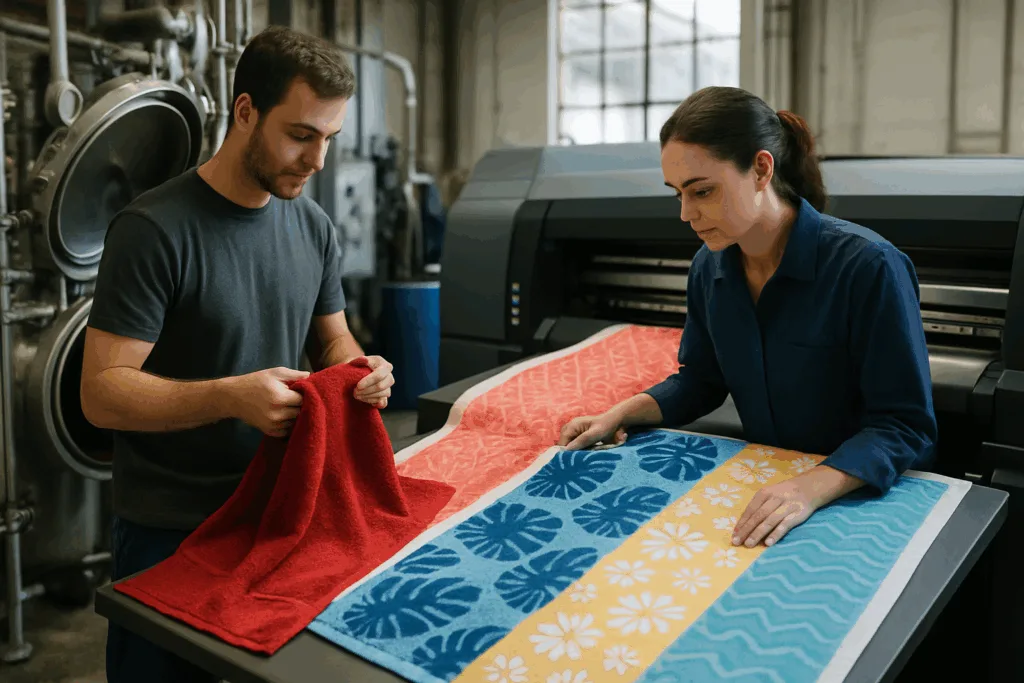
Depending on fiber and print method, towels enter inkjet or sublimation machines. For cotton, steam fixation sets reactive dyes permanently; microfiber undergoes transfer press heating. Detailed wash cycles remove residual inks and fixatives, preserving handfeel and absorbency.
Finishing, Packaging, and Logistics
Finishing steps—enzyme wash, tumble conditioning, antimicrobial treatment—finalize towel handfeel and hygiene. Dobby borders and hemmed edges provide stability and luxury touches. Towels move to packaging (belly bands, ribbon wraps, compostable bags); logistics teams handle bulk export under Incoterms like EXW/FOB/CIF/DDP. Sampling milestones include pre-production sample, top-of-production, and final bulk inspection.
Buyer Guidance: Choosing Digitally Printed Towels
Key Selection Factors
- Fiber type and GSM: Match fiber and density to absorbency, softness, and target durability.
- Desired print quality: Choose method (reactive inkjet vs. sublimation) for artwork sharpness and colorfastness.
- Lead time and MOQ: Digital printing supports short lead times and low minimums—confirm with supplier.
- Compliance and certifications: Request OEKO-TEX, GOTS, BSCI, or SEDEX documentation.
- Preferred finishing: Specify enzyme wash, anti-pilling, and logistical requirements (packaging, branding, delivery terms).
Applications Where Digital Printing Excels
- Branded guest towels for hotels and gyms
- Event or promotional beach towels
- Sports towels with vibrant team logos
- Artistic and limited-edition towel collections
- Baby/hooded towels with soft feel and custom designs
Sustainability, Compliance, and Industry Standards
Environmental Impact of Digital Towel Printing
Digitally printed towels are produced with minimal water, energy, and chemical usage compared to conventional dyeing. The transition accelerates water stewardship initiatives and aligns with global standards such as REACH and OEKO-TEX (REACH Regulation).
Quality Testing and Durability
Industry-standard tests confirm towel quality: absorbency (AATCC 79), wicking (AATCC 197), colorfastness (AATCC 61/8/162), and pile pull resistance (ASTM D3939). Buyers can review lab reports for assurance on softness, drying rate, and long-term print durability.
Circe Towel: Leading OEM/ODM Partner in Digital Towel Printing
What Sets Circe Towel Apart?
Circe Towel is a trusted B2B manufacturer delivering digital printed towels, bath sheets, sports towels, and promotional programs across a spectrum of fibers—including combed/long-staple cotton, Egyptian/Turkish cotton, bamboo blends, and microfiber. Their advanced facilities combine high-speed loom weaving, digital/injection printing, and robust finishing treatments, ensuring absorbency, soft handfeel, and vibrant, colorfast custom designs. Reliable service and transparent workflow support hospitality, retail, and custom branding needs.
How Digital Printing Is Changing the Towel Industry
Summary of Transformative Trends
Digital printing has revolutionized towel manufacturing, driving innovations in design freedom, sustainability, and buyer flexibility. New fibers and weaves, optimized GSM ranges, and eco-conscious finishing protocols allow consumers to specify towels tailored to brand image, technical function, and budget—enhanced by sharp, long-lasting custom prints. OEMs can launch on-trend towel lines rapidly, even for small runs. As consumer demand for personalized, sustainable goods rises, digital printing sets the benchmark for the future of the towel industry.
Expert Takeaway: “Digital towel printing offers designers and hotels near-unlimited creative options—without compromising softness, absorbency, or durability.”
Frequently Asked Questions
What is the main benefit of digital printed towels for buyers?
Digital printed towels allow vibrant, custom designs with short lead times and low MOQs—ideal for branding, promotion, and personalized use.
Can digital printing be applied to both cotton and microfiber towels?
Yes, reactive inkjet is used for cotton towels, while sublimation printing specializes in polyester/microfiber towels for sharp, fade-resistant artwork.
Does digital printing impact towel absorbency or softness?
Advanced finishing ensures digital printing maintains high absorbency and soft handfeel, especially on combed cotton and bamboo blends.
How do manufacturers ensure colorfastness on digital printed towels?
By using dye fixation (steam for cotton, heat transfer for microfiber) and testing to AATCC standards, manufacturers guarantee wash and light fastness.
Are digital printed towels sustainable compared to traditional methods?
Digital printing uses less water, energy, and chemicals, and supports sustainable certifications like OEKO-TEX and GOTS for eco-friendly production.
What customization options are available for OEM towel orders?
Brands can specify fiber, GSM, weave, loop type, print design, finishing, size, and packaging—covering hotel, gym, beach, and promotional towel needs.