
What Are Towel Finishing Chemicals?
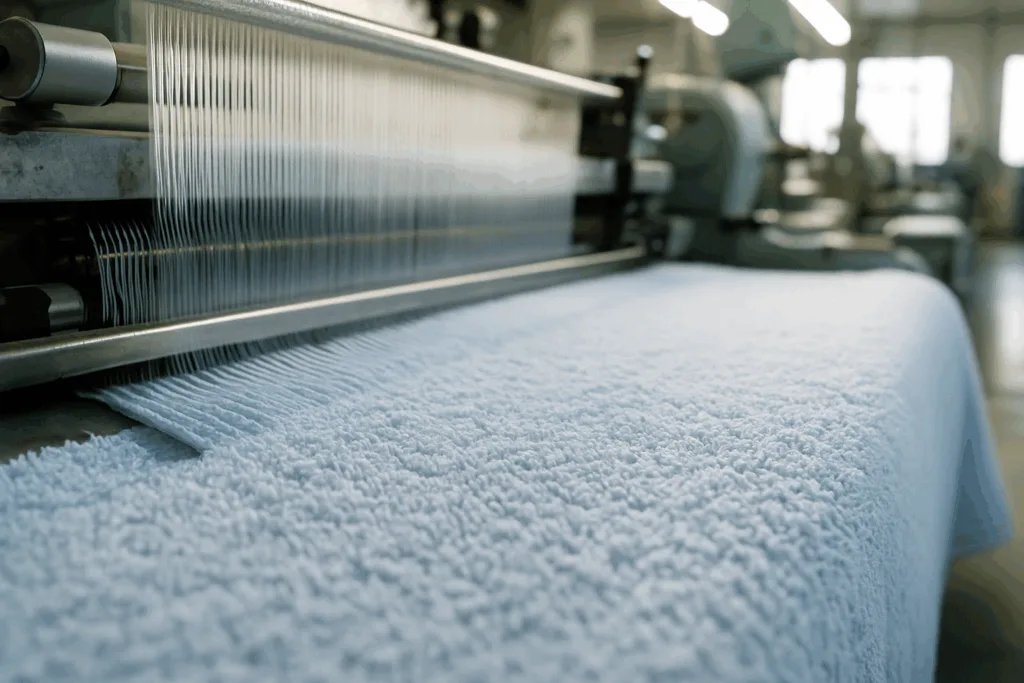
Finishing chemicals—often called textile auxiliaries—are compounds applied to towels in their final production stages. These substances enhance fiber softness, reduce drying time, increase colorfastness, and impart specialized properties such as antimicrobial effects or wrinkle resistance. Circe Towel, a leader in OEM/ODM towel production, employs carefully selected, compliant finishing agents to meet clients’ absorbency, softness, and sustainability goals.
Main Types of Finishing Agents
- Softening Agents: Enzyme washes and silicone softeners for gentle handfeel.
- Dry-Fast Finishes: Low-VOC hydrophilic treatments to speed moisture evaporation.
- Anti-pilling Agents: Prevent fiber linting and improve fabric longevity.
- Antimicrobial Additives: Reduce bacterial growth without harsh silver or nano-particle formulations.
- Pre-shrink and Stabilizing Finishes: Controlled tumble steam or compaction for stable dimensions.
Key Safety and Compliance Considerations
Responsible towel makers prioritize safety and compliance at every step. Certified finishing chemicals, audited by OEKO-TEX STANDARD 100 requirements, ensure that no hazardous residues remain when the towel reaches the consumer. Circe Towel’s processes are rigorously checked for adherence to BSCI, SEDEX, and GOTS organic cotton protocols, especially regarding restricted chemicals and water stewardship.
Why Finishing Matters for Soft Towels
The journey to soft finish towels begins with fiber selection—long-staple combed cotton, premium Egyptian or Turkish cotton, or bamboo viscose blends. Next, the weaving stage, particularly terry loop pile design and twist levels, establishes the baseline texture. The finishing step then enhances softness through enzyme baths that smooth fiber edges, followed by conditioning with silicone or plant-based softeners chosen for hypoallergenic standards. Buyers of spa, hotel, and retail towels rely on these tactile improvements, as they directly elevate guest comfort and perceived value.
Softer Towels: Three Essential Factors
- Fiber Quality: Finest long-staple cotton, bamboo viscose/cotton blends.
- Loop Construction: Zero-twist/low-twist, high-density terry with uniform height.
- Sustainable Finishing: Enzyme/silicone/low-VOC softeners approved by OEKO-TEX.
Achieving Quick-Dry Performance
Quick dry towels excel in athletic, travel, and promotional settings. Microfiber (polyester/nylon) is dominant for fast dry, boasting GSM ranges of 180–300 and engineered honeycomb or suede weaves. For cotton-based quick-dry, towel finishing chemicals infuse hydrophilic surfactants or modify fiber polarity to enhance vertical wicking (AATCC 197). This means towels shed moisture rapidly while retaining necessary absorbency—a delicate balance carefully calibrated by finishing experts at Circe Towel.
Dry Time vs. Absorbency: Finding the Sweet Spot
Quick-dry finishing agents work by:
- Reducing fiber surface tension for rapid evaporation
- Preserving or improving loop integrity to maintain absorbency
- Ensuring that any chemical residue is minimal and skin-safe
Comparing Fiber, Weave, GSM, and Use Scenarios
The interplay of base fiber, weave design, weight, and finishing agent selection determines a towel’s ultimate feel, dry time, and suitability for different applications:
| Fiber/Blend | Weave Type | GSM Range | Absorbency | Dry Time | Best Use Scenario |
|---|---|---|---|---|---|
| Long-staple cotton | Terry, zero/low-twist | 450–700 | High | Moderate | Luxury bath/hotel/spa |
| Egyptian/Turkish cotton | Terry, jacquard/dobby | 600–900 | Very High | Average | Bath sheets/resort/spa |
| Bamboo/cotton blend | Terry, honeycomb | 400–650 | High + anti-microbial | Faster | Eco-focused/spa/hotel |
| Microfiber | Suede/waffle | 180–300 | Medium | Very Fast | Sports/travel/gym |
Expert Takeaway
Buyers choosing towels for specific environments should prioritize the optimal combination of fiber, weave, and finishing agent. Eco-compliant softeners and hydrophilic treatments maximize comfort and performance—and signal a supplier’s commitment to safe, sustainable production.
Ensuring Finishing Safety and Skin Comfort
Safety in textile finishing means rigorous attention to chemical toxicity, allergen potential, and residue limits. All Circe Towel finishing agents are tested for skin compatibility and pass key criteria for absorbency (AATCC 79), colorfastness (AATCC 61/8/162), and anti-pilling (ASTM D3512/ISO 12945). For organic programs, only GOTS-allowed auxiliaries are employed, while REACH and Prop 65 standards guide selection for export markets. This approach protects end consumers and underlines brand credibility—especially in children’s, spa, and health facility towels.
Certifications and Audits
- OEKO-TEX STANDARD 100: External Link
- GOTS (if organic): External Link
- BSCI/WRAP/SEDEX: Ethical and traceable production assurance
Sustainable and Eco-Friendly Finishing at Circe Towel
Circe Towel’s environmental stewardship extends to water-saving dye baths, closed-loop softener recovery, and the elimination of hazardous finishing compounds. The company’s R&D prioritizes plant-derived softeners, low-emission hydrophilic treatments, and certified colorants for cotton and microfiber. Wastewater is monitored by local compliance bodies and recycled wherever feasible. Buyers looking for promotional, retail, or hospitality programs benefit from transparent reporting, minimized chemical loads, and endorsement from industry-recognized sustainability standards.
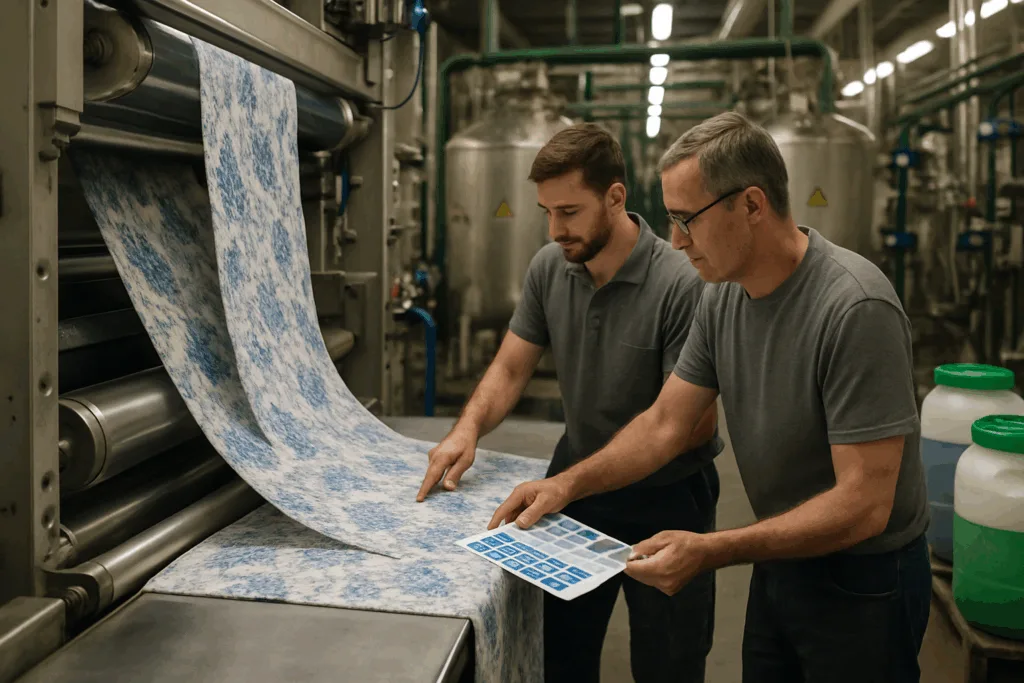
How Eco-Finishing Reduces Risk and Adds Value
- Safer towels for direct skin contact—no formaldehyde or heavy metals
- Lower water/energy footprint in finishing room operations
- Stronger color retention and fiber longevity under repeated wash cycles
- Enhanced brand positioning through traceable, eco-compliant supply chains
Process Insights: From Bulk Towel to Finished Textile
Most towels begin as greige (undyed, unfinished) fabric. Post-weaving, they undergo pre-shrink or compaction finishing—using steam or mechanical pressure. Next, dyeing is performed, either via piece dyeing (for solids) or yarn dye/printing (for jacquard/beach towels); Circe Towel offers reactive and vat dye methods for colorfastness. The final touch is the application of selected finishing agents, delivered via controlled padding or exhaust bath, before tumble drying stabilizes softness and absorbency. Quality checks at each stage ensure consistency, durability, and compliance.
Manufacturing Steps Involving Finishing Agents
- Loom weaving/knitting setup for optimal pile density and loop pull resistance
- Enzyme/silicone softener baths (timing/temperature control)
- Hydrophilic dry-fast application via low-VOC padder
- Anti-pilling & antimicrobial incorporation for high-wear towels
- Final drying and dimensional stabilization (steam/tumble)
- Test: GSM, absorbency, colorfastness, and lint shedding
Buyer Guidance: Choosing the Right Finish for Every Towel Program
For B2B partners, clarity on finishing agent selection supports efficient sampling, bulk ordering, and marketing claims. Circe Towel’s technical team provides tailored recommendations matching product requirements—whether ultra-soft bath towels for luxury hotels, quick-dry sports towels, or robust promotional products. Key decision factors include fiber type, weave construction, GSM, finishing approach, packaging, compliance, and MOQ/lead time.
Checklist for Sourcing Finishing Agents
- Define towel application and required performance traits
- Select fiber and weave for comfort and dry-speed targets
- Specify finishing chemicals with documented safety/certifications
- Request absorbency and durability test data
- Verify colorfastness, lint resistance, and allergen testing
- Confirm eco-friendly finishing options and compliance reporting
Towel Finishing Chemicals: Current Innovations
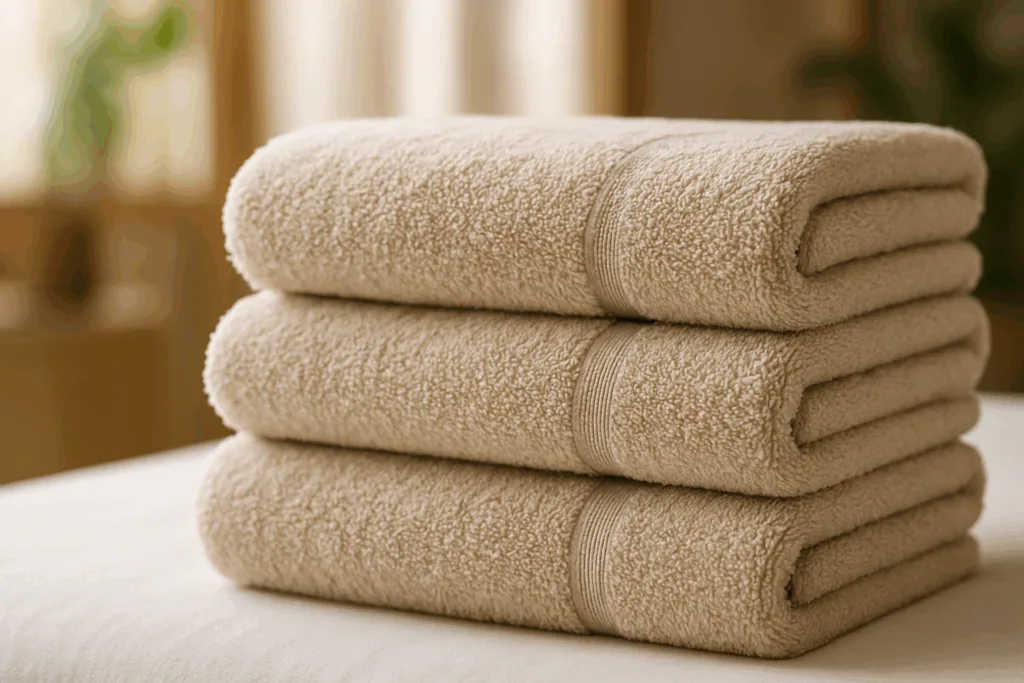
Industry innovation is rapidly advancing the science of towel finishing. Enzyme-based softeners now outperform petrochemical alternatives, delivering greater handfeel at reduced environmental cost. Silicone finishes are evolving toward plant-based molecules with improved bio-degradability. Hydrophilic quick-dry agents combine with engineered polyester or bamboo fibers for next-gen moisture management. Brands like Circe Towel trial zero-formaldehyde, low-VOC treatments and recycled-water systems to further shrink environmental impact while maintaining premium towel attributes.
Comparing Traditional vs. Eco-Friendly Finishing
| Traditional Chemical | Eco-Friendly Alternative | Effectiveness | Safety | Environmental Impact |
|---|---|---|---|---|
| Quaternary ammonium softeners | Enzyme & plant-based softeners | Comparable | Higher (less irritation) | Lower emissions, safer residues |
| Petrochemical hydrophilic agents | Low-VOC, bio-derived water repellents | Equal or better | Non-toxic | Minimized water pollution |
| Triclosan/silver antimicrobials | Plant-extract antimicrobials | Moderate | Higher (non-hazardous) | Biodegradable, safe run-off |
Frequently Asked Questions
What are towel finishing chemicals and why are they used?
Towel finishing chemicals are specialized agents applied during production to enhance softness, absorbency, quick-dry performance, and durability in towels.
Are eco-friendly towel finishing agents as effective as conventional options?
Yes, modern eco-friendly finishing agents deliver equal or better softness and drying speed while reducing environmental and health risks.
How do soft finish towels differ from regular towels?
Soft finish towels undergo advanced enzyme and silicone treatments, making them smoother and gentler on skin compared to untreated towels.
What makes a towel quick-drying?
Quick-dry towels use microfiber or specialized finishing agents to enhance moisture wicking and evaporation rates for rapid drying.
Is Circe Towel’s finishing process safe for sensitive skin?
Yes, Circe Towel’s finishing agents are OEKO-TEX 100 certified, hypoallergenic, and suited for all skin types, including babies.
Can buyers specify sustainable finishing in their towel orders?
Absolutely. Circe Towel offers custom eco-finishing options, allowing buyers to select sustainability certifications and chemical profiles for their orders.