
From Yarn to Towel: A Step-by-Step Look Inside the Factory
Towel manufacturing is a meticulous process that begins with the careful selection of fibers and ends with plush, high-performance towels ready for homes, spas, hotels, and gyms worldwide. A detailed towel factory tour reveals that each stage in the towel manufacturing process is purpose-built to deliver absorbency, softness, durability, and vibrant color. Here, we explore how towels are made, detailing the precise steps that transform raw yarn into everyday essentials. For brands and partners seeking a reliable OEM/ODM supplier, this journey inside a leading facility—like Circe Towel—demonstrates why factory expertise is the bedrock of quality and trust.
The Towel Manufacturing Process: An Overview
Every towel starts with a decision: which fiber blend, construction method, and finishing approach will best serve its intended use? Whether designing luxury hotel bath sheets, robust gym towels, or branded promotional gifts, the towel manufacturing process follows a carefully sequenced path. High-grade materials, strict quality control, and sustainable practices are hallmarks of facilities that prioritize customer confidence from the first spool of yarn to final packaging.
Key Steps in the Towel Factory Tour
- Raw material selection & yarn spinning
- Weaving or knitting the towel fabric
- Dyeing and printing for color and customization
- Finishing for performance & feel
- Cutting and hemming for final shape
- Packaging, quality control, and shipping
Yarn Selection: The Start of Absorbency and Softness
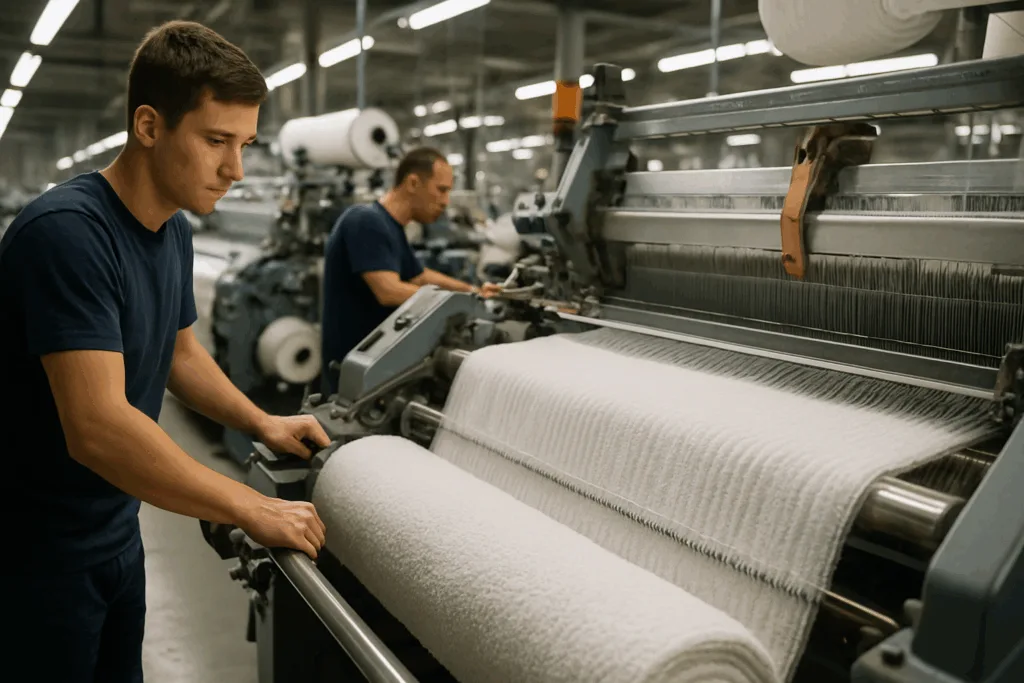
A towel’s feel and performance originate with fiber choice and yarn construction. Top factories source fibers ranging from long-staple combed cotton and Egyptian or Turkish cotton, prized for their length and smoothness, to bamboo viscose blends that boost softness and sustainability. Microfiber, typically a blend of polyester and nylon, delivers quick-dry characteristics for sports and travel towels.
Fiber Types and Their Benefits
| Fiber/Blend | Typical GSM | Absorbency | Drying Time | Best Use |
|---|---|---|---|---|
| Long-staple cotton | 450–900 | High | Medium | Luxury bath, spa |
| Egyptian/Turkish cotton | 550–900 | Excellent | Medium | Hotel, premium home towels |
| Bamboo/cotton blend | 400–700 | High + Antimicrobial | Medium | Baby, sensitive skin |
| Microfiber poly/nylon | 180–300 | Moderate | Very Fast | Sports, gym, quick-dry |
Spinning and Yarn Preparation
High-quality towels begin with ring-spun or combed yarns, which are smoother and more uniform than open-end alternatives. Ring-spun yarns are twisted for durability and minimize pilling and lint. Factories scrutinize yarn diameter, twist per inch, and humidity conditioning—each variable directly influences uniform pile formation in the final fabric.
Weaving Excellence: Looms and Towel Fabrics
Towels are typically woven on high-speed Jacquard or dobby looms that control warp, weft, and pile yarn to craft distinctive textures and borders. The hallmark of the towel manufacturing process is the terry loop—vertical loops on both sides absorb liquids and add plushness. Pile height and loop density tune absorbency, softness, drying time, and durability for the intended product segment.
Weave Structures and Their Functions
- Classic terry: Optimal for bath towels; single or double loop for bulk or luxury feel.
- Zero/low-twist terry: Softer handfeel and greater fluffiness, using high-quality long-staple fibers.
- Waffle/honeycomb: Lightweight, quick-drying—favored for spa, travel, or guest towels.
- Velour: One side sheared for a velvet finish (often used for beach or promotional towels).
Selvage and Pile Management
Attention to selvage (towel edge), pile ratio, and selvage control prevents unraveling and ensures dimensional stability. Factories like Circe Towel regularly test for pile pull resistance and lint management to extend product life and meet demanding commercial requirements.
Dyeing, Printing, and Colorfastness
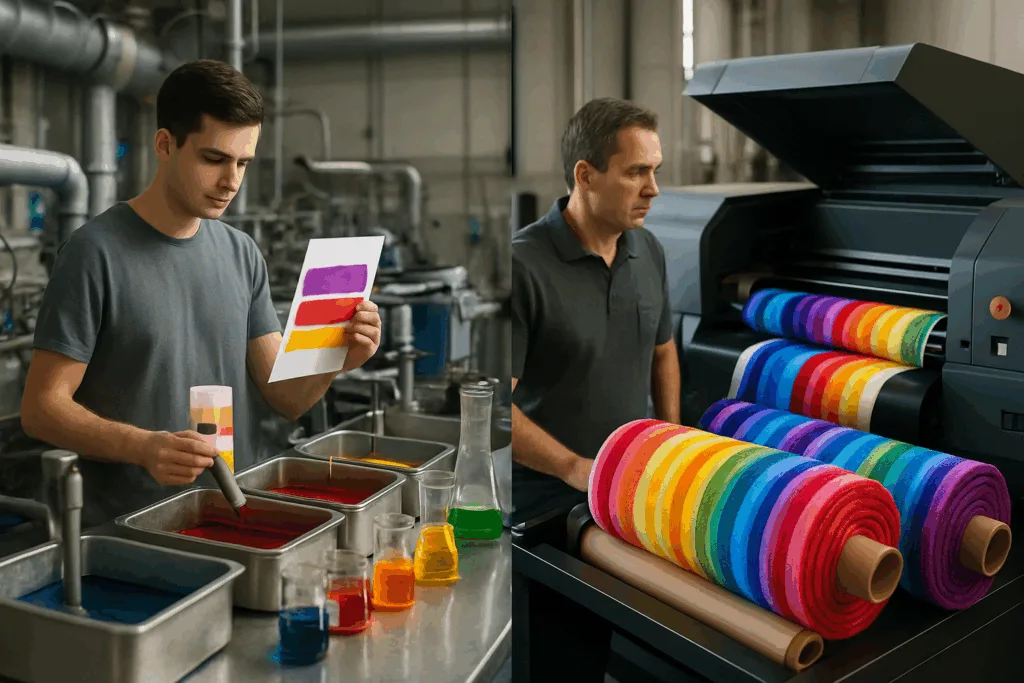
Towels acquire their signature hues through precision dyeing or printing. Cotton towels are typically dyed using reactive or vat dyeing methods, providing rich, long-lasting color. Piece dyeing (dyeing after weaving) offers flexibility and fast turnaround, while yarn-dying (before weaving) is used for detailed stripes, checks, or Jacquard patterns. Microfiber towels use sublimation or digital printing for vibrant, fade-resistant graphics.
Color Control and Approvals
Consistent color is non-negotiable for brand and client trust. Expert operators monitor dye baths for temperature and pH, and use spectrophotometers for shade control and bulk color approval. Circe Towel also facilitates pre-production sample approval workflows to ensure color harmony across large orders.
Quality and Environmental Compliance
- OEKO-TEX STANDARD 100 certification ensures finished towels are free from harmful substances.
- GOTS certification is available for organic cotton towels, supporting eco-conscious buyers.
- Water stewardship, effluent treatment, and low-VOC processes reduce environmental impact.
Finishing: The Science of Softness and Durability
Once colored, towels move through a series of finishing processes that define texture, longevity, and handfeel. Enzyme washes, silicone softeners, and special low-VOC finishes enhance softness. Anti-pilling treatments and mechanical techniques—such as steam conditioning and pre-shrinking—ensure a stable, dimensionally consistent product. The anti-microbial and quick-dry properties can also be imparted through generic but effective treatments, especially for gym and sports towels.
Finishing Checklist for Quality
- Enzyme wash for increased softness
- Silicone or low-VOC softener for skin-friendliness
- Steam or tumble finishing for dimensional stability
- Compaction to minimize shrinkage after wash
- Uniform shearing for velour finish where needed
Cutting, Hemming, and Decorative Borders
Large towels are cut to specification and hemmed with reinforced, high-tensile stitching. This step also incorporates proprietary branding—such as jacquard-woven borders, dobby accents, or custom embroidery—requiring precision to align patterns and maintain a luxury feel. Factory tour highlights often include inspection of advanced machines that minimize seam puckering and maximize visual appeal.
Standard Towel Sizes and Usage
- Face towel: 30–35 x 30–35 cm
- Hand towel: 35–50 x 70–100 cm
- Bath towel: 60–70 x 120–140 cm
- Bath sheet: 80–100 x 160–200 cm
- Beach/sports towel: 70–90 x 150–180 cm
Packaging, Inspection, and Logistics
Post-production, towels are inspected meticulously—checked for stitch quality, pile consistency, size accuracy, and colorfastness. Tests follow international standards such as AATCC (absorbency, wicking, colorfastness to wash/crock/chlorine) and ASTM (tensile, seam, pilling, snagging). Only passing items proceed to packaging lines, where options range from belly bands and polybags (including compostable alternatives) to ribbon wraps and vacuum packs, tailored to B2B, retail, or direct-to-consumer specifications.
Export and Delivery
Pallets are consolidated and labeled per Incoterms—EXW, FOB, CIF, or DDP—based on client preference. Bulk order processes move from sampling through pre-production approval to top-of-production (TOP) checks, ensuring each shipment matches contract requirements. Circe Towel’s logistics experts manage this with a focus on timeliness and service reliability.
Quality Assurance: Every Detail Matters
Quality control is comprehensive, involving multi-point inspection and extensive laboratory testing. Factories maintain reference samples and batch records, ensuring seamless traceability. Test programs cover:
- Absorbency and vertical wicking (AATCC 79, AATCC 197)
- Colorfastness to washing/crocking/chlorine (AATCC 61, 8, 162)
- Dimensional change (AATCC 135/150) and pilling (ASTM D3512/ISO 12945)
- Snagging and seam strength (ASTM D3939/D1683)
- Lint shedding—critical for hospitality and baby towels
Expert Insight: “Durability and handfeel are crafted at every stage. Informed fiber selection, controlled weaving, rigorous dyeing, and advanced finishing combine to ensure each towel delivers on its promise.”
From Yarn to Towel: A Step-by-Step Look Inside the Factory
The complete towel factory tour encapsulates rigorous attention to detail across every phase of the towel manufacturing process. Suppliers like Circe Towel not only deploy cutting-edge machinery but also anchor their operations in technical know-how and third-party compliance. This instills total confidence in buyers—whether ordering branded spa towels or crafting large-scale retail programs. The result: a versatile portfolio of towels spanning face, hand, bath, promotional, gym, and specialty applications, tailored to exacting specification and delivered with sustainability at the forefront.
Applications: Matching Towel Specs to Buyer Needs
Different end-users require specific towel attributes. A luxury hotel prioritizes dense, double-loop Egyptian cotton bath sheets with pronounced dobby borders and low lint. Athletic brands specify microfiber towels with minimal GSM for portability and rapid drying. Baby products demand hypoallergenic bamboo-cotton blends with anti-pilling properties. The towel manufacturing process is tailored for each use case, with thoughtful consultation at every turn.
Custom Branding and Value-Add Features
- Jacquard weaving for logos or border patterns
- Digital printing and photo-quality graphics for beach/promotional towels
- Embroidery and hanger loops for retail or hospitality convenience
- Special packaging for gift or retail programs
Sustainability and Social Responsibility in Towel Manufacturing
Contemporary towel factories implement sustainability across sourcing, production, and logistics. This includes using certified organic cotton, recycling water, employing renewable energy, and passing social audits such as BSCI, WRAP, or SEDEX. Compliance with OEKO-TEX and chemical safety standards (REACH, Prop 65) assures safety for end-users and the planet.
The Competitive Edge: Why Factory Expertise Matters
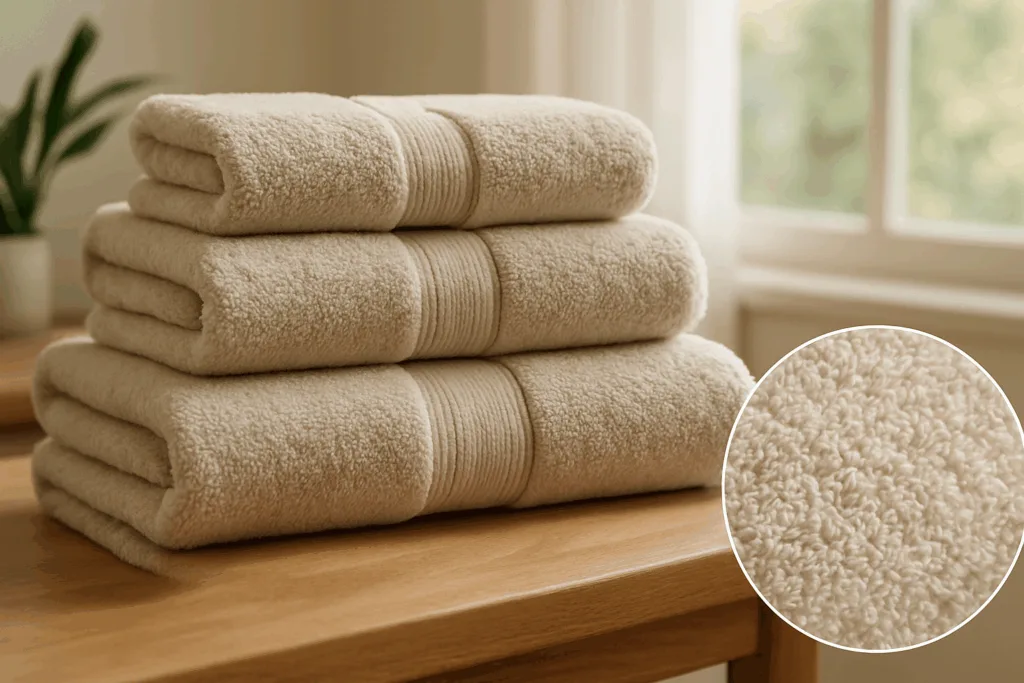
What distinguishes a trustworthy towel supplier is technical depth, agility, and process transparency. Circe Towel, for example, combines modern manufacturing with robust service—offering MOQs to match business models and lead times driven by scale, season, or market. From fiber selection to rapid color matching and compliance documentation, every decision is made with buyer outcomes in mind. This is the essence of how towels are made at the professional level, ensuring consistent results order after order.
Frequently Asked Questions
What fibers are best for towel absorbency and softness?
Long-staple combed cotton, Egyptian or Turkish cotton, and bamboo-cotton blends provide superior absorbency and a soft, luxurious handfeel, while microfiber excels for quick-dry and sports use.
How do factories ensure towels retain their color and shape?
Advanced dyeing methods, strict shade control, and finishing techniques—like pre-shrinking and silicone softening—ensure towels remain colorfast and dimensionally stable after washing.
What quality tests do towels undergo before shipping?
Towels are tested for absorbency, colorfastness, dimensional change, pilling, seam strength, lint shedding, and durability, following global standards such as AATCC and ASTM protocols.
How do I choose the right GSM for my towel application?
For plush bath towels, opt for 550–900 GSM; hand or face towels typically require 300–550 GSM; lighter GSM (180–300) suits microfiber sports and gym towels.
Can I customize size, color, and branding for my towel order?
Yes, factories like Circe Towel offer full OEM/ODM solutions—custom sizes, colors, embroidery, digital prints, jacquard borders, and tailored packaging to meet brand needs.
What sustainability certifications should I look for in towel manufacturing?
Key certifications include OEKO-TEX STANDARD 100, GOTS (for organic cotton), and compliance with REACH or Prop 65 for chemical safety, as well as audited ethical supply chains.