
For B2B towel buyers, certification is no longer just a nice extra on a product page. If you supply hotels, spas, gyms, wellness brands, retail chains, baby product lines, Amazon stores, or private label home textile brands, your customers are asking harder questions: Is the towel safe for repeated skin contact? Can the supplier provide valid documentation? Can the certification be verified? Does the certificate cover the finished towel, or only the fabric?
This is where OEKO-TEX certified towels become important.
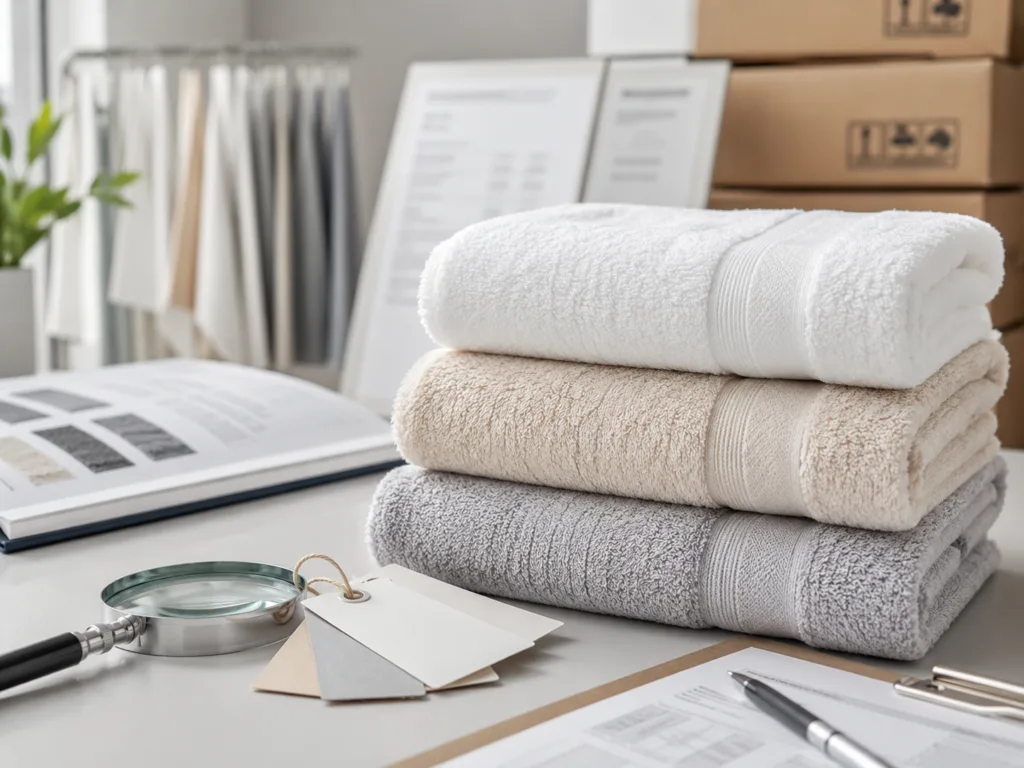
A towel is one of the most intimate textile products in daily use. It touches the face, body, hands, children’s skin, hotel guests, spa clients, gym users, and retail consumers after showering, sweating, swimming, or cleansing. For importers and brand owners, a towel is not just a piece of cotton or microfiber. It is a skin-contact product, a compliance product, and a brand trust product.
The problem is that many towel suppliers use words like “eco-friendly,” “non-toxic,” “green,” “safe,” or “natural” without giving buyers clear proof. For mature B2B buyers, verbal claims are not enough. They need certificates, traceability, matching product scope, stable quality control, and a supplier who understands how certification affects bulk production, custom logos, dyeing, packaging, and retail labeling.
This guide explains what OEKO-TEX certification means for towels, why B2B buyers should care, how to verify a certificate, and what to check before placing a bulk towel order.
What Does OEKO-TEX Certified Mean for Towels?
When buyers refer to OEKO-TEX certified towels, they usually mean towels certified under OEKO-TEX STANDARD 100. According to OEKO-TEX, STANDARD 100 is a label for textiles tested for harmful substances, and the official website allows buyers to check certified products through the OEKO-TEX Label Check by scanning a QR code or entering the certificate number.
For towels, this matters because the product is used directly on the skin. The certification is designed to give buyers and end users more confidence that the textile has been tested according to defined safety criteria. For a hotel group, this can support guest safety standards. For a retailer, it can support product page claims and packaging communication. For an importer, it can support supplier evaluation and compliance records. For a private label brand, it can help differentiate the product from generic low-cost towels.
However, buyers should understand one key point: OEKO-TEX certification is not a vague “green” label. It is a specific textile certification with defined scope. A supplier saying “we have OEKO-TEX” is not enough. Buyers need to know which product is covered, which certificate number applies, whether the certificate is still valid, and whether the finished towel with its components is included.
Why B2B Buyers Should Care About OEKO-TEX Certified Towels
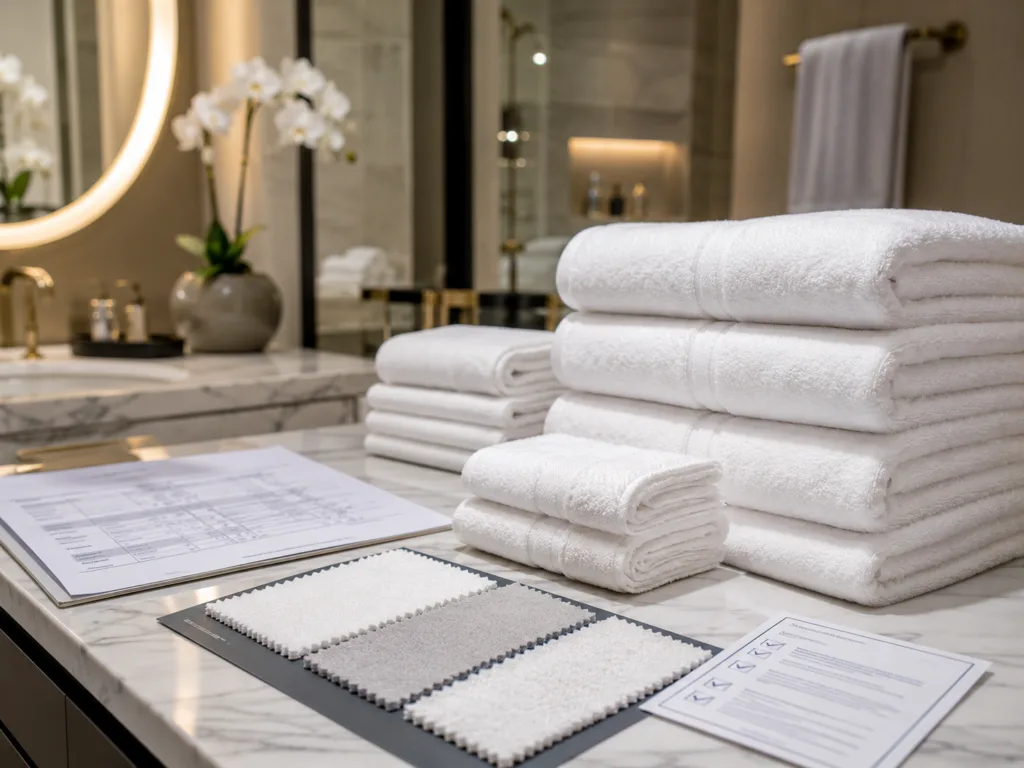
1. Towels Are High-Frequency Skin-Contact Products
Unlike decorative textiles, towels are used directly on wet or warm skin. Bath towels, face towels, hand towels, gym towels, beach towels, spa towels, baby towels, and hotel towels all involve repeated contact with the body. This makes chemical safety more important than it may be for low-contact textile products.
For example, a luxury hotel towel may be washed hundreds of times and used by different guests. A baby towel may be used after bathing. A gym towel may touch sweat and sensitive skin. A spa towel may be part of a premium wellness experience. In these cases, buyers are not only purchasing softness, GSM, size, and color. They are purchasing confidence.
OEKO-TEX certified towels can help buyers show that product safety has been considered at the sourcing stage, not added as an afterthought.
2. Certification Helps Mature Buyers Reduce Sourcing Risk
For B2B buyers, risk is not only about whether the towel looks good in a sample photo. Real sourcing risk appears later: during customs documentation, retail onboarding, customer complaints, product claims, platform audits, or brand reputation issues.
A professional towel buyer may need to answer questions such as:
Can this towel be sold through retail channels?
Can we use the certification claim on our website?
Does the supplier have documentation for the towel material?
Can the certificate be checked online?
Does the certificate match the product we are ordering?
Will custom embroidery or printing affect the certification scope?
OEKO-TEX does not replace all local regulations or retailer requirements, but it can be an important part of a responsible sourcing file. Hohenstein notes that STANDARD 100 certificates are valid for one year, and for a finished product to be labeled, the final product and each of its components must be tested.
That detail is extremely important for B2B buyers. A certificate for raw fabric does not automatically mean that every finished towel, embroidery thread, sewing thread, woven label, printed logo, dyed border, or decorative component is covered.
3. OEKO-TEX Is More Concrete Than Generic Eco-Friendly Claims
Many towel listings use attractive sustainability language. “Eco towel.” “Green towel.” “Natural towel.” “Chemical-free towel.” “Non-toxic towel.” These phrases may sound appealing, but for B2B purchasing, they are often too broad.
OEKO-TEX certification gives buyers something more concrete to check: a certificate number, a product scope, a validity period, and a recognized testing framework. OEKO-TEX also provides an official Label Check tool where buyers can enter the label number to verify whether a label is official.
This is especially useful when comparing suppliers. Two factories may both claim to offer “safe hotel towels,” but only one may be able to provide a valid certificate that matches the product category. For importers, wholesalers, and brand owners, this difference can affect trust, pricing, retail acceptance, and long-term cooperation.
OEKO-TEX vs Organic Cotton: They Are Not the Same
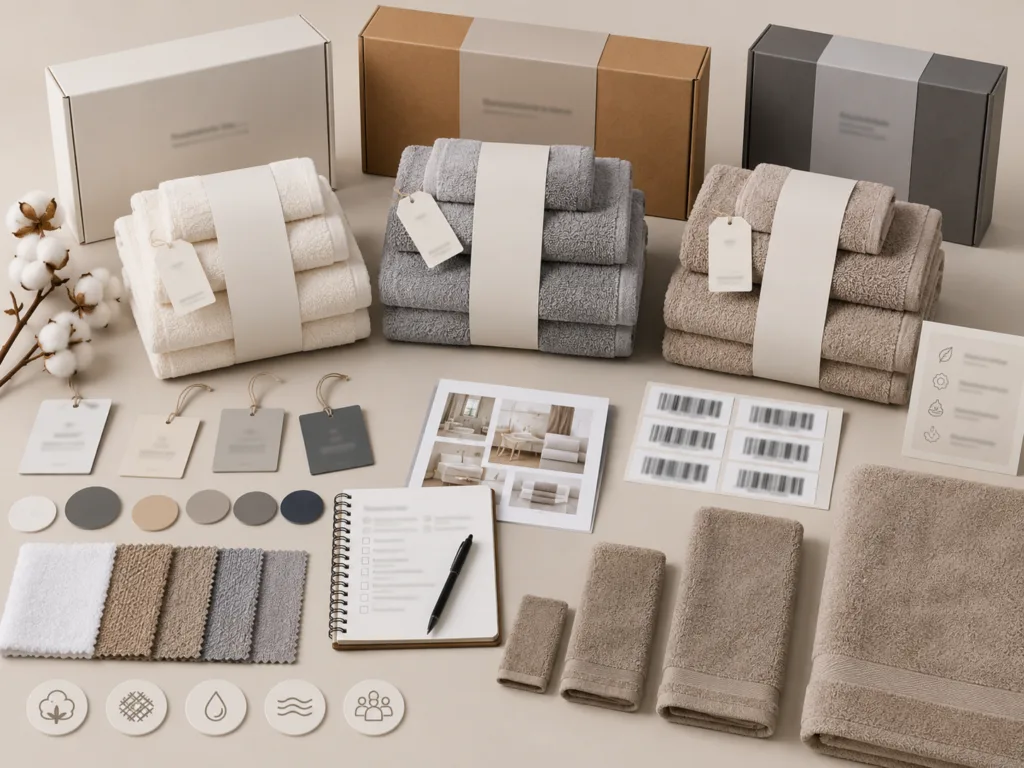
One common misunderstanding in towel sourcing is the difference between OEKO-TEX certification and organic cotton.
They answer different questions.
Organic cotton focuses on the origin and cultivation of the cotton fiber. OEKO-TEX STANDARD 100 focuses on testing textiles for harmful substances. A towel can be made from organic cotton without being OEKO-TEX certified. A towel can also be OEKO-TEX certified without being made from organic cotton.
For B2B buyers, the simplest way to explain the difference is this:
Organic cotton tells you more about where the fiber comes from. OEKO-TEX tells you more about whether the textile has been tested for harmful substances.
This distinction matters when writing product descriptions, Amazon listings, retail packaging, or hotel procurement documents. Buyers should avoid mixing certification claims. If the towel is not organic cotton, do not describe it as organic. If the towel does not have a valid OEKO-TEX certificate, do not market it as OEKO-TEX certified.
Mature buyers care about accurate claims because inaccurate wording can create compliance and reputation problems.
OEKO-TEX STANDARD 100 vs MADE IN GREEN
Another useful distinction is between OEKO-TEX STANDARD 100 and OEKO-TEX MADE IN GREEN.
STANDARD 100 is mainly related to harmful substance testing for textiles. MADE IN GREEN goes further. OEKO-TEX states that MADE IN GREEN labeled textiles are produced more sustainably in socially responsible workplaces, are traceable, and are tested for harmful substances.
For many standard B2B towel projects, STANDARD 100 may be the most practical certification to discuss first. This applies to hotel towels, spa towels, retail towel sets, gym towels, beach towels, and custom logo towels.
For premium retail brands, European buyers, sustainability-focused chains, or buyers with stricter ESG requirements, MADE IN GREEN may become more relevant because it connects product safety with traceability and responsible production conditions. Hohenstein describes MADE IN GREEN as a traceable product label that combines safe product certification with responsible process certification.
The key for buyers is not to ask for “all certificates” blindly. The right question is: which certification is commercially necessary for the market, sales channel, product positioning, and order budget?
Which Towel Products Can Be OEKO-TEX Certified?
OEKO-TEX certified towels can apply to many towel categories, depending on the supplier’s certified product scope. Common B2B towel products include:
Bath towels
Hand towels
Face towels
Hotel towels
Spa towels
Gym towels
Beach towels
Pool towels
Baby towels
Kitchen towels
Cotton towels
Microfiber towels
Custom logo towels
Retail towel sets
Promotional towels
Resort towels
For B2B buyers, the category alone is not enough. You should confirm whether the actual product you are buying is covered by the supplier’s certificate. A white cotton bath towel may be covered, but a dark dyed towel with embroidery may need additional confirmation. A plain towel may be covered, but a towel with printed artwork, jacquard logo, custom label, or special packaging claim may require a more careful check.
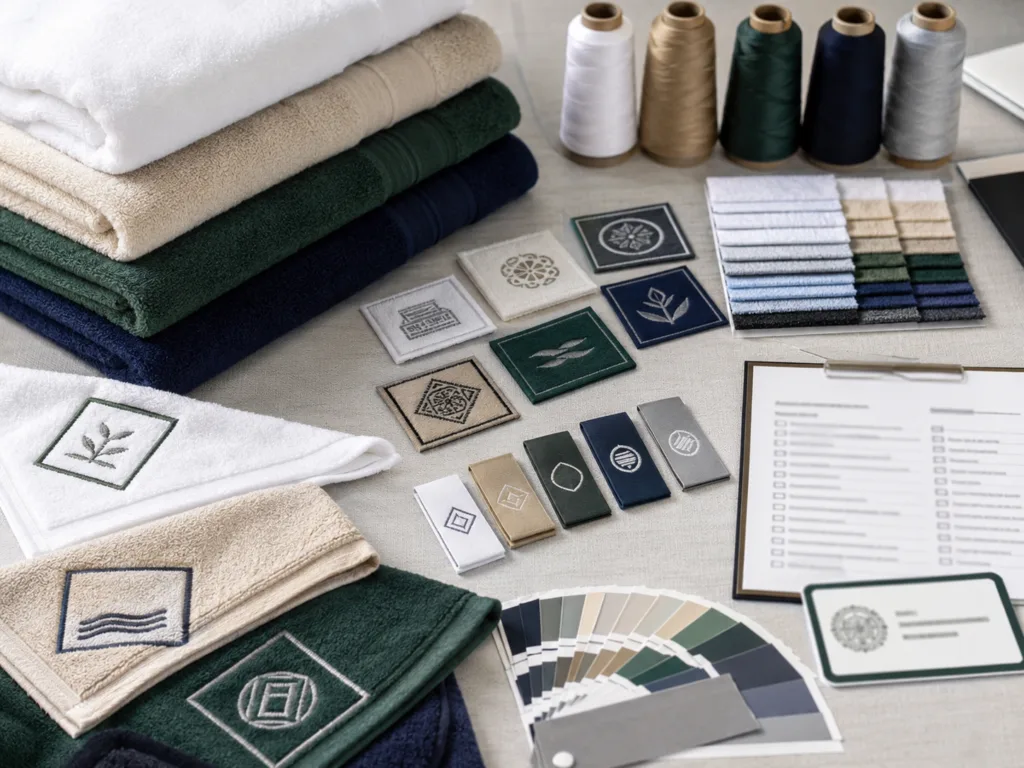
This is especially important for private label orders. When buyers add custom colors, logo embroidery, screen printing, woven labels, hang tags, or retail packaging, the finished product becomes different from a standard stock towel.
How to Verify OEKO-TEX Certified Towels Before Ordering
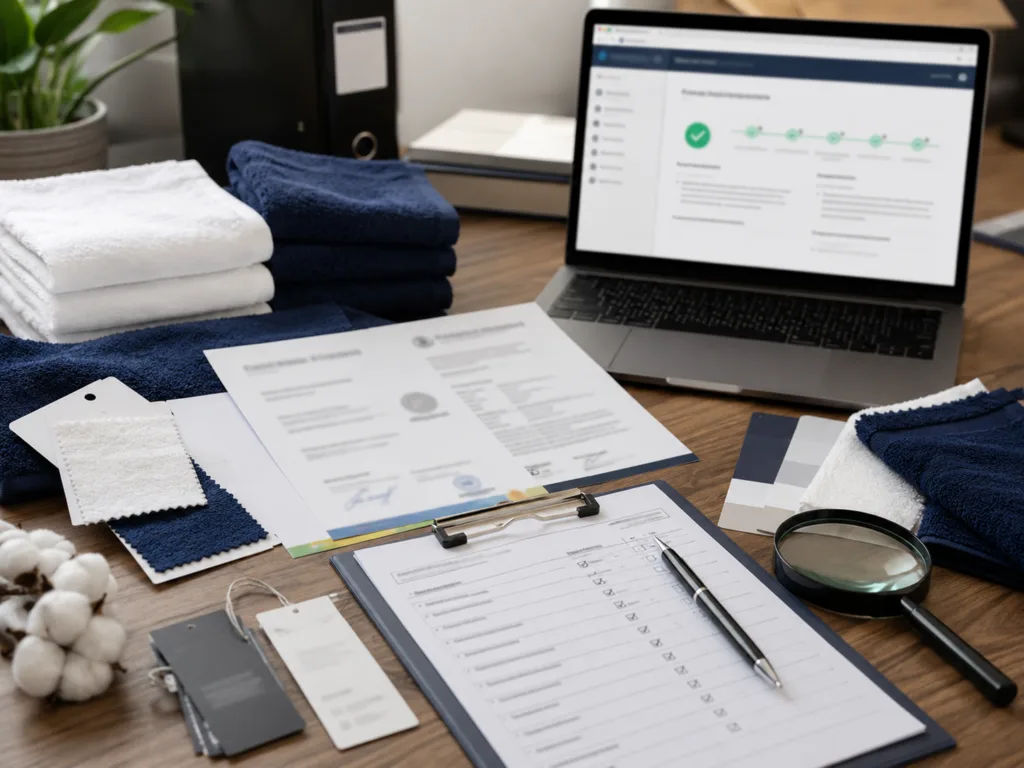
A serious B2B buyer should never rely only on a supplier’s product image or sales message. Before placing a bulk order, ask for documentation and verify it carefully.
Here is a practical verification checklist.
1. Ask for the Certificate Number
A real OEKO-TEX certificate should have a certificate or label number. OEKO-TEX provides a Label Check tool where buyers can enter the label number to check whether it is official.
If a supplier cannot provide a certificate number, treat that as a warning sign.
2. Check the Certificate Holder
The certificate holder may be the towel factory, fabric mill, dyeing facility, or another company in the supply chain. Buyers should check whether the certificate holder is connected to the product being offered.
If the supplier is a trading company, that is not automatically a problem. Many professional exporters work with certified mills or factories. But the supplier should be able to explain whose certificate it is and how it applies to the towel order.
3. Match the Product Scope
This is one of the most important steps. The certificate should cover the relevant product type. For example, if you are buying cotton bath towels, the certificate scope should be relevant to cotton terry towels or similar textile products.
Do not assume that one certificate covers all towel products, all colors, all materials, or all custom processes.
4. Check the Validity Period
STANDARD 100 certificates are valid for 12 months and can be renewed annually, according to Hohenstein.
An expired certificate should not be treated as valid proof for a new order. Always check the current validity before confirming bulk production.
5. Confirm Finished Product Coverage
For finished towel labeling, the final product and each component must be tested, according to Hohenstein’s STANDARD 100 facts.
This means buyers should ask whether embroidery thread, sewing thread, printed logo, border decoration, labels, and other components are included if they will be part of the finished towel.
6. Confirm Label Usage Rights
Even if a towel is made from certified material, buyers should not automatically print the OEKO-TEX label on packaging, hang tags, or product pages. OEKO-TEX label use has rules, and buyers should confirm whether the specific product and supplier arrangement allow label usage. Hohenstein also provides guidance for correctly referencing OEKO-TEX certification and using labels and logos.
For retail buyers and Amazon sellers, this is especially important. Incorrect certification claims can create listing problems and customer trust issues.
Common Mistakes When Buying OEKO-TEX Certified Towels
Mistake 1: Assuming One Factory Certificate Covers Everything
A factory may have OEKO-TEX certification for certain towel products, but not all products. Different materials, colors, dyeing methods, or custom finishes may not be covered.
Mistake 2: Checking the Certificate Too Late
Some buyers ask about certification only after sample approval or just before shipment. This is risky. Certification requirements should be discussed before quotation and sampling because they may affect available materials, MOQ, price, lead time, and labeling.
Mistake 3: Ignoring Custom Logo Methods
Custom logo towels are popular for hotels, resorts, gyms, spas, and retail brands. But embroidery, jacquard weaving, screen printing, digital printing, woven labels, and special packaging may affect the final product scope.
A mature buyer should ask: Is the logo method compatible with the certification requirement? Are the threads or inks covered? Can the finished towel still be marketed as OEKO-TEX certified?
Mistake 4: Confusing OEKO-TEX With “Natural” or “Organic”
OEKO-TEX certified does not automatically mean organic, biodegradable, recycled, or plastic-free. Each claim needs its own proof. Buyers should use precise language to avoid misleading claims.
Mistake 5: Choosing the Cheapest Supplier Without Documentation
For large towel orders, the cheapest option is not always the safest. A low price may hide unstable dyeing, inconsistent GSM, poor absorbency, weak stitching, packaging problems, or unclear certification status. For mature buyers, the better supplier is often the one who can balance price, quality, documentation, production stability, and communication.
What B2B Buyers Should Ask a Towel Supplier
Before placing an order for OEKO-TEX certified towels, buyers should ask:
Are these towels OEKO-TEX STANDARD 100 certified?
Can you provide the certificate number for verification?
Does the certificate cover the finished towel or only the fabric?
Which towel materials, GSM, sizes, and colors are covered?
Are embroidery, printing, sewing thread, and labels included?
Can the OEKO-TEX label be used on retail packaging?
Will certification requirements affect MOQ or lead time?
Can you support pre-production samples before bulk order?
Can you provide quality inspection photos before shipment?
Do you support export packing for retail, hotel, or wholesale channels?
These questions help separate professional suppliers from sellers who only use certification words as decoration.
What a Reliable B2B Towel Supplier Should Provide
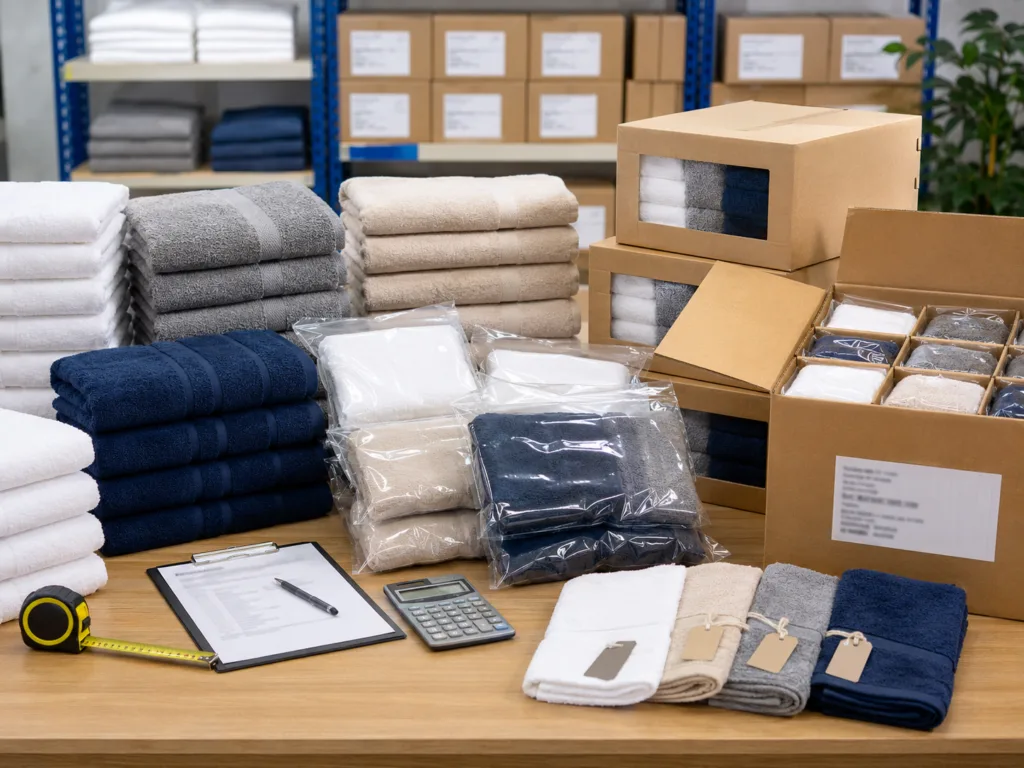
A reliable towel supplier should not only say “yes, we can do it.” For mature buyers, a good supplier should help clarify the whole order path.
For OEKO-TEX certified towel projects, a professional supplier should be able to support:
Material selection based on target market
GSM recommendation based on product use
Size options for hotel, spa, beach, gym, or retail towels
Color matching and dyeing feasibility
Custom logo evaluation
Certificate checking and product scope confirmation
Sample development before bulk production
Bulk production quality control
Packing options for retail or wholesale
Export carton planning
Pre-shipment inspection support
Clear communication about MOQ, price, and lead time
This is where supplier experience matters. A towel for a luxury hotel is different from a promotional gym towel. A retail towel set is different from a resort pool towel. A baby towel requires different sensitivity from a general beach towel. A private label towel with packaging claims requires more careful document control than an unbranded wholesale towel.
Final Buying Advice: Certification Is Not a Shortcut, It Is a Filter
OEKO-TEX certification does not replace good sourcing judgment. Buyers still need to check towel quality, absorbency, softness, lint performance, color fastness, stitching, weight tolerance, packaging, and shipment reliability.
But certification is a strong filter.
It helps buyers identify suppliers who understand product safety, documentation, and international market expectations. It reduces the risk of relying on empty “eco-friendly” claims. It gives hotels, retailers, importers, Amazon sellers, and private label brands a clearer basis for product communication.
For B2B towel buyers, the best approach is simple: confirm certification early, verify the certificate number, match the product scope, check custom processes, and work with a supplier who can explain the details before production begins.
If you are sourcing OEKO-TEX certified towels for hotels, spas, retail stores, resorts, gyms, or private label projects, the goal is not just to buy a towel. The goal is to build a safer, more reliable, and more marketable towel product line that your customers can trust.
FAQ
1. Are OEKO-TEX certified towels the same as organic cotton towels?
No. OEKO-TEX certification and organic cotton certification are different. Organic cotton focuses on fiber origin, while OEKO-TEX STANDARD 100 focuses on testing textiles for harmful substances.
2. Can custom logo towels be OEKO-TEX certified?
Yes, but buyers should confirm whether the finished towel is covered, including embroidery thread, printing ink, sewing thread, labels, or other customized components.
3. How can I verify if an OEKO-TEX certificate is real?
You can use the official OEKO-TEX Label Check tool by entering the certificate or label number. The label number is case sensitive, so it should be entered exactly as provided.
4. Do OEKO-TEX certified towels cost more?
They may cost more depending on material, dyeing, finishing, certification scope, MOQ, and custom logo requirements. For B2B buyers, it is best to confirm certification needs before sampling and quotation.