
Overview of Towel Types and Their Core Functions
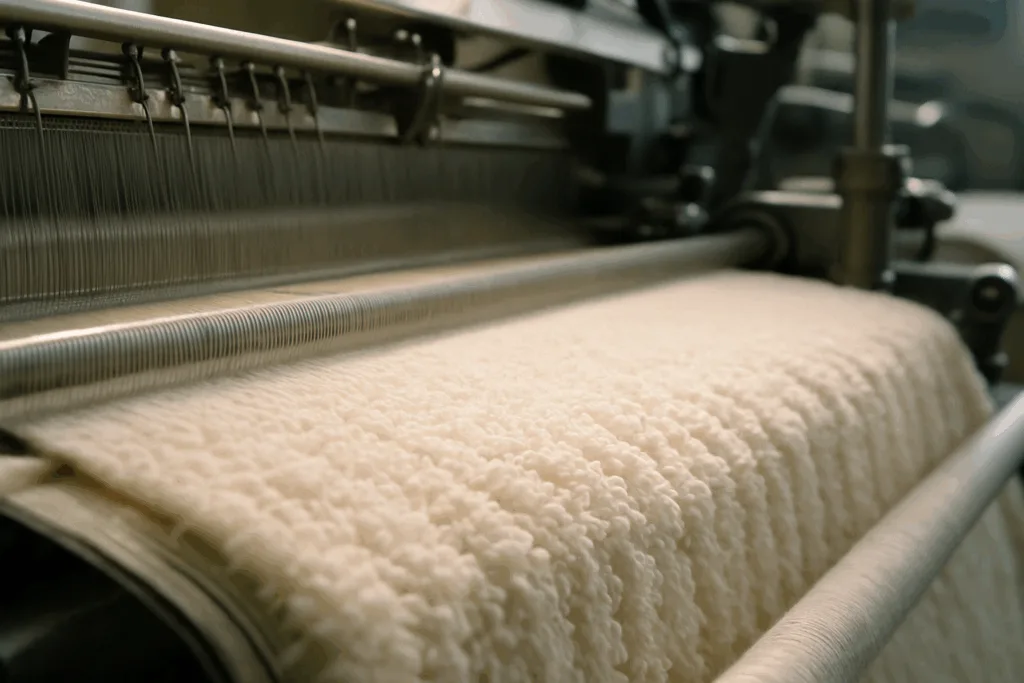
Bath Towels: The Everyday Essential
Bath towels serve as the main drying towel post-shower or bath, primarily valued for surface area and absorbency. They are designed to cover the body, requiring high durability, quick-dry capability, and supreme softness.
Hand Towels: The Practical Companion
Hand towels are intended for drying hands and face after washing, frequently positioned in bathrooms and powder rooms. Their moderate GSM and size optimize single-use absorbency without excess bulk.
Face Towels: The Gentle Detail
Face towels, sometimes called washcloths, focus on facial cleaning or makeup removal. These require soft fibers and controlled pile construction to minimize irritation, with high colorfastness to resist frequent laundering.
Key Manufacturing Specifications: Size, GSM, Fibers
Standard Sizes by Towel Type
- Bath towels: 60×120 cm to 70×140 cm (some luxury up to 100×150 cm)
- Hand towels: 30×50 cm to 40×75 cm
- Face towels: 30×30 cm to 35×35 cm
GSM (Grams per Square Meter)
GSM reflects fabric density and impacts absorbency, handfeel, and drying time:
- Face towels: 300–550 gsm for gentle texture and rapid dry
- Hand towels: 350–550 gsm for balance between weight and absorbency
- Bath towels: 450–700 gsm for full coverage, plushness, and slow dry
Fiber Selection: Combed Cotton, Bamboo, Microfiber
Manufacturers select fibers based on cost, application, and desired properties:
- Long-staple combed cotton: Supreme softness, low lint, high absorbency
- Egyptian/Turkish cotton: Known for exceptional handfeel and durability
- Bamboo/cotton blends: Added antibacterial properties, quicker dry
- Microfiber: Fast-drying, lightweight, popular for sports towels
Towel Constructions and Weave Techniques
Terry Loop Weave and Technical Details
Terry loops dominate towel manufacturing, leveraging loop height and density to optimize absorbency and softness. Bath towels commonly feature double terry for plushness, while hand and face towels may use single terry or low-twist yarns for a lightweight finish. Jacquard and dobby borders add structural interest and resilience along the edges.
Alternative Weaves
- Waffle/Honeycomb: Lightweight, quick-dry, used for hand and face towels
- Velour/Sheared: Luxurious feel, often reserved for decorative hand towels and exclusive bath sets
Spinning Methods: Impact on Texture and Strength
Ring-spun yarns create more refined, durable threads for bath and hand towels, while open-end spinning is cost-efficient for lower GSM products. Manufacturers control pile ratio and selvage integrity to reduce snagging and extend towel longevity.
Comparison Table: Manufacturing Metrics for Bath, Hand, and Face Towels
| Towel Type | Standard Size (cm) | GSM Range | Recommended Fiber | Construction/Weave | Absorbency (sec, AATCC 79) | Dry Time | Best Use Scenario |
|---|---|---|---|---|---|---|---|
| Bath Towel | 70×140 | 450–700 | Combed/Egyptian Cotton | Double Terry, Jacquard Border | <10 | Moderate | Home, Hotel, Spa |
| Hand Towel | 35×75 | 350–550 | Bamboo/Cotton Blend | Single Terry, Dobby Edge | <13 | Fast | Bathroom, Guest Washrooms |
| Face Towel | 30×30 | 300–400 | Superfine Cotton/Microfiber | Low-Twist Terry, Waffle | <15 | Very Fast | Facial Care, Beauty, Gym |
Finishing, Dyeing, and Colorfastness Standards
Dyeing Methods: Reactive, Vat, Sublimation
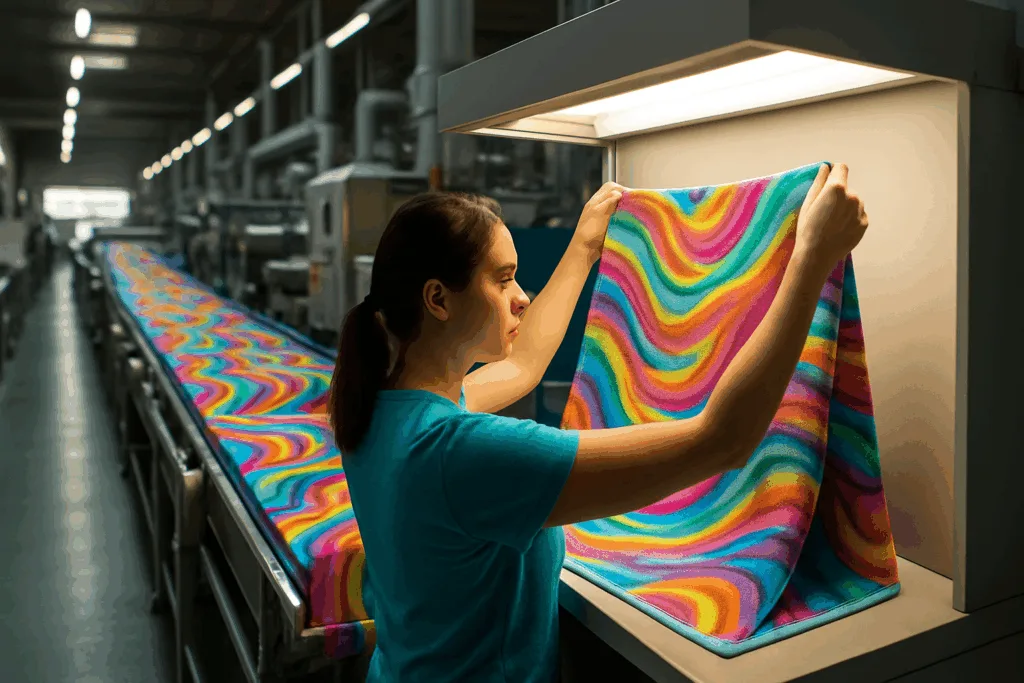
For premium bath and hand towels, manufacturers employ reactive or vat dyeing for lasting vibrance and wash resistance (AATCC 61/8). Yarn-dyeing offers fade-proof stripes, while digital and sublimation printing suit logo and promotional programs, especially for microfiber accessories.
Chemical and Mechanical Finishing
- Enzyme wash: Softens pile, reduces pilling
- Silicone softeners: Delivers lasting handfeel
- Low-VOC formulas: Ensures compliance with OEKO-TEX STANDARD 100 and REACH
- Antimicrobial processes: Non-branded, used for spa and beauty face towels
Laundering Performance: Absorbency, Shrinkage, and Color Stability
Quality assurance relies on absorbency tests (AATCC 79), dimensional change evaluation (AATCC 135/150), and colorfastness to laundering and chlorine (AATCC 61/162). Premium towels maintain color and shape after 50+ washes, with pilling and lint shedding controlled by fiber quality and finishing method.
Edge Details, Embellishments, and Customizations
Dobby and Jacquard Borders
Edge reinforcements prevent fraying and maintain dimensional stability. Custom dobby borders elevate hand towel aesthetics, while unembellished hems are standard for face towels to ensure softness against the skin.
Embroidery, Branding, and Special Applications
- Personalized embroidery (hotel, spa, promotional use)
- Digital print for logos or high-color beach towels
- Hanger loops for easy bathroom storage
Compliance, Sustainability, and Institutional Standards
Certifications and Audit Protocols
Leading manufacturers like Circe Towel follow international guidelines: OEKO-TEX STANDARD 100 for chemical safety, BSCI and WRAP for social responsibility, GOTS for organic cotton, and SEDEX for ethical sourcing. OEKO-TEX certification assures buyers towels are free from harmful substances.
Environmental Stewardship and Water Usage
- Water-conserving dyehouses, effluent control
- Low-energy tumble finishers for softening
- Compostable poly packaging initiatives for B2B bulk orders
Packaging & Logistics: Bulk Manufacturing Efficiency
Bulk Packing Options
- Belly bands and recyclable sleeves
- Vacuum-packed options for storage and transport savings
- Carton configurations designed for reduced shipping costs
Sampling to Bulk Workflow
Professional towel manufacturers execute precise workflows: initial sample approval, pre-production (PP) sample review, top-of-production (TOP) inspection, and final bulk shipment. Logistics adhere to Incoterms (FOB, CIF, DDP), ensuring global buyers receive defect-free, compliant towels on schedule.
Bath Towel vs Hand Towel: Buyer Guidance
Choosing the Right Towel Type
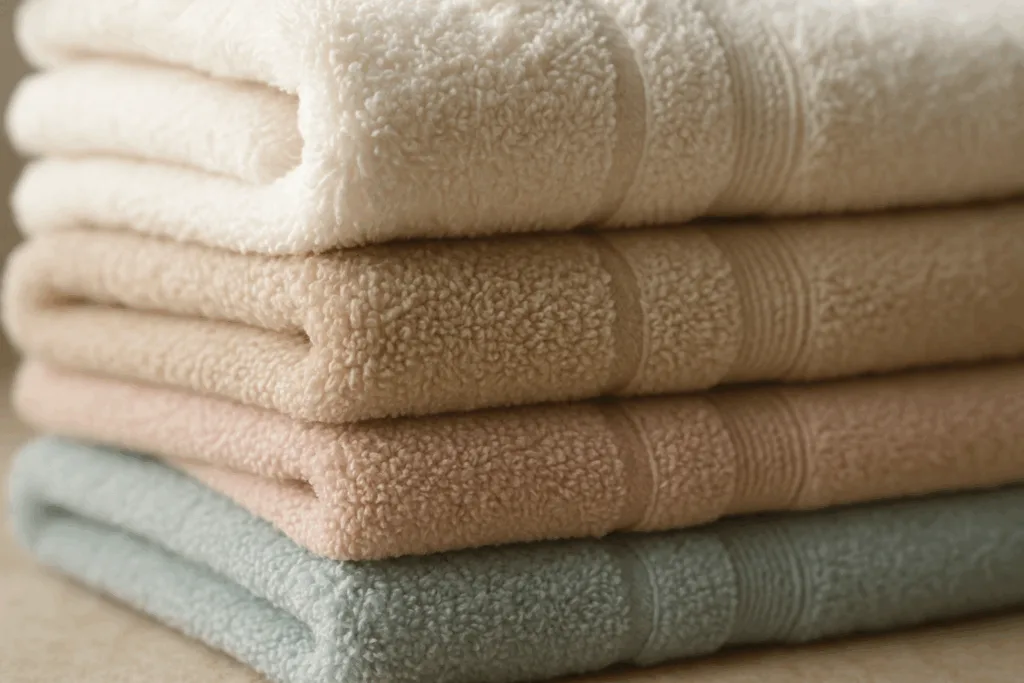
When deciding between bath towels and hand towels for home, hospitality, or institutional use, compare GSM, fiber choice, and intended application. Bath towels offer superior body coverage and absorbency, while hand towels provide efficiency for high-turnover environments. Circe Towel advises buyers to specify GSM and fiber preferences upfront—optimizing for budget, branding, and guest comfort.
Custom Specifications for Commercial Orders
- Specify GSM based on desired plushness and drying time
- Select border style (dobby/jacquard) for branding and durability
- Request certified sustainable options or special finishes as needed
Frequently Asked Questions
What is the main difference between bath towels, hand towels, and face towels?
Bath towels are larger and heavier for full body drying, hand towels are mid-sized for drying hands, and face towels are small and gentle, suitable for facial cleansing.
How does GSM affect towel performance?
Higher GSM means denser, more absorbent towels with a plusher feel; lower GSM towels are lighter, quicker to dry, and best for frequent laundering.
Which fiber types offer the best durability for towels?
Long-staple combed cotton and Egyptian cotton provide superior durability, with bamboo blends offering antibacterial properties and enhanced softness.
How do manufacturers ensure colorfastness in towels?
Manufacturers use reactive and vat dyeing, along with rigorous AATCC washing and colorfastness tests, to maintain vibrancy through repeated laundering.
What certifications should buyers request for bulk towel orders?
Buyers should look for OEKO-TEX STANDARD 100, GOTS for organic options, and BSCI/WRAP for ethical manufacturing practices.
Can towels be customized with logos or special finishes?
Yes, towels can feature embroidered or digitally printed logos, unique borders, hanger loops, and finishes like antibacterial treatment based on buyer needs.