
Combed vs. Ringspun Cotton Towels: What’s the Difference?
When searching for high-end towels, the choice between combed cotton towels and ringspun towels often shapes your overall experience. Each yarn type brings unique benefits in terms of softness, absorbency, durability, and cost. Understanding the differences between these two textile spinning processes is key for buyers aiming to select luxury towels for hotels, spas, homes, or promotional events. Below, we unravel how combed and ringspun cotton yarns are made—and how each influences the end product’s performance and value.
Understanding Towel Yarn Types
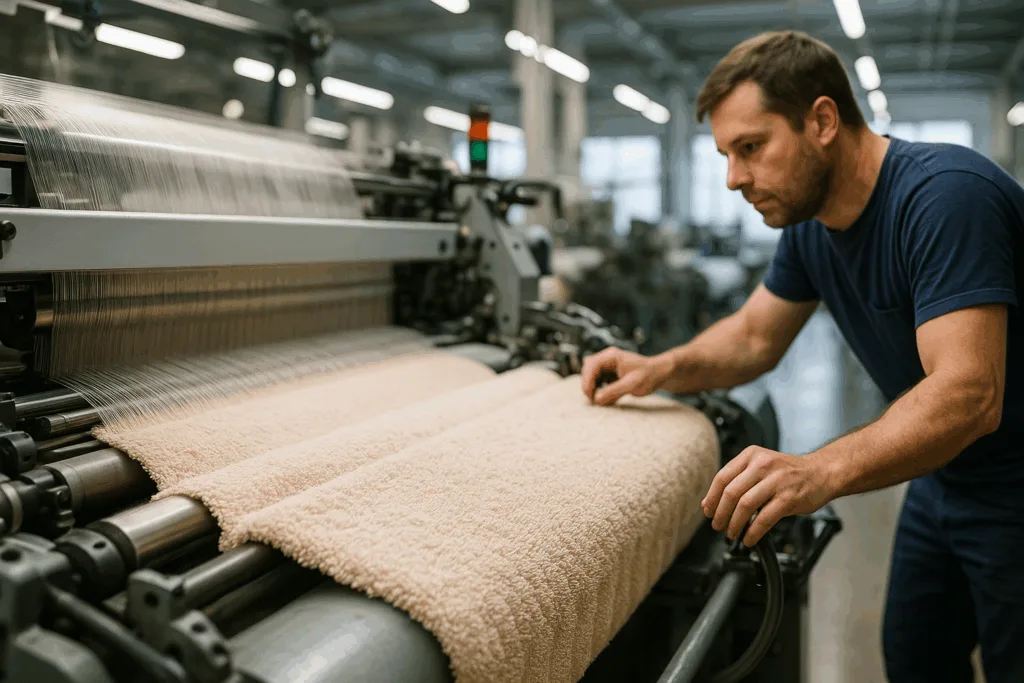
The quality of a towel starts with its yarn. Manufacturers like Circe Towel use refined processes to select, clean, and spin cotton fibers for optimal handfeel and functional properties. Yarn type influences everything from absorbency and softness to longevity and colorfastness.
Main Yarn Types Used in Towels
- Combed Cotton: Produced by removing short fibers through combing for enhanced smoothness.
- Ringspun Cotton: Twists long and short fibers together for stronger, finer yarn.
- Open-end Cotton: Lower-cost, bulkier yarn mainly for economy towels.
- Bamboo/Cotton Blends: Often ringspun; boost softness and antimicrobial traits.
- Microfiber: Poly/nylon for quick-dry gym and beach towels.
Combed Cotton Towels: Process and Features
Combed cotton towels start with a meticulous fiber selection process. Only long-staple cotton is chosen for its superior length and strength. The raw cotton is then combed—a high-speed process that removes short, weak fibers using fine brushes. What remains are fibers of uniform length, resulting in yarn with fewer impurities and enhanced smoothness.
Manufacturing Steps
- Selection: Premium long-staple cotton (e.g., Egyptian, Turkish, GOTS-certified organic) is sourced.
- Combing: Short fibers and impurities are extracted using fine combs.
- Spinning: Only long, strong fibers are spun into yarn with minimal twists for softness.
- Weaving: High-density terry loops or jacquard designs are woven for plushness and absorbency.
- Dyeing & Finishing: Reactive dyeing methods are applied for colorfastness, followed by enzyme wash for extra softness.
Combed Cotton Towel Properties
- Softness: Ultra-smooth surface due to lack of short fibers and fewer protruding ends.
- Absorbency: Even loop structure promotes fast, full water uptake.
- Durability: Resist pilling and linting, meeting high standards like ASTM D3512 for pilling, and OEKO-TEX STANDARD 100 compliance.
- Premium Feel: Luxurious, ideal for upscale hospitality.
Ringspun Cotton Towels: Method and Merits
Ringspun cotton uses a different approach. Both long and short cotton fibers are tightly twisted together. This multi-fiber spinning—often done on ring frames—produces a finer, stronger, and smoother yarn than open-end spinning. Most quality towel manufacturers, including Circe Towel, prefer ringspun for mid- to high-tier products.
Manufacturing Steps
- Selection: Long and short staple cottons are mixed for a wider fiber range.
- Carding: Preliminary cleaning removes foreign matter, prepping fibers for spinning.
- Ringspinning: Fibers are drawn, twisted, and wound at high speed to form strong, continuous yarn.
- Weaving: Terry and jacquard looms set loop density and pile height for target softness and absorbency.
- Dyeing & Finishing: Piece dyeing or yarn dye for stripes; finishing enhances handfeel and color stability.
Ringspun Cotton Towel Properties
- Soft-but-Durable: Twisting delivers balanced handfeel and strong tensile properties (ASTM D5034).
- Good Absorbency: Fine loops manage rapid wicking but may retain more water post-use, increasing dry time.
- Pilling Resistance: Higher than open-end, but slightly lower than combed due to fiber mix.
- Cost-Effective: Quality rivaling combed cotton, with scalable production and pricing.
Comparative Table: Combed vs. Ringspun Cotton Towels
| Feature | Combed Cotton Towels | Ringspun Cotton Towels |
|---|---|---|
| Fiber Type | 100% long-staple, combed | Long & short staple, carded |
| Yarn Prep | Short fibers removed; uniform | All fibers twisted together |
| Handfeel | Very soft, smooth, luxurious | Soft, substantial, slightly textured |
| Absorbency | Highest; quick wicking | High; fast wicking, moderate retention |
| Durability/Lint | Resist pilling, low lint | Good; moderate resistance |
| Dry Time | Faster (less water trapped) | Standard (denser loops retain water) |
| Cost | Premium (higher fiber/refinement costs) | Mid-range (cost efficient) |
| Best Use Cases | Luxury hotels, spas, premium gifts | Hotels, gyms, home, mass promo |
Benefits and Drawbacks of Each Towel Yarn Type
Combed Cotton Towels: Advantages
- Unmatched softness and comfort—ideal for sensitive skin.
- Superior durability and reduced pilling; withstands repeated industrial laundering (Circe Towel tests meet ISO 12945 for pilling).
- Faster dry time; reduces mustiness in humid climates.
Combed Cotton Towels: Disadvantages
- Higher price—premium fiber and processing cost.
- More limited supply; longer lead times on bulk orders.
Ringspun Cotton Towels: Advantages
- Balanced softness and strength; feels substantial yet gentle.
- Cost-effective for high-volume B2B orders with consistent quality.
- Reliable durability; ideal for varied hospitality and gym settings.
Ringspun Cotton Towels: Disadvantages
- May show light pilling after extensive use.
- Slightly more lint shedding compared to combed cotton, especially in early washes.
Weaves, GSM, and Construction: Refining Towel Performance
Spinning is only part of the equation. The towel’s weave, GSM (grams per square meter), loop height, and density all help define absorbency, softness, and durability. For example, combed cotton loops woven at 650 gsm assure hotel-grade plushness, while ringspun cotton terry towels at 500 gsm suit frequent usage in gyms or resorts.
Common Constructions in Premium Towels
- Terry Loop (single/double): Deep pile for absorbency, commonly seen in luxury bath sheets.
- Zero-twist/Low-twist: Softer handfeel, with rapid dry.
- Jacquard: Patterned luxury, often used in high-end circles and branding projects.
- Velour: Sheared surface for plush look; less absorbent, great for showpiece towels.
- Dobby Border: Classic woven edging, increases visual appeal and seam strength.
- Waffle/Honeycomb: Lightweight, dries quickly; popular in spa/sauna.
GSM Guide: Matching Thickness and Use
- Face/Hand Towels: 350–500 gsm
- Bath Towels: 500–650 gsm
- Bath Sheets: 650–900 gsm
- Microfiber Sports: 180–300 gsm
Expert Take: Circe Towel’s Approach to Premium Manufacturing
“Circe Towel sources long-staple cottons for combed towel lines, blending advanced combing and ringspinning techniques to maximize softness, strength and absorbency for every application, from spa luxury to rugged gym demand.”
Specialized finishing, like enzyme softening and reactive dyeing, protect color and handfeel from wash to wash. All Circe Towel products are OEKO-TEX certified and meet international quality tests, ensuring reliability and sustainability in every bulk order.
Choosing the Right Towel Yarn for Your Needs
For hoteliers, spas, gyms, and retailers, the decision often balances softness, resilience, cost, and brand image. Combed cotton towels are ideal if ultimate plushness and longevity matter most—especially for premium settings or discerning clients. Ringspun cotton towels offer outstanding value and versatility, with solid durability for everyday use and large-scale orders.
Buyer Guidance
- Assess your target guests or users: Is luxury the main driver, or do you need cost-efficient durability?
- Check desired sizes and GSM based on usage scenario: Hand towel (300–450 gsm) versus bath sheet (650+ gsm).
- Review supplier quality protocols: Reliable brands like Circe Towel can share test reports for colorfastness and durability.
- Consider sustainability: Ask about OEKO-TEX and GOTS certification, eco-friendly dyeing, and compostable packaging.
Whether sourcing towels for boutique hotels or nationwide chain gyms, clarifying fiber, spin, and weave yields the best results across softness, absorbency, and long-term operational savings.
Applications and Customization: Bath, Gym, Spa, Hotel, and Beyond
Today’s markets demand towels tailored to niche needs, from logo-embroidered bath sheets for luxury suites to branded ringspun gym towels. Manufacturers offer an array of options:

- Custom embroidery and woven labels for hotel and promotional programs.
- Varied dyeing: Piece-dye for solid colors, yarn-dye for vibrant stripes, and digital print for beach towels.
- Finishing touches: Anti-pilling treatments, pre-shrunk fabrics, silicones for extra softness, antimicrobial finishes for gym towels.
- Eco-packaging: Compostable polybags, ribbon wraps, vacuum packs, and bespoke cartons align with sustainable service values.
Packaging and Incoterms (EXW, FOB, CIF, DDP) affect logistics, cost, and global delivery speed. Sampling protocols—from lab-dip to PP sample, TOP, and bulk—ensure bulk orders match approved standards.
Towel Quality and Compliance: Testing and Assurance
Premium towel brands monitor quality at every step. Testing meets international standards:
- Absorbency: AATCC 79 vertical wicking for fast-dry towels.
- Colorfastness: AATCC 61, AATCC 8 for washing/crocking, chlorine resistance (AATCC 162).
- Pilling Resistance: ISO 12945 standards.
- Tensile/Seam Strength: ASTM D5034, ASTM D1683.
- Sustainability: OEKO-TEX STANDARD 100, GOTS (for organic cotton), BSCI audits.
Brands like Circe Towel invest in these protocols, delivering confidence and peace of mind for every shipment.
Combed vs. Ringspun Cotton Towels: What’s the Difference?
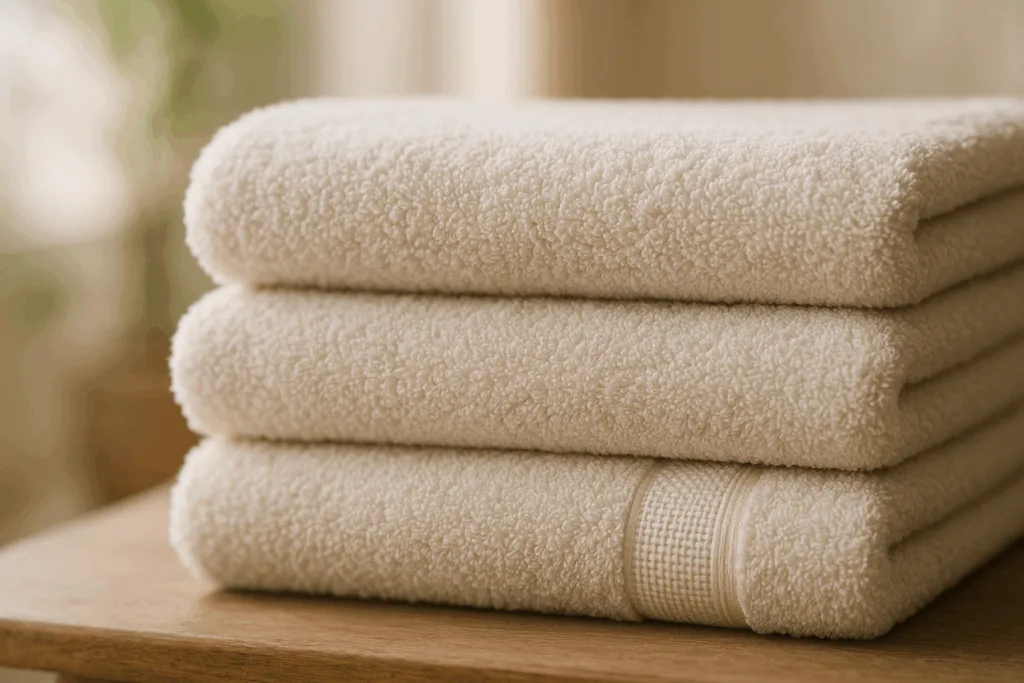
To sum up, combed cotton towels stand out for their silkier softness, faster dry time, and elite durability—making them the go-to for upscale settings. Ringspun cotton towels deliver balanced softness and strength at a more accessible price for broader markets. Knowing the difference in yarn types and construction helps buyers align purchases with brand goals, guest expectations, and long-term operational value.
Frequently Asked Questions
What is combed cotton, and why is it used in towels?
Combed cotton is made by removing short fibers from long-staple cotton, producing cleaner, stronger, and softer yarn ideal for luxury towels with less pilling and greater longevity.
How are ringspun towels different from combed cotton towels?
Ringspun towels are made by twisting together long and short fibers, creating a fine, durable yarn. They are softer and stronger than open-end towels but may be less plush than combed cotton towels.
Are combed cotton towels more absorbent than ringspun towels?
Combed cotton towels usually offer slightly higher absorbency due to their longer, cleaner fibers and uniform loop structure, allowing for faster water uptake and dry time.
Which type is more durable for hotels and spas?
Combed cotton towels excel in durability and resistance to pilling, making them best for luxury hotels and spas. Ringspun cotton towels also provide reliable durability, especially for high-turnover environments.
Can I customize combed or ringspun towels with my logo?
Yes, both combed and ringspun towels support custom embroidery, woven labels, and various dyeing or printing options for branding, as offered by manufacturers like Circe Towel.
How do I select the best towel yarn for bulk orders?
Consider the intended use, required softness, durability, cost, and supplier certifications like OEKO-TEX or GOTS. Discuss yarn type and finishing options with your manufacturer to match your market needs.