
Understanding Cotton Fiber Quality in Towel Manufacturing
The foundation of every superior towel lies in the quality of its cotton fibers. Cotton towel manufacturing demands a detailed approach, where the length, purity, and type of fiber drive the softness, absorbency, and resilience of the final product. Leading manufacturers like Circe Towel meticulously assess every batch, prioritizing long-staple combed cotton, Egyptian cotton, and certified organic cotton for optimal performance. But why do these selections matter?
Cotton Fiber Categories
- Long-Staple Cotton: Smoother, longer fibers with fewer ends, resulting in ultra-soft, low-lint towels.
- Egyptian Cotton: Renowned for its silky touch, high absorbency, and robust durability.
- Organic Cotton: Grown without synthetic chemicals, offering purity and sustainability.
Why Fiber Length Matters
Longer fibers produce less lint, yield a denser weave, and retain plushness wash after wash. Manufacturers measure staple length using calibrated micronaire instruments and visual sorting. Short-staple or mixed grades often lead to rougher, less durable towels with higher pilling risk.
Expert Takeaway
The secret to a luxuriously soft towel isn’t just more cotton—it’s better cotton, thoughtfully selected for every intended use. — Circe Towel Product Development Team
The Impact of Cotton Grade on Towel Softness
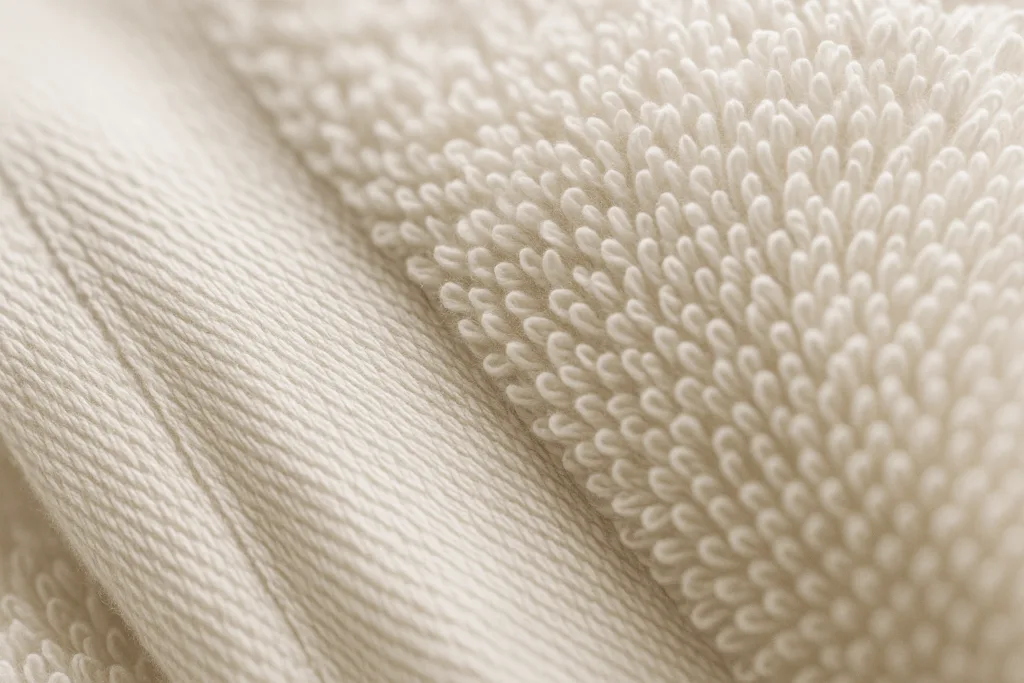
Towel softness results from a seamless blend of fiber quality, spinning technology, and finishing processes. Premium grades such as long-staple and Egyptian cotton consistently outperform standard upland types in tactile softness.
Softness Benchmarks: Measuring Real Feel
Representatives from top hotels and spas often cite Circe Towel’s bath sheets and hand towels for their cloud-like touch—a direct outcome of rigorous fiber selection. Methods such as ring-spinning amplify softness by straightening fibers and minimizing rough ends, while enzyme and silicone finishing further refine the handfeel.
Comparing Key Cotton Types and Softness Outcomes
| Cotton Type | Staple Length | Weave | GSM Range | Softness | Absorbency | Resilience | Best Use |
|---|---|---|---|---|---|---|---|
| Long-Staple Combed | 35–45 mm | Terry, Zero-twist | 500–700 | Ultra-plush | Very high | Excellent | Luxury hotel/spa, home |
| Egyptian Cotton | Greater than 38 mm | Double-loop, Velour | 600–900 | Silky-soft | Top-tier | Superior | Upscale hospitality, bath sheets |
| Organic Cotton | 32–38 mm | Low-twist, Dobby | 450–700 | Soft & natural | High | Good | Eco hotels, baby towels |
How Cotton Quality Affects Towel Softness and Durability
The interplay between cotton quality and towel performance is at the core of Circe Towel’s design strategy. High-grade cotton fibers enable manufacturers to produce towels that maintain their structure and handfeel throughout extensive hotel and spa laundry cycles. Inferior cotton grades, however, lose softness swiftly and are prone to yarn breakage, pilling, or color fading after repeated washing.
Technical Details Linking Cotton Quality to Towel Longevity
- Low-Pilling: Long fibers resist friction, reducing surface fuzz and prolonging smoothness.
- Tensile Strength: ASTM D5034 tested towels with premium cotton routinely surpass 30 lbf seam strength benchmarks.
- Dimensional Stability: Pre-shrunk, high-quality cotton towels retain shape and size according to AATCC 135 standards.
- Absorbency & Dry Time: High-grade fibers have larger internal cavities (lumens) for rapid wicking, passing AATCC 79 & 197 tests for commercial hospitality.
Circe Towel’s Fiber Selection Standards
Circe Towel procures only certified long-staple, Egyptian, or GOTS-certified organic cotton, with batch traceability and strict quality control. Each fiber is screened for size, uniformity, and color, supporting consistent absorbency and softness. Manufacturing partners must meet OEKO-TEX STANDARD 100 and REACH compliance for chemical safety. This ensures every Circe Towel item excels in luxury, sustainability, and durability.
Cotton Types: Long-Staple vs. Egyptian vs. Organic
Understanding cotton species is essential for buyers comparing towel options. Each variety brings distinguishing traits:
Long-Staple Combed Cotton
Harvested from select upland (Gossypium hirsutum) cultivars, long-staple cotton yields fewer knots in yarn. Combing removes short fibers, optimizing towel strength and minimizing lint. Typical GSM for bath towels is 500–700, ideal for premium resorts and home use.
Egyptian Cotton
Grown primarily along the Nile, Egyptian cotton (Gossypium barbadense) boasts extra-long fibers up to 45 mm. Its exceptional smoothness supports advanced weaves—velour, double-loop terry—and maximizes water absorption. Bath sheets may reach GSM 900 for unparalleled softness.
Organic Cotton
Organic cotton meets rigorous environmental standards (GOTS, OEKO-TEX), omitting pesticides and synthetic fertilizers. Slightly shorter than Egyptian, it’s prized for gentleness—perfect for baby towels and eco-focused hotels.
Absorbency: The Role of Fiber Structure
A towel’s absorbency hinges on fiber type, weave, and fabric density. High-quality cotton features porous lumens, amplifying its ability to wick moisture. Weaving tighter loops from long-staple or Egyptian cotton results in towels that soak up more water instantly and dry out faster.
Absorbency Testing in Manufacturing
- AATCC 79: Time-to-complete-wetting—premier fibers reach full absorbency in under 20 seconds.
- Vertical Wicking: Hotel-grade towels (>20 cm in 5 min) hold up after 50 wash cycles.
- GSM & Loop Density: Increased loop height (lower twist) produces greater plushness and soaking capacity.
Impact on Buyer Outcomes
Hotels choosing Egyptian cotton for spa towels report a 30% reduction in dry time and improved guest ratings on comfort.
Durability: What Keeps Towels Lasting Wash After Wash?
Durability in towels depends on intrinsic fiber strength, weave construction, and finishing processes that minimize damage and degradation. Premium cotton towels with reinforced selvage and high pile-pull resistance pass stringent industry tests.
Manufacturing for Durability
- Ring-Spun Yarn: Provides strong, uniform threads—superior to open-end for high-traffic hotel use.
- Terry Loop Density: Dense piles withstand friction during laundering without matting or thinning.
- Finishing: Enzyme wash, silicone softeners, and anti-pilling agents add smoothness and longevity.
- Quality Control: ASTM D3512 pilling, D1683 seam strength, and AATCC 61 colorfastness testing ensure resilience against industrial wash and wear.
Towels made from inferior cotton may lose color, shed lint, or show fraying within months—an unacceptable outcome for hospitality clients.
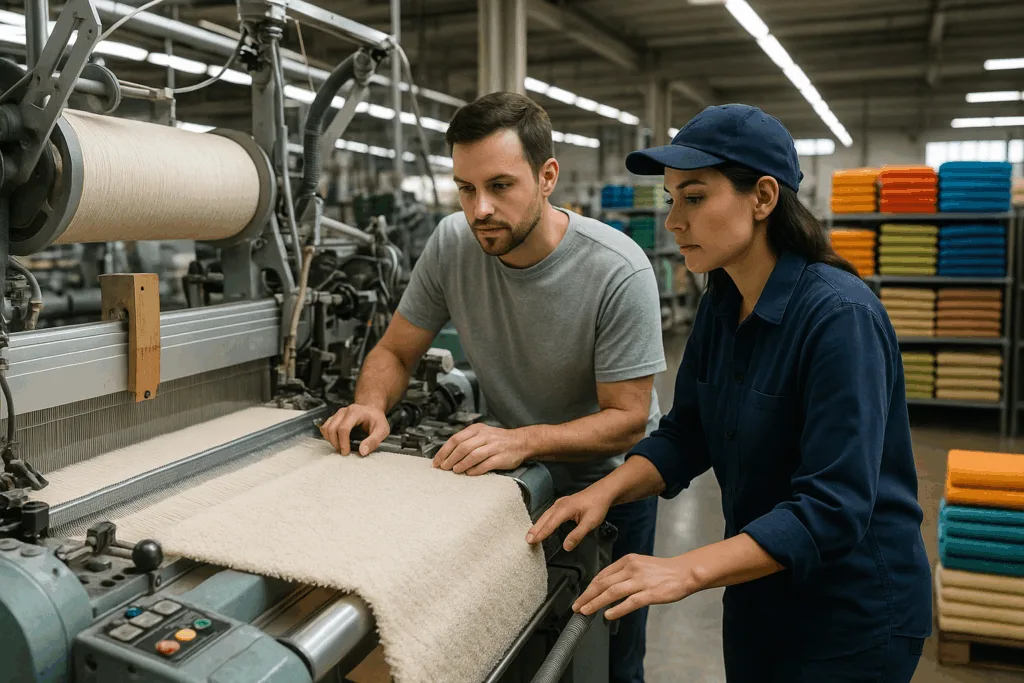
The Weaving and Finishing Process: Achieving Peak Performance
After fiber selection, spinning and weaving define the towel’s character. Circe Towel utilizes advanced loom setups, tight selvage controls, and custom pile ratios, favoring wound-checks for pile pull resistance and precise loop formation. Weave types—terry, zero-twist, jacquard—are matched to application.
Finishing Stages
Enzyme washes remove impurities; reactive dyes provide deep colorfastness. Low-VOC silicone softeners enhance feel and water repellency. Antimicrobial finishes are applied for sports and hotel towels where hygiene is essential, and pre-shrink stabilization ensures dimensional control for long-term use.
Specialty Techniques
- Piece Dyeing: Uniform shades for spa towels.
- Yarn Dye/Jacquard: Vibrant patterns for beach or promotional towels.
- Embroidery/Print: Logo customization to fit B2B programs.
Testing Protocols and Industry Standards
Quality assurance is non-negotiable in cotton towel manufacturing. Circe Towel’s internal protocols mirror global standards for absorbency, durability, and safety. Each batch undergoes:
- Absorbency: AATCC 79, 197
- Colorfastness: AATCC 61, AATCC 8
- Dimensional Change: AATCC 135
- Pilling/Snagging: ASTM D3512, D3939
- Compliance: OEKO-TEX STANDARD 100, GOTS, BSCI audits
All test results are reviewed before bulk production, ensuring Circe Towel clients receive towels that excel not only in softness, absorbency, and colorfastness, but also regulatory compliance.
Size, Application, and Customization in Premium Towels
Successful towel programs address both technical excellence and the practical needs of users. Circe Towel supplies a wide range—from facial towels (300–400 gsm) to beach towels (up to 600 gsm), bath sheets, hand towels, and custom gym towels.
Customization Codes
- Sampling: Pre-production sample, pilot production (TOP), and bulk workflow to match buyer color and quality targets.
- Logo Placement: Embroidery, print, or woven tags for branding.
- Special Packaging: Compostable wraps, belly bands, ribbon ties, bulk carton specs per Incoterms (EXW, FOB, CIF, DDP).
This product versatility is underpinned by Circe Towel’s strict adherence to quality. Hotels, spas, gyms, and promotional clients all benefit from tailored specs matched to real-world durability and absorbency expectations.
Sustainable Cotton Choices for Responsible Manufacturing
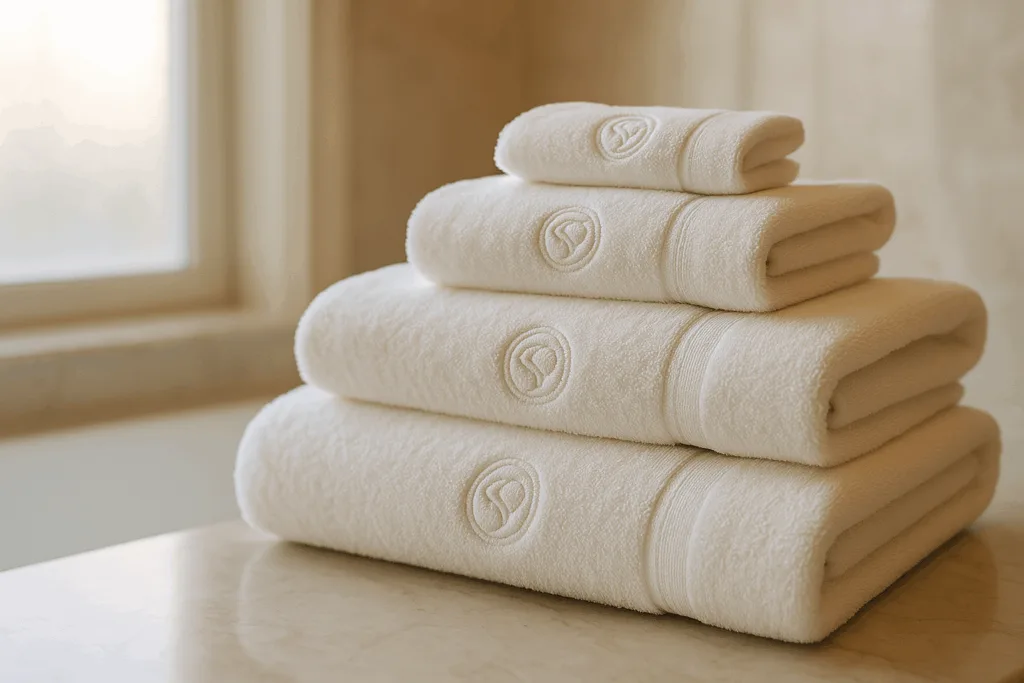
Modern towel manufacturing demands both environmental stewardship and product excellence. Circe Towel sources cotton under sustainable water-use programs and prioritizes mills that meet GOTS and OEKO-TEX STANDARD 100 standards. Certifications are independently verified for each bulk order.
Key Sustainability Practices
- Toxin-free dyeing and finishing to meet REACH requirements.
- Water recycling and responsible discharge in partnered mills.
- Organic cotton adoption for targeted programs (baby, eco hotel towels).
Buyers pursuing compliance or sustainability goals can specify OEKO-TEX and GOTS certification at order. Circe Towel provides documentation and traceability for every bulk shipment.
Frequently Asked Questions
What makes long-staple cotton superior in towel manufacturing?
Long-staple cotton fibers create smoother, stronger yarns, resulting in towels that are softer, shed less lint, and retain plushness over time after repeated washing.
How does Egyptian cotton compare to other types for towel softness?
Egyptian cotton’s extra-long fibers deliver a silky, luxurious feel and exceptional absorbency, making it the preferred choice for upscale bath sheets and spa towels.
Are organic cotton towels less durable than conventional towels?
High-quality organic cotton towels, especially those certified by GOTS, match or even surpass conventional towels in durability due to careful fiber selection and premium finishing.
Which standards assure a towel’s absorbency and colorfastness?
Absorbency is tested by AATCC 79 and 197, while colorfastness is certified through AATCC 61 and 8, ensuring towels perform for professional use and multiple wash cycles.
How do finishing treatments improve towel softness and longevity?
Enzyme washes and silicone softeners remove impurities and smooth fibers, while anti-pilling agents and pre-shrink stabilization boost softness and prevent towel thinning or damage.
Does Circe Towel provide sustainable and certified cotton options?
Yes, Circe Towel offers GOTS-certified organic and OEKO-TEX compliant cotton towels, ensuring sustainable sourcing and verified chemical safety for eco-conscious buyers.