
Introduction: The Art and Science of Towel Export Packaging
In the fast-paced world of textile trade, how towels are packed and prepared for export determines not just their condition on arrival but also the credibility of the supplier. Export packaging for towels is a precise operation that balances international standards, moisture control, branding requirements, and shipment logistics. Leading manufacturers like Circe Towel apply technical expertise throughout the process, combining advanced machinery with rigorous quality protocols for optimal results.
Understanding Bulk Towel Manufacturing for Export
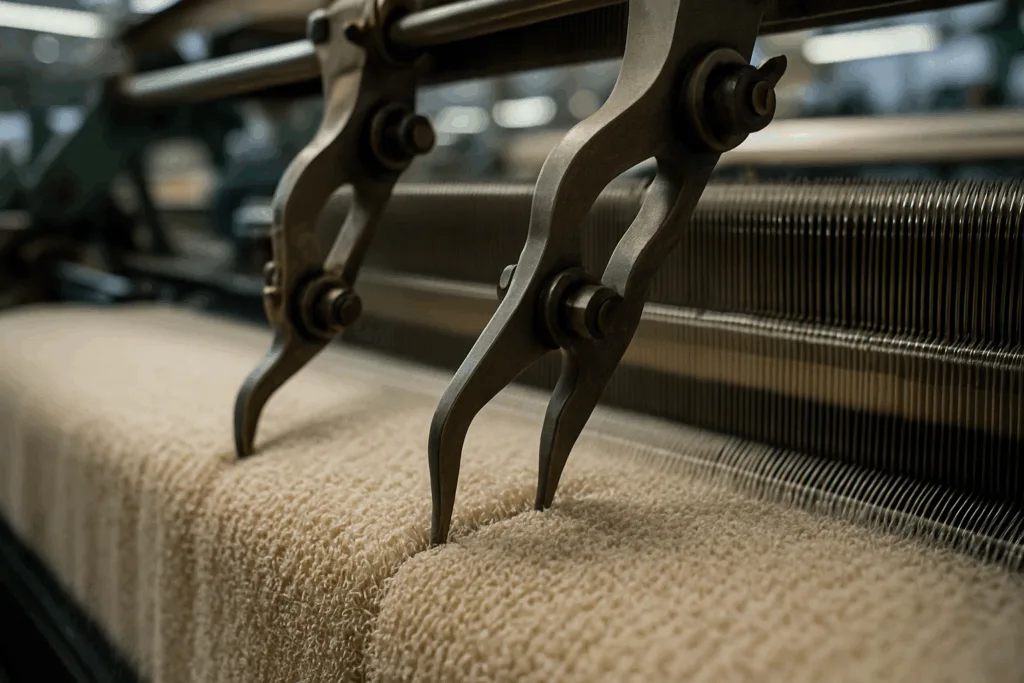
Fiber Selection and GSM Optimization
Export-grade towels are crafted from high-performance fibers such as long-staple combed cotton, Egyptian and Turkish cotton, bamboo viscose blends, and microfiber. The chosen GSM (grams per square meter) directly informs bulk packaging—face and hand towels at 400–550 gsm, bath towels at 500–700 gsm, and sheets reaching up to 900 gsm. Denser towels require tailored packing methods to maintain their structure during transit.
Consistency in Weaving and Dyeing
Uniform terry loops, zero or low-twist constructions, and jacquard patterns are maintained on high-speed looms. AATCC-certified absorbency and colorfastness testing are implemented pre-packing. Production lots undergo shade control and bulk sample approval, ensuring towels in each carton meet international standards for bulk towel export.
Towel Export Packaging: Standards & Methods
Core Packaging Methods for Export Towels
Export packaging balances protection, presentation, and efficiency. The most common techniques are:
- Vacuum Packing: Reduces volume by 60–75%, protecting towels from moisture and dust. Ideal for larger shipments.
- Compression Packing: Towels are stacked and pressed into dense blocks, frequently wrapped in polybags or environmentally safe compostable films.
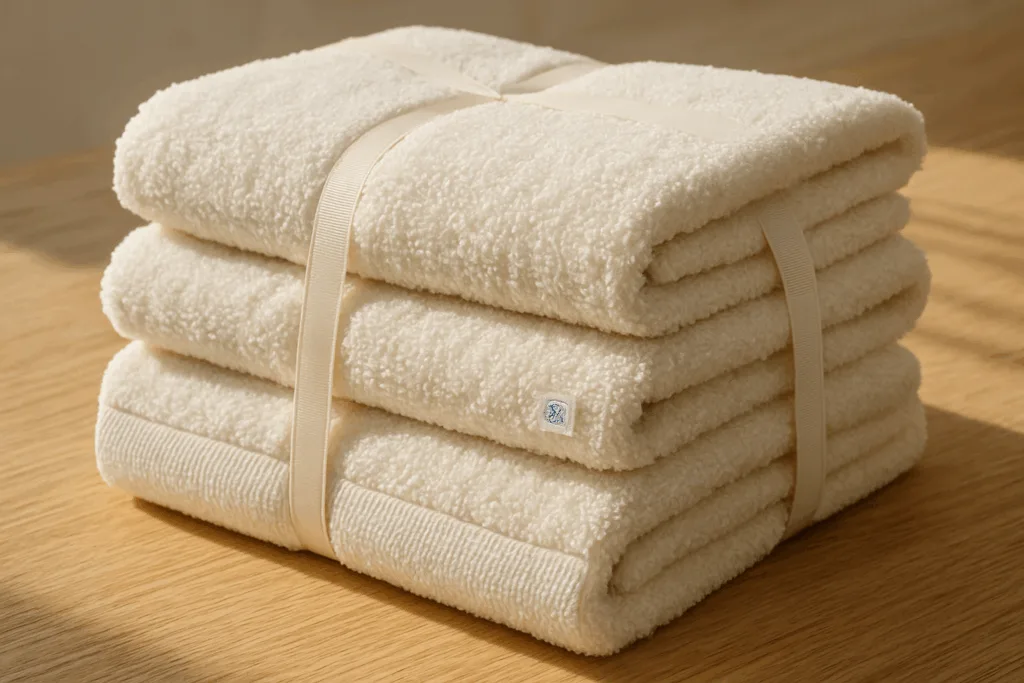
- Individual Polybags & Carton Inserts: Standard for luxury towels and brands needing retail-ready sets with hangtags or custom sleeves.
- Belly Bands, Ribbon Wraps, or Hanger Loops: Used for gifting and promotional towels, combining product protection with aesthetic appeal.
Importance of Export Packaging Standards
Global buyers expect adherence to relevant standards: vacuum/seal integrity, barcode placement, durable hangtags, and labeling norms (including OEKO-TEX 100, GOTS, and care instructions). Carton dimensions and weight must match shipping container requirements, with moisture-proof liners inside cartons for ocean voyages.
Advanced Labeling for Global Compliance
Hangtags and Multilingual Labels
Export towels are tagged with product information, care instructions, fiber content, and certifications in multiple languages. Durable hangtags withstand compression and handling. Circe Towel ensures permanent barcode placement using thermal transfer or laser printing, supporting automated tracking and retail compliance.
Barcoding & Traceability Solutions
Each carton and inner pack receives GS1-compliant barcodes—tracking bulk towel manufacturing lots from factory to warehouse. For promotional programs, QR codes offer marketing links and authenticity checks.
Moisture and Shipping Protection Protocols
Anti-Damp Treatments & Packaging Materials
During transit, towels face risks from humidity and water ingress. Protective measures include:
- Desiccant Pouches: Absorb excess moisture within cartons for sea shipments.
- PE/LDPE Moisture Barrier Linings: Plastic liners wrap towel stacks before carton closure, creating a vapor seal.
- Vacuum Sealing & Double Wrapping: Especially critical for organic/GOTS towels, preserving integrity and preventing microbial growth.
- Anti-mold Stickers: Embedded in cartons to inhibit mold development, particularly for tropical destinations.
Container Loading & Transport Handling
Export teams perform pre-shipment inspections—checking carton stacking, edge protection, and palletization. Thermal indicators are attached for temperature-sensitive cargo. Incoterm clarity (EXW, FOB, CIF, DDP) ensures proper responsibility for moisture protection throughout the supply chain.
How Towels Are Packed and Prepared for Export
Step-by-Step Export Preparation Process
- Final Inspection & Sorting: Towels are checked for defects, GSM uniformity, and finishing quality (softness, absorbency, stitching).
- Folding and Stacking: Automated conveyors fold towels to the determined retail or bulk spec—face, hand, bath, sheet, or promotional sets—ensuring tight edges and minimal creasing.
- Packing: Towels are placed into polybags or vacuum/compression packs with protective inserts or bands. Hangtags and barcodes are affixed.
- Carton Closure: Moisture barriers, desiccant sachets, and anti-mold stickers are introduced. Cartons are sealed, stacked, and tested for drop resistance.
- Palletizing & Container Loading: Packed cartons are shrink-wrapped onto pallets for safe container loading. Temperature and humidity monitoring devices may be included for sensitive shipments.
- Documentation: Packing lists, invoices, and compliance certificates accompany each shipment for customs clearance and B2B transparency.
Comparative Table: Towel Fiber, Weave, and Packing Performance
| Fiber/Weave | Typical GSM | Absorbency | Durability | Packing Approach | Best Use Scenarios |
|---|---|---|---|---|---|
| Long-staple combed cotton terry | 500–700 | High (AATCC 79) | Excellent | Vacuum/compression, carton with liners | Hotels, retail, bulk export |
| Egyptian/Turkish cotton, low-twist terry | 600–900 | Superior | Very strong | Individual polybag, gift packaging | Luxury retail, spa, high-end export |
| Bamboo/cotton blend, dobby/waffle | 450–600 | Quick-wicking | Strong | Compostable wrap, carton inserts | Eco/organic export |
| Microfiber (poly/nylon), suede/velour | 180–300 | Moderate-fast dry | Resistant | Compression packs, retail bands | Sports, gym, promo export |
Packaging Methods: Pros, Cons, and Suitability
Vacuum Packaging
Vacuum packing offers a significant reduction in carton volume and a tight moisture barrier. It is best for large bulk shipments and towels with high pile density. However, for retail presentations or premium products, the compressed format may not support elegant unpacking.
Compression Packing
Compression is faster for automation, enabling cost-effective shipment and integrity protection in transit. It is suited to sports towels, baby towels, and promotional programs, especially where low GSM or microfiber is used.
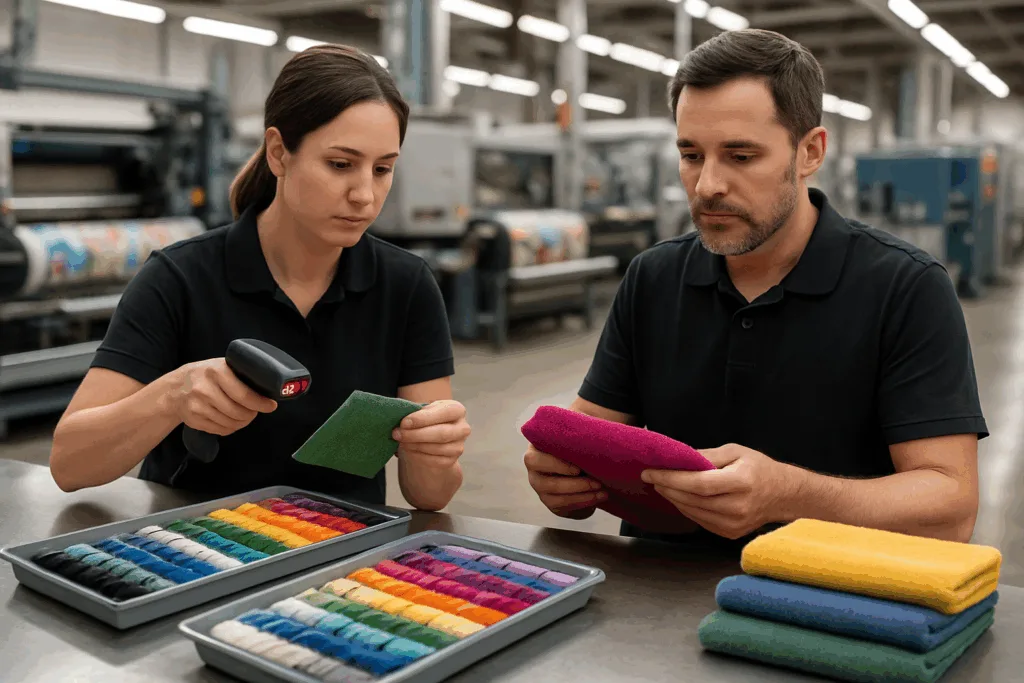
Individual Polybag & Retail-Ready
Polybag or banded packaging enhances the unboxing experience for luxury or branded towels, with clear labeling and protective hangtags. For eco-sensitive markets, compostable or recyclable films are favored.
Export Carton Specifications & Label Requirements
Carton Strength and Internal Packing
Export cartons are rated for burst strength and drop tests, typically 5-layer corrugated with moisture barriers and reinforced edges. Size is calibrated to the container type (20/40-foot), load weight, and buyer-specific packing lists.
Essential Label Elements
- Product details: material, GSM, finishing (enzyme/silicone treated, anti-pilling)
- Certifications/compliance: OEKO-TEX, GOTS, REACH, BSCI/SEDEX audit references
- Barcode (GS1, UPC, EAN) and batch numbers
- Customs HS code and country of origin
- Buyer logo, PO number, and destination marks
Buyer Guidance: Choosing the Right Export Packaging
Key Factors for OEM/ODM Towel Exports
When structuring a bulk towel export program, buyers should consider fiber and GSM based on usage, carton limits, and geographical hazards (humidity, temperature, shipping time). Options like vacuum and compression packing offer cost and protection advantages for high-volume imports, while custom polybags and retail packaging support brand identity. Circe Towel provides tailored packing advice for bath, hand, face, gym, spa, and promotional towel lines, ensuring optimal absorbency, softness, durability, and compliance for every destination.
Sample, PP, and TOP Approval
Before final bulk shipment, buyers often request Pre-Production (PP) Samples for checking packing configuration, label placement, and moisture protection protocols. TOP (Top of Production) Samples are taken from live production to confirm carton integrity and overall export readiness.
Quality Control and Export Readiness: Circe Towel Process Insights
Bulk Shipment Verification
Each export order undergoes batch testing for absorbency (AATCC 79), colorfastness (AATCC 61, 8, 162), pilling (ASTM D3512), and dimensional stability (AATCC 135/150). Carton drop tests and humidity checks validate packing effectiveness before container loading.
Compliance Documentation
Documentation includes complete packing lists, certificate of origin, compliance audit references (BSCI, SEDEX, OEKO-TEX), and chemical safety declarations. This transparency underpins trust in the Circe Towel export workflow.
Frequently Asked Questions
What is the difference between vacuum and compression packing for export towels?
Vacuum packing tightly removes air from towel stacks to minimize space and protect from moisture, while compression packing presses towels into dense blocks for efficient carton use; both methods protect bulk towels during transit but suit different towel types and shipment scales.
How do exporters prevent towels from getting damp or moldy during shipping?
Exporters use moisture-proof linings, desiccant pouches, anti-mold stickers, and vacuum sealing to protect towels from dampness and mold growth, especially in ocean shipments to humid climates.
Which export standards must be met for packing and labeling towels?
Export towel packaging must comply with standards like OEKO-TEX 100, GOTS (organic), barcode requirements, and customs labeling norms including product details, origin, and batch codes for traceability.
What role do hangtags and barcodes play in towel export packages?
Hangtags and barcodes provide product identification, care instructions, retail tracking, and batch traceability, ensuring towels meet buyer specifications and international trade compliance.
Does packing method affect towel quality upon arrival?
Packing method impacts towel softness, shape, and hygiene; proper vacuum or compression techniques preserve absorbency and color, while insufficient protection can lead to crushing or dampness.
How can buyers confirm export towel packaging before shipment?
Buyers request Pre-Production and Top of Production samples to verify towel packaging, labeling, and moisture protection meet expectations before approving bulk shipment.