
When buyers compare sublimation vs reactive printing for towels, the question is usually simple on the surface: “Which printing method is better?”
But in real towel manufacturing, that is the wrong first question.
A more useful question is: What fabric are you printing on, how will the towel be used, and what quality level does your buyer expect after repeated washing?
For a hotel group, a printed towel that looks beautiful but loses absorbency is not a good towel. For a beach brand, a cotton towel with a premium feel but limited photo-level design accuracy may not meet the creative brief. For an Amazon seller, the wrong printing method can create color complaints, return risks, and expensive resampling. For a wholesaler, choosing the wrong technique can turn a profitable bulk order into a slow-moving inventory problem.
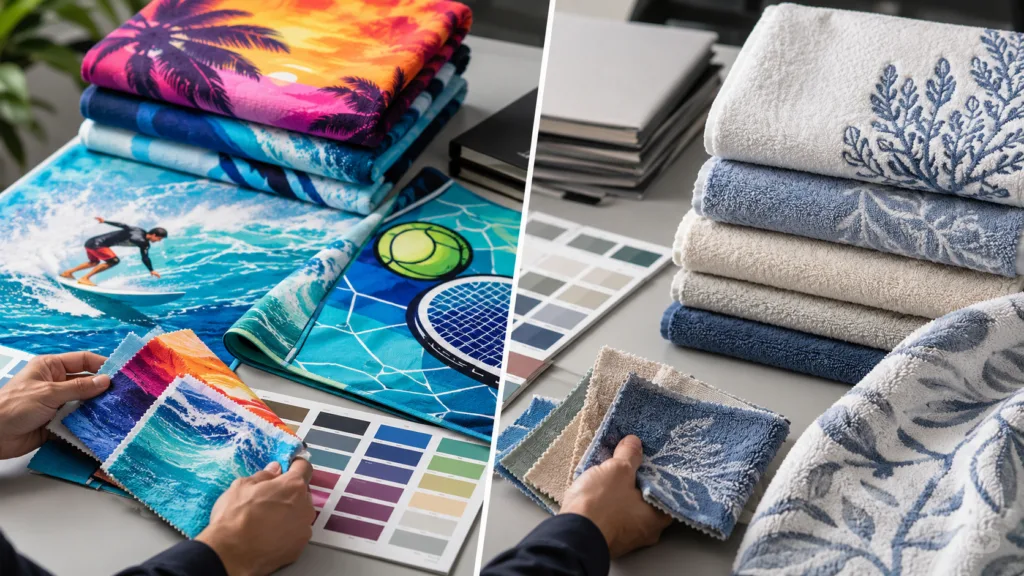
That is why sublimation and reactive printing should not be compared as “cheap vs expensive” or “modern vs traditional.” They serve different commercial purposes.
Sublimation printing is usually better for polyester or microfiber towels that need vivid, full-color, all-over designs. Reactive printing is usually better for cotton towels when softness, absorbency, wash durability, and premium positioning matter.
The best choice depends on fabric, GSM, towel construction, design complexity, target market, MOQ, lead time, and compliance expectations. This guide explains the practical difference from a sourcing and production perspective, so you can choose the right printing method before sampling and avoid costly bulk-order mistakes.
What Is Sublimation Printing for Towels?
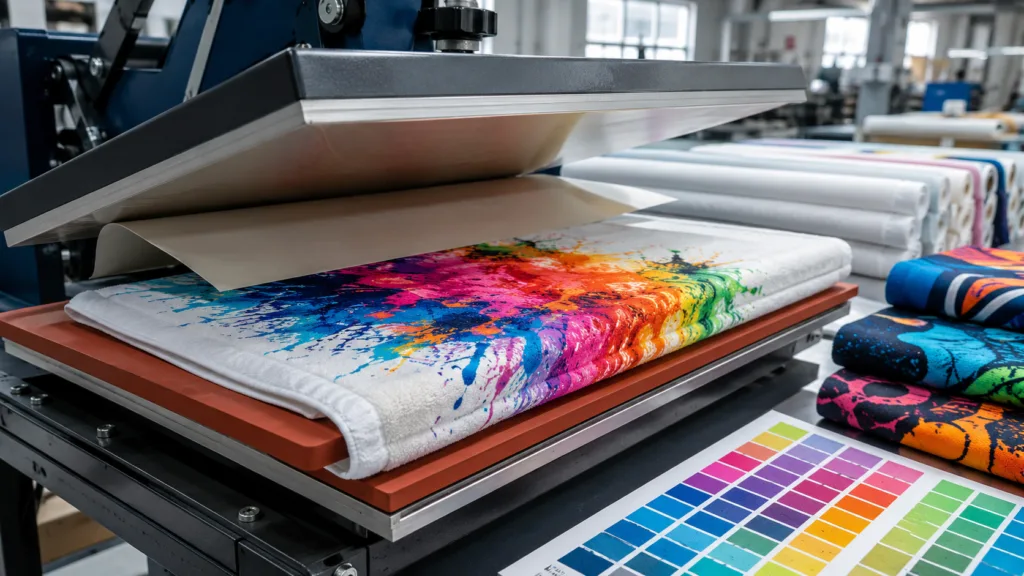
Sublimation printing is a heat-transfer process mainly used on polyester-based fabrics. The artwork is first printed onto transfer paper with sublimation ink. Under heat and pressure, the dye turns into gas and penetrates the polyester fibers. Once cooled, the design becomes part of the fabric surface rather than sitting as a thick coating on top.
For towels, sublimation is most commonly used on:
- Microfiber sports towels
- Polyester beach towels
- Promotional towels
- Travel towels
- Gym towels
- Cooling towels
- Branded event towels
- Photo-print towels
- Full-surface custom towels
Its biggest advantage is visual impact.
If a buyer needs a towel with bright colors, gradients, photo-style images, illustrations, tourist graphics, team patterns, or full-bleed artwork, sublimation is often the most efficient option. It allows high design freedom without requiring separate screens for each color.
This makes it especially attractive for brands and wholesalers that sell visual products: beach towels, resort towels, festival towels, yoga towels, sports towels, souvenir towels, and promotional products.
However, sublimation has one key limitation: it works best on polyester, not cotton.
This point is important because many buyers ask for “100% cotton sublimation towels.” In most serious towel production, that request needs to be corrected early. Sublimation dyes are designed for polyester fibers. If the buyer wants a cotton towel with a natural hand feel and strong absorbency, reactive printing is usually the more suitable route.
Sublimation can be an excellent choice when the business goal is visual branding, fast sampling, and flexible artwork. It is not the best choice when the product promise depends on a thick, fluffy, highly absorbent cotton towel.
What Is Reactive Printing for Towels?
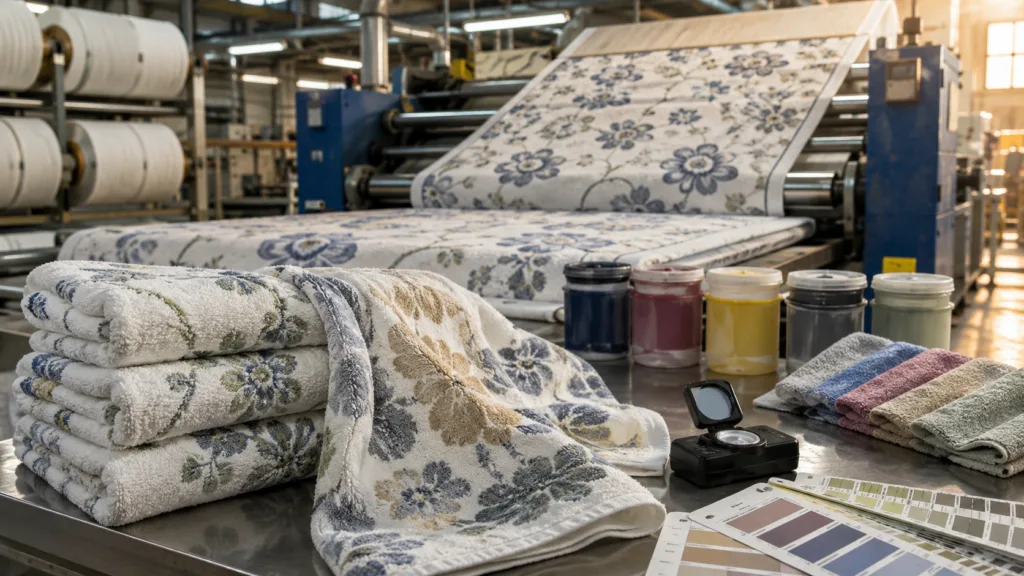
Reactive printing is a dyeing and printing method mainly used for cotton and other cellulose fibers. In simple terms, the reactive dye bonds with the cotton fiber during processing, producing a soft printed towel with good wash performance when properly controlled.
For towels, reactive printing is commonly used on:
- 100% cotton bath towels
- Cotton beach towels
- Cotton hand towels
- Premium retail towels
- Home textile collections
- Hotel or spa towels with decorative patterns
- Baby and family towels
- Cotton towels requiring softer hand feel
The biggest advantage of reactive printing is that it respects the natural performance of cotton. Cotton towels are valued for softness, absorbency, skin comfort, and a more premium touch. Reactive printing supports these qualities better than many surface-coating methods when the process is done correctly.
Reactive printing is usually a stronger choice when the buyer cares about:
- Cotton hand feel
- Absorbency
- Long-term washing performance
- Retail-grade quality
- Higher perceived value
- Premium home textile positioning
- Better compatibility with cotton terry structures
But reactive printing is not always the easiest or cheapest option. It usually involves more production steps, including printing, steaming, washing, and finishing. It may require higher MOQ, longer lead time, stricter color control, and more careful wastewater management at the factory level.
For serious buyers, that is not necessarily a disadvantage. It simply means reactive printing should be planned properly from the beginning, not treated as a last-minute artwork decision.
Sublimation vs Reactive Printing: Quick Comparison
| Factor | Sublimation Printing | Reactive Printing |
|---|---|---|
| Best Fabric | Polyester, microfiber | Cotton, cellulose fibers |
| Best Use | Full-color, photo-style, promotional, sports, beach | Premium cotton, bath, hotel, retail, home textile |
| Hand Feel | Smooth, depends on fabric | Soft, natural cotton touch |
| Absorbency | Depends heavily on microfiber structure | Usually stronger for cotton terry towels |
| Color Effect | Bright, sharp, vivid | Rich, natural, premium |
| Artwork Detail | Excellent for photos and gradients | Good, but fine detail depends on towel surface |
| MOQ Flexibility | Often more flexible | Usually higher |
| Lead Time | Usually faster | Usually longer |
| Cost Level | Often more cost-efficient | Usually higher due to process complexity |
| Best Buyer Type | Promo brands, sports brands, beach brands, Amazon sellers | Hotels, retail brands, home textile importers, premium buyers |
| Main Risk | Wrong fabric choice, weak absorbency expectation | Color control, shrinkage, longer development cycle |
Which Printing Method Is Better for Cotton Towels?
For 100% cotton towels, reactive printing is usually the better choice.
The reason is simple: cotton towels are purchased for their comfort and absorbency. If the printing method damages the hand feel or reduces the performance of the towel, the product may look good in photos but fail in real use.
This matters especially for:
- Hotel bath towels
- Spa towels
- Premium retail towel collections
- Home bath towels
- Baby towels
- Gift towels
- Cotton beach towels sold as higher-end products
A cotton towel is not just a printable surface. It is a functional textile. Buyers expect it to dry skin properly, stay comfortable after washing, and maintain a quality feel over time.
Reactive printing can support these expectations because the dye bonds with the cotton fiber instead of forming a heavy surface layer. When the towel construction, yarn, GSM, washing process, and finishing are controlled well, the result is a printed cotton towel that still feels like cotton.
That said, buyers should not expect every design to perform equally well on cotton terry. Terry loops are not a perfectly flat canvas. Very small text, sharp thin lines, and complex photo details may not appear as clean as they would on a smooth microfiber surface. For cotton towels, artwork should be adjusted according to the fabric structure.
A mature supplier should review the design before sampling and advise whether reactive printing, yarn-dyed jacquard, embroidery, dobby border, or another branding method is more suitable.
Which Printing Method Is Better for Microfiber Towels?
For microfiber towels, sublimation printing is usually the better choice.
Microfiber towels are often made with polyester or polyester-blend structures, which makes them suitable for sublimation. This is why sublimation is widely used for gym towels, yoga towels, sports towels, travel towels, cooling towels, and promotional towels.
The commercial advantage is clear: microfiber towels are lightweight, fast-drying, easy to pack, and suitable for vivid custom graphics. For Amazon sellers, event brands, sports clubs, and promotional distributors, sublimation offers strong visual branding at a practical cost.
Sublimation is especially useful when the buyer needs:
- Full-surface artwork
- Many colors in one design
- Gradients or photo images
- Team graphics
- Seasonal prints
- Low-to-medium MOQ testing
- Fast sample development
- Lightweight towels for shipping efficiency
However, microfiber is not the same as cotton. A sublimated microfiber towel may dry quickly and look vibrant, but it does not deliver the same plush feeling as a premium cotton bath towel. Buyers should position the product correctly.
If the end customer expects a compact sports towel, sublimation microfiber is a strong option. If the end customer expects a luxury bath towel, cotton with reactive printing or another cotton-friendly branding method is usually more suitable.
Application Guide: How to Choose by Product Type
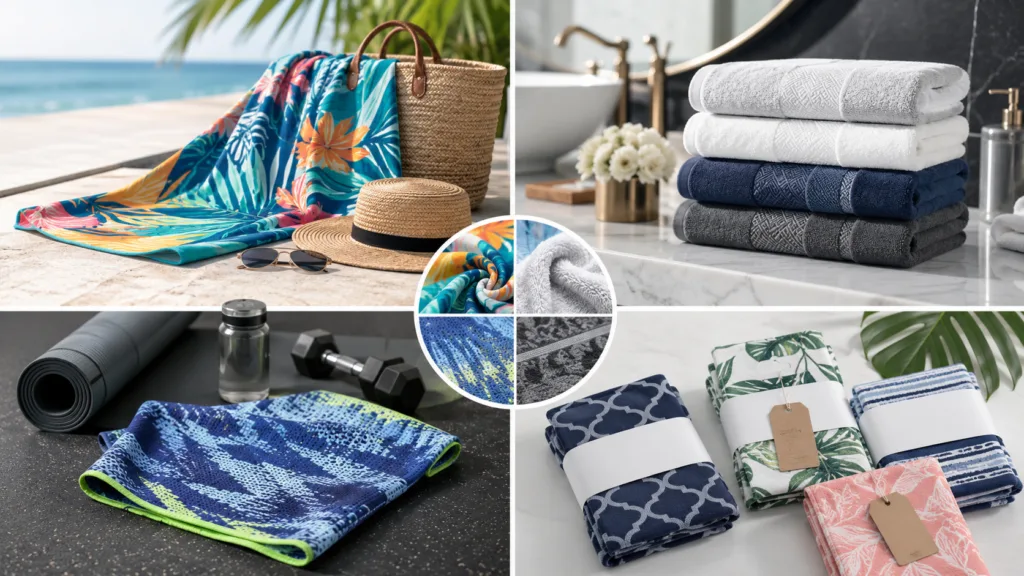
1. Beach Towels
Beach towels can use either sublimation or reactive printing, depending on the brand positioning.
For bold patterns, tourist graphics, photo images, and colorful all-over designs, sublimation is often the better option. It allows strong shelf appeal and fast visual differentiation. This is useful for resort shops, promotional campaigns, beach clubs, souvenir programs, and online retail.
For premium cotton beach towels, reactive printing may be more suitable. Cotton beach towels have stronger natural absorbency and a more familiar hand feel. They may be better for boutique resort brands, lifestyle retailers, and higher-end home textile collections.
Buyer recommendation:
Choose sublimation for graphic-driven beach towels. Choose reactive printing for premium cotton beach towels where touch and absorbency matter more.
2. Hotel Towels
For hotel towels, printing is not always the best branding method.
Hotels usually care more about whiteness, absorbency, softness, durability, laundering performance, and cost per use. Large printed patterns can create operational issues if they fade, bleed, or make the towel harder to maintain.
For hotel bath towels, embroidery, dobby border, woven logo, or jacquard construction may be more appropriate than full-area printing. If printing is required for decorative towels or retail hotel merchandise, reactive printing on cotton is usually more aligned with hotel-quality expectations.
Buyer recommendation:
For hotel bath towels, start with cotton quality, GSM, laundering performance, and branding durability before choosing a printing method.
3. Gym Towels and Sports Towels
Gym towels can go in two directions.
If the towel is microfiber, lightweight, and design-driven, sublimation is a strong choice. It works well for sports clubs, fitness brands, yoga studios, running events, and promotional campaigns.
If the towel is cotton terry and used in gyms, spas, or locker rooms, reactive printing or embroidery may be more suitable. Cotton gym towels need to absorb sweat and withstand repeated washing. In this case, performance matters more than full-photo artwork.
Buyer recommendation:
Choose sublimation for microfiber sports towels. Choose reactive printing or embroidery for cotton gym towels.
4. Promotional Towels
Promotional towels usually need strong branding, cost control, and fast delivery. Sublimation is often the practical winner here.
For events, giveaways, corporate campaigns, and seasonal promotions, buyers often need bright logos, all-over color, and relatively flexible quantities. Microfiber sublimation towels can support these needs well.
Reactive printing may be too slow or too expensive for short-term promotional projects unless the buyer wants a premium cotton gift towel.
Buyer recommendation:
For fast promotional campaigns, sublimation microfiber towels usually offer a better balance of design, price, and lead time.
5. Retail Bath Towels
For retail bath towels, the customer experience is everything.
A towel may look attractive online, but if it feels rough, dries poorly, or changes after washing, reviews will suffer. This is especially important for Amazon sellers, department-store suppliers, and private-label home brands.
For cotton retail bath towels, reactive printing is usually more appropriate than sublimation. It supports the expected cotton feel and better aligns with premium home textile positioning.
However, artwork should still be realistic. Large-area reactive prints on terry towels may not look as sharp as artwork on flat fabric. A good supplier should evaluate design scale, color tolerance, towel pile height, and shrinkage before confirming the sample.
Buyer recommendation:
For retail cotton bath towels, prioritize hand feel, absorbency, wash testing, and packaging presentation. Reactive printing is usually the better fit.
The Hidden Buyer Risk: Choosing Artwork Before Choosing Fabric
One of the most common sourcing mistakes is developing artwork before confirming the fabric.
A buyer may send a beautiful digital design and request:
- 100% cotton
- Thick terry towel
- Photo-quality artwork
- Low MOQ
- Very soft hand feel
- High absorbency
- Fast delivery
- Low price
- Excellent wash fastness
In real manufacturing, not all of these goals can be maximized at the same time.
A thick cotton terry towel is not the same as a smooth polyester fabric. A microfiber towel can show sharper printed graphics, but it will not feel like a premium cotton bath towel. Reactive printing can create quality cotton prints, but it needs more process control and more realistic artwork planning.
This is why serious suppliers should ask technical questions before quoting:
- What is the towel material?
- What GSM do you need?
- Is the towel for bath, beach, gym, hotel, retail, or promotion?
- Do you require cotton, microfiber, or a blend?
- Is the design full-surface or logo-only?
- How many colors are in the artwork?
- What is your expected MOQ?
- What is the target market?
- Do you need OEKO-TEX, REACH-related documentation, or other testing support?
- What packaging format do you need for wholesale or retail?
These questions are not delays. They protect the order.
For bulk towel projects, the cheapest sample is not always the safest sample. The safest sample is the one built on the correct fabric-printing combination.
Color Fastness and Wash Testing: What Serious Buyers Should Ask
For mature buyers, visual approval is not enough.
A towel is a washable textile. It faces water, detergent, rubbing, sunlight, sweat, hotel laundry cycles, gym use, beach sand, pool environments, and repeated handling. A printed towel must be evaluated as a functional product, not only as a photo sample.
Depending on the market and product type, buyers may request or discuss:
- Color fastness to washing
- Color fastness to rubbing or crocking
- Color fastness to perspiration
- Shrinkage after washing
- Absorbency testing
- GSM tolerance
- Pile loss or linting
- Seam strength
- Dimensional stability
- Chemical safety documentation
- Packaging drop-test requirements for retail or export cartons
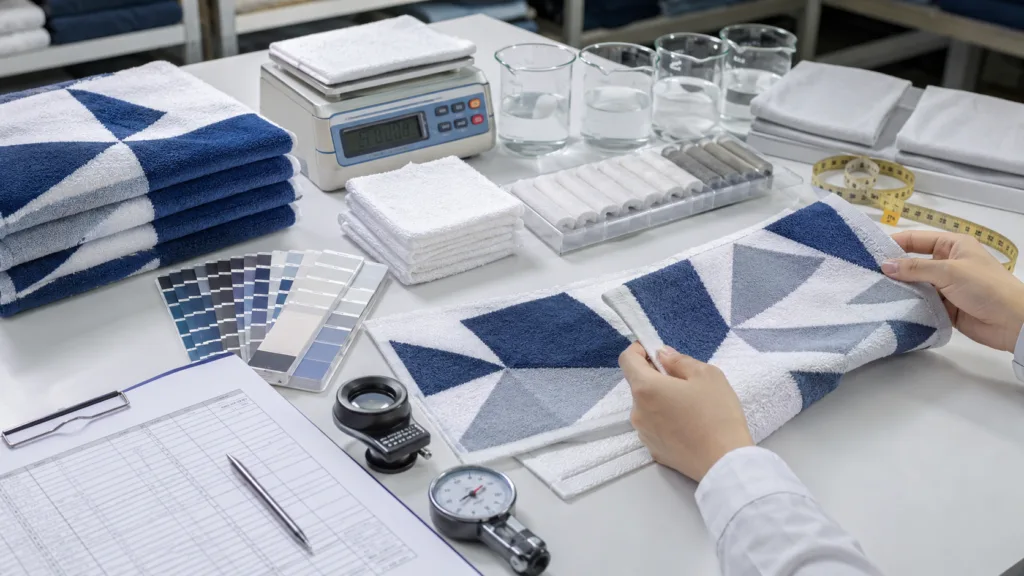
For sublimation towels, the key concern is usually whether the fabric, print sharpness, color saturation, and hand feel match the intended use.
For reactive printed cotton towels, buyers should pay closer attention to washing, staining, shrinkage, color consistency, and finishing quality.
A reliable towel supplier should not only say “yes, we can print.” They should help the buyer define what needs to be tested before bulk production.
Cost and MOQ: Which Method Is More Economical?
In many cases, sublimation printing is more flexible and cost-efficient for smaller or design-heavy projects. It does not require separate screens for each color, and it works well for colorful artwork. That makes it attractive for low-to-medium quantity programs, seasonal collections, promotional orders, and e-commerce testing.
Reactive printing usually has higher process complexity. It may involve more preparation, washing, steaming, and finishing. This can increase MOQ, sample cost, and lead time. But for cotton towels, the higher cost may be justified because the final product better matches customer expectations.
The better question is not “Which method is cheaper?”
The better question is: Which method protects the buyer’s margin after reviews, returns, washing performance, and repeat orders are considered?
For a promotional campaign, sublimation may protect the budget. For a premium cotton towel collection, reactive printing may protect the brand reputation.
A mature buyer should calculate cost by commercial outcome, not only by unit price.
Lead Time: Which Method Is Faster?
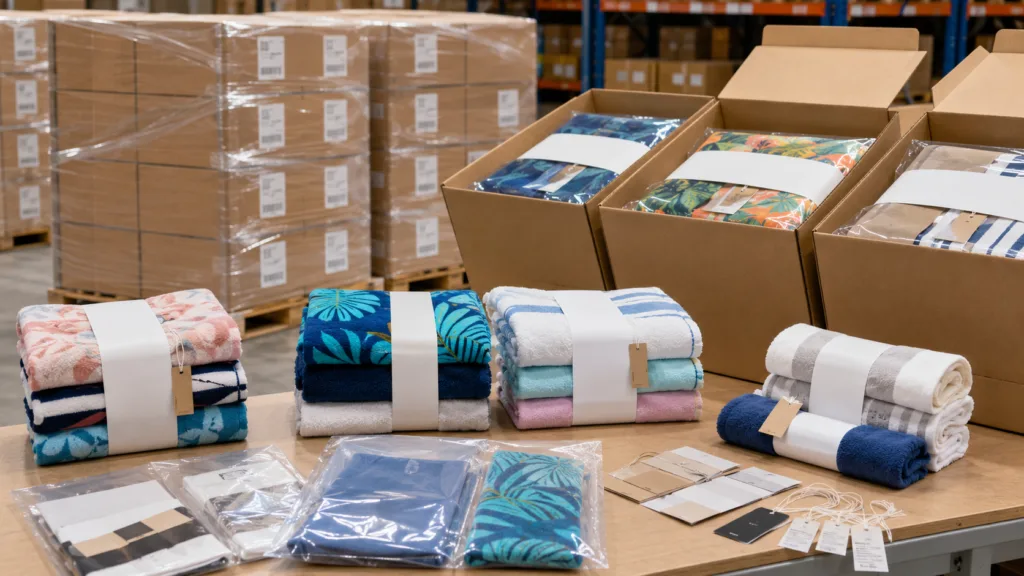
Sublimation is usually faster for artwork-heavy towel projects, especially when using existing microfiber towel bases. This makes it useful for event deadlines, seasonal launches, and online product testing.
Reactive printing usually needs more time because of the additional wet-processing steps. Bulk production also requires more careful color approval, especially when the towel is cotton, the GSM is high, or the artwork involves multiple colors.
Buyers should also remember that towel lead time is affected by more than printing. Yarn availability, fabric weaving, dyeing, cutting, sewing, label production, packaging, carton printing, inspection, and shipping all affect the final delivery schedule.
For large orders, the printing method is only one part of the timeline.
Sustainability and Compliance Considerations
Sustainability is more complicated than saying “cotton is natural” or “polyester is durable.”
Sublimation on polyester avoids some wet-printing steps, but polyester is still a synthetic fiber. Buyers targeting eco-conscious markets may need to consider recycled polyester options, microfiber shedding concerns, product lifespan, and end-market labeling expectations.
Reactive printing works well with cotton, but it is a wet process. It may involve water, salt, alkali, washing, and effluent treatment. Therefore, factory selection matters. A responsible supplier should work with dyeing and printing partners that understand wastewater management, restricted substances, and buyer compliance requirements.
For European buyers, chemical compliance should be part of the sourcing conversation from the beginning. For retail buyers, certifications and testing documents can also support product listing, distributor approval, and customer trust.
Important documents may include:
- OEKO-TEX STANDARD 100 where applicable
- REACH-related chemical compliance support for EU markets
- Color fastness test reports
- Fabric composition reports
- Care label recommendations
- Packaging and barcode support
- Inspection reports before shipment
A good supplier should not use sustainability only as a marketing word. The real value is documentation, process control, and transparent communication before bulk production.
Supplier Checklist Before You Place a Bulk Order
Before confirming sublimation or reactive printing, ask your supplier to review these points:
- Fabric compatibility
Is the towel cotton, microfiber, polyester, or blended? - End use
Is it for bath, hotel, beach, gym, spa, retail, gift, or promotion? - Design feasibility
Is the artwork suitable for terry loops, microfiber surface, or full-area printing? - MOQ and budget
Is the buyer testing a new product or planning a long-term bulk order? - Color expectations
Does the buyer require Pantone matching or only visual approval? - Testing requirements
Are wash fastness, rubbing fastness, shrinkage, absorbency, or chemical tests needed? - Packaging method
Will the towels be packed for wholesale cartons, retail shelves, Amazon FBA, hotel supply, or gift boxes? - Lead time
Is there enough time for fabric preparation, printing, finishing, inspection, and export shipping? - Target market
Are there compliance needs for the U.S., EU, U.K., Australia, or other markets? - Repeat order potential
Is the selected method stable enough for long-term replenishment?
This checklist helps buyers avoid one of the most expensive sourcing problems: approving a sample that cannot scale smoothly into bulk production.
Final Verdict: Sublimation vs Reactive Printing — Which Is Better?
There is no universal winner.
Choose sublimation printing if your towel project is based on polyester or microfiber and requires vivid full-color artwork, photo-quality designs, fast sampling, flexible MOQ, and strong visual impact. It is especially suitable for beach towels, sports towels, gym towels, travel towels, promotional towels, and online retail products where design is the main selling point.
Choose reactive printing if your towel project is based on cotton and requires softness, absorbency, wash durability, and a more premium textile feel. It is usually the better choice for cotton bath towels, retail towel collections, premium beach towels, hotel-related products, spa towels, and home textile brands.
The right decision should start with fabric and end use, not only artwork.
For wholesalers, hotel buyers, importers, Amazon sellers, and retail brands, choosing the correct printing method early can reduce sampling waste, improve product reviews, protect margins, and make repeat orders easier.
At Circe Towel, we help buyers evaluate towel material, GSM, printing method, logo technique, packaging, MOQ, and export requirements before sampling. Whether your project needs sublimation microfiber towels or reactive printed cotton towels, the goal is the same: a towel that looks right, performs well, and is ready for bulk production.
Not sure which method fits your towel project? Send us your towel material, size, GSM, artwork, quantity, packaging plan, and target market. Our team can recommend the most suitable towel printing solution before you move into sampling.
FAQ
1. Is sublimation printing good for cotton towels?
Sublimation printing is generally not the best choice for 100% cotton towels. It works best on polyester or microfiber fabrics. If you need printed cotton towels with good softness and absorbency, reactive printing is usually more suitable.
2. Which printing method is best for beach towels?
For colorful microfiber or polyester beach towels, sublimation is usually the better choice because it supports vivid all-over designs. For premium cotton beach towels, reactive printing may be better because it maintains a more natural cotton feel.
3. Is reactive printing more expensive than sublimation?
Reactive printing is often more expensive because it usually involves more processing steps, such as steaming, washing, and finishing. However, for cotton towels, the higher cost may be justified by better softness, absorbency, and wash performance.
4. Which method should Amazon sellers choose for custom towels?
Amazon sellers should choose based on product positioning. For lightweight sports, travel, yoga, or promotional towels, sublimation microfiber towels are often practical. For premium cotton bath towels or home textile products, reactive printing is usually a better fit.