
For bulk towel buyers, quality control is not a formality at the end of production. It is the difference between a shipment that sells smoothly and a shipment that creates customer complaints, chargebacks, bad reviews, hotel operation problems, or expensive rework after arrival.
A towel may look simple from the outside. It is soft, folded, packed, and shipped. But for wholesale buyers, hotel purchasing teams, importers, Amazon sellers, retail brands, gyms, spas, and promotional distributors, a towel is a performance product. It must meet expectations for hand feel, absorbency, weight, size, durability, color consistency, lint control, logo accuracy, labeling, packaging, and shipment presentation.

The biggest mistake many buyers make is approving a nice sample and assuming bulk production will be identical. In real production, quality can shift because of yarn batch differences, dyeing variation, washing shrinkage, weaving density, finishing treatment, cutting tolerance, stitching workmanship, packaging handling, or rushed production schedules. A professional towel quality control checklist helps buyers define expectations before production, monitor critical points during manufacturing, and make smarter shipment decisions before goods leave the factory.
This guide explains what serious bulk buyers should check before shipment and how to reduce quality risk when sourcing towels from overseas suppliers.
1. Start With the Approved Sample and Specification Sheet
Every bulk towel order should begin with two control documents: an approved physical sample and a written specification sheet. The sample shows the target look and feel. The specification sheet defines measurable details. Without both, quality disputes become subjective.
A complete towel specification sheet should include:
- Towel type: bath towel, hand towel, face towel, beach towel, gym towel, yoga towel, spa towel, hotel towel, kitchen towel, or promotional towel
- Material: cotton, combed cotton, ring-spun cotton, zero-twist cotton, microfiber, bamboo blend, cotton-polyester blend, recycled fiber, or other yarn composition
- Size before and after washing, if relevant
- GSM or unit weight
- Single-piece weight target
- Color reference or lab dip approval
- Yarn count and pile style where applicable
- Hemming style and edge construction
- Logo method: embroidery, jacquard, woven label, printed logo, embossed logo, or hang tag
- Packaging method: bulk pack, individual polybag, paper band, belly band, retail box, gift box, carton packing, or pallet requirement
- Carton quantity, carton size, gross weight, net weight, and shipping marks
- Inspection tolerance and defect classification
For mature buyers, a sample is not enough. The sample must be translated into numbers. “Soft and thick” is not a QC standard. “600 GSM, 70 x 140 cm after washing, approved ivory lab dip, embroidery logo centered 8 cm above the bottom hem” is a QC standard.
2. Fabric and Material Inspection: Confirm What You Are Actually Buying
Material choice affects cost, performance, positioning, and customer satisfaction. A retail gift towel, a hotel bath towel, a gym towel, and a quick-dry travel towel should not be judged by the same standard.
Cotton Towels
Cotton towels are still the mainstream choice for bath, hotel, spa, and home use because they offer a familiar soft hand feel and strong water absorption. Buyers should confirm whether the towel uses regular cotton, combed cotton, ring-spun cotton, or long-staple cotton. Combed cotton usually feels smoother because shorter fibers and impurities are removed. Ring-spun yarn can create a softer and more durable yarn structure compared with basic open-end yarn.
For hotel and spa buyers, cotton towels should be checked for pile density, softness after washing, lint control, shrinkage, and repeated-use durability. A towel that feels fluffy in a showroom but becomes rough after several washes may damage the guest experience.
Microfiber Towels
Microfiber towels are common for sports, gym, travel, yoga, cleaning, beach, and quick-dry categories. They are usually lighter, faster drying, and more compact than traditional cotton towels. However, microfiber quality varies widely. Buyers should check fabric density, surface finish, absorbency speed, edge stitching, colorfastness, and whether the towel develops odor easily after damp use.
For yoga and Pilates towels, buyers should also inspect anti-slip backing, silicone dot adhesion, suede microfiber feel, and grip performance under sweat conditions.
Bamboo, Blended, and Recycled Towels
Bamboo blends, cotton-bamboo blends, recycled polyester, and other eco-positioned materials are increasingly used by brands targeting sustainability-minded customers. However, these claims must be handled carefully. Buyers should ask for material composition, certification support if needed, and clear labeling. The product must still perform well; an “eco” towel that absorbs poorly or sheds heavily will not survive repeat purchase.
The key QC question is simple: does the delivered bulk material match the approved sample and the claimed composition?
3. GSM and Weight Check: Thickness Must Match the Market Position
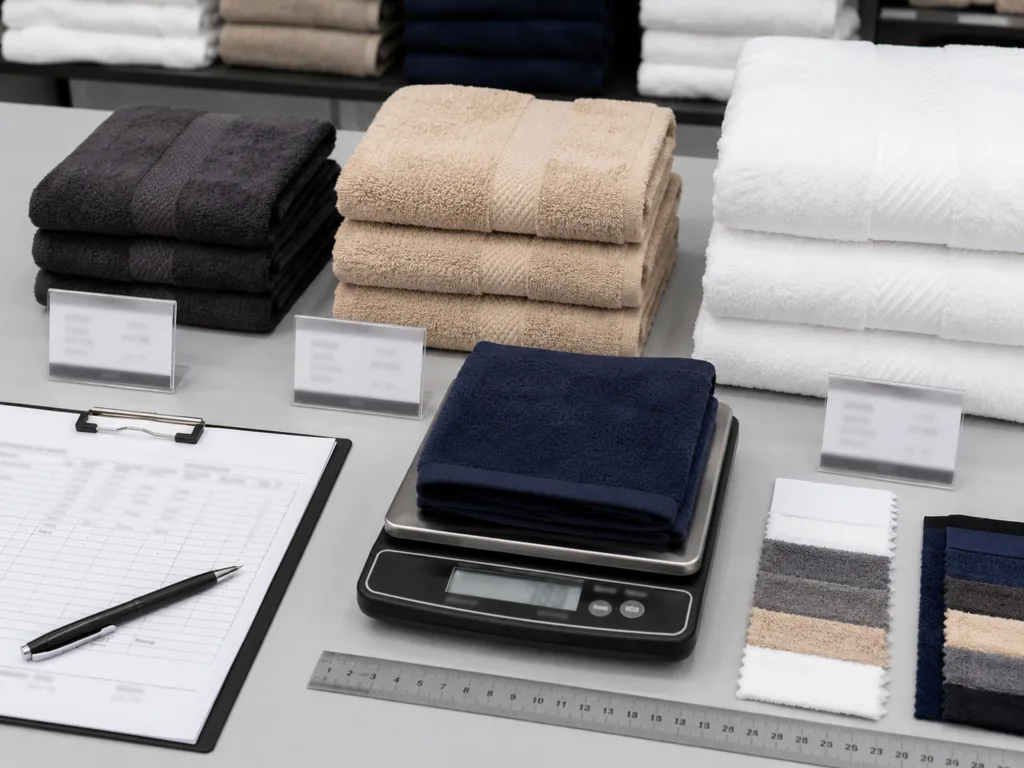
GSM means grams per square meter. It is one of the most important indicators for towel structure, although it should never be used alone to judge quality. Fabric mass per unit area is commonly measured under recognized textile weight testing methods such as ASTM D3776. For towel buyers, GSM helps control thickness, hand feel, cost, absorbency expectation, and freight planning.
A general market guide:
- 300–400 GSM: lightweight, fast-drying, promotional, gym, travel, economy use
- 400–500 GSM: daily household, retail value range, beach or sports use depending on construction
- 500–650 GSM: mid-to-premium bath towels, hotel towels, spa towels, gift sets
- 650–800 GSM: plush, luxury, premium hotel or high-end retail positioning
Higher GSM usually means a thicker and heavier towel, but higher does not automatically mean better. A 700 GSM towel with poor yarn quality, weak absorbency, and heavy lint is not a premium towel. A 450 GSM towel with excellent yarn, tight weaving, and quick-dry performance can be ideal for gyms, travel, or retail multipacks.
Before shipment, buyers should check:
- Does the single-piece weight match the approved sample?
- Is the GSM consistent across random samples?
- Are towels from different cartons similar in thickness and hand feel?
- Has the supplier reduced weight to lower cost without approval?
- Does the weight match the intended use and price point?
For importers and retailers, weight is also a logistics issue. A small GSM change across thousands of pieces can affect carton weight, freight cost, storage cost, and final landed cost.
4. Size and Shrinkage Control: Measure After Finishing, Not Only After Cutting
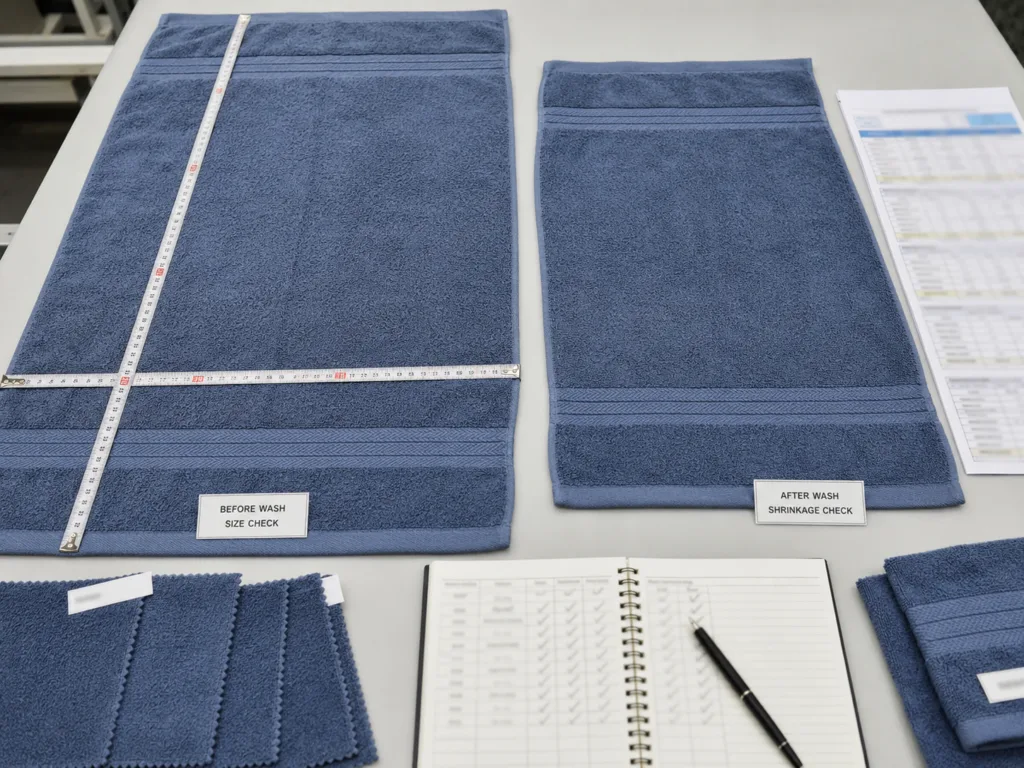
Towel size is one of the most common bulk order disputes. Towels can shrink after dyeing, washing, drying, and finishing. Therefore, buyers should define whether the size requirement refers to pre-wash size, finished size, or size after a specific washing test.
Common towel sizes vary by market and application, but typical categories include:
- Face towel: around 30 x 30 cm or 30 x 50 cm
- Hand towel: around 35 x 75 cm or 40 x 70 cm
- Bath towel: around 70 x 140 cm
- Bath sheet: around 80 x 160 cm or larger
- Beach towel: around 80 x 160 cm, 90 x 180 cm, or custom oversized formats
- Gym towel: around 30 x 100 cm, 40 x 80 cm, or custom sizes
- Yoga towel: often designed to match mat dimensions, such as 183 x 61 cm or similar
For QC, buyers should not measure only one perfect piece from the top of the carton. Randomly measure towels from different cartons, colors, and production lots. Confirm length, width, diagonal distortion, edge straightness, and shrinkage after washing if required.
A professional supplier should be able to discuss reasonable tolerance before production. For example, a small size deviation may be acceptable for promotional towels, but hotel chains and retail boxed sets often require tighter consistency because presentation matters.
5. Absorbency Test: A Towel Must Do Its Job
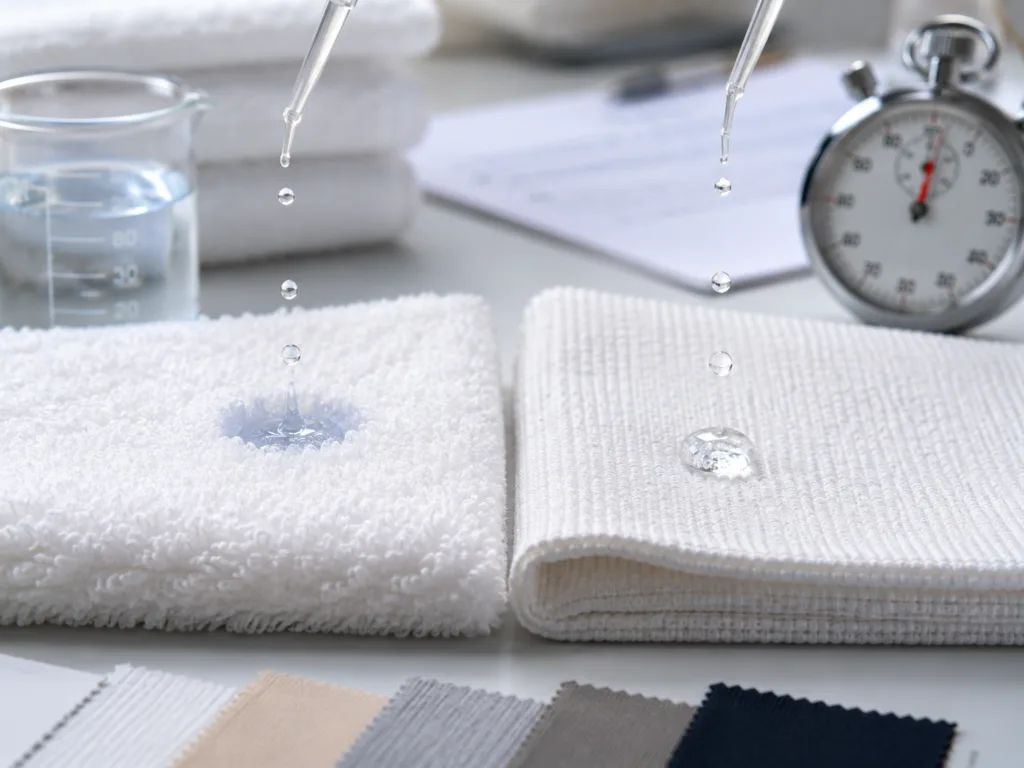
Absorbency is the core function of most towels. A towel can be thick, soft, and visually attractive, but if it pushes water around instead of absorbing it, the product will fail in real use.
Absorbency can be affected by:
- Fiber type
- Yarn quality
- Pile density
- Weaving structure
- Chemical finishing
- Softener residue
- Dyeing process
- Washing treatment
- Surface coating or print
Recognized textile absorbency methods such as AATCC TM79 use a water droplet approach to measure how quickly water penetrates the textile surface. For commercial QC, buyers can also request simple in-factory checks, such as a water drop test, capillary absorbency comparison, or wash-and-use performance test.
Before shipment, buyers should check:
- Does water absorb quickly or bead on the surface?
- Is absorbency consistent between colors?
- Does dark color perform differently from light color?
- Does the towel absorb better after one wash?
- Has too much softener been used, reducing absorbency?
- Does printed or coated fabric reduce water uptake?
This is especially important for hotel towels, bath towels, baby towels, spa towels, and gym towels. For beach towels and yoga towels, absorbency must be balanced with drying speed and packing weight.
6. Color Consistency and Colorfastness: Avoid Bleeding, Crocking, and Shade Variation
Color issues can destroy a bulk towel order. A retail brand cannot sell a gift set if the towels in one carton have visible shade differences. A hotel cannot use dark towels that bleed onto white laundry. An Amazon seller may face negative reviews if customers receive towels that fade after the first wash.
Buyers should control color at three stages:
Lab Dip Approval
Before production, approve the lab dip under appropriate lighting. If possible, compare it with Pantone, physical swatch, or previous production sample.
Bulk Shade Check
During and after production, compare towels from different dye lots and cartons. The key question is whether consumers will notice shade variation when towels are placed together.
Colorfastness Testing
Colorfastness to washing and rubbing should be considered, especially for dark colors, bright colors, printed towels, hotel towels, beach towels, and sports towels. ISO 105-X12 is widely used for colorfastness to rubbing, checking whether textile color transfers to another material under dry or wet friction.
Before shipment, buyers should check:
- Shade consistency against approved sample
- Color difference between cartons
- Dry and wet rubbing performance
- Wash fading risk
- Color bleeding onto white cloth
- Color migration in packed sets
- Color matching between towel body, embroidery, label, and packaging
For retail sets, even a small color difference can look cheap. For hospitality buyers, colorfastness is not only about appearance; it affects laundry management and replacement cost.
7. Lint Shedding and Pile Quality: Check the Hidden Customer Complaint
Lint shedding is one of the most common towel complaints. Some lint is normal for new cotton towels, especially after the first wash. But excessive lint indicates poor yarn quality, weak pile structure, insufficient finishing, or unstable production control.
Buyers should inspect:
- Loose fibers on the towel surface
- Pile height consistency
- Pulled loops
- Broken yarns
- Uneven terry loops
- Bald areas or thin areas
- Fiber dust inside packaging
- Lint after rubbing or shaking
- Lint after washing, if a wash test is required
For hotels, lint affects laundry systems and guest perception. For dark towels, lint is often more visible. For Amazon and retail buyers, lint complaints can quickly appear in reviews.
A reliable towel supplier should be able to explain the expected lint level for each construction and suggest proper pre-washing, finishing, or material choices based on the buyer’s market.
8. Stitching, Hemming, and Edge Workmanship
Customers often judge towel quality by the edges before they judge the fabric. Poor stitching makes a towel look cheap and can lead to fraying, loose threads, and early product failure.
Inspect the following points:
- Straightness of hem stitching
- Even stitch density
- No skipped stitches
- No broken stitches
- No open seams
- No twisted edges
- No excessive loose threads
- Neat corner finishing
- Correct thread color
- Consistent border width
- Label sewn in the correct direction
For hotel towels, strong hemming is important because towels go through frequent industrial washing. For retail towels, clean finishing improves shelf appeal. For branded towels, edge workmanship directly affects perceived brand value.
If the towel includes embroidery, check for puckering, backing paper residue, loose embroidery thread, wrong logo size, wrong position, and color mismatch. If it includes jacquard, check whether the pattern is clear and not distorted.
9. Application-Based QC: Different Buyers Need Different Standards
A good towel QC checklist must match the intended use. The same towel cannot satisfy every market.
Hotel and Hospitality Towels
Hotel buyers care about durability, absorbency, laundry resistance, softness after repeated washes, consistent whiteness, shrinkage control, and replacement cost. White towels must be checked for stains, yellowing, odor, and packaging contamination. Hemming must be strong enough for industrial laundering.
Retail and Private Label Towels
Retail buyers care about visual presentation, color consistency, hand feel, packaging accuracy, barcode labels, hang tags, and shelf appeal. A towel may pass basic function tests but fail retail presentation if the folding, paper band, or color set looks inconsistent.
Amazon and E-Commerce Towels
Amazon sellers care about product consistency, packaging protection, barcode accuracy, carton labeling, customer review risk, and photo-sample consistency. The final product must match listing photos and descriptions. Size, GSM, color, and set quantity must be exact.
Gym, Yoga, and Sports Towels
Sports towel buyers care about quick-dry performance, odor control, compact packing, absorbency under sweat, colorfastness, and anti-slip function if used for yoga or Pilates. For anti-slip towels, silicone backing must be checked for adhesion and durability.
Beach Towels
Beach towel buyers care about size, color brightness, print quality, absorbency, sand release, drying speed, and giftable presentation. Printed patterns must be checked for clarity, alignment, and color bleeding.
Promotional Towels
Promotional buyers often care about price, logo visibility, delivery time, and event deadlines. However, even low-cost promotional towels should meet basic requirements for color, size, stitching, smell, and packing quantity.
10. Packaging Inspection: Protect the Product and the Buyer’s Brand
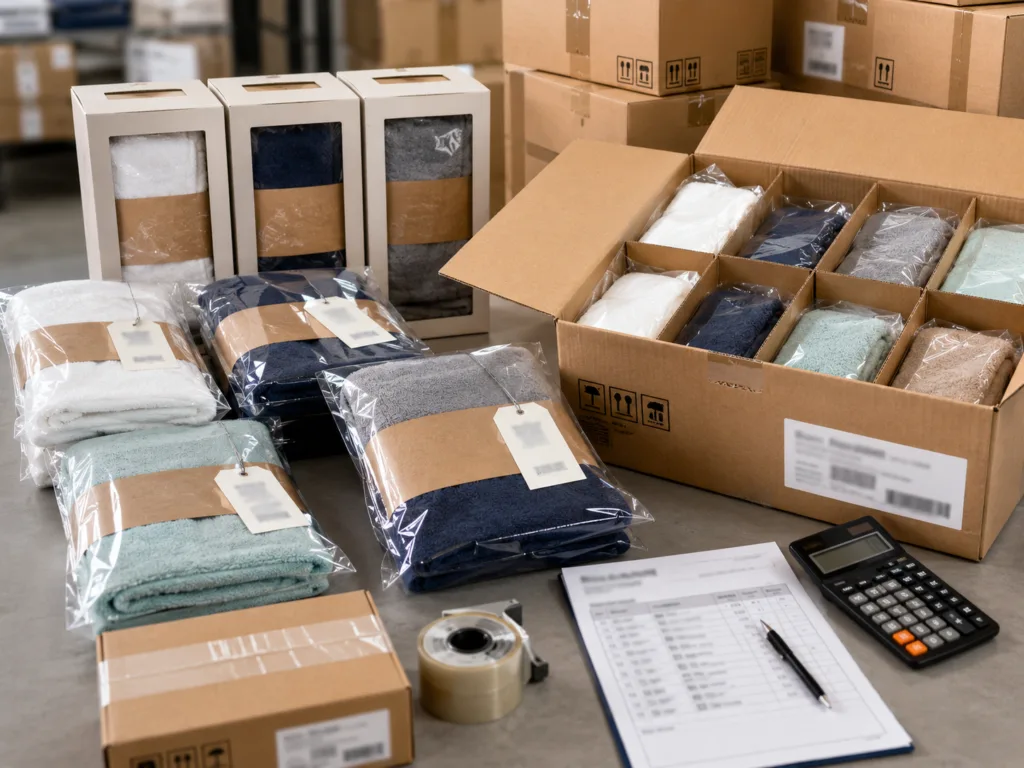
Packaging mistakes are expensive because they are often discovered too late. A towel may be well made, but if cartons are mislabeled, barcodes are wrong, inner quantities are mixed, or packaging is damaged during shipping, the buyer still has a problem.
Before shipment, inspect:
- Folding method
- Individual polybag quality
- Paper band or belly band placement
- Hang tag content and position
- Barcode accuracy
- SKU and color labeling
- Carton quantity
- Assortment ratio
- Carton marks
- Carton strength
- Moisture protection
- Gross weight and net weight
- Carton dimensions
- Pallet requirement, if applicable
- Export shipping marks
For Amazon and retail buyers, barcode and labeling accuracy are critical. For importers and wholesalers, carton quantity and SKU separation are essential for warehouse receiving. For hotel buyers, packaging should protect towels from moisture, dust, and odor during long-distance transportation.
If towels are packed too tightly, they may arrive compressed and unattractive. If cartons are weak, they may collapse in transit. If packaging lacks moisture control, towels may develop odor or mildew risk.
11. Smell, Cleanliness, and Contamination Check
Towels are close-contact products. They touch skin, face, hair, and sometimes babies or hotel guests. Buyers should never ignore smell and cleanliness.
Check for:
- Chemical odor
- Moldy smell
- Damp smell
- Oil stains
- Rust marks
- Dirt marks
- Hair or foreign fibers
- Insects or debris
- Packaging dust
- Mixed fibers from other production lines
Odor can come from dyeing, finishing chemicals, damp storage, poor drying, contaminated cartons, or long warehouse exposure. For high-end retail and hospitality buyers, smell is a serious brand issue. A towel that smells bad at unboxing creates an immediate negative impression.
12. Use AQL Sampling and Define Defects Before Inspection
For large towel orders, checking every single piece is usually not practical. Many professional buyers use AQL-based sampling systems for pre-shipment inspection. AQL inspection is based on selecting a statistically defined sample from the shipment and accepting or rejecting the lot according to the number and severity of defects found.
The key is not only the sampling number. The buyer and supplier should define defect categories before production.
Critical Defects
Critical defects are usually unacceptable because they may create safety, regulatory, or severe brand risk. Examples may include contamination, sharp foreign objects, mold, severe chemical odor, wrong product that cannot be sold, or serious labeling errors for regulated markets.
Major Defects
Major defects affect function, saleability, or customer satisfaction. Examples include wrong size beyond tolerance, wrong GSM, poor absorbency, severe color difference, open seams, incorrect logo, wrong packaging, missing pieces in a set, or visible stains.
Minor Defects
Minor defects do not usually affect function but reduce appearance quality. Examples include small loose threads, slight folding inconsistency, tiny trimming issues, or minor carton scuffs.
A strong towel QC plan should define what counts as critical, major, and minor before inspection. Otherwise, disputes happen at the worst time: when the goods are finished and the shipment deadline is close.
Final Towel QC Checklist Before Shipment
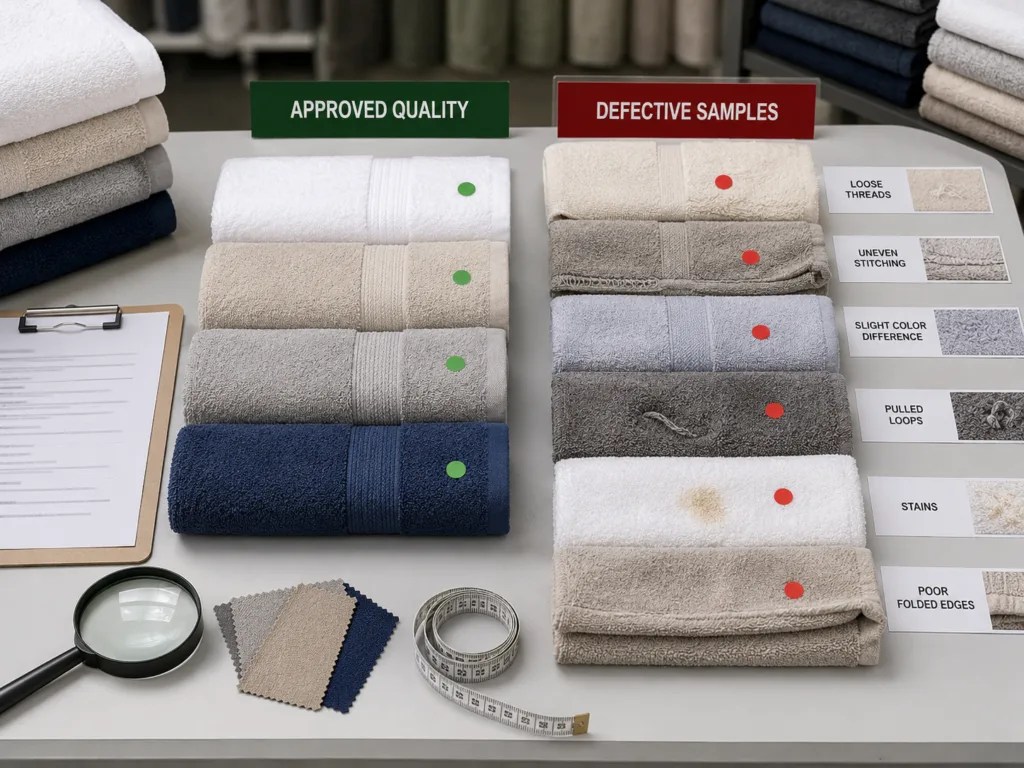
Use this checklist before approving bulk towel shipment:
| QC Item | What Buyers Should Check |
|---|---|
| Approved Sample | Bulk towels match the confirmed sample in material, weight, color, hand feel, and workmanship |
| Material | Fiber composition, yarn quality, pile structure, fabric type, and claimed material support |
| GSM / Weight | Single-piece weight and GSM match the specification and approved sample |
| Size | Finished length, width, shrinkage tolerance, edge straightness, and size consistency |
| Absorbency | Water absorbs quickly and consistently across colors and lots |
| Color | Shade matches lab dip or approved sample; no obvious carton-to-carton variation |
| Colorfastness | No serious bleeding, fading, or rubbing transfer risk |
| Lint | No excessive shedding, fiber dust, pulled loops, or weak pile areas |
| Stitching | Straight hems, secure seams, clean corners, no skipped stitches or open seams |
| Logo | Correct size, position, color, method, and workmanship |
| Smell | No chemical, moldy, damp, or storage odor |
| Cleanliness | No stains, oil marks, dirt, foreign fibers, or contamination |
| Packaging | Correct folding, label, barcode, SKU, carton quantity, carton marks, and protection |
| Cartons | Strong export cartons, accurate gross/net weight, correct dimensions, and moisture protection |
| Documents | Packing list, invoice, carton details, inspection report, and required certificates if applicable |
How Buyers Can Reduce Quality Risk Before Placing a Bulk Order
The best quality control does not happen only before shipment. It starts before the purchase order is confirmed.
To reduce risk, buyers should:
- Request a pre-production sample and approve it in writing.
- Confirm a detailed specification sheet with measurable standards.
- Define size, GSM, color, packaging, logo, and tolerance before production.
- Ask for lab dips before bulk dyeing.
- Confirm packaging artwork and barcode details carefully.
- Request production photos during manufacturing.
- Use random inspection from multiple cartons, not only top samples.
- Define critical, major, and minor defects before shipment.
- Arrange third-party inspection for high-value or first-time orders.
- Work with a supplier that understands both manufacturing and export requirements.
A low unit price is attractive, but a poorly controlled shipment can cost more than the savings. Returns, repacking, air freight replacement, bad reviews, hotel complaints, and brand damage are far more expensive than proper QC.
Why Choosing a Reliable Towel Supplier Matters
For mature buyers, a towel supplier is not just a factory that produces fabric rectangles. A reliable supplier helps control specifications, sampling, production consistency, packaging accuracy, and shipment readiness.
A professional towel supplier should provide:
- Material and GSM recommendations based on target market
- Custom size and color support
- Lab dip and sample development
- Logo customization options
- Private label packaging support
- Bulk production management
- In-line and final inspection support
- Export carton packing
- Flexible solutions for wholesale, hotel, retail, gym, spa, and promotional buyers
- Clear communication before and during production
Buyers placing bulk towel orders need more than a cheap quote. They need a supplier who can understand the application, predict quality risks, and deliver goods that match the approved standard.
Whether you are sourcing hotel towels, retail towel sets, beach towels, gym towels, yoga towels, spa towels, or promotional towels, a structured towel QC checklist helps protect your business before the shipment leaves the factory.
If you are planning a bulk towel order, the smartest time to discuss quality control is before production begins. Clear specifications, realistic tolerances, professional inspection, and export-ready packaging can make the difference between a one-time order and a stable long-term supply relationship.
FAQ
1. What is the most important quality point in a bulk towel order?
There is no single point for every buyer. Hotel buyers usually care most about absorbency, durability, shrinkage, and washing performance. Retail buyers care more about color consistency, hand feel, packaging, and shelf presentation. E-commerce buyers must also control barcode accuracy, set quantity, and review-related defects.
2. Is higher GSM always better for towels?
No. Higher GSM usually means a thicker and heavier towel, but it is not always better. A luxury bath towel may need higher GSM, while a gym towel, travel towel, or quick-dry towel may perform better at a lower GSM. The right GSM depends on the application, target price, drying speed, freight cost, and customer expectations.
3. How can buyers test towel absorbency before shipment?
Buyers can request a simple water drop test, wash test, or laboratory absorbency test. The key is to check whether water enters the fabric quickly instead of sitting on the surface. Too much softener, poor fiber quality, or surface treatment can reduce absorbency.
4. Should buyers arrange third-party inspection for towel orders?
For first-time suppliers, large orders, retail programs, hotel projects, or customized packaging orders, third-party inspection is strongly recommended. It helps verify size, GSM, color, absorbency, stitching, logo, packaging, carton marks, and defect levels before the shipment leaves the factory.
Credible Reference Standards and Testing Frameworks Buyers Can Mention
- ASTM D3776 / D3776M: Standard test methods for mass per unit area of fabric, commonly relevant to GSM and fabric weight control.
- AATCC TM79: Textile absorbency test method using water droplet wetting time.
- ISO 105-X12: Color fastness to rubbing for textiles under dry and wet rubbing conditions.
- ISO 2859-1 / AQL sampling: Acceptance sampling framework widely used for pre-shipment inspection by attributes.
- ANSI/ASQ Z1.4: AQL-style sampling standard commonly used in product inspections.