
Approving a towel sample is not a small step. For wholesale buyers, hotel procurement teams, private-label brands, importers, Amazon sellers, and retail buyers, it is the moment when the production standard becomes real.
A towel sample is not only something to touch, photograph, or show to a manager. It becomes the reference point for bulk production, quality control, packaging, labeling, shipment preparation, and final inspection. Once a buyer approves the sample, the factory will normally move forward based on that approved version. If the material, GSM, color, logo, packaging, or washing performance was not checked clearly at the sample stage, the problem often appears later — when thousands of towels are already in production.
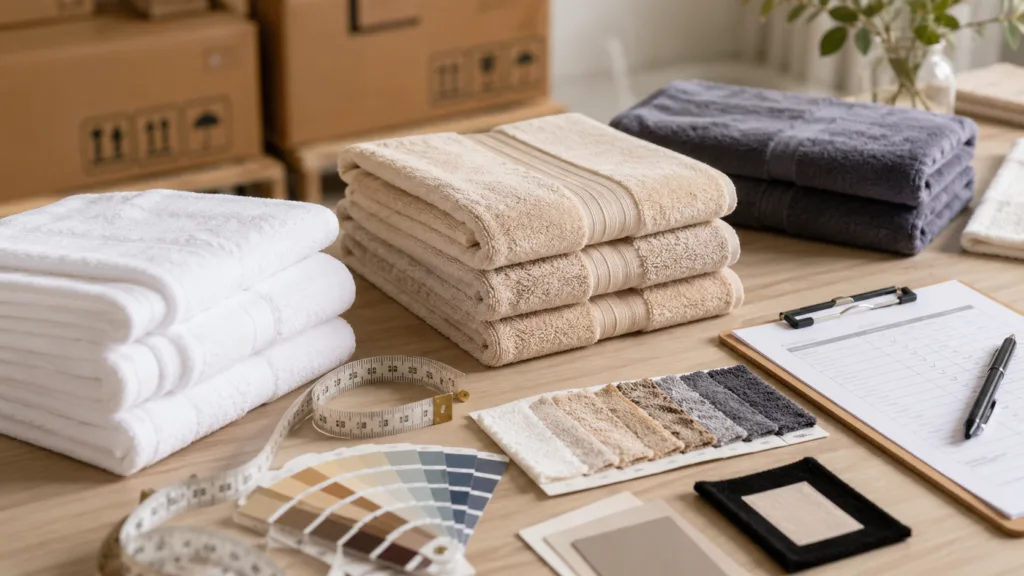
The home textile market is large, competitive, and increasingly quality-sensitive. Grand View Research valued the global home textile market at USD 137.8 billion in 2025 and projected it to reach USD 231.4 billion by 2033, which means buyers are not simply competing on price; they are competing on consistency, branding, compliance, and customer experience.
That is why professional towel sample approval should be treated as a risk-control process, not just a visual confirmation.
Below is a practical checklist for buyers who want to approve custom towel samples with confidence before bulk production.
1. Confirm Whether the Sample Uses the Exact Bulk Material
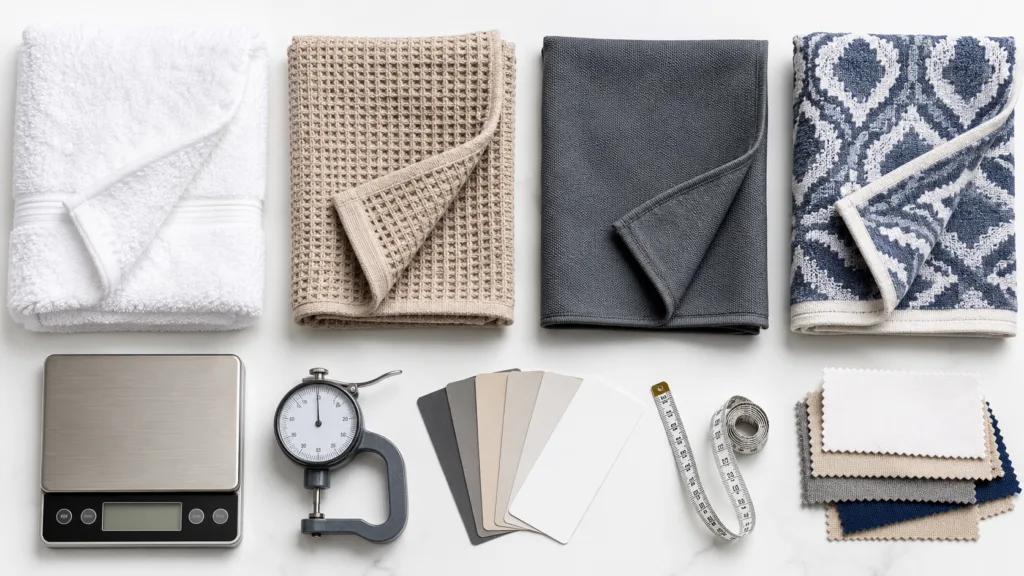
The first question is simple: is this sample made from the exact material planned for bulk production?
This matters more than many buyers realize. A towel made from 100% cotton, microfiber, bamboo-cotton blend, cotton-polyester blend, waffle fabric, terry fabric, yarn-dyed jacquard, or reactive printed cotton will not perform the same way. The hand feel, absorbency, drying time, shrinkage, lint level, logo effect, color depth, and cost structure can all change when the fabric changes.
For example, a 100% cotton terry towel is usually chosen when absorbency and a natural hand feel are important. Hotel bath towels, spa towels, baby towels, and premium retail towels often need this kind of soft, skin-friendly touch. USDA Agricultural Research Service describes cotton as natural, biodegradable, soft, and highly absorbent, which is why cotton remains a key fiber for next-to-skin textile applications.
Microfiber, on the other hand, can be lighter, faster drying, and more compact. It may work better for sports, travel, cleaning, and some promotional towel programs. But if a buyer expects the plush, absorbent feel of cotton, microfiber will not give the same experience.
Waffle towels can look elegant and dry quickly, but they feel different from terry towels. Yarn-dyed jacquard towels are strong for brand patterns and woven logos, but they have MOQ, yarn color, and design limitations. Printed towels can create more colorful artwork, but the printing method will influence colorfastness, hand feel, and durability.
Before approving the sample, buyers should ask the supplier to confirm:
- fiber composition
- fabric construction
- yarn type if relevant
- production material versus sample substitute
- whether the bulk material is available and stable
- whether the same fabric batch or equivalent quality will be used for mass production
A professional supplier should not simply say “similar quality.” For large orders, “similar” is not enough. Buyers should ask whether the sample represents the confirmed bulk production standard.
2. Check GSM, Weight, and Thickness — Not Just Softness
GSM means grams per square meter. It is one of the most important specifications in towel sourcing because it affects weight, thickness, absorbency, drying time, shipping cost, and perceived value.
A higher GSM towel usually feels thicker and more luxurious, but it may dry more slowly and cost more to ship. A lower GSM towel may be lighter, faster drying, and more economical, but it may not feel premium enough for hotels or retail gifting.
Buyers should not approve a towel sample based only on the word “soft.” Softness can be affected by finishing, washing, or even temporary surface treatment. GSM and actual weight are measurable.
A practical approval process should include:
- measuring the towel size
- weighing the towel
- confirming GSM with the supplier
- comparing the sample weight against the agreed specification
- deciding acceptable tolerance for bulk production
For hotel bath towels, buyers often care about plushness, durability, and guest perception. For gym towels, buyers may care more about absorbency, compact size, and repeated washing. For beach towels, surface area, design impact, and drying time may be more important. For Amazon or retail towels, product weight also affects fulfillment cost, packaging size, and shipping economics.
The key point: the “best” GSM depends on the application. A premium hotel bath towel, a yoga towel, a golf towel, a baby washcloth, and a promotional hand towel should not be approved by the same standard.
3. Test Absorbency Before Final Approval
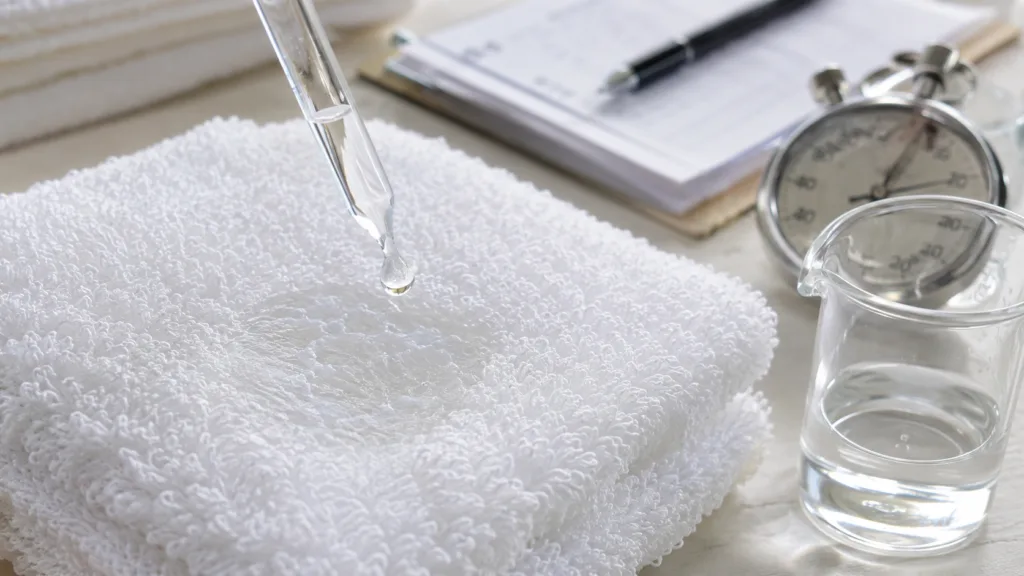
A towel can look thick and still absorb poorly. Some towels feel fluffy at first touch but push water around instead of absorbing it. That is why absorbency should be tested before bulk approval, especially for hotel, spa, gym, baby, kitchen, and bath towel orders.
Professional textile testing can follow recognized methods. AATCC TM79 is a test method used to determine the water absorbency of yarns, fabrics, and garments, and it can apply to textiles of different fiber contents and constructions.
Not every buyer needs a full lab test for every order, but every buyer should at least perform a practical in-house check:
- Drop water on the towel surface and observe penetration speed.
- Use the towel after washing to see whether absorbency improves.
- Compare absorbency before and after one or more washes.
- Check whether finishing residue affects water absorption.
- Test both sides if the towel has different surfaces.
- For gym or sports towels, test sweat wiping and quick drying.
- For bath towels, test skin feel and real drying performance.
This step is especially important because some finishing treatments can make a towel feel smoother or softer but reduce absorbency temporarily. Buyers should avoid approving towels only from a showroom impression. A towel is a functional product. It must perform.
4. Wash the Sample and Check Shrinkage
A towel sample should be washed before final approval whenever possible. This is one of the most practical ways to avoid disputes after bulk delivery.
Washing helps buyers check:
- shrinkage
- color bleeding
- lint
- edge deformation
- embroidery distortion
- label durability
- softness after washing
- absorbency after washing
- towel shape retention
ISO 6330 specifies domestic washing and drying procedures for textile testing, which shows how important controlled washing procedures are in evaluating textile performance.
For custom towels, buyers should confirm both pre-wash and post-wash expectations. Cotton towels may shrink to some degree, depending on yarn, construction, dyeing, finishing, and washing method. If the towel is for hotels, gyms, salons, spas, or rental programs, repeated laundering is part of the product’s real life cycle.
A buyer should not only ask, “What is the size?” A better question is:
“What is the expected size tolerance before and after washing?”
This is especially important for towel sets, retail packaging, hotel linen programs, and branded gift boxes where folded size and shelf presentation matter.
5. Measure the Size and Define Tolerance Clearly
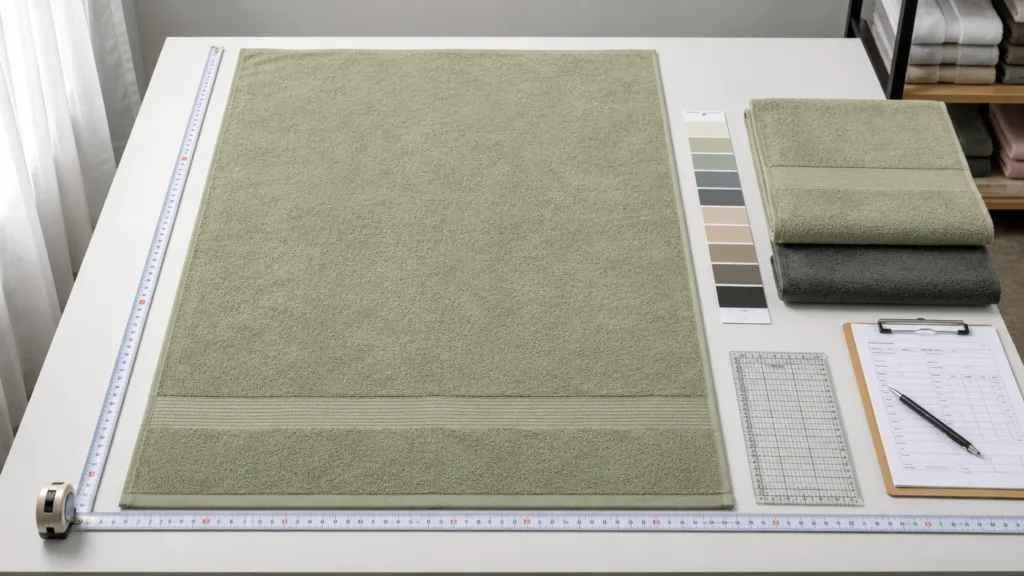
Size mistakes are common in towel orders because different buyers measure differently. Some measure edge to edge. Some measure after washing. Some focus on folded size. Some only check the printed area or embroidery placement.
Before approving a towel sample, buyers should measure:
- full length
- full width
- border width
- logo distance from edge
- label position
- hanging loop position if included
- folded size for packaging
- carton packing size if relevant
Common towel categories have different size logic. A gym towel may need to fit equipment or a training bag. A hotel hand towel must match the property’s linen standard. A beach towel needs enough surface area for comfort and visual impact. A baby towel must balance coverage, softness, and safety. A golf towel may need a grommet, hook, or tri-fold presentation.
For mature buyers, the approval should include tolerance. For example, a buyer may approve a size with a reasonable production tolerance rather than expecting every towel to be absolutely identical. Textile products are flexible goods, not metal parts. But tolerance should be written down before production starts.
6. Approve Color With a Physical Reference, Not a Screen
Color approval is one of the most sensitive parts of towel production. Digital images are useful for communication, but they should not be the only approval standard.
Screen brightness, camera lighting, fabric pile direction, dyeing process, fiber composition, and finishing can all change how a towel color appears. A deep green cotton towel, a microfiber towel, and a yarn-dyed jacquard towel may all absorb and reflect color differently.
Buyers should confirm:
- Pantone reference if custom dyeing is required
- whether the color is stock fabric or custom dyed
- acceptable color tolerance
- sample color under natural and indoor light
- color after washing
- colorfastness needs for dark shades
- whether the logo color matches the towel body
- whether different items in a set need shade consistency
For retail and brand buyers, color is not just a production detail. It affects shelf appeal, product photography, customer reviews, and repeat orders. For hotels and spas, color consistency affects brand environment. For Amazon sellers, a product that arrives darker, lighter, or duller than listing images can lead to complaints and returns.
If the towel is a custom dyed product, buyers should also confirm MOQ and lead time. Custom dyeing often requires higher minimum quantities than stock colors because fabric dyeing or yarn dyeing involves production setup.
7. Check Logo Method, Clarity, and Placement
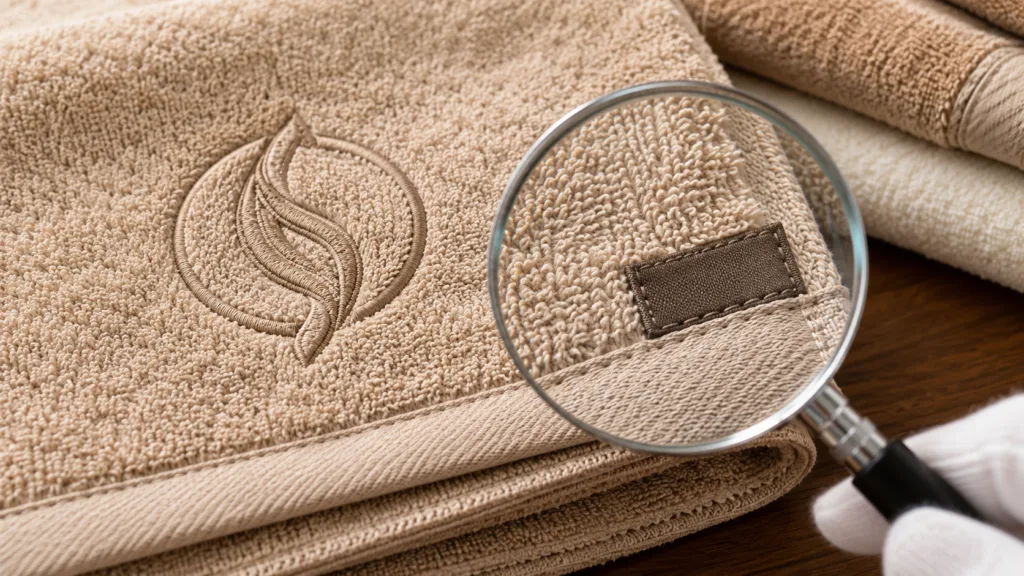
For custom logo towels, the logo is often the reason the buyer is placing the order in the first place. So logo approval should be detailed.
Different logo methods suit different towel types:
Embroidery works well for many cotton towels, hand towels, golf towels, and hotel towels. It gives a premium feel, but very small text or complex artwork may lose detail.
Jacquard is suitable for woven-in patterns or logos. It is durable and integrated into the towel structure, but it has design and color limitations.
Printing works well for colorful artwork, beach towels, promotional towels, and some retail designs. The printing method matters: reactive printing, pigment printing, sublimation, and digital printing all have different effects.
Woven labels and side tags are useful for retail branding, minimalist logos, care information, or premium presentation.
Before approving the sample, buyers should check:
- logo size
- logo position
- thread color or print color
- stitch density
- clarity of letters
- back side of embroidery
- whether the logo feels too stiff
- whether the logo distorts after washing
- whether the label is sewn straight
- whether the logo placement works when folded
A logo may look good in a flat photo but appear badly positioned after the towel is folded into retail packaging. That is why buyers should review both open and folded presentations before approval.
8. Inspect Edges, Stitching, Borders, and Workmanship
A good towel sample should be inspected from the front, back, edges, seams, corners, and logo area. Many quality problems are not visible in the first product photo.
Buyers should check:
- loose threads
- uneven hemming
- skipped stitches
- rough corners
- twisted edges
- lint or fiber shedding
- stains or oil marks
- broken loops
- uneven pile height
- poor border alignment
- weak label stitching
- embroidery backing irritation
- color marks on white or light towels
For hotel and institutional buyers, durability is critical because towels will go through repeated washing and handling. For retail buyers, visual finishing affects perceived quality. For Amazon sellers, loose threads and poor stitching can quickly become negative reviews.
The approved sample should represent the workmanship level expected in bulk production. If the sample has a small issue but the buyer still approves it, the supplier may assume the standard is acceptable. If the buyer likes the material but wants cleaner stitching, that should be stated clearly before mass production.
9. Confirm Packaging Before Production Starts
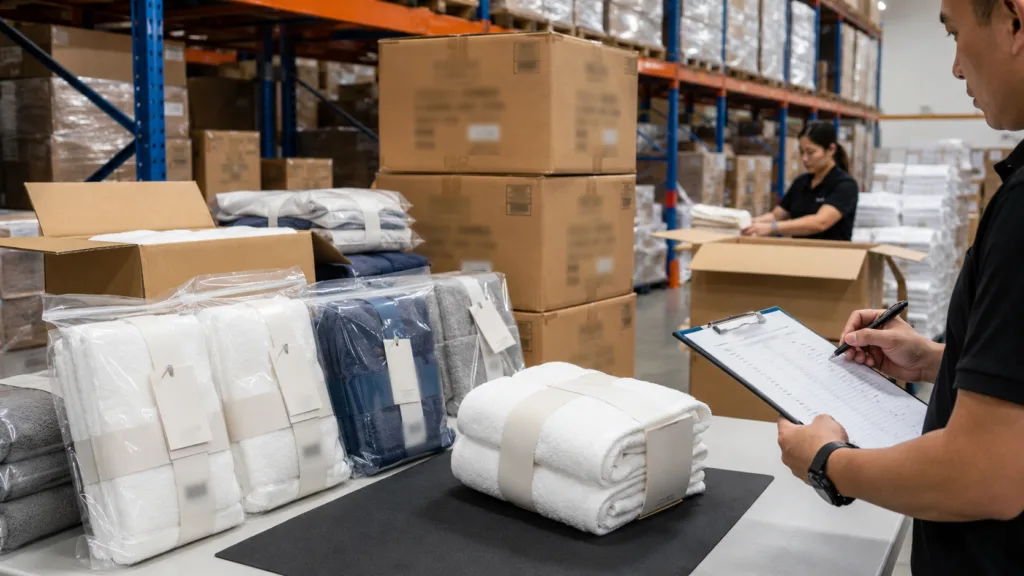
Packaging should not be left until the end. For B2B towel orders, packaging affects shipping, retail display, warehouse handling, barcode scanning, customer experience, and compliance.
Different channels require different packaging:
Hotel and spa orders may need bulk packing by size, color, or department.
Retail orders may need belly bands, hang tags, kraft boxes, printed sleeves, gift boxes, barcode labels, and shelf-ready presentation.
Amazon FBA orders may need individual packaging, scannable barcodes, carton labels, and poly bag requirements. Amazon states that FBA units need an exterior scannable barcode or label, and its bagging requirements include suffocation warning rules for bags with openings of five inches or larger when measured flat.
Importers and wholesalers may need carton marks, SKU separation, inner cartons, master cartons, and packing lists that match purchase orders.
Before approving the sample, buyers should confirm:
- individual packaging method
- folded size
- hang tag design
- belly band material
- barcode type and position
- care label content
- carton quantity
- carton size and weight
- shipping marks
- FBA label needs
- retail-ready presentation
- plastic-free or recyclable packaging requirements
Packaging approval is part of product approval. A towel that is well made but packed incorrectly can still cause warehouse delays, relabeling costs, retail rejection, or Amazon receiving problems.
10. Review Labeling and Compliance Requirements
Labeling requirements depend on the target market, product type, and sales channel. Buyers should confirm requirements before bulk production because relabeling finished goods is expensive and time-consuming.
For the U.S. market, the FTC Textile Fiber Rule requires certain textiles to carry labels disclosing generic fiber names and percentages by weight, the manufacturer or marketer name, and the country where the product was processed or manufactured.
The FTC also explains that textile labels under the Textile and Wool Acts must identify fiber content, country of origin, and the company name or RN of the manufacturer, importer, or another firm involved in marketing or distribution.
For the European market, Regulation (EU) No 1007/2011 covers textile fiber names and related labeling and marking of fiber composition of textile products.
For buyers who promote safety, sustainability, or baby-friendly products, certification claims should be handled carefully. OEKO-TEX STANDARD 100 is a label for textiles tested for harmful substances from yarn to finished product. For organic cotton claims, Textile Exchange notes that standards such as OCS and GOTS are used to track organic fiber or material content through the supply chain.
Buyers should confirm:
- fiber composition label
- country of origin
- care instructions
- RN or importer identity if needed
- SKU and barcode
- certification claim support
- packaging claim support
- language requirements
- customer-specific label format
A supplier should not guess compliance wording. Mature buyers should provide market requirements, and the supplier should help match the physical product and packaging accordingly.
11. Match the Sample to the Real Application Scenario
A towel should be approved according to its intended use. A towel that works well for one channel may fail in another.
For hotels, the key concerns are softness, absorbency, durability, washing performance, whiteness or color consistency, guest comfort, and long-term cost per use.
For gyms and fitness studios, buyers may care about sweat absorption, compact size, quick drying, odor control, repeated washing, and logo visibility.
For spas and salons, towels need a soft hand feel, color consistency, comfort against skin, and resistance to oils, cosmetics, or frequent laundering.
For beach towel brands, buyers often care about artwork, size, color impact, sand shake-off, drying time, and retail packaging.
For baby towel buyers, softness, safety, skin contact, absorbency, stitching, labels, and chemical safety are especially important.
For Amazon and retail buyers, the towel must photograph well, match listing claims, fit packaging dimensions, carry correct barcodes, survive fulfillment handling, and meet customer expectations after washing.
For importers and wholesalers, consistency matters most. They need a towel that can be reordered with stable material, color, weight, packaging, and price.
The best sample approval process is not generic. It should be built around the buyer’s real selling channel.
12. Keep an Approved Sample for Bulk Inspection
Once the sample is approved, both buyer and supplier should keep a final approved sample. This sample should include not only the towel, but also the confirmed logo, label, packaging, and any agreed details.
The approved sample becomes the reference for:
- bulk production
- internal QC
- third-party inspection
- pre-shipment review
- dispute resolution
- reorder comparison
Buyers should also keep written approval records, including:
- sample version
- date of approval
- material
- GSM
- size
- color
- logo method
- packaging
- tolerance
- special requirements
- comments or changes before bulk production
If there are several sample rounds, the buyer should clearly identify the final approved version. Confusion between “first sample,” “revised sample,” and “approved sample” can create costly mistakes.
A Practical Towel Sample Approval Checklist for Buyers
Before giving final approval, buyers should confirm the following:
- Is the material exactly the same as bulk production?
- Is the towel GSM confirmed and measurable?
- Does the towel weight match the target price and shipping plan?
- Is the size correct before and after washing?
- Is shrinkage acceptable?
- Does the towel absorb water properly?
- Does the color match the approved physical reference?
- Is the logo clear, durable, and correctly placed?
- Are edges, seams, corners, and labels clean?
- Does the towel perform well after washing?
- Is the packaging approved for the sales channel?
- Are labeling and compliance details confirmed?
If the answer to any of these questions is unclear, the sample is not fully approved yet.
Final Thoughts: Sample Approval Is the Last Checkpoint Before Bulk Production
For serious towel buyers, sample approval is not a formality. It is the final checkpoint before money, material, labor, and production capacity are committed.
A good towel sample should answer the buyer’s most important questions:
Will the bulk towels feel the same?
Will the color be stable?
Will the logo look professional?
Will the towel absorb well?
Will it survive washing?
Will the packaging work for retail, hotel, Amazon, or wholesale distribution?
Will the final product match what customers expect?
At Circe Towel, we help buyers review towel samples from a practical production perspective, including material selection, GSM, absorbency, size, logo method, workmanship, packaging, labeling, and bulk order consistency. For wholesale buyers, hotels, private-label brands, importers, and retail channels, careful sample approval can reduce production risk and make large towel orders smoother from the first sample to final shipment.
FAQ
1. Why is towel sample approval important before bulk production?
Towel sample approval is important because the approved sample becomes the production and quality reference for the bulk order. It helps buyers confirm material, GSM, size, color, logo, workmanship, absorbency, packaging, and labeling before mass production begins.
2. Should buyers wash a towel sample before approving it?
Yes. Washing the sample helps buyers check shrinkage, color bleeding, lint, absorbency, edge deformation, embroidery durability, and overall hand feel after laundering. This is especially important for hotel towels, gym towels, baby towels, spa towels, and retail towel products.
3. What GSM is best for custom towels?
There is no single best GSM for every towel. Higher GSM usually feels thicker and more luxurious, while lower GSM can be lighter, faster drying, and more cost-effective. The best GSM depends on the application, such as hotel bath towels, gym towels, beach towels, baby towels, promotional towels, or retail towel sets.
4. What should buyers check in custom logo towel samples?
Buyers should check logo size, position, clarity, color, stitch density, printing quality, label placement, back-side finish, durability after washing, and how the logo looks when the towel is folded or packed. A logo that looks good flat may not always work well in retail packaging.
References
- Grand View Research: global home textile market size and growth outlook.
- AATCC TM79: absorbency test method for textiles.
- ISO 6330: domestic washing and drying procedures for textile testing.
- FTC Textile Fiber Rule and textile labeling guidance. – EU Regulation No 1007/2011 on textile fiber names and labeling.
- OEKO-TEX STANDARD 100 textile safety certification.
- Textile Exchange guidance on organic cotton and chain-of-custody standards.
- Amazon Seller Central packaging, barcode, and bagging requirements.