
Choosing wholesale towel suppliers is about more than finding the lowest price. For procurement specialists and business owners, it’s essential to evaluate reliability, consistency, and the supplier’s ability to support your long-term needs. This detailed guide will walk you through how to assess wholesale towels, wholesale towel suppliers, wholesale bath towels, and wholesale towels bulk — helping you make informed and impactful purchasing decisions.
Understanding Wholesale Towel Suppliers
Wholesale towel suppliers are critical connectors between manufacturers and B2B end users, including hotels, gyms, retail chains, spas, sports teams, and promotional companies. In the B2B landscape, these suppliers manage towel sourcing, maintain product stock, and handle distribution at scale — all while offering custom options to fit your specific business requirements.
Their role goes far beyond providing basic inventory. Reliable wholesale towel suppliers invest in supply chain management, maintain diverse stock, and ensure stable quality for every order. Rather than simply shopping for the lowest price, procurement specialists must analyze reliability, manufacturing capacity, and after-sales support to form partnerships built for growth.
Leading suppliers typically offer a vast range of towels by material and purpose: bath towels, beach towels, gym towels, hotel-grade face towels, hand towels, kitchen towels, golf towels, promotional towels, and more. Customization options such as varied fabric (pure cotton, microfiber, bamboo blends), jacquard weaving, digital and reactive printing, and embroidery are increasingly standard.
The market expects not only diversity in towel categories but also full support for custom orders, private label branding, and packaging flexibility. This is why evaluating suppliers on more than just unit cost is vital for true long-term B2B success.
Inventory Depth and Product Range

When comparing wholesale towels and wholesale towels bulk options, inventory depth and variety take center stage. A supplier with shallow stock can lead to delayed shipments or backorders — impacting your organization’s operations or your customers’ timelines.
Assess variety in towel types, materials, sizes, and colors. Can the supplier provide high volumes of bath towels, beach towels, hand towels, and face towels at all times? Do they maintain minimum stock levels for both year-round and seasonal categories? Strong suppliers anticipate high-demand periods with strategic inventory planning, ensuring reliable fills for events like retail promotions, peak tourist seasons at hotels, or flash sales for e-commerce.
Evaluate how each supplier responds to seasonal surges and promotional needs. Do they offer special reserves for peak seasons? Are they ready with bulk packaging for urgent hotel openings?
Lead times are often directly tied to a supplier’s on-hand inventory. The deeper and wider their stock, the faster your order can ship — minimizing supply chain disruptions. Meanwhile, narrow portfolios or single-material stockrooms may result in long or unpredictable lead times that can hinder your project timelines.
To properly compare, request inventory reports for core products. Ask about average stock levels on staple items such as bath towels, face towels, and beach towels. Consider reviewing category coverage like:
- Cotton vs. microfiber towel types
- Full range of GSM (thickness/weight) options
- Standard vs. custom sizes
- Promotional, retail, and hospitality-oriented lines
Suppliers with proactive inventory management and broad coverage are more likely to deliver consistently, regardless of order size or market shifts.
Supplier Replenishment Capabilities
Reliable supply chains depend not just on what’s in stock, but how quickly inventory can be replenished. When ordering wholesale towels or wholesale bath towels for busy hotels, spas, or retail outlets, pay close attention to a supplier’s replenishment cycle.
Robust replenishment is typically supported by automated restock systems, precise communication, and integrated demand forecasting. Suppliers with clear reorder schedules and the ability to adapt with short notice minimize the risk of out-of-stock events — a must for long-term partnerships.
Beware of suppliers with limited restock abilities or infrequent shipments from the factory. Delays from overseas production or unstable sourcing relationships can lead to inconsistent supply, forcing your business to carry costly safety stock or losing business opportunity altogether.
It’s wise to investigate supplier lead times, both standard and expedited. Ask for historical data on average turnaround — not just best-case scenarios. How often do lead times slip, and what are their actual fill rates for critical SKUs?
Suppliers deeply rooted with trusted manufacturers, or those who own part of their production line (as Circe Towel does), can offer superior restock speed and flexibility. These partnerships reduce uncertainty and give you the stability needed to plan confidently for recurring or expansion orders.
Price Structure and Value Proposition
For buyers of wholesale towels bulk, price is a critical — but not solitary — factor. Understanding price structure means weighing more than just the quoted rate per piece. It’s important to look at what goes into the price: GSM (Grams per Square Meter), raw materials (e.g., combed cotton vs. microfiber), finishing, decoration method, and packaging. Each impacts both cost and resulting towel performance.
Lowest unit price rarely equals best value, especially with towels that require durability for hospitality use or repeated laundering. Instead, focus on the balance of quality versus cost. Buying low-GSM towels to save money in the short term often results in more frequent replacements, hidden costs, and potential dips in customer satisfaction.
Always clarify each supplier’s Minimum Order Quantity (MOQ), customization up-charges, and eligibility for volume-based discounts. Scrutinize shipping and handling fees, along with after-sales costs such as warranty claims or returns. True value comes from minimizing lifetime total costs, not just initial purchase price.
In summary, evaluate:
- Unit cost plus all hidden fees
- Quality-tested samples for durability checks
- Discount programs for regular or large-scale orders
- Breakpoints for packaging and freight economics
Focusing solely on price can lead to quality, supply, and after-sales headaches down the line. Instead, aim for value — the intersection of cost, reliability, and towel performance.
After-Sales Service and Support
After-sales support is the backbone of supplier reliability, especially for bulk buyers of wholesale bath towels where quality assurance and operational continuity are essential. Responsive customer service ensures that issues are quickly resolved and that your business keeps running smoothly.
Evaluate the supplier’s return policies. Are they fair and easy to navigate if you receive off-spec or damaged towels? A clear, accessible warranty is also a key marker of supplier confidence and accountability. Check whether the supplier is proactive in communication, both before and after delivery. Are they willing to help troubleshoot, handle replacements, or manage trade-in situations?
Test communication by asking questions about customization or requesting product documentation prior to purchase. Note the speed and clarity of their replies. Real feedback from similar clients, especially in hospitality or retail, can illuminate strengths and gaps in after-sales processes. Look for reviews or testimonials that reference problem-solving attitude and resolution speed.
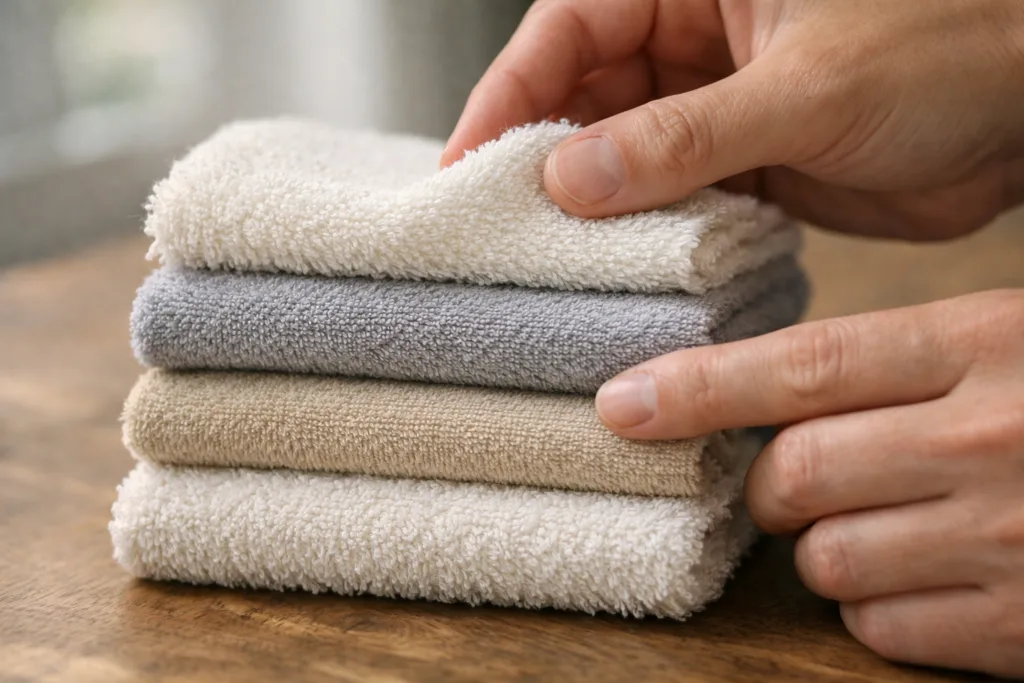
Reliable suppliers view after-sales service as a partnership, not a formality. An open, ongoing channel of communication helps prevent small issues from becoming operational roadblocks, building the foundation for a trustworthy supply relationship.
Material Comparison: Cotton, Microfiber, Bamboo, and Blends
The right towel material impacts everything from cost to customer experience. Wholesale towels come in several popular fabrics — each with unique advantages and ideal applications.
| Material | Key Strengths | Best For | Typical Trade-offs |
|---|---|---|---|
| Combed Cotton | Softness, absorbency, durability | Hotels, spas, premium retail | Slower drying, higher cost |
| Microfiber | Fast drying, lightweight, lint-free | Gyms, sports, cleaning, budget promo | Different hand feel vs. cotton, lower plushness |
| Bamboo Blend | Eco-friendly, silky-soft, antibacterial | Eco-focused brands, wellness | Slightly higher cost, limited color vibrancy |
| Cotton-Poly Blends | Cost-efficient, wrinkle-resistant | Promotional, price-sensitive bulk | Reduced absorbency/softness |
Cotton towels are praised for their plush feel and absorbency, but they take longer to dry and tend to cost more. Microfiber towels are thin, light, and dry fast, ideal for fitness centers or promotional giveaways, but can feel less luxurious.
Bamboo introduces a silky luster with antibacterial perks, appealing for wellness or eco-targeted businesses.
It’s important to align your choice with the use case, balancing cost, performance, and end-user preference. Circe Towel, for example, often advises buyers to select cotton for hotel bath towels and microfiber for gym or cleaning contracts, optimizing both feel and practicality. Always check for fabric consistency and performance standards from your supplier before scaling any material selection.
Towel Construction and Manufacturing Techniques
Towel construction significantly influences performance and longevity. Choices such as terry, velour, and jacquard constructions each bring unique features for wholesale bath towels and specialty lines.
- Terry: Looped pile on both sides for maximum absorbency and softness. Ideal for bathing, hospitality, and spa use.
- Velour: Sheared surface feels smooth and showcases dyes well — popular for promotional towels and beach use where vivid prints are needed.
- Jacquard: Woven-in designs allow for brand logos or patterns without printing. Durable, elegant, and great for hotel and corporate identity.
Other options, such as waffle weave or honeycomb textures, are engineered for faster drying and lighter weight, suiting busy gyms or wellness retreats. Construction affects absorbency, plushness, and even the ability of the towel to properly hold embroidery or printed logos. For example, detailed embroidery works best on high-GSM terry, while digital prints pop on smooth velour or microfiber surfaces.
When specifying towels for your application, check that the construction method aligns with your durability and branding goals. Avoid constructions that might weaken over repeated washes or with certain decorations — especially if the towels will face heavy-duty hospitality laundering.
Design and Spec Checklist for Bulk Orders
Organizing your bulk towel procurement with a clear checklist ensures the right fit for your business and end-user. Below is a sample evaluation table for your reference:
| Specification | Why It Matters | Recommended Questions |
|---|---|---|
| Size | Fit for use case and branding | Are sizes standard (e.g., 70x140cm) or custom? |
| GSM (Weight) | Absorbency, feel, and cost | What GSM is used for bath vs hand towels? |
| Material | Performance and satisfaction | Cotton, microfiber, or blends? |
| Edge Finishing | Durability and appearance | Is hemming double-stitched? |
| Logo/Decoration | Branding and feel | Embroidery, jacquard, or digital print? |
| Absorbency/Softness | User comfort, hospitality grade | Are lab test reports available? |
| Colorfastness | Longevity, retail shelf impact | How do towels perform after washing? |
| Packaging | Channel readiness | Bulk, retail ready, or gift box packaging? |
Always align order specifications to your market — e.g., high-GSM, plush towels for luxury hotels, but lighter, quick-dry options for gyms or budget promotions. This due diligence minimizes procurement errors and costly returns.
Quality Control and Testing Criteria
Quality assurance is just as important as price or stock depth when buying wholesale towels bulk. Towel quality is measured through several core criteria:
- Absorbency: High-GSM and long-staple cotton typically yield superior water absorption. Confirm with lab test reports.
- Durability: Check for resistance to tearing, shrinkage, fraying, and color loss after repeated industrial laundering cycles.
- Wash Performance: Reliable towels should compress and recover shape without heavy linting or thinning over time.
- Stitching: Consistent, dense stitching especially along edges or banding guards against unraveling. See 7 Ways Hemming & Stitching Shape Towel Edge Durability.
- Colorfastness: Evaluate with actual machine wash tests or certifications relevant to your market.
Ask suppliers for quality test certifications or samples with lab reports. Don’t hesitate to request detailed test methods for absorbency, GSM verification, and shrinkage. Better yet, review case studies of other procurement failures (like excessive shrinkage or print color fade) and confirm supplier’s processes prevent these outcomes.
Maintaining stringent quality control translates to fewer product returns, stronger brand reputation, and lower total long-term costs.
Common Mistakes to Avoid in Towel Procurement
Some of the most frequent errors in sourcing wholesale bath towels include misjudging GSM, selecting the wrong fabric blend, or overlooking construction defects. Choosing towels that are too thin (low GSM) for hotel or spa use leads to fast wear and negative guest feedback. Microfiber alternatives may underwhelm in settings expecting cotton softness.
Improper finishing can cause loose stitching, while poor colorfastness or print execution results in fading and a worn-out appearance. Buyers often rush into bulk commitments without reviewing test samples or fail to validate logo/decoration compatibility with the towel’s construction. Early-stage sample evaluation is critical for flagging any hand feel or aesthetic concerns before large-scale investment.
Finally, focusing solely on price is a recipe for supply chain headaches — quality, support, and supplier accountability must be equally prioritized.
Your Complete Ordering Guide
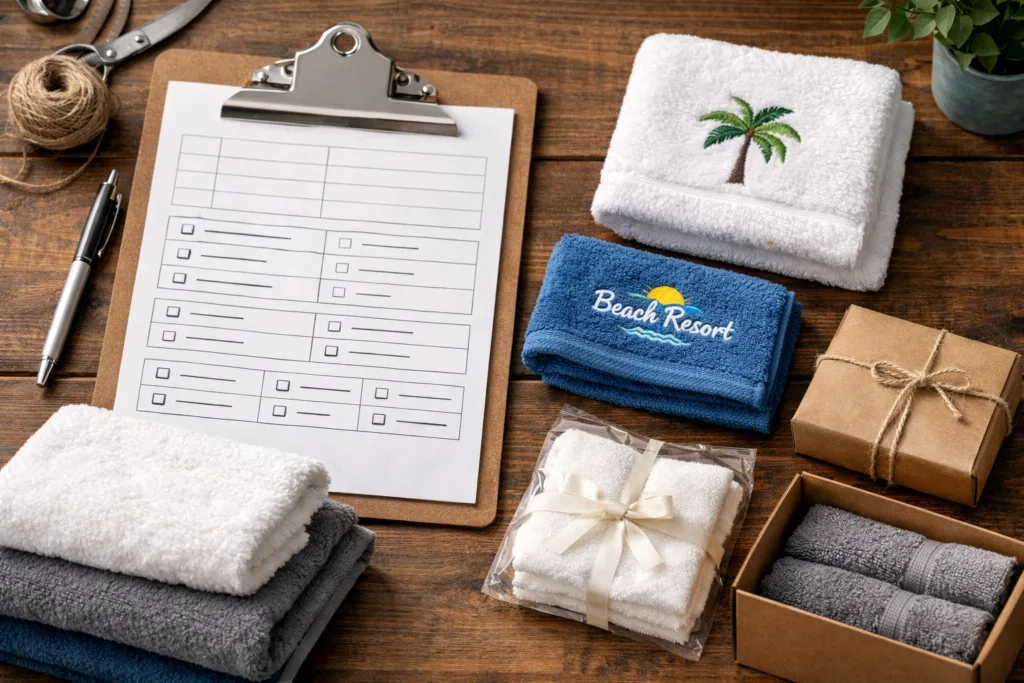
Ordering wholesale towels bulk is a structured process that, when followed carefully, prevents costly mistakes.
- Understand MOQ and Lead Times: Clarify minimum order quantity and typical delivery timeframes. Lead times may vary by towel type or customization, so request explicit commitments.
- Sampling and Art Proofs: Always begin with samples. For decorated towels, ask for digital proofs or actual run samples (e.g., embroidery, jacquard, or printed logos).
- Order Preparation: Consolidate specifications for size, GSM, color, material, and packaging so nothing is lost in translation between design and production teams.
- Packing and Distribution Needs: Match packaging formats to your business requirements: bulk-packed for industrial usage, shelf-ready for retail, or individually boxed for promotional gifting.
- Shipping Choice: Compare sea, air, and express options for cost and speed. Peak season often increases freight rates and delivery times — plan accordingly.
For detailed guidance on sampling, manufacturing, and packaging, Circe Towel provides educational content in the Complete Guide to Towel Manufacturing. Proper order preparation means you get exactly what you expect — no surprises upon delivery.
Frequently Asked Questions
What is the best material for hotel towels?
Long-staple combed cotton is recommended for hotel towels because it combines absorbency, softness, and durability through many industrial washes, providing guests with a consistently premium experience.
How do I determine the right GSM for my needs?
The ideal GSM depends on your use case: hotels and spas often choose 500–650 GSM for extra plushness, while gyms or promotions may prefer lighter 350–450 GSM towels for quick drying and cost efficiency.
Can I get custom designs and logos on towels?
Yes, most wholesale towel suppliers offer branding options such as embroidery, jacquard weaving, and digital printing to accommodate logos and custom designs suited to your brand or event.
What are the standard lead times for bulk orders?
Standard lead times typically range from 20 to 45 days depending on order size, material, and level of customization, with rush service sometimes available for urgent requirements.
How are bulk orders packaged for resale?
Packaging options include bulk cartons, retail-ready wrapping, and custom boxes or sleeves, depending on your preferred channel—always clarify packaging standards with your supplier in advance.
What should I expect in terms of quality control?
You should expect quality checkpoints for absorbency, GSM, stitching, and colorfastness as well as access to test reports or samples prior to shipment from reputable towel wholesale suppliers.
Related Reading
- Get a Practical Sourcing Blueprint with our Bulk Towels Procurement Guide
- Mastering MOQ & Lead Times: Your Deep Dive into Towel Manufacturing
- Discover How Absorbency, Loops, and Yarn Twist Impact Towel Performance
- Boost Towel Lifespan: Hemming & Stitching Techniques Demystified
- Logo Decoration Explained: Picking the Right Technique for Brand Towels