
Towel Weaving Process Overview
The towel weaving process starts long before yarns touch the loom. It requires a strategic approach to fibers, yarn spinning, and loom setup. Every technical choice, from warp and weft density to loop height calibration, directly impacts towel performance for hotels, spas, gyms, and retail brands alike.
- Fiber and yarn selection—cotton, bamboo blends, microfiber
- Yarn spinning—ring-spun, open-end, or combed
- Terry loom setup—warp, weft, pile, and ground yarn specifications
- Dyeing and color management
- Specialty finishing for softness, strength, and colorfastness
Fibers: Foundations for Absorbency and Softness
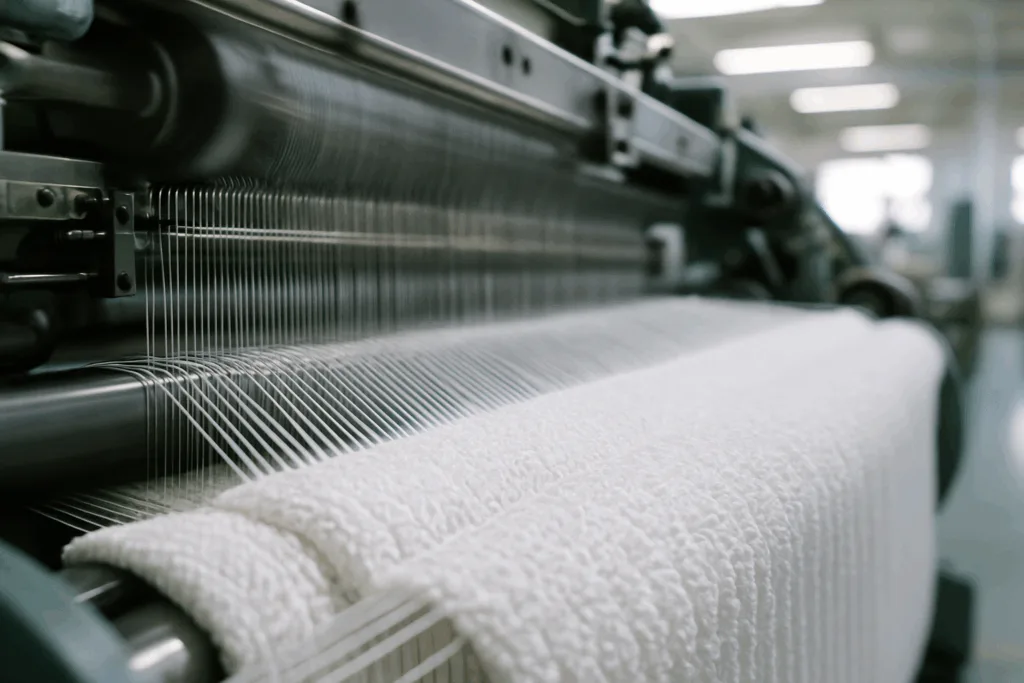
Fibers are the soul of a towel. Circe Towel incorporates long-staple combed cotton and premium Egyptian or Turkish cotton for their superior moisture-wicking properties, as well as bamboo viscose blends for eco-conscious buyers and microfiber for sports/quick-dry segments. Fiber selection is informed by the towel’s end-use and desired handfeel.
Key Fiber Types:
- Combed, long-staple cotton: Soft hand, minimal lint, high durability
- Egyptian/Turkish cotton: Extra-fine, long loops, enhanced absorbency
- Bamboo/cotton blends: Antibacterial, sustainable, silky sheen
- Microfiber (polyester/nylon): Lightweight, rapid dry, robust for sports
Performance Metrics
Towel quality is often measured by GSM (grams per square meter), which influences plushness, drying speed, and cost structure:
| Fiber/Weave | Typical GSM | Absorbency | Dry Time | Best Use Scenario |
|---|---|---|---|---|
| Combed Cotton Terry | 450–700 | High | Moderate | Bath, Hotel |
| Egyptian Cotton Terry | 600–900 | Very High | Moderate | Luxury, Spa |
| Bamboo/Cotton Blend | 500–750 | High | Moderate | Eco Hotel, Spa |
| Microfiber Suede | 180–300 | Good | Fast | Sports, Gym |
| Waffle Cotton | 350–550 | Moderate | Quick | Guest, Sauna |
The Towel Loom: Precision Engineering at Scale
The heart of the towel weaving process is the terry loom—an intricate machine that crafts the signature loops responsible for unrivaled absorbency. Circe Towel utilizes high-speed jacquard and dobby looms equipped for single and double terry construction, vital for producing intricate borders and custom logos.
Loom Setup and Warp/Weft Density
Precise control of warp and weft densities is essential. Higher densities yield plusher towels but require advanced selvage and tension management. Towel looms often combine two warps—a ground warp and a pile warp—to weave base cloth and loops in a single process. Automated systems at Circe Towel ensure consistency and reduce defects over runs.
Terry Weaving: How Loops Are Born
The terry weaving process alternates between binding the ground yarns and raising the pile to form loops. The proportion of pile to ground yarn (the pile ratio) must be carefully controlled: more pile means greater absorbency but may reduce durability if the structure isn’t balanced. Machine calibration sets loop height—commonly between 6–12mm, modulated for product application (face, bath, sheet).
Loop Structure & Height Control
- Long loops increase softness and absorbency.
- Short loops are more compact, enhancing durability and reducing snags.
- Double terry weave builds in two-sided loops for ultra-plush hotel towels.
- Jacquard and border weaving integrates designs without sacrificing function.
Weaving Defect Prevention
Loop height consistency and selvage integrity are checked via in-line monitoring. Circe Towel’s production lines employ laser measurement for loop height uniformity and tension control systems to minimize pilling and prevent loop pull. All adjustments directly improve product lifespan and brand trust.
Towel Weaving Process: Detailed Steps
The towel weaving process at Circe Towel includes strategic project management, total quality control, and bespoke service for each client’s requirements. Here’s an in-depth look at each stage:
- Yarn Preparation: Fibers are carded, combed (if needed), and spun to precise twist levels. For colorfastness, Circe Towel frequently deploys yarn-dyeing before weaving for stripes and Jacquard towels.
- Loom Warping: Warps are wound onto beams—pile, ground, and decorative threads kept segregated for pattern work. Tension and alignment are meticulously set.
- Terry Weaving: Looms interlace warp/weft and alternate pile formation over reed cycles. Loop height sensors verify the result in real time.
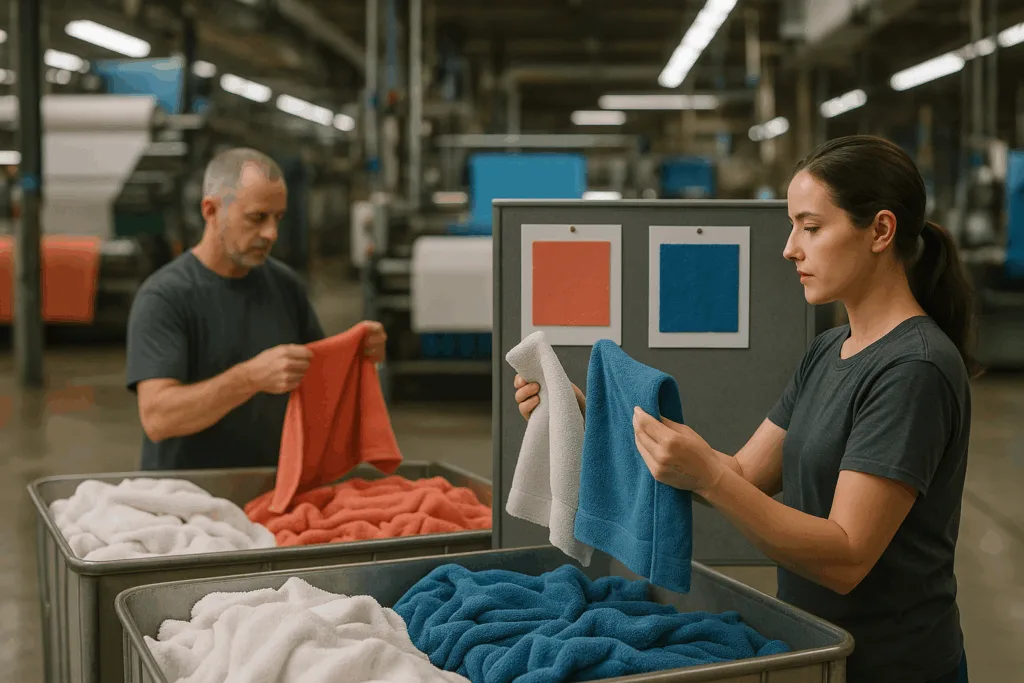
- Quality Inspection: Operators perform visual checks for skipped loops, pattern misalignment, and selvage flaws.
- Pre-Finishing: Towels are pre-shrunk and stabilized by tumbling or steaming, ensuring minimal size change on end use. Edges are hemmed, borders woven or stitched.
- Dyeing & Printing: Bulk towels undergo vat or reactive dyeing. For printed beach towels or promotional items, digital/sublimation techniques are utilized with careful color matching following client approvals.
- Softening & Finishing: Enzyme washes, silicone softeners, and low-VOC treatments enhance handfeel, anti-pilling and, optionally, antimicrobial properties. Colorfastness is validated via AATCC tests 61/8/162.
- Final Inspection & Testing: Product is tested for absorbency (AATCC 79), dimensional change (AATCC 135/150), tensile strength (ASTM D5034), pilling (ASTM D3512/ISO 12945), snagging (ASTM D3939), and lint shedding. Compliance with OEKO-TEX STANDARD 100, GOTS for organic, and BSCI/WRAP/SEDEX standards ensures safe, sustainable output.
- Packing & Delivery: Towels are packaged by client specification—belly bands, ribbons, compostable bags or vacuum packs, then boxed per Incoterms EXW/FOB/CIF/DDP.
- Bulk & Sample Management: Full sampling workflow—LAB dips, PP and TOP samples—guarantees shade, size, and feel before mass production.
Special Weave Structures: Tailoring Performance
Today’s clients seek performance fabrics for targeted use cases. Beyond standard terry, advanced weaves from Circe Towel yield differentiated handfeel and technical benefits:
- Zero/Low Twist Terry: Larger, airier loops for maximum softness, slightly quicker drying due to open structure.
- Waffle/Honeycomb: Grid-like form for quick dry, spa/light-weight towels.
- Velour (sheared): Top loops clipped for a smooth, glossy face—ideal for printing and promotional towels.
- Jacquard: Complex woven designs, logos, and borders integrated at the loom.
Dyeing, Printing & Finishing: Bringing Color and Character
Color is carefully built into the towel during yarn preparation or post-weaving dye cycles. For deep, lasting shades, reactive and vat dyes are used on cottons, while microfiber towels use sublimation or pigment prints. Strict approval processes ensure bulk meets client expectations. Finishing treatments—including enzyme and silicone softeners, anti-pilling, and antimicrobial washes—optimize both handfeel and lasting durability. Each towel batch is pre-shrunk to maintain dimensional accuracy after repeated wash cycles.
Circe Towel: Manufacturing Leadership at Every Stage
Circe Towel’s entire process is built to deliver consistent, measurable results for global B2B towel buyers. The company’s advanced loom park allows efficient switching between standard and custom weave structures, while in-line quality assurance and sustainable finishing reflect both industry best practices and the highest client standards. Packaging and fulfillment workflows—tailored for bulk hospitality orders or branded retail programs—underscore Circe Towel’s reliability in every market segment.
Towel Weaving Process
The heart of towel weaving process mastery is this: every input, from fiber type and loop architecture to loom tension and dye chemistry, converges to serve the buyer’s real-world needs. Circe Towel’s investment in high-speed terry looms, laser loop control, and international standard compliance enables the company to deliver towels known for their absorbency, colorfastness, and comfort—whether destined for luxury hotels, branded spas, sports clubs, or family homes.
Expert Takeaway: “The secret to luxury towel performance is managing every variable—fiber, GSM, weave density, and loop precision—without compromise. Meticulous process control creates towels that delight users and stand up to rigorous institutional laundering.”
Practical Buyer Guidance
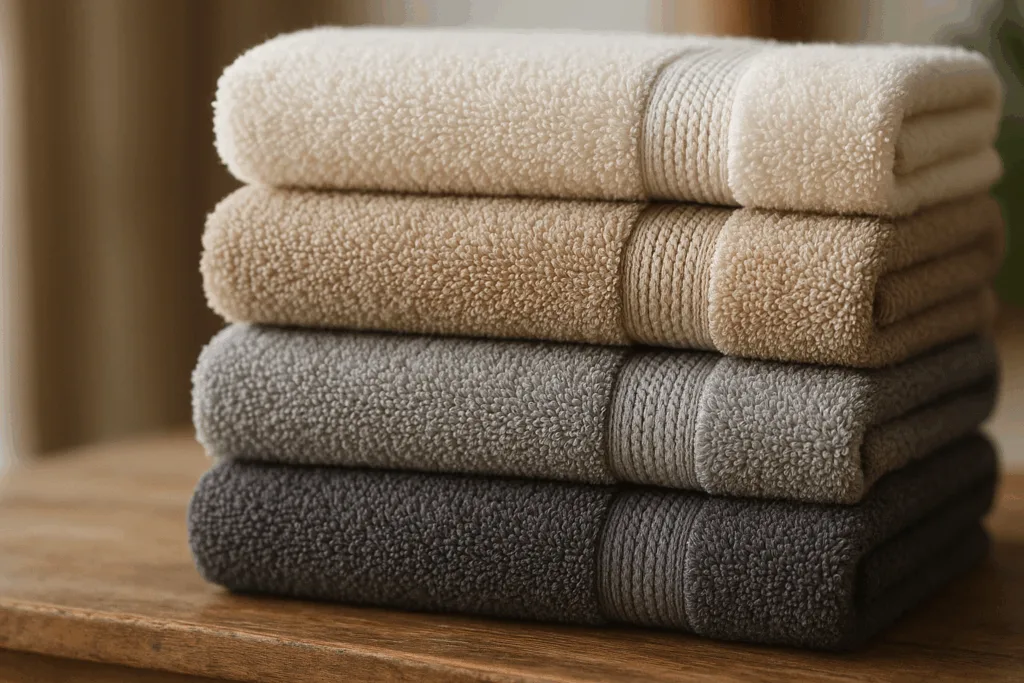
When specifying towels, consider GSM, fiber blend, preferred weave (single/double terry, jacquard, or special finishes), and required certifications (such as OEKO-TEX or GOTS). Clarify intended use—bath, spa, gym, promotional—and packaging needs to ensure a match between technical build and market requirements. Circe Towel offers full OEM/ODM support, from design to sample to bulk order, ensuring fit-for-purpose product every time.
Frequently Asked Questions
What is the towel weaving process?
The towel weaving process involves spinning fibers into yarn, setting up ground and pile warps, weaving loops on a terry loom, dyeing, finishing, and quality testing to produce towels with optimal absorbency, softness, and durability.
How is loop height controlled during towel weaving?
Loop height is set on the terry loom via pile warp tension and precise machine calibration. Sensors and in-line checks ensure uniformity, which impacts softness and absorbency.
What fibers are best for luxury towels?
Luxury towels are typically crafted from long-staple combed cotton, Egyptian or Turkish cotton for superior absorbency and handfeel, though bamboo blends offer added sustainability and softness.
What quality tests are performed on woven towels?
Critical towel tests include absorbency (AATCC 79), dimensional stability (AATCC 135/150), colorfastness (AATCC 61/8/162), tensile strength (ASTM D5034), and pilling/snags tests for durability.
What is terry weaving?
Terry weaving is a specialized loom technique that interlaces pile warp yarns with ground yarns, forming loops on one or both sides of the fabric, essential for absorbency and softness in towels.
How does Circe Towel ensure product consistency and compliance?
Circe Towel employs high-speed looms, in-line loop sensors, rigorous AATCC/ISO standard testing, and internationally recognized compliance certifications like OEKO-TEX and GOTS.