
Introduction to Custom Towels
Across hospitality, sports, retail, and wellness industries, towels are essential—not just for their practical uses, but for their power in branding. Companies now routinely look for creative ways to stand out with custom towels with logo, making branding a central part of the guest, member, or customer experience.
Choosing the right decoration method can have major impacts on both cost and the perceived quality of your brand. The top custom towel options are custom printed towels, custom embroidery towels, and jacquard towels. Each offers unique advantages for different requirements, from vivid artwork and texture to tactile feel and long-term durability.
This guide compares all three methods practically—so you can make the best sourcing decision, whether you need hundreds of promo beach towels, premium hotel bath linens, or gym towels that match your fitness brand. The choice affects everything from project budgets to the way your brand logo appears after a year of washing. Let’s explore which approach truly fits your needs.
Definitions of Decoration Methods
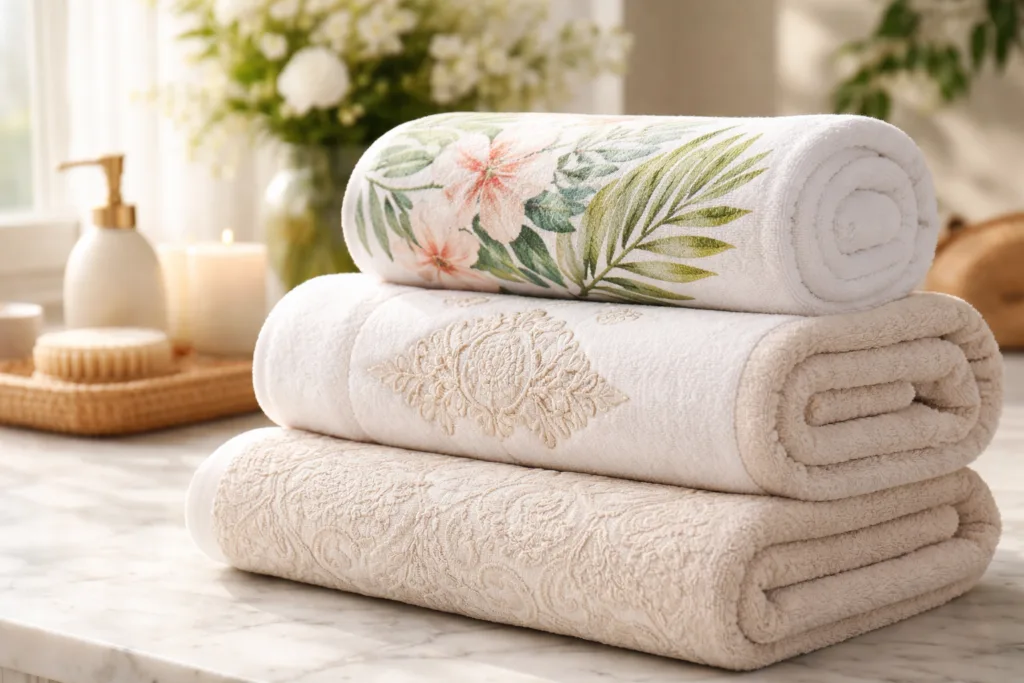
Understanding the methods behind custom printed towels, custom embroidery towels, and jacquard towels helps clarify which is right for your project.
Custom Printed Towels use techniques like screen printing, digital printing, and reactive dye printing. Printing brings your logo or design directly onto the towel’s surface. This method is ideal for multi-color, photo-realistic, or gradient designs. The print sits on or in the fibers, depending on technology—digital prints often bond deeper, while surface prints may have a slight hand feel.
Custom Embroidery Towels are produced by sewing your logo or graphics with colored threads, creating raised stitched textures. Embroidery excels for single or few colors and delivers a luxurious, dimensional look. Logos have a high-impact tactile quality and are very resistant to wear, though intricate color gradients or fine details are not embroidery’s strength.
Jacquard Towels integrate the design directly into the weaving process. Instead of surface decoration, the motif or text is created by alternating different colored yarns, resulting in a plush, reversible, and color-stable towel with your artwork woven as part of the towel itself. This method accommodates bold patterns and typographic logos particularly well.
Each process produces a distinct visual style: printing enables high-resolution color art; embroidery adds luxury and durability; jacquard offers sophistication and a premium feel, while also being highly resilient to washing and abrasion.
When it comes to durability, embroidery and jacquard generally outperform delicate prints—though high-quality digital print on cotton can maintain brilliance with proper care. Maintenance is usually simple, but always follow material and decoration care recommendations for best results.
Material Comparison for Towels
The ideal towel material depends on your chosen customization process and end-use. For custom towels with logo, consider how cotton, microfiber, bamboo, and blends complement each decoration method:
- Cotton: Universally high absorbency, softness, and a classic hand-feel. Best for all methods—especially favoring embroidery and jacquard, which benefit from robust yarns and rich color saturation.
- Microfiber: Exceptionally quick-drying and light, with high wicking power. Popular in gym and promotional towels, it pairs well with digital printing but can be tricky for embroidery due to its fine structure. Not typically used for jacquard techniques, as weaving parameters differ.
- Bamboo and Blends: Provide eco-friendly, soft, and anti-microbial options. Bamboo blends print beautifully and feel gentle, though they can present challenges for very tight embroidery stitching. Blends add value in wellness or spa settings.
Your material choice influences absorbency (higher in cotton), quick-drying performance (microfiber), and softness versus plushness. For hotel-quality towels, premium combed cotton delivers long-term softness and holds up to embroidery and jacquard. Gym and car care applications may favor microfiber or technical blends for weight and drying speed.
If your application requires vivid, edge-to-edge color, materials such as velour-finished cotton or high-quality microfiber support superior printed image quality. Embroidery and jacquard both benefit from terry-looped cotton for raised effects and thick absorption.
For more on material selection and practical branding impacts, see the Buyer’s Guide: Custom Towel Options, Materials, and Branding Strategies.
Construction Techniques and Their Implications
The way a towel is constructed determines much of its texture, durability, and suitability for custom towels with logo branding. The three main types are terry, velour, and waffle constructions.
Terry towels—with their looped pile—offer maximum absorbency and plushness, making them popular for both jacquard weaving and large logo embroidery. Velour towels are shaved on one side for a smooth, velvet-like feel (excellent for rich printing) but sacrifice a bit of absorbency compared to classic terry. Waffle towels, with their signature pattern, are lighter and quick-drying, often chosen for technical, gym, or promo use—ideal for embroidery on flat surfaces.
Construction affects decoration: printing demands a smooth surface (velour or sheared cotton), while terry is ideal for embroidery stitches and jacquard patterns. Over time, denser, high-GSM towels better retain their logo’s appearance, with less risk of pilling or design distortion.
Unique towel concepts can combine constructions; for example, velour fronts with terry backs to merge print vibrance with practical absorbency.
For more technical details, explore 8 Expert Insights into Towel Absorbency, Loops & Yarn Twist and 7 Ways Hemming & Stitching Shape Towel Edge Durability.
Design & Specification Checklist for Custom Towels
Buyers of custom towels with logo benefit greatly from a clear design and specification checklist. Here are the essential factors to consider before ordering:
- Size & purpose (bath, hand, face, gym, beach, or golf towel)
- GSM (weight/thickness) for absorbency, plushness, and transport requirements
- Base material: cotton, microfiber, bamboo blend, or mixed fiber
- Colorways and colorfastness needs
- Edge finishing: regular hem, double stitching, or decorative fringes
- Packaging: retail folding, bulk packs, polybags, or private label boxes
- Logo placement: center, edge, corner, or all-over (method affects options)
- Target absorption and softness ratings
- End-use market preferences (hospitality, gym, retail, or promo)
| Specification | Printed Towels | Embroidered Towels | Jacquard Towels |
|---|---|---|---|
| MOQ | Low to mid (200–500) | Low (100–300) | Mid to high (600+) |
| Design Complexity | High / Full color, gradients | Medium / Simple multi-color | Bold shapes, limited color count |
| Durability | Good (with proper print tech) | Excellent | Excellent |
| Unit Price | $–$$ | $$–$$$ (by stitch area) | $$–$$$ (by pattern scale/GSM) |
| Logo Placement | Anywhere / Full surface | Edge, band, panel | All-over woven |
| Recommended Application | Promo, beach, gym, fashion | Hospitality, spa, golf, retail | Luxury retail, hotel, exclusive promo |
Tailor these specifications to your end-user. For major hospitality programs, choose colors and logo placement that align with brand guidelines. In promotional or sports applications, lighter GSM and large visuals may take priority, while retail towels can justify higher fabric quality and special packaging.
Quality & Testing Considerations
Effective sourcing of custom towels with logo means never overlooking quality metrics. Start by assessing absorbency using standardized soak tests; true hotel-grade cotton can exceed 600% water uptake.
Test wash durability with repeated laundering—both print adhesion and embroidery stitches should remain stable, edges intact, and colors vivid after 20+ cycles. Colorfastness tests (rubbing, sunlight, washing) confirm the logo won’t bleed onto other laundry or fade easily.
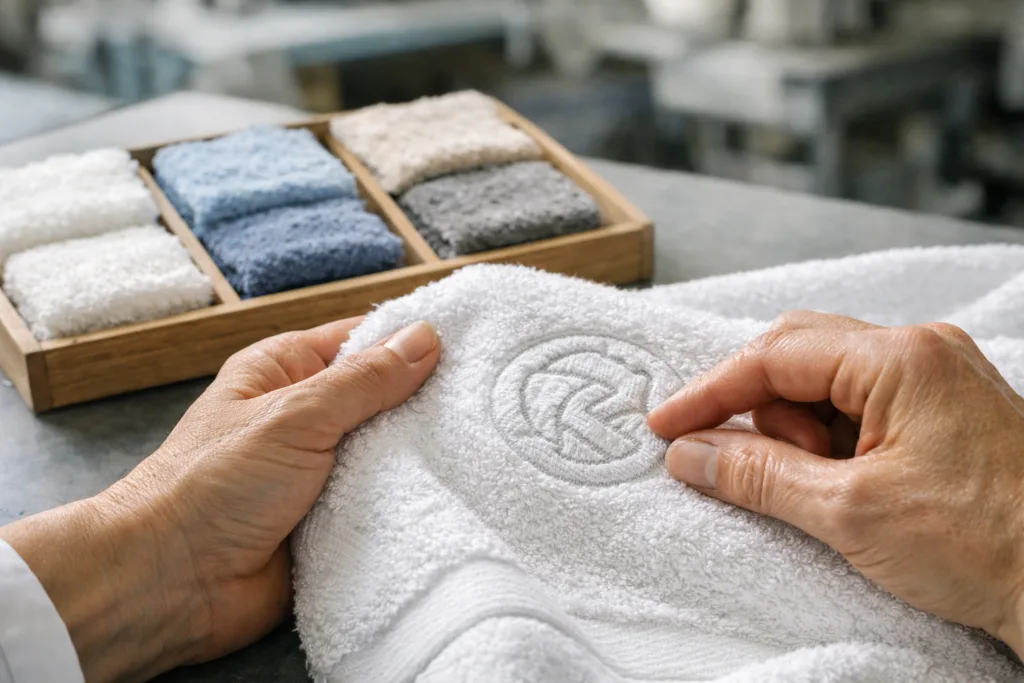
Acceptable shrinkage rates for high-quality towels typically range under 5%. Excess shrinkage is a red flag for insufficient pre-shrinking or poor finishing. Consistent, tight stitching at edges and borders is a mark of manufacturing excellence and resists fraying—explore further in 7 Ways Hemming & Stitching Shape Towel Edge Durability.
Finally, inspect for linting and pilling, especially important for spa and facial towels. Lint-controlled combed cotton and advanced microfiber blends are recommended for applications with sensitive equipment or clientele.
Industry and Application Fit
The best decoration method for custom towels with logo depends on industry and market expectations.
In hospitality, five-star hotels often select embroidered or jacquard towels that maintain their brand standards through hundreds of wash cycles. For example, a luxury hotel chain sourcing jacquard cotton beach towels with graphic design guarantees their bold monogram remains visible and tactile, even after heavy guest use.
For gyms and sports settings, the demands shift toward lightweight, quick-drying, and functional branding. Custom gym towels (such as Circe Towel’s waffle microfiber gym towel with hook) often showcase printed logos for low minimums and maximum visual impact. Waffle and microfiber options dry quickly, and printing methods allow for bold all-over designs ideal for frequent laundering and repeated high-visibility use.
Retailers favor decoration methods that balance aesthetics and durability, such as jacquard or finely stitched embroidery that appeals to brand-conscious shoppers. Limited edition towels with intricate patterns or unique border designs enhance perceived value. For promotional campaigns, custom printed towels offer cost-effective, eye-catching branding for event giveaways or seasonal launches.
Gifting and seasonal products may push for highly creative designs with softer textures and custom packaging—matching the trend toward experiential retail. Overall, your choice should align with your brand’s aesthetic requirements, the practicality of end-use, and the expected wash and wear cycles.
For detailed towel manufacturing insight, see Jacquard Towel Manufacturing Explained.
Customization Options Beyond Decoration
Brand customization doesn’t stop at the main decoration method. For custom towels with logo, further personalize with:
- Unique border weaves, colored pipings, or embroidered edges
- Contrasting or woven-in logos on jacquard borders
- Private label woven tags, logo-printed care labels, or branded packaging sleeves
- Special folding, ribbon, or hanger-packaged assemblies for retail display
Private label production allows brands to control every detail, from logo positioning to retail-ready packaging. Circe Towel, for instance, collaborates with client brands to deliver custom size and GSM, integrate labels, and offer tailored OEM and ODM solutions—ensuring even bulk export packaging matches brand standards.
Thoughtful enhancements like reversible jacquard textures or embroidered monogram bands elevate perceived value in hospitality and retail, further distinguishing your brand in the market.
Common Mistakes and Troubleshooting Tips
Avoiding critical mistakes can save time, money, and future disappointment with bulk custom towels with logo orders.
One common issue is choosing the wrong GSM—too low for plushness, resulting in limp towels, or too high, making them heavy and slow-drying for sports use. Select fabric based on application: cotton for classic absorbency, microfiber for performance, blended for spa or wellness towels.
Complex designs don’t always translate well to embroidery or jacquard. For multicolor gradients or photo graphics, print methods perform better. Conversely, choose embroidery or jacquard for simpler logos needing exceptional durability.
Always request pre-production samples or proofing to check for color accuracy, fade-resistance, tight stitching, and border quality. Do not skip edge or linting reviews, as these affect both user experience and the perceived value of your brand.
Ordering Guide for Custom Towels
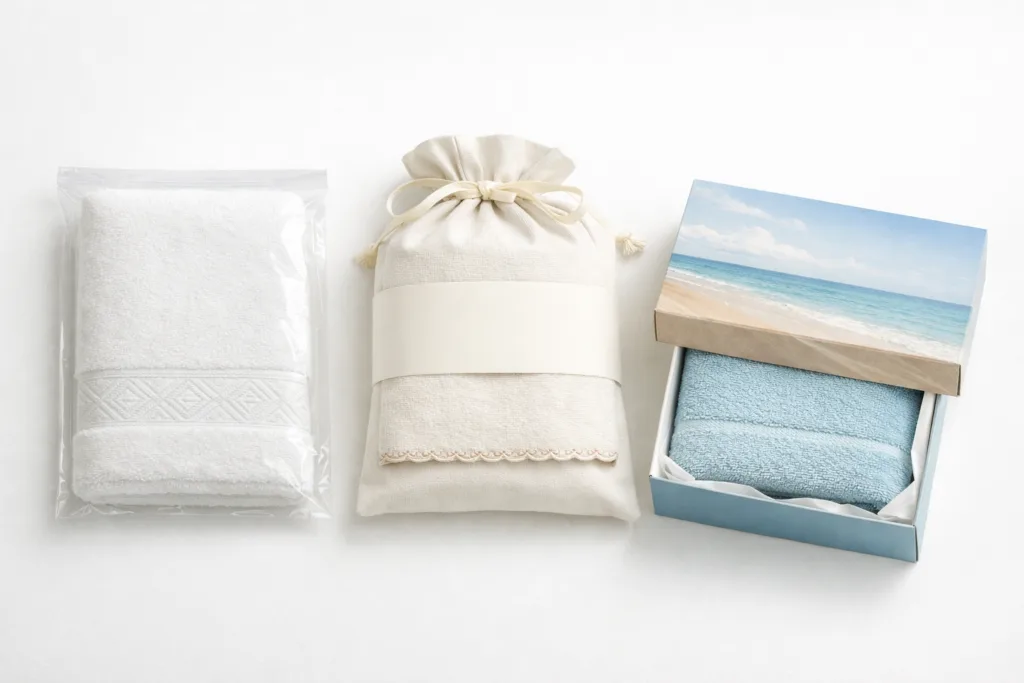
Sourcing custom towels with logo is a process with several decision milestones:
- MOQ (Minimum Order Quantity): Varies by method—printing typically starts at 200–500 units, embroidery as low as 100 in some cases, while jacquard may require 600+ due to loom setup and run efficiency.
- Lead Time: Sampling and bulk lead times are longer for jacquard (due to custom weaving) and shorter for digital or screen printing. Allow 3–4 weeks for sampling, plus 4–8 weeks for production and transit.
- Sampling & Artwork: Provide vector logo files and color targets. Review and approve detailed digital proofs or knit-outs for jacquard before mass production begins.
- Proofing & QA: Never disregard the pre-shipment proof and quality check (including edge stitching, labeling, and packaging). This is crucial for quality assurance and avoiding surprises.
- Packing & Shipping: Optimize for project needs—retail towels may require individual wrapping, bulk programs use compact export cartons.
For a deeper breakdown, turn to Private Label Towels: Your Complete Guide to MOQ and Cost Structure and 20 Must-Ask Questions for Smooth Towel Sourcing: From Samples to Shipping and Restocking.
Frequently Asked Questions
Which decoration method lasts longest on custom towels with logos?
Both embroidery and jacquard offer exceptional longevity—embroidery uses durable threads that withstand frequent washing, while jacquard weaves your logo directly into the fabric, making it resistant to fading or abrasion.
Can I get complex, multi-color gradients on custom towels with logo?
Complex multi-color or gradient designs work best with custom printed towels; embroidery and jacquard are limited to bold shapes and a moderate number of solid colors.
How do material choices impact price and performance for custom printed towels?
Cotton provides luxury feel and high absorbency, microfiber offers lighter weight and quick drying at a lower price, while blends can add eco-friendly features; each impacts print quality and cost per unit.
What’s the difference in MOQ between decoration techniques?
Printed towels generally have lower MOQs than jacquard due to simpler setup, with embroidery often offering the lowest minimums but with higher per-item costs for large stitch areas.
How do I ensure colors match my brand on custom towels with logo?
Always request physical or digital strike-offs, specify Pantone colors, and work closely with your manufacturer to proof color samples before final production; colorfastness testing is also essential.
Are custom towels with logo machine-washable and safe for commercial laundry?
Yes, when produced with quality materials and approved decoration methods, custom towels withstand machine washing—even in commercial settings—if manufacturer care instructions are followed.
Related Reading
- Step-by-Step Blueprint to Launch Your Branded Towel Business
- 13 Pro Tips to Pick the Right Towel Manufacturer
- A Clear Guide to Jacquard Towel Manufacturing Methods
- Embroidery, Jacquard, or Printing? Custom Logo Towel Methods Demystified
- Your Bulk Custom Towel Manufacturing Checklist: MOQ, Samples, and Quality Explained