
Introduction to Choosing a Towel Manufacturer
When exploring how to choose a towel manufacturer, the decision you make directly affects your brand’s quality and reputation. The towel industry serves a range of markets—hospitality, retail, sports, wellness, and promotions—each with unique product and branding requirements. Searching through lists of towel manufacturers can seem daunting, but the right partner delivers consistent, high-quality products on time and aligned with your specifications.
Why is the factory’s fit so critical? A skilled towels manufacturer doesn’t just provide towels—they co-create your product success through technical know-how, sourcing expertise, and reliable production. Key factors influencing your choice include manufacturing experience, material science, customization capabilities, minimum order quantities (MOQ), lead times, quality assurance, certifications, and communication efficiency.
This article offers a step-by-step guide to evaluating towel manufacturers, helping you confidently assess factories and avoid common pitfalls. Understand what truly matters—beyond price—to secure a supplier who supports your brand’s long-term vision. Custom manufacturing options like GSM adjustments, private label packaging, and unique decorations can set your brand apart, but only if your factory collaborates effectively.
Understanding Material Options
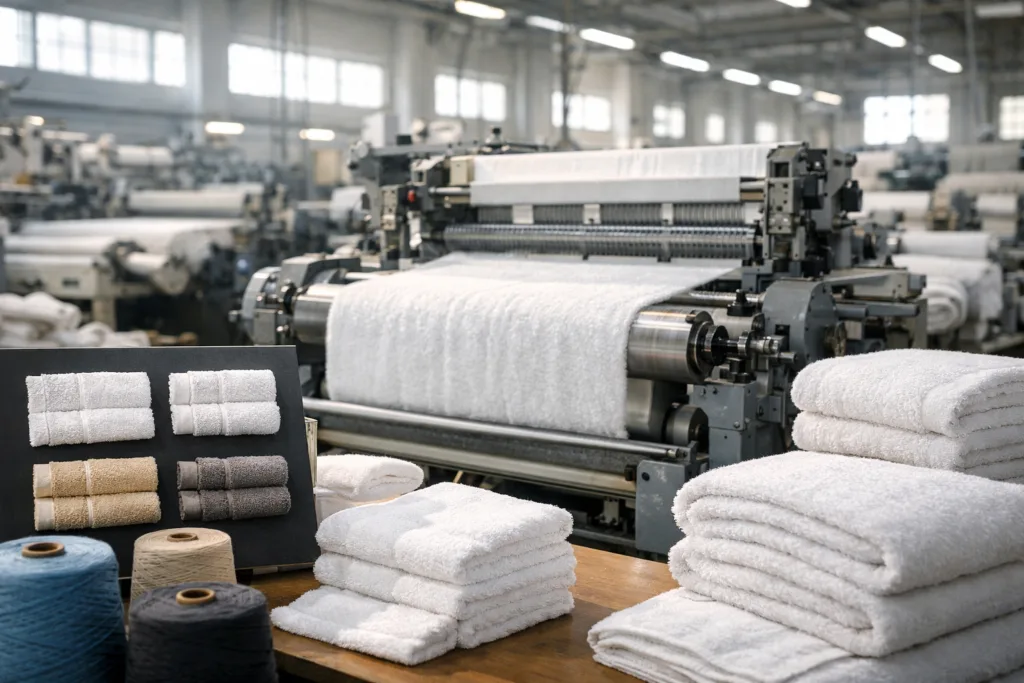
Material selection defines your towel’s core qualities—absorbency, softness, durability, and market appeal. High quality towel manufacturers invest in fabric development and sourcing, allowing you to choose among genuine cotton, advanced microfiber, sustainable bamboo blends, or tailored fabric mixes. But what are the real differences?
- Cotton: Classic, natural, highly absorbent. Ringspun and combed cotton offer supreme softness and durability, ideal for luxurious hotel towels or spa applications. Organic or long-staple cotton enhances value but may raise costs. Learn why combed and ringspun differences matter in this in-depth guide.
- Microfiber: Engineered for quick drying and high absorbency, with a lightweight feel. Excellent for gym, sports, and automotive care. However, some buyers find microfiber can lack the plush “natural” touch that cotton provides.
- Bamboo & Blends: Bamboo fibers bring eco-friendly credentials, antibacterial properties, and soft luster—suited for wellness, baby, and upscale settings. Combine with cotton for durability but check for shrinkage or colorfastness concerns.
- Other Blends: Polyester-cotton mixes may reduce lint and improve durability for institutional use, but could trade off softness.
Material impacts every end use. For gym towels, microfiber or high-GSM cotton maximize sweat absorption. Spas and hotels often prefer longer-staple, ultra-soft cotton or bamboo blends. Promotional towels may require cost-effective blends—but consider eco options to elevate your brand image. Sustainable choices and recycled yarns are increasingly available (see eco-friendly towel innovations for more).
Ultimately, match your choice to market needs and branding goals. Leading towels manufacturer teams can advise on realistic trade-offs—such as balancing bulk-laundering durability with a gentle hand feel.
Evaluating Manufacturing Construction Types
Choosing the best towel construction is as important as selecting material. Each weave structure creates a distinct texture, absorbency profile, and visual appeal, so how do you match towel construction to your project’s requirements?
| Construction Type | Main Features | Best Use Case |
|---|---|---|
| Terry | Looped pile for plushness; high absorbency | Hotel, bath, spa, gym towels |
| Velour | Sheared, smoother finish; print-friendly | Promotional, beach, lounge towels |
| Waffle | Textured surface, lightweight, fast-drying | Sports, travel, wellness, kitchen |
| Jacquard | Woven-in patterns, logo integration, durable | Retail, branded hotel, promotional gifts |
| Blends | Custom performance, may mix properties | Institutional, cost-sensitive, specialty uses |
Terry towels excel in absorbency and softness thanks to their looped construction, making them the standard for hotel and spa use. Velour offers a smooth surface, ideal for vivid printing but absorbs slightly less—suited for branded beach towels or lounge areas. Waffle weaves bring breathability and ultra-quick drying, perfect for wellness and travel applications.
Jacquard, a specialty offered by advanced towel manufacturers, directly weaves logos into the towel—maximizing permanence, brand appeal, and luxury feel (learn more in Jacquard manufacturing explained).
A quality-focused towels manufacturer will match weave density (thread count or warp/weft ratio) and fabric weight (GSM) to your application. For example, lightweight waffle gym towels might range from 250–300 GSM for portability, while luxury bath towels exceed 500 GSM for plushness. Matching construction to target market is essential for long-lasting product success.
Design and Specification Checklist
Sourcing the right towels hinges on well-defined specifications. To support how to choose a towel manufacturer, use this practical checklist to clarify and compare design options with factories:
| Specification | Options/Notes | Importance |
|---|---|---|
| Size | Face, hand, bath, beach, gym (standard & custom range) | Critical |
| GSM (Grams/Square Meter) | Low (200–300), Mid (350–450), High (500+) | Directly impacts weight & absorbency |
| Material | Cotton, microfiber, bamboo, blends | Key for softness & durability |
| Edge Finishing | Double stitched, hemmed, piped, customized | Enhances durability |
| Logo/Decoration | Embroidery, printing, jacquard | Brand impact & cost |
| Packaging | Bulk, retail-ready, custom private label | Presentation & shelf appeal |
Also evaluate absorbency, softness, and colorfastness. For hotels, opt for triple-stitched edges and high-GSM for wash durability. Promotional projects may prioritize eye-catching printing, but confirm packaging upgrades are possible. For logo placement, compare embroidery (see detailed method comparison) versus digital or screen printing; embroidery is luxurious but less suitable for large, bold graphics.
Keep this checklist accessible when communicating with factories—organized specs help minimize misunderstandings and ensure your order delivers as expected. Reliable towels manufacturer teams will clarify unclear specs and suggest actionable upgrades based on your goals.
Ensuring Product Quality and Compliance
Working with high quality towel manufacturers is non-negotiable if you value consistent performance, repeat business, and brand reputation. But what does “quality” mean in towel production? Focus on these proven benchmarks:
- Absorbency: Should meet your market’s expectations on first use and after many washes.
- Wash Durability: No excessive shedding, pilling, or texture breakdown after repeated laundering.
- Shrinkage: Well-finished towels shrink minimally (<5%), preserving shape and feel. Mastering shrinkage control is an advanced factory skill—see expert methods in this technical guide.
- Colorfastness: Towels must resist fading and bleeding when laundered with detergents.
- Stitching Quality: Clean, reinforced edgings prevent fraying and extend life.
Always request test reports or third-party verification. Certifications like OEKO-TEX® confirm the absence of harmful substances; other global standards (GOTS, ISO 9001) indicate a stable management system and safe material sourcing. For larger importers, factory audits validate environmental, labor, and compliance best practices.
Set clear performance requirements—such as “withstands 50 commercial washes, <5% shrinkage, no color bleeding.” Issues can include rough surface feel (over-dried cotton), linting (poor yarn prep), or loose seams (inconsistent finishing). A high quality towel manufacturer will share in-house and third-party QC procedures and offer a fair warranty for defective products (see practical examples in this quality control breakdown).
Industry Fit and Application Suitability
Every industry—and even project type—requires distinct towel specifications. A towels manufacturer experienced in hospitality, sports, gifting, and promotional use helps you avoid mismatches and meet end-user expectations.
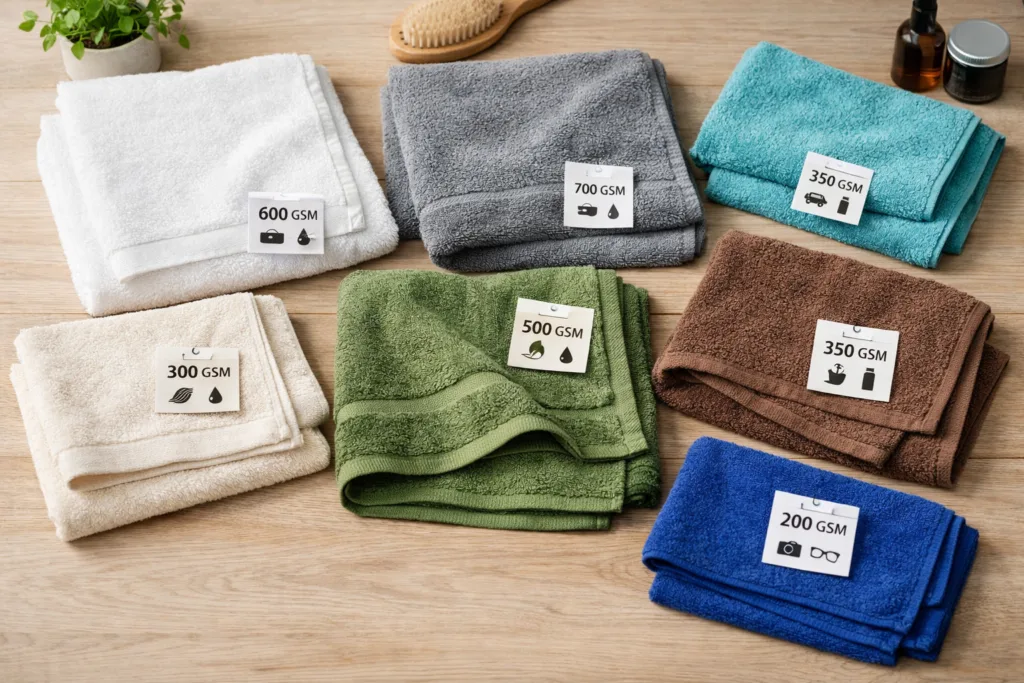
Hospitality fields favor premium, long-lasting cotton with subtle branding and neutral packaging. Sports teams need lightweight, quick-dry, or cooling microfiber towels in compact formats (see gym towels manufacturer). Promotional projects demand high-impact graphics, often using digital or reactive printing on large surfaces but with cost-control in mind.
- For hotels and spas: Soft, colorfast, double-stitched bath and hand towels, branded via elegant jacquard or tonal embroidery.
- For gyms, sports, and fitness: Microfiber or cotton blends engineered for rapid moisture uptake, often with custom printing or compact packaging.
- For gifting and events: Unique graphics, convenient retail packaging, and “feel-good” textures—even kids’ towel sets designed for high visual impact.
Increasingly, brands differentiate with sustainable materials and custom details. Circe Towel sees rising demand for bamboo-cotton blends in wellness, and bold, digitally printed velour towels for summer promotions. By understanding how your towels will be used, you can specify the right trade-offs—such as sacrificing GSM for portability, or upgrading edge finishes for durability over hundreds of washes.
Customization Capabilities: What to Look For
Strong customization offerings help your towels stand out and reinforce your brand identity. When thinking about how to choose a towel manufacturer, ask not just “what” can be customized, but “how well” and “how fast.”
Common customization options include:
- Woven logos or patterns (jacquard)
- Embroidery for detailed branding
- Printing—reactive, screen, or digital—for vivid imagery
- Custom borders, labels, or colored hems
- Unique packaging—individual, retail-ready, or eco-wraps
Private label production means your brand, your specs, and your packaging—crucial for retail and hospitality buyers. However, customization often extends lead time, raises MOQs, and impacts price structure. Request samples or prototypes to test clarity, colorfastness, and hand feel before scaling up. Review real-world projects or case studies: for example, a sports club might trial embroidered gym towels with woven name tags and get feedback before finalizing a bulk contract.
Common Mistakes to Avoid When Sourcing Towels
Many buyers, even experienced ones, fall into sourcing traps that undermine quality and project outcomes—even with high quality towel manufacturers. Recognizing these issues early gives you leverage to make informed, cost-effective decisions.
- Incompatible Fabric Selection: Selecting towels too thick or thin for their intended setting (e.g. bulky spa towels for gym giveaways).
- Incorrect GSM: Not matching weight and absorbency to anticipated use, leading to either overkill or disappointment.
- Poor Absorbency/Durability: Overlooking test standards or skipping sampling, risking returned batches and dissatisfied clients.
- Decoration Method Mismatch: Choosing embroidery for large graphics (heavy, stiff) or low-grade printing for premium presentation towels.
- Edge/Sewing Issues: Accepting single-stitched hems for institutional use causes premature fraying (dive deeper into edge finishing at this technical article).
When problems do arise, act fast: request corrective action, share QC reports, and discuss troubleshooting solutions with your supplier. Purchase orders must clearly define specs, testing requirements, and communication expectations—this is how high quality towel manufacturers secure repeat business for all parties.
The Ordering Process: What You Need to Know
Partnering with towel manufacturers is more than just choosing materials and decoration. The logistics behind how to choose a towel manufacturer—MOQ, timelines, approvals, shipping—play a huge role in smooth procurement.
- MOQ (Minimum Order Quantity): Defines production feasibility and impacts unit costs. Plain stock towels—sometimes as low as 300–500 units. High-customization (private label, jacquard, dyed-to-match): typically 1,000–2,000+ units.
- Lead Times: Expect 2–4 weeks for in-stock or simple embroidery, 5–8+ weeks for reactive printing, large jacquard runs, or new weave structures. Order in advance to buffer for sampling and transit.
- Artwork Prep & Approval: Digital mockups and physical samples reduce misunderstanding. Approve fabric swatches, logo placements, and packaging before confirming mass production.
- Packaging Choices: Bulk packing cuts costs for hospitality, while retail, eco, or gift boxes have higher price/branding value (compare options and impacts in this packaging guide).
Shipping and logistics should be clear—request factory assistance with export documentation, and factor in customs or seasonal fluctuations. Good communication is vital: clarify progress steps, inspection points, and what happens if timelines shift. Circe Towel, for instance, always confirms label, packaging, and logo placements through both digital and sample approval before mass production—even if it adds a few days—to guarantee the final product fits the intended market.
Frequently Asked Questions
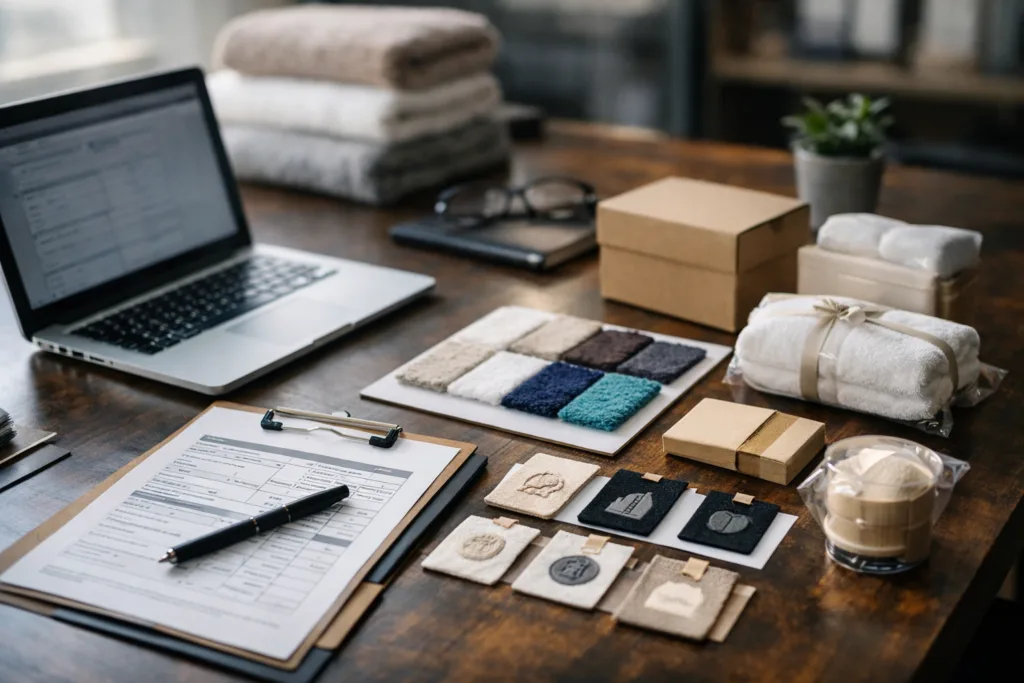
What is the typical lead time for custom towel orders?
Most towel manufacturers require 2–4 weeks for simple stock or embroidery orders and 5–8+ weeks for full customization such as jacquard weaving or digital printing; confirming details early helps keep production on schedule.
How can I ensure towel quality and avoid product issues?
Work only with high quality towel manufacturers who provide third-party test reports, certified production standards, and pre-shipment samples; clearly define expectations for GSM, absorbency, shrinkage, and colorfastness in your purchase order.
What decoration options can a towels manufacturer typically provide?
Decoration choices include embroidery, screen/digital/reactive printing, and jacquard woven logos; your decision should match your brand image, design complexity, and budget.
What are common MOQs for different towel types?
Standard towels often start at 300–500 pieces per SKU, while fully custom or jacquard towels may require MOQs of 1,000–2,000 units or more depending on factory and technique.
How is towel pricing determined?
Costs are influenced by material choice, GSM, size, customization complexity, packaging type, and total order quantity; clear specifications upfront allow for accurate and competitive price quotes from manufacturers.
Can I request samples before confirming a large order?
Most high quality towel manufacturers offer pre-production samples (with sample fees or deductible charges); sampling ensures your specifications are met before mass production begins and minimizes potential risk.
Conclusion and Next Steps
Choosing the right towel manufacturer is a strategic decision—one that brings together material insight, construction know-how, and attention to detail. By following this guide, you have actionable checklists and comparison tables to help evaluate options at every stage, from material selection to order logistics.
Take time to define your brand’s requirements and clarify specifications with your supplier. The best outcomes result from aligned expectations and clear technical communication. Remember, thoughtful trade-offs—like balancing absorbency and drying speed, or selecting the perfect logo application—build lasting value for your brand and your customers.
Need help choosing the right towel material and GSM for your market? Circe Towel can recommend practical options based on your project. Request swatches, test reports, or a sample RFQ to begin your own tailored sourcing journey.
Related Reading
- Manufacturer vs Supplier: Which Is Right for Your Towel Sourcing Strategy?
- How Eco-Friendly Towels Transform Brand Value (and Buyer Trust)
- Find the Perfect Logo Decoration: Embroidery, Jacquard, or Printing?
- The Power of Jacquard: Elevate Your Branding with Woven Innovation
- 8 Pro Tips to Prevent Towel Shrinkage: Buyer’s Quality Guide