
For professional towel buyers, MOQ is not just a number on a quotation sheet. It is a reflection of how towel production actually works.
A custom towel order involves far more than cutting fabric and adding a logo. Material selection, yarn sourcing, weaving structure, GSM, dyeing, color consistency, logo method, towel size, packaging, inspection, carton planning and international shipping all affect the minimum quantity a supplier can support efficiently.
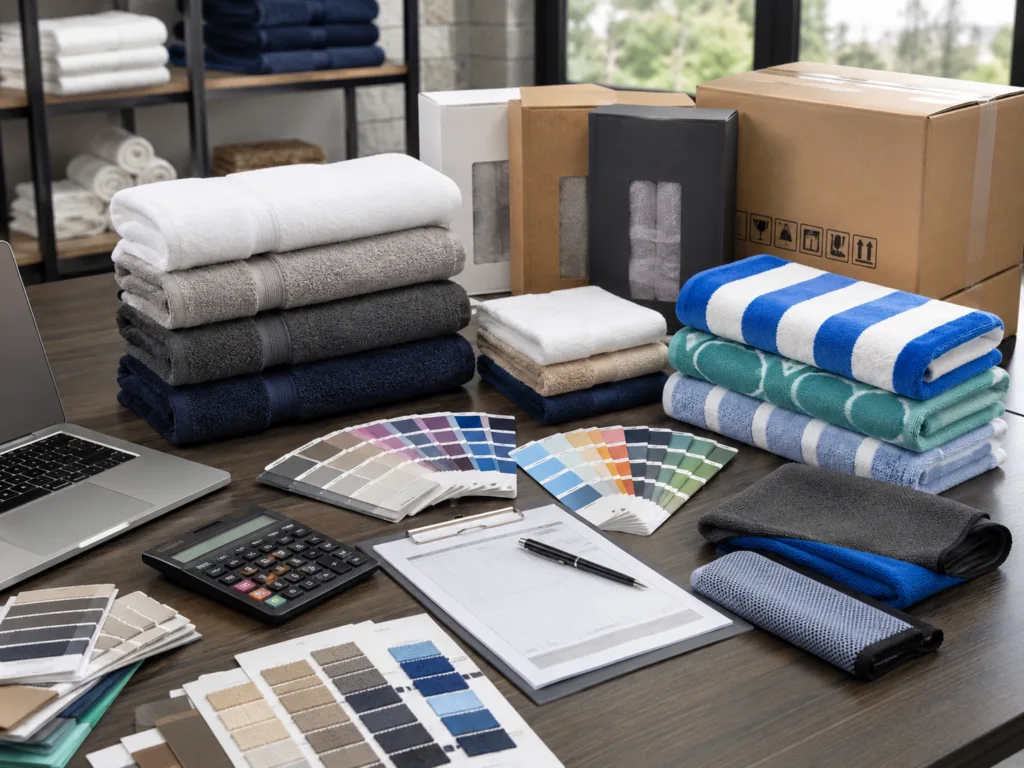
This is why one towel project may require 500 pieces per color, while another may require 2,000 pieces or more. A standard white hotel towel, a jacquard beach towel, a microfiber car drying towel and a private label retail towel set are not produced under the same conditions. Each product has a different cost structure, production setup and quality control requirement.
For hotels, resorts, importers, retailers, gyms, spas and wholesale distributors, understanding towel MOQ is not about finding the smallest possible order. It is about building a stable, cost-efficient and repeatable towel supply program.
A well-planned MOQ helps buyers control unit cost, maintain consistent quality, reduce production risk and improve delivery efficiency. In large-scale towel sourcing, MOQ is not a barrier. It is a production planning tool.
What Does Towel MOQ Mean in Bulk Sourcing?
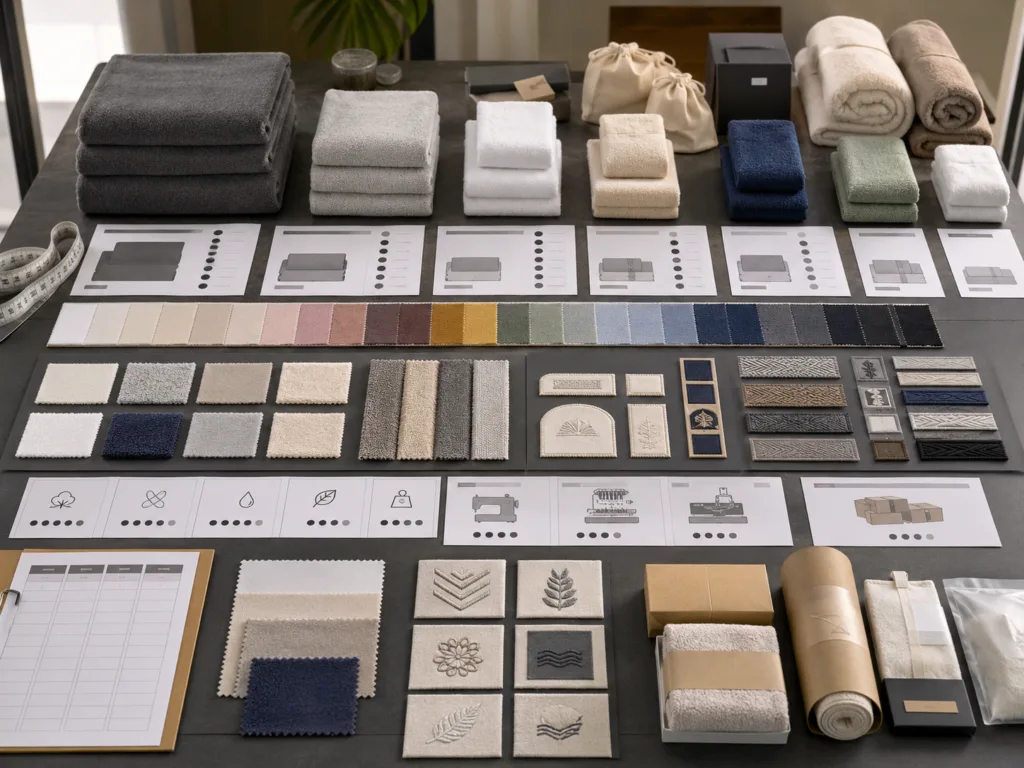
MOQ means Minimum Order Quantity. In towel manufacturing, it usually refers to the lowest production volume required for a specific towel type, size, color, material, logo method or packaging style.
However, one of the most common misunderstandings is that MOQ is always calculated as a single total quantity. In real production, MOQ may be calculated by:
- Towel type
- Size
- Color
- GSM
- Material
- Logo method
- Design
- Packaging style
- Carton configuration
For example, a buyer may request 3,000 towels in total. On paper, this sounds like a reasonable bulk order. But if those 3,000 towels are divided into five colors, three sizes and two different logo methods, the actual production becomes much more complex.
A 3,000-piece order with one size and one color is very different from a 3,000-piece order split into many variations. For factories and sourcing teams, order structure often matters as much as total quantity.
This is why professional towel buyers should not only ask, “What is your MOQ?” A better question is:
“What is the most efficient MOQ for this towel type, material, color, logo method and packaging plan?”
That question leads to better pricing, better quality and better production planning.
1. Fabric Type: The First Factor Behind Towel MOQ
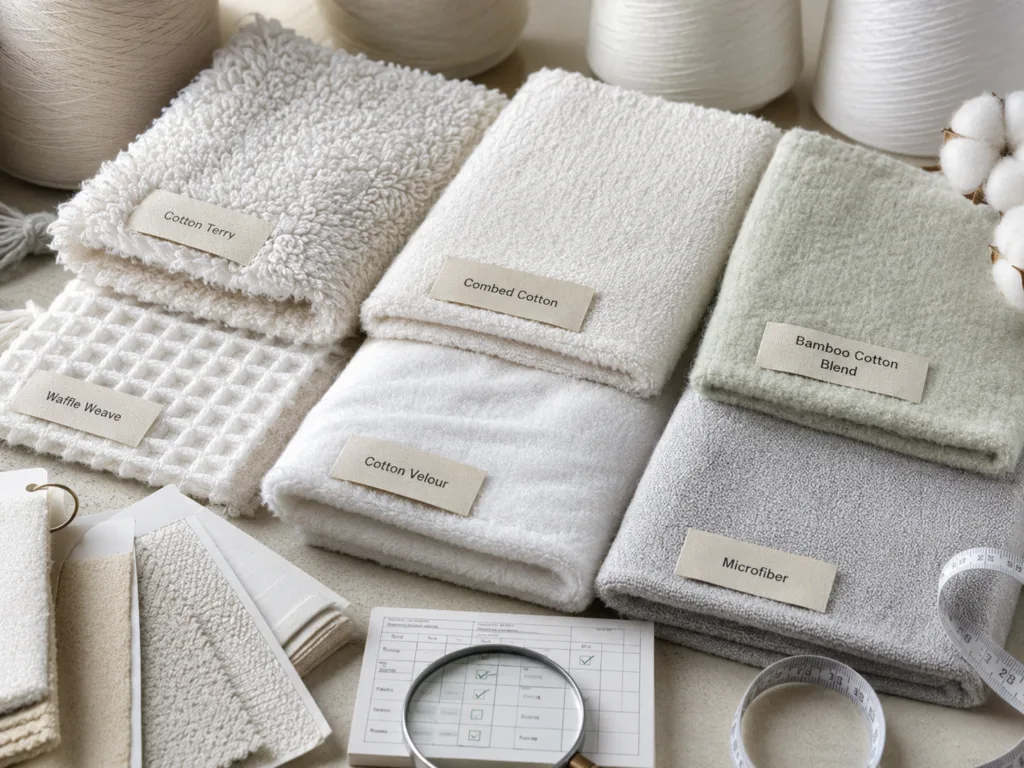
Fabric is one of the biggest drivers of towel MOQ. Different materials require different sourcing, weaving, dyeing and finishing processes.
Common towel materials include:
- 100% cotton
- Combed cotton
- Ring-spun cotton
- Bamboo cotton blend
- Microfiber
- Recycled polyester microfiber
- Cotton velour
- Waffle weave fabric
- Terry fabric
A standard cotton hotel towel may have a different MOQ from a microfiber car drying towel because the production systems are different. Cotton towels depend heavily on yarn quality, weaving density, loop structure and finishing. Microfiber towels depend on polyester/polyamide composition, weave type, GSM, edge finishing and absorbency performance.
For bulk buyers, fabric choice is not only about touch and appearance. It affects durability, washing performance, drying speed, production cost and repeat order consistency.
A hotel group sourcing bath towels may prioritize long-term laundry durability and consistent whiteness. A car wash distributor may focus on high absorbency, lint-free performance and edge type. A retail beach towel brand may care more about surface texture, print clarity and shelf presentation.
Each application requires a different fabric structure. That is why the MOQ also changes.
When suppliers need to source a specific yarn or fabric batch, they must reach a practical production volume. If the quantity is too small, material cost becomes unstable, dyeing becomes inefficient and the final unit price becomes less competitive.
For serious buyers, a suitable MOQ helps secure a stable material batch and reduces variation between production runs.
2. GSM and Weight: Why Heavier Towels Often Need Better Planning
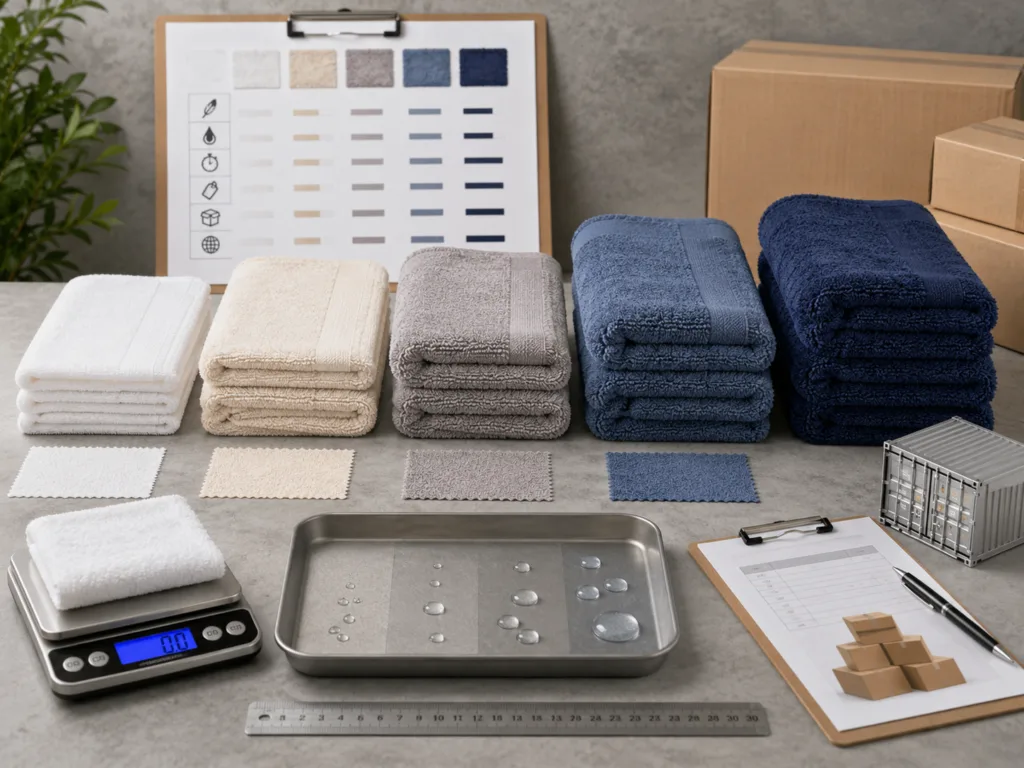
GSM means grams per square meter. It is one of the most important specifications in towel sourcing because it directly affects thickness, softness, absorbency, drying speed, unit cost, carton weight and freight cost.
Different towel categories use different GSM ranges:
| Towel Type | Common GSM Range | Typical Use |
| Lightweight gym towels | 300–400 GSM | Fitness, sports, quick-dry use |
| Standard bath towels | 400–550 GSM | Hotels, retail, daily use |
| Premium hotel towels | 550–700 GSM | Resorts, spas, luxury hospitality |
| Heavy luxury towels | 700+ GSM | High-end retail, premium spa |
| Microfiber car towels | 300–1200 GSM | Car wash, detailing, drying |
| Beach towels | 300–500 GSM | Resorts, beach clubs, retail |
Higher GSM usually means more material consumption and higher production cost. It can also increase carton weight and shipping cost. For large importers and hotel buyers, this matters because landed cost is not only the factory price. It includes freight, duty, warehousing and distribution.
A 600 GSM bath towel and a 400 GSM bath towel may look similar in a product photo, but they behave differently in real use. The heavier towel may feel more premium and absorb more water, but it also dries more slowly and costs more to ship. The lighter towel may be better for gyms, travel or high-turnover laundry environments.
This is why mature buyers usually do not choose GSM blindly. They match GSM with usage scenario, target market and budget.
MOQ is affected because heavier towels require more yarn and more stable production planning. If a buyer wants a premium 650 GSM hotel towel in a custom size and custom color, the MOQ will naturally be different from a standard lightweight gym towel in stock white.
3. Absorbency and Performance Requirements Affect MOQ
For towels, quality is not only about softness. Performance matters.
Bulk buyers often care about:
- Water absorbency
- Drying speed
- Lint control
- Color fastness
- Shrinkage control
- Edge durability
- Washing resistance
- Hand feel after repeated laundering
- Pilling resistance
- Shape stability
Different markets have different expectations. A luxury resort towel must feel soft, thick and elegant. A gym towel must absorb sweat and dry quickly. A microfiber car drying towel must absorb large amounts of water without scratching paint. A spa towel must balance softness, presentation and repeated washing performance.
These performance requirements affect material choice, weaving structure and finishing process. For example, a twisted loop microfiber towel for car drying requires different machinery and finishing from a standard terry bath towel. A jacquard towel with a woven logo requires a different production setup from a simple embroidered towel.
If buyers require specific absorbency, softness or washing durability standards, suppliers may need to adjust yarn, weave, GSM or finishing. That customization increases the importance of MOQ because the production must be large enough to justify testing, setup and stable bulk output.
For large buyers, this is actually beneficial. A well-structured MOQ gives the supplier enough room to control quality rather than forcing production into an inefficient small run.
4. Towel Size: Larger Towels Change Cost, MOQ and Shipping
Towel size has a direct impact on MOQ and total project cost. Larger towels consume more material, take more space in dyeing and finishing, require more sewing time and increase packing volume.
Common towel sizes include:
| Product | Common Size Examples |
| Face towel | 30 × 30 cm, 30 × 50 cm |
| Hand towel | 35 × 75 cm, 40 × 80 cm |
| Bath towel | 70 × 140 cm, 76 × 152 cm |
| Bath sheet | 90 × 150 cm, 100 × 180 cm |
| Beach towel | 80 × 160 cm, 90 × 180 cm |
| Gym towel | 30 × 100 cm, 40 × 100 cm |
| Car drying towel | 40 × 40 cm, 50 × 80 cm, 70 × 90 cm |
A bath sheet or beach towel requires much more material than a small hand towel. This affects not only factory cost but also shipping efficiency. For importers and retailers, carton size and container loading are important because bulky towels can quickly increase freight cost.
For hotel buyers, size consistency is also important. Towels must fit housekeeping systems, laundry processes, room presentation and replacement cycles. For retail brands, size must match consumer expectations, packaging layout and shelf positioning.
MOQ may also be calculated per size. If a buyer wants bath towels, hand towels and face towels as a complete hotel towel collection, each size may have its own production requirement.
For large buyers, the best approach is to plan towel sizes as a complete program rather than isolated items. A hotel may need a full set. A retailer may need a coordinated collection. A wholesaler may need a range that fits different resale channels.
Better size planning leads to better MOQ structure.
5. Color Customization: Why MOQ Is Often Calculated Per Color
Color is one of the most important reasons custom towel MOQ varies.
Stock colors are usually easier to source. Custom Pantone colors require more planning because dyeing must be controlled by batch. Each color may have its own MOQ because dyeing a very small quantity is inefficient and may lead to higher cost or unstable color results.
Color customization affects:
- Dyeing batch size
- Color matching
- Color fastness testing
- Shade consistency
- Reorder stability
- Production scheduling
For hotel buyers, white towels remain popular because they are easier to standardize, bleach and replace. However, resorts, spas and premium retail brands may require beige, sage green, charcoal, navy, terracotta or seasonal colors to match brand identity.
For retail buyers, color is part of merchandising. A towel collection may include multiple SKUs across different colors. However, too many colors in the first order can make MOQ structure complicated.
For example, 10,000 towels in two colors may be efficient. But 10,000 towels divided into ten colors may create production challenges, higher dyeing cost and more inventory complexity.
Professional buyers often start with a focused color system. They choose core colors first, then expand the collection after market response and reorder planning become clearer.
That is how mature buyers use MOQ strategically.
6. Logo Method: Embroidery, Jacquard, Printing and Labels
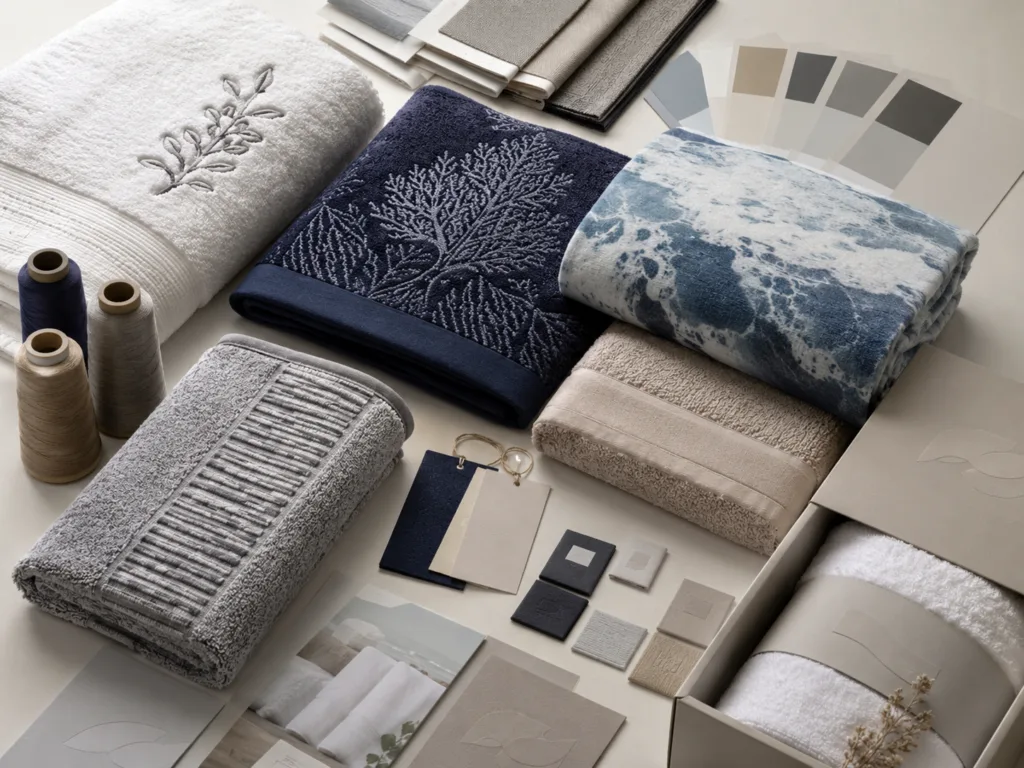
Logo customization is another major MOQ factor. Different logo methods require different setup processes.
Embroidery
Embroidery is widely used for hotels, spas, gyms and corporate towel programs. It gives a clean and premium look, especially on bath towels, hand towels and spa towels.
MOQ depends on:
- Logo size
- Stitch count
- Thread colors
- Placement
- Towel thickness
- Quantity per design
Embroidery is suitable for professional buyers who want a branded but elegant appearance.
Jacquard Woven Logo
Jacquard is more integrated into the towel structure. The logo or pattern is woven into the towel rather than added afterward.
It is often used for:
- Hotel towel programs
- Resort towels
- Beach towels
- Retail towel collections
- Premium private label projects
Jacquard usually requires a higher MOQ because it involves weaving setup, pattern development and machine scheduling. However, for large buyers, jacquard can create a more premium and durable branding effect.
Printing
Printing is common for beach towels, microfiber towels, sports towels and promotional towels. It works well when the design has large artwork, gradients or strong visual branding.
MOQ depends on:
- Print area
- Number of colors
- Printing method
- Fabric type
- Artwork complexity
A full-color printed beach towel has a very different MOQ logic from a small embroidered hotel towel.
Woven Labels, Hang Tags and Care Labels
For retail and private label buyers, branding does not stop at the towel itself. Labels, hang tags, care labels and packaging inserts also matter.
Each branding element may have its own MOQ. This is especially important for retailers and importers who need barcode labels, care instructions, packaging compliance and shelf-ready presentation.
A professional supplier should help buyers evaluate the most suitable branding method based on order volume, market positioning and long-term reorder plan.
7. Packaging: A Hidden MOQ Driver Many Buyers Overlook
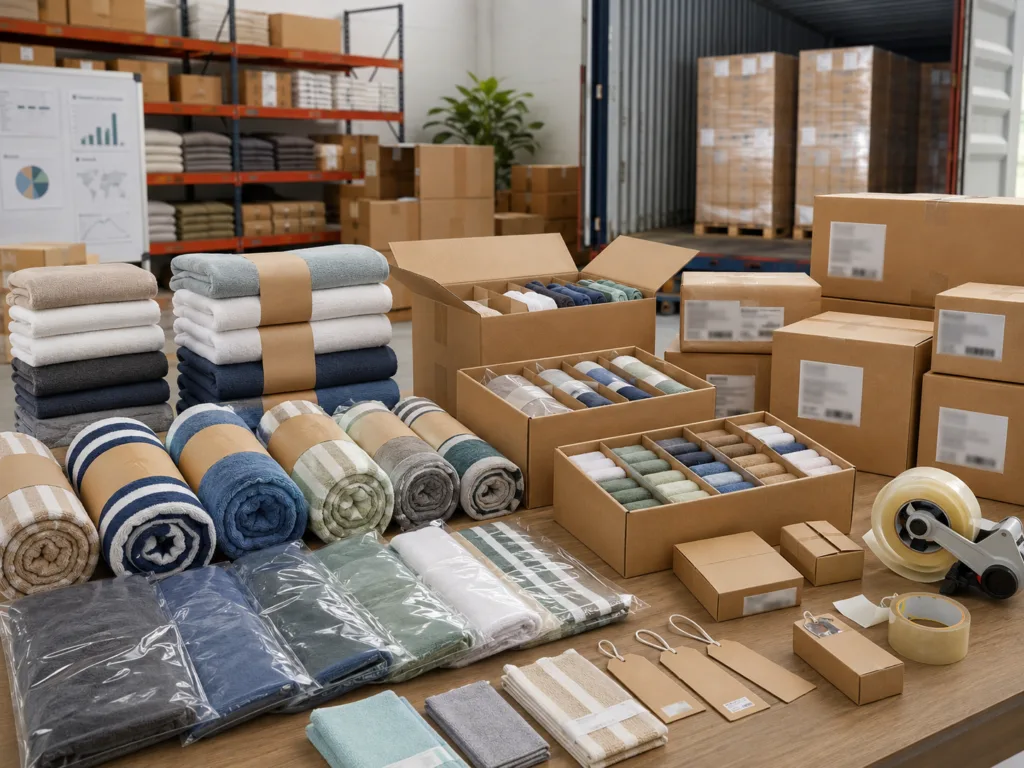
Packaging can strongly affect towel MOQ, especially for retail and private label programs.
Common towel packaging options include:
- Bulk carton packing
- Individual polybags
- Paper bands
- Kraft boxes
- Retail boxes
- Gift boxes
- Hang tags
- Barcode labels
- Printed care cards
- Custom carton marks
Hotel towels are often packed in bulk cartons for operational efficiency. Retail towels may require paper bands, hang tags, barcode stickers or gift-ready packaging. E-commerce towels may need individual packaging that protects the product during fulfillment. Gift towel sets may require box inserts, belly bands or branded rigid boxes.
Packaging MOQ may be separate from towel MOQ. A buyer may meet the towel MOQ but still need to consider the MOQ for printed boxes, paper bands or custom tags.
For importers and retailers, packaging also affects carton volume, warehouse handling, shelf display and final landed cost. A thick gift box may look premium, but it increases shipping volume. A simple paper band may be more efficient for wholesale distribution.
Large buyers should plan towel MOQ and packaging MOQ together. This avoids delays, cost surprises and inconsistent branding.
MOQ Planning by Buyer Type
Different buyers should think about towel MOQ differently.
Hotel and Resort Buyers
Hotels and resorts usually care about consistency, durability and repeat orders. Their towel programs often include bath towels, hand towels, face towels and bath mats.
Important factors include:
- GSM
- White shade consistency
- Washing durability
- Embroidery logo
- Long-term replenishment
- Carton packing efficiency
For hospitality buyers, MOQ should support stable repeat supply, not just one-time purchasing.
Retail Brands
Retail buyers care about design, packaging and shelf presentation. MOQ may be affected by color range, private label packaging, barcode requirements and seasonal launch schedules.
For retail brands, MOQ planning should consider SKU structure. Too many sizes and colors in the first order may increase cost and complexity.
Importers and Wholesalers
Importers and wholesalers usually focus on price tiers, carton efficiency, product range and repeatability. They need a supplier who can support stable production across multiple towel categories.
MOQ planning helps wholesalers balance unit cost, product variety and inventory risk.
Spa and Wellness Brands
Spa buyers often care about softness, muted colors, premium hand feel and elegant branding. Embroidery, neutral tones and coordinated towel sets are common.
MOQ should be planned around a consistent brand experience.
Car Wash and Detailing Distributors
For car wash and detailing buyers, microfiber performance is critical. GSM, weave type, edge finishing and absorbency matter more than decorative appearance.
Typical concerns include:
- Twisted loop or coral fleece structure
- High absorbency
- Scratch-free performance
- Edge type
- Bulk carton packing
- Repeat supply stability
For this category, MOQ should support consistent performance across every batch.
Common MOQ Mistakes in Custom Towel Sourcing
Mistake 1: Only Asking for the Lowest MOQ
The lowest MOQ is not always the best business decision. A very small production run may lead to higher unit cost, limited customization and less stable quality.
Professional buyers should focus on the most efficient MOQ, not simply the lowest one.
Mistake 2: Splitting Too Many Colors
Too many colors can increase dyeing complexity and reduce production efficiency. A focused color plan is often better for the first bulk order.
Mistake 3: Choosing Logo Methods Without Considering Volume
Embroidery, jacquard and printing all have different MOQ logic. Buyers should match logo method with order size and product positioning.
Mistake 4: Ignoring Packaging MOQ
Custom packaging can become a major cost and MOQ driver. Packaging should be discussed early, not after towel production is confirmed.
Mistake 5: Not Planning Reorders
For mature buyers, the first order should be planned with future reorders in mind. Stable supply matters more than one-time low pricing.
How to Build a More Efficient Bulk Towel Order
Before requesting a quotation, professional buyers should prepare the following information:
| Requirement | Why It Matters |
| Towel type | Determines fabric, production method and usage |
| Size | Affects material cost, carton volume and shipping |
| GSM | Impacts thickness, absorbency, drying speed and price |
| Material | Determines softness, durability and performance |
| Color | Affects dyeing MOQ and batch consistency |
| Logo method | Impacts setup cost and production planning |
| Packaging | Affects presentation, MOQ and freight efficiency |
| Target quantity | Helps suppliers calculate realistic unit cost |
| Destination market | Impacts shipping, labeling and compliance needs |
| Reorder plan | Helps build long-term supply stability |
A strong supplier should not only quote a price. They should help buyers structure the order for better cost control, quality consistency and delivery efficiency.
For large-scale towel programs, this is where sourcing experience matters.
How Circe Towel Supports Professional Bulk Towel Buyers
Circe Towel supports bulk custom towel sourcing for hotels, resorts, spas, gyms, retailers, importers, wholesalers and car wash supply distributors.
We help buyers evaluate the right combination of:
- Towel type
- Material
- GSM
- Size
- Color
- Logo method
- Packaging
- Carton planning
- Quality inspection
- Bulk production coordination
- Export-ready delivery
Our goal is not only to produce towels, but to help buyers build a practical and scalable towel supply program.
Whether you are developing hotel towel sets, private label retail towels, resort beach towels, gym towels or microfiber car drying towels, MOQ should be planned around your business model, target market and long-term purchasing strategy.
A well-structured towel order can help reduce unit cost, improve quality stability and make future reorders easier.
Final Thoughts: MOQ Is a Planning Tool, Not a Limitation
Custom towel MOQ is not an arbitrary factory rule. It is shaped by fabric, GSM, size, absorbency, color, logo method, packaging and production efficiency.
For mature buyers, MOQ should not be seen as a restriction. It should be used as a planning tool.
The right MOQ helps secure stable material, consistent dyeing, efficient production, reliable inspection and better landed cost. It also allows buyers to build a long-term supply program instead of handling each order as a separate project.
For hotels, retailers, importers, wholesalers, spas, gyms and distributors, the question is not simply how low the MOQ can be.
The better question is:
What MOQ gives us the best balance of quality, cost, branding, packaging and delivery efficiency?
That is the question serious towel buyers ask. And that is where a professional towel supplier can create real value.
FAQ
1. What is the MOQ for custom towels?
Custom towel MOQ depends on towel type, size, material, GSM, color, logo method and packaging. Bulk hotel towels, beach towels, microfiber towels and private label retail towels may all require different minimum quantities because they use different production processes.
2. Why is towel MOQ often calculated per color or size?
Each color or size may require separate dyeing, cutting, sewing, inspection and packing. A large total quantity can still be complex if it is divided into too many colors, sizes or logo versions.
3. Does higher GSM affect towel MOQ?
Yes. Higher GSM towels use more material and require more careful production planning. They also affect carton weight, shipping cost and landed cost, which is important for bulk buyers.
4. How can bulk buyers reduce towel unit cost?
Bulk buyers can reduce unit cost by simplifying color options, choosing efficient sizes, planning packaging early, selecting the right logo method and placing orders at a quantity that supports stable production and better material purchasing.