
For experienced wholesale buyers, a towel is never just “a towel.” Two bath towels may look similar in a product photo, yet their real cost can be very different once you consider material, yarn quality, GSM, size, dyeing, logo method, packaging, carton efficiency and freight. This is why asking “How much is one towel?” without technical details rarely leads to an accurate quotation.
A reliable wholesale towel cost breakdown should answer a more practical question: what exactly are you paying for, and which specifications actually matter for your market?

For hotels, resorts, spas, retail chains, promotional distributors, importers and private label brands, towel pricing is not only about the unit price from the factory. The true buying decision includes durability, absorbency, hand feel, shrinkage, branding effect, packaging presentation, reorder consistency and landed cost. A low FOB price may look attractive at first, but if the towel sheds, loses softness after washing, absorbs poorly, takes too much carton space or arrives with unsuitable packaging, the real cost becomes much higher.
This guide breaks down the major factors that affect wholesale towel pricing, so you can compare supplier quotes more intelligently and prepare a clearer inquiry for bulk orders.
1. Material: The Foundation of Towel Cost and Performance
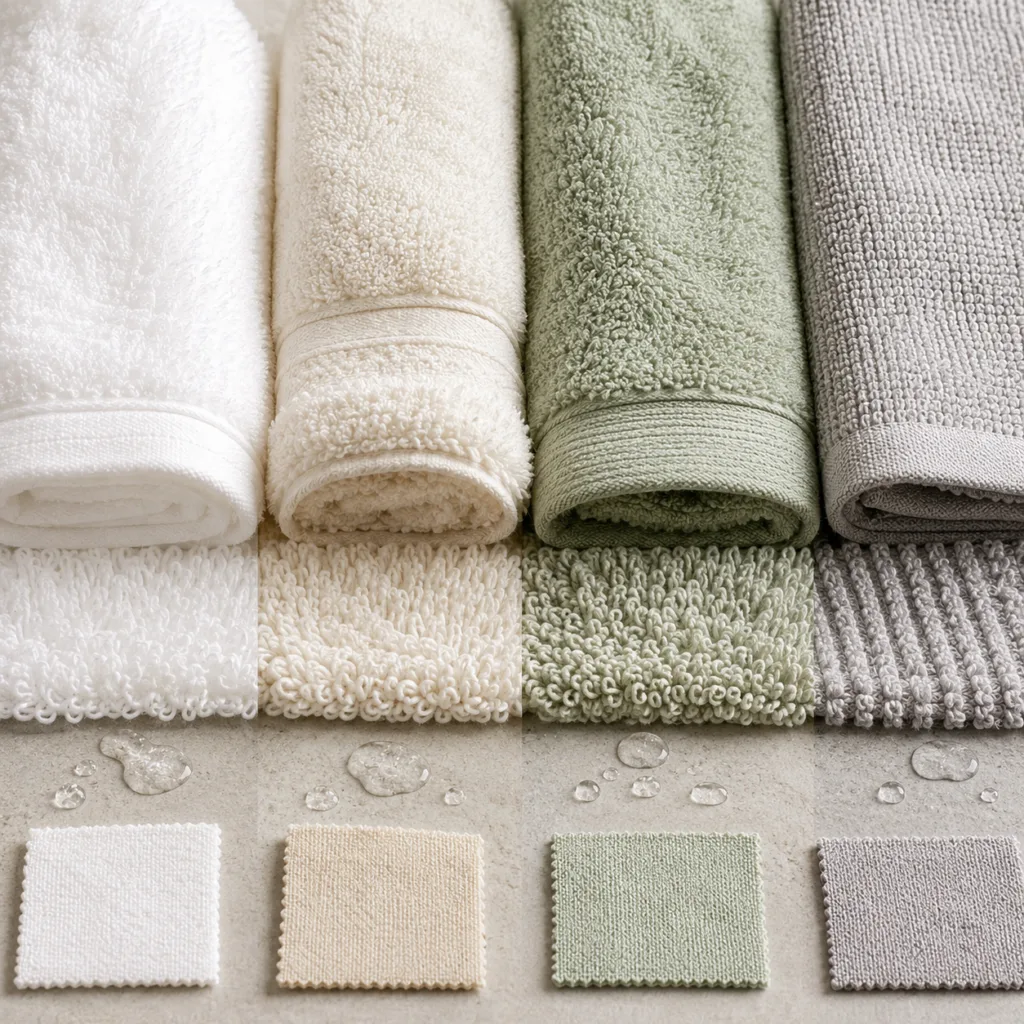
Material is one of the first pricing drivers in towel manufacturing. It affects softness, absorbency, drying speed, durability, weight, dyeing performance and the final perceived value of the product.
Cotton Towels
Cotton remains the most widely used material for bath towels, hand towels, hotel towels and spa towels because of its natural softness and absorbency. For most hospitality and retail projects, cotton is still the safest choice.
However, not all cotton towels cost the same. Price may vary depending on cotton grade, yarn count, yarn spinning method and finishing process. A standard cotton towel for bulk hotel use may be cost-efficient and durable, while a premium combed cotton towel with a softer touch and cleaner surface will cost more.
Cotton towels are suitable for:
- Hotels and resorts
- Spas and wellness centers
- Home textile retailers
- Gift sets
- Private label bathroom collections
- Premium promotional programs
The main buyer concern with cotton is balance. A towel needs to feel soft enough for end users but also strong enough to survive repeated washing. For hotels, this is especially important because towels are washed frequently under commercial laundry conditions.
Combed Cotton Towels
Combed cotton is processed to remove shorter fibers and impurities, leaving longer and stronger fibers. This usually creates a smoother, softer and more durable towel surface. Because the processing is more refined, combed cotton costs more than regular cotton.
For retail brands and higher-end hospitality buyers, combed cotton can be a worthwhile upgrade because it improves hand feel and perceived value. It is especially suitable when the towel is sold as part of a premium bathroom collection or hotel amenity line.
Ring-Spun Cotton Towels
Ring-spun cotton uses a spinning process that twists and thins the cotton fibers into a finer, stronger yarn. The result is often a smoother and more durable towel compared with basic open-end yarn.
This option is commonly used when buyers want a towel that feels more refined but still remains practical for bulk production. It is useful for mid-to-high-end hotel towels, spa towels and private label retail towels.
Bamboo Blend Towels
Bamboo blend towels are often selected for softness and an eco-conscious brand story. They can feel smooth and luxurious, making them attractive for boutique hotels, spas, baby towels and sustainable lifestyle brands.
However, bamboo blend towels normally cost more than basic cotton towels. Buyers should also clarify the exact blend ratio, because different cotton/bamboo combinations will affect cost, durability, absorbency and drying time.
Bamboo blend towels are best for:
- Eco-focused retail brands
- Boutique hotel amenities
- Spa and wellness collections
- Baby and sensitive-skin towel lines
- Gift packaging projects
Microfiber Towels
Microfiber towels are lightweight, quick-drying and compact. They are widely used for gym towels, travel towels, sports towels, beach towels, cleaning towels and car care towels.
Compared with thick cotton bath towels, microfiber can be more cost-efficient in certain use cases because it is lighter and packs smaller. This can reduce freight pressure, especially for large promotional or travel-related orders.
Microfiber towels are suitable for:
- Fitness brands
- Outdoor and travel retailers
- Sports events
- Promotional products
- Car care and cleaning use
- Quick-dry beach towels
The key point is that microfiber is not a direct replacement for cotton in every market. If the buyer’s end customer expects a plush hotel bath towel, microfiber may feel too thin. But if the goal is quick drying, portability and cost control, microfiber may be a strong choice.
2. Yarn Quality and Finishing: Why Similar Towels Feel Different
Material tells only part of the story. Yarn quality, weaving density and finishing also affect cost and performance.
A towel made with better yarn usually has a cleaner surface, better strength and better softness after washing. A cheaper towel may look acceptable before use, but after several washes it may become rough, shed fibers, shrink unevenly or lose its shape.
Important quality factors include:
- Yarn count
- Fiber length
- Weaving density
- Loop height
- Terry construction
- Dyeing consistency
- Color fastness
- Shrinkage control
- Edge stitching quality
- Linting performance
For mature buyers, these details matter because towels are repeat-use products. A hotel does not only care how the towel feels on day one. It cares how the towel performs after many laundry cycles. A retail brand does not only care how the towel looks in a product photo. It cares whether customers leave good reviews after using and washing it.
This is why a slightly higher towel price can be reasonable if it improves durability, softness retention and customer satisfaction.
3. GSM: The Number That Changes Weight, Thickness and Price
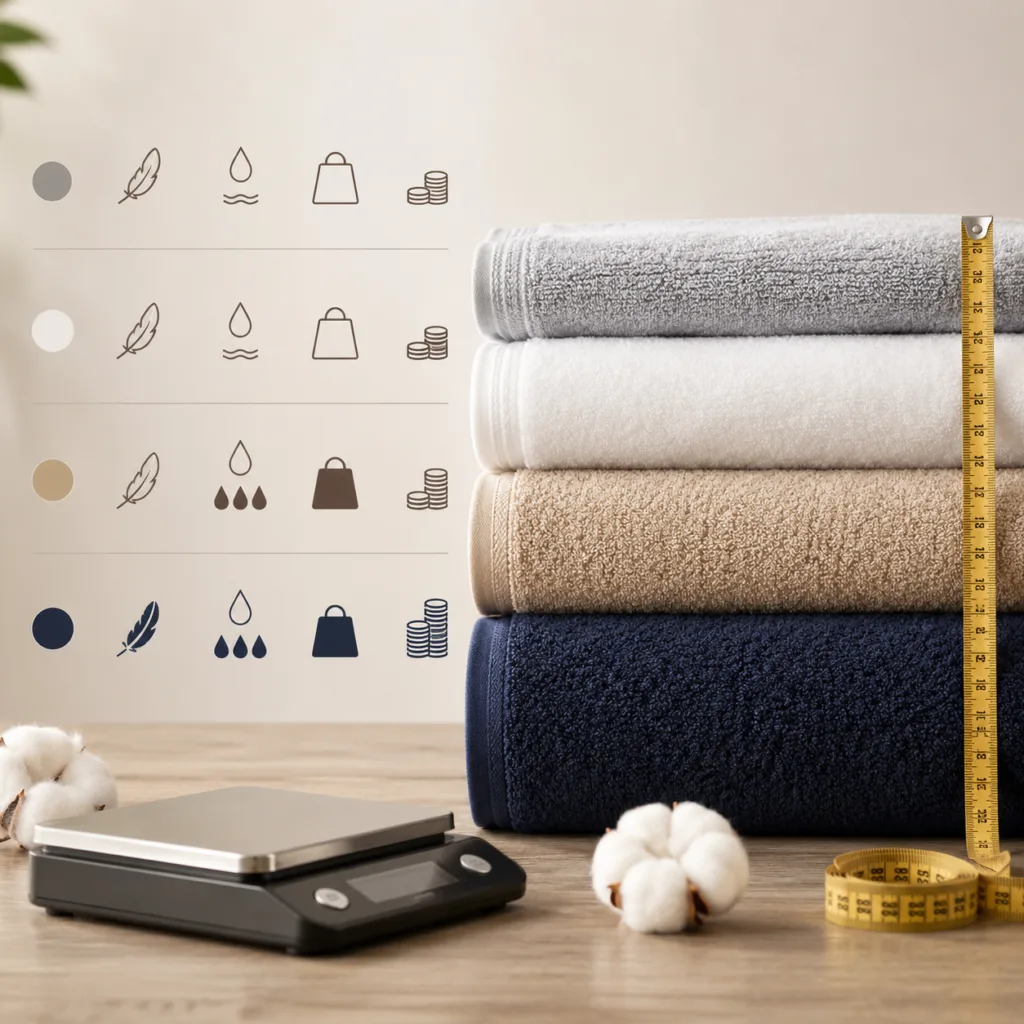
GSM means grams per square meter. It is one of the most important specifications in wholesale towel pricing because it directly affects fabric weight, thickness, absorbency, drying time, carton weight and freight cost.
In simple terms, higher GSM usually means a heavier and thicker towel. But higher GSM is not always better. The right GSM depends on the towel type, target market and use case.
Common GSM Ranges for Towels
300–400 GSM: Lightweight towels, gym towels, travel towels, promotional towels and quick-dry use. These towels are easier to pack and dry faster, but they may not feel plush enough for premium hospitality.
400–500 GSM: Standard bath towels, practical hotel towels, general home towels and mid-range wholesale projects. This range often provides a balance between cost, absorbency and drying speed.
500–650 GSM: Premium hotel towels, spa towels and higher-end retail towels. These towels feel thicker and more luxurious, with better perceived value.
650–800 GSM: Luxury towels and premium gift sets. These towels feel plush and heavy, but they also cost more, dry more slowly and increase freight cost.
800+ GSM: Ultra-luxury towels for special retail or hospitality positioning. They can create a very premium impression, but they are not always practical for commercial laundry or high-turnover hotel use.
How GSM Affects Wholesale Towel Cost
GSM affects cost in several ways:
First, higher GSM uses more yarn. More raw material means a higher production cost.
Second, higher GSM increases towel weight. This affects carton weight and international freight.
Third, higher GSM may increase drying time. For hotels and spas, this can influence laundry efficiency.
Fourth, higher GSM changes the end-user experience. A 700 GSM towel may feel luxurious, but a 400 GSM towel may be more practical for gyms, travel and promotional projects.
A smart buyer does not automatically choose the highest GSM. Instead, the buyer chooses the GSM that matches the market position. For example, a resort gift shop may benefit from a plush 600 GSM towel, while a gym chain may prefer a lighter, faster-drying towel that is easier to wash and replace.
4. Absorbency: What Buyers Should Really Look At
Absorbency is one of the most important towel performance factors, especially for bath towels, hotel towels and spa towels. But absorbency is not determined by GSM alone.
A towel’s absorbency can be affected by:
- Fiber type
- Yarn structure
- Loop density
- Terry height
- Finishing chemicals
- Washing process
- Fabric softener residue
- Weaving construction
Some towels feel very soft in the showroom because of heavy finishing treatment, but they may not absorb water well before washing. This is a common issue buyers should understand. A towel that feels silky-soft at first touch is not always the best-performing towel in real use.
For hospitality buyers, absorbency should be tested after washing, not only judged by hand feel. For retail buyers, absorbency matters because customers quickly notice whether a towel actually dries well after showering.
When placing a bulk order, buyers may request samples and test:
- Water absorption speed
- Drying time
- Linting after washing
- Softness after washing
- Shrinkage rate
- Color stability
- Edge durability
This is especially important for repeat programs, hotel supply contracts and private label towel lines where long-term performance affects reorder potential.
5. Towel Size: Bigger Towels Cost More in More Than One Way
Towel size is another obvious but often underestimated cost factor. Larger towels use more fabric, weigh more, take more space in cartons and increase freight cost.
Common towel sizes include:
- Washcloth: small facial or cleaning towel
- Hand towel: used in bathrooms, hotels and spas
- Bath towel: standard shower towel
- Bath sheet: larger and more luxurious bath towel
- Beach towel: larger surface, often with printed design
- Gym towel: compact and quick-dry
- Hair towel: usually lightweight and absorbent
- Spa towel: often soft, neutral and premium
A buyer may compare two towels with the same GSM but different sizes and wonder why the larger towel costs significantly more. The answer is simple: GSM is weight per square meter, so once the area increases, total material consumption increases.
For example, a large bath sheet at 600 GSM can be much heavier than a standard bath towel at the same GSM. This affects raw material cost, packing quantity per carton and shipping cost.
For retail projects, oversized towels can create stronger shelf appeal and higher perceived value. For hotels, very large towels can improve guest experience but may increase laundry and replacement costs. For promotional projects, a smaller or mid-sized towel may be more cost-efficient.
The best approach is to match size to usage, not to choose size based only on appearance.
6. Logo Customization: Branding Method Changes Cost and MOQ

Logo customization is one of the biggest differences between standard wholesale towels and private label towel programs. The logo method affects not only cost but also MOQ, production time, appearance and brand positioning.
Embroidery Logo
Embroidery is one of the most popular methods for hotel towels, spa towels, corporate gifts and premium custom towels. It creates a raised, textured logo that feels professional and durable.
The cost of embroidery depends on:
- Logo size
- Stitch count
- Number of thread colors
- Logo complexity
- Position on the towel
- Quantity per design
A small one-color embroidery logo is usually more cost-efficient than a large, detailed multi-color logo. For hotel and spa projects, embroidery is often a good choice because it looks refined and can support a premium image.
Jacquard Woven Logo
Jacquard means the design or logo is woven directly into the towel fabric. This method is common for premium hotel towels, beach towels and retail towel collections.
Jacquard looks more integrated than embroidery because the design becomes part of the towel structure. It is excellent for repeated patterns, border designs, large logos and high-end brand presentation.
However, jacquard usually requires a higher MOQ and more production planning. It is best suited for buyers with stable volume and long-term programs.
Printed Logo or Full-Surface Printing
Printing is widely used for beach towels, sports towels, microfiber towels and promotional towels. It allows more colorful designs and larger artwork areas than embroidery or woven labels.
Printing cost depends on:
- Print size
- Number of colors
- Printing method
- Fabric type
- Artwork complexity
- Color fastness requirements
Printed towels are ideal when visual impact matters. A beach towel, for example, may rely on bold patterns and lifestyle colors. A microfiber travel towel may use printed branding because the fabric is lightweight and portable.
Woven Label
A woven label is a cost-effective private label solution. Instead of applying the logo directly onto the towel surface, the brand label is sewn onto the edge or corner.
This is a good option for:
- Small trial orders
- Startup brands
- Budget-sensitive projects
- Retail collections with simple branding
- Buyers testing a new market
Woven labels can create a clean branded look without the higher cost or MOQ of jacquard weaving.
Hang Tag and Paper Band
Hang tags and paper bands are packaging-level branding methods. They are often used for retail towels, gift towels and eco-style packaging.
They do not change the towel itself, so they are usually easier to customize than woven fabric logos. For many buyers, combining a simple woven label with a branded hang tag or paper band creates a professional look at a controlled cost.
7. Packaging: From Bulk Packing to Retail-Ready Presentation

Packaging is often underestimated in wholesale towel pricing. Buyers may focus heavily on the towel unit price but forget that packaging can affect labor cost, material cost, carton size, shipping volume and retail presentation.
Bulk Packing
Bulk packing is the most cost-efficient option. Towels are usually folded and packed in larger polybags or directly into export cartons based on buyer requirements.
This is suitable for:
- Hotel supply
- Spa replenishment
- Cleaning and facility use
- Wholesale distributors
- Projects where retail display is not needed
Bulk packing reduces packaging cost and helps improve carton efficiency.
Individual Polybag
Individual polybags keep each towel clean during storage and transport. This option is useful for e-commerce, retail distribution and warehouse handling.
It costs more than bulk packing because it requires more packaging material and labor. However, it can reduce handling issues and improve product presentation for buyers who need ready-to-distribute goods.
Paper Band or Belly Band
Paper bands are popular for retail towels and eco-conscious brands. They are simple, attractive and lighter than rigid boxes. They can show the brand name, product information, size, material and care instructions.
Paper bands are a good balance between cost and presentation. They are especially suitable for home textile stores, boutique retailers and gift-style towel collections.
Gift Box or Retail Box
Gift boxes create a premium impression but significantly increase cost and volume. They are suitable for gift sets, holiday promotions, corporate gifting and luxury retail.
Buyers should remember that boxes do not only add packaging cost. They can also reduce the number of towels per carton and increase freight cost. If the box is too large or not optimized, the landed cost may rise sharply.
Export Carton Planning
For bulk towel orders, carton planning is part of cost control. A good supplier should consider:
- Folding method
- Pieces per polybag
- Pieces per carton
- Carton strength
- Carton dimensions
- Gross weight
- Volume weight
- Moisture protection
- Shipping mark requirements
Better carton efficiency can help reduce freight cost, especially for bulky towels.
8. Quantity and MOQ: Why Larger Orders Lower Unit Cost
MOQ is not just a supplier rule. It is connected to production efficiency.
Custom towels may involve yarn purchasing, dyeing, weaving, cutting, sewing, logo setup, packaging printing and quality inspection. When the order quantity is small, these fixed costs must be spread across fewer pieces, so the unit price becomes higher.
Larger orders often allow better pricing because:
- Material purchasing is more efficient
- Dyeing cost is spread over more units
- Logo setup cost is diluted
- Packaging printing becomes more economical
- Production line efficiency improves
- Carton and freight planning becomes easier
For buyers testing a new market, standard sizes and available colors can help reduce initial cost. For mature buyers planning a long-term product line, custom color, GSM, logo and packaging can create stronger differentiation.
A practical approach is to separate sample development from bulk order planning. Use samples to confirm quality, then negotiate the bulk structure based on real order volume.
9. Freight: The Hidden Factor Behind Real Towel Cost

Towels are bulky and weight-sensitive products. Freight can have a major impact on total cost, especially for bath towels, beach towels and gift-boxed towel sets.
Many buyers compare FOB prices from different suppliers but forget to compare landed cost. This can be misleading. A towel with a lower FOB price may become more expensive after packaging and freight are included.
Express and Air Freight
Express and air freight are fast but expensive. They are useful for samples, urgent replenishment and small trial orders. However, thick cotton towels can become costly to ship by air because they have both physical weight and volume.
Air shipping is suitable for:
- Sample orders
- Urgent retail launches
- Small test batches
- Time-sensitive promotional projects
But it is usually not the best method for large towel orders unless timing is more important than cost.
Sea Freight
Sea freight is normally more economical for large towel orders. It is suitable for importers, distributors, hotel supply programs and retail replenishment.
Sea shipping takes longer, but it can significantly reduce unit freight cost when the order volume is high enough. Mature buyers often plan towel orders in advance to avoid expensive air freight.
Landed Cost
The real cost buyers should calculate is landed cost, not only factory price.
Landed cost may include:
- Product cost
- Logo customization cost
- Packaging cost
- Inland transport
- Export handling
- International freight
- Insurance
- Customs duties
- Import taxes
- Local delivery
- Warehousing or fulfillment cost
For serious wholesale buyers, landed cost is the number that matters. It determines margin, retail price, hotel operating cost and reorder feasibility.
10. Quality Control: A Lower Price Can Become Expensive
When comparing towel quotes, buyers should ask what quality standards are included. A lower price may come from cheaper yarn, lower density, weaker stitching, poor dyeing control or minimal inspection.
Important quality checkpoints include:
- Size tolerance
- GSM tolerance
- Weight consistency
- Color matching
- Color fastness
- Shrinkage after washing
- Linting level
- Sewing strength
- Edge finishing
- Logo placement
- Packaging accuracy
- Carton condition
For hotel and spa towels, washing performance is critical. For retail towels, appearance, softness and packaging consistency are equally important. For promotional towels, logo accuracy and delivery timing may be the top priorities.
The best supplier is not always the cheapest supplier. The best supplier helps buyers control risk before production, during production and before shipment.
11. How Different Buyers Should Think About Towel Cost
Different buyers need different towel specifications. A mature supplier should not offer one generic towel to every buyer.
Hotels and Resorts
Hotels need towels that balance softness, durability, absorbency and laundry performance. Extremely heavy towels may feel luxurious but can increase drying time and operating cost. Mid-to-premium GSM cotton towels are often more practical.
Key concerns:
- Durability after repeated washing
- Absorbency
- White or neutral color consistency
- Replacement cost
- Logo embroidery quality
- Bulk packing efficiency
Spas and Wellness Brands
Spas often care more about softness, calm colors and premium touch. Bamboo blends, combed cotton and higher GSM options may be attractive.
Key concerns:
- Soft hand feel
- Skin comfort
- Premium presentation
- Neutral or custom colors
- Embroidery or woven label branding
- Gift-ready packaging options
Retail Brands
Retail buyers need towels that look good, feel good and support brand positioning. Packaging and labeling become more important because the towel must sell visually.
Key concerns:
- Shelf appeal
- Private label branding
- Packaging design
- Color consistency
- Customer reviews
- Reorder stability
Promotional and Corporate Buyers
Promotional towel buyers often need clear branding, controlled cost and reliable delivery. Microfiber, printed towels or standard cotton towels may be suitable depending on the project.
Key concerns:
- Budget control
- Logo visibility
- Delivery deadline
- Simple packaging
- Large quantity pricing
Importers and Distributors
Importers care about range planning, MOQ, freight efficiency and consistent supply. They may need multiple towel sizes, colors and packaging options across one program.
Key concerns:
- Competitive landed cost
- Stable production quality
- Carton efficiency
- Mixed product planning
- Repeat order support
12. What Information Suppliers Need for an Accurate Quotation
To receive a useful wholesale towel quotation, buyers should provide clear specifications. Without these details, suppliers can only give rough estimates.
A complete towel inquiry should include:
- Towel type: bath towel, hand towel, beach towel, gym towel, spa towel, etc.
- Size
- Material
- GSM
- Color
- Quantity
- Logo method
- Logo size and artwork
- Packaging style
- Destination country or port
- Preferred shipping method
- Target market or application
- Certification or compliance needs
- Expected delivery timeline
The more precise the inquiry, the faster the supplier can provide a realistic price. It also reduces misunderstanding and avoids multiple rounds of re-quotation.
Conclusion: The Best Towel Price Is the Price That Fits Your Market
Wholesale towel cost is shaped by more than material and size. GSM, yarn quality, absorbency, logo method, packaging, MOQ and freight all affect the final price. For mature buyers, the goal is not to find the cheapest towel. The goal is to find the right towel specification that supports your market, margin and customer experience.
A hotel buyer may need durable towels that perform well after repeated washing. A retail brand may need better packaging and stronger private label presentation. A spa may need soft, premium towels with calm colors and elegant branding. An importer may need a balanced product range with strong carton efficiency and predictable landed cost.
Before placing a bulk towel order, compare specifications carefully. Ask what is included in the quote. Check the GSM, material, logo method, packaging and freight structure. Most importantly, calculate the landed cost, not only the factory unit price.
If you are planning a custom towel project, share your towel type, size, material, GSM, logo requirement, packaging style, quantity and destination country. With the right specifications, your supplier can help you compare cost options and build a towel program that is commercially realistic, brand-ready and suitable for long-term wholesale growth.
FAQ
1. What is the biggest factor affecting wholesale towel cost?
GSM, material and size are usually the biggest cost factors. Higher GSM towels use more yarn, larger towels consume more fabric, and premium materials such as combed cotton or bamboo blends usually cost more than basic cotton or standard microfiber.
2. Is a higher GSM towel always better?
No. Higher GSM means a thicker and heavier towel, but it is not always the best choice. Hotels may need a balance between softness, absorbency and laundry efficiency. Gyms, travel brands and promotional buyers may prefer lighter towels that dry faster and cost less to ship.
3. How can I get an accurate custom towel quotation?
To get an accurate quotation, provide towel type, size, material, GSM, order quantity, logo method, packaging requirement and destination country. If you need private label packaging or special compliance documents, include those details at the beginning of the inquiry.