
Choosing hotel towels is not as simple as picking the heaviest towel in a supplier’s catalog. For hotel buyers, GSM is important, but it is only one part of the buying decision. The right towel must feel good to guests, survive repeated commercial washing, dry fast enough for daily operations, fit the hotel’s positioning, and stay within a realistic replacement budget.
That is why a professional Hotel Towel GSM Guide should not only explain what GSM means. It should help buyers decide which towel makes sense for a budget hotel, boutique property, luxury resort, spa, serviced apartment, Airbnb project, wholesale program or hotel supply contract.
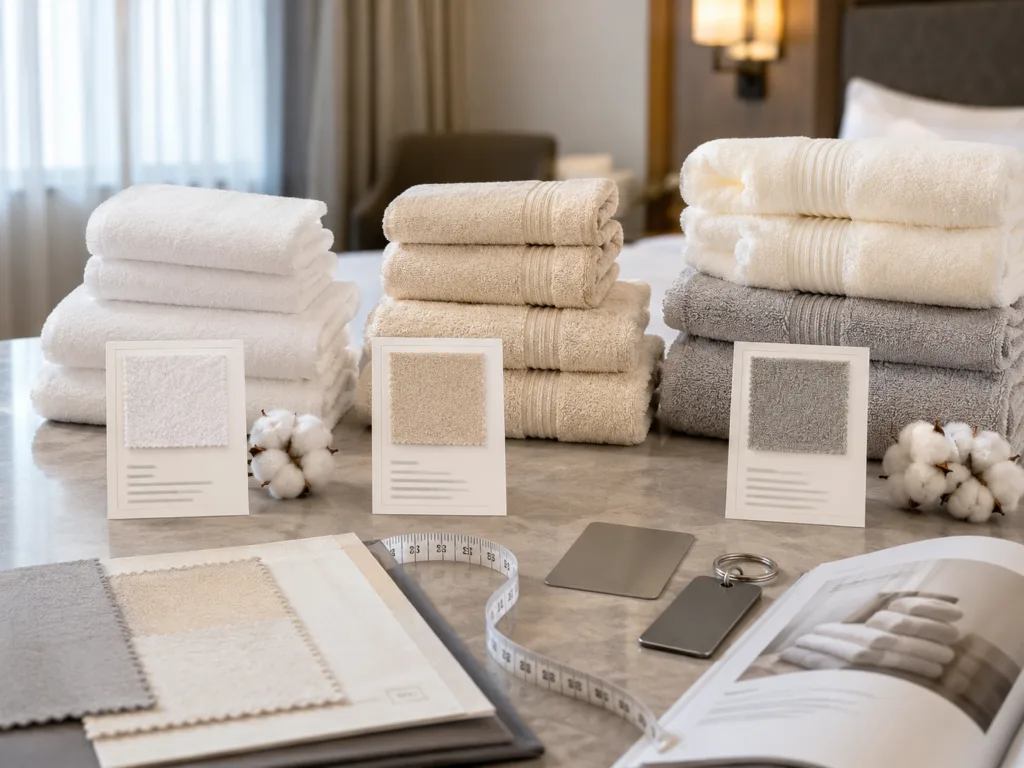
A 700 GSM towel may feel impressive in a showroom, but it may be too slow-drying for a high-turnover hotel. A 400 GSM towel may be practical and economical, but it may feel too thin for a boutique hotel trying to build a premium guest experience. For B2B buyers, the best towel is not always the thickest towel. It is the towel that creates the right balance between comfort, absorbency, durability, laundry efficiency, price and brand image.
This guide breaks down hotel towel GSM by hotel type, towel use, material, absorbency, size, construction, packaging and bulk purchasing strategy.
What Does GSM Mean in Hotel Towels?
GSM means grams per square meter. It measures the fabric weight of a towel. In general, a higher GSM towel is denser, heavier and more absorbent, while a lower GSM towel is lighter, thinner and faster to dry. CottonWorks, a cotton industry resource, notes that towel buyers should consider pile type and GSM because higher GSM usually means a denser and more absorbent towel.
For hotel procurement, GSM usually tells you four things:
- How heavy the towel feels in the guest’s hand
- How much water the towel can absorb
- How long the towel may take to dry after washing
- How much the towel may cost per piece and per shipment
However, GSM does not tell the whole story. Two towels with the same GSM can feel completely different if they use different yarns, cotton grades, loop density, weaving structures, finishing processes or dyeing methods. A well-made 500 GSM towel can outperform a poorly made 650 GSM towel in softness, absorbency and long-term durability.
That is why serious hotel buyers should use GSM as a starting point, not the only buying standard.
Common Hotel Towel GSM Ranges
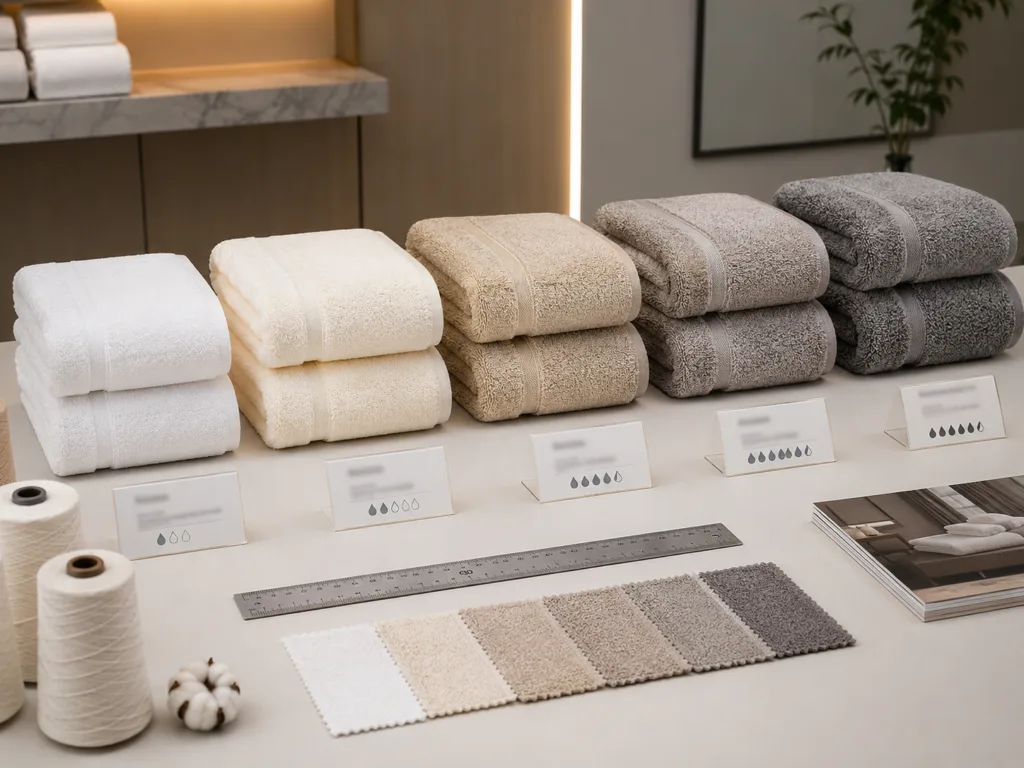
Here is a practical GSM range for hotel towel sourcing:
| GSM Range | Towel Feel | Best Application |
| 300–400 GSM | Lightweight, quick-dry, economical | Hostels, gyms, budget hotels, promotional towels |
| 400–500 GSM | Practical, balanced, easy to launder | Economy hotels, serviced apartments, Airbnb, guesthouses |
| 500–600 GSM | Soft, comfortable, more premium | Boutique hotels, mid-range hotels, resorts |
| 600–700 GSM | Plush, absorbent, luxury feel | Luxury hotels, spas, villas, premium suites |
| 700+ GSM | Very thick, heavy, high-end | Spa use, VIP rooms, luxury retail, display sets |
For many hotel towel programs, the most practical range is 450–650 GSM, depending on the hotel category and towel type. Higher GSM can improve guest perception, but it can also increase drying time, laundry load, carton weight and shipping cost.
Best GSM for Budget Hotels
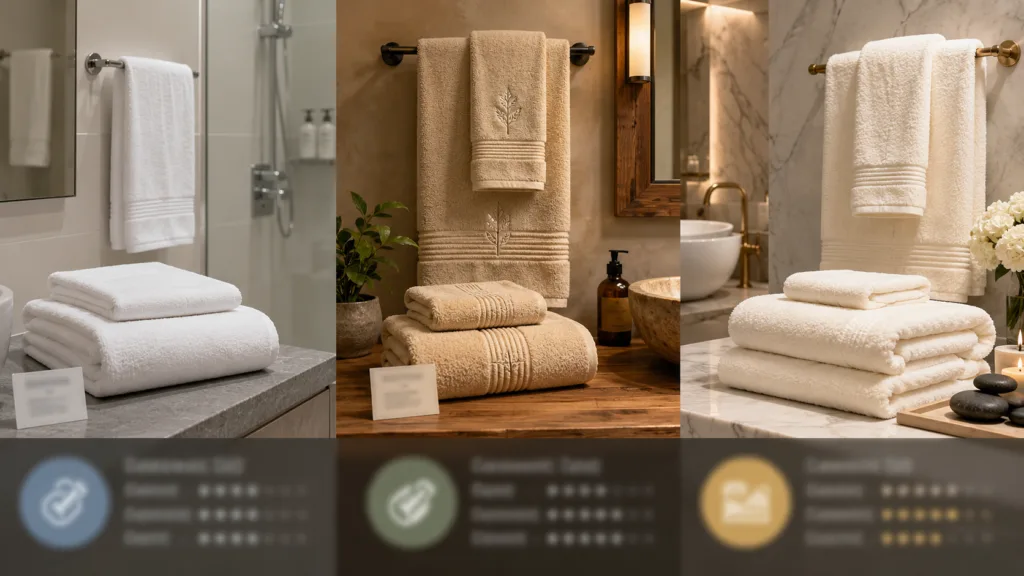
For budget hotels, economy chains, hostels and high-turnover accommodation, the best GSM range is usually:
350–450 GSM for bath towels
350–500 GSM for hand towels and face towels
Budget hotel buyers are not only looking for the lowest unit price. They care about long-term cost per room. A towel that is cheap but loses shape, sheds heavily or becomes rough after repeated washing will quickly become more expensive because it needs frequent replacement.
For this segment, the buyer’s main concerns are:
- Fast drying
- Stable quality
- Competitive bulk price
- Low replacement cost
- Good whiteness retention
- Easy washing and storage
- Acceptable guest comfort
- Consistent supply for repeat orders
A 400 GSM towel can be a good fit for a budget hotel if the yarn, weaving and finishing are controlled properly. It will dry faster than a thick luxury towel, reduce laundry pressure and take up less storage space.
For wholesalers and importers serving budget hotel chains, it is also important to build a repeatable towel program. Instead of changing suppliers every order, buyers should keep stable specifications for size, GSM, yarn type, color, hem style and packing method. This helps avoid complaints caused by inconsistent hand feel or shade difference between batches.
Best GSM for Boutique Hotels
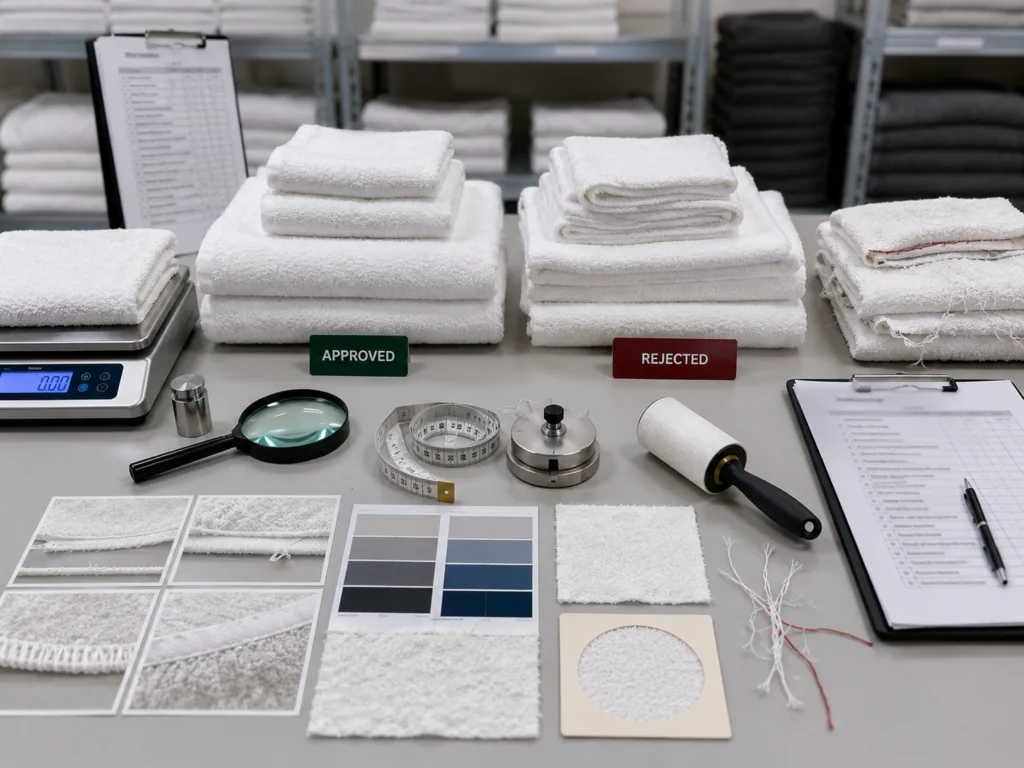
Boutique hotels are different from budget hotels. They are usually smaller, more design-focused and more sensitive to guest experience. A towel is not just a bathroom item. It is part of the property’s visual identity and brand feeling.
For boutique hotels, the recommended GSM range is usually:
500–600 GSM for bath towels
450–550 GSM for hand towels
400–500 GSM for face towels
This GSM range gives a better hand feel without becoming too heavy for daily laundry. It also works well for custom details such as embroidery, woven labels, custom colors, paper belly bands and retail-style packaging.
Boutique hotel buyers often ask for:
- Softer hand feel
- Better drape and appearance
- Custom logo embroidery
- Custom colors matching interior design
- Retail-ready packaging for gift shops
- Smaller but consistent repeat orders
- Coordinated towel sets for rooms, spa and pool areas
For this customer group, a towel should look good when folded, feel soft after washing and match the hotel’s overall atmosphere. A boutique hotel with natural wood, linen bedding and neutral interiors may prefer white, ivory, beige, sand, taupe or soft grey towels. A resort-style property may prefer navy, forest green, terracotta or custom Pantone colors.
For B2B suppliers, boutique hotels are valuable because they care about design and quality, not only price. They may start with a moderate order, but if the towel program matches their brand, repeat orders can be stable.
Best GSM for Luxury Hotels and Resorts
Luxury hotels, five-star resorts, spa properties and private villas need towels that create an immediate feeling of comfort. Guests in this segment expect softness, volume, absorbency and a premium bathroom experience.
The recommended GSM range is usually:
600–700 GSM for bath towels
600–750 GSM for spa towels
550–700 GSM for bath sheets
500–600 GSM for hand towels
450–550 GSM for face towels
Luxury buyers often request long-staple cotton, combed cotton, ring-spun yarn, zero-twist or low-twist construction, dense terry loops and refined finishing. Terry towels are absorbent because the looped structure creates more surface area for moisture pickup. Fiber and construction both affect absorbency; Good Housekeeping’s textile experts also highlight that cotton fiber and terry loop structure are key factors in towel absorbency.
However, luxury buyers still need to think about hotel operations. A 750 GSM towel may feel wonderful, but it can increase drying time, energy use, shipping weight and laundry workload. For many luxury hotels, 650 GSM is a strong middle point: plush enough for guest perception, but still manageable for commercial washing.
For resorts and spas, towel selection should also be divided by area:
- Guest room bath towels: 600–700 GSM
- Spa towels: 650–750 GSM
- Pool towels: 400–600 GSM, depending on drying needs
- Beach towels: 350–500 GSM if large-format and quick-dry is important
- Bath mats: often heavier and denser for stability and water absorption
Luxury does not always mean choosing the highest GSM. It means choosing the right GSM for the guest experience and operating model.
Hotel Towel Materials: Cotton, Blends and Specialty Options
Most hotel towels are made from cotton because cotton is soft, breathable and naturally absorbent. Cotton is also suitable for terry construction, which is the classic looped fabric used in towels.
Common hotel towel material options include:
100% Cotton
This is the most common choice for hotels. It offers good absorbency, softness and comfort. It is suitable for budget, mid-range, boutique and luxury hotels.
Combed Cotton
Combed cotton removes shorter fibers and impurities, resulting in a smoother yarn. Towels made with combed cotton often feel softer and show better durability than basic cotton towels.
Ring-Spun Cotton
Ring-spun yarn is smoother and stronger than open-end yarn. It is often used for hotel towels that need both comfort and durability.
Long-Staple Cotton
Long-staple cotton can create smoother, stronger and softer yarns. It is more commonly used in premium and luxury towel programs.
Cotton-Polyester Blends
Blended towels may improve drying speed and durability, but they usually do not feel as naturally absorbent or premium as 100% cotton. They may work for economy programs, gyms or institutional use, but many hotel buyers still prefer cotton for guest-facing towels.
Organic Cotton
Organic cotton can be useful for eco-conscious hotels, resorts and wellness brands. For buyers making sustainability claims, certification matters. Textile Exchange works on standards and initiatives for preferred fibers and materials, including cotton and other textile supply chain programs.
Absorbency: Why GSM Alone Is Not Enough
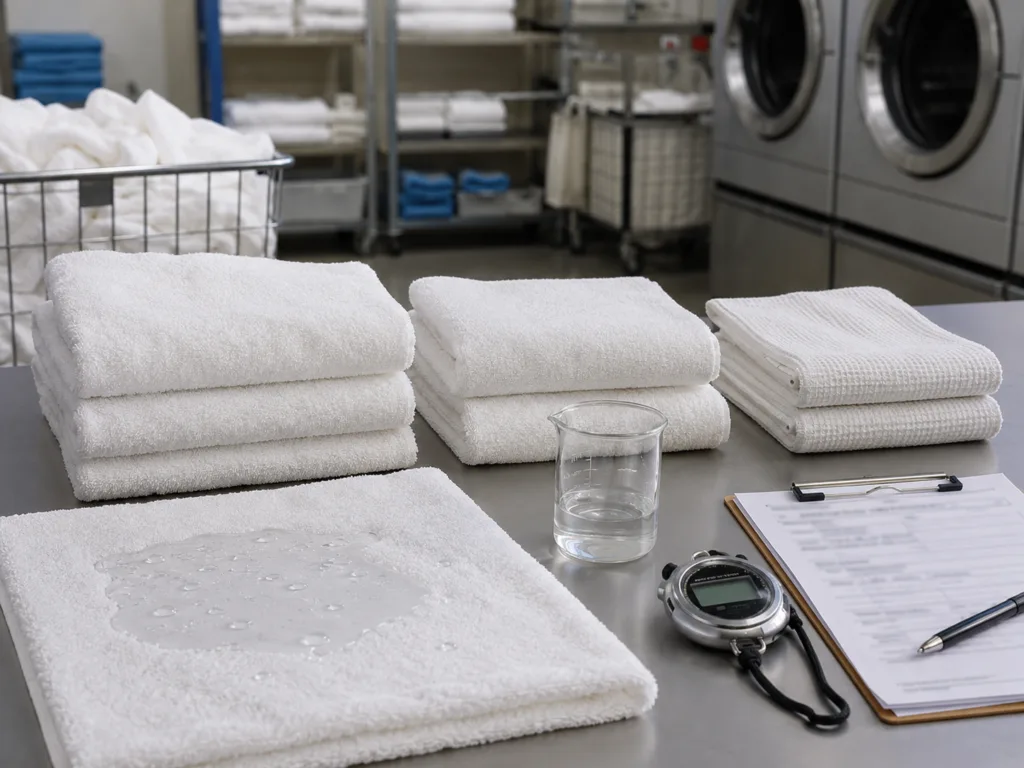
Hotel guests judge towels quickly. Does the towel absorb water fast? Does it feel soft on the skin? Does it leave lint? Does it smell fresh? Does it dry properly between uses?
Absorbency depends on several factors:
- Fiber content
- Yarn quality
- Terry loop height
- Loop density
- Weaving structure
- Finishing chemicals
- Washing process
- Residue from softeners or detergents
AATCC lists TM79 as a standard test method for absorbency of textiles, showing that absorbency is a measurable textile performance factor, not just a feeling. The AATCC TM79 description also states that the method can be used to determine water absorbency of yarns, fabrics and garments across different fiber contents and constructions.
For hotel buyers, a simple sourcing rule is this:
Ask for both hand feel and performance.
A towel should not only feel soft when new. It should absorb well after washing, keep its shape, reduce linting and remain comfortable after repeated laundering.
Some towels are over-softened during finishing to feel good in the sample stage. But after several washes, the finish may fade and the towel can become rough, flat or less absorbent. This is why bulk buyers should test samples after washing, not only when they arrive.
Hotel Towel Sizes: Choose by Room Type and Guest Expectation
Towel size affects guest comfort, laundry cost, carton volume and total order weight. A larger towel feels more generous, but it also increases cost and drying time.
Common hotel towel sizes include:
| Towel Type | Common Size Range | Best Use |
| Face Towel / Washcloth | 30×30 cm / 12×12 in | Bathroom vanity, guest amenities |
| Hand Towel | 35×75 cm / 14×30 in or 40×70 cm | Guest bathroom, public restroom |
| Bath Towel | 70×140 cm / 27×55 in | Standard hotel rooms |
| Large Bath Towel | 76×152 cm / 30×60 in | Boutique and luxury rooms |
| Bath Sheet | 90×150 cm / 35×60 in or larger | Suites, luxury hotels, villas |
| Pool Towel | 70×140 cm to 100×180 cm | Pool, spa, resort, beach |
| Bath Mat | 50×80 cm / 20×30 in | Bathroom floor |
For budget hotels, standard bath towels around 70×140 cm are practical. For boutique and luxury hotels, 76×152 cm or larger bath sheets can improve the guest experience. For resorts, pool towels and beach towels should be planned separately because they need different color, size, weight and drying performance.
How Laundry Cost Changes the Towel Decision
Hotel towels are washed frequently. This makes commercial laundry performance a major buying factor.
Heavier towels can increase:
- Washing load weight
- Drying time
- Energy use
- Storage space
- Shipping cost
- Replacement cost
- Handling workload for housekeeping
Public health laundry guidance also shows why correct laundering and complete drying matter. CDC guidance for healthcare laundry commonly recommends hot-water washing at 160°F / 71°C for 25 minutes, and another CDC appendix notes hot water of 70–80°C for 10 minutes with approved detergent and complete drying in a commercial dryer for soiled linen management. While hotels are not hospitals, these references show how textile hygiene depends on washing conditions, detergent control and complete drying.
For hotels, the commercial question is not only “How much is one towel?” It is:
How much does this towel cost after 100, 150 or 200 laundry cycles?
A towel with slightly higher unit cost may be cheaper in the long run if it lasts longer, sheds less and keeps a better appearance.
Quality Checks Before Bulk Hotel Towel Orders
Before placing a large hotel towel order, buyers should confirm the following:
1. GSM Tolerance
Ask for the target GSM and acceptable tolerance. In production, a small tolerance is normal, but it should be controlled.
2. Size After Washing
Towels may shrink after washing. Buyers should confirm both original size and washed size.
3. Color Fastness
For dyed towels, especially dark colors such as navy, charcoal, brown or forest green, color fastness matters.
4. Linting Level
Excessive linting creates guest complaints and laundry problems.
5. Hem and Stitching
Weak hems, loose threads and uneven stitching reduce towel life.
6. Absorbency After Washing
Do not judge only by first touch. Wash the sample and test absorbency again.
7. Weight Consistency
Inconsistent towel weight across cartons can indicate unstable production control.
8. Certification Scope
If certification is required, confirm whether it applies to yarn, fabric, finished towels, dyeing process or final product. OEKO-TEX STANDARD 100 is a widely recognized textile label for products tested for harmful substances, covering textile safety from yarn to finished product.
Packaging Options for Hotel Towel Bulk Orders
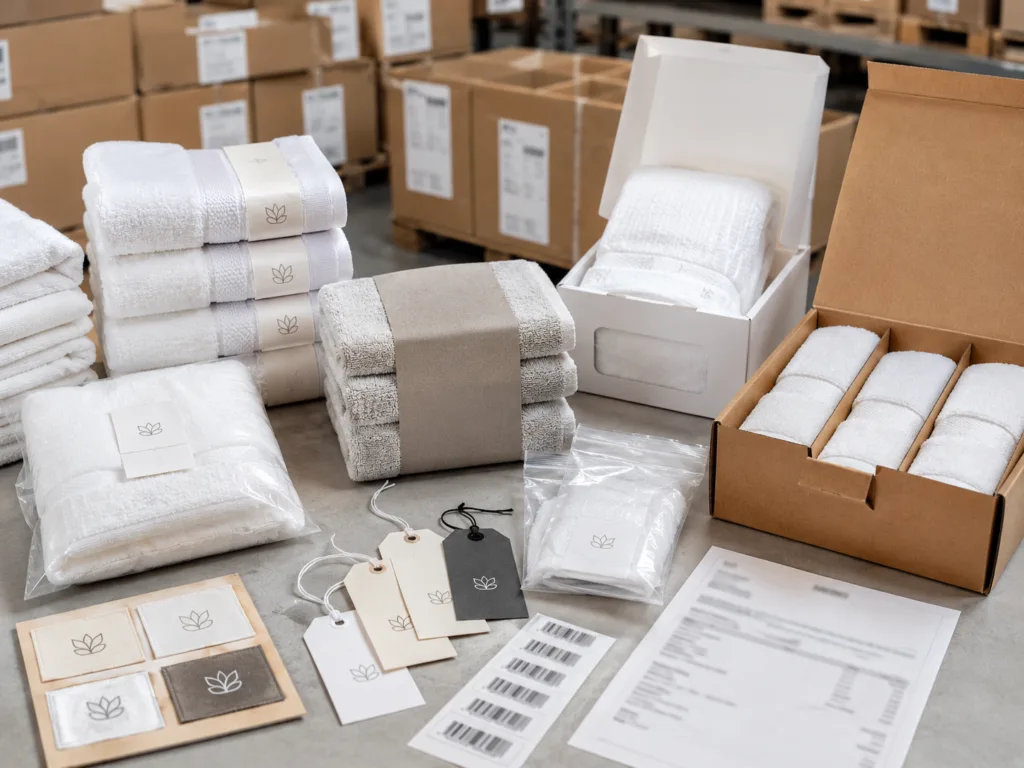
Packaging is not just a visual detail. For hotel towels, packaging affects shipping efficiency, warehouse handling, retail presentation and brand image.
Common B2B packaging options include:
Bulk Carton Packing
Best for hotel projects, wholesalers and importers. Towels are folded and packed by quantity into export cartons.
Individual Polybag Packing
Useful when towels need better dust protection or separate distribution.
Paper Belly Band
Good for boutique hotels, resort gift shops and retail-style presentation.
Custom Woven Label
Suitable for hotel brands, private label towel programs and wholesalers.
Embroidered Logo
Popular for boutique hotels, resorts, spas and premium hospitality buyers.
Hang Tag or Insert Card
Useful for retail, gift sets or eco-message storytelling.
Gift Box or Towel Set Packaging
Best for luxury hotel amenities, corporate gifting, resort retail and branded hospitality programs.
For large orders, packaging should be confirmed early because it affects carton size, shipping volume, barcode requirements, labeling and final landed cost.
Recommended GSM by Hotel Type
| Hotel Type | Bath Towel GSM | Buying Priority |
| Hostel / Gym / Economy Stay | 300–400 GSM | Quick dry, low cost, easy replacement |
| Budget Hotel | 350–450 GSM | Durability, laundry efficiency, price |
| Standard Hotel | 450–550 GSM | Balanced comfort and cost |
| Boutique Hotel | 500–600 GSM | Guest experience, design, branding |
| Resort | 500–650 GSM | Comfort, absorbency, coordinated sets |
| Luxury Hotel | 600–700 GSM | Plush hand feel, premium appearance |
| Spa / Villa / VIP Suite | 650–750 GSM | Maximum comfort and luxury perception |
Recommended GSM by Towel Type
| Towel Type | Recommended GSM | Notes |
| Face Towel | 400–550 GSM | Softness matters because it touches the face |
| Hand Towel | 450–600 GSM | Balance absorbency and drying speed |
| Bath Towel | 450–700 GSM | Depends on hotel positioning |
| Bath Sheet | 550–700 GSM | Better for luxury rooms and suites |
| Pool Towel | 350–550 GSM | Larger size often needs lighter GSM |
| Beach Towel | 300–500 GSM | Quick dry and large-format comfort |
| Spa Towel | 600–750 GSM | Plushness and guest experience matter |
| Bath Mat | 650–900 GSM | Stability and floor absorbency matter |
What Mature Hotel Buyers Care About Most
For suppliers, the best way to convert serious B2B buyers is to answer the questions they actually care about.
Hotel buyers, wholesalers and importers usually care about:
- Can the supplier keep quality consistent across repeat orders?
- Can the towel survive commercial laundry?
- Is the GSM suitable for the hotel’s price level?
- Will the towel dry fast enough for daily turnover?
- Can the supplier support custom logo, color and packaging?
- Are certificates available when needed?
- Can the supplier handle bulk production and export packing?
- Is the MOQ realistic for hotel projects?
- Can samples be tested before bulk production?
- Can the supplier recommend a full towel set, not only one bath towel?
- Can the price stay stable for repeat purchasing programs?
- Can the supplier help reduce complaints from guests and housekeeping teams?
This is why hotel towel sourcing should be treated as a program, not a one-time product purchase.
A mature buyer may need bath towels, hand towels, face towels, bath mats, pool towels, spa towels and branded packaging. A professional supplier should help the buyer match GSM, size, yarn, color, logo method, packaging and carton plan based on the hotel’s real operating needs.
How to Choose the Right Hotel Towel Supplier
When sourcing hotel towels in bulk, do not only compare unit prices. Ask suppliers these questions:
- What GSM range do you recommend for my hotel type?
- Can you provide washed samples for testing?
- What is the shrinkage rate after washing?
- What is the MOQ for custom color or logo embroidery?
- Can you support full towel sets for guest rooms, pool and spa?
- What certifications can be provided?
- How do you control loose threads, linting and stitching defects?
- Can you provide export carton labels and packing lists?
- Can you keep the same quality for repeat orders?
- Can you recommend a cost-saving option without lowering guest experience too much?
For large hotel projects, the best supplier is not always the one offering the lowest price. It is the one that understands hospitality operations and can help reduce long-term risk.
Final Buying Advice
The best hotel towel GSM depends on your property type, guest expectations, laundry system and purchasing budget.
For budget hotels, choose practical towels around 350–450 GSM with good durability and fast drying.
For boutique hotels, choose 500–600 GSM towels that balance softness, branding and laundry efficiency.
For luxury hotels and resorts, choose 600–700 GSM towels for a plush, premium guest experience.
For spas and VIP suites, consider 650–750 GSM, but check drying time and operational cost before scaling.
A smart hotel towel program should not focus only on GSM. It should combine material, yarn quality, absorbency, towel size, stitching, shrinkage control, color fastness, packaging, certification and long-term supply stability.
If you are sourcing towels for a hotel, resort, spa, wholesaler or import program, share your hotel type, target GSM, towel sizes, logo requirements, packaging needs and estimated order quantity. A reliable towel supplier can help you build a practical towel solution that matches your market, budget and guest experience.
FAQ
1. What is the best GSM for hotel towels?
For most hotels, 450–650 GSM is the most practical range. Budget hotels often use 350–450 GSM, boutique hotels usually choose 500–600 GSM, and luxury hotels often prefer 600–700 GSM.
2. Are higher GSM towels always better for hotels?
No. Higher GSM towels feel thicker and more luxurious, but they can dry more slowly, cost more, weigh more in shipping and increase laundry workload. The best GSM depends on hotel positioning and daily operations.
3. What GSM towels do luxury hotels use?
Luxury hotels often use 600–700 GSM bath towels. Spas, villas and VIP suites may use 650–750 GSM towels, but buyers should test drying time and laundry performance before placing large orders.
4. What should hotel buyers check before ordering towels in bulk?
Hotel buyers should check GSM, size after washing, absorbency, linting, stitching, color fastness, shrinkage, packaging, certification scope and supplier consistency across repeat orders.
References
- CottonWorks explains that towel buyers should consider pile type and GSM, and that higher GSM generally means a denser, more absorbent towel.
- Good Housekeeping’s textile experts explain that cotton fiber structure and terry loops are key factors in towel absorbency.
- AATCC lists TM79 as a standard test method for textile absorbency.
- AATCC TM79 describes absorbency testing for yarns, fabrics and garments across different fiber contents and constructions.
- OEKO-TEX STANDARD 100 is a textile safety label for products tested for harmful substances.
- Textile Exchange provides standards and initiatives related to preferred fibers and responsible textile supply chains.
- CDC laundry guidance provides hot-water laundering and drying references for textile hygiene management.