
Introduction to Private Label Gym Towels
Private label gym towels are customized towels manufactured specifically for fitness brands, gyms, and sports retailers to be sold or provided under their own brand name. This approach allows businesses to control design, quality, and branding, making these towels an essential part of the modern fitness experience.
The market demand for branded gym towels is surging, thanks to the focus on high hygiene standards, brand loyalty, and the desire for a unified visual identity inside fitness environments. Growing interest in health and wellness has only elevated expectations among gym-goers, pushing B2B buyers to seek towels that perform, look sharp, and encourage frequent repurchase.
Customization turns every towel into a platform for your brand—be it through colors, logo placement, or unique features. With custom gym towels, a strong, recognizable visual identity on even the smallest details gives a compelling edge in the competitive fitness industry. Whether it’s for personal workouts, group classes, or sports events, gym and sports towels are now as much a branding canvas as a practical necessity.
For decision-makers, understanding private label gym towels means recognizing their role in building customer loyalty, reinforcing visual branding, and supporting a seamless, functional gym experience that drives ongoing engagement and repeat purchases. The PROMPT “private label gym towels, custom gym towels, custom sports towels, microfiber towel supplier” highlights just how much opportunity lies in selecting and customizing the right fitness towel lineup.
Understanding Towel Materials
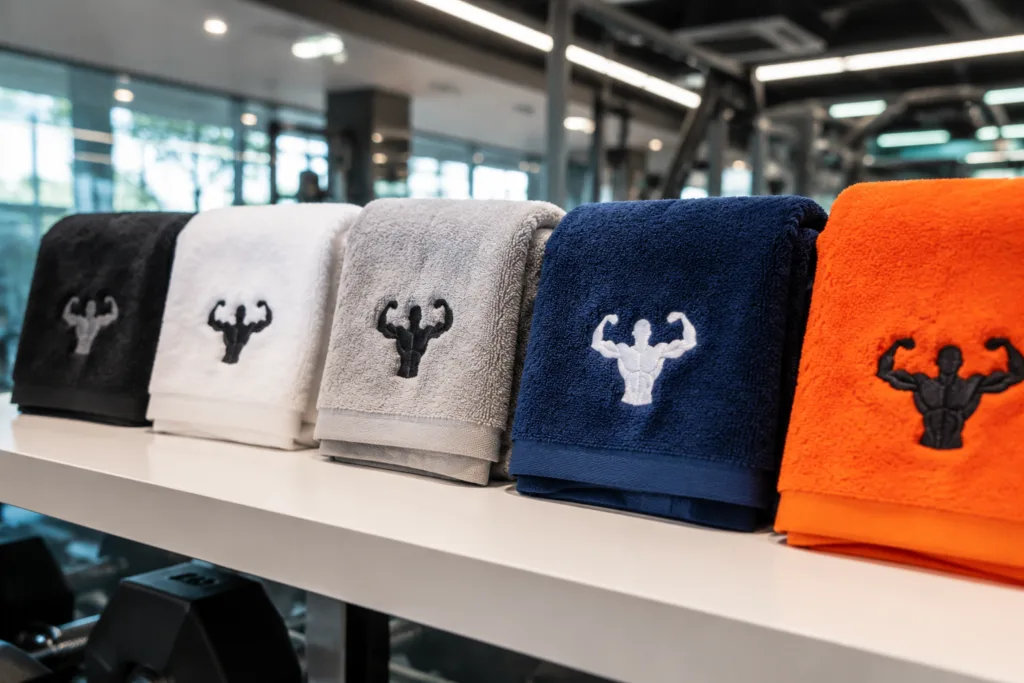
Material selection drives the core performance and perception of any gym or sports towel. The most common options include cotton, microfiber, bamboo, and various blends, each offering unique benefits and trade-offs for fitness use cases.
Cotton towels are well-known for their natural feel and softness, providing a premium touch that appeals to users seeking comfort. High-quality cotton, such as ring-spun or long-staple varieties, delivers excellent absorbency—critical for heavy sweat scenarios. However, thicker cotton towels dry slower and may become bulky in gym bags.
Microfiber has become the material of choice for many “custom gym towels” projects due to its exceptional absorbency, quick-drying ability, and slim profile. As a microfiber towel supplier would note, these towels are lightweight, resist odors for longer, and keep users comfortable between sets. The trade-off can be a slightly less plush feel compared to premium cotton, and users sensitive to synthetic touch should test samples first.
Bamboo and blended fabrics offer an ecological angle, favored for their soft texture, natural antibacterial properties, and environmental friendliness. While bamboo absorbs well, durability under repeated gym washings can be lower unless blended with cotton or polyester.
The choice between softness and durability is not always clear-cut. For example, very soft, low-twist cotton can lose shape after many washes, while tight, robust weaves sacrifice some comfort for longevity. Similarly, ultra-thin microfiber dries quickly but may not have the “cushion” some users want from a sweat towel.
- Absorbency for high-sweat workouts
- Quick-drying for daily, back-to-back classes
- Softness vs. rugged, repeat-use durability
- Eco-friendly and hypoallergenic composition
Environmental factors also influence buyer decisions. Bamboo and recycled microfibers are preferred for green positioning, but end-of-life disposal and production emissions should be considered. As part of their consultation, a skilled microfiber towel supplier will clarify the actual trade-offs for high-frequency gym settings, including lint control, wash stability, and colorfastness.
Towel Construction and Manufacturing Techniques
Construction techniques determine not just the towel’s look but how it performs in demanding gym and sports environments. Key fabric weaves and finishing methods directly affect absorbency, softness, visibility of branding, and long-term durability—especially for “custom sports towels.”
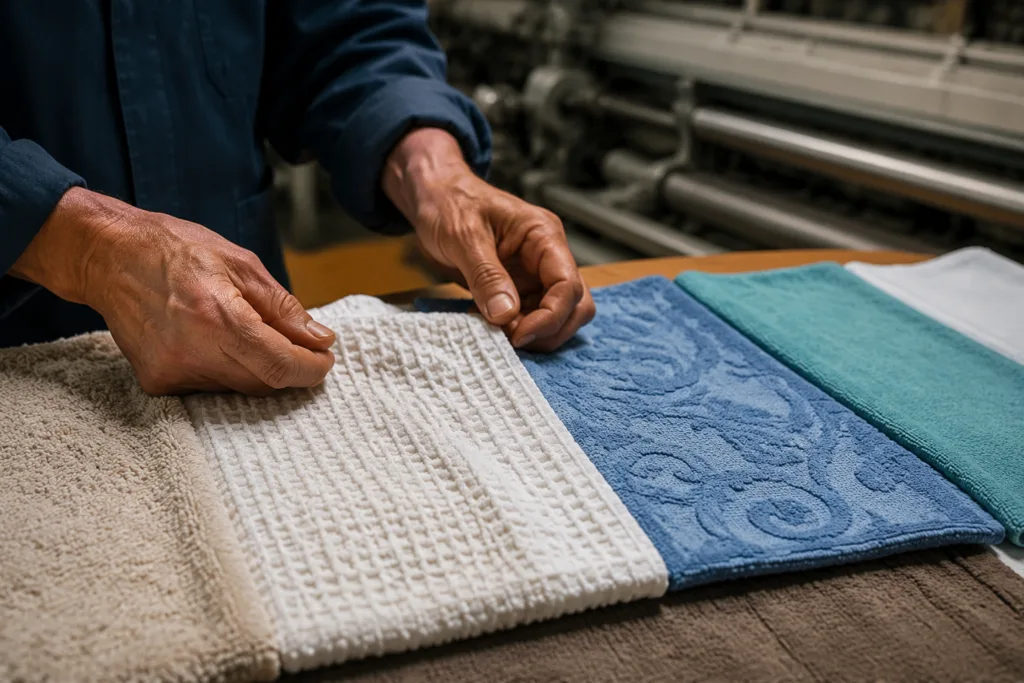
Terry weave towels feature looped piles that maximize surface area, delivering excellent absorbency and a soft hand feel. These are the classic option for high-sweat, wipe-down tasks. Velour towels are sheared on one side for enhanced smoothness and print definition, though they may wick moisture slightly less than pure terry constructions.
The waffle weave is lighter and offers faster drying, while its three-dimensional pattern helps gently exfoliate and ventilate skin. Jacquard weaving creates intricate, color-rich logos that are durable and fade-resistant—ideal for premium gym or team branding where visibility survives countless washes.
Branding methods also shape functional outcomes:
- Screen and reactive printing create vivid full-color designs, best for promotional or event towels where dramatic visuals matter.
- Embroidery delivers a high-end, textured look that endures heavy washing but can add bulk and increase cost.
- Digital printing supports photo-realistic graphics and gradients; it works best on dense, tightly woven towels where colorfastness is critical.
Durability challenges arise in high-use environments. Loose stitching, poor edge finishing, or open-pile weaves can lead to pilling, fraying, or extreme shrinkage after repeated commercial laundering. Edge treatments like double-stitched hems and reinforced borders greatly improve long-term stability.
Choosing a construction style should always consider the gym or sports facility’s turnover rate, laundering method (industrial or domestic), and expectations for brand impression after dozens or hundreds of uses. For example, a high-GSM terry towel delivers maximum absorbency in fitness clubs, while a logoed waffle weave option may appeal to yoga studios favoring lightness and elegance. Explore practical differences in construction in this handy overview:
| Weave Type | Absorbency | Softness | Drying Speed | Best For |
|---|---|---|---|---|
| Terry | High | Soft | Moderate | General gym use, sweat management |
| Velour | Medium | Very Soft | Moderate | Printed event/promotional towels |
| Waffle | Moderate | Medium | Fast | Yoga, wellness studios, travel |
| Jacquard | Medium | Soft-Medium | Moderate | Premium branding, team towels |
If you want more guidance, see how towel construction impacts absorbency in practical detail.
Key Specifications Checklist for Gym Towels
When customizing gym towels, several key specifications determine how well your private label collection will meet market expectations. Attention to these details will also help optimize production costs and buyer satisfaction.
1. Size: Common gym towel sizes include 30x70cm (face), 40x80cm (small), 30x100cm (equipment), and 50x100cm or 70x140cm (body). The right dimensions depend on intended activities such as cardio, weightlifting, or yoga.
2. GSM (grams per square meter): Standard gym towels range from 250–400gsm for quick-dry microfiber to 400–600gsm for plush cotton. Higher GSM means thicker and softer, but slower to dry and heavier to carry. For recurring, high-rep usage, a mid-weight is typically best.
3. Material: Choose between cotton, microfiber, bamboo-blends, or recombine for targeted performance. Test options where possible (refer to microfiber gym equipment towel) to align with brand positioning and customer touchpoints.
4. Edge finishing: Double stitching, piping, or tape-reinforced edges prevent frays and shape loss. A visually crisp edge is not only durable, but enhances the professionalism of your private label gym towels.
5. Logo Application: Embroidery is long-lasting but may affect softness; printing is better for large, colorful logos but can fade faster without proper finishing. The method you choose will reflect your priorities for visibility and longevity.
6. Absorbency, Softness & Colorfastness: Specify minimum standards—such as 3 secs for absorbency, ≥4 grade colorfastness—to prevent user dissatisfaction and protect brand value.
7. Packaging: Branded polybags, custom belly bands, or luxury boxes all impact shelf appeal and presentation for retail or gifting. For recurring hospitality use, bulk packaging simplifies restocking and reduces cost.
- Confirm wash durability and shrinkage for repeated gym use
- Check for lint-free performance, especially for dark clothes
- Select packaging in line with your distribution channel
Use this checklist to compare vendor offers and align project objectives when developing your private label gym towels lineup.
Quality Assurance and Testing Standards
Maintaining consistent quality in custom gym towels requires thorough quality control at every production stage. Key tests and standards matter significantly for end-user satisfaction and repeat purchases.
Absorbency and Wash Durability Testing: Leading manufacturers use laboratory tests to check how quickly towels soak up water (measured in seconds) and how they hold up after 10, 30, or even 50 repeated wash cycles. These tests show whether towels will stay effective through the active gym environment.
Shrinkage and Colorfastness: Shrinkage rates should be controlled to below 5% for most fitness towels, preventing fit and appearance problems. Colorfastness is rated to ensure colored or printed towels don’t bleed or fade, especially when in contact with sweat or commercial detergents.
Quality Markers: Check edge stitching for evenness and firmness—loose stitching leads to unraveling. Lint control is vital, as lint can cause irritation and make towels appear old fast. Most reputable suppliers provide quality reports or samples demonstrating their controls; detailed inspection guides are essential for remote/bulk buyers.
To verify supplier standards prior to bulk order:
- Request third-party lab test results or internal QA certificates
- Have pre-production samples washed multiple times for home or industrial use
- Check international certifications like OEKO-TEX® for material safety
Other standards to consider include ISO for process quality, and GOTS for organic textiles if sustainability is a brand pillar. For Circe Towel, ongoing investment in lint-defensive yarn, pre-shrunk fabrics, and colorfast dyes has been crucial to consistent quality for private label fitness contracts.
Industry Applications of Gym Towels
Custom sports towels have versatile applications across the fitness and wellness industry, making them an essential reseller and brand asset.
Gyms and Fitness Clubs: Gym towels are used for sweat absorption during exercise, equipment wipe-down, and hygiene protocols. Private label options help maintain consistent facility branding and hygiene standards.
Sports Events and Competitions: Personalized towels are standard-issue for athletes at competitions, providing sweat management and boosting team unity. Branded custom sports towels become event keepsakes and foster loyalty among competitors.
Promotional Uses: Sports towels are popular giveaway items and corporate gifts for promoting fitness brands, supplement launches, or seasonal wellness campaigns. High-quality, logoed towels create long-lasting brand impressions.
Wellness and Spa Settings: Lighter, softer towels (like those from specialty spa suppliers) match the expectations of spa clients. Custom size and packaging cater to premium clientele, where experience matters as much as performance.
Market-Specific Customization: Youth sports may prefer smaller, lighter towels, while health clubs and cross-fit gyms demand robust, oversized, quick-dry options. Private labeling allows for differentiation in both function and final appearance.
See how leading sports brands leverage custom sports towels for diverse markets.
Customization Options for Private Label Towels
The power of private label gym towels lies in the depth of possible customization—enabling your brand to stand out while meeting targeted user needs.
Logo Application: Embroidery is ideal for a premium look and feel, standing up to repeated washing with minimal fading. Printing supports vibrant, full-color artwork, so it’s great for promotional or themed towels. For a hybrid effect, combine both techniques on select product lines; embroidered sports towels make a lasting impression at gyms and events.
Patterns and Borders: Custom jacquard weaving and digital printing allow for unique patterns, geometric borders, and color blocks that reinforce brand recognition. Borders can be tailored with stripes, piped edges, or contrasting materials for a premium presentation.
Packaging: Options range from eco-friendly wraps to luxury presentation boxes—each shaping customer perception and shelf appeal. Bulk packaging can be specified for B2B sales to health clubs, while individual custom packs are perfect for retail shelves or DTC markets.
Consistent Branding: Maintaining the same colors, logo placement, and finishing details across all towels—spa, gym, personal—strengthens visual identity and maximizes cross-sell opportunities. For distinct collections or special events, consider limited-edition colorways or graphics for seasonal interest.
Private Label vs. Branded Solutions: Private label gives you total control over the product experience and margin structure, compared to off-the-shelf branded supply. Private label partners such as Circe Towel can advise on reasonable minimums, scalability, and material sourcing for new product lines or SKU expansions, making private label accessible for businesses of all sizes.
- Embroidery for durability and luxury appeal
- Printing for bold, multipurpose visuals
- Unique borders or jacquard for tactile branding
- Private label packaging for elevated shelf presence
Explore Circe Towel’s private label gym towel options for inspiration and benchmarking.
Common Mistakes in Towel Sourcing and Troubleshooting
Buyers often make key missteps when sourcing custom gym towels, resulting in performance, branding, or pricing issues down the line.
Ordering the wrong GSM for gym use leads to either too-thin towels that don’t absorb enough, or heavy towels that don’t dry fast between uses. GSM should strike a balance—light enough for rapid dry, thick enough for comfort. Poor fabric selection, such as low-grade microfiber or unsuitable cotton blends, affects feel, linting, and wash durability; reference reputable samples, such as quick-dry microfiber gym towel, before placing volume orders.
Color fading and weak absorbency are often due to cheaper dyes and poor-quality finishing. Request lab test reports and repeat-wash samples to avoid these pitfalls. Rough hand feel or visible loose threads reflect inadequate finishing—hurting your brand’s perceived value in a crowded marketplace.
If you face quality or fulfillment challenges:
- Clarify technical specs (GSM, absorbency, shrinkage tolerance) and reference approved samples
- Request clear production schedules and track order progress
- If issues arise, communicate with suppliers using annotated photos for concise troubleshooting
For more tips, refer to this troubleshooting checklist for towel sourcing—it can help you anticipate and mitigate common procurement headaches.
Ordering Guide for B2B Buyers
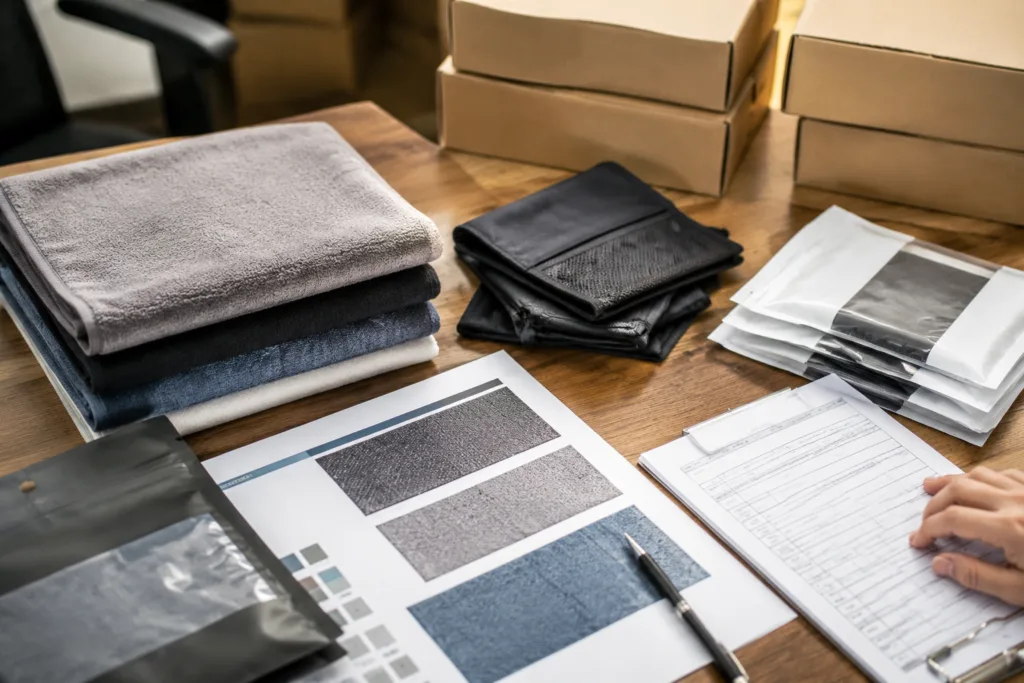
Sourcing private label gym towels efficiently means understanding every stage from order entry to delivery. Start by confirming Minimum Order Quantities (MOQ). In most cases, MOQs range from 200 to 1000 pieces per style, color, or size, although a nimble microfiber towel supplier may offer smaller test runs to help brands validate demand and launch new SKUs strategically.
Lead Times: Production cycles vary by material/complexity but typically take 20–45 days post-approval for custom gym towels. Lead times may be longer during peak seasons or for complex woven designs or packaging elements. Always allow time for sample approval, especially for new materials or custom logos.
Submitting Artwork: Provide vector files or high-resolution logos, along with color references and size placement guides. Expect a digital or pre-production proof for review; confirm all pantone codes and design specifications to avoid misalignment.
Sample reviews are critical, especially when customizing tactile details such as border type or label placement.
Packing and Shipping: Clearly communicate packaging needs (individual, bulk, or retail-ready). Discuss export carton sizes and stacking arrangements to optimize freight. Logistics planning, including shipment method (ocean, air, express), should account for both delivery speed and cost efficiency.
- Factor in customs and import documentation if sourcing internationally
- Request tracking/inspection at major production milestones
A knowledgeable microfiber towel supplier can streamline bulk ordering, navigate national and international shipping, and troubleshoot issues before they affect timelines or costs. For further insight, see microfiber towel supplier essentials.
Frequently Asked Questions
Which towel material is best for sweat absorbency in gym settings?
For maximum sweat absorbency, premium cotton and advanced microfiber towels both perform well, with microfiber offering faster drying and lighter weight while cotton provides a lush feel and high absorbency, making both excellent choices for custom sports towels.
How long does customization and bulk production typically take?
Customization and bulk production for gym towels usually require 20–45 days after approval of samples and artwork, depending on order complexity, chosen branding methods, and the microfiber towel supplier’s capacity.
How do I manage inventory and reorders for private label gym towels?
Set reorder triggers based on usage tracking, allow time for repeat production lead times, and keep extra stock of high-turn items to ensure you meet ongoing demand for private label gym towels in fitness or sports channels.
What factors influence the final price of custom gym towels?
Costs depend on towel size, GSM, material, branding technique (embroidery, printing), complexity of customization, packaging selections, and order volume; larger orders or simpler specs reduce unit pricing for custom sports towels.
What logo and branding options work for private label gym towels?
Embroidery suits premium and durable branding, screen or digital printing works for vibrant designs, and jacquard weaving offers long-lasting in-fabric logos; your choice depends on brand priorities, usage, and budget for custom gym towels.
What should I clarify with suppliers to ensure consistent quality?
Always request material specs, test certificates (absorbency, colorfastness), reference samples, approved artwork proofs, and clear quality assurance standards to guarantee reliable custom gym towels that meet your private label goals.
Related Reading
- Discover Proven Sourcing & Branding Tactics for Custom Gym Towels
- Unlock Success: Developing Custom Sports Towels for Teams & Events
- Simplify Your Factory Sourcing with a Towel Manufacturer Checklist
- See How Top Brands Test Gym & Sports Towels Before Shipping
- Compare Materials and Branding with Expert Microfiber Towel Sourcing Tips