
Understanding the Towel Manufacturing Process
The towel manufacturing process can feel complex, especially when placing a bulk towel order for the first time. Essential stages include development, sampling, mass production, quality control, and shipment. Each step is designed to transform your design vision into reliable, high-quality towels for your business application—whether that’s hospitality, sports, retail, or promotional use.
Development covers initial communication, material choice, towel size, gram weight (GSM), and customization options. Next, sampling ensures your requirements are met before mass production. Production brings your towels to life, followed by rigorous quality control checks. The final phase involves packaging and shipping to your warehouse or drop-shipping destination.
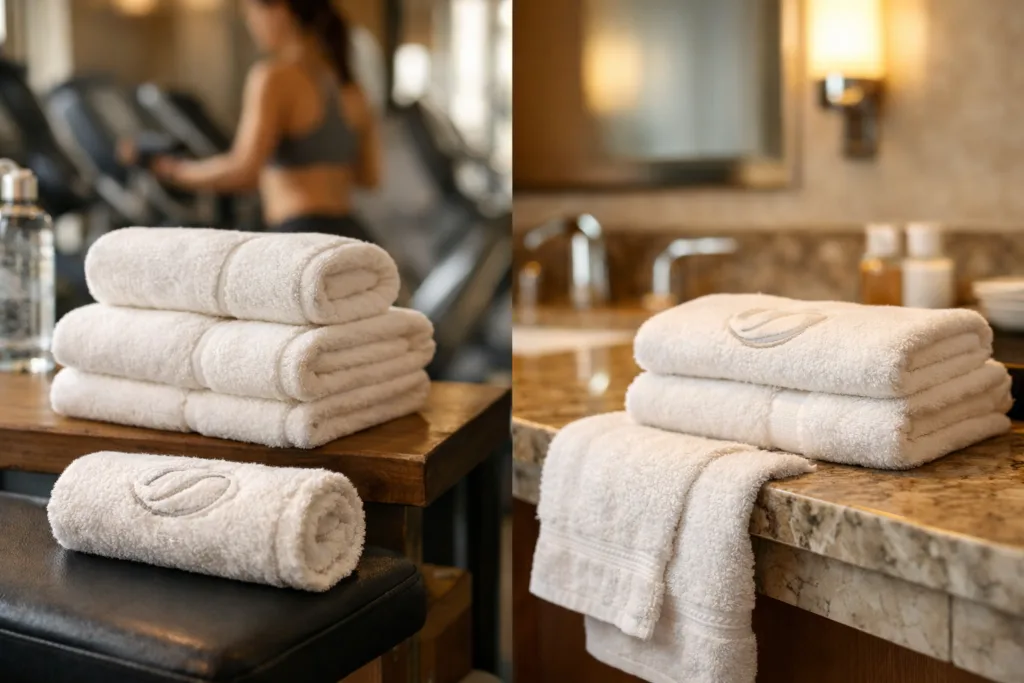
Communication is key during every stage. Sharing clear requirements and visuals with your manufacturer and staying informed about updates allows for the best results, especially with custom towels bulk or wholesale custom towel orders. At every step, details such as absorbency, softness, durability, and decoration methods are considered. The process is always adapted to your unique end-use scenario: plush hotel towels need different GSM, softness, and branding than lightweight, quick-dry gym towels.
- Development: Design consultation and technical breakdown
- Sampling: Physical prototype for approval
- Production: Making your towels in bulk
- Quality Control: Testing and assurance before shipping
- Packing & Shipping: Logistics and documentation
Effective communication and a reliable towel manufacturer are the foundation of a smooth order experience. Realistic lead times and clear specifications ensure your project is delivered on time and to spec.
Defining Key Concepts in Towel Production
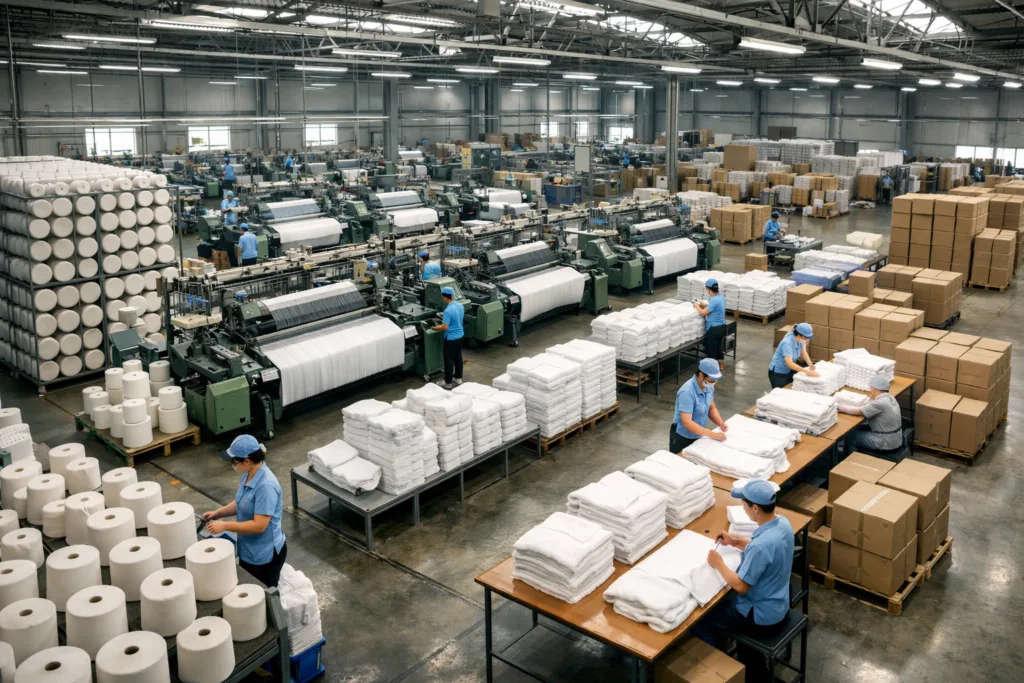
Before placing a bulk towel order, understanding a few essential terms will help you manage expectations and control costs. The Minimum Order Quantity (MOQ) refers to the smallest production volume the factory accepts for your custom project. MOQs are based on machine setup costs, dye/printing requirements, and fabric sourcing constraints. For example, a custom color or jacquard logo typically requires higher MOQs than a standard, unbranded towel.
Sampling costs are a one-time fee covering prototype development. These fees may include fabric test runs, dyeing, printing, or embroidery setup. Sampling gives you a physical example of your design before large-scale investment. Lead time—which combines sample time plus production time—will be affected by custom dye batches, pre-ordered yarns, or external events.
Customization plays a role in both thick (higher GSM) and thin (lower GSM) towels. Higher GSM increases absorbency and softness but also costs and drying time. GSM, or grams per square meter, directly reflects towel thickness and quality perception in the market. Deciding on the right GSM for your custom towels—a hotel towel or a sports towel—impacts how your product performs for its intended use.
Quality control ensures your specifications such as softness, absorbency, colorfastness, and stability are checked systematically. Factories often follow set procedures for inspection, including size, stitching, and washing tests.
Material Comparison for Custom Towels
Choosing the right material is one of the most important steps for custom towels bulk and wholesale custom towels. Material selection determines feel, absorbency, durability, and overall market acceptance. Here are the most common options and their realistic trade-offs for bulk towel order projects:
| Material | Absorbency | Softness | Eco-Friendliness | Best For | Price Impact |
|---|---|---|---|---|---|
| Cotton | Excellent | Very soft, gets softer over time | High with organic options | Hospitality, Retail, Spa | Moderate to High |
| Microfiber | Very high, quick-drying | Soft, smooth texture | Often synthetic | Sports, Promotional, Gym | Low to Moderate |
| Bamboo/Cotton Blend | Excellent | Silky, hypoallergenic | Very high | Wellness, Premium Retail | High |
| Blends (Poly/Cotton) | Good, faster dry | Medium | Moderate | Value Hospitality, Car Care | Low |
Cotton is the industry standard for hotel, spa, and home use due to its natural softness and absorbency. Microfiber is preferred for sports and gym towels because it dries faster and is less bulky—great for bags or outdoor events. Bamboo blends add a silky hand-feel and antibacterial qualities, appealing to premium or wellness-focused clients. Polyester blends offer cost efficiency and durability but may lack the plush touch expected in retail or hospitality.
When sourcing custom towels, always match material with customer expectations and market price points. Circe Towel often helps buyers balance material performance and branding impact, identifying the fabric blend best suited to your project goals.
Construction Techniques in Towel Manufacturing Process
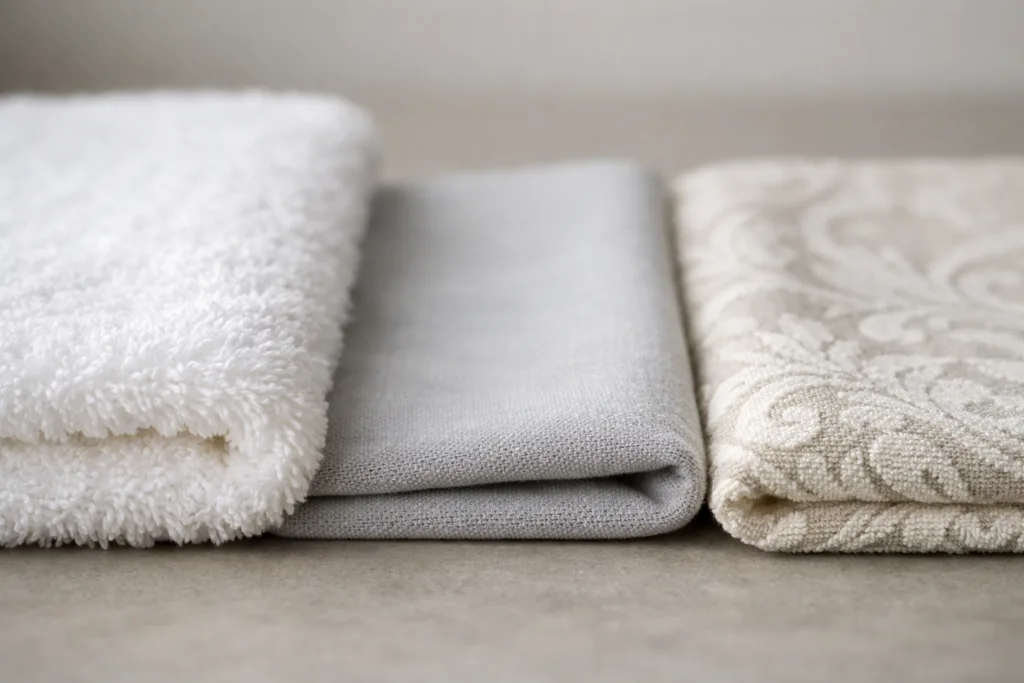
The construction method used in the towel manufacturing process shapes the feel, absorbency, and durability of your product. The three most common techniques are terry, velour, and waffle.
- Terry: Traditional looped cotton, highly absorbent and fluffy. Best for baths, spas, and hospitality use.
- Velour: Sheared surface on one side, smooth and good for decorative printing; often seen in promotional and beach towels.
- Waffle: Honeycomb weave, lightweight, and fast-drying: ideal for gym, kitchen, and travel towels.
Jacquard weaving allows for complex, woven-in logos and patterns, offering subtle branding advantages over embroidery or printing. Jacquard is a great solution when you seek long-lasting, fiber-integrated branding for hotels or sports teams.
Towel construction method affects:
- Absorbency: Terry maximizes water-holding; microfiber weaves balance absorption and quick-dry.
- Softness: Finer loops and yarns improve initial feel; dense terry or cotton feels plusher after wash cycles.
- Durability: Well-stitched hems and reinforced edges protect towels from fraying, crucial for hospitality turnover.
Application always informs construction: plush terry for luxury suites, quick-dry waffle microfiber for gym giveaway towels. Visual and tactile factors—including pile length, border design, and hem detail—create customer appeal and reinforce brand perception.
Design & Specification Checklist for Towels
Before you order, clarify the key specifications to avoid costly mistakes in your bulk towel order. Below is a comprehensive towel specification checklist for buyers:
| Spec/Option | Decision Point | Notes |
|---|---|---|
| Size | Bath, hand, face, beach | Match end-use and market standards |
| GSM | 300-700 GSM typical | Higher for plushness, lower for quick-dry/gym |
| Material | Cotton, microfiber, blends | Performance, certification needs |
| Edge Finishing | Hem, piping, fringe | Durability & style trade-off |
| Logo Method | Embroidery, print, jacquard | Budget, branding, visual effect |
| Packing | Banded, polybag, custom box | Retail vs. bulk or export logistics |
- Absorbency, softness, and colorfastness are major quality flags for buyers—always request data from your supplier’s tests.
- Packaging can reinforce your branding or serve practical needs for transport and display. Eco-friendly options are increasingly popular for retail and wellness.
- Decoration method impacts cost and shelf appeal: dense embroidery offers longevity, while digital printing excels with full-color logos.
Aligning all specifications with your target customer and retail price point is key to product and commercial success. See our product range link for examples of how these specs come together.
Quality Control Measures and Testing
Every professional towel manufacturing process includes stringent quality control checks, especially when producing custom towels bulk for demanding markets. Factories typically run standardized tests at multiple stages:
- Absorbency Test: Measures how much water a towel can soak up and retain without dripping.
- Wash Durability: Ensures fabric doesn’t shrink, fade, or develop lint after repeated washing.
- Colorfastness: Checks resistance to fading from laundering, sunlight, and chemicals—critical for branded towels.
- Stitching Quality: Examines seam strength and hem finishing to prevent unraveling. See advanced hemming insights here.
- Lint Control: Evaluates shedding, which impacts perceived quality and cleanliness.
Pre-production samples allow buyers to review benchmarks before committing to a full bulk towel order. In bulk runs, random inspections and batch testing are performed using precise tools—sometimes based on international standards or buyer-specific requirements.
For all custom towels bulk and wholesale orders, ask your supplier for a QC report or test data to avoid surprises. A reputable partner will offer open access to these metrics and accommodate third-party inspection if needed.
Industry Applications for Custom Towels
Wholesale custom towels are used in more ways than just guest bathrooms. Understanding these applications guides you in designing and ordering the right product for your industry segment.
- Hospitality: High-GSM cotton towels for hotels, resorts, and spas—require premium softness, colorfastness, and longevity.
- Sports & Fitness: Lightweight, quick-dry towels for gyms, yoga studios, and event giveaways, choosing sizes and packaging tailored for members on-the-go.
- Promotional & Gifting: Custom-printed towels for brand campaigns, gifts, and trade shows: lower MOQs but flexible in color and packaging.
- Retail: Designer face, hand, or baby towels, often featuring complex jacquard or embroidery for shelf appeal. Explore jacquard towel applications.
Tailored solutions match towel attributes—like GSM, logo style, and packaging—to the expectation of each channel. This approach reduces returns and maximizes your branding impact.
Customization Options for Branding and Marketing
When you order custom towels bulk, the right branding and decoration choices differentiate your product. Three primary branding methods are used:
- Embroidery: Deep, luxury effect. Best for hotel and sports club branding. Explore different embroidery options here.
- Printing: Includes reactive and digital, offering precise color reproduction for complex logos and patterns—great for promotional and beach towels.
- Jacquard Weaving: Integrates design into the fabric itself for a long-lasting and subtle effect, suitable for private label.
Label and packaging customization enhance private label presentation and help products stand out in retail spaces. Options include branded sewing labels, hang tags, and eco-friendly boxes or bands for direct-to-shelf display.
For best results, prepare artwork in vector formats and ask for a pre-production proof or digital mock-up. Correct alignment of colors, sizes, and resolution during proofing prevents costly errors and delays.
Common Mistakes in Towel Sourcing and How to Avoid Them
Even experienced buyers can fall into common traps when managing their bulk towel order:
- Choosing the Wrong GSM: Too light for a hotel or too heavy for a gym means customer complaints about feel and dry time. Always match GSM to application and market standard.
- Poor Fabric Choices: Ignoring absorbency needs or using synthetic blends for hospitality leads to negative reviews about performance and hand-feel.
- Color and Branding Issues: Colorfastness problems cause fading or uneven shades after washing. Request lab test data before confirming mass production.
- Weak Stitching: Low-cost edge finishing can unravel quickly. Specify reinforced seams or certified edge finishes for demanding markets.
- Decoration Errors: Picking basic printing when embroidery offers more impact—or vice versa—leads to missed branding goals or overblown budgets. Clarify the end-use, longevity, and price point of your towel.
Align each decision with customer expectations and your realistic pricing structure. Collaborate with your supplier on technical choices—quality always starts at development and specification-check stages, not post-production.
Comprehensive Ordering Guide for Bulk Towel Purchases
A smooth towel manufacturing process starts with knowing what to expect during ordering. Here’s what every buyer should clarify before their bulk towel order:
- MOQ: Minimum production quantities are set by factory equipment and fabric dye lot constraints. Confirm these early—sometimes they vary by material, color, or design complexity.
- Lead Time: Standard lead times range from 25–45 days for most projects. Factors causing delay include yarn dyeing (custom colors), factory scheduling, artwork revision, and seasonal surges such as pre-summer beach towel orders.
- Sampling: Expect a sampling period of 7–14 days for basic designs. More complex logo weaving or printing may need three weeks or more. Sampling costs are often deducted from your final invoice if you proceed to mass order.
- Artwork Preparation: Supply vector-format files and Pantone references. Approve proofs promptly—delays here affect the entire production cycle.
- Shipping: Express or sea freight are the main options. Shipping documentation, export packaging, and incoterms (FOB, CIF, etc.) should be reviewed for clarity. For more on packaging, see packaging for export guide.
Circe Towel has found that clear, upfront communication and early sample approval are the best ways to prevent unnecessary delays and guarantee delivery to your timeline. Build some buffer into your schedule for urgent market launches or promotions, especially if your customization is complex.
Frequently Asked Questions
What is the typical lead time for custom towel orders?
Lead times are usually 25–45 days for most bulk towel orders, with sampling taking 1–3 weeks depending on design and production complexity, plus shipping time based on location.
How do I avoid quality issues when ordering custom towels in bulk?
Work with suppliers who offer pre-production samples, request standard QC test reports, check their certification, and clarify all requirements in detail before approving mass production.
What towel customization options are available for branding?
You can select from embroidery, printing (reactive, digital, or screen), jacquard weave patterns, custom labels, and branded packaging tailored to your marketing or retail requirements.
What are the key differences between cotton, microfiber, and bamboo blend towels?
Cotton offers classic softness and absorbency, microfiber excels at drying speed and lightness, while bamboo blends add a silky, eco-friendly touch with natural antibacterial properties.
How should I prepare my artwork for custom towel decoration?
Supply design files in vector format (AI or EPS), provide Pantone color codes, and approve digital or physical proofs before production to avoid misalignment or color issues.
Can I get a physical sample before placing a bulk order?
Yes, requesting a sample is standard practice; this allows you to check color, size, feel, and branding before committing to a full production run and bulk purchase.
Related Reading
- 7 Signs You’ve Chosen the Right Towel Manufacturing Partner
- Unlock Branding Success with Jacquard Towel Methods
- 8 Proven Methods to Control Towel Shrinkage and Maintain Quality
- Understand Towel Absorbency: Loops, Yarn Twist, and Fiber Selection Made Simple
- How Bulk Towels Are Packed and Shipped for Export