
Introduction to Choosing the Right Towel Supplier
The towel industry plays a vital role in hospitality, retail, sports, and wellness sectors, supplying millions of essential products each year. For buyers, making a bulk towel order is never as simple as just picking a fabric or color—it’s a decision layered with complexity, from textile performance to logistics and after-sales service. Choosing the right towels supplier requires careful due diligence and thorough communication to mitigate risks and ensure your needs are satisfied with every shipment.
Three pillars can make or break your sourcing success: quality, supplier reliability, and clear communication at every stage. This guide focuses on helping you get the specifics right with your potential partner, including the all-important sample order towels process, key shipping details, and restocking procedures. Asking detailed questions in advance can prevent costly missteps and disappointment—especially when custom orders or brand-critical deadlines are involved.
Just so we’re clear: “sample order towels” refers to physical product samples sent for approval before mass manufacturing, while a “bulk towel order” covers larger production runs, typically for B2B customers. Use this FAQ and checklist approach to cover all your bases—before you commit, not after.
Sample Order Process
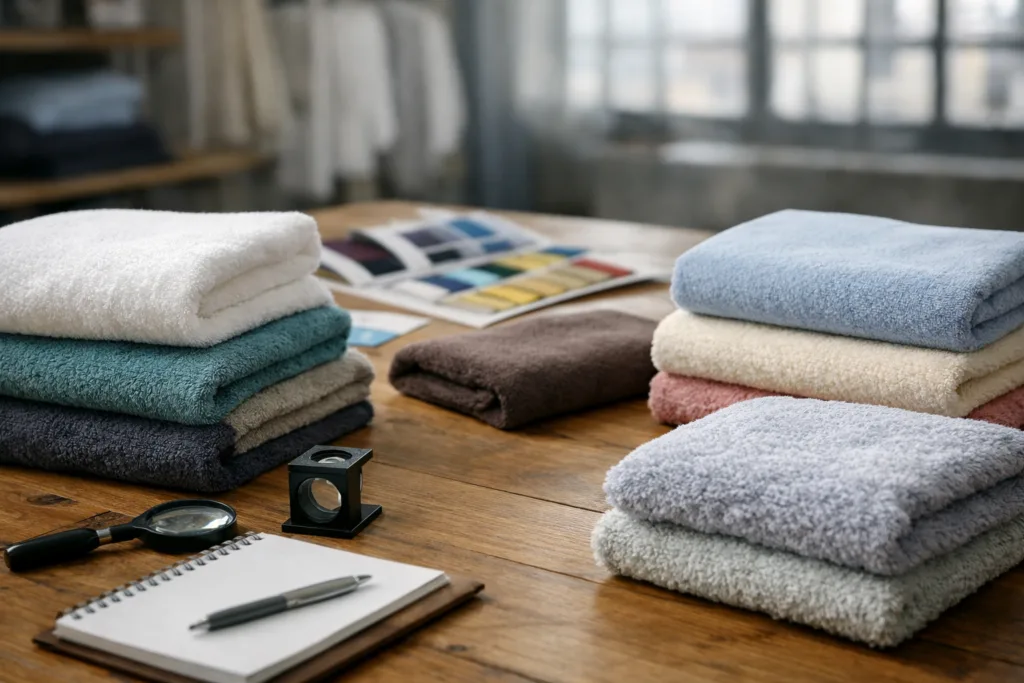
Before placing any bulk towel order, it’s standard and highly recommended to request sample order towels from your prospective supplier. Begin by specifying key requirements such as towel size, intended use (e.g., spa, gym, retail), preferred materials (like cotton, microfiber, or bamboo blends), color direction, desired GSM range (e.g., 400–600 GSM for bath towels), and branding elements if needed. The more detailed your initial inquiry, the more relevant and accurate your samples will be—saving time in follow-up rounds.
Sample production typically takes 5 to 14 days, depending on customizations such as embroidery, jacquard weaving, or digital printing. Once ready, shipping samples internationally usually adds 3 to 7 days via express courier. Be clear on who covers these costs: many suppliers charge nominal fees, refundable against your final bulk order, but some may offer free samples for repeat B2B buyers. Don’t forget to request a breakdown—unit price, shipping, and special surcharges for complex decorations—to track total sample expenses.
Evaluate your sample order towels thoroughly. Check absorbency, softness, stitching, shrinkage after washing, and accurate logo placement. Defining clear feedback criteria improves communication and helps suppliers understand your brand’s standards. If applicable, request small test lots of multiple materials or GSMs to compare performance side by side. This up-front diligence significantly reduces the odds of post-production quality issues.
- Request actual color and finish samples, not digital mockups.
- Test wash and dry multiple times to check for lint, shrinkage, or fading.
- Clarify whether any sample fees apply toward the first bulk order.
- Agree on a realistic sample revision process upfront.
A final tip: Start your supplier relationship with respectful feedback. Manufacturers like Circe Towel value clear communication and use sample order towels feedback to optimize your production run, ensuring your first shipment meets expectations.
Color Confirmation and Material Selection
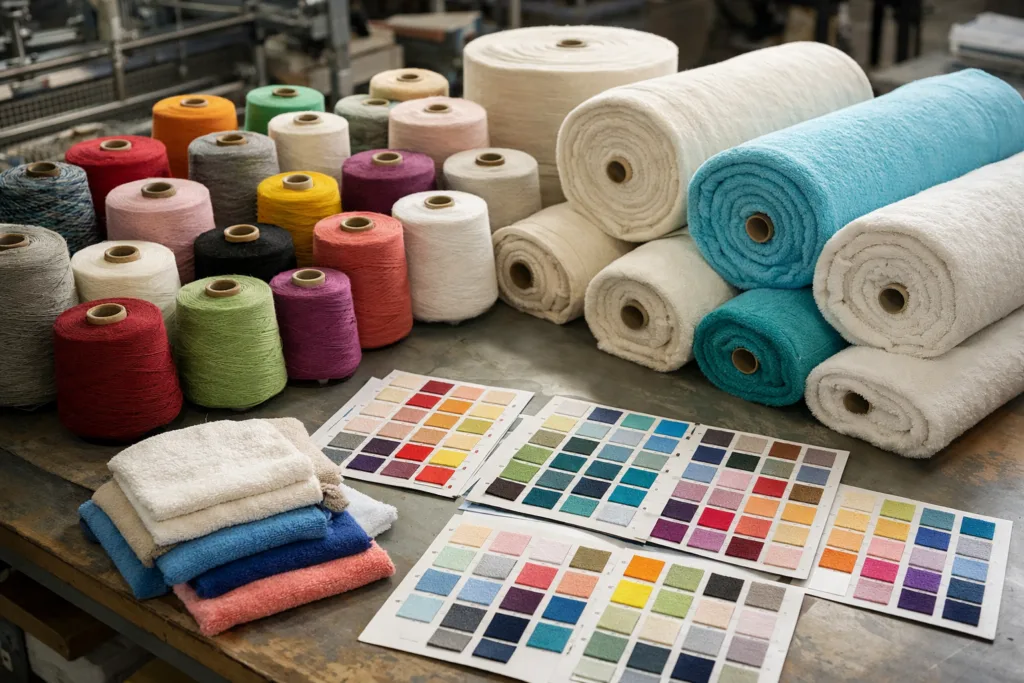
Before ordering wholesale towels, buyers must confirm both color and material selection. Dependable towel suppliers offer a set range of stock colors, but also support Pantone or custom-matched options where brand alignment is critical. The process typically goes like this: after sharing your color target (Pantone code, swatch, or brand guideline), you’ll receive physical color lab dips or yarn wraps for approval. Only written sign-off should trigger mass dyeing—never rely solely on screen colors.
Material choice is equally essential. For example, 100% cotton offers classic softness and absorbency, while microfiber excels in sports or promotional towels for rapid drying and lightweight performance. Bamboo and blends add unique textures or eco-appeal. The GSM (grams per square meter) number directly affects towel feel—lower for kitchen or sports use (250–350), higher for luxury spas or hotels (550–700). Consider both the functional target and the audience’s brand perception when weighing material and GSM trade-offs.
Colorfastness is another must—especially for wholesale towels used in repeated commercial washing. Check your supplier’s test protocols for chlorine, UV, and detergent resistance. If your logo or patterns use reactive dye or advanced digital printing, confirm color holding under heavy laundering. Poor colorfastness can quickly tarnish a brand’s image in a hospitality setting, and recovering from a faulty shipment is costly.
| Feature | 100% Cotton | Microfiber | Bamboo Blend |
|---|---|---|---|
| Feel | Soft, plush | Silky, lightweight | Soft, smooth |
| Absorbency | Excellent | High, fast | Good, eco-friendly |
| Drying Speed | Moderate | Very fast | Moderate |
| Durability | High | Very high | High |
| Cost | Medium | Low-Medium | Medium-High |
| Brand Perception | Classic, luxurious | Modern, athletic | Eco, upscale |
| Best Use | Hotels/Spas/Retail | Sports/Promotions | Eco Hospitality |
Buyers will find that Circe Towel often recommends approval of physical swatches and small-batch tests for new wholesale towels programs, especially when introducing color or fiber innovations that will drive long-term brand value.
Minimum Order Quantities (MOQs)
Every towels supplier operates with minimum order quantities (MOQs)—the fewest units or kilos they can produce per order. In the towel industry, standard MOQs for a bulk towel order typically range from 300 to 2000 pieces per size, per color. Highly customized features—like detailed embroidery or all-over jacquard—can raise these numbers due to upfront setup and changeover costs. Fiber type impacts too: commodity white cotton towels often come with lower MOQs than proprietary bamboo blends or custom reactive prints.
Understanding MOQs is critical for budgeting and inventory management. Large MOQs might strain cash flow or require advance warehousing space, while smaller volumes can force a higher unit price. Don’t hesitate to discuss possible negotiation—suppliers may be flexible for long-term, repeat clients or if you’re trialing a new style. Ask if initial sample order towels can serve as a partial first order, or if combining similar SKUs (e.g., white and pale blue bath towels) can help meet thresholds at better pricing.
When in doubt, clarify these questions in writing:
- What is the MOQ for each towel size, color, and customization method?
- Is there a surcharge for low-quantity orders?
- Can MOQs be combined across related styles?
- What happens if I need an urgent reorder under MOQ?
For a more granular guide on MOQs and their impact on cost structure, see Complete Guide to Towel Manufacturing: MOQ, Sampling, Quality, and Lead Time Explained.
Packaging Specifications
The way your towels are packaged affects not only logistics and cost but also retail and brand perception. Most towels supplier partners offer a spectrum of options—from bulk polybagged cartons for hotels to high-end, custom-printed boxes, belly bands, or retail-ready zip pouches. Sustainable packaging, like recyclable or compostable bags, is becoming standard for eco-focused buyers—ask whether your supplier’s options align with your sustainability goals.
For promotional or private label wholesale towels, custom packaging can boost perceived value and drive sales. Think of window boxes showing off texture, or coordinated paper wraps for cohesive branding. However, more elaborate solutions may increase unit cost and shipping volume, so optimize dimensions for both market and freight efficiency. Check with your production team on standard carton sizes, inner pack quantities, and if retail security features (like hang holes or tamper seals) are possible.
- Is sustainable or recycled packaging available?
- What are the default carton and pack sizes?
- Are there print-ready templates for private label packaging?
- Does the packaging protect the product from humidity and dust?
For those interested in more about packaging trade-offs, read How Towels Are Packed and Prepared for Export.
Shipping Considerations
Shipping strategy directly affects your wholesale towels landing cost, lead time, and risk exposure. Express air, ocean freight, or ground? The transport choice depends on urgency, order size, and destination. Air freight (fast, expensive) is common for rush replenishment or smaller, higher-value shipments; ocean freight (slower, cost-efficient) is standard for bulk towel order logistics. Mixed modes (air to port, ground last mile) are also possible for complex supply chains.
Incoterms like FOB (Free On Board) and CIF (Cost, Insurance, Freight) define hand-off points and responsibilities. Clarify with your towels supplier which incoterm is being used, so everyone understands who manages customs, insurance, and port fees. For international orders, customs clearance can cause delays—choose suppliers familiar with your country’s import procedures and ask if they can recommend a customs agent to help.
Delays can impact buyer relationships, especially for seasonal items or in hospitality, so discuss worst-case contingency plans. Ask suppliers for historic shipping performance data or references. Get clear, written confirmation of production and delivery windows. To maximize supply chain visibility, some buyers request real-time tracking or periodic shipping updates—especially for large, multi-container orders.
- What are the typical lead times for air, sea, and ground shipments?
- How are damages or losses during transit handled?
- Are export/import duties included in your quotation?
- What are the packing specs for minimizing freight costs?
For a deeper dive on sourcing best practices, reference How to Evaluate Bulk Towel Suppliers for Hotels, Gyms, and Retail.
Reordering and Restocking Procedures
Securing reliable restocking is central to avoiding stockouts and lost sales, especially in fast-paced hospitality or retail environments. Most suppliers require a restocking lead time of 20–50 days for typical products—customizations or busy holiday periods may extend this. Some towels supplier factories maintain semi-finished stock for quick-turn programs, which can cut time significantly.
Ask for a clear restocking process document up front. This should describe how to trigger a reorder (by email, portal, or purchase order), expected communication cadence, and whom to contact for urgent issues or forecast changes. Maintaining safety stock on your end—and communicating anticipated spikes—helps both parties plan and minimize surprise delays.
To ensure long-term consistency, clarify whether the original fabric lot, color recipes, or finishing agents will be repeated in reorders or if batch variance is possible. Discuss how price changes, raw material shortages, or labor disruptions are communicated and managed. For buyers placing regular sample order towels, some suppliers offer reorder discounts or priority during production windows.
Inventory planning is a two-way street: proactive dialogue secures ongoing quality and supply, keeping your towel programs resilient through market or seasonality fluctuations.
After-Sales Support and Quality Assurance
High-stakes bulk towel order shipments deserve robust after-sales support. Even with the most diligent sample approval, issues like seam defects, off-tone colors, or packaging mishaps can occur. Professional suppliers provide clear instructions for returns, replacements, or credit, along with timelines and documentation requirements. Clarify whether your supplier covers the cost of defective units or misprints, and request their returns policy in writing.
Quality assurance starts before towels leave the factory floor. Trusted manufacturers use extensive pre-shipment testing—colorfastness, dimensional stability, absorbency, tear resistance, and stain response are commonplace for hotel and retail clients. Ask to review their QA checklist or request third-party audit reports. Some suppliers offer warranty periods for critical production runs, especially in hospitality or sports where performance standards are contractually defined.
Testing procedures typically include visual inspections, washing trials, and packaging integrity checks. For buyers concerned with brand reputation, request photographic proof or video from the final QC phase. A culture of transparency is key; companies like Circe Towel proactively share QA protocols to support long-term partnerships built on trust.
Common Mistakes to Avoid When Sourcing Towels
Sourcing mistakes can lead to costly headaches. A major pitfall is overlooking the importance of GSM selection. Too thin, and towels feel cheap and underperform; too heavy, and costs and drying times skyrocket. Always balance your market’s absorbency and feel expectations with realistic use cases (e.g., hotel guests vs. poolside promotional giveaways).
Another error is picking the wrong fiber for the job. Microfiber may please gym-goers but disappoint a luxury guest, and decorative techniques like screen printing may wear out in heavy washing scenarios. Failing to request ample sample order towels leads to surprise quality letdowns. Don’t skip in-production checks—photos from the line aren’t just reassurance, they’re risk control. Work closely with your towels supplier and prioritize a robust QA plan for every order, no matter the scale.
-
- Never settle just for digital mockups—real samples matter.
- Always clarify the full list of approved materials and finishing processes.
- For high-visibility programs, ask for production spot checks or third-party audits.
>
Towel Customization Options
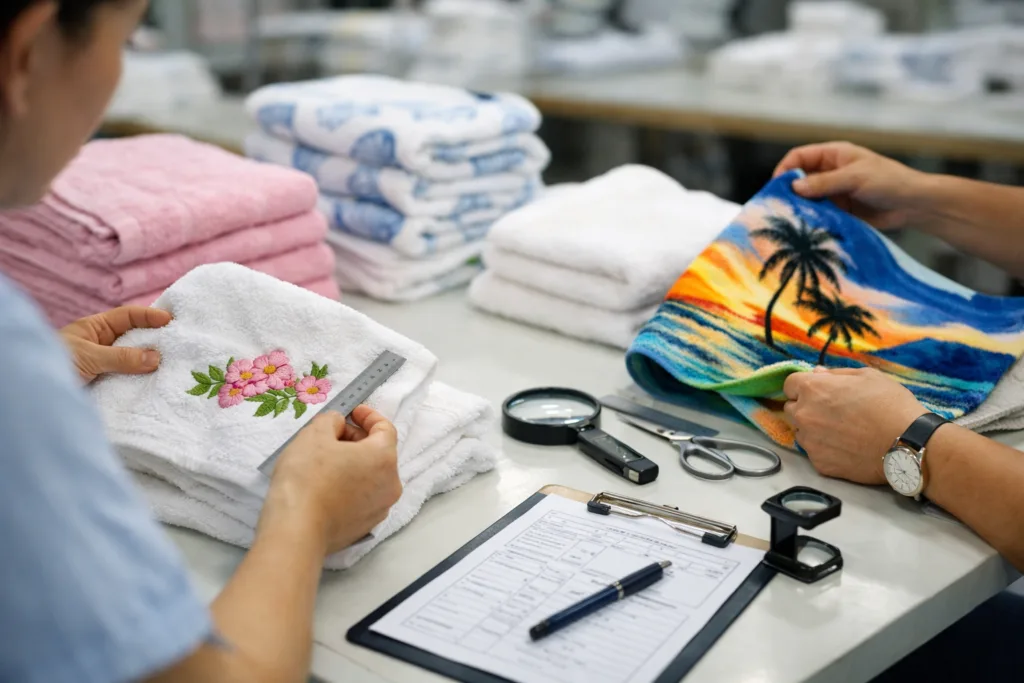
The true impact of your wholesale towels often lies in their customization. Common branding techniques include embroidery (elegant, long-lasting, but costlier for high-detail logos), jacquard weaving (permanently integrates logos/patterns into the towel, ideal for premium retail or sports programs), or dye sublimation and digital/rotary printing (vivid, scalable, but best for lighter use or promotional items).
Custom decorative borders, tape, or colorblocking add unique flair and support differentiated market placement. Private label and OEM partners can incorporate bespoke packaging, brand labels, hangtags, or even custom-shaped towels if order volume allows. Decide early which methods align with your brand’s intended image, expected wash cycles, and target budget—some logos look better woven, others printed.
Essential questions to clarify with your towels supplier include:
- Can you provide artwork guidelines or templates for embroidery, printing, or jacquard?
- What are the color and detail limits per decorating method?
- Are there extra set-up fees for new designs?
- How is private label packaging coordinated with logo decoration timelines?
To see how modern customization is shaping buyer options, check out Custom Logo Towels: Embroidery, Jacquard, and Printing Methods.
Frequently Asked Questions
How long does a sample order towels process typically take?
Sample order towels usually require 5 to 14 days for production, plus 3 to 7 days for express shipping depending on the customization and location.
What is the standard MOQ for a bulk towel order with a new towels supplier?
Standard MOQs range from 300 to 2000 pieces per style or color, but can be lower or higher based on material, decoration, and supplier policies.
Do suppliers offer flexible shipping options for wholesale towels?
Yes; reputable suppliers can arrange air, sea, or ground shipping depending on your timeline, cost requirements, and order size for wholesale towels.
What are common issues found in towel QC, and how are they solved?
Frequent issues include color shifts, poor stitching, and incorrect packing; these are addressed through thorough quality control and proactive after-sales service.
Can I use the sample order towels as part of my first bulk towel order?
Some suppliers allow combining approved sample order towels into your first bulk towel order, helping reduce cost and confirm production consistency.
What details should I prepare when requesting towels supplier quotations?
Prepare details including intended use, fiber type, size, GSM, color, logo method, target quantity, packaging needs, delivery point, and artwork files if customizing.