
Understanding Supplier Audits
Every B2B buyer needs to know how to audit a towel supplier before placing their first order. Supplier audits are essential steps that help ensure you’re sourcing towels from reliable partners rather than risking your brand on inconsistent manufacturing.
A supplier audit is a systematic evaluation of a supplier’s facility, processes, and documentation, either on-site or remotely. The audit’s purpose is to identify strengths, weaknesses, and potential risks related to capacity, product quality, compliance, and communication.
Effective audits help mitigate quality or supply risks. When towel manufacturers lack operational discipline, buyers face issues like missed delivery deadlines, inconsistent towel softness, poor absorbency, or color differences.
Audits come in two main types: on-site, where buyers or their agents physically inspect the facility; and remote audits, which rely on video tours, detailed documentation, and digital Q&A. Thorough documentation is key for both, serving as the foundation for decision-making and future accountability.
- On-site audits provide tactile assessment and deeper process clarity.
- Remote audits are efficient for overseas suppliers, but require robust checklists and photos/videos.
- Both methods benefit from detailed reporting, photos, capacity data, and sample review.
Auditing is not just about ticking boxes; it’s a strategic process that shapes the success of your towel sourcing project.
Key Audit Criteria Overview
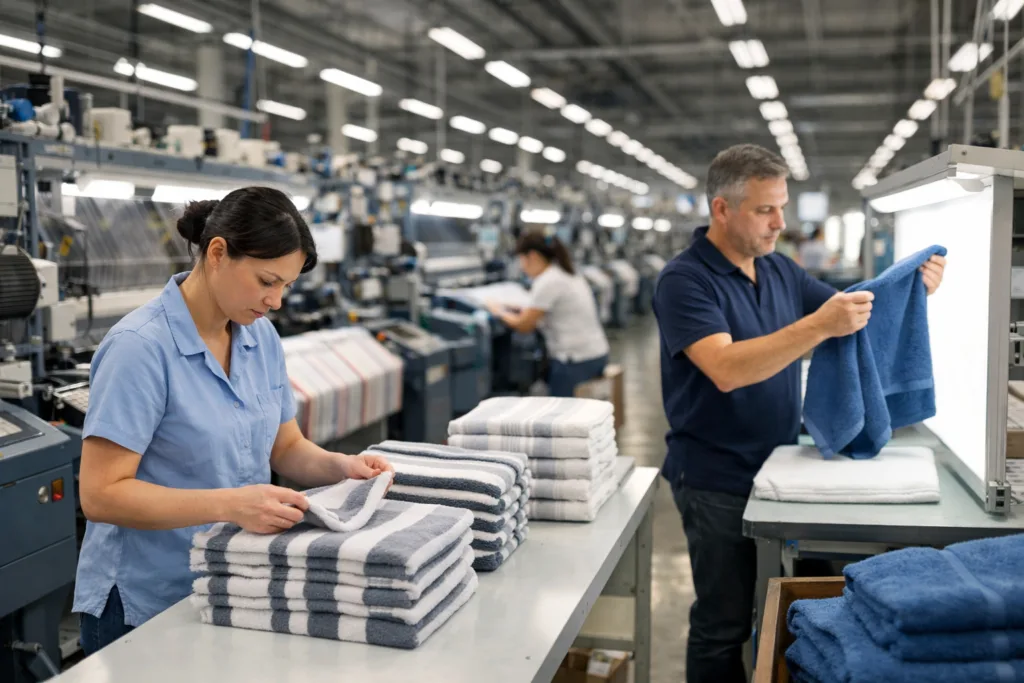
Successful towel supplier audits require clear criteria for evaluating towel manufacturers. To start, assess their manufacturing capacity: Does the factory’s output match your project’s volume and timelines? Tour their facility or review photos to check machinery such as looms, embroidery machines, and automated packaging lines.
Buyers must examine compliance and certification records. Look for ISO, OEKO-TEX, organic cotton certifications, and export licenses. These validate the supplier’s ability to deliver consistently and responsibly. Suppliers that regularly produce for brands or chains in your sector demonstrate capacity and discipline.
Responsiveness and communication are equally important. Reliable towel suppliers answer emails promptly, provide clear timelines, and proactively share progress updates.
- Response time (average hours/days)
- Ability to clarify samples, specs, and artwork requests
- Transparent on production delays/changes
Inspect previous customer reviews and references. Find case studies or testimonials from buyers in hospitality, retail, or sports. Use third-party platforms or request contact details for verification.
Above all, audit their quality control processes. Ask for protocols on absorbency, colorfastness, stitching, and mass production consistency. Review internal and external test reports.
Use performance metrics to measure:
- Production lead times
- Sample-to-bulk consistency
- Defect rates (e.g., linting, stitching issues)
- Frequency of export orders
When Circe Towel supports audits, buyers benefit from proactive documentation, transparent quality test data, and real-time sample tracking—practices rooted in years of bulk towel manufacturing.
Material Comparison for Towels
Choosing the right towel material from your towels supplier profoundly shapes user experience and project outcomes. The main materials include cotton, microfiber, bamboo blends, and hybrid fabrics.
| Material | Absorbency | Softness | Durability | Care Instructions | End Use |
|---|---|---|---|---|---|
| Cotton | Excellent | Soft | Long-lasting | Wash warm, avoid bleach | Hotels, spas, retail |
| Microfiber | Very High | Silky/Soft | Resists wear | Cold wash, air dry | Gyms, sports, cleaning |
| Bamboo Blend | High | Ultra-soft | Good (eco-friendly) | Gentle wash | Luxury spa, eco-retail |
| Cotton/Microfiber Blend | Balanced | Varies | Durable | Flexible | Promo, travel, clubs |
Cotton towels are popular for their absorbency and comfort. Hospitality clients prefer medium- to high-GSM cotton for bath towels, as it delivers both softness and durability. Microfiber towels, with their high absorbency and quick dry nature, are preferred in gyms, cleaning, and some promotional contexts.
Bamboo blends offer superior softness and antibacterial properties but may require gentler washing. Their eco-friendly profile is valued in premium spa or retail brands.
Material selection impacts cost, performance, and user satisfaction. For example, higher GSM cotton costs more but feels plush and wears longer, while microfiber offers cost-effective drying and bright colors for sports.
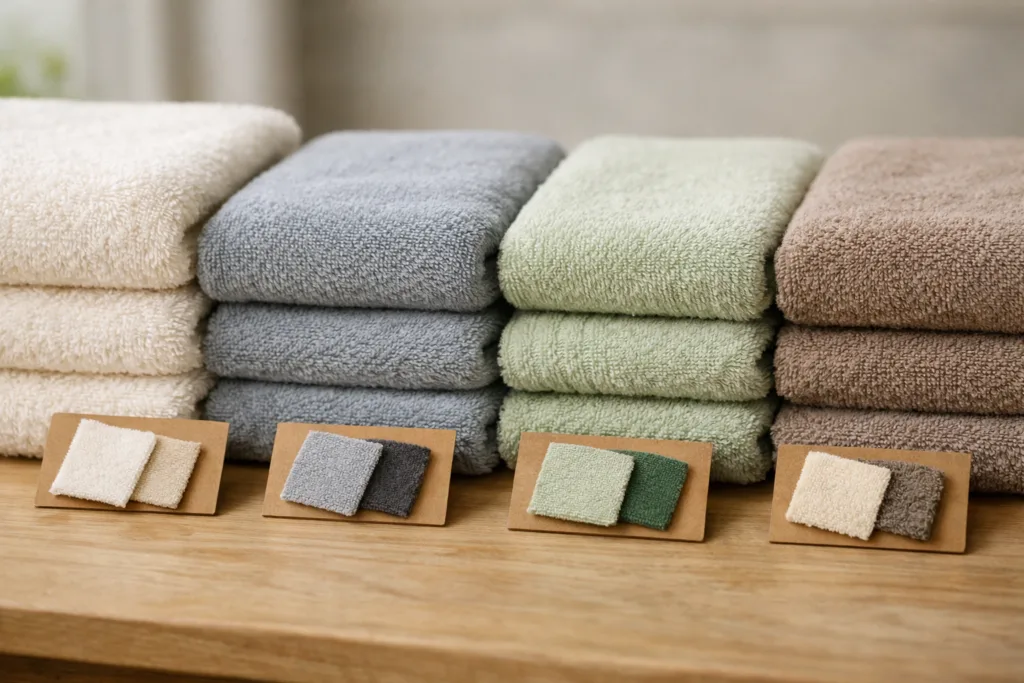
Color retention is crucial—reactive dyed cotton towels resist fading after repeated hotel washes. Microfiber towels can endure heavy use and retain printed designs. Circe Towel leverages expertise in fabric selection, GSM optimization, and dyeing to reduce color fading and maximize wash performance.
Construction and Manufacturing Methods
The construction method chosen by hotel towel suppliers affects towel quality, feel, and suitability for each market. Common constructions include terry, velour, waffle, jacquard, and others.
- Terry: Traditional loop pile—highly absorbent, plush, ideal for bath and hotel towels.
- Velour: Sheared surface—soft, luxurious feel, less absorbent, great for beach towels and gifting.
- Waffle: Textured, lightweight—good for quick drying and sports/fitness towels.
- Jacquard: Decorative woven patterns—offers high brand visibility, best for retail, hotel, or special promotions.
Each construction influences thickness, absorbency, and hand feel. Terry is thicker and absorbs water quickly, while waffle dries faster and is lighter, perfect for fitness clubs or travel.
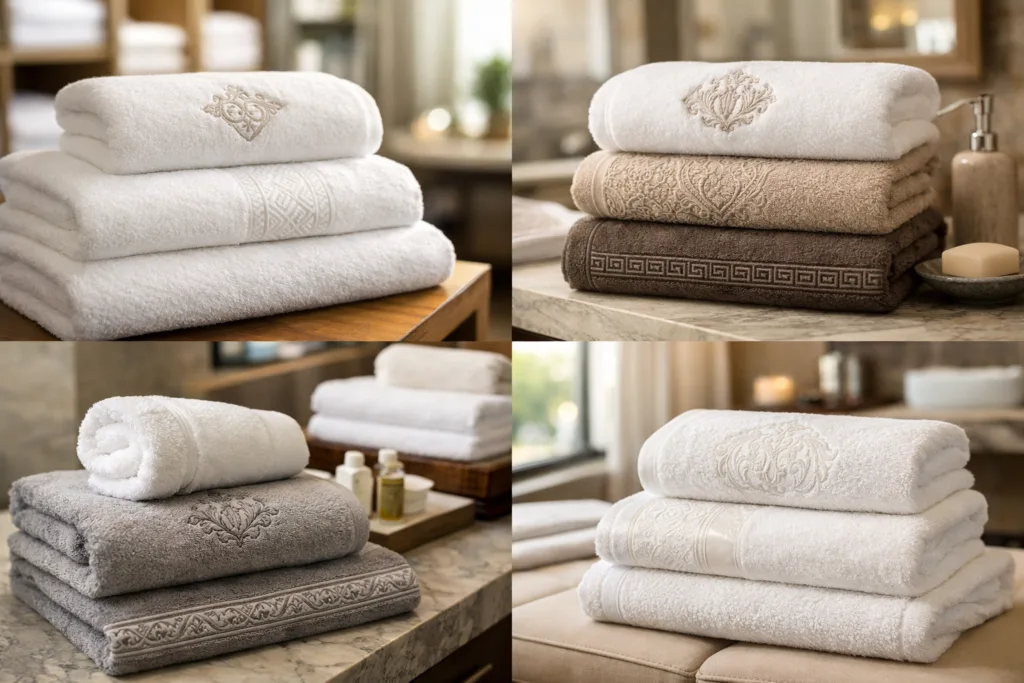
Decoration methods matter for branding. Embroidery provides durable, elegant logos; digital or reactive printing offers vibrant, intricate designs. Jacquard weaving allows color pattern integration directly into the fabric, ideal for high-end applications.
Cost varies by construction and decoration. Embroidery and jacquard are pricier than basic printing. Buyers should balance durability and aesthetics against budget. For example, hotel groups invest in thick terry towels with embroidered branding; retail pushes jacquard patterns and creative printing.
Circe Towel’s manufacturing facility adapts methods to client needs, supporting OEM and ODM requests with advanced machinery and expert finishing for each application scenario.
Design and Specification Checklist
A structured checklist empowers buyers learning how to audit a towel supplier. Use it to verify that your chosen suppliers can deliver to your required specifications:
- Size (width, length, custom formats)
- GSM (gram per square meter – defines thickness/absorbency)
- Material (cotton/microfiber/blends)
- Edge finishing (hems, piping, stitching quality)
- Color, pattern
- Brand visibility (embroidery, printing, jacquard)
- Packing method (bags, gift box, bulk export)
- Label & logo (sewn, woven, printed)
| Specification | Impact | Audit Tip |
|---|---|---|
| GSM (350–900) | Absorbency, plushness | Request GSM test certificate |
| Edge stitching | Durability, appearance | Inspect sample hems for tightness |
| Custom size | Fit for application | Compare sample vs. spec |
| Logo method | Brand exposure, longevity | Assess embroidery density, printing accuracy |
| Packing | Protection, presentation | Check export packing standards |
| Color selection | Aesthetic match | Request colorfastness test |
Each specification influences towel performance and aesthetics. Higher GSM means heavier, more absorbent towels but longer drying time. Low GSM is lighter, faster-drying, better for sports or quick turnover.
The checklist should be tailored to your target market. Retail projects may prioritize visual appeal and packaging, while hotel towel suppliers focus on durability and wash performance. Customizing specs to each industry ensures buyer satisfaction and reduces post-order surprises.
Quality Assurance and Testing
Rigorous testing is vital for towel manufacturers to achieve consistent quality. Key protocols include:
- Absorbency tests: Measure water uptake speed and total capacity.
- Wash durability: Evaluate longevity after repeated laundering.
- Shrinkage assessments: Check for size changes post-wash.
- Colorfastness: Analyze resistance to fading or bleeding.
- Stitching consistency: Inspect edge hems and seams for durability.
- Lint control: Monitor fibers released during washing.
Both in-house and third-party labs are used for these tests. Third-party reports add credibility and impartiality for high-value projects.
Batch consistency should be tracked over time. Compare bulk deliveries to original samples—request records and actual test sheets. Quality monitoring continues throughout production; inspect at spinning, dyeing, sewing, and final packaging stages.
Quality failures like excessive shrinkage, color runs, or loose edges are often the result of incomplete testing or inferior materials. Prioritizing process documentation and validated testing controls minimizes risk.
Circe Towel applies batch control and multi-stage testing, having experienced the impact of minor process lapses. Buyers should insist on detailed test protocols and regular production snapshots to maintain standards.
Application and Industry Fit
A towels supplier must fit the buyer’s application and industry demands. Hospitality groups require plush, durable towels with minimal lint and colorfastness for frequent hotel laundering. Gyms need quick-dry and sweat-absorbent towels with reinforced stitching for heavy use.
Spa brands prioritize ultra-soft, sustainable fabrics and subtle logo integration. Retail needs visual appeal, creative patterns, and attractive packaging for shelf presence.
- Promotional buyers usually seek cost-effective, branded towels that highlight logos and messaging.
- Golf and sports buyers demand towels with secure hanging, advanced absorbency, and easy logo recognition.
- Baby or kitchen sectors emphasize gentle finishing and small-size options.
Sample use case: A hotel chain audits suppliers for premium terry cotton, high GSM, and reliable embroidery for branding. In contrast, a gym franchise specifies microfiber towels with quick-dry texture, while a wellness retailer assesses bamboo blends for eco-credentials.
Understanding market and user needs helps tailor specifications. Reviewing industry case studies from suppliers provides guidance on matching towels to each sector.
Customization Options
Hotel towel suppliers typically offer extensive customization to boost brand visibility and fit project requirements. Options include:
- Embroidery (names, logos, special patterns)
- Jacquard weaving (brand pattern within fabric)
- Reactive/digital printing (full-color graphics)
- Decorative borders, piping, and tassels
- Custom packaging (gift box, retail-ready, bulk export)
- Special labeling (private label, color tags)
Private labeling gives buyers unique identity and control over packaging and tags. Order volume influences customization options—bulk orders enable advanced decoration, while small-batch runs may restrict methods or increase price.
Consider lead time when customizing: Embroidery and woven borders may extend timelines compared to simple printed towels. Custom color matching should be supported by lab dip tests.
Buyers aligning application and branding get higher engagement. Circe Towel advises on trade-offs between extreme detail (complex embroidery) and fast lead time (simple printing) based on real OEM project experience.
Common Mistakes to Avoid
Many buyers new to how to audit a towel supplier risk costly errors:
- Selecting the wrong GSM, resulting in towels that feel too thin or take too long to dry.
- Choosing the wrong fabric for the application (e.g., cotton for fitness when microfiber suits better).
- Neglecting colorfastness or shrinkage testing, which leads to product failure post-wash.
- Accepting samples that differ from bulk production batches.
- Overlooking packaging details, risking transit damage or suboptimal shelf display.
- Not verifying production claims, certifications, or previous project experience.
When quality assurance is insufficient, towels may lint excessively, shrink, or lose color, undermining both function and brand reputation. Always request test reports, inspect samples thoroughly, and confirm batch consistency.
Take a holistic audit approach, balancing specs, communication quality, and application fit. Troubleshoot upfront: if possible, bring questions on label sewing, export packaging, or compliance forward early.
Ordering Guide and Next Steps
After auditing towel manufacturers, the ordering process begins with defining minimum order quantities (MOQ). These can vary by product type, customization complexity, and material—from 100 to several thousand units for bulk towels.
Lead times depend on construction, material, and customization, typically 3–8 weeks. Factors influencing lead time include fabric sourcing, decoration method (embroidery vs. printing), and holiday manufacturing schedules.
- Prepare clear artwork and specification sheets for your order.
- Review proofs and pre-production samples with attention to color and logo placement.
- Discuss packing requirements: individual vs. bulk, destination-based standards.
- Set shipment schedules considering transit time and customs clearance.
Maintain open communication with your supplier through each step. Track milestones and flag issues promptly. Suppliers like Circe Towel integrate order tracking and QC monitoring into their client portal for transparency.
For further details on sampling, MOQ, and lead time, see the Complete Guide to Towel Manufacturing.
Frequently Asked Questions
What’s the typical MOQ for custom towels?
Minimum order quantities depend on towel type and customization, ranging from 100 units for standard products up to several thousand for complex designs or private label packaging.
How long does bulk towel production and shipping take?
Lead time is usually 3–8 weeks, depending on materials, construction, and order size. Shipping times vary by region and customs requirements.
Which tests ensure towel quality before shipment?
Important tests include absorbency, colorfastness, wash durability, stitching quality, shrinkage, and lint control. Suppliers should provide documented test reports before shipment.
Can I request samples before placing a bulk order?
Most towel suppliers provide samples for buyer evaluation; sample-to-bulk consistency should be verified through side-by-side comparison and batch controls during production.
How do I choose the right towel material for my market?
Material selection depends on project needs—cotton for hotels, microfiber for gyms, bamboo blends for wellness, or mixed fabrics for promotional use. Review absorbency, softness, and durability.
What if there’s an issue with delivered towels?
If quality or specification issues arise, contact the supplier immediately. Most reputable towel suppliers offer return or remediation policies, especially when backed by documented audits and test protocols.
Related Reading
- 12 Criteria for Choosing Wholesale Towel Suppliers That Build Lasting Partnerships
- Understanding MOQ, Sampling, and Lead Time When Ordering Bulk Custom Towels
- Explore How Towel Absorbency and Yarn Twist Impact Performance
- Checklist: What Brands Inspect for Quality Before Shipping Bulk Towels
- Logo Towels Explained: Embroidery, Jacquard, or Printing—Find Your Ideal Branding Method
- Factory Insights: Step-by-Step Look Inside Towel Manufacturing