
Understanding Private Label Towels
Private label towels are towels produced by a specialized manufacturer but branded and sold under your company’s name. Unlike generic, off-the-shelf options, private label towels let you own every detail of the product experience, from material and size to packaging and branding. This is vital for businesses seeking to differentiate themselves in competitive markets such as hospitality, sports, retail, and promotions. In fact, B2B buyers researching private label towels, private label towel manufacturer, oem towels, custom branded towels will find this strategy the foundation for true brand ownership.
Compared to generic towels, private label towels offer unique advantages. You choose the material, design, GSM (grams per square meter), colors, packaging, and artwork methods. This flexibility is crucial for developing a line that matches your quality standards and appeals directly to your target audience. Well-known retailers, boutique gyms, top hotels, and modern wellness brands often use private label towels to enhance their image and attract repeat customers.
- Increase your perceived value with branded towels.
- Address unique market needs (e.g., extra-absorbent spa towels, vivid beach towels).
- Obtain control over logistics, quality, and margin.
- Promote loyalty by developing cohesive product lines.
The private label model is positioned between generic/wholesale sourcing and OEM manufacturing, perfect for B2B buyers who want to balance customization and ease of launch. By crafting a unique towel collection, you set your brand apart from the competition.
Private Label, OEM, and ODM: What’s the Difference?
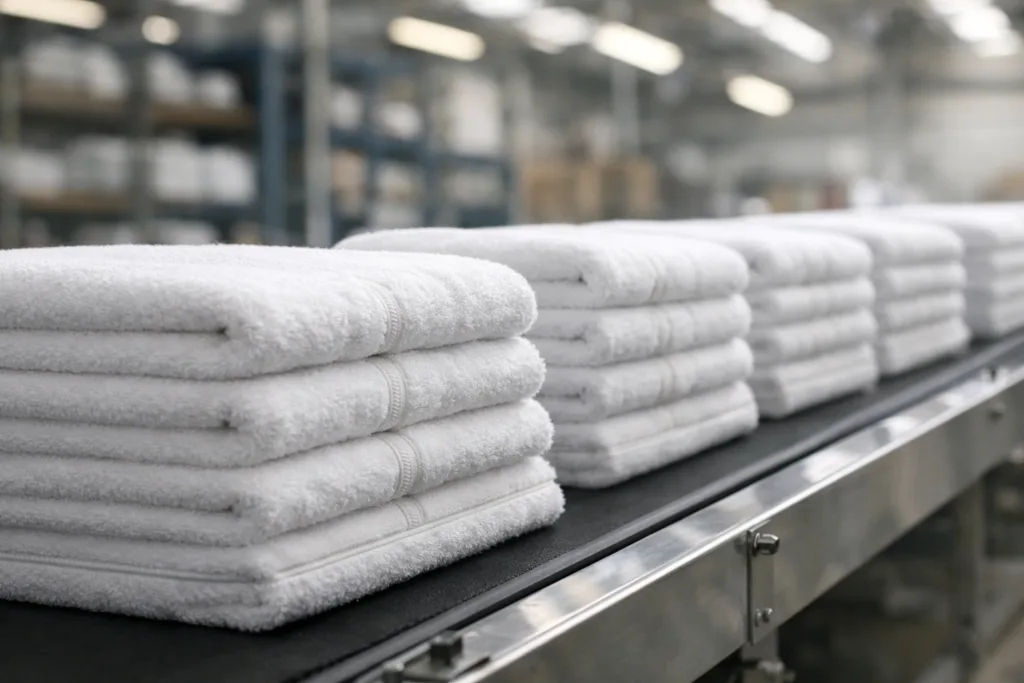
Choosing the right manufacturing route is a pivotal decision for new towel brands. Understanding the difference between private label, OEM, and ODM helps you select the best partnership model for your needs. A private label towel manufacturer supplies towels that you customize with your brand identity but are based on proven production specs they already have.
OEM towels (Original Equipment Manufacturer) are produced exactly to your specification—you provide the design, and the manufacturer brings it to life. This means you have control over every aspect of the towel’s characteristics. Conversely, ODM (Original Design Manufacturer) solutions let you choose from a manufacturer’s existing designs, often with minimal modifications allowed, such as logo or color tweaks. While both approaches offer a bridge to brand ownership, they come with different levels of flexibility, cost, and risk.
| Model | Design Control | Brand Ownership | MOQ | Flexibility |
|---|---|---|---|---|
| Private Label | Medium | High | Medium (500–2000pcs) | Branding, color, material |
| OEM Towels | Full | High | High (3000–5000pcs) | Custom specs, full design |
| ODM | Low | Moderate | Low (300–1000pcs) | Artwork, logo, minor changes |
| Wholesale/Generic | None | None | Low (100–500pcs) | Stock only |
For flexible, fast product launches with strong branding, private label towel manufacturer collaboration can offer the best value. OEM towels give unmatched creative freedom but require larger investment and product development expertise. ODM and wholesale may suit brands wanting simple, quick procurement with limited customization.
To further explore the topic, see Which Towel Sourcing Model Is Right for Your Brand?, a guide to understand the trade-offs between models.
Identifying the Right Brand Stage for Private Labeling
How do you know if your business is ready for private label towels? Successful private labeling requires more than just a logo—it involves market readiness, resource planning, and a well-defined audience. Typical indicators include established sales channels, clear brand positioning, and consistent demand for specialized towel products in your target market.
Start by assessing whether your industry niche (e.g., boutique hotels, gyms, promotional companies) is underserved by generic towels. Next, evaluate competitors: is there an opportunity to improve on their offerings in design, performance, or branding? Having a clear understanding of your ideal customer—what they value most in towels (softness, size, design, or messaging)—will drive material and branding decisions for your private label towels.
Budget is another major factor. Launching a private label line involves investment in design, sampling, packaging, and minimum order quantities. Your team also needs a strategy for marketing, distribution, and replenishment. When these elements are in place, you can move confidently to the next stage—partnering with a qualified manufacturer.
Step-by-Step Process to Launch a Towel Line
Launching your own towel brand starts with a clear plan and realistic milestones. The most effective way is to partner with an experienced private label towel manufacturer who can guide you through every critical step.
- Concept Development & Market Research: Identify trending styles and performance features. Study what your competition offers and what gaps exist.
- Partner with a Private Label Towel Manufacturer: Look for proven experience, flexible capabilities, and transparent communication. Providers like Circe Towel are used to adapting GSM, weaving methods, and decoration processes to suit different brand visions.
- Towel Line Design: Decide on sizes (bath, hand, gym), primary materials (cotton, microfiber), weaving style (terry, jacquard, waffle), and branding elements.
- Sampling & Product Testing: Approve lab dips for color, review fabric swatches, and order product samples to test absorbency, softness, and wash performance.
- Contracting & MOQ Finalization: Confirm minimum order quantities, lead times, packaging specs, and delivery schedules before production starts.
For a detailed look inside manufacturing, see From Yarn to Towel: A Step-by-Step Look Inside the Factory.
Material Comparison: Choosing the Right Fabric
Fabric selection is at the heart of custom branded towels sourcing. Different use cases require different materials—each with unique advantages and trade-offs. Below is a comparison of the main options used in private labeling:
| Fabric | Best For | Pros | Cons | Sustainability |
|---|---|---|---|---|
| Cotton | Hospitality, retail | Soft, absorbent, classic feel | Longer drying time, higher lint risk | Biodegradable |
| Microfiber | Sports, gyms | Lightweight, fast-drying, low lint | Less plush, petroleum-based | Less eco-friendly |
| Bamboo Blend | Wellness, eco segments | Soft, antibacterial, sustainable | Costlier, may pill over time | Renewable source |
| Cotton-Poly Blend | Promotional | Resilient, budget-friendly | Less absorbent, less soft | Depends on % recycled |
For ultra-absorbency in spa or hotel settings, ring-spun or long-staple cotton towels work well. Sports or event towels benefit more from moisture-wicking microfiber, which can show vibrant custom branded towels graphics through digital or sublimation printing. Bamboo blends appeal to brands seeking an eco-friendly edge, though with higher per-unit costs.
Consider your market’s willingness to pay for premium materials, local climate (affecting drying time), and the product’s life cycle. For an in-depth look at textile sustainability, visit Eco-Friendly Towel Production: From Organic Cotton to Recycled Yarn.
Construction Techniques: What You Need to Know
Towel construction dramatically influences function, performance, branding options, and customer satisfaction for custom branded towels. The four essential constructions all carry distinct advantages for certain markets:
- Terry: Looped pile on both sides. Ideal for bath, hospitality, and home markets. Boasts high absorbency and a plush hand-feel.
- Velour: Sheared on one side for a soft, flat finish (good for vibrant printing). Used in beach and promotional towels.
- Waffle: Textured grid with lightweight feel—great for gym and kitchen towels due to fast drying.
- Jacquard: Woven-in designs for striking patterns and luxury branding. Well-suited for upscale retail or signature events.
Choosing between these means weighing goals: Terry is favored for absorbency and comfort, while velour elevates graphic printing and retail appearance. Waffle weaves excel in sports and fitness, where quick drying is a must. Jacquard’s high setup costs pay off for brands needing permanent, woven-in designs with no risk of post-wash fading.
Tooling and weaving choices also affect speed and cost—jacquard and velour often require longer setup and lead times than terry or waffle. For more on how construction affects your choices, see Jacquard Towel Manufacturing Explained.
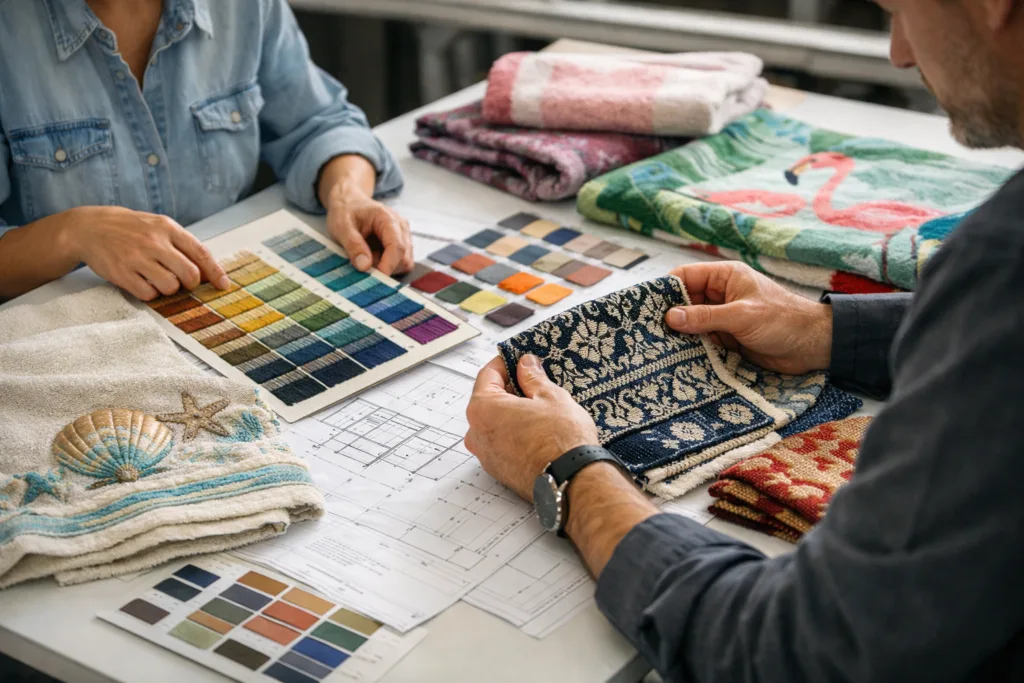
Design & Specification Checklist for Private Label Towels
Success with private label towels begins with a smart specification plan. Use the following checklist to cover all crucial features:
| Feature | Options | Best For |
|---|---|---|
| Size | Face, Hand, Bath, Gym, Beach | Match to use case |
| GSM | 300 – 700 | Lower for sports/travel, higher for luxury |
| Material | Cotton, Bamboo, Microfiber, Blends | Tailor to audience, climate |
| Edge Finish | Double stitch, piping, bound | Durability, visual appeal |
| Branding | Embroidery, Printing, Jacquard | Logo prominence, longevity, cost |
| Packaging | Sleeve, box, polybag | Retail vs. bulk vs. gift |
- Prioritize absorbency and colorfastness for hospitality and home lines.
- Weigh embroidery (luxury look, lasting) versus printing methods (cost-effective, color reach) for custom logo projects.
- Packaging isn’t just for protection—it’s a brand touchpoint. Retail needs striking presentation; bulk hospitality may require efficiency.
Strong specifications protect your branding and ensure end-user satisfaction. For technical guidance, refer to 7 Ways Hemming & Stitching Shape Towel Edge Durability or check the Link to browse common towel types.
Quality Assurance & Testing Standards
Reliable quality is non-negotiable for any private label towel manufacturer, driving user trust and long-term success. Assessing a towel’s performance goes beyond feel and color; rigorous textile testing safeguards your brand’s reputation.
- Absorbency: Test how much water is absorbed (g/m2). Higher absorbency, better end-user experience. Compare via standardized wash/dry cycles.
- Wash Durability & Shrinkage: Repeated laundering can shrink or distort poorly made towels. Top manufacturers set a max shrinkage threshold (under 5–8% is ideal).
- Colorfastness: Fading damages brand image. Test for color migration in hot or chlorinated water washes.
- Stitching Consistency: Inspect hems, edge binding, and decorative elements for loose threads or skipped stitches.
- Lint Control: Especially vital for hotel, spa, and car care towels—excess linting frustrates users.
To ensure standardized quality, work with your private label towel manufacturer to set specific inspection protocols and request pre-shipment and third-party testing as needed. Circe Towel, for example, shares detailed lab reports with clients for every production batch. For inspection checklists and supplier auditing, see Expert Guide: Auditing Your Towel Supplier for Quality B2B Orders.
Industry Applications and Use Cases for Private Label Towels
Private label and custom branded towels are incredibly versatile for B2B buyers, with applications spanning:
- Hospitality: Hotels, resorts, and spas elevate guest experience with plush, logoed bath and hand towels.
- Sports and Fitness: Gyms and clubs use branded gym towels for both function and marketing, while sporting events distribute souvenir towels.
- Retail: Boutiques and online brands offer exclusive towel collections, from beach towels with artist prints to ultra-absorbent baby sets.
- Promotional: Branded event towels are standout giveaways at trade shows, product launches, or charity races.
- Seasonal: Beach, holiday, and gifting lines offer timely revenue boosts with limited-edition packaging or designs.
Applying the right material and branding technique ensures your towels perform in demanding hospitality or athletic settings, or shine as eye-catching retail items. For more on industry fits, see the Link to product solutions, or browse categories like gym towels manufacturer and sports towels manufacturer.
Common Mistakes to Avoid When Choosing Towels
The path to a successful towel launch is not without pitfalls. Here’s how to avoid the most frequent errors when investing in private label towels:
- Choosing the wrong GSM for the application—bulky towels for gyms slow drying, while towels too thin for hotels feel cheap.
- Poor fabric selection (e.g., low-grade microfiber for retail, uncombed cotton for hospitality) leads to negative reviews and high return rates.
- Ignoring colorfastness—fading towels diminish brand impact and increase costs for replacements.
- Overlooking absorbency—sports and spa users need quick, effective drying to remain satisfied.
- Confusing embroidery, printing, and jacquard branding methods—each has budget, order quantity, and visual trade-offs; mismatching can cause brand headaches.
Planning your private label towels specifications, setting clear performance benchmarks, and requesting samples can sidestep these issues. For more must-ask pre-order questions, read 20 Must-Ask Questions for Smooth Towel Sourcing.
Ordering Guide: Essential Steps from Concept to Delivery
Clear project flow is crucial when ordering through your private label towel manufacturer. Here’s what to expect:
- MOQ (Minimum Order Quantity): Most manufacturers set MOQs based on style, material, or branding complexity—bulk starts around 500–2000 pieces.
- Lead Time: Sampling takes 2–4 weeks; bulk runs may require 30–60 days from approval, depending on season and capacity.
- Artwork & Proofs: Send high-resolution vector logos for embroidery, Jacquard patterns, or print. Review digital and physical samples for final sign-off.
- Packaging: Choose options from bulk polybag to custom retail boxes, hanging sleeves, or gift packs to suit your market.
- Shipping & Logistics: Discuss shipment terms (FOB, CIF), carton sizes, and freight methods in advance to avoid surprises.
Partner with your manufacturer for open updates, from sampling to final quality checks and shipping. For practical, in-depth timeline guides, see Complete Guide to Towel Manufacturing: MOQ, Sampling, Quality, and Lead Time Explained.
Frequently Asked Questions
What is the difference between private label and custom towels?
Private label towels are produced according to the manufacturer’s standard specs with your branding, while fully custom towels (often OEM) are developed from scratch to your unique design and specifications.
How can I ensure good quality with my towels?
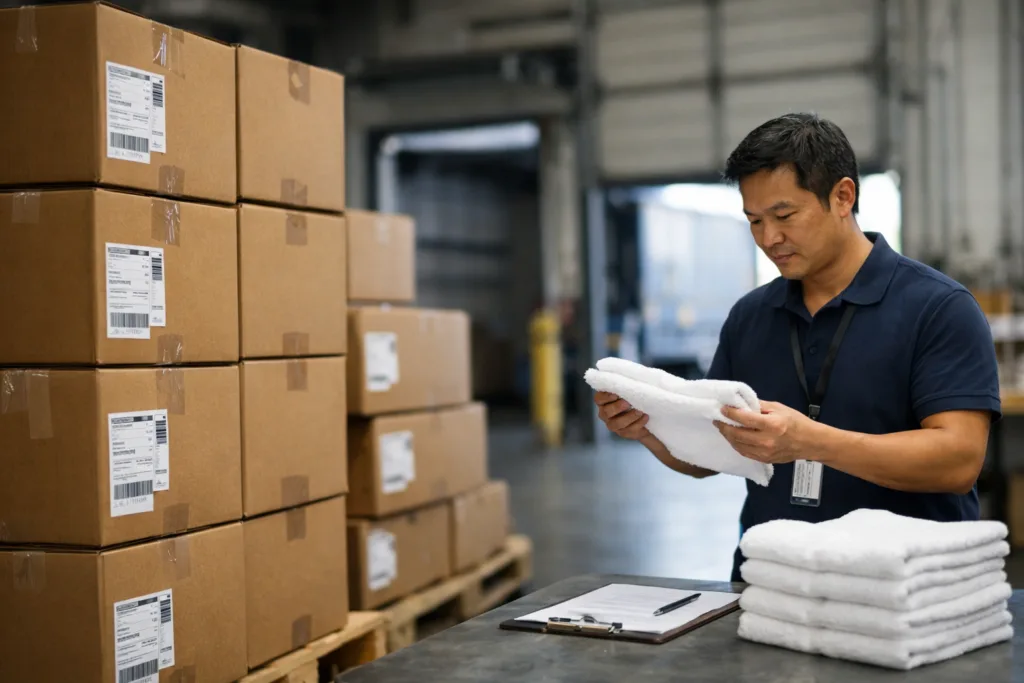
Work closely with your private label towel manufacturer to set quality benchmarks for absorbency, GSM, colorfastness, and stitching, and always request pre-production and shipment samples for testing.
What is the usual timeline for developing a private label towel line?
Plan for 2–4 weeks for sampling and 30–60 days for bulk production, as timelines vary by complexity, season, and capacity of the supplier.
Can private label towels be customized in small batches?
Some private label towel manufacturer partners offer low MOQs for simpler branding, but advanced decoration (embroidery or jacquard) and special packaging may require larger orders.
How is the pricing determined for private label towels?
Pricing is based on material choice, towel size, GSM, construction type, decoration method (printing, embroidery), packaging, and total order quantity.
What are the available methods for logo placement?
Logo placement for custom branded towels includes embroidery, printing (screen, digital, or reactive), and woven-in Jacquard, each with its own benefits and ideal uses.
Summary and Next Steps
Building a successful towel brand moves from idea to execution by focusing on market needs, careful partner selection, and detail-driven product choices. By understanding the partnership models, materials, constructions, and branding trade-offs, you’ll sidestep common pitfalls and maximize both value and impact.
Remember: the right private label towels and private label towel manufacturer will support every step from concept through compliant production, helping your vision become a true business asset. Thoughtful material specs, rigorous quality control, and honest communication are the foundation of a launch that lasts.
Ready to move forward? Prepare your RFQ with clear specs, request pre-production samples, and focus on building your unique towel line on a confident foundation.
Related Reading
- Ultimate Roadmap for Launching Your Custom Private Label Towel Brand
- Decoding OEM, Private Label, and Custom Towel Sourcing Models
- Crucial Steps: MOQ, Sampling, and Quality in Towel Manufacturing
- Expert Tactics for Auditing Your Towel Supplier’s Quality
- Choosing Between Embroidery, Jacquard, or Printing for Towel Logos