
Introduction to Printed Towel Techniques
Printed towel techniques play a critical role in product branding and market differentiation. For buyers exploring custom printed towels, understanding these techniques directly influences the final product’s appearance, feel, and impact. Towels bearing vivid logos or detailed patterns catch customer attention, enhance perceived value, and reinforce brand identity across hospitality, wellness, retail, and promotional sectors.
In today’s crowded markets, standing out requires more than just a great towel — the right print approach transforms towels into messaging tools for hotels, gyms, resorts, or event giveaways. Print technique choices, from traditional silk screen to advanced digital methods, determine not only design possibilities but also color vibrancy, wash durability, and cost-efficiency. Buyers need reliable, application-focused knowledge of the various towel printing options to drive results.
This guide introduces the essential printing technologies for towels, pinpoints how their strengths align with diverse business needs, and addresses what B2B purchasers must consider for effective project outcomes. For tailored consultation on suitable print methods, manufacturing capacities, or end-market requirements, experienced suppliers like Circe Towel can help navigate complexities and ensure project success.
Understanding Printed Towel Basics
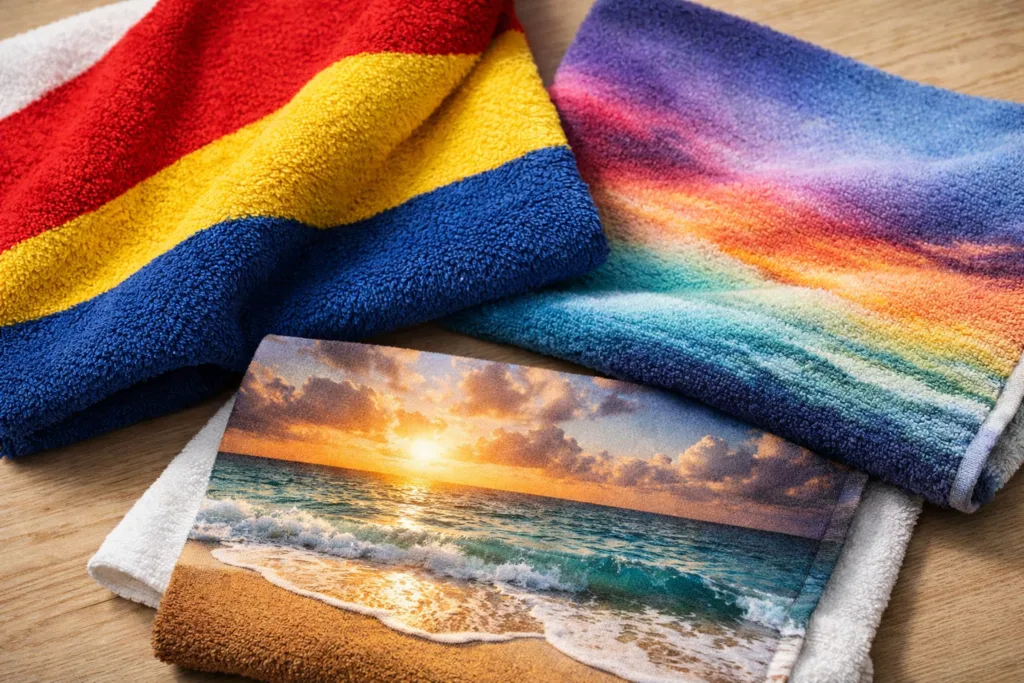
At its core, towel printing is the process of transferring graphics, logos, or designs onto towel textiles using specialized techniques. Custom printed towels are not limited to bath linens; printable towels span a wide variety—from face towels and hand towels to beach, gym, and golf towels. Their applications stretch across hospitality, sports, wellness, retail, and corporate branding.
The term “printable towels” designates any towel construct or fabric composition that can successfully take a print and maintain image clarity and durability through washing. Familiarizing yourself with process terms—like digital printing, screen printing, reactive dyeing, and heat transfer—is essential for setting realistic design expectations and budget planning. Each approach impacts appearance, tactile feel, color depth, and production cost in unique ways.
Use cases include:
- Exclusive amenities for hotel, spa, or resort guests
- Branded merchandise and retail lines
- Team towels for sports events and gyms
- Gift-with-purchase or seasonal promotional items
Consistent print quality supports brand perception. Whether for precision logo application or full-bleed photographic artwork, understanding which towel printing techniques deliver your desired result is paramount. High color accuracy and durability, especially after repeated laundering, protect your investment and reputation.
Material Comparison for Printed Towels
The material chosen for custom printed towels lays the foundation for success. Cotton, microfiber, bamboo, or blends each offer distinct properties affecting absorbency, tactile softness, durability, and print compatibility.
Cotton is the most widely used base, valued for its natural absorbency, skin-friendly touch, and compatibility with both screen and reactive dye printing methods. For projects needing plush feel and strong color hold, ringspun or combed cotton is preferable (see combed vs ringspun towels for details).
Microfiber excels when fast drying, lightweight feel, and vibrant color are critical. It’s especially popular in gym, sport, and quick-dry beach towels. However, not all print methods adhere as strongly to synthetics—digital printing and heat transfer are typically better suited for microfiber than reactive dyes.
Bamboo and blended fabrics (cotton-poly, cotton-bamboo) combine the positive traits of their components. Bamboo blends offer an eco-friendly story, soft touch, and good absorbency but sometimes challenge colorfastness in intricate prints.
Colorfastness and print longevity also depend on the interplay between fabric and ink chemistry. For example, high-GSM velour cotton is favored for luxury applications: it absorbs vibrant prints while retaining softness. In contrast, low-GSM blends are budget-friendly but may limit color consistency or wash durability.
Within Circe Towel’s factory, material selection is typically aligned with target end-use and market positioning—always balancing absorbency, expected usage cycles, and desired print application. For high-touch hospitality items, always specify pre-shrunk, tightly woven cotton to minimize post-print distortion.
| Material | Absorbency | Softness | Durability | Best Print Methods | Target Applications |
|---|---|---|---|---|---|
| Cotton | Excellent | Soft | High | Screen, Reactive, Digital | Hotel, Spa, Retail |
| Microfiber | Good | Very Soft | Medium/High | Digital, Heat Transfer | Gym, Sports, Promo |
| Bamboo Blend | Very Good | Ultra Soft | Medium | Screen, Reactive (with care) | Eco, Baby, Spa |
| Cotton-Poly Blend | Good | Medium | High | Screen, Digital, Heat Transfer | Budget, Promo, Institutional |
Construction and Manufacturing Overview
How a towel is constructed impacts both its screen printed towels results and long-term utility. Key constructions include:
- Terry: Loop-woven for superior absorbency, compatible with most print types. However, heavy pile can blur ultra-fine details.
- Velour: Terry with sheared loops, creating a flat, soft finish ideal for detailed prints and high color saturation.
- Waffle: Honeycomb-textured, quick-drying, less common for complex prints but popular for unique handfeel (waffle weave cotton bath towels illustrate fabric structure).
- Jacquard: Patterns woven directly into fabric, best for color blocking and large motifs rather than intricate print overlays (learn more about jacquard manufacturing).
The towel’s GSM (grams per square meter) indicates density: higher GSM means a thicker, plusher towel but also longer drying time and higher print ink absorption. For screen printed towels, medium to high GSM velour or tightly woven terry ensures optimal print sharpness and resist wear-and-tear from washing, making them favored for premium retail and hospitality.
Edge finishing and border selection also matter. Double stitching, wide hems, or decorative borders help prevent fraying and add perceived value. Facilities like Circe Towel can tailor stitching and finishing based on predicted wash cycles and required print zone stability. Matching manufacturing methods to print technique (such as tight pile for digital or sheared velour for screen printing) is crucial for high-yield, consistent outcomes.
Popular Printing Techniques Explained
The choice of towel printing method is essential as it determines visual impact, durability, and compatibility with your order’s complexity and size. The main manufacturing techniques include:
Screen Printing
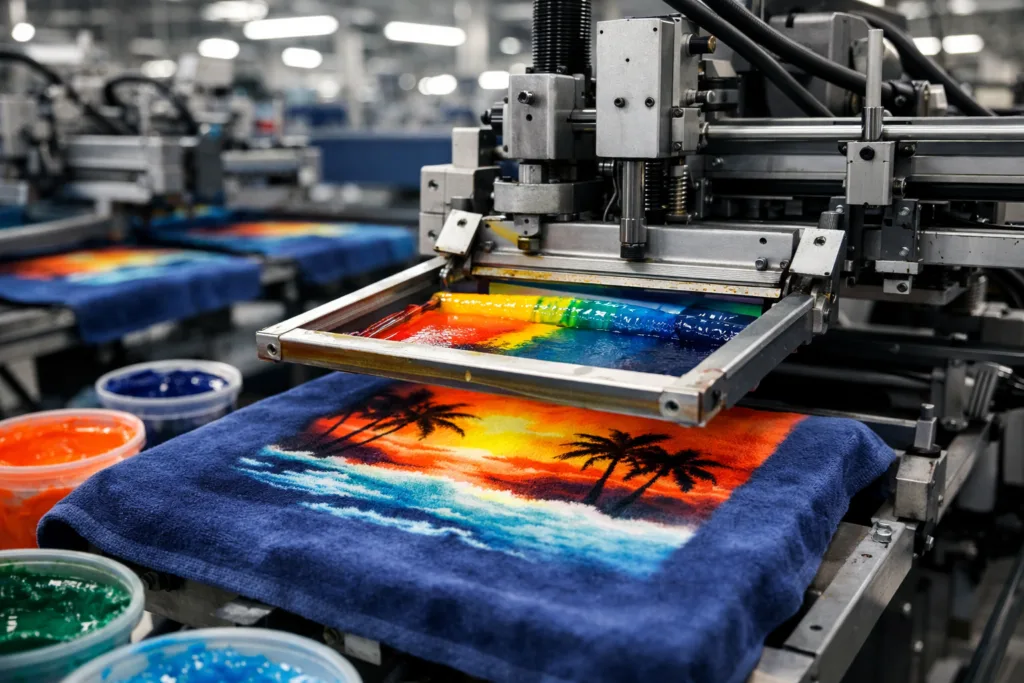
This process uses mesh screens for each color in your artwork. It’s a time-tested choice for screen printed towels where bold, vibrant colors and large graphics are required. Screen printing excels on cotton and velour, delivering excellent color longevity and cost efficiency at high volumes. However, fine gradients or highly detailed photographic artwork are less achievable due to the medium’s nature. Minimum order quantities (MOQs) can be higher due to setup costs.
Digital Printing
Digital printing (also known as direct-to-fabric) uses inkjets to apply designs, allowing unlimited color combinations and precise rendering of intricate logos or gradients. This method works especially well with microfiber and velour surfaces, supporting small batch or even single-piece orders. Digital is ideal for complex, multi-tonal artwork or photographic prints where color accuracy matters most. Wash performance improves year-over-year as ink technology advances, but it’s important to consider fabric-integration specifics for durability (see the impact of digital printing).
Reactive Dye Printing
Reactive dye printing chemically bonds the print with natural fibers (cotton/bamboo), producing vibrant, fade-resistant colors with a soft hand. It’s excellent for all-over prints, especially when colorfastness and wash resistance are crucial (e.g., high-usage hospitality towels). However, setup is more involved and best suited for larger runs due to higher MOQs and process complexity.
Heat Transfer (Sublimation)
This process uses heat to transfer dyes from paper onto poly-based or specially treated surfaces—perfect for vivid photographic effects on microfiber. Advantages include low setup, smooth images, and flexibility at small or medium MOQs. The tradeoff is that heat transfer is less durable than reactive or screen prints on cotton, and the tactile feel can sometimes be altered by the print film.
Technique Selection Table
| Technique | Best For | Color Complexity | MOQ Range | Fabric Suitability |
|---|---|---|---|---|
| Screen Printing | Bold logos, solid colors | 2–6 colors max | 500+ | Cotton, Velour |
| Digital Printing | Photographic, gradients | Unlimited | 1+ | Microfiber, Velour |
| Reactive Dye | All-over prints, colorfastness | 8–12 colors | 1000+ | Cotton, Bamboo |
| Heat Transfer | Photo realism, small runs | Full color | 50–500 | Microfiber, Blends |
Case Example: A gym chain needing 5000 branded towels with a simple two-color logo would likely select screen printed towels for sharpness and cost control. A boutique spa desiring small batches of towels with full-photo prints for a gift set, on the other hand, may favor digital printing for flexibility and visual fidelity.
Design and Specification Checklist
Before placing an order for custom printed towels, buyers should review several specification points to optimize cost, branding, and user experience.
- Size & GSM: Choose dimensions based on usage—e.g., 70x140cm for bath, 30x100cm for gym—and GSM for required plushness (350–600+ GSM).
- Material & Construction: Match fiber and weave to print method and end-use. Velour cotton for luxury, microfiber for lightweight sports towels.
- Edge Finishing: Double-stitched or hemmed edges prevent fraying and improve durability (why stitching quality matters).
- Logo Application: Consider print, embroidery, or patches for brand presence—print for color detail, embroidery for premium touch (methods compared here).
- Absorbency & Softness: Align thickness and finish with market—premium soft touch for retail, fast-dry for gyms.
- Colorfastness: Specify print and material combinations known to resist fading to uphold your brand’s visual standards.
For a concise at-a-glance summary:
| Specification | Best Practice |
|---|---|
| Print Area | Allow for border and hem clearances |
| GSM Range | 350–500 for sports; 500–700 for premium bath |
| Color Testing | Request lab dips or strike-offs before full run |
| Packaging | Match to market: polybag, gift box, or retail band |
| Branding | Print for detail, embroidery for texture, patches for durability |
| MOQ | Align design with supplier’s process minimums |
Quality and Testing Considerations
Rigorously managed quality control is key for custom printed towels destined for professional applications. During sampling and mass production, core indicators include:
- Absorbency: Measured by soak time. Ensure post-print towels still meet application needs.
- Wash Durability: Printed design should withstand at least 15–30 wash cycles without visible fading or peeling.
- Colorfastness: Products are tested for color migration and photostability using standardized protocols.
- Shrinkage: Initial fabric must be stabilized before printing to prevent design distortion post-laundering (tips for shrinkage control).
- Stitching Quality: Consistent edge and logo seam construction support product life.
- Lint Control: Tight weave and finished seams help control fiber shedding during early use.
Manufacturers often employ in-house and third-party laboratories to validate towel performance. Circe Towel, for instance, optimizes finishing and color setting workflows to minimize rejections and warranty claims on high-volume orders.
Industry Applications and Use Cases
Printed towels are versatile tools across a range of sectors. For hospitality, branded bath and hand towels elevate guest experience and reinforce property identity. In spas and resorts, plush printed towels communicate luxury and meticulous attention to detail (hotel-quality cotton bath towels set an example).
For fitness clubs and sports events, gym and golf towels with bold graphics serve both practical and promotional functions—keeping users dry while making the brand visible in high-traffic settings (see gym towel solutions).
Promotional campaigns, brand collaborations, and retail lines benefit from shaped, color-rich beach towels, round blankets, or novelty prints for seasonal gifting (round microfiber beach towel demonstrates design scope).
To maximize reach, always tailor design complexity, color palette, and tactile finish to the expectations of your specific customer base, partner, or event.
Customization Options for Printed Towels
Modern custom printed towels benefit from a wide array of branding and finishing enhancements. Logo application options range from traditional printing (for bold visual statements) to embroidery (for high-relief tactile effects) and woven patches (for abrasion resistance in heavy-use environments).
Pattern customization includes all-over prints, two-tone fades, intricate jacquard borders, and photo-grade digital artwork. For further differentiation, border stitching can be colored or contrast-hemmed, matching brand graphics or representing team themes.
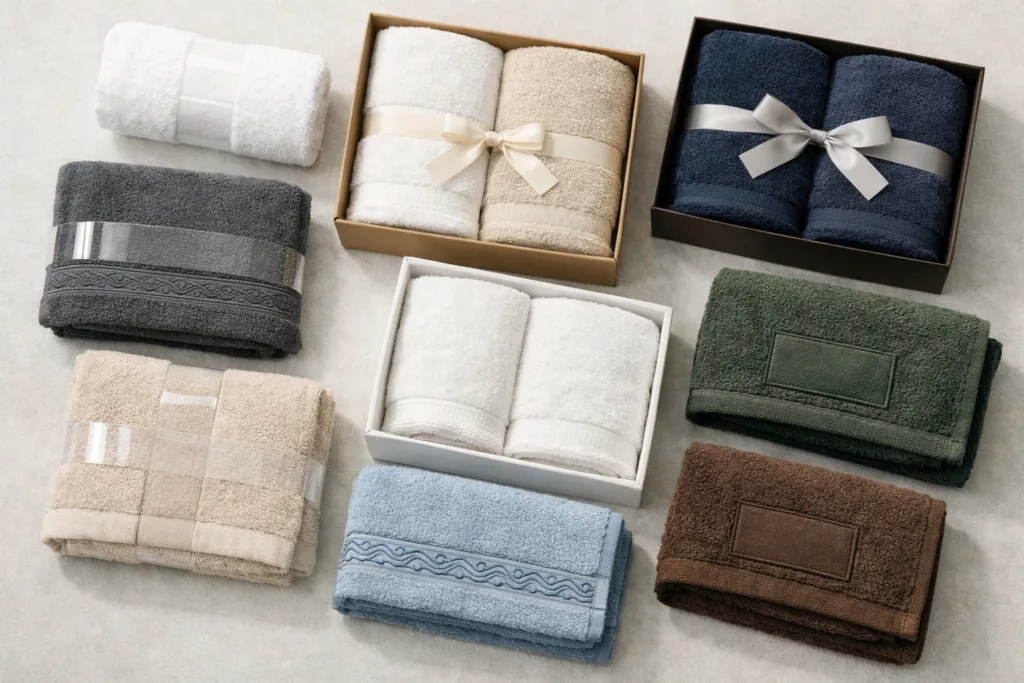
Packaging options—such as branded belly bands, eco-friendly gift boxes, or retail-ready hanging packs—enhance consumer perception and facilitate direct-to-store sales. In private label sectors, compliant barcoding, insert cards, and hangtags are standard (rundown of private label strategies).
Successful programs often combine several elements—vivid printing, premium embroidery, and memorable packaging—to strengthen branding and customer engagement across channels.
Common Mistakes and Troubleshooting
Purchasers of custom printed towels sometimes encounter avoidable setbacks. Choosing a GSM unsuitable for your intended use—such as ultra-light towels in luxury hotels—can lead to negative guest feedback or higher replacement rates.
Poor fabric selection can cause rapid fading (e.g., using low-quality blends for intricate prints that require high colorfastness). Similarly, overlooking the quality of stitching may lead to premature fraying and reduced towel lifespan.
Selecting improper decoration methods also risks brand presentation: highly detailed designs will not translate well with basic screen printing, while photographic logos may lack brilliance via basic heat transfer.
To avoid these issues:
- Confirm GSM and size meet end-user comfort and performance needs.
- Specify materials and print methods proven for the artwork.
- Request detailed proofs, samples, and lab testing data for critical applications.
- Work closely with suppliers to align decoration method and order quantity with technical feasibility.
If issues arise during production or shortly after delivery (such as fading, shrinkage, or logo peeling), address them via root cause investigation, adjust design/specification standards for future orders, and coordinate with manufacturing for corrective actions.
Ordering Guide for Printed Towels
Making the ordering process for custom printed towels smooth benefits both supplier and buyer. Understanding and negotiating MOQs is key, as printing method and desired customization level greatly affect economic minimums (see MOQ and pricing strategies).
Lead times vary. Screen and digital printing setups may take 2–4 weeks for sampling and 4–8 weeks for mass production. Complex reactive dye runs, especially large-scale, may extend deadlines. Always request samples and approve artwork proofs (digital and physical) to confirm color accuracy and tactile quality.
Proofing should verify logo placement, border margins, and edge finishing against provided specifications. Packaging decisions (single wrap, sets, display-ready formats) impact handling costs and shipping efficiencies, especially for export and retail projects (insights on packing for export).
For optimal results, coordinate closely on timetables, transparency in approvals, and supplier documentation throughout the project.
Frequently Asked Questions
What fabric is best for custom printed towels?
Cotton is generally the best choice for most custom printed towels due to its combination of absorbency, print compatibility, and softness, while microfiber works well for lightweight or high-color applications.
How do order quantities affect towel printing method selection?
Higher order quantities justify the setup costs of screen and reactive dye printing, while digital and heat transfer printing are more flexible and cost-effective for small batch or lower MOQs.
Will the print fade after washing?
Properly chosen printing techniques, such as reactive dye or high-quality screen printing, offer strong wash durability, but it’s critical to match ink chemistry to both fabric and intended wash frequency.
Can I customize both the towel material and print design?
Yes, buyers can specify both fabric composition (cotton, microfiber, bamboo) and print design, but certain print methods work better with specific towel bases; confirm technical feasibility with your supplier.
How long does it take to receive custom printed towels?
Lead times range from 4 to 8 weeks depending on the printing process, order size, and design complexity, with samples and artwork approvals potentially adding to the schedule.
Are there eco-friendly options for printed towels?
Yes, bamboo blends and organic cottons are increasingly popular, and choosing digital or reactive dye methods can reduce water and chemical usage, even for large-scale projects.
Related Reading
- Custom Printed Towels vs Other Branding: A Clear Guide to Method Selection
- Decoding Towel Manufacturing: MOQ, Sampling, and Quality Explained
- How to Audit a Towel Supplier for Reliable Bulk Orders
- Mastering MOQ and Price for Private Label Towel Success
- Understanding Jacquard Towel Manufacturing for Custom Projects
- Strengthen Towel Durability: Top Hemming and Stitching Choices