
Introduction to Personalized Towel Projects
Personalized towel projects have quickly become a key strategy for brands seeking true differentiation. From exclusive beauty collaborations to thoughtful gifting initiatives, custom face towels and personalized face towels are making waves in limited edition, small-batch programs. Whether your goal is to create a memorable experience for spa clientele, design a branded loyalty reward, or supply bespoke products for corporate gifts, small-batch towel customization is becoming an accessible reality for B2B buyers.
The demand for personalized products is surging, especially in sectors like beauty, wellness, hospitality, and corporate gifting. Today’s consumers crave items that reflect their unique identities or convey a sense of belonging to a valued group. These preferences translate directly into opportunities for strategic product managers, brand leads, and procurement specialists.
Limited run, small-scale towel production brings fresh possibilities for product curation, themed collections, and creative bundling. Working with the right partner allows you to source custom face towels and custom made towels sized, designed, and finished to perfectly suit your brand or event objectives—without unnecessary inventory risk. Most importantly, these personalized touches elevate the user experience and reinforce your quality promise at every touchpoint.
Why Choose Face Towels for Personalization?
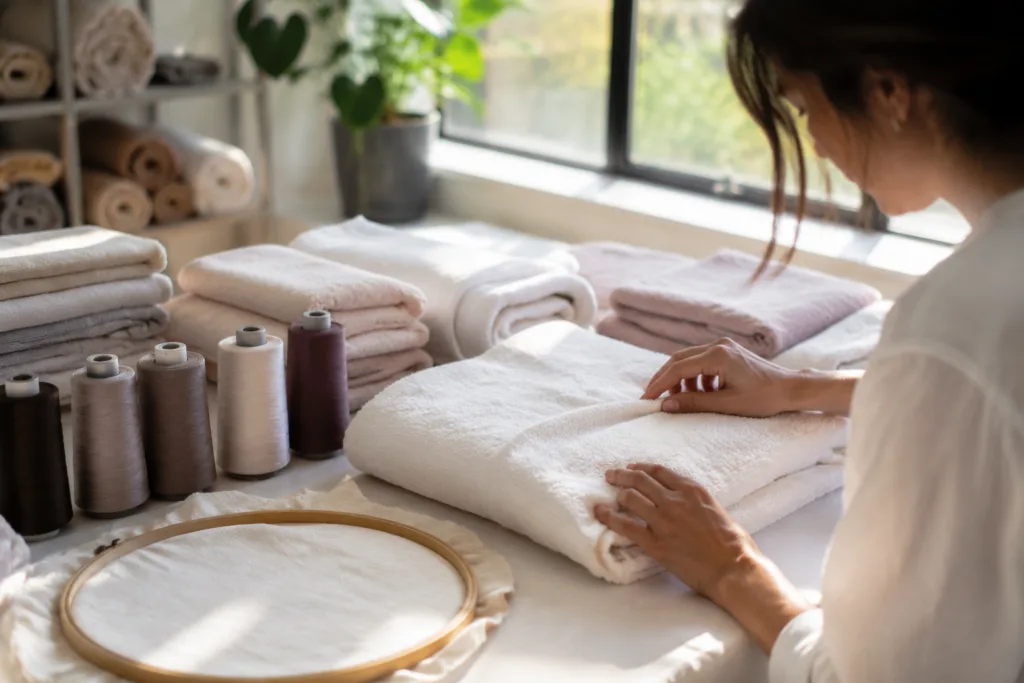
Face towels are uniquely suited for customization and targeted branding. As a daily essential across spas, gyms, hotels, homes, and wellness centers, they offer high utility and repeated exposure to your logo or message. A customised face towel fits naturally into membership kits, gratitude boxes, and special event gifts—practicality meets brand presence.
Their compact size means face towels are easy to store, ship, and distribute in small batches. This minimizes logistical hurdles and allows for more creative, agile project planning—perfect for seasonal campaigns or niche collections. For example, launching a Mother’s Day set with embroidered motifs or gifting a gym member a set of custom made towels for hitting a milestone is both impactful and manageable at a face towel scale.
Face towels also open the door to creative branding techniques. Their workable surface is ideal for intricate embroidery, crisp jacquard patterns, or high-color digital printing. Whether your brand needs subtle monogramming on a luxury towel or bold logos for promotional events, the design options are vast. When bundled, these small but mighty towels make a strong impression in curated gifting boxes or as part of exclusive member kits.
- Ideal for spas, gyms, guest amenities, and retail gift sets
- High reuse frequency means ongoing brand exposure
- Flexible for themed packaging or special decorations
Material Comparison for Personalized Face Towels
Material selection is central to project success when sourcing custom made towels for small-batch runs. Here’s how key materials compare:
| Material | Feel | Absorbency | Drying Speed | Best For |
|---|---|---|---|---|
| Cotton | Soft, plush | High | Moderate | Luxury, spa, retail |
| Microfiber | Silky, lightweight | Medium | Very fast | Travel, fitness, promo kits |
| Bamboo | Ultra soft | High | Good | Eco, baby & organic |
| Cotton Blend | Balanced | Medium | Good | Economy, bulk, promo |
Cotton remains the gold standard for absorbency, softness and durability—best for high-end beauty or spa projects. Buyers concerned with ultra-softness can explore long-staple or combed varieties, often used by hospitality-focused suppliers like Circe Towel.
Microfiber offers standout performance in drying speed and packability, making it ideal for fitness or travel-themed kits. While not as plush as premium cotton, it excels in lightweight, cost-friendly, and visually sharp applications.
Bamboo blends are drawing attention for their eco-credentials and silk-like hand feel—ideal for organic, wellness, or baby lines where softness and environmental claims are key. Blended fabrics balance cost with acceptable performance and may be preferred for large-scale promotional projects when budget is a leading factor.
When considering custom made towels, weigh the tactile experience, absorbency, care instructions, and branding compatibility (especially when using embroidery or vivid prints). Each fabric type interacts differently with decoration methods, which can affect both perceived value and long-term performance.
Understanding Towel Construction Types
Towel construction impacts both brand presentation and end-user performance for customizable face towels. Let’s break down the main types:
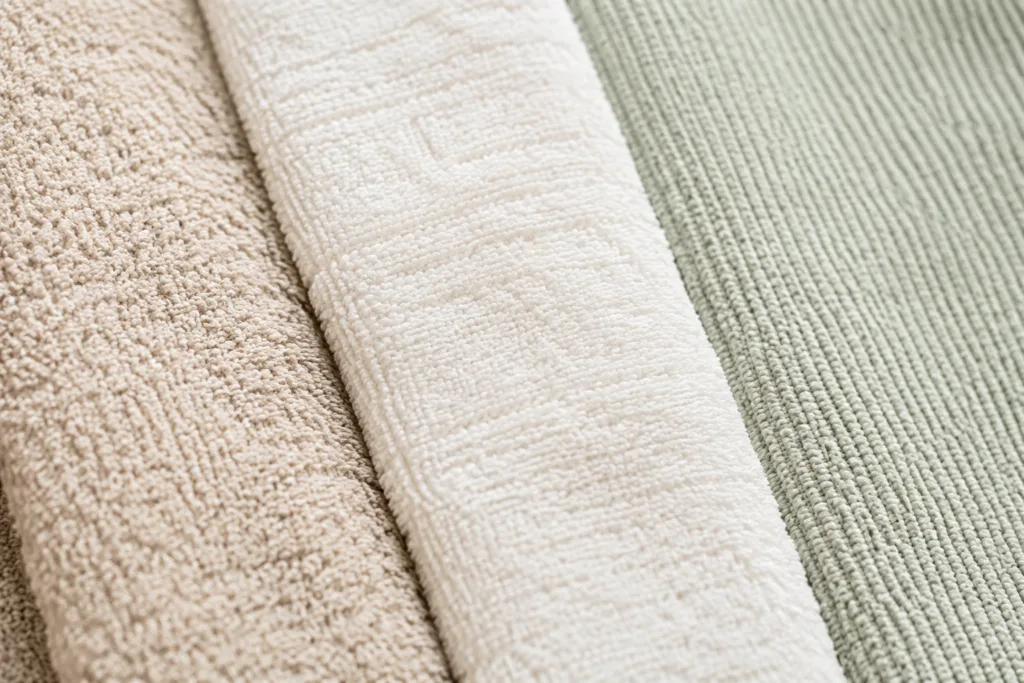
Terry face towels feature a classic looped pile surface, delivering excellent absorbency and a familiar tactile sensation. Velour towels offer a sheared, velvet-like finish—less absorbent but luxurious in hand feel, often used for special kits or decorative sets.
Waffle weave towels are lighter, faster-drying, and lend a crisp, modern texture. They’re popular for gym and yoga towels where rapid moisture management matters. Jacquard construction enables complex, woven-in patterns—perfect for standout branding or themed campaigns that require high design definition.
For decoration methods:
- Embroidery: Durable, gives a premium look, but detailed logos or tiny fonts can appear raised or lose sharpness on thick piles.
- Printing (reactive/digital): Excellent for multi-color artwork, detailed graphics, or when budget is a concern. However, print longevity depends on care and washing.
Construction choice ties directly to branding cost and visual outcome. For example, custom face towels with fine jacquard or multi-color prints have higher minimum order quantities (MOQs) and longer lead times versus basic embroidery on cotton terry. Brands should balance their desired look with their required batch size, cost ceiling, and material preferences.
Size & GSM Considerations
Choosing the right size and GSM (grams per square meter) is crucial for crafting effective personalised face towels. Industry standards for face towels usually range from 28x28cm up to 35x80cm, suitable for both single units and sets.
A lower GSM (250–300) makes for lighter, faster-drying towels that fit well in travel kits or cost-sensitive giveaways. Higher GSM (350–500) enhances plushness and perceived luxury, ideal for beauty, spa, or member loyalty gifts.
Custom sizing options can be tailored, but each deviation impacts material yield, packaging options, and final price. Working with an experienced partner ensures the specified size and GSM align with the intended customer experience and logistics constraints.
- Popular face towel sizes: 30×30 cm, 34×75 cm, 35×80 cm
- Economy GSM: 250–300
Luxury GSM: 350–500 - Smaller sizes enable compact, elegant retail packaging
It’s essential to match size and GSM with project positioning, especially for personalised face towels meant to impress in premium gift sets. Circe Towel often advises balancing high absorbency and softness with weight as well as shipping and presentation needs.
Design & Specification Checklist
A clear checklist keeps your custom face towels project on track from procurement to delivery. Below is a handy reference table to guide your sourcing process:
| Spec | Options | Effect on Project |
|---|---|---|
| Size | 30×30, 34×75, 35×80 cm or custom | Packaging, cost, user experience |
| GSM | 250–500 GSM | Softness, absorbency, weight |
| Fabric | Cotton, microfiber, bamboo blend | Hand feel, cost, branding method |
| Decoration | Embroidery, printing, jacquard | Logo detail, cost, durability |
| Edge Finishing | Hemmed, overlock, satin | Look, durability, lint risk |
| Packaging | Gift box, polybag, belly band | Gifting appeal, storage, shipping |
Check for colorfastness and absorbency certifications when embedding your brand into custom face towels. Embroidery enables lasting logos, while printing shines with vibrant patterns. Match edge finishing style to the mood—overlock or pointed corners look sleek, traditional hemming ensures longevity, and satin adds a premium touch for VIP kits.
Finally, confirm that your packaging plan enhances brand consistency, whether you’re preparing bulk sets for retail or unique boxes for executive gifting. If you need further design tips, Circe Towel offers a comprehensive logo towel design guide for brand managers.
Quality Control & Testing Standards
Stringent quality control is vital in custom made towels to uphold brand reputation. Three critical attributes are absorbency, wash durability, and shrinkage. Proper lab and in-house testing ensures towels deliver on both performance and aesthetics.
Common quality checks include:
- Fabric absorbency and colorfastness (no fading or dye bleeding after washes)
- Dimensional stability (minimal shrinkage post-laundering)
- Stitching consistency (no loose threads or weak corners)
- Lint control (to avoid shedding on user’s skin)
For every batch, it’s best practice to provide notifications or quality assurance sheets outlining test results and batch specifications. Circe Towel, for instance, shares batch certificates and wash test reports for all customized towel projects, giving buyers peace of mind.
To avoid surprises, clearly communicate your expectations and required standards for custom made towels before production. Specify if you need certifications, special pre-wash treatments, or additional QC steps for your application or market. This approach results in fewer product disputes and a smoother project timeline.
Common Mistakes When Customizing Towels
Customising towels brings significant value, but certain mistakes can compromise your results, especially for a customised face towel:
- Selecting a GSM too lightweight for luxury projects, leading to towels that feel insubstantial.
- Choosing low-quality fabrics that lack absorption—unimpressive for high-end beauty or member kits.
- Overlooking the cost and feasibility of complex logo embroidery or oversized multi-color prints on a small towel surface.
- Skipping detailed proofs or color swatches before mass production, risking unpleasant surprises upon delivery.
- Neglecting to factor in lead times, sampling, and shipping for small-batch orders often results in missed event deadlines.
Work closely with manufacturers to review artwork placement, finishing details, and order timelines. Run pre-production samples, especially for first-time orders, to catch issues before they scale. This workflow keeps your towel project on budget, on brand, and on time.
Ordering Guide for Small-Batch Personalized Towels

Ordering personalized face towels in small batches is straightforward with the right preparation. Start by confirming the minimum order quantity (MOQ) with your chosen factory. For most suppliers, small-batch runs typically start between 100–300 units per design, depending on material and decoration method complexity.
Expect lead times of 2–5 weeks for sampling, plus 3–6 weeks for production of personalized face towels, with another 1–2 weeks allocated for packaging and shipment (especially for gift set or custom box projects).
Pre-production sampling is key: it allows for review and tweaks before full production. Ensure all artwork files are production-ready, and participate in the proofing process—approve embroidery/printing tests, confirm Pantone matches, and verify finishing details. Don’t neglect packaging discussions at the art approval stage, as box or band sizing will impact overall presentation and shipping cost.
Small-batch orders for personalized face towels benefit from air shipping or consolidated freight methods. Request tracking for every batch and clarify post-delivery QC checks to ensure consistency from concept to customer handover.
Frequently Asked Questions
What is the typical lead time for custom towels?
Most custom towel projects require 2–5 weeks for sampling and artwork approval, plus 3–6 weeks for full production; allow additional time for shipping, especially for small batches requiring special packaging or finishing.
Can I order a sample before committing?
Yes—it’s standard practice to request a custom face towel sample before bulk production, ensuring design, size, color, and branding methods match expectations; some suppliers may charge a small sample fee.
What customization options are available?
Projects can include embroidery, digital or reactive printing, woven jacquard, custom sizes, special finishing, branded labels, and diverse packaging to achieve unique custom face towels and custom made towels.
Are there specific care instructions I should provide to customers?
Advise gentle wash, mild detergent, and low heat drying; for custom made towels with embroidery or prints, recommend washing separately at first to protect decoration and colorfastness.
What are the best practices for branding my towels?
Choose branding methods based on logo complexity, project budget, and towel material—embroider for durable, high-end appeal, print for vibrant graphics, and jacquard for integrated, long-lasting patterns.
How do I decide on a fabric for my project?
Consider your project’s audience and use case: opt for cotton in luxury or spa, microfiber for fitness or travel, bamboo for eco-conscious gifts, and blends for budget-friendly or promotional needs.
Related Reading
- How to Add Impactful Logos to Custom Towels: Design & Sourcing Guide
- Print on Demand or Bulk? Find the Cost-Effective Towel Sourcing Strategy for Your Brand
- Elevate Your Brand with Jacquard: The Secrets of Woven Towel Manufacturing
- How to Audit Your Towel Supplier for Consistency and Quality Assurance
- Understanding MOQ and Costs: A Private Label Towel Sourcing Playbook