
Introduction to Custom Towels with Logos
Custom towels with logo are a game-changer for businesses aiming to stand out in hospitality, sports, wellness, events, and promotional marketing. Far beyond standard basics, these branded textiles connect your brand to user experience in everyday moments, whether at a luxury hotel, bustling gym, or outdoor event.
Promotional towels with logo serve multiple functions: increasing brand recognition, delivering a tangible impression at events, and adding value to corporate gifting strategies. However, achieving visible impact relies on more than simply adding your towel logo. Strategic decisions around logo type, placement, and fabric matter deeply to branding outcomes and long-term durability.
Thoughtful customization ensures your brand is presented professionally, maximizing both aesthetic appeal and lasting performance. This guide will break down essential considerations for enterprises sourcing custom towels with logo—from material choice to construction, logo technique, placement, and common pitfalls—so your project aligns perfectly with audience expectations and manufacturing capabilities.
Understanding Towel Materials
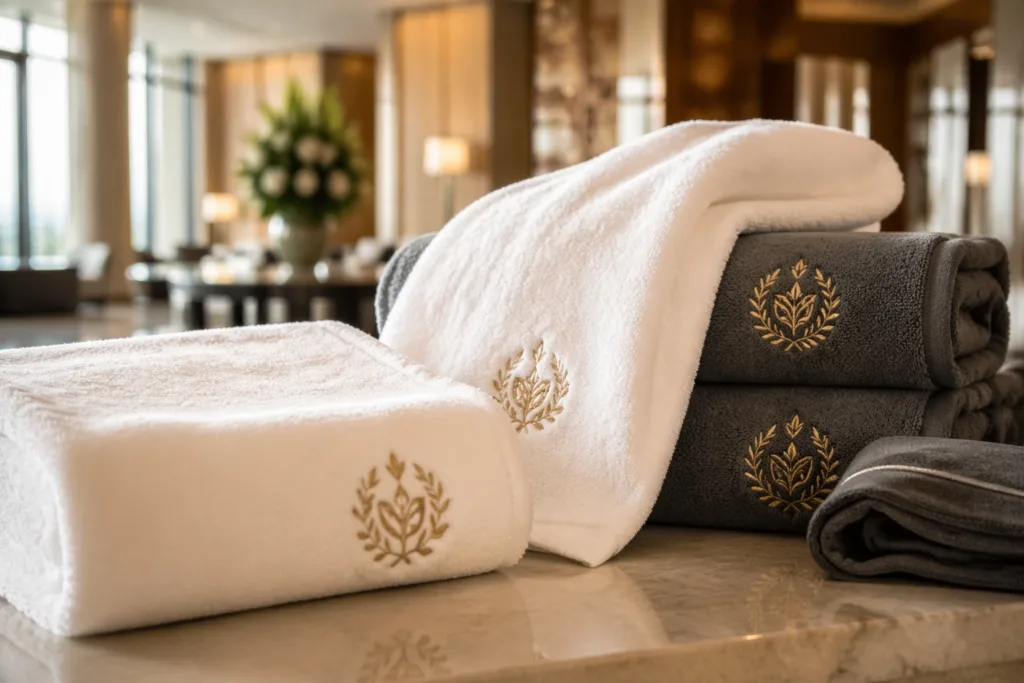
Material selection is foundational when creating custom hand towels with logo. Cotton, microfiber, and bamboo each offer unique benefits and drawbacks that influence feel, absorption, logo clarity, and practical durability.
Cotton: Pure cotton remains the most popular base for branded towels, especially combed or ringspun types. Cotton is soft, breathable, and highly absorbent, which is ideal for spas, hotels, and wellness sectors. Cotton’s thick pile absorbs embroidery threads well, maintains clarity with woven jacquard, and supports reactive or digital printing.
Microfiber: Microfiber towels are engineered from synthetic fibers, often polyester-polyamide blends. They excel at quick drying and high absorbency despite being thin and lightweight, making them popular for sports, gyms, and promotional events. Microfiber accepts printing with sharp detail but may not offer the plush luxury feel of cotton in high-GSM constructions.
Bamboo (or Bamboo Blends): Bamboo fiber and blends provide natural softness and antimicrobial benefits, appealing to eco-conscious or wellness brands. While softer and less prone to odor, bamboo is less common and typically more expensive. Not all logo decoration methods work equally well—intricate embroidery is more challenging, while printing offers better results.
The best choice depends on your use case and brand goals. Cotton offers universal appeal and superior comfort, while microfiber is practical for bulk promotional towels with logo that require lightweight performance. If you prioritize sustainability and a velvety hand feel, bamboo blends can deliver a premium impression but may require adjustment in logo technique. Circe Towel often works with buyers to match base fabric to intended branding and usage scenarios for optimal performance.
- Pro tip: For hospitality and retail, prioritize cotton. For sports and events, microfiber’s portability and cost mix excel.
- Never overlook GSM selection—higher GSM means plushness and absorbency, but can impact drying speed and shipping cost.
Towel Construction and Manufacturing Techniques
The construction style of your towel dramatically influences how your towel logo will present and perform over time. The four most common constructions are terry, velour, waffle, and jacquard—each suited to distinct branding strategies and application needs.
Terry towels feature prominent loops and maximize absorbency, making them a classic choice for hotels and spas. Logos can be embroidered for depth or applied via woven labels. However, intricate printed details may lose crispness due to surface texture.
Velour towels are sheared for a smooth, plush finish on one side—ideal for clear, vibrant printed logos and promotional towels. While less absorbent than pure terry, velour is perfect for beach or gift towels where touch and visual impact matter most.
Waffle construction weaves a grid pattern for fast-drying, lightweight performance. Best for sports or travel, waffle towels display printed or embroidered logos with decent clarity, though deep textures can limit fine details.
Jacquard towels use specialized weaving to embed logo graphics directly into the fabric. This method delivers unmatched durability and colorfastness, supporting two- or three-color designs with remarkable longevity after repeated washing. Jacquard is exceptional for private label or luxury towels, but not every logo (especially complex or gradient-heavy marks) can be executed perfectly.
| Towel Construction | Best For | Logo Technique | Visual Outcome |
|---|---|---|---|
| Terry | Hospitality, wellness | Embroidery, woven label | Subtle depth, tactile |
| Velour | Beach, promo | Printing | Sharp, vibrant |
| Waffle | Sports, travel | Printing, embroidery | Crisp, light |
| Jacquard | Luxury, private label | Woven design | Durable, colorfast |
Whether prioritizing tactile quality, logo sharpness, or resilience, choosing the right towel base is crucial. Circe Towel’s manufacturing experience suggests matching construction to intended use—think terry for spa hand towels, velour for gift items, jacquard for brand identity, and waffle for active sports lines.
Effective Logo Placement Strategies
Determining where to place your towel logo is just as critical as the branding method itself. Optimal logo placement ensures your design is visible, professional, and consistent with industry expectations for custom towels with logo.
- Corners: Embroidering or printing the logo in one corner (often lower right or left) creates subtlety and allows for universal folding. This is the default for high-end hospitality and most bath towels.
- Center/Edge: Center logo placement draws focus and is outstanding for gym or promotional towels. Edge placements—on the border or band—are effective for jacquard and woven logo effects.
- Band (Border) Area: Placing the logo within or just above the border branding area is precise, especially for large bath or hand towels. This location provides a consistent brand view regardless of towel folding.
Consider towel type when deciding placement: Bath towels often favor a discrete corner or border, beach towels allow larger, central logos, and gym/sports towels can showcase larger marks for energetic visibility. Test your design at real-life scale and avoid tiny logos that fade visually when the towel is in use or folded. Circe Towel recommends proofing logo readability against fabric pile or pattern in sampling stages, as contrast can shift in production.
Designing Logo Towels: Color and Detail Considerations
Logo clarity and brand consistency depend heavily on color selection, number of colors, and detail handling—especially for promotional towels with logo in bulk production.
Colorfastness: Premium towel production uses high-quality dyes to lock in color and resist fading from repeated laundering. Screen, digital, or reactive printing methods all perform differently. Always specify your Pantone or color codes to match corporate guidelines as closely as possible.
Color Count Limitation: Woven and embroidered logos typically support up to six thread colors. Printing can offer unlimited color, but gradients and complex shading are trickier to execute and may not reproduce as sharply due to fabric structures. Fewer colors not only control cost but also reduce production risks and improve visual punch.
Detail Level: The smallest detail that can be rendered depends on the logo method—fine embroidery can blur edges, while woven jacquards are limited by yarn thickness. Simplifying tiny elements, increasing line weight, and enlarging text are easy ways to maintain brand integrity on towels.
Minimize complications by designing with the substrate in mind. Priority should be given to contrast and simplicity. For example, a small script logo may need a bolder or alternative mark when used on thick terry fabric. Embroidery works best with solid shapes, while digital print can handle gradients—on smooth surfaces like velour or microfiber.
Consult expert towel factories if unsure how your logo translates to different materials, especially when producing thousands of promotional towels with logo for events or campaigns.
Design & Specification Checklist for Custom Towels
Before starting production of custom hand towels with logo, ensure you’ve covered the core design and technical specifications. This not only streamlines procurement but also minimizes rework and costly mistakes.
| Specification | Choices/Notes |
|---|---|
| Size | Standard (e.g., 30x30cm, 35x75cm), or custom per campaign |
| GSM | 250–350 (light, promo), 400–550 (retail, hotel), 600+ (luxury) |
| Material | Cotton, microfiber, bamboo, blended |
| Edge Finishing | Double-stitched, hemmed, taped, decorative |
| Logo Method | Embroidery, reactive print, digital print, jacquard, label |
| Packaging | Bulk/OEM polybag, single pack, custom gift box, sleeve |
Alongside these, always specify quality targets: absorbency (measured by ISO test, or typical ml/gm), softness (“hand feel” evaluation), and colorfastness (rubbing/wash grade). For projects demanding exceptional presentation, clarify packaging requirements—gift boxes for retail, branded pouches for gym, or bulk-packed by color for easy inventory control. Partner with suppliers who can offer flexibility and guidance in balancing cost, lead time, and finish.
Ensuring Quality Through Testing
Quality assurance is key for towel logo projects. This isn’t just about first impressions; it’s about building brand trust over the product’s lifecycle.
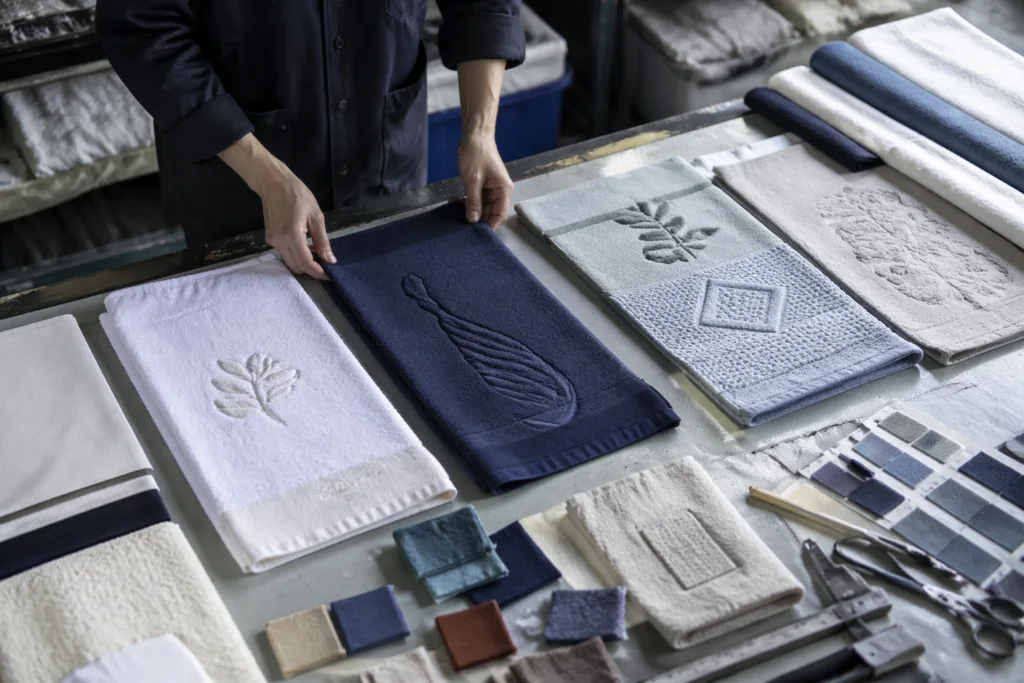
Standard industry tests include:
- Absorbency Test: Measures how quickly and how much liquid the towel absorbs. Poor absorbency can ruin user experience and reduce perceived quality.
- Wash Durability: Simulates repeated laundering to check for color fading, shape change, or pilling. Critical for towels used in hotels, gyms, and spas.
- Shrinkage: Assesses fabric and stitching integrity post-wash. High shrinkage ruins sizing and logo alignment.
- Colorfastness: Confirms color stability—especially vital for multicolor towel logo applications to avoid bleeding or fading.
Other benchmarks include edge stitching consistency, lint control (especially with high-GSM cotton), and logo technique durability. For example, embroidery may fray if base GSM is too low, or digital prints may blur on overly plush fabrics. To avoid pitfalls, request test reports or reference samples from your towel supplier before placing a bulk or private label order. Circe Towel’s QA system checks all major points, helping buyers avoid common production and branding issues.
Industry Applications for Logo Towels
Custom logo towels shine across diverse sectors, from hospitality to sports to promotional gifting. Each application requires careful matching of towel type and branding method to audience and usage scenario.
Hospitality: Hotels and spas use custom towels with subtle jacquard or embroidered logos to elevate guest experience and reinforce premium brand perception. Consistency in absorbency, whiteness, and GSM ensures predictable wash-life and guest satisfaction.
Sports & Events: Gyms, fitness studios, and tournaments favor lightweight, easily laundered towels. Printed or boldly embroidered logos foster team spirit and repeat visibility—especially with high-turnover wash cycles. Review options like embroidered sports towels for durability.
Promotional & Gifting: For company giveaways, events, and retail premiums, promotional towels with logo deliver lasting brand touchpoints. The right mix of visual appeal, packaging, and function increases “keep” rate. Consider compact microfiber hand towels or striking beach towels for high-traffic events.
Your audience dictates your choices: hospitality leans toward classic, plush cotton finishes; sports and events need resilient, quick-dry microfiber; promotions thrive on vivid printing and creative packaging. Always check that towel grade and branding method match user expectations and brand promise.
Customization Options for Enhanced Branding
The customization method for custom towels with logo dramatically influences visual and tactile qualities, price points, and minimum order requirements.
- Embroidery: Offers a premium, three-dimensional look with excellent wash durability—ideal for luxury, corporate gifting, or low-color count marks.
- Printing (Screen/Digital/Reactive): Enables detailed or multicolor designs, flexible placement, and vivid reproduction on smooth surfaces. Digital printing is excellent for small runs and photorealistic graphics.
- Jacquard Weaving: Embeds logo into the structure itself, providing zero-fade performance and a luxury feel. Suitable for elegant branding but best with simple, high-contrast marks.
- Labels/Tags: Sewn logo labels can enhance brand presence and information (e.g., for care or marketing).
Enhancements such as decorative borders, piping, or contrast stitching can frame the logo for additional impact. Don’t overlook the role of packaging—custom sleeves, boxes, or pouches not only attract attention but can drive home your brand message across sales channels. For an in-depth look, see our logo towel technique comparison guide.
Common Mistakes and Troubleshooting in Logo Towels
Sourcing custom towels with a towel logo can go awry if common pitfalls are overlooked.
Inappropriate GSM: Towels that are too thin lack absorbency and perceived value, while excessively thick towels take too long to dry and increase logistics costs. Not matching GSM to end-use reduces both user satisfaction and product lifecycle.
Poor Fabric Choice: Selecting the wrong base impacts softness and branding. Microfiber can appear cheap in retail or hospitality, whereas plush cotton may raise costs unnecessarily for mass promotions.
Logo Fading or Distortion: Using untested dyes or detailing methods mismatched to towel construction leads to muddy graphics or thread breakage after just a few washes.
Weak Absorbency & Rough Hand Feel: Common with low-grade yarns or poorly finished towels—hurts brand trust and repeat business.
Best practices: Always sample before confirming, use reference standards, and clarify specifications with your supplier—especially where logo technique, thread type, and pile height interact. Internal audits and third-party QC checks help catch errors before your logo towels reach the end user.
Ordering Guide for Custom Logo Towels
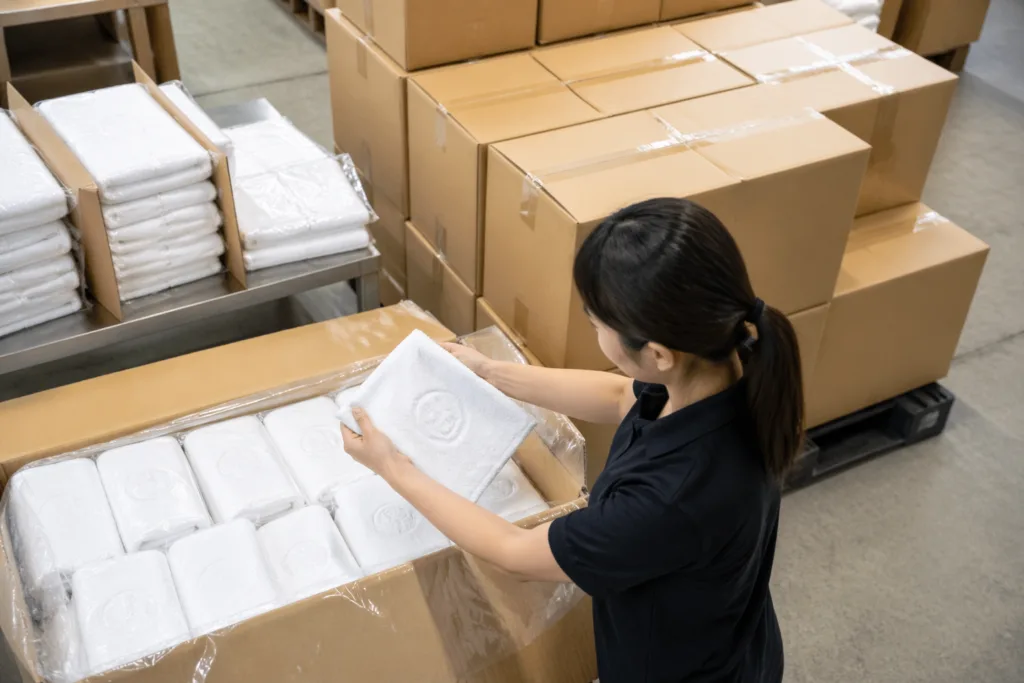
Smooth procurement of custom hand towels with logo starts with clear processes and realistic expectations around quantity, timing, and proofing.
- MOQ (Minimum Order Quantity): Embroidery, jacquard, and custom dyeing often require higher MOQs (300–1000+ pieces), while digital or screen printing can accommodate lower volumes for events or boutique brands.
- Lead Times: Typical lead time for sampling is 10–15 days, full production from 25–45 days depending on method, order size, and seasonality. Build in extra time for shipping if importing.
Artwork Preparation: Submit vector files (AI, PDF, EPS) with Pantone or CMYK references for accurate color matching. Confirm print area, size, and technique based on preproduction proofs.
Sampling Process: Always review physical or digital samples. Approve colors, placement, and all logo treatments before greenlighting mass production.
Shipping and Packaging: Specify packaging needs (bulk or retail-ready), carton marking, and split shipments if applicable. Ask about logistics partners or freight consolidators for cost-efficient transport. For a step-by-step order checklist, reference resources like our brand launch checklist.
Frequently Asked Questions
What is the best fabric for logo towels?
Cotton is the most versatile and widely chosen fabric for logo towels due to its balance of softness, absorbency, and branding compatibility; microfiber works well for lightweight, quick-dry needs, and bamboo blends serve eco-premium markets.
How long does manufacturing take for custom towels with logo?
Typical production lead time is 25 to 45 days after final sample approval, but complex orders or peak factory schedules can extend this; sampling usually takes 10–15 days, plus shipping time to your destination.
What is the recommended logo size and placement for most towels?
For standard hand or bath towels, a 7–12cm logo in the lower corner or within the border area is preferred; for beach or gym towels, consider central placement for greater visibility but confirm scale doesn’t overpower the design.
Are there color or detail limitations for promotional towels with logo?
Yes, embroidery and jacquard are best kept to six or fewer solid colors and simplified details, while screen or digital printing allows more complex graphics but requires clean edges and adequate contrast for best results.
Which branding method is most durable for frequent laundering?
Jacquard weaving and quality embroidery offer superior wash durability and color retention for high-use towels; reactive or screen printing works if proper dyes and curing are used but may fade faster in heavy-use environments.
How do I manage bulk towel shipping and packaging?
Clarify packaging (bulk or retail), request carton marking, and coordinate with your supplier for consolidated freight or door-to-door logistics; accurate order specs and packing lists reduce shipping errors and customs delays.
Related Reading
- Buyer’s Guide to Customizable Towel Materials and Branding Decisions
- Choosing the Right Logo Method: Embroidery, Jacquard, or Printing?
- Your Step-by-Step Factory Checklist for Smooth Towel Sourcing
- How Brands Ensure Towel Quality and Consistency Before Shipping
- Expert Tips for Auditing a Towel Supplier for B2B Orders