
For professional towel buyers, lead time is not just a delivery date. It is a planning tool.
A hotel group preparing for a new opening, a retail brand launching a seasonal collection, an importer arranging container space, or an Amazon seller planning inventory replenishment cannot rely on vague promises such as “fast delivery” or “soon.” They need to understand what actually happens between the first inquiry and the final delivery.
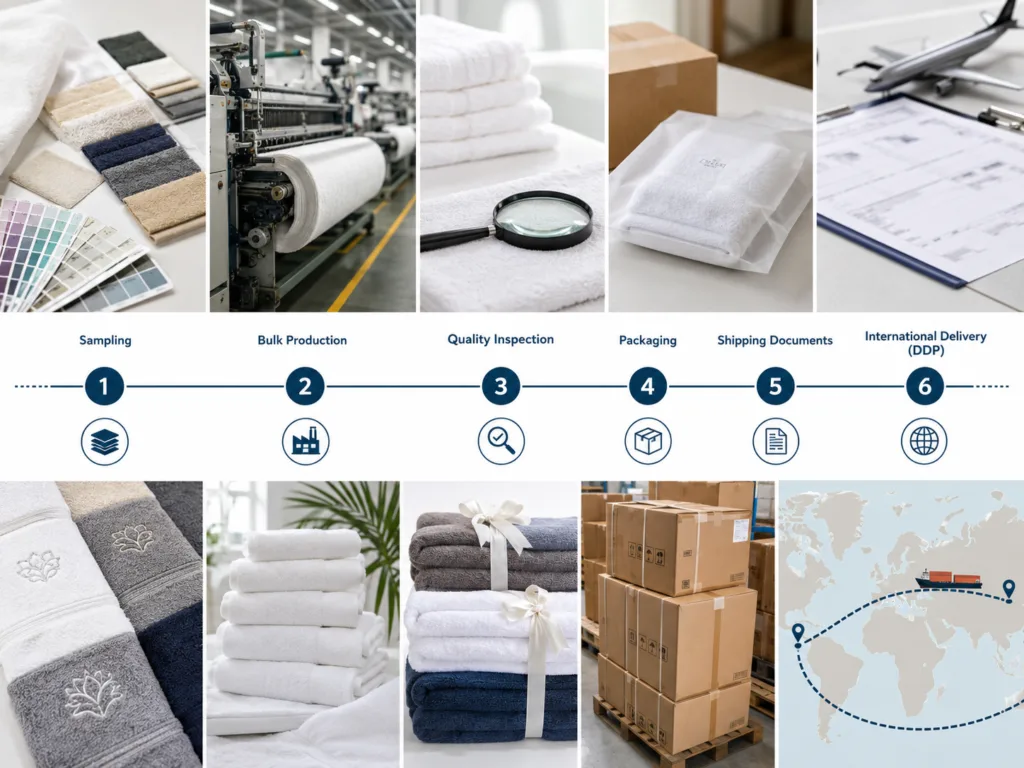
Towel lead time depends on more than factory capacity. It is shaped by fabric selection, GSM, size, color, logo method, packaging, quality inspection, order quantity, certification requirements, and shipping method. A stock white hotel towel with simple carton packing can move much faster than a custom-dyed retail towel set with embroidery, woven labels, belly bands, barcode labels and DDP sea freight delivery.
This guide explains the complete towel order timeline from a buyer’s point of view: sampling, bulk production, quality control, retail packaging and DDP shipping. It is written for wholesalers, hotel buyers, retail brands, importers and e-commerce buyers who need to plan large towel orders with fewer surprises.
1. Why Towel Lead Time Matters for Bulk Buyers
Many towel inquiries start with one question:
“How soon can you ship?”
It is a reasonable question, but it is rarely enough. A professional supplier cannot confirm a reliable lead time without knowing the product structure and order details.
A towel order may involve:
- Yarn or fabric preparation
- Weaving or knitting
- Dyeing or color matching
- Washing and softening
- Cutting and sewing
- Logo embroidery, jacquard, printing or woven label application
- Absorbency and color fastness checks
- Folding and retail packaging
- Carton packing
- Export documentation
- Air, sea, express or DDP shipping
Each step takes time. More importantly, some steps cannot begin until the previous one is approved. For example, bulk production should not start before the sample is confirmed. Packaging cannot be finalized if the buyer has not approved the label, barcode, hang tag or carton mark.
For mature buyers, lead time should be managed from the beginning of the sourcing process, not after the purchase order is placed.
2. Typical Towel Lead Time: A Practical B2B Timeline
The exact timeline depends on product type, customization level and destination country, but a typical custom towel project often follows this structure:
| Stage | Typical Time Range |
| Requirement confirmation | 1–3 days |
| Stock sample preparation | 3–7 days |
| Custom sample development | 7–15 days |
| Sample shipping | 5–10 days |
| Sample review and approval | 2–7 days |
| Bulk production | 20–35 days |
| Logo, label and packaging work | Included or +5–10 days |
| Quality inspection and carton packing | 3–7 days |
| DDP air shipping | 7–15 days |
| DDP sea shipping | 25–45+ days |
This is not a fixed promise. It is a planning framework. Large orders, custom colors, peak-season production, multiple SKUs, retail packaging and destination customs procedures can all extend the timeline.
A useful rule for buyers is this:
Towel lead time should be calculated from sample approval, not from the first inquiry.
The first inquiry is the start of discussion. Sample approval is the real starting point for controlled production.
3. Sampling Lead Time: Why It Is Worth Planning Carefully

Sampling is not a formality. For a serious bulk towel order, the sample stage protects the buyer from costly mistakes.
A towel sample helps confirm:
- Fabric hand feel
- GSM and thickness
- Absorbency
- Size after washing
- Color direction
- Edge sewing quality
- Logo position and scale
- Packaging appearance
- Overall retail or hospitality presentation
For stock towels, sampling is faster because the towel already exists. The buyer can quickly check fabric quality, touch, size and absorbency before deciding whether to proceed.
For custom towels, sampling takes longer because the supplier may need to prepare a specific size, GSM, color, logo and packaging format. A custom sample is not just a towel. It is a small preview of the final product.
Stock Towel Samples
Stock towel samples are usually suitable when the buyer wants to test:
- Basic quality level
- Existing colors
- Standard hotel towel sizes
- Existing yoga towel or microfiber towel options
- Low-MOQ logo decoration possibilities
- Fast sample review before a larger order
This is often the best path for buyers who need speed or who are still evaluating suppliers.
Custom Towel Samples
Custom samples are better when the buyer has a specific product plan, such as:
- Hotel towel with embroidered logo
- Retail bath towel set with private label packaging
- Yoga towel with silicone anti-slip dots
- Beach towel with full-surface print
- Microfiber towel with brand-specific color and size
- Gift towel set with box packaging
Custom sampling normally requires more communication. Buyers should prepare artwork files, Pantone color references, towel size, GSM target, material preference and packaging requirements before asking for a sample.
4. Fabric and Material: How They Affect Lead Time
Material choice has a direct impact on both production time and product performance.
Cotton Towels
Cotton remains one of the most common choices for bath towels, hotel towels and spa towels because it is soft, absorbent and familiar to consumers. Cotton is a natural cellulose fiber, and its comfort and moisture absorption make it especially suitable for towels used against the skin. Cotton Incorporated, a not-for-profit research and promotion organization for cotton, describes its work as covering the full cotton lifecycle from fiber through finished product, which reflects how much fiber choice matters in textile performance.
Cotton towels are widely used for:
- Hotel bath towels
- Hand towels
- Face towels
- Spa towels
- Retail towel sets
- Premium home textile collections
However, cotton towel lead time can vary depending on yarn count, weaving structure, dyeing requirements and washing process.
Microfiber Towels
Microfiber towels are common in yoga, sports, travel, gym and car wash categories. They are lightweight, quick-drying and suitable for printing. However, microfiber towels may involve different production steps from cotton terry towels, especially if they require anti-slip backing, silicone dots, sublimation printing or special edge stitching.
Bamboo Blended or Specialty Towels
Some buyers request bamboo blends, recycled fibers or other specialty materials for sustainability positioning. These may require longer lead times because the fabric may not always be available in stock. If certification or traceability is required, the buyer should confirm this early.
5. GSM and Absorbency: Why Weight Is Not the Only Quality Standard
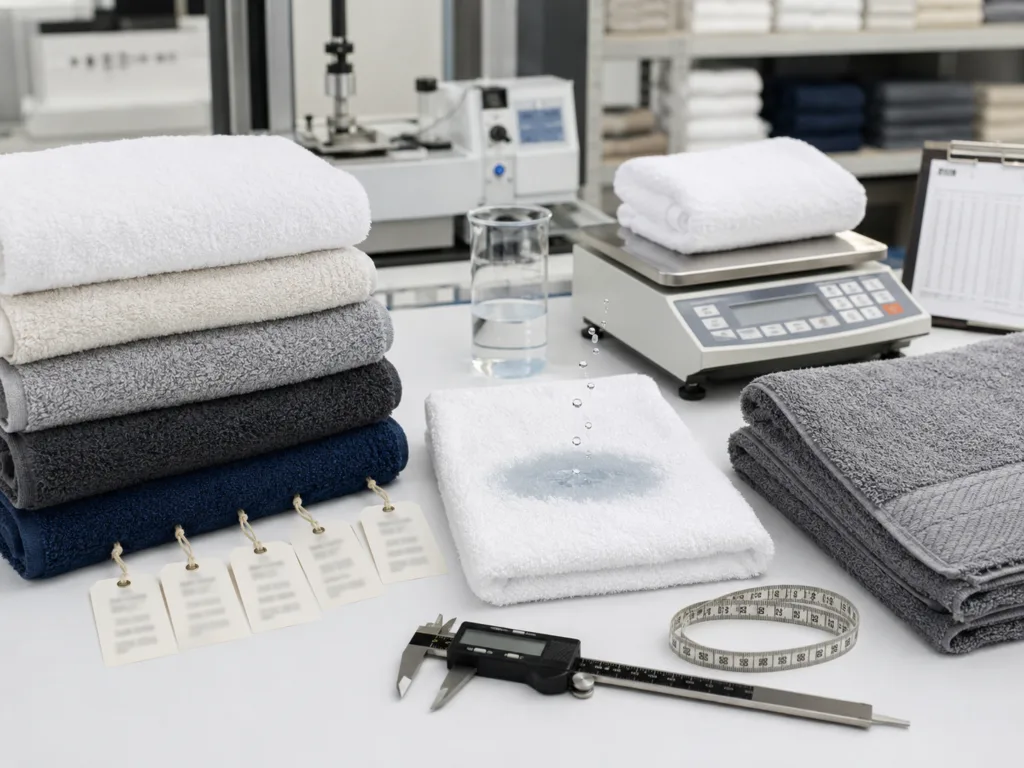
GSM means grams per square meter. It is one of the most common towel specifications, but it should not be used alone to judge towel quality.
A higher GSM towel is usually thicker and heavier, but not always better for every market. A luxury hotel bath towel may need a plush hand feel and high absorbency. A gym towel may need to dry quickly. A travel towel may need to be lightweight. A beach towel may need a large surface area and attractive print instead of extreme thickness.
Common GSM references:
| Towel Type | Common GSM Range | Buyer Priority |
| Lightweight gym towel | 250–400 GSM | Quick drying, low bulk |
| Retail bath towel | 400–600 GSM | Softness, absorbency, shelf appeal |
| Hotel bath towel | 500–700 GSM | Durability, wash performance |
| Luxury spa towel | 600–800 GSM | Plush feel, premium experience |
| Beach towel | 300–500 GSM | Size, design, portability |
| Microfiber towel | Often lower GSM | Compact, fast-drying |
Absorbency depends on more than GSM. It is also affected by fiber quality, yarn twist, weaving density, finishing process, washing treatment and chemical softeners. Too much softener can make a towel feel nice at first touch but may reduce absorbency. This is why professional buyers should evaluate hand feel and water absorption together.
A good sample review should include:
- Touch and softness
- Water absorption test
- Lint level
- Thickness
- Weight consistency
- Size after washing
- Edge sewing strength
- Color bleeding risk
For hotels and repeat retail programs, wash performance is especially important. The towel must remain usable after multiple laundry cycles, not just look good in a sample photo.
6. Application Scenarios: Different Towels Have Different Timelines
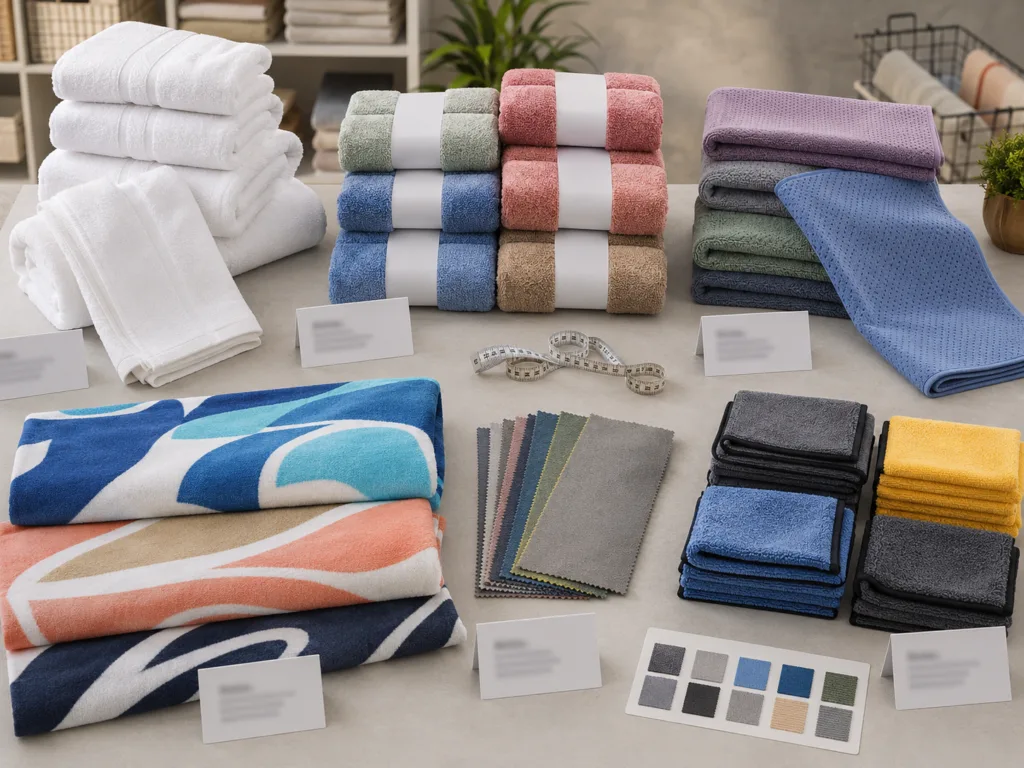
Not all towel orders follow the same production logic. The application scenario matters.
Hotel Towels
Hotel towel buyers usually care about durability, absorbency, whiteness, GSM consistency and bulk laundry performance. Common products include bath towels, hand towels, face towels, bath mats and pool towels.
Lead time may be faster if the buyer chooses standard white towels with embroidery. It may be longer if the order requires custom size, special border design, dyed color or jacquard logo.
Hotel buyers should confirm:
- Towel size
- GSM
- Cotton type
- Logo method
- Laundry durability expectations
- Carton quantity
- Replacement order plan
Retail Bath Towels
Retail buyers care not only about towel quality but also shelf presentation. A retail towel order may require:
- Custom colors
- Size sets
- Woven labels
- Hang tags
- Belly bands
- Barcode labels
- Gift boxes
- Polybags
- Carton marks
- Retail compliance information
Packaging approval can become a major lead time factor. If the towel is ready but the barcode label, hang tag or carton mark is not approved, shipment may still be delayed.
Yoga Towels and Sports Towels
Yoga towels may involve microfiber fabric, silicone anti-slip dots, printed patterns and special sizes. For hot yoga and studio use, absorbency, grip and wash durability are more important than thickness.
Lead time can increase when the buyer needs:
- Custom silicone dot pattern
- Pantone-matched fabric
- Full-surface print
- Logo placement
- Individual packaging
- Multiple color options
Beach Towels
Beach towels are often larger and more design-driven. They may use reactive printing, digital printing, jacquard weaving or velour finish. Because beach towels are seasonal products, buyers should plan earlier before summer demand.
For beach towel importers, delays often come from artwork revisions, color matching and packaging changes.
Microfiber Car Wash Towels
Car wash towels are performance products. Buyers care about lint level, edge type, absorbency, GSM, size and scratch-free use. Lead time depends on fabric availability, color, edge sewing and packaging.
7. Size and Shrinkage: A Small Detail That Can Affect the Whole Order
Towel size is not always as simple as cutting fabric to a requested measurement. Cotton towels may shrink after washing. A professional supplier should consider finished size, pre-wash size and shrinkage tolerance.
Common towel sizes include:
| Product | Common Size |
| Face towel | 30 × 30 cm / 30 × 50 cm |
| Hand towel | 35 × 75 cm / 40 × 80 cm |
| Bath towel | 70 × 140 cm / 76 × 152 cm |
| Bath sheet | 90 × 160 cm / 100 × 180 cm |
| Yoga towel | 183 × 61 cm / 183 × 68 cm |
| Beach towel | 80 × 160 cm / 90 × 180 cm |
| Gym towel | 30 × 100 cm / 40 × 100 cm |
For bulk buyers, the key question is not only “What size can you make?” but also:
What is the size tolerance after production and washing?
This matters for retail packaging, shelf display, carton planning and customer satisfaction.
8. Logo Customization: Embroidery, Jacquard, Printing and Labels
Logo work is one of the most common causes of sampling delays.
Embroidery
Embroidery is common for hotel towels, spa towels and premium gift towels. It looks durable and professional, but the supplier needs a clear logo file and must digitize the artwork before production.
Embroidery lead time depends on:
- Logo complexity
- Stitch count
- Logo size
- Thread color
- Placement
- Sample approval
Small text may not embroider clearly on thick terry fabric. Buyers should be open to adjusting logo size for better results.
Jacquard Logo
Jacquard is woven into the towel structure. It is suitable for large-volume orders but usually requires more preparation than embroidery. It may involve longer sampling and production time because the design is part of the weaving process.
Printing
Printing is common for beach towels, microfiber towels and promotional towels. Artwork quality, color separation, fabric type and printing method can all affect timing.
Woven Labels and Private Label Branding
Woven labels are useful for retail brands and importers. However, labels require their own production time. If the buyer wants custom labels, hang tags and packaging together, these should be approved before bulk towel production is completed.
9. Packaging Lead Time: The Hidden Timeline Many Buyers Forget
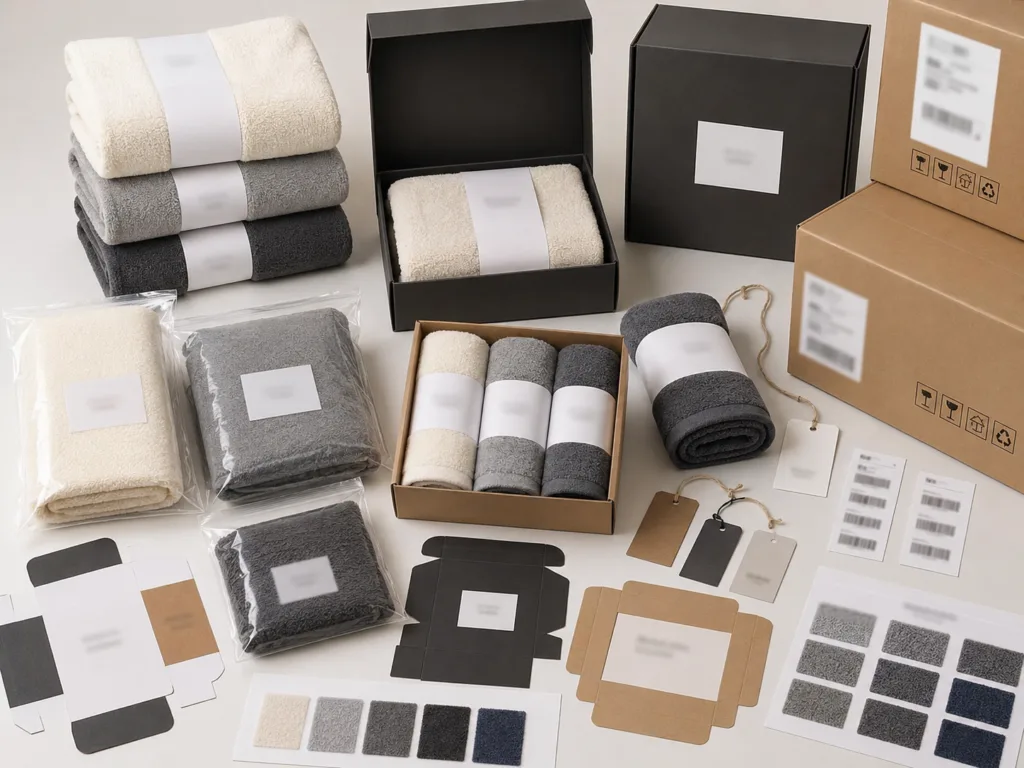
Packaging is often underestimated.
For B2B towel orders, packaging can include:
- Individual polybags
- Paper belly bands
- Hang tags
- Woven labels
- Barcode stickers
- Gift boxes
- Carton dividers
- Master cartons
- Shipping marks
- Amazon FBA labels
- Retail compliance labels
A hotel buyer may only need bulk carton packing. A retail buyer may need a complete shelf-ready presentation. An Amazon buyer may require barcode labels, carton size control and specific outer carton information.
Packaging affects lead time because it often involves printing. Printed belly bands, hang tags, labels and boxes require artwork confirmation, material selection, proofing and production.
To avoid delays, buyers should prepare:
- Logo file
- Brand color
- Barcode information
- Packaging dieline
- Label text
- Country of origin requirements
- Carton mark requirements
- Retail channel requirements
OEKO-TEX® STANDARD 100 is often requested in textile sourcing because it verifies that textile products have been tested for harmful substances. The official OEKO-TEX description states that STANDARD 100 applies from yarn to finished product and is used as a textile safety label. For towels used in hotels, spas, retail and children’s products, buyers should clarify certification needs early because certification scope, label claims and supplier documentation can affect sourcing and approval time.
10. Bulk Production Lead Time: What Happens After Sample Approval
After the buyer approves the sample, the factory can move into bulk production. For custom towels, this may include yarn preparation, weaving, dyeing, washing, sewing, logo customization and packing.
A typical production flow may look like this:
- Final specification confirmation
- Purchase order and deposit
- Yarn or fabric preparation
- Weaving or knitting
- Dyeing or printing
- Washing and finishing
- Cutting and sewing
- Logo embroidery, label or other branding
- In-line quality control
- Final inspection
- Folding and packaging
- Carton packing
- Shipping document preparation
Large orders are not simply “more pieces.” They require production coordination. A 500-piece order, a 5,000-piece order and a 50,000-piece order may need very different scheduling, especially if there are multiple colors, sizes and packaging formats.
For mature buyers, it is useful to confirm production capacity before placing the order:
- How many pieces per day can be produced?
- Are all colors made in the same batch?
- What is the color tolerance?
- Is pre-shipment inspection available?
- Can the supplier support repeat orders?
- Can the supplier reserve fabric or yarn for future replenishment?
These questions are more useful than simply asking for the shortest possible lead time.
11. Quality Control: Why Inspection Time Should Not Be Removed
When buyers are under pressure, they may ask the supplier to ship immediately after production. This can be risky.
Towel quality inspection should check:
- Size tolerance
- GSM consistency
- Color difference
- Absorbency
- Sewing quality
- Loose threads
- Stains or contamination
- Logo position
- Label accuracy
- Packaging accuracy
- Carton quantity
- Carton marks
For hotels, quality control protects brand experience. For retailers, it protects sell-through and reduces returns. For importers, it protects long-term customer relationships.
A few extra days of inspection and packing can prevent much bigger problems after arrival.
12. DDP Shipping Lead Time: Convenience With More Planning

DDP shipping is attractive to many overseas buyers because it simplifies importing. Under Delivered Duty Paid, the seller takes responsibility for delivering goods to the named destination, including export and import formalities, duties and taxes. The International Trade Administration lists DDP as “Delivered Duty Paid” to the named place of destination. Maersk also explains that DDP places maximum responsibility on the seller, including export clearance, import clearance and payment of duties or taxes.
For buyers without their own freight forwarder, DDP can be useful because it reduces the need to manage customs procedures directly.
However, DDP shipping is not magic. It still depends on:
- Destination country
- Product HS code
- Carton size and weight
- Air or sea freight option
- Customs clearance speed
- Import duty and tax calculation
- Final delivery address
- Peak season congestion
DDP Air Shipping
DDP air shipping is faster and suitable for urgent orders, samples, small replenishment orders or higher-value towel products. It is usually more expensive than sea shipping but can help buyers meet launch dates.
DDP Sea Shipping
DDP sea shipping is more suitable for large towel orders because towels are bulky. Bath towels, beach towels and hotel towels can take significant carton volume, so sea shipping is often more cost-effective for wholesale orders.
The trade-off is time. DDP sea shipping may take several weeks depending on destination and customs clearance.
13. How Buyers Can Shorten Towel Lead Time
A good supplier can manage production, but buyers also play a major role in shortening lead time.
The fastest towel projects usually have clear specifications from the beginning.
Buyers should prepare:
- Towel type
- Size
- GSM
- Material
- Color reference or Pantone code
- Quantity by SKU
- Logo file
- Logo size and position
- Packaging method
- Barcode and label information
- Delivery address
- Preferred shipping method
- Target delivery date
The more complete the information, the faster the supplier can quote, sample, schedule production and arrange shipping.
A practical inquiry should look like this:
“We need 5,000 cotton bath towels, 70 × 140 cm, 600 GSM, white, embroidered logo at bottom center, individual polybag, 20 pieces per carton, DDP shipping to California, USA. Please quote sample cost, bulk price and estimated lead time.”
This type of inquiry is much easier to process than:
“Please send price for towels.”
14. Common Reasons Towel Orders Are Delayed
Most delays are avoidable. Common causes include:
- Buyer only sends photos without size or GSM
- Logo file is low resolution
- Pantone color is not confirmed
- Packaging design is changed after production starts
- Barcode labels are provided late
- Sample approval takes too long
- Quantity changes after quotation
- Multiple SKUs are added late
- Delivery address is incomplete
- Buyer expects DDP shipping but does not confirm destination details
- Peak season production is not planned early enough
Lead time is a shared responsibility. The supplier manages production, but the buyer controls approval speed and specification clarity.
15. How to Evaluate a Towel Supplier Before a Large Order
For mature buyers, the best supplier is not always the one promising the fastest lead time. It is the one who can explain the timeline clearly and control the details.
Before placing a bulk order, buyers should ask:
- Can you make a sample before bulk production?
- What is the estimated sample lead time?
- What is the estimated production lead time after approval?
- Can you support embroidery, printing, labels and packaging?
- Can you arrange DDP shipping?
- What quality checks are done before shipment?
- Can you support repeat orders?
- Can you provide certification documents if required?
- How do you handle color, size and GSM tolerance?
A professional towel supplier should be able to answer these questions with practical details, not vague promises.
Conclusion: Plan Towel Lead Time Before You Place the Order
Towel lead time is not just about factory speed. It is the result of product decisions, sample approval, material availability, GSM, size, logo method, packaging complexity, quality control and shipping route.
For wholesalers, hotel buyers, retail brands, importers and Amazon sellers, the safest approach is to plan the timeline before production starts.
If your towel order involves custom sizes, private label packaging, logo embroidery, retail barcodes, hotel-grade GSM, multiple colors or DDP delivery, start early. Share complete specifications with your supplier and confirm the sample before moving into bulk production.
A well-planned towel order does more than arrive on time. It protects your launch schedule, reduces quality risk and helps your business build a more reliable supply chain.
For custom towel projects, the most useful first step is simple: prepare your towel type, size, GSM, quantity, logo requirement, packaging plan and destination country. With these details, a supplier can estimate sampling time, bulk production lead time and DDP shipping options much more accurately.
FAQ
1. What is the typical towel lead time for bulk orders?
For custom bulk towel orders, production usually takes around 20–35 days after sample approval. The total timeline may be longer when sampling, packaging, inspection and DDP shipping are included.
2. How long does towel sampling usually take?
Stock towel samples may take around 3–7 days to prepare. Custom towel samples with specific size, GSM, color, logo or packaging usually take around 7–15 days, depending on complexity.
3. Does higher GSM increase towel production time?
Higher GSM itself does not always increase production time, but it may affect yarn usage, weaving schedule, drying time, washing process and carton volume. Custom high-GSM towels may need more planning than standard stock towels.
4. Is DDP shipping suitable for large towel orders?
Yes, DDP shipping can be suitable for large towel orders, especially for buyers who want the supplier to manage export, freight, customs clearance, duties and final delivery. For bulky towel orders, DDP sea shipping is usually more cost-effective, while DDP air shipping is faster but more expensive.