
Importing towels from China can be a strong sourcing strategy for retailers, hotels, car care brands, yoga studios, gyms, spas, wholesalers and private label businesses. But successful towel sourcing is not simply about finding the lowest unit price. For professional buyers, the real goal is to build a repeatable supply chain: stable quality, correct specifications, reliable lead times, compliant labeling, protective packaging and predictable shipping.
China remains one of the most important textile sourcing bases in the world. According to the Observatory of Economic Complexity, China was the leading exporter of cotton terry toilet and kitchen linen in 2024, ahead of India and Pakistan. China also accounted for a major share of global textile exports, which confirms its broad manufacturing depth across yarn, weaving, dyeing, finishing, sewing, packaging and export logistics.
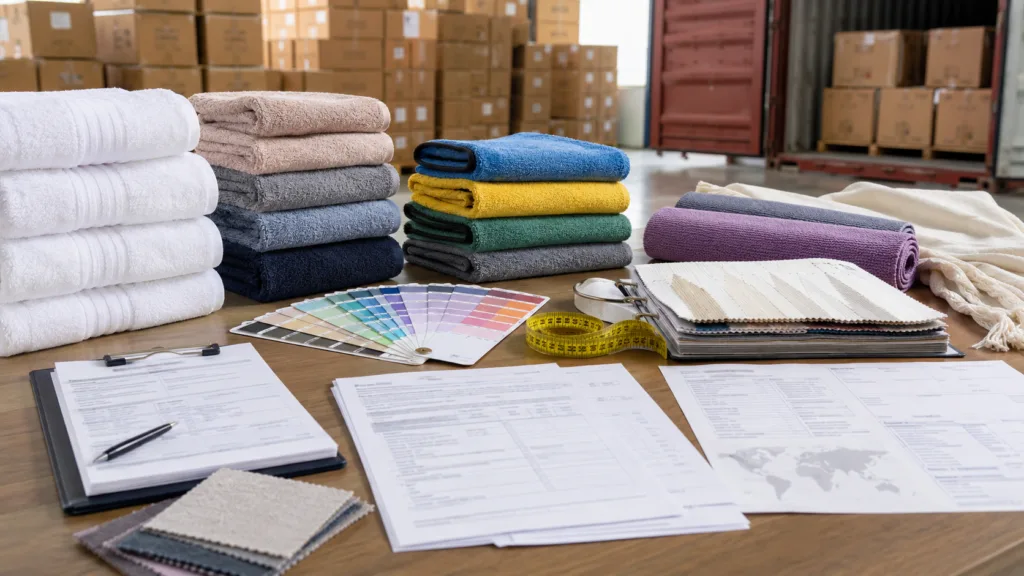
For mature B2B buyers, that scale can be an advantage only when the sourcing process is managed correctly. A poorly specified towel order can lead to inconsistent GSM, weak absorbency, color deviation, excessive lint, shrinkage, rough hand feel, poor logo execution or packaging that does not survive long-distance shipping.
This guide explains how to import towels from China step by step, from supplier selection and sampling to bulk production, quality control and shipping. It is written for buyers who care about commercial results: retail sell-through, hotel guest experience, repeat purchases, brand reputation and long-term supplier reliability.
1. Define the Towel Category Before Asking for Price
The biggest mistake many buyers make is asking, “How much is your towel?” before defining the towel itself. A towel is not a single product. A hotel bath towel, a retail gift towel, a yoga towel and a car wash microfiber towel have completely different performance requirements.
Before contacting a China towel supplier, clarify the category:
Hotel towels
Hotel towels need durability, absorbency, wash resistance and consistent white or dyed color. Buyers usually care about GSM, pile density, softness after repeated laundering, shrinkage and embroidered logo quality.
Retail towels
Retail towel buyers care about visual presentation, packaging, color range, shelf appeal, hang tags, barcode labels, belly bands, gift boxes and brand consistency.
Car wash and detailing towels
Car care towels require surface safety, lint control, absorbency, edge type, GSM, microfiber composition and scratch-free performance. For detailing brands, towel feel alone is not enough; fabric structure and finishing matter.
Yoga and gym towels
Yoga towels need sweat absorption, anti-slip performance, quick drying, soft touch and easy washing. For yoga studios and sports retailers, logo placement and color matching can also affect brand perception.
Beach and resort towels
Beach towels and resort towels often require larger sizes, stronger visual designs, jacquard weaving, reactive printing, fringe options or premium packaging for boutique resorts and gift shops.
Once the category is clear, the supplier can recommend the correct material, GSM, size, production method and packaging solution. Without this step, price comparison becomes meaningless.
2. Prepare a Clear Specification Sheet
A professional towel inquiry should include more than quantity. Serious suppliers can quote faster and more accurately when buyers provide a detailed specification sheet.
At minimum, prepare the following information:
Product type: bath towel, hand towel, face towel, beach towel, gym towel, yoga towel, microfiber towel, car cleaning towel.
Material: 100% cotton, combed cotton, ring-spun cotton, bamboo cotton blend, microfiber, recycled polyester blend or other custom composition.
Size: length and width in cm or inches.
GSM: grams per square meter, one of the key indicators for towel weight and density.
Color: stock color, Pantone color or custom dyed color.
Logo method: embroidery, woven label, jacquard logo, printing, heat transfer or sewn label.
Packaging: bulk carton, individual polybag, belly band, hang tag, gift box, retail-ready carton or private label packaging.
Target market: North America, Europe, Australia, Middle East or other regions.
Order quantity: estimated first order quantity and future replenishment plan.
Compliance needs: OEKO-TEX, recycled material documentation, fiber label, country of origin label or retailer-specific requirements.
For U.S. textile products, the Federal Trade Commission notes that most textile products need labels showing fiber content, country of origin and the identity of the manufacturer or another responsible business. This is why importers should discuss labeling requirements early instead of treating labels as an afterthought.
A strong specification sheet protects both sides. The buyer avoids vague pricing. The supplier avoids wrong assumptions. The final order becomes easier to inspect.
3. Choose the Right China Towel Supplier
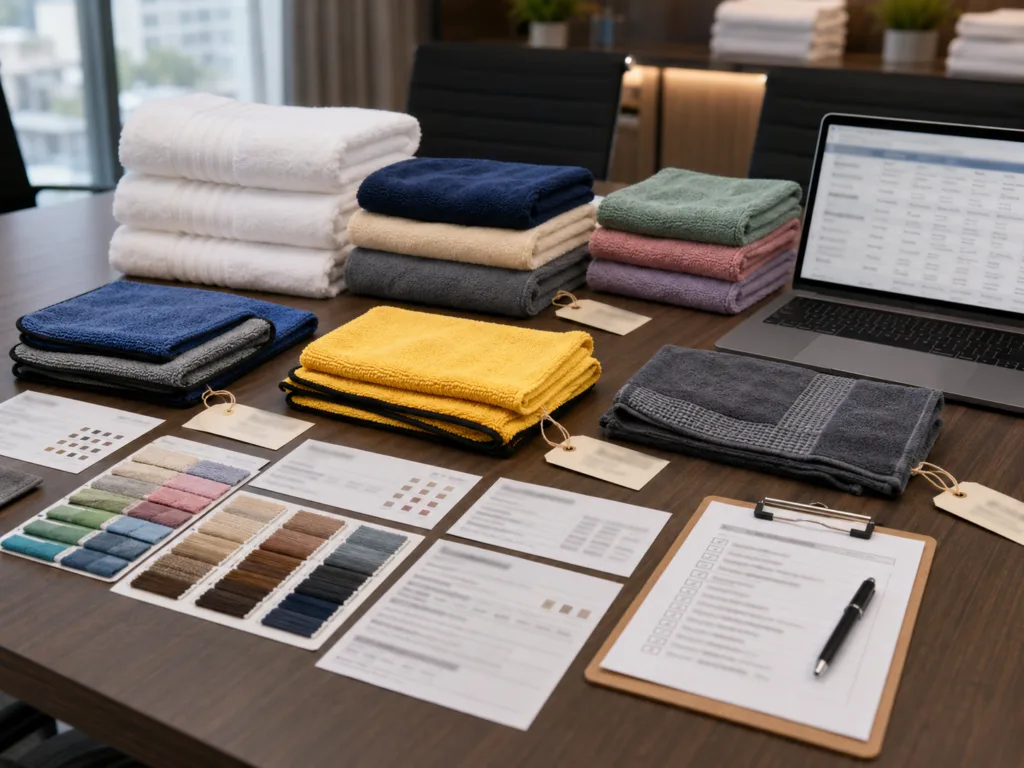
When importing towels from China, the best supplier is not always the cheapest one. The right supplier understands your sales channel, quality expectations and risk tolerance.
A hotel buyer and a car detailing brand do not need the same towel. A retail chain and a yoga studio do not evaluate samples in the same way. Your supplier should be able to discuss the product from your customer’s point of view.
A reliable China towel supplier should be able to explain:
- Suitable material options for your towel category
- GSM differences and cost impact
- Stock color versus custom dyed color
- MOQ for stock towels, light customization and full custom production
- Logo method advantages and limitations
- Sampling lead time
- Bulk production lead time
- Tolerance for size, weight and color
- Packaging options for retail or wholesale
- Export carton strength and packing method
- Inspection process before shipment
- Shipping options and document support
For mature buyers, supplier communication quality is often an early warning signal. If a supplier gives a price without asking about size, GSM, material, logo, packaging or target market, the quote may not be reliable.
Circe Towel supports B2B towel buyers by helping translate business needs into production-ready specifications. For retailers, hotels, car care brands and yoga studios, this means fewer vague discussions and a clearer path from sample to bulk order.
4. Understand MOQ: Stock, Light Customization and Full Custom Production
MOQ depends on the complexity of the towel.
Stock towel with logo customization usually has a lower MOQ because the towel body already exists. This is suitable for testing markets, small hotel projects, yoga studios, promotional projects or first-time retail buyers.
Custom color towels require dyeing and therefore need a higher MOQ. Color matching takes time, and the factory needs to run fabric or yarn dyeing efficiently.
Custom size or custom weaving usually requires a higher MOQ because production must be arranged from the fabric or weaving stage.
Jacquard towels can be more suitable for resorts, gift collections and retail brands that want a woven-in logo or pattern, but they usually need larger quantities than simple embroidery.
Printed beach towels may require artwork review, color separation, printing tests and fabric compatibility checks.
A mature buyer should not only ask, “What is the MOQ?” A better question is:
“What is the most cost-effective production route for my first order and my future repeat orders?”
For example, a retailer may begin with stock colors and custom packaging to test demand, then move to custom dyed colors once sales data proves the product line. A hotel group may start with embroidered stock white towels for one property, then develop a custom GSM and logo standard for multiple locations.
5. Sampling: How to Test Towels Before Bulk Production
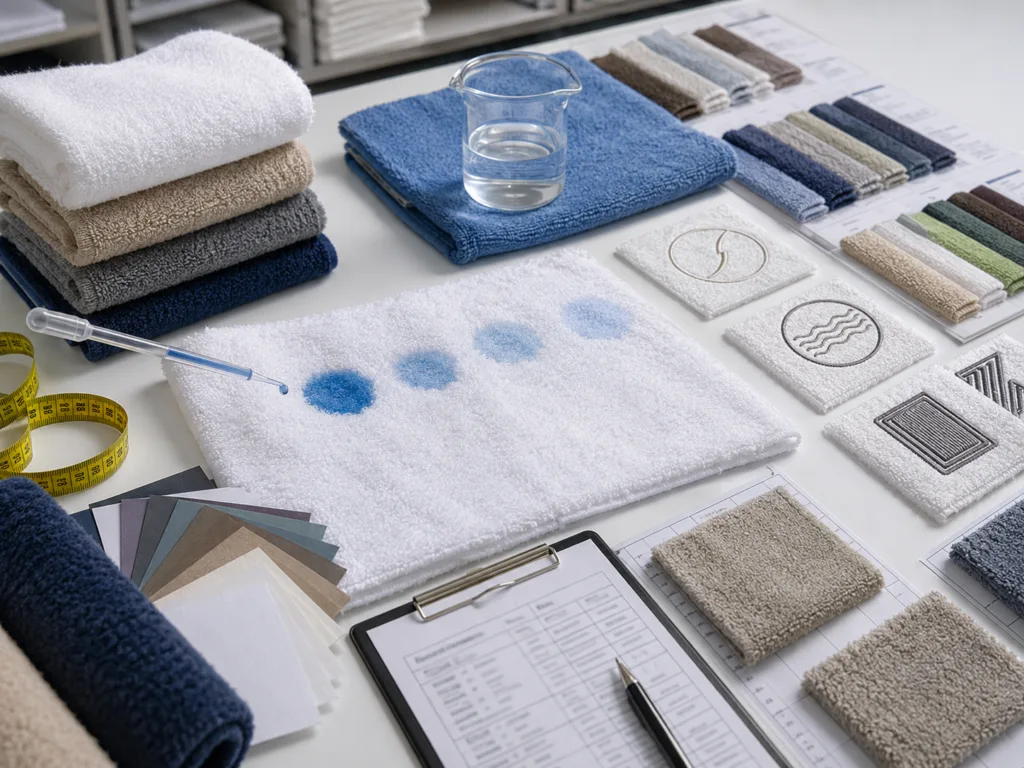
Sampling is where professional buyers reduce risk. A towel sample should not only look good when new. It should perform after washing, handling and real use.
There are generally three types of samples:
Stock sample
Used to check fabric, GSM, hand feel, size and general quality quickly.
Logo sample
Used to confirm embroidery size, thread color, logo placement, woven label, printing effect or jacquard design.
Pre-production sample
Used as the approved reference before bulk production. This sample should match the confirmed material, color, GSM, logo and packaging as closely as possible.
When checking towel samples, evaluate these points:
Hand feel
Softness matters, but softness alone can be misleading. Some towels feel soft because of finishing agents but perform poorly after washing.
Absorbency
For hotel, spa, gym and car wash towels, absorbency is a core performance point. A towel that looks premium but absorbs slowly may disappoint end users.
GSM and density
Higher GSM often suggests a heavier towel, but the right GSM depends on use. A 700gsm towel may feel luxurious for hotels but may be too heavy or slow-drying for gyms.
Lint and shedding
Excessive lint can damage customer experience, especially for dark colors, car detailing towels and hotel laundry operations.
Shrinkage
Shrinkage affects final size, folding, shelf appearance and hotel inventory consistency. Textile dimensional change testing is commonly managed through standardized test methods such as ISO 3759, which covers preparation, marking and measuring of textile specimens for dimensional change tests.
Color fastness
For dyed towels, buyers should check whether color bleeds, fades or stains other items after washing.
Logo execution
Embroidery should be clean, stable and not too stiff. Printing should not make the towel surface unpleasant, especially for beach towels and gym towels.
Packaging test
Retail buyers should test whether belly bands, hang tags, barcode labels and boxes look good after transport. Hotel buyers should check whether bulk packing is practical for storage and distribution.
Circe Towel can assist buyers with stock samples, logo samples and production sample review, helping buyers confirm the correct route before committing to larger quantities.
6. Production Process: From Yarn to Finished Towels
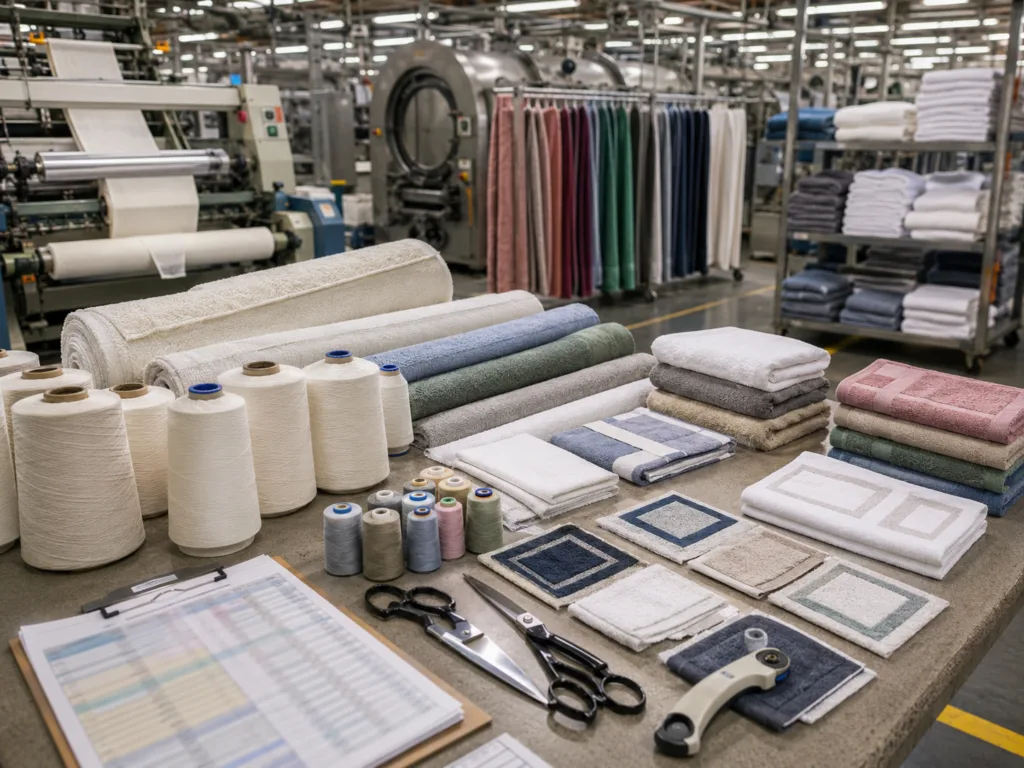
Understanding the production process helps buyers ask better questions and control risk.
A typical cotton towel production process may include:
Yarn selection
The yarn affects softness, strength, absorbency and price. Combed cotton usually gives a cleaner, smoother feel than lower-grade yarn.
Weaving
The towel structure is formed through weaving. Terry loop height, density and construction influence absorbency, texture and hand feel.
Dyeing
For colored towels, dyeing quality affects color consistency, fastness and shade matching. Custom colors usually need lab dips before approval.
Washing and finishing
Finishing affects softness, shrinkage and final appearance. However, over-soft finishing may create a false impression during sampling.
Cutting and sewing
Edges, hems and stitching must be neat and consistent. Poor sewing can make even a good fabric look cheap.
Logo customization
Embroidery, woven labels, jacquard logos and printing should be checked against the approved sample.
Inspection
The factory or supplier should check size, weight, color, defects, stains, broken yarns, skipped stitches, logo placement and packing accuracy.
Packing
Towels are folded, packed, labeled and placed into export cartons according to the confirmed packing method.
For retailers, the most important point is consistency. A towel line must look repeatable across colors, sizes and replenishment orders. For hotels, the main concern is operational durability. For car care brands, fabric performance matters more than decorative packaging. For yoga studios, touch, grip and quick-dry performance often drive repeat purchases.
7. Quality Control Before Shipment
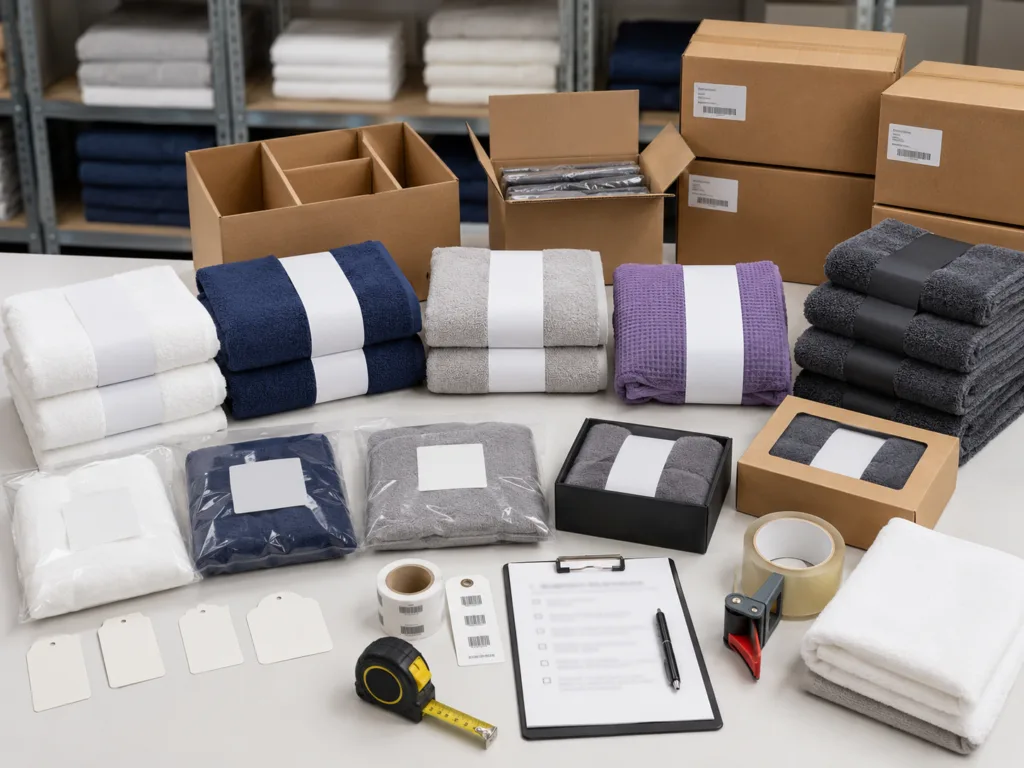
Pre-shipment inspection is not optional for serious orders. It is one of the most important steps when importing towels from China.
A practical towel inspection should include:
- Quantity check
- Size measurement
- GSM or weight check
- Color comparison against approved sample
- Logo position and size check
- Sewing and edge inspection
- Stain, hole, loose thread and broken yarn check
- Packing method check
- Carton label and shipping mark check
- Barcode label check for retail orders
- Random washing test when needed
For hotel towels, buyers should pay extra attention to shrinkage, lint, absorbency and repeated washing performance. For retail towels, packaging appearance and label accuracy matter because the product must be shelf-ready. For car wash towels, lint control, edge type and fabric safety are critical. For yoga towels, anti-slip backing, size stability and sweat absorption should be checked.
Certification can also be part of quality assurance. OEKO-TEX states that its certifications are based on science and are designed to support responsible decisions in textiles and leather goods. Its MADE IN GREEN label, for example, identifies products tested for harmful substances and made under sustainable and socially responsible conditions.
Not every project needs the same certification, but mature buyers should ask early if their market, retailer or end customer requires specific documentation.
8. Packaging: The Hidden Factor in Towel Profitability
Packaging is not just protection. For retail buyers, packaging affects perceived value, shelf presentation and reorder potential.
A towel with weak packaging may arrive compressed, wrinkled, dusty or hard to display. A towel with strong retail packaging can look more premium even before the customer touches it.
Common towel packaging options include:
Bulk carton packing
Best for hotels, spas, gyms, laundries and wholesalers that prioritize cost and efficiency.
Individual polybag
Useful for cleanliness, warehouse sorting and online fulfillment.
Belly band
Good for retail towels, gift towels and boutique collections.
Hang tag
Useful for brand story, material information, care instructions and barcode placement.
Gift box
Suitable for premium retail sets, corporate gifting and holiday collections.
Custom carton marks
Important for importers, distributors and warehouse teams managing multiple SKUs.
For retailers, packaging should be planned together with the towel, not after production. Barcode labels, warning labels, material labels, country of origin information and carton marks should be checked before mass packing.
Circe Towel can help retail buyers develop export-ready packaging, including logo labels, belly bands, hang tags, barcode label placement, carton marks and private label presentation.
9. Shipping Towels from China: Air, Sea, DDP and Incoterms

Towels are bulky products. Shipping cost can significantly affect landed cost, especially for low-value or high-volume items. Buyers should compare not only unit price but also packed volume, carton weight and freight method.
Air freight
Air freight is suitable for samples, urgent replenishment, trade show preparation or small trial orders. It is faster but more expensive.
Sea freight
Sea freight is usually better for bulk towel orders, hotel projects, wholesale replenishment and retail containers. It has a longer lead time but much better cost efficiency for volume.
DDP shipping
DDP may be convenient for buyers who want the supplier or logistics provider to handle duties and delivery. However, it is not always the best option for every country, every order size or every product type. Serious importers should understand what is included and what is not included.
FOB, CIF, FCA and DDP
International trade terms should be clearly agreed before shipment. The International Chamber of Commerce explains that Incoterms are eleven three-letter trade terms reflecting business-to-business practice in contracts for the sale and purchase of goods. The U.S. International Trade Administration also explains common Incoterms such as FOB, CIF, CFR and FAS for sea and inland waterway transport.
For towel buyers, the key is to understand where risk transfers, who pays which cost and who controls the freight. Many new buyers focus only on the product price and discover destination fees later. Mature buyers calculate the full landed cost.
A complete shipping discussion should include:
- Carton size
- Gross weight and net weight
- CBM
- Number of cartons
- Loading port
- Destination port or address
- Shipping method
- Incoterm
- Customs documents
- Import duties and local taxes
- Delivery timeline
- Insurance when appropriate
The World Bank’s Logistics Performance Index measures the speed and connectivity of international supply chains, and its recent dataset covers 2023–2024. For B2B importers, this reinforces a practical point: logistics performance is part of supplier performance, not a separate afterthought.
10. How Circe Towel Helps Retailers and B2B Buyers Import Towels from China
Circe Towel supports international buyers who need more than a basic towel quotation. We work with retailers, hotels, spas, car care brands, yoga studios, gyms, wholesalers and importers to develop towel solutions based on real market needs.
For retailers, we can help with:
- Product category planning
- Material and GSM recommendation
- Stock towel options for lower-risk testing
- Custom color, size and logo development
- Embroidery, woven label, jacquard and printing solutions
- Retail packaging, hang tags, belly bands and barcode label support
- Sample arrangement before bulk production
- Production follow-up
- Pre-shipment inspection support
- Export carton and shipping coordination
For hotels and resorts, we can support bath towels, hand towels, face towels, pool towels, spa towels and embroidered logo towels.
For car wash and detailing brands, we can assist with microfiber towel options, GSM selection, edge finishing, lint control and private label packaging.
For yoga studios and sports retailers, we can support yoga towels, gym towels, anti-slip towel options, logo placement and small-batch stock solutions when suitable.
Our goal is not only to sell towels. Our goal is to help buyers build a stable towel supply chain that can support repeat orders, seasonal launches, hotel projects, retail shelves and long-term brand growth.
11. Common Mistakes to Avoid When Importing Towels from China
Mistake 1: Comparing prices without matching specifications
A 500gsm towel and a 700gsm towel are not the same product. A stock towel and a custom dyed towel are not the same production route.
Mistake 2: Ignoring washing performance
A towel should be judged after washing, not only when it is fresh from the sample package.
Mistake 3: Choosing the wrong logo method
Embroidery may look premium but can feel stiff if the design is too large. Printing may work for beach towels but may reduce softness depending on the method.
Mistake 4: Treating packaging as a last-minute detail
For retail buyers, packaging is part of the product. It affects perceived value, shelf impact and customer trust.
Mistake 5: Not checking labeling rules
Fiber content, country of origin and responsible business identification should be discussed early, especially for retail markets.
Mistake 6: Forgetting landed cost
The cheapest towel may become expensive after freight, duties, destination fees and repacking costs.
Mistake 7: Skipping pre-shipment inspection
Once towels leave the factory, fixing defects becomes costly. Inspection before shipment is far easier than dispute resolution after arrival.
Conclusion: Import Towels from China with a Supply Chain Mindset
To import towels from China successfully, buyers need more than a supplier list. They need a clear product specification, suitable MOQ strategy, reliable sampling, controlled production, professional quality inspection and realistic shipping planning.
For mature B2B buyers, towels are not generic commodities. They are part of the customer experience. A hotel guest notices towel softness and absorbency. A retail shopper notices packaging and color. A car detailing customer notices lint and scratch-free performance. A yoga student notices grip, sweat absorption and comfort.
That is why the right China towel supplier should help you manage both product quality and commercial results.
Circe Towel helps retailers, hotels, car care brands, yoga studios and wholesalers develop towel products that are practical, brand-ready and export-ready. Whether you need stock towel solutions, custom logo towels, private label packaging or bulk production support, we can help you move from inquiry to sample, from sample to production, and from production to shipment with fewer risks and clearer communication.
For your next towel order, start with the right specifications. The better your sourcing process, the stronger your final product will be.
FAQ
1. What is the best way to import towels from China?
The best way is to start with a clear specification sheet, including towel type, material, GSM, size, color, logo method, packaging, quantity and target market. Then confirm samples, approve production details, arrange quality inspection and choose the right shipping method based on order volume.
2. What is the MOQ for custom towels from China?
MOQ depends on the towel type and customization level. Stock towels with logo customization usually have lower MOQ. Custom color, custom size, jacquard weaving or fully customized packaging normally require higher MOQ because they involve deeper production planning.
3. How do I check towel quality before bulk production?
Check hand feel, GSM, absorbency, lint, shrinkage, color fastness, sewing, logo quality and packaging. For professional orders, test the towel after washing instead of judging only by the fresh sample.
4. Can Circe Towel help retailers with private label towel packaging?
Yes. Circe Towel can support custom logo towels, retail packaging, belly bands, hang tags, barcode label placement, gift boxes, carton marks and export-ready packing for retailers, hotels, car care brands, yoga studios and wholesalers.