
Introduction to Towel Packaging
For brands aiming to elevate their presence in retail, hospitality, sports, or promotional markets, private label towel packaging is more than a finishing touch—it’s a strategic asset. The packaging choices you make for towels impact not only how your product is seen but also how it’s remembered. Custom branded towels, complemented by thoughtful packaging, reinforce both value and recognition with every touchpoint.
Effective packaging isn’t just about protection; it’s about storytelling and differentiation. Consumers associate quality, credibility, and brand promise with well-executed packaging—from the initial visual appeal to tactile details during unboxing. Private label towel packaging aligns the product’s core attributes with the intended brand message, helping influence purchasing decisions in both wholesale and retail contexts.
Key packaging elements such as hang tags, care labels, cartons, and curated unboxing experiences are essential. They combine form and function, providing information and shaping perception. In today’s competitive textile industry, getting these details right is crucial for private label towels to stand out.
Key Components of Towel Packaging
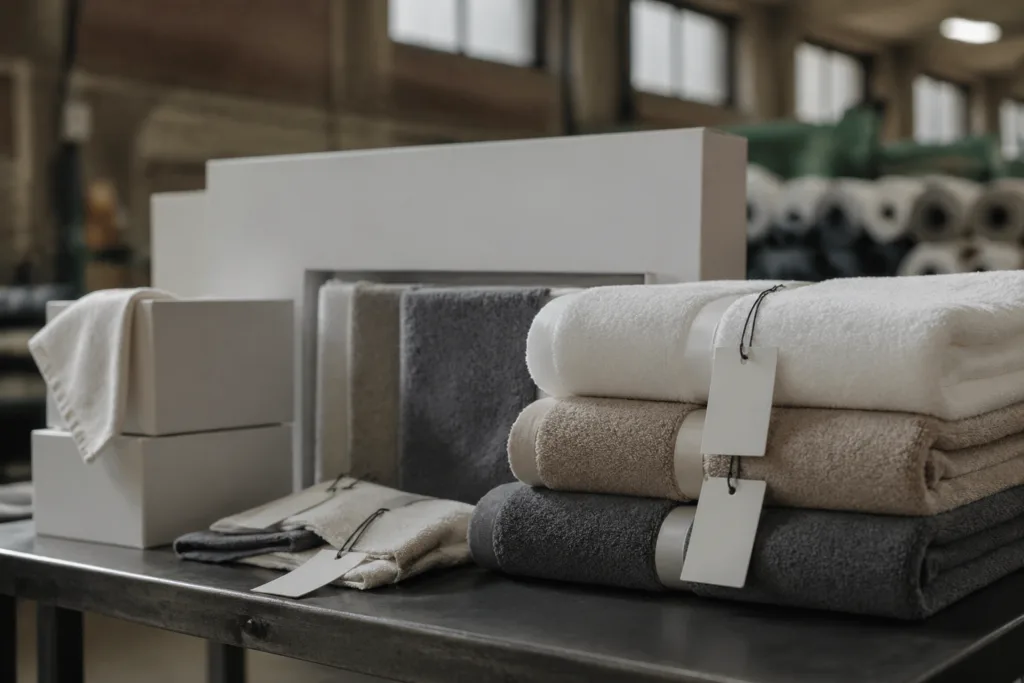
Every towel package is built on a foundation of several critical elements, each serving a role in reinforcing your brand while optimizing user experience. Custom packaging towels enable brands to tailor these elements for unique positioning and market needs.
Hang Tags
Hang tags act as the brand’s calling card, often including the logo, product name, origin, and care instructions. Design, material, and placement influence the perceived value—embossed finishes, eco-friendly paper, or even QR codes guide buyers and signal premium quality.
Care Labels
Care labels are essential for conveying washing instructions, regulatory compliance, and fiber content. They must be clear, durable, and, depending on the region, may need to adhere to strict labeling guidelines. A well-designed care label minimizes customer confusion and protects brand reputation.
Cartons
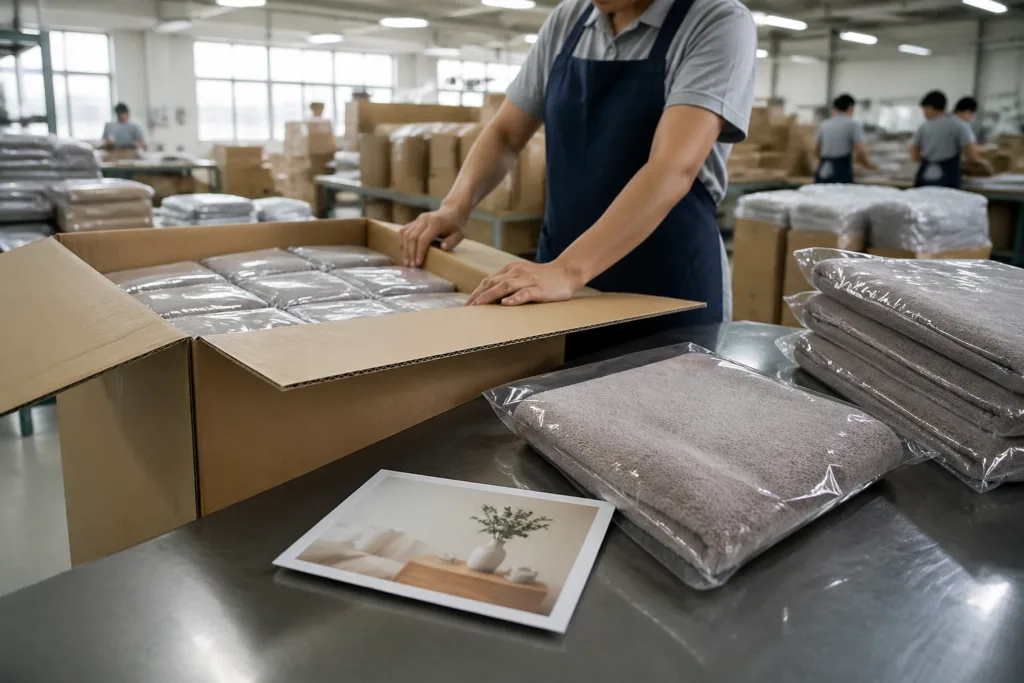
Cartons house towels during bulk shipping and display. They must balance protection and presentation. Heavy-duty corrugated cardboard is common for export, while customized cartons for retail often reflect brand identity through graphics and structural design.
Unboxing Elements
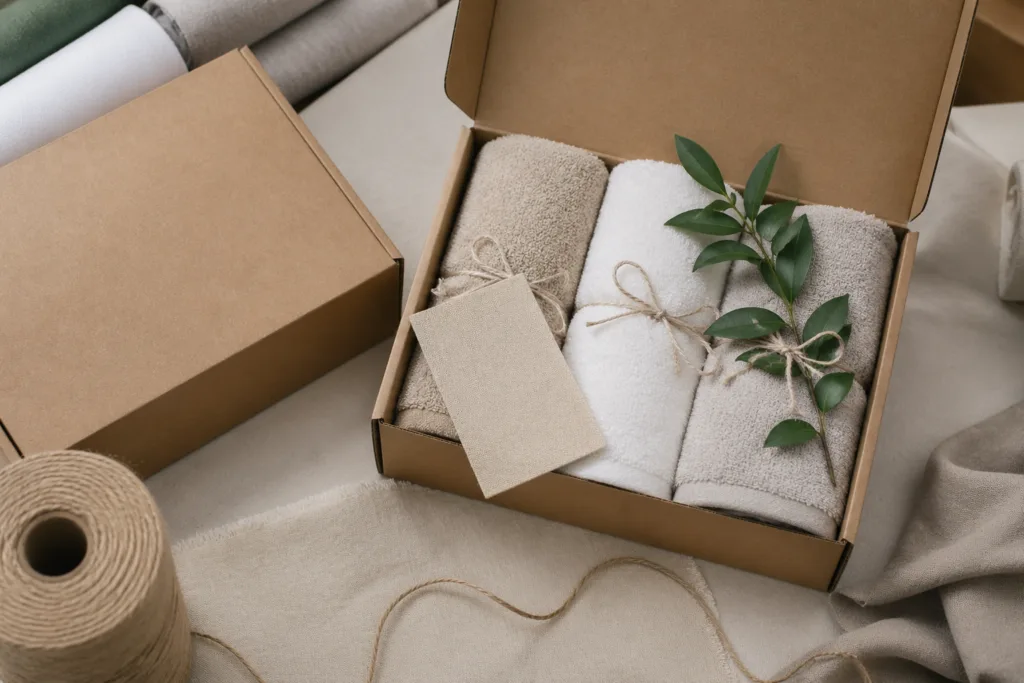
Unboxing is an opportunity to deliver memorable experiences. Elements such as branded belly bands, tissue wrap, or ribbons invite tactile and visual appreciation. For promotional events and gifting, these details can be the difference between a generic and a luxury feel.
Brand Story Cards
Brand story cards let buyers connect with the narrative behind the towel—sourcing, craftsmanship, and sustainability. In today’s value-driven marketplace, a compelling story enriches custom packaging towels and encourages loyalty.
- Hang tags: Brand introduction, visual appeal
- Care labels: Regulatory info, customer guidance
- Cartons: Transit protection, retail presence
- Unboxing elements: First-touch impression
- Brand story cards: Connection and differentiation
Material Comparison for Custom Packaging
The material selection for custom branded towels is a decision that affects not only cost but also sustainability and brand perception. Manufacturers and buyers must weigh trade-offs between recyclability, durability, print options, and tactile feel.
| Material | Recyclability | Aesthetics | Cost Range | Durability | Branding Potential | Towel Compatibility |
|---|---|---|---|---|---|---|
| Cardboard (corrugated) | High | Custom print, natural finish | Moderate | Excellent for shipping | Full-color print, emboss | All types, bulk |
| Kraft paper | High | Eco-friendly, raw look | Low–Moderate | Fair | Emboss, die-cut | Smaller sets, retail |
| Plastic wrap (PE, PET) | Low–Moderate (if recycled) | Glossy, transparent | Low | Water-resistant | Sticker/printed label | Microfiber, sports |
| Fabric bands (cotton/poly) | Moderate | Soft, tactile detail | Moderate | Reusable | Embroidery, woven label | Luxury, spa, gifting |
| Rigid gift boxes | Moderate–High | Premium, structured | High | Excellent | Foil, texture, spot UV | Luxury, sets |
Recyclable options like cardboard and kraft paper reduce environmental impact. Durable materials ensure towels reach customers undamaged. While plastics offer budget advantages, they can diminish eco appeal unless sourced as recycled. Fabric bands, often used for spa and luxury towels, serve both as packaging and reusable accessories—reinforcing brand value.
Cost differs substantially between everyday retail and premium gifting. Custom branded towels packaged in rigid gift boxes or with embroidered belly bands generally cost more, but communicate a luxury positioning. Material compatibility with towel types matters: microfiber towels, for instance, work well with lightweight cartons or PE wraps, while heavyweight cotton towels can benefit from more robust and tactile packaging.
Circe Towel has supported clients in selecting carton types and sustainable materials that match each towel SKU’s profile, balancing market demand for eco solutions with logistical realities.
Construction and Manufacturing Comparisons
The towel’s construction greatly influences how it can be packaged for branding and shipment. Cotton, microfiber, and bamboo each carry distinct perceptions in the market; cotton is classic for softness and absorbency, microfiber excels in performance sports, while bamboo is often chosen for sustainable messaging.
Structural variants like terry, velour, and waffle affect stackability and space efficiency within cartons. Terry towels provide bulk and comfort but require more space, while velour’s sleek finish is suited for gifting and retail display. Waffle construction offers compactness, ideal for volume shipping with custom packaging towels.
Jacquard & Embroidery Benefits
Branding methods play a key role; jacquard weaving and embroidery give custom branded towels a tactile, high-end signature. These methods are less prone to fading versus printing, and raise the perceived value—important for luxury or hospitality use.
Design Impact on Storage & Shipping
Complex designs may require larger package sizes, increasing logistics cost but also giving more area for storytelling and brand messaging. For bulk and private label towels, the package’s shape can highlight special features—like unique patterns or premium GSM.
Choosing the right construction enables both brand identity and operational efficiency. Circe Towel often advises hospitality buyers to match GSM and fabric type with intended package style, optimizing for both shelf appeal and cost control.
Design & Specification Checklist
Selecting custom packaging towels means evaluating detailed specifications that reflect the brand and meet operational needs. Below is a practical checklist to guide buyers:
| Specification | Importance | Branding Impact | Trade-off |
|---|---|---|---|
| Towel Size | High | Logo visibility, shelf fit | Larger sizes increase shipping costs |
| GSM | High | Perceived quality | Higher GSM = greater luxury but slower drying |
| Material (Cotton/Microfiber) | High | Customer preference, message | Cotton feels softer; microfiber dries faster |
| Edge Finishing | Medium | Premium look, durability | More intricate finishes raise unit cost |
| Logo Method | High | Brand recall | Embroidery is premium; printing is flexible |
| Colorfastness | High | Consistent brand color | Poor colorfastness can cause fading |
| Absorbency | High | Functional reputation | Excess absorbency may slow drying |
- Choose towel size for shelf compatibility and logo exposure
- Specify GSM for desired softness and drying speed
- Review edge finishing (hemming, stitching) for durability and impact
- Clarify logo method: embroidery for luxury, printing for budget-friendly branding
- Test absorbency, softness, and colorfastness to maintain customer satisfaction
Packaging design should always align with the intended audience. Spa towels may need gentle colors and soft finishes, while gym towels benefit from bold patterns and moisture management.
Custom packaging towels provide a canvas to reinforce these specifications, helping buyers build a unique market fit.
Quality & Testing Considerations
Quality assurance underpins the integrity of both towels and their packaging. Private label towel packaging must ensure the product inside meets branding promises.
Absorbency and wash durability are primary factors—towels must maintain performance through repeated laundering. Colorfastness guarantees the brand’s color integrity; shrinkage control preserves the intended fit in packaging and on retail shelves.
Lint control is critical, especially for hospitality applications where customer feedback can impact reputation. Stitching consistency, not only on towels but also on sewn labels and borders, reinforces packaging strength and prevents premature wear.
Testing methods include:
- Lab-based absorbency checks
- Accelerated wash cycle simulations
- Colorfastness by standardized rub test
- Shrinkage and linting via repeated tumble drying
- Stitch strength measurements
Packaging claims should be validated by trusted, third-party testing facilities whenever possible. Circe Towel recommends working with recognized labs for both towel and packaging quality—especially when custom branded towels are entering regulated markets.
Industry/Application Fit
Private label towels see wide-ranging use across industries, each with distinct packaging demands. In hospitality, hotel and spa towels require pristine, hygienically sealed packaging with elegant branding—usually sturdy cartons and branded belly bands.
In the gym and sports sector, absorbent towels packaged in lightweight, resealable wraps allow for convenience, with bold branding for sports events. For retail, eye-catching packaging—like printed boxes or custom hang tags—translates into shelf presence and impulse buys.
Promotional products favor creative and strategic packaging, optimizing for event giveaways and branding impact. The right packaging approach helps these towels transition from generic items to branded tools.
Private label towels can be found in all these segments, tailored by industry to maximize branding effectiveness and user satisfaction. Successful brands match packaging style to the expectations of their target market.
To see manufacturing specifics for diverse industry applications, check Circe Towel’s product catalog.
Customization Options for Packaging
Custom branded towels are only as effective as the packaging that completes them. Buyers have a wide array of customization possibilities for maximized impact.
Logo placement—on hang tags, belly bands, or even outer cartons—allows the brand message to shine. Design customization ranges from minimalist to elaborate, accommodating the intended consumer demographic and retail environment.
Border and pattern choices for labels, packaging cards, and stickers add distinction. Materials and finishes can be varied to suit gifting, retail, or promotional goals. For labels, options span printed, woven, and embroidered designs.
Packaging personalization extends to colors, motifs, and tactile elements. For luxury buyers, rigid gift boxes and magnetic closures send a signal of exclusivity. For eco-conscious markets, recycled materials and sustainable glue become key differentiators.
- Logo design and placement: Hang tag, belly band, carton
- Material choice: Cardboard, kraft paper, recycled PE
- Label methods: Woven, printed, embroidered
- Pattern and border styles: Reflect unique brand story
- Demographic tailoring: Luxury, sporty, eco, kids
Private label benefits shine through packaging customization, enabling brands to craft memorable experiences and foster consumer loyalty.
Common Mistakes and Troubleshooting
Despite best intentions, buyers can run into issues when specifying custom packaging towels. Choosing the wrong GSM can result in towels that fail to deliver comfort or absorbency—especially in hospitality or spa settings.
Poor fabric choices, like using low-grade microfiber for retail, can cause negative feedback on softness and feel. Packaging design flaws, such as weak cartons or unclear labeling, disrupt customer satisfaction and lead to brand dilution.
Fading through poor printing methods, or inconsistent colorfastness, damages the branding impact. Neglecting edge stitching reduces perceived quality and hinders longevity.
- Always align GSM/fabric with application context
- Use consistent quality control during production
- Choose appropriate packaging strength for export vs retail
- Avoid generic labels—clarify care instructions
- Test print durability and colorfastness
Preventing these issues starts with clear specifications, sampling, and collaborative sourcing. Custom packaging towels should always undergo quality checks before mass production.
Ordering Guide for Towel Packaging
Securing private label towel packaging requires strategic planning to ensure both brand impact and operational efficiency. Most suppliers set minimum order quantities (MOQ) for customized packaging, usually ranging from 500–2,000 units per style.
Lead times depend on packaging complexity—basic cartons may take 2–3 weeks, while luxury boxes or custom labels may need 5–8 weeks. Preparing artwork is critical; review proofs for clarity and color accuracy before bulk production.
Effective sampling strategies include requesting pre-production prototypes and lab-tested towel samples. Logistics decisions should account for carton size, mode of shipment, and destination-specific requirements.
- Define MOQ and confirm with supplier
- Allow for sufficient lead time: Standard vs custom designs
- Double-check artwork proofs before confirming
- Sample both towel and packaging; adjust if needed
- Clarify logistics and export packaging requirements
Private label towel packaging success hinges on communication, clarity, and quality-focused sampling. Need help choosing the right towel packaging for your branding needs? Circe Towel can recommend practical options based on your project.
Summary & Call to Action
Effective towel packaging is integral to branding success. Thoughtfully selected hang tags, care labels, cartons, and unboxing elements reinforce identity and drive higher customer satisfaction. Customization offerings and strict quality testing ensure private label towel packaging meets market expectations.
By aligning packaging strategies with target audiences, buyers can increase value and recognition of private label towels, transforming everyday textiles into memorable products. Circe Towel’s expertise with custom packaging towels helps buyers navigate choices in material selection, branding methods, and operational trade-offs.
Looking for custom solutions that stand out? Contact Circe Towel for a tailored approach to your towel packaging needs.
Frequently Asked Questions
What are the best materials for towel packaging?
Cardboard, kraft paper, and recycled plastics are widely used for their balance of durability, cost, and sustainability; fabric bands enhance luxury appeal for gifting.
How do I ensure my brand stands out on packaging?
Combine eye-catching logo design, unique materials or finishes, and clear messaging on hang tags and cartons to encourage visual and tactile recognition.
What are the common printing methods for towels?
Screen printing, reactive printing, digital printing, embroidery, and jacquard weaving are most common; each impacts cost, durability, and branding clarity differently.
How can I customize my towel packaging cost-effectively?
Optimize quantities to match MOQ, use standard carton sizes with custom labels, and focus customization on high-impact areas like hang tags or story cards.
What is the ideal GSM for a luxury towel?
Luxury towels typically feature GSM values between 500–700, offering plushness and absorbency; higher GSM signals quality, while lower GSM suits fast-drying needs.
Can packaging enhance towel absorbency?
Packaging doesn’t directly affect absorbency but helps keep towels pristine and prevent lint, preserving the towel’s functional qualities for the end user.