
Introduction to Embroidered Towels
Embroidered towels have become a staple for businesses that value detail and prestige in their textile selection. At their core, custom embroidery towels feature intricate patterns or logos stitched directly into the towel fabric. This approach contrasts sharply with printing, resulting in a textured, raised design that instantly communicates quality and bespoke character.
For B2B buyers, the choice of towel personalized embroidery is especially appealing where branding, gifting, or guest experience are mission-critical. Sectors like hospitality, resorts, spas, luxury gyms, and promotional gift companies regularly invest in embroidered towels because they enhance perceived value. Unlike flat or printed designs, embroidery stands out—both visually and to the touch—delivering an impression of substance and sophistication.
Industries frequently using custom embroidery towels include:
- Hotels and resorts (logo towels for rooms and pools)
- Upscale spas and wellness centers (bespoke branding)
- Corporate gifting and VIP events (memorability with tactile branding)
- Promotional campaigns for premium partners
- Private label/retail brands seeking durable, prestigious logo placement
Beyond the visual difference, embroidery provides longevity and resistance to fading after repeated use and washing. Buyers looking for a blend of endurance and refined appearance choose custom embroidery towels for their high-end projects, promotional needs, and as unique brand reinforcement tools.
This article will break down the comparative strengths of embroidery over printing, material selection principles, construction methods, design checklists, and practical trade-offs. We’ll also explore quality standards, common sourcing mistakes, ordering guidance, and how Circe Towel approaches projects requiring both creativity and manufacturing expertise.
The Advantages of Embroidery Over Printing
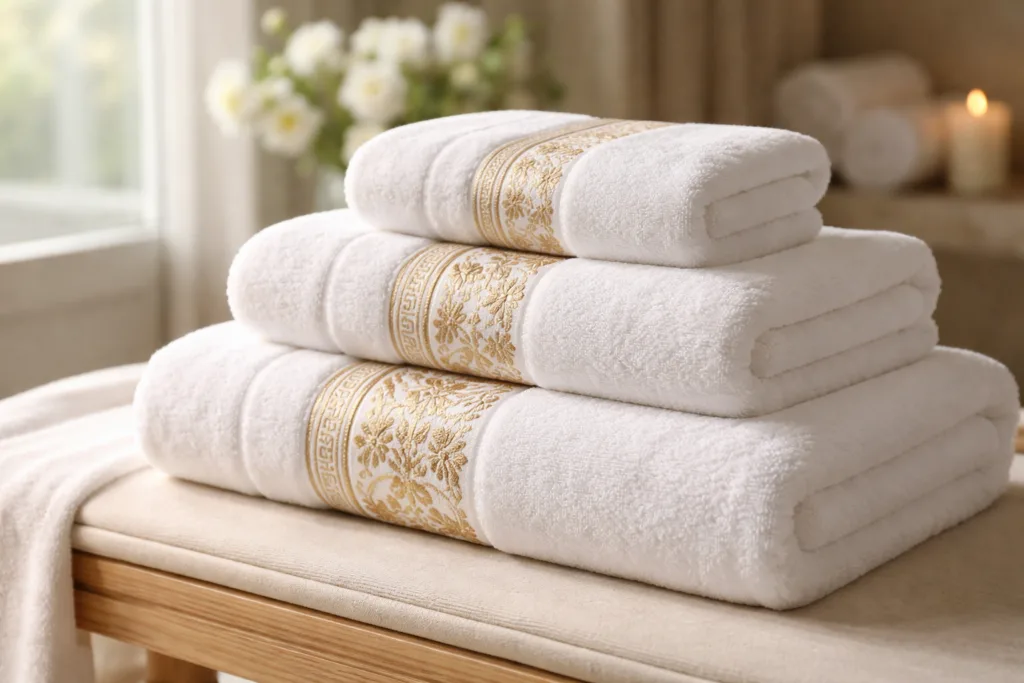
Embroidered towels offer advantages that make them the superior choice over printed towels for certain applications. One of the most notable benefits of custom embroidery towels is durability. Since the design is stitched into the fabric using colorfast threads, it doesn’t fade, crack, or peel—helping your towels maintain their appearance even after extensive laundering.
Another valuable aspect is the elevated perceived value. Recipients and guests immediately recognize embroidered details as a mark of craftsmanship and luxury. This makes towel personalized embroidery particularly desirable for gifts, VIP event gifts, or loyalty rewards. The tactile raised finish feels distinct, while the threads catch light differently than flat prints, generating a rich, textured aesthetic.
Embroidery also provides greater flexibility for intricate logos or patterns, enabling brands to reproduce detailed motifs with sharper definition. While not every gradient or photo effect can be stitched, most logos convert well, with clean lines and sophistication. Moreover, embroidery maintains vibrancy and structure after repeated wash cycles—a major advantage for hospitality and gym applications where frequent laundering is expected.
For businesses prioritizing both durability and distinction, custom embroidery towels become a strategic branding decision. Compared to printed towels, which may lose color or show cracks over time, embroidery ensures long-lasting impact.
There are a few trade-offs. Embroidery may be less cost-effective for extremely large or complex, multi-color graphic areas, and the texture means it’s best suited to logos, badges, or accent designs rather than all-over patterns. Still, for specific high-impact branding, gifts, or upscale usage, the benefits far outweigh the limitations.
Material Comparison for Embroidered Towels
Material selection plays a crucial role when planning towel personalized embroidery. Common towel base fabrics include cotton, microfiber, bamboo, and blends—each with unique properties and suitability for embroidery.
Let’s examine the typical options:
| Material | Absorbency | Softness | Durability | Embroidery Suitability |
|---|---|---|---|---|
| 100% Cotton | High | Soft (improves with quality) | Very good | Excellent—holds stitches, resists pull |
| Microfiber | Medium–High | Very soft, quick-dry | Durable | Good—may require strong backing |
| Bamboo Blend | High | Ultra soft, chill touch | Good | Good—softer fibers may shift |
| Cotton–Poly Blend | Medium | Balanced | Very durable | Fair—can be prone to puckering |
100% Cotton remains the industry standard for embroidered towels. It provides great absorbency, a natural feel, and holds stitches firmly—ideal for hospitality, spa, and branded gift towels. Higher GSM (grams per square meter) usually means a thicker, plusher towel, but extreme thickness can challenge embroidery by hiding fine thread detail.
Microfiber brings fast drying and vivid colors, typically favored for sports or gym towels. Embroidering on microfiber demands correct stabilizing backings to avoid bunching—Circe Towel recommends testing substrate and stitch density for best results.
Bamboo blends, increasingly popular for eco-focused brands, combine silky softness with good absorbency. While compatible with embroidery, these softer yarns may shift or distort intricate motifs, especially on lighter-weight towels. Use of proper backing is essential.
Environmental responsibility is a growing buyer concern. Organic cotton and bamboo blends support a lower-impact supply chain, though at a premium cost. Circe Towel sources both conventional and sustainable fabrics, and helps buyers evaluate the right balance between performance, feel, price, and ecological requirements.
Ultimately, matching towel personalized embroidery materials to the application ensures best results—plush cotton for hotel and spa, sleek microfiber for sports, and bamboo for unique, sustainable gifting.
Construction and Manufacturing Techniques
The underlying construction of a towel impacts both the visual appeal of custom embroidered beach towels and their performance in daily use. The most common towel constructions for embroidery include terry, velour, waffle, and jacquard weave.
Terry towels have looped piles, offering high absorbency and plush feel. Low to medium pile heights make it easier to maintain detailed, flat embroidery without threads getting lost.
Velour towels are shaved terry, presenting a short, smooth surface perfect for crisp custom embroidery towels—ideal for upscale gifts or display pieces where artwork clarity is paramount.
Waffle weave delivers distinctive texture and lightweight feel, but it requires careful hooping and stabilization in the embroidery process. Designs with bold, simple lines succeed best on waffle because of the geometric surface.
Jacquard allows pattern woven into the towel itself. Sometimes, custom embroidery towels combine jacquard borders with stitched logos for a premium look, especially in private label and limited edition launches. For more about jacquard towels, refer to Jacquard Towel Manufacturing Explained.
Pile height matters: short to medium piles are preferred for logo clarity and structure, while high piles (ultra-plush luxury towels) risk hiding detail or causing distortion. Edge hemming and binding finishes must also accommodate embroidery, ensuring clean lines and lasting durability.
Manufacturers customize edging, include supporting backing, or apply wash-stabilized thread to meet design requirements. Common embroidery techniques on towels:
- Standard flat embroidery: Most logos and text, suitable for nearly all towel types.
- Appliqué embroidery: Uses fabric pieces for bold branding, best on larger towels.
- 3D/puff embroidery: Raised, sculpted logos, effective for thick borders or gym towels, but can be prone to wear.
Well-matched technique and construction deliver custom embroidered beach towels with robust branding impact and high wear resistance.
Design & Specification Checklist
When sourcing custom embroidered beach towels or hospitality towels, careful planning ensures project success. Buyers should walk through a detailed checklist before finalizing orders.
| Factor | Recommended Range | Buyer Notes |
|---|---|---|
| Towel Size | 30×60″ (beach) / 27×54″ (bath) | Match to end-use & brand style |
| GSM | 350–600 gsm (beach 350–400, hotel 500+) | Higher GSM for plushness; balance with drying time |
| Material | 100% cotton / microfiber / blend | Softness for gifts, durability for hotels/gym |
| Logo Position | Corner (beach), border (hotel) | Consistent placement enforces brand recognition |
| Embroidery Size | 2–6″ wide typical | Oversized logos may add weight & stiffen area |
| Edge Finishing | Standard hem/double needle | Quality hems prevent unraveling |
| Absorbency | High (cotton, bamboo) | Essential for guest use and drying speed |
| Colorfastness | Grade 4+ (wash test) | Necessary for multi-color embroidery/white towels |
| Packaging | Bulk, gift box, polybag, ribbon tie | Presentation should suit gifting or retail placement |
Consider the branding palette and how embroidery thread colors will appear on the chosen base towel. Detailed, multi-color logos might need slight adaptation to maintain sharpness and color integrity. For different uses (beach, gym, hospitality), adapt towel features to the expected wear, laundering cycles, and desired visual impact.
Striking the right balance between absorption, softness, and durability depends on your market segment. Sample approval is a must to ensure art, embroidery, and overall finish align with your expectations.
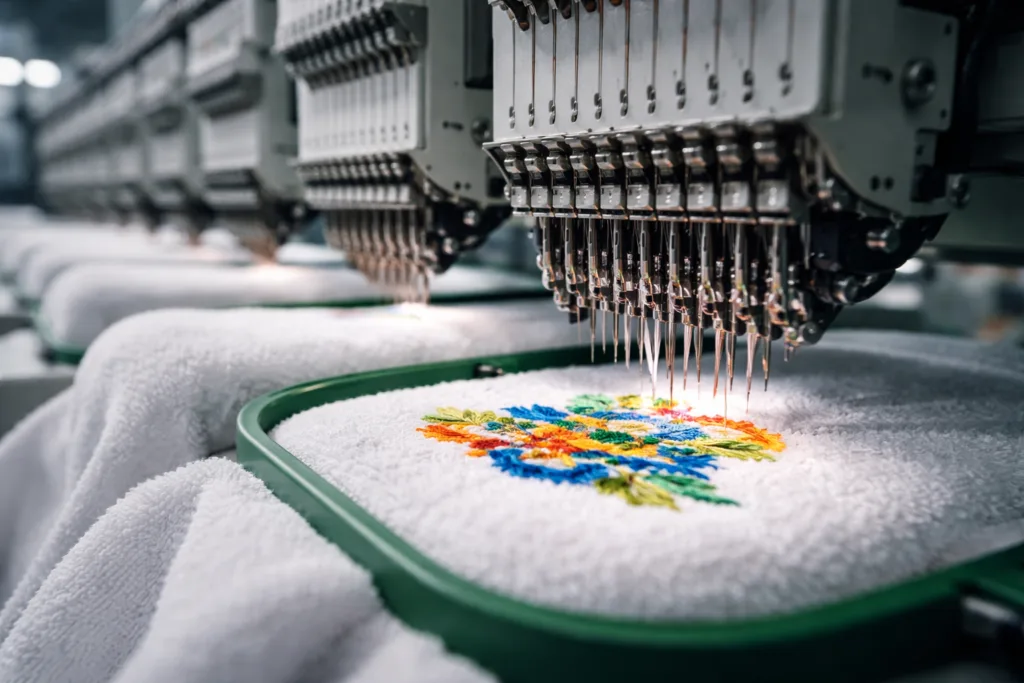
Example: Beach towels often feature oversized, colorful logos in the corner or end border for maximum brand exposure; hotel towels might use subtle, tone-on-tone embroidery near the edge for classic elegance; gym towels may require bold, high-contrast branding with endurance stitching for heavy rotation. Reviewing these specifications upfront minimizes post-production surprises.
Quality Standards & Testing for Embroidered Towels
Robust quality control protects your investment in custom embroidery towels. Manufacturers should follow industry standards for absorbency, colorfastness, stitching durability, shrinkage, and lint control.
Absorbency testing ensures towels deliver practical functionality—not just appearance. Towels should quickly soak up water and maintain their feel even after repeated stitching.
Wash durability and colorfastness are key. Reputable manufacturers like Circe Towel use embroidery threads and base fabrics pre-tested for reaction to chlorine, sunlight, and repeated washing (typically 30+ cycles with minimal fading or fraying). This is especially important for hospitality and sports applications.
S hrinkage tests verify post-laundry dimensions. Excess shrinkage can warp embroidery, so pre-shrinking and stabilization are practiced at the factory. If you’d like deeper insights on shrinkage control, refer to 8 Expert Ways to Master Towel Shrinkage Control.
Stitching quality checks look for even thread tension, secure starts and finishes, and absence of skipped sections. Proper backing choice (tear-away or cut-away) holds the design stable and resists distortion. Lint control matters too, with low-shedding yarn preferred to satisfy end-users and leave embroidery crisp.
A comprehensive QC checklist:
- Absorbency & softness maintained after embroidery
- Thread and base colorfastness (Grade 4 or higher)
- Stitch and edge stability after 30+ industrial washes
- S hrinkage under 5%
- No excessive linting or pilling
Such standards underpin every project—leading to satisfied corporate buyers and delighted end-users.
Industry Applications for Embroidered Towels
The versatility of towel personalized embroidery extends across many industries, each with unique requirements and branding goals. In hospitality—such as hotels, resorts, and spas—embroidered towels define guest experience, provide a luxury touch, and reinforce brand prestige throughout the property. Distinctive logo placement on bath, pool, or hand towels supports visual identity at every client interaction.
For gifting and corporate branding, custom embroidery towels serve as memorable, high-value gifts for partners, VIP clients, and employees. During seasonal promotions or holiday events, themed designs (e.g., festive motifs, campaign tags) create limited-edition impact while communicating company values.
Sports clubs and events choose custom embroidered beach towels and gym towels to unite teams, recognize achievements, or market sponsors. The durability and lasting color of embroidery withstand heavy laundering. A sports towel with a club or sponsor logo is continually visible, whether at tournaments or training.
Application-specific customization suggestions include selecting larger sizes and vibrant colors for beach towels, subtle monochrome embroidery for wellness spas, or high-memory threads for swimming pools where chlorine resistance is required.
Current market trends show growing demand for sustainable fabrics and eco-friendly embroidery supplies, especially in international boutique hotels and new private label launches. Circe Towel monitors these trends to guide buyers toward future-ready, practical solutions.
Common Mistakes to Avoid with Embroidered Towels
Even experienced sourcing teams can overlook key risks when specifying custom embroidered beach towels. A frequent mistake is selecting a GSM (grams per square meter) too low or too high for the application. Lightweight towels may feel insubstantial or allow embroidery to pucker, while ultra-high GSM can limit logo clarity as threads sink into deep piles.
Another issue is picking fabrics that lack sufficient colorfastness or softness. Inferior base materials will fade or become rough after washing, diminishing both towel comfort and embroidery visibility.
Poor stitching techniques—or failing to check thread compatibility and proper backing—can lead to loose designs, unraveling, or distortion after just a few washes. Overly intricate artwork often loses detail when transformed into thread; simplifying logos and removing fine gradients prevent disappointment.
Washing and post-care need attention as well. Not all embroidery threads react equally to industrial laundering, chlorine, or frequent drying. Specifying the correct wash-resilient threads and recommending proper care to end-users preserves both the towel and brand image.
Preventing these errors starts with well-matched design, material, and production oversight—something Circe Towel incorporates as part of quality-focused manufacturing.
Ordering Guide for Custom Embroidered Towels
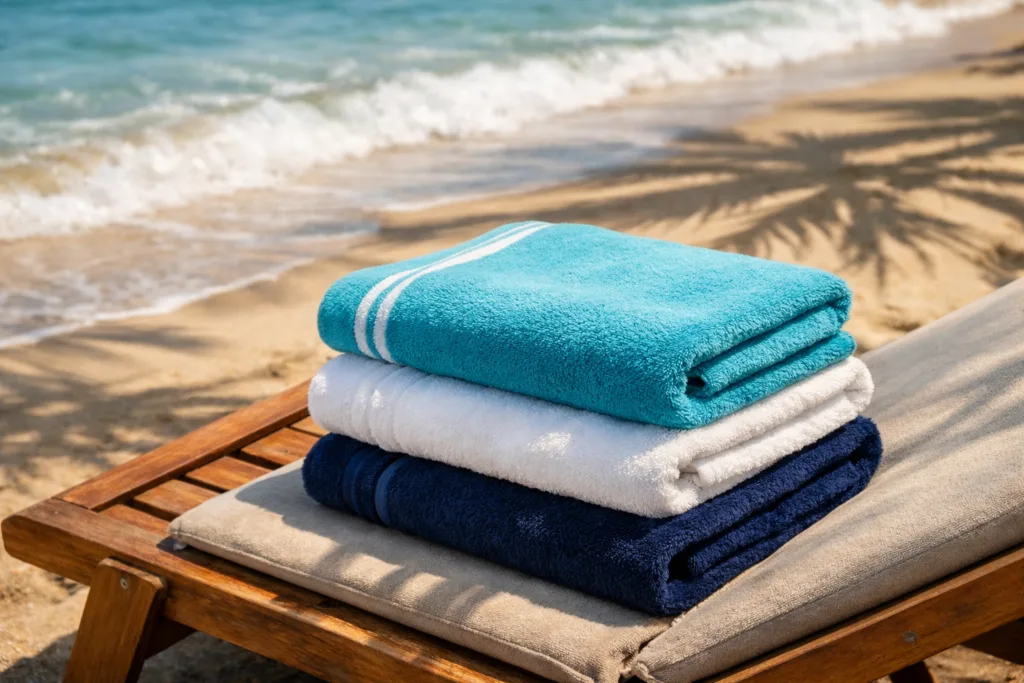
Sourcing custom embroidery towels for your organization or brand requires thoughtful attention to process. Minimum Order Quantities (MOQ) typically range from 100 to 500 units, though larger volumes enjoy better cost structures due to setup and design programming costs.
Lead times depend on material availability, embroidery complexity, and packing needs. A typical order might involve 2–3 weeks for sampling, plus another 4–6 weeks for mass production, but customized colors, bespoke sizes, or premium packaging can extend timelines.
Sampling and proofing are vital. Always request a physical or stitched sample with your logo and colorway before greenlighting bulk production. This minimizes ambiguity and ensures all parties share the same expectations for color, dimension, and finish.
Packing options vary by industry: bulk polybags for hospitality, retail-ready boxes or ribbon wraps for gifts, and shrink-wrapped rolls for tours or promotional drops. Be clear about requirements early to coordinate with your supplier.
Finally, consider logistics: shipping mode (air vs sea), carton size, and storage requirements. Embroidered towels are bulkier than printed alternatives due to thread volume—plan warehousing and transit accordingly. Circe Towel helps buyers factor in these realities when mapping large-scale projects.
Frequently Asked Questions
What is the best fabric for custom embroidered beach towels?
100% cotton is typically the best fabric choice due to its absorbency, softness, and ability to securely hold embroidery stitches without puckering, ensuring long-lasting and vibrant results for custom embroidered beach towels.
How long does the embroidery last after washing?
High-quality embroidery can last through 30 or more industrial wash cycles with minimal fading or fraying, as long as threads and base fabrics are quality-tested and proper laundering instructions are followed.
Can embroidery be done on different towel sizes?
Yes, embroidery can be applied to nearly any towel size, from washcloths and hand towels to oversized custom embroidered beach towels, with logo size and placement tailored for balance and visibility.
What should I consider when designing an embroidered logo?
Focus on clean, bold designs with clear boundaries, avoiding intricate gradients or tiny details, and ensure colors contrast well with the towel base for best readability and branding impact.
How do I decide between embroidery and printing?
Choose embroidery for long-lasting, high-end, or textured branding; select printing for complex graphics, large photographic areas, or when targeting lower unit costs on bulk promotional towels.
What are typical costs associated with custom embroidery?
Costs vary based on quantity, logo size, stitch count, and fabric, but embroidery is usually slightly higher in price per towel than printing, reflecting its durability and premium appearance.
Related Reading
- Custom Embroidery vs. Printing: Efficient Branding Methods Compared
- Finding the Right Towel Manufacturer: What Every Brand Should Know
- Quality Testing Secrets: How Top Brands Approve Towels Before Shipping
- Your Guide to Private Label Towels: MOQ, Pricing, and Profitability
- How Top Factories Control Shrinkage for Reliable Towel Longevity
- Logo Branding on Towels: Understanding Embroidery, Jacquard, and Printing