
Understanding Towel Manufacturers
When searching for towels manufacturer, B2B buyers often encounter the terms “manufacturer” and “supplier.” Although sometimes used interchangeably, these roles differ significantly. A towel manufacturer directly produces towels, managing everything from material sourcing to finished product. In contrast, suppliers typically act as intermediaries or distributors who buy from manufacturers and resell to buyers.
Towel manufacturers play a vital role in the textile supply chain. They oversee product development, customization, rigorous quality checks, and large-scale production. By working directly with a towel manufacturer, buyers gain more control over specifications and quality, leading to cost savings, better branding, and consistent performance.
Direct partnerships with towel manufacturers often mean improved transparency and direct access to factory expertise. Manufacturers can guide buyers on fabric choices, help judge realistic timelines, and support customized requirements for bath towels, beach towels, or promotional towels.
Manufacturers add value by acting as solution providers. For example, Circe Towel, as a towel manufacturer, frequently collaborates with brands and hotels to optimize GSM, edge finishing, and logo methods based on end-use, leveraging years of experience to steer buyers through the complexities of textile sourcing.
- Comprehensive fabric selection and development
- Custom design and private label solutions
- Bulk production and export packaging
- Consistent quality assurance and wash testing
- Branding and logo application for retail and hospitality
Core Services Offered by Towel Manufacturers
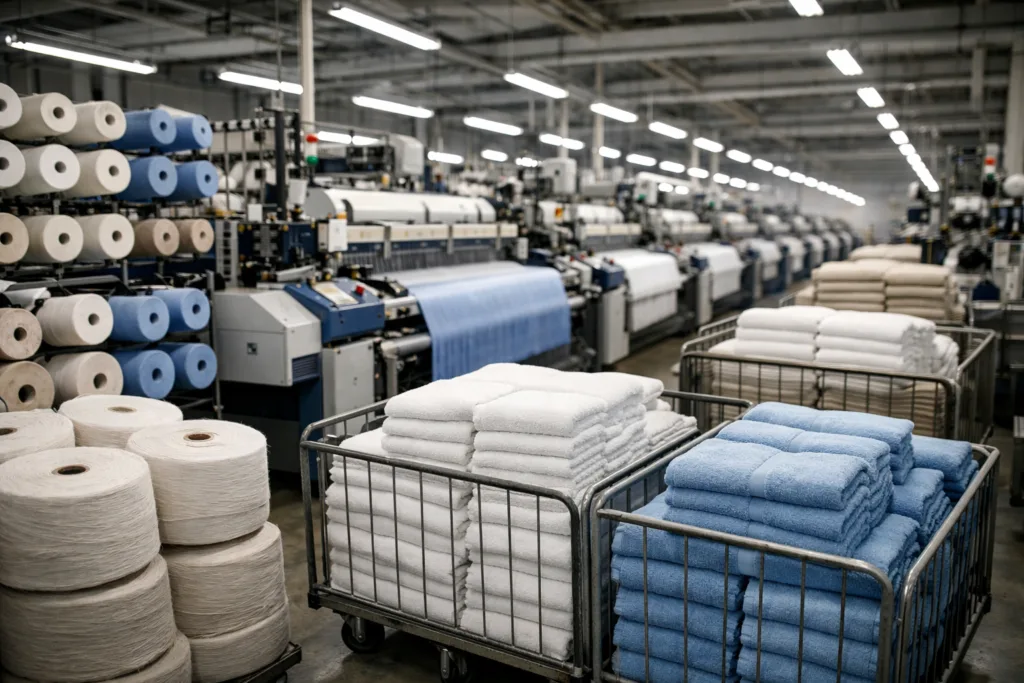
Bath towel manufacturers and beach towel manufacturer teams deliver an extensive suite of services designed to address unique project requirements.
Custom development is central: buyers can specify towel size, GSM (grams per square meter), material (cotton, microfiber, bamboo), color, and decorative elements. This stage involves selecting yarn types, evaluating weaving methods, and balancing softness with durability for each market segment.
Prototyping and sampling form the backbone of product validation. Circe Towel, for example, often creates multiple sample iterations, enabling real-world testing on absorbency, wash resistance, and branding clarity. Prototypes let buyers assess true-to-market performance before green-lighting bulk production.
Production covers fabric formation—such as spinning yarn, weaving (terry, jacquard, waffle, velour), and finishing. Decoration follows, where embroidery, printing, and dyeing are applied based on project needs. Key decisions, like using reactive dyes for colorfastness, become critical in hospitality or retail environments.
Quality checks occur throughout. Inspection for lint, shrinkage, color uniformity, and stitching integrity protects against defects. Specialist manufacturers conduct lab tests, batch sampling, and tailored audits to meet buyer standards.
Packaging and global exporting services round out the offering. Packaging varies from retail-ready boxes with branded inserts to bulk cartons for hotels or wholesalers. Export support includes documentation, logistics, and custom labeling to match global distribution requirements. For a full factory workflow, see From Yarn to Towel: A Step-by-Step Look Inside the Factory.
Ideal Buyers for Towel Manufacturers
Towel manufacturers cater to a wide array of B2B clients seeking specific capabilities.
Brands often pursue private label towels, tapping into custom design, unique packaging, and exclusive trims. This streamlines differentiation and leverages manufacturer expertise in branding methods like jacquard weaving or fine embroidery.
Wholesalers and retailers benefit from bulk purchasing economies and mass production. Reliable consistency and flexible logistics are key factors for those targeting large store rollouts or multi-market distribution.
The hospitality sector—including hotels and spas—depends on manufacturers for custom sizes, robust colorfastness, and superior wash durability. Circe Towel, for instance, works closely with hotels to ensure towels endure hundreds of commercial washes while retaining absorbency and softness.
Gym and sports buyers have performance-specific needs: lightweight yet highly absorbent fabrics, fast drying, compact storage, and custom logo placement. See options like black cotton gym towel or ice cold gym and fitness cooling towel.
Promotional product companies value rapid prototyping, creative decoration, and flexible minimum order quantities (MOQs) for seasonal events or campaigns.
Material Comparison for Towels
The choice of towel material has a substantial impact on user experience and sourcing costs. Buyers of custom towels should consider each material’s strengths and trade-offs.
Cotton vs. Microfiber: Cotton provides classic softness and high absorbency, making it ideal for bath and hotel towels. Microfiber excels in quick-dry performance, lightweight handling, and durability, favored for gym, sports, and promotional uses.
Bamboo, increasingly popular, offers eco-friendly attributes and natural antibacterial properties, but may carry a higher price point and softer hand feel.
Blended fabrics—combining cotton, polyester, or bamboo—enable tailored performance, balancing absorbency, wash durability, and cost.
For specific uses, bath towels usually require high GSM cotton for plushness, whereas gym towels often prioritize microfiber for compactness and rapid drying. Beach towels may blend cotton softness with vivid printed designs—see examples like beach towels manufacturer.
| Material | Absorbency | Softness | Durability | Wash Performance | Cost | Recommended Uses |
|---|---|---|---|---|---|---|
| Cotton | Excellent | Soft (especially combed/ringspun) | High if quality is controlled | Stable (if properly finished) | Moderate–High | Bath, hotel, spa |
| Microfiber | Good | Medium | Very high | Excellent for gym use | Low–Moderate | Gym, sports, promotional |
| Bamboo | Very good | Extra soft | Medium | Gentle cycles preferred | High | Premium, eco-friendly, baby |
| Blends | Balanced | Varies | High (polyester blend) | Variable | Low–Moderate | Retail, promotional, beach |
Practical considerations include durability after multiple washes, colorfastness, shrinkage control, and budget. For a deeper dive into towel absorbency, see Expert Insights into Towel Absorbency.
Construction and Manufacturing Techniques
Bath towel manufacturers and beach towel manufacturer teams offer a range of construction options, each affecting performance and feel. The most common weaves are:
- Terry: Loop pile for high absorbency
- Velour: Sheared surface for softness and print clarity
- Waffle: Grid pattern for lightweight, quick-dry texture
- Jacquard: Complex woven designs, ideal for branding
Decoration methods include embroidery (for premium logos), digital or screen printing (color variety and large artwork), and dyeing (solid colors and colorfastness). Jacquard weaving supports durable, integrated branding without surface distortion.
Construction and finishing impact absorbency, softness, and durability. For example, hemmed, double-stitched edges resist fraying, whereas decorative borders enhance retail appeal but may affect cost.
Choosing the right technique depends on end use: hotel towels require hardest-wearing edges, whereas retail towels may prioritize texture and design. For the latest in manufacturing innovation, see Top Innovations in Modern Towel Manufacturing.
Design & Spec Checklist for Towel Sourcing
Buyers working with towels manufacturer must approach projects with clear specifications and quality criteria.
Key specs include size (length x width), GSM (thickness), material (cotton, microfiber, bamboo), and intended application. Edge finishing—such as double hems—significantly contributes to towel longevity. For more on edge durability, read 7 Ways Hemming & Stitching Shape Towel Edge Durability.
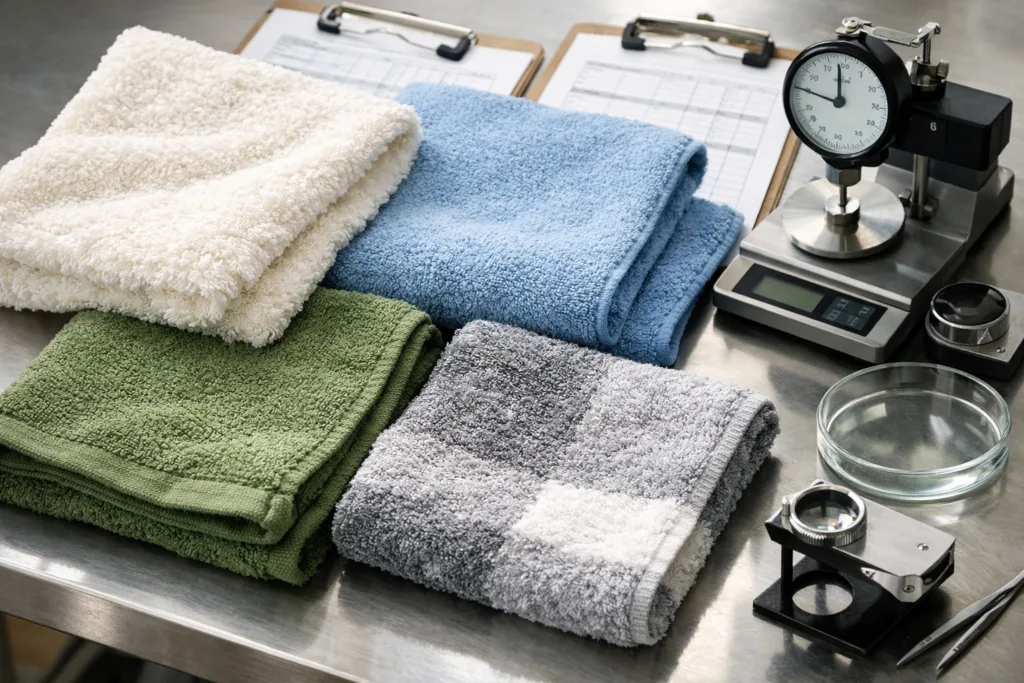
Branding choices range from embroidery (ideal for high-end or hospitality towels) to printing (for vibrant retail and promotional designs). Criteria such as absorbency tests and hand-feel inspections provide further assurance.
Packaging aligns with brand positioning, whether bulk cartons for hotels or customized boxes for retail. Buyers should ensure packaging supports safe transit and retail presentation.
| Spec | Detail/Option | Impact |
|---|---|---|
| Size | Custom dimensions | Fit for use and branding |
| GSM | 300–800 GSM | Thickness vs dry speed |
| Material | Cotton, microfiber, blends | Absorbency, softness, durability |
| Edge Finishing | Double hem, piping | Durability, style |
| Logo Method | Embroidery, printing, jacquard | Brand visibility, cost |
| Packaging | Bulk, custom box, bag | Protection, retail impact |
Ensuring Quality Through Testing
Towel manufacturers rely on rigorous quality metrics to deliver reliable products. Absorbency tests measure how quickly and fully towels take up water, typically performed on sample batches.
Wash durability is vital: repeated laundering must not cause excessive color fading, shrinkage, or pilling. Colorfastness ensures designs and brand colors stay vibrant after use. For more, review Towel Quality Testing: What Brands Check Before Shipping.
Shrinkage and lint control tests protect against product failures, especially in hospitality settings where towels undergo hundreds of washes. Stitching quality, often inspected by the manufacturer, affects edge resistance and lifespan.
Samples should be evaluated for hand feel, absorbency, and logo clarity before confirming bulk orders. Quality assurance includes batch audits, lab reports, and pre-shipment inspections. Circe Towel utilizes practical protocols—combining lab tests, sample reviews, and operator experience—to maintain consistent quality standards.
Industry and Application Fit
Towel manufacturers create solutions for a range of commercial and branded uses. Bath towels anchor hospitality settings with plush, absorbent texture. Beach towels combine vivid colours and graphic prints to attract retail buyers—see microfiber quick-dry printed beach towel.
Gym towels require lightweight, fast-drying microfiber or cotton blends, often with easy-maintenance and compact storage. Sports towels follow similar principles but may include branding or performance finishes like cooling technology—find options such as outdoor sports towel for tennis training.
Hotel towels must withstand frequent, industrial laundering, retaining absorbency and structure. Spa towels demand extra softness and sensitivity for skin touch.
Promotional gifting trends drive demand for custom towels, blending logo placement with practical features. Branded towels make impactful corporate gifts for events, gyms, and product launches.
Successful projects often combine the right material, construction, and branding method for each market. For example, Circe Towel partners with retail brands to design graphic beach towels, balancing visual appeal and colorfastness with packaging solutions tailored for high-volume retail.
- Bath towels for hotels and hospitality
- Beach towels for retail and gifting
- Gym and sports towels for performance use
- Promotional towels for brand campaigns
- Specialty towels (baby, kitchen, car care)
Customization Options for Your Towel Projects
Beach towel manufacturer teams offer diverse customization tools for towel projects. Logo branding can be applied by embroidery (for premium, tactile finishes), printing (for vivid, multi-color designs), or jacquard weaving (for integrated, durable branding).
Patterns and colors must align with market preferences and brand identity. Careful selection ensures towels stand out in retail or promotional contexts. For the latest logo application methods, check Custom Logo Towels: Embroidery, Jacquard, and Printing Methods.
Custom packaging ranges from bulk cartons for hotels to printed boxes or branded pouches for retail. Brands targeting private label solutions can work with manufacturers to ensure packaging aligns with their marketing and protection requirements.
Balancing customization with cost-effectiveness requires trade-offs: highly specialty materials or complex branding will increase per-unit price, so volume, design complexity, and packaging specs should be discussed early to optimize ROI.
Common Mistakes and Troubleshooting in Towel Sourcing
Towel manufacturers routinely help buyers navigate common pitfalls. Mistakes in fabric choice can result in towels that lack desired absorbency or softness, impacting end-user satisfaction.
Choosing the wrong GSM for the intended use—such as heavy towels for gym applications—can cause frustration in handling and higher shipping costs. Poor selection of decoration methods (like screen printing on textured terry towels) may compromise logo clarity and durability.
Low-quality towels often suffer fading, poor absorbency, excessive shrinkage, and linting. Evaluating vendor samples and testing for wash performance, colorfastness, and edge durability will reveal issues before bulk ordering.
Manufacturers encourage transparent communication, reference checks, and trial samples to avoid errors. Circe Towel shares its troubleshooting experiences, such as batch corrections for shrinkage or color variation, helping clients refine specifications and prevent recurring issues.
An Effective Ordering Guide for Towels
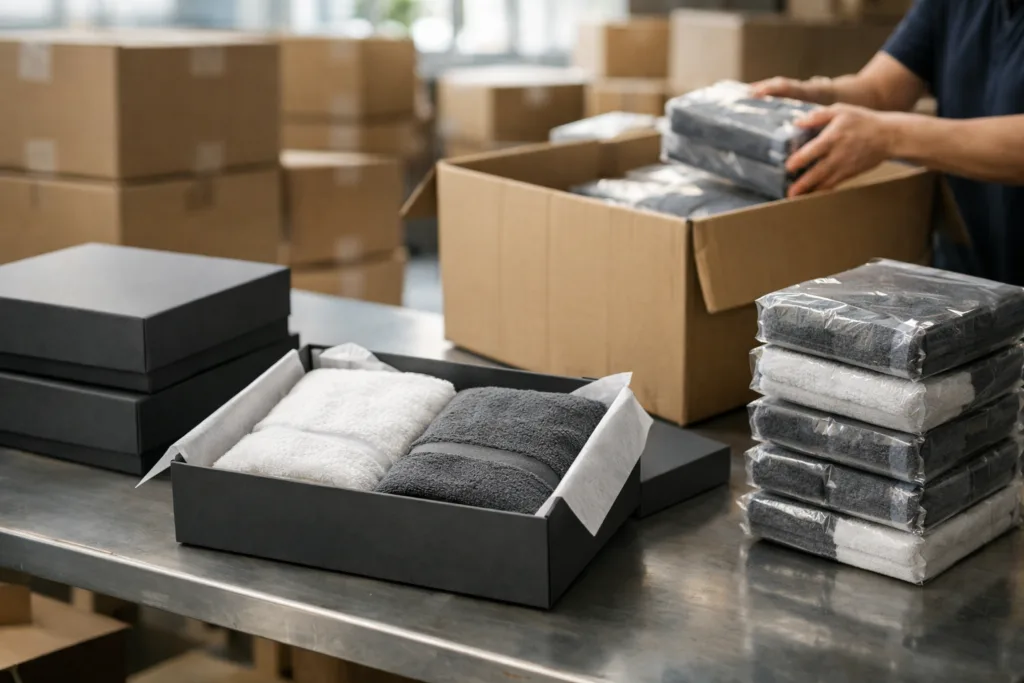
Buyers of custom towels should follow a clear ordering workflow to ensure successful outcomes. Understanding minimum order quantities (MOQ) is vital, as manufacturers set MOQs based on material, design complexity, and production efficiency.
Lead times vary by order scale and customization—simple bulk orders may take two weeks, while complex private label projects can span six weeks. Sample production involves preparing artwork, proofs, and logo specifications for approval.
Packaging and shipping options—bulk cartons, custom boxes, or retail sets—should be finalized with the manufacturer to match storage, transit, and presentation requirements. See guidance on export packaging at How Towels Are Packed and Prepared for Export.
Above all, clear communication across all project stages—design, material choice, branding, and logistics—reduces risks and improves end results. Experienced manufacturers assist with artwork reviews, spec checks, and production updates. For specialized applications, review products like waffle weave cotton bath towel or jacquard cotton beach towel with graphic design.
Frequently Asked Questions
How long does it take to get custom towels made?
The timeline depends on design complexity and order quantity, but custom towels usually require 3–6 weeks from sampling to bulk production.
What are the differences in towel GSM?
GSM measures thickness; higher GSM towels are plusher for baths and hotels, lower GSM suits gyms or quick-dry use—choose based on your application needs.
How many colors can be used in a custom design?
The number of colors depends on the manufacturing method; digital printing allows many, while jacquard or embroidery may have practical limits.
Can I get samples before placing a large order?
Most manufacturers provide samples for buyer review, letting you check absorbency, softness, and branding before confirming bulk orders.
How do I ensure the quality of towels?
Ask your towel manufacturer about lab testing, wash proofing, colorfastness, and edge finishing; review samples and request QC reports before shipment.
What are the differences between terry and velour towels?
Terry towels have looped pile for absorbency; velour towels are sheared to provide softness and vibrant prints but slightly lower absorbency.