
Introduction to Towel Manufacturing and Supply
Understanding the difference between a towel manufacturer and a towel supplier is crucial when sourcing towels for your brand or business. In the towels manufacturer vs towels supplier discussion, the roles, capabilities, and value each brings can significantly impact quality, price, and long-term satisfaction. Choosing the right partner means more than finding a vendor; it’s about aligning your supplier with your brand’s strategy and operational needs.
A towel manufacturer designs, develops, and produces towels directly, often with the ability to customize fabrics, sizes, and branding. A towel supplier acts as an intermediary, offering finished products—sometimes from multiple manufacturers—but may not control detailed production processes. Alongside these, the terms trader and wholesaler appear frequently. Traders are primarily focused on brokering and export logistics, while wholesalers stock and distribute towels in bulk—yet may offer less control over specifications.
Making the right choice between towels manufacturer vs towels supplier can help prevent costly ordering errors, ensure on-time delivery, and provide better alignment with your brand or business growth stage.
Differentiating Manufacturers, Suppliers, Traders, and Wholesalers
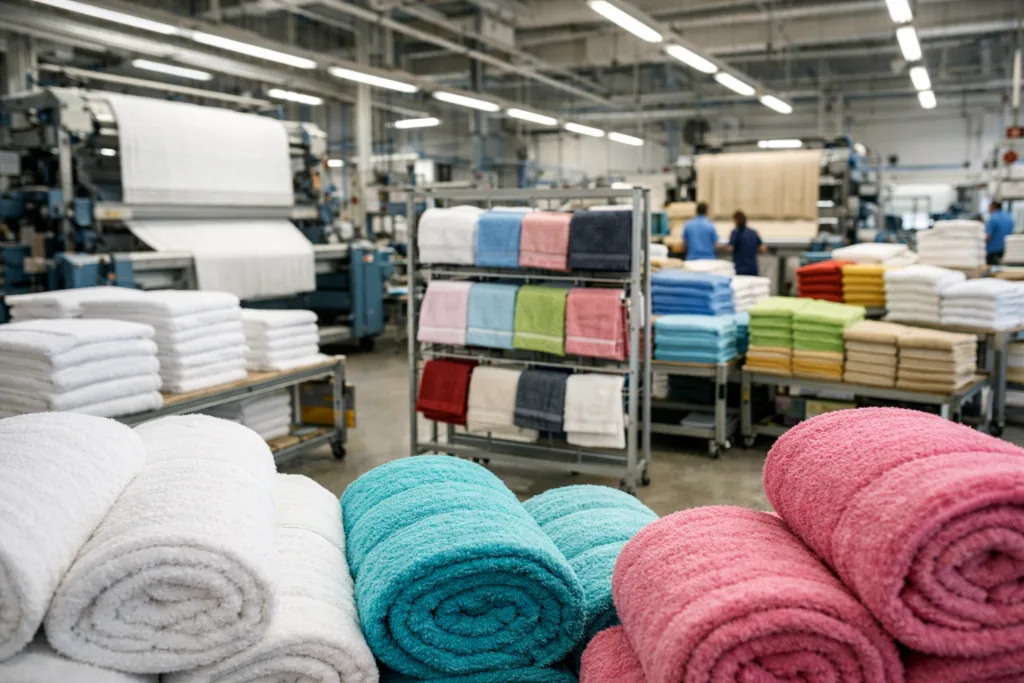
The towel supply chain often includes several key players: manufacturers, suppliers, traders, and wholesalers. Each has a distinct role, affecting factors like pricing, quality management, and supply speed. Understanding these differences clarifies common sourcing confusion, especially when searching for towel wholesale suppliers for projects ranging from hospitality to retail distribution.
- Manufacturer: Owns and operates production facilities. Offers customization, bulk orders, and control over technical specs and finishing details. Direct engagement usually means lower per-unit cost on larger quantities, better traceability, and detailed support for unique specifications.
- Supplier: Sources towels (sometimes with branding options) from one or many manufacturers. Good for general needs or quick-turnaround items but offers limited deep customization and less insight into technical variables unless partnered with specialist factories.
- Trader: Functions as a broker, connecting various global partners for complex exports or imports. Usually deals in standardized products and can help with international logistics—however, technical support may be minimal.
- Wholesaler: Maintains local or regional inventory for fast fulfillment. Works well for standard sizes and colors in ready stock, but can’t fulfill custom projects or unique material requirements.
In terms of pricing, manufacturers generally offer the best cost structure for large orders, especially for custom projects. Suppliers and wholesalers offer flexibility and lower minimum order quantities (MOQs), suitable for smaller brands or resellers entering the market. For communication and technical support, direct access to manufacturers is typically smoother, especially when rapid adjustments are needed or quality issues arise.
Scalability matters: established brands benefit from direct manufacturing for consistent quality and branding control, while startups or buyers with low volume may prefer towel wholesale suppliers for minimized risk and faster restocking.
Whenever rapid design feedback, technical specification changes, or premium branding are required, working with a specialized towels manufacturer provides end-to-end oversight. For operational convenience, especially with broad or local distribution, suppliers or wholesalers streamline order processes, often at the expense of customization depth.
Material Comparisons: Cotton, Microfiber, Bamboo, and Blends
Material choice is a cornerstone in any towels manufacturer decision process. The three most common towel fibers are cotton, microfiber, and bamboo—each offering unique performance traits and market fit.
Cotton: Considered traditional, cotton towels are valued for their plush feel, excellent absorbency, and durability across wash cycles. Egyptian, Turkish, and combed or ringspun cotton varieties are popular for luxury applications. They may take longer to dry and can grow stiff if not finished properly, but advances in finishing have greatly improved their hand feel. For hospitality and home brands that prioritize softness and classic appeal, cotton remains a go-to.
Microfiber: Made from ultra-fine synthetic filaments, microfiber towels are lightweight, super absorbent for their weight, and fast-drying. They’re ideal for gyms, sports teams, and promotional uses where drying speed or compact size is a priority. They tend to excel in cleaning or technical use but might lack the plushness of premium cotton. Care should be taken with iron heat and fabric softeners, which can reduce performance.
Bamboo: Often blended with cotton, bamboo-based towels offer softness and a ‘cool’ feel, thanks to their smooth, round fibers. They’re known for being hypoallergenic and more sustainable, as bamboo requires less water and pesticides than cotton. Still, pure bamboo isn’t common for high-performance towels, as blends perform better over the long term.
Blended fabrics combine the strengths of different fibers—for instance, cotton’s softness with microfiber’s quick-dry properties. Depending on target market (e.g., luxury hotels seeking plushness, gyms needing high-use durability, or eco-brands focusing on sustainability), material choice drives guest experience and repeat purchases.
Environmental considerations are rising in the towel sector, from certified organic cotton eco-friendly towel production to recycled polyester microfibers. Sourcing partners with access to sustainable materials can improve brand reputation, especially for private labels targeting eco-conscious buyers.
Circe Towel frequently helps clients evaluate trade-offs between classic cotton, fast-dry microfiber, and responsible bamboo/cotton blends, showing how each material’s life-cycle and guest experience can align with brand goals and specific use cases.
Manufacturing Techniques and Construction Differences
Towel performance depends not only on fiber choice but also on construction. Towels supplier options cover a range of weaving methods, pile structures, and decorative techniques. Here’s how the main types differ:
- Terry: Features uncut loops on both sides for maximum absorbency and plushness. Common in bath towels and hospitality sectors.
- Velour: One side is sheared for smoothness, giving a softer, almost suede-like texture. Better for vibrant prints and higher-end branding.
- Waffle: Recognizable by its grid texture, waffle towels are lighter, fast-drying, and stylish—great for spas and wellness, and as upscale gifts.
- Jacquard: Uses complex weaving to create patterns that are integral to the towel’s structure, enabling logo integration without surface printing. Perfect for lasting brand visuals.
Weaving decisions impact final hand feel, wash durability, and visual branding. For example, a beach towel made with terry is bulkier but highly absorbent, while a microfiber promotional towel is slim, compact, and fast-drying (microfiber-quick-dry-printed-beach-towel). GSM (grams per square meter) directly relates to thickness and absorption; higher GSM means denser and plusher towels, but with longer drying times and higher shipping cost, a trade-off that matters in hospitality or logistics-sensitive projects.
When it comes to decoration, embroidery offers durability and luxury feel for logos, while digital or reactive printing (How Digital Printing Is Changing the Towel Industry) is ideal for full-color designs and promotional campaigns. Jacquard weaving creates permanent patterns but may increase cost and production time. Jacquard towel manufacturing enables creative visual solutions resistant to wash-fading.
Towels supplier selection should balance product function with technical construction—for example, gyms might prioritize quick-dry waffle or microfiber, while hotels often select high-GSM terry or jacquard for superior guest feel and longevity.
Design and Specification Checklist for Towels
When deciding between towels manufacturer vs towels supplier, use a checklist approach to clarify requirements and ensure alignment with your business goals. Here is a practical specification table to help structure decisions:
| Specification | Options | Impact on End-Use |
|---|---|---|
| Size | Face, hand, bath, beach, gym, kitchen | Should match user/application (e.g., large bath towels for hotels, compact gym towels for fitness) |
| Material | Cotton, microfiber, bamboo blend | Determines absorbency, softness, and drying speed |
| GSM | 300–750+ | Higher GSM = more plushness, lower GSM = quick-dry/lightweight |
| Edge Finishing | Hemmed, piped, decorative borders | Affects durability, bulk feel, and appearance |
| Decoration | Embroidery, printing, jacquard | Brand visibility, wash longevity, cost |
| Packaging | Bulk, retail, branded gift box | Impacts shelf presence and gifting appeal |
Consider the following when narrowing your options:
- Define towel sizes that match end users (e.g., gym towels for fitness studios, bath towels for guest rooms).
- Choose GSM suitable to your brand positioning and budget—don’t overspecify for cost-sensitive programs.
- Select material and edge finishing based on required aesthetics and durability (7 Ways Hemming & Stitching Shape Towel Edge Durability).
- Match logo application to branding needs—embroidery for luxury, printing for bold visuals, jacquard for long-term use.
- Plan packaging with the end channel in mind (retail-ready vs. bulk hospitality supply).
Coordinating these specs early with your towels manufacturer vs towels supplier helps reduce design delays, avoid mismatches, and ensure your towel program aligns with expectations.
Quality Standards and Testing Requirements
Quality is not just about initial feel; it’s about performance over time. A reliable towels supplier should provide verified data on absorbency, shrinkage, pilling, and colorfastness, using internationally recognized standards. Key indicators include:
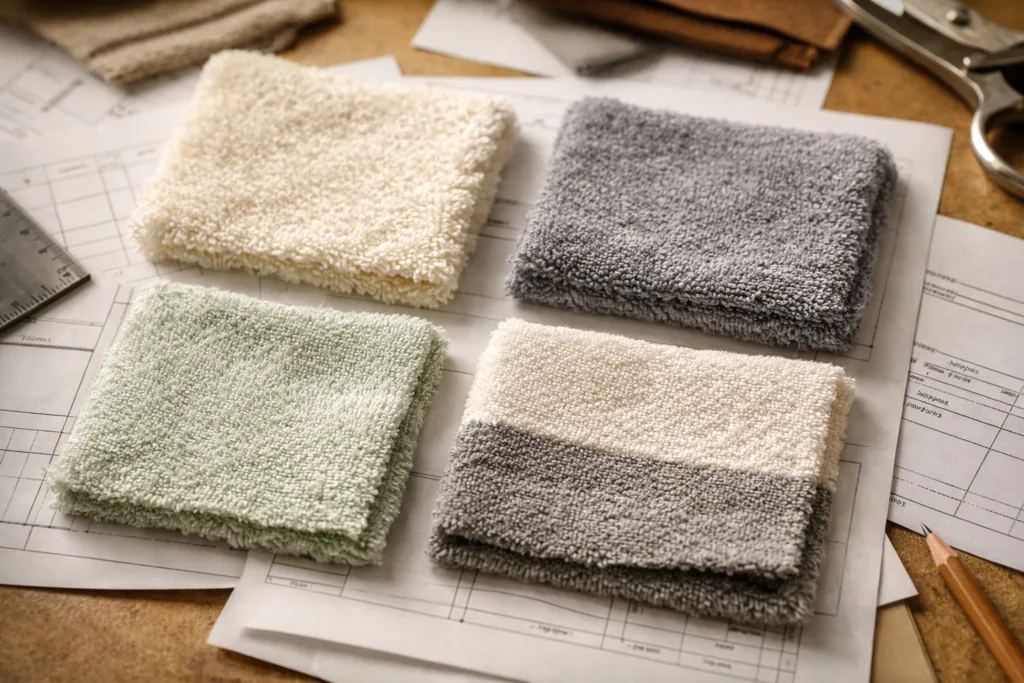
- Absorbency: How much water the towel can hold relative to its weight. Critical for uses where quick drying is expected, like in hospitality.
- Wash Durability: Resistance to fiber damage, color fade, and shrinkage over repeated laundering (towel shrinkage control).
- Stitching Quality: Consistent seam lines prevent unraveling and add to perceived premium quality.
- Linting Control: Minimized fiber shedding ensures professional appearance after washing.
Testing typically conforms to standards like ISO 105 (colorfastness), AATCC 79 (absorbency), and others outlined in export markets. Request data sheets and, if possible, third-party reports. A responsible towels supplier will accommodate sampling, pre-shipment inspections, or in-house lab tests to confirm quality as promised. For details, see Towel Quality Testing: What Brands Check Before Shipping.
If you face questions about technical specs or certifications for competitive tenders, experienced suppliers can guide you in stress-testing samples or adjusting specs for durability gains. If you’re unsure, ask for production records, sample test results, or third-party audits before greenlighting large orders.
Industry and Application Fit: Who Should Choose What?
Not every towels manufacturer or towels supplier suits every business. The best partner is determined by your target market, order volume, customization needs, and growth stage.
- Hospitality (hotels, resorts): Partnering directly with a manufacturer is recommended. Hospitality operations require consistent, high-quality towels that withstand industrial laundering. Custom sizes, jacquard branding, and bulk packaging are best arranged with factory-level control (hotel-quality-solid-color-cotton-bath-towel).
- Sports & Fitness: Gyms, sports clubs, and events often need quick-dry, durable towels and frequently use suppliers or wholesalers for standard microfiber options, sometimes with simple logo printing (microfiber gym equipment towel).
- Promotional & Branding: For campaigns, a supplier with low MOQs and rapid fulfillment can make sense, accepting less customization but faster turnaround.
- Brand Start-Ups: Startups with limited budget/scale often start with suppliers to test market appeal, then switch to direct manufacturing as volume grows.
- Established Brands/Retailers: Control, consistency, and deeper customization lead these businesses to work with manufacturers for private label programs and seasonal launches.
For example, a premium gym chain might start off buying ready-stock towels via a supplier for pilot projects. As member volume grows and the brand matures, they transition to direct manufacturing for custom colorways and size specs.
Need help deciding which towel sourcing route is best for your brand? Circe Towel can assist with tailored solutions, sharing insights from projects across every industry segment.
Customization Options for Branding and Private Labeling
Customization takes your towels beyond commodity status. A towels manufacturer can help you integrate logos, patterns, special borders, hang tags, and retail packaging that reflect your brand’s story. You can choose from:
- Embroidery: Durable, luxury touch; best for high-end or hospitality.
- Printing (reactive/digital): Vibrant, complex graphics for promotional or retail towels.
- Jacquard Weaving: Logos or artwork woven directly into the fabric (custom embroidered sports towel), adding depth and longevity.
- Custom Labels & Packaging: Private label sewing, gift sets, eco-packaging, or branded sleeves for retail shelves.
Private label manufacturing solutions create cohesion across products, supporting seasonal launches, event campaigns, or tiered branding—think matching towels, gift sets, or co-branded promotional gear. Cost impacts depend on decoration technique, color count, and order volume; embroidery often costs more per unit than printing but can create a premium effect. Lead times for custom orders (especially jacquard or embroidery) are naturally longer, and most factories set MOQs—often 300–1000 units per item/design, depending on the complexity.
Partnering directly with a towels manufacturer gives you oversight, flexibility, and access to in-house design support, ensuring your towel project stands out in both look and feel.
Common Mistakes and Troubleshooting in Towel Sourcing
Towel sourcing can trip up buyers if they overlook key technical or process details. Here are some common errors when working with a towels supplier, plus solutions:
- Wrong GSM Selection: Specifying a towel that’s too thin for hospitality or too heavy for sports can disappoint end users. Always match GSM to expected use and client feedback.
- Poor Material Alignment: Choosing microfiber for luxury hotels or cotton for rainy sports events might misalign with performance needs. Ensure fabric choice fits application.
- Impractical Logo Methods: Picking full-color printing for items subject to heavy laundering or embroidery for intricate gradients can cause brand visuals to fade or look uneven. Evaluate each method’s durability vs. design.
- Ignoring Edge Finishing: Weak seams or unfinished edges can unravel, reducing product life (hemming and stitching guidance).
If you discover absorbency is lacking, confirm fabric weight and pre-treatment processes with your supplier; sometimes finishing agents or incorrect washing remove moisture-wicking coatings (finishing agents in soft towels). For scratchy hand feel, review whether the right fiber blend or finishing treatment was chosen.
When you spot recurring quality problems, document issues with photos and work with your supplier on root-cause analysis. Share technical details and real-world usage reports for corrective action or claims. If persistent, consider auditing their factory or shifting to a towels manufacturer with stronger in-house QC processes for critical, branded projects.
Comprehensive Ordering Guide for Towels
Simplify your buying journey by understanding key steps in the order cycle—no matter if you select a towels manufacturer vs towels supplier.
| Stage | Buyer Task | Supplier/Manufacturer Role |
|---|---|---|
| Inquiry & Specification | Prepare spec sheet, clarify sizes and logo options | Review feasibility, suggest improvements |
| Sampling | Order physical samples for testing | Produce and ship samples; adjust based on feedback |
| Artwork & Proofing | Submit final artwork/logos | Share digital/physical proofs for approval |
| Order Placement | Confirm price, MOQ, delivery timeline | Issue contract/proforma, begin raw material sourcing |
| Bulk Production | Monitor progress, arrange QA as needed | Manufacture order, conduct QC checks |
| Packing & Shipping | Plan logistics, confirm packaging specs | Pack per instructions, hand over to freight |
Key factors: Check MOQs carefully (some suppliers allow lower entry quantities), confirm lead times (plan for peak/holiday surges), and communicate expected delivery windows up front.
Artwork must be high resolution for embroidery or digital print; work with your supplier’s designer where available to pre-empt design translation issues. Always ensure a final proof is approved before mass production.
Track logistics from factory floor to your warehouse, clarifying Incoterms, shipping modes (air/sea), and any special requirements for retail or promotional campaigns. Prepare for lead-time variances during high season and always build in buffer time for unforeseen production delays. For further detail, consult How Towels Are Packed and Prepared for Export.
Frequently Asked Questions
What’s the difference between a towel manufacturer and a towel supplier?
A towel manufacturer makes the products from raw materials, offering full customization and technical control, while a supplier resells finished towels from one or more sources, often without direct control over production.
How do I choose between towel wholesale suppliers and manufacturers?
Consider order size, customization needs, and delivery timelines—large, custom projects suit manufacturers, while small, quick orders favor towel wholesale suppliers.
Can a towels manufacturer offer lower MOQs like suppliers?
Manufacturers usually have higher MOQs due to production setup costs, but some can offer lower quantities for sample runs or with adjusted specs depending on the project scope.
What affects the cost difference between buying from a towels manufacturer vs towels supplier?
Buying direct from the manufacturer eliminates middleman margin and supports deeper customization, while suppliers may bundle logistics, flexibility, and accessible small runs into the pricing structure.
How do I verify the quality of towels from suppliers?
Ask for physical samples, test reports, and production records; check key metrics like GSM, absorbency, and wash durability before finalizing a bulk order.
Are testing standards the same for all towel wholesale suppliers?
Not always—requirements can vary by export market, but reputable suppliers should follow internationally recognized test protocols for absorbency, colorfastness, and durability.
Related Reading
- How to Choose the Right Towel Manufacturing Partner for Your Brand
- Discover Sustainable Towel Production from Organic to Recycled Materials
- Master Towel Logo Application: Embroidery, Printing, and Jacquard Compared
- Quality Testing Essentials for Successful Towel Sourcing and Shipping
- Prolong Towel Lifespan: 7 Edge Finishing and Stitching Tips for Durability