
Understanding the Basics: OEM, Private Label, Wholesale, Custom Towels
When sourcing towels for business, the terms oem towels, private label towels, wholesale towels, and custom towels often come up. Each option offers different levels of brand control, product flexibility, and logistical demands. Choosing between them depends on your brand identity, target market, and budget priorities.
OEM towels (Original Equipment Manufacturer) are produced according to a buyer’s unique specifications. Here, you control everything from materials and design to labeling. The manufacturer uses your tech packs or detailed requirements and produces towels under your brand name—the ultimate option for differentiation.
Private label towels are pre-designed and produced by manufacturers but sold under your brand. You select from existing products and add your labels or packaging. This model suits businesses seeking quick market entry with moderate flexibility and limited development hurdles. Branding rights still rest with you.
Wholesale towels are ready-made stock, usually generic, without extensive customization. Buyers purchase these in bulk for resale or operational needs. There’s no branding involvement beyond perhaps a swing tag. Wholesale works well for frequent reorders, budget sensitivity, and fast fulfillment.
Custom towels cover a spectrum, from small tweaks to full-scale design. These can include size, material, color, logo application, or packing style. The term often overlaps with OEM but can also include variable branding scenarios.
Understanding these sourcing models matters because your decision will affect product uniqueness, cost structure, minimum order quantities, and your ability to build a lasting brand impression. Hospitality chains, sports leagues, retail brands, and promotional marketers all rely on one or more of these options, based on their business goals.
- OEM towels: full control, unique design, highest flexibility, larger MOQs
- Private label towels: fast to market, branding rights, moderate MOQs
- Wholesale towels: stock products, low MOQs, less control
- Custom towels: flexible adjustments, varies by supplier, medium MOQs
For those navigating their towel sourcing journey, clarifying the differences between oem towels, private label towels, wholesale towels, and custom towels is foundational for smart decision-making.
Material Comparison: Cotton vs. Microfiber vs. Bamboo vs. Blended Fabrics
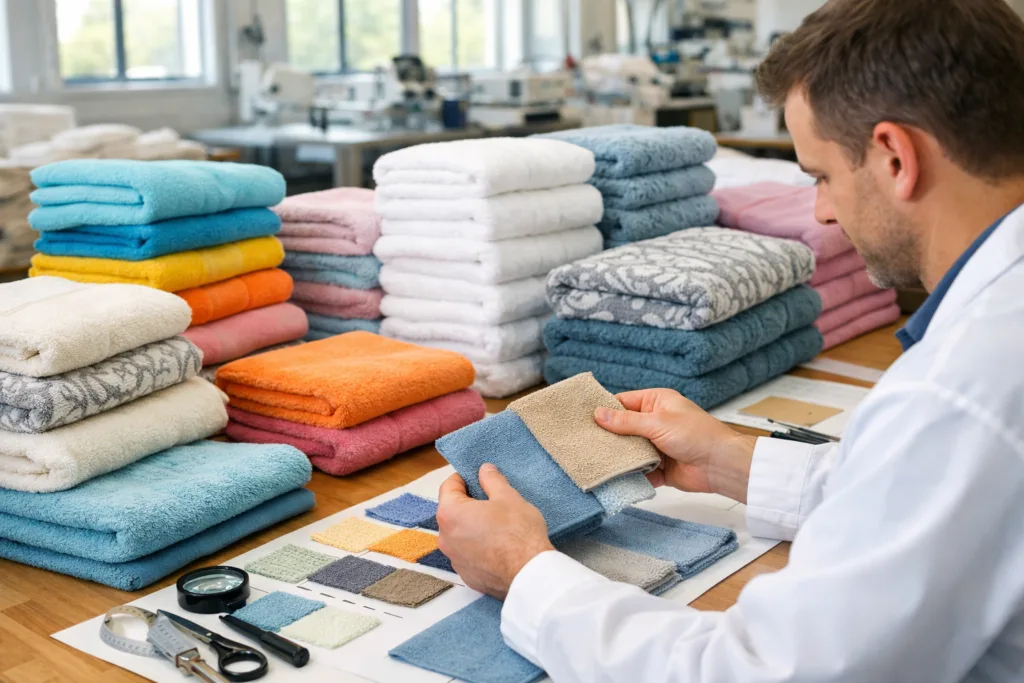
The foundation of every towel is its material. The most common types include cotton towels, microfiber towels, bamboo blends, and various synthetic or mixed-fiber options. Each material delivers a unique performance profile, affecting how the final product feels, functions, and lasts in use.
Cotton towels are favored for their natural softness, classic look, and superior absorbency. Ringspun and combed cotton increase durability and plushness—ideal for hotels, spas, and retail. However, high-GSM cotton towels dry more slowly and can be bulkier to store or ship. Bamboo blends introduce natural antibacterial properties and outstanding softness, making them attractive for eco-conscious or luxury markets, though at a higher price point.
Microfiber towels outshine others in drying speed and compactness. They’re lightweight, resist odors, and are easy to care for. Sports clubs, gyms, and car care companies often choose microfiber for its quick-dry function and longevity. But, the hand-feel is distinct and some users prefer the thicker, plush touch of cotton towels.
Blended fabrics combine cotton and synthetic fibers to balance cost, performance, and appearance. Blends might improve colorfastness or reduce lint but can compromise on absorbency or feel compared to pure cotton towels. Synthetic blends often last through more washes with less shrinkage, lowering lifetime replacement costs in operational settings.
Materials also have environmental implications. Bamboo and organic cotton towels are seen as greener options, using fewer chemicals and less water in production. Microfiber requires less drying energy but raises concerns about microplastic shedding during laundering.
In specific applications, material choice relates directly to user need:
- Gyms, sports, and poolside: Microfiber towels for quick-dry, odor resistance
- Hotels and spas: High-GSM cotton towels for comfort and luxury feel
- Baby and wellness: Bamboo blends for softness against sensitive skin
- Promotional and bulk use: Blended towels for cost-effectiveness
Tips for buyers: Always test sample towels for absorption rate, softness post-wash, and shrinkage. Check for certifications such as OEKO-TEX® for chemical safety. For more details on material testing, see our blog on Towel Quality Testing: What Brands Check Before Shipping.
| Material | Absorbency | Softness | Durability | Environmental | Cost Range | Best Application |
|---|---|---|---|---|---|---|
| Combed Cotton | High | Very Soft | Good | Natural, biodegradable | $$-$$$ | Hotels, retail |
| Microfiber | Moderate | Medium | Excellent | Microplastic risk | $-$$ | Gyms, sports, car care |
| Bamboo Blend | High | Very Soft | Good | Sustainable, fast-growing | $$-$$$ | Wellness, baby, spa |
| Cotton/Poly Blend | Moderate | Medium | Excellent | Mixed impact | $-$$ | Promotional, frequent wash |
In Circe Towel’s experience, choosing the right towel material is a negotiation between immediate cost, feel, and usage longevity. Clients seeking enduring softness often start with combed cotton, while those pursuing high turnover and efficiency opt for microfibers.
Construction and Manufacturing Comparisons
Towel performance is shaped not only by materials but also by construction. Manufacturing methods like loop style, density, and finishing directly impact absorbency, softness, and usable lifetime—for both standard and custom towels.
Terry towels are the classic choice, with looped piles that excel at water absorption. Their thickness and softness come from the thread length and density—the higher the GSM, the more plush and absorbent. Edge stitching and hemming also play a role in long-term durability.
Velour towels are sheared on one side for a sueded, velvet-like finish—ideal for printing vibrant logos or graphics for retail and promotional custom towels. These sacrifice some absorbency compared to terry but provide a premium appearance.
Waffle towels are thin, compact, and fast-drying, favored in kitchens, spas, and travel sets. The textured weave is gentle on skin but less plush than terry cloth. Waffle cotton towels are often selected for their lightweight handling and breathability.
Jacquard towels use woven patterns, not printed, enabling subtle and durable branding. Jacquard construction adds sophistication and resists fading after many washes. It’s a popular method for luxury hotels, retail collections, and sports teams. Learn more in our guide Jacquard Towel Manufacturing Explained.
Decoration methods also matter:
- Printing (reactive, digital): High color saturation and detailed patterns, but may fade with harsh washing
- Embroidery: Elegant, tactile logos, superior wash durability, higher cost
- Yarn dyeing: Lasting color, woven patterns, ideal for stripes and jacquard effects
Recommended constructions by application:
- Hotels: High-GSM terry or jacquard for absorbency and feel
- Retail/gifting: Velour or custom printed towels for visual appeal
- Gym/sports: Lightweight terry or waffle for quick-dry performance
Terry construction is more affordable in bulk, while velour and jacquard add production steps and design costs. Creative custom towels require balancing these factors with your brand’s goals and end user expectations.
Design and Spec Checklist for Sourcing Towels
Sourcing the right custom towels means knowing what to specify from the outset. A structured design and specification checklist streamlines supplier communication, ensures brand alignment, and reduces costly errors.
| Spec Component | Buyer Input/Decision | Notes |
|---|---|---|
| Size | Standard/Custom | Match with usage: bath, hand, face, beach, gym |
| GSM | 300–800 GSM | Higher GSM = thicker, more absorbent but slower to dry |
| Material | Cotton, Microfiber, Blend | Relates to absorbency, hand-feel, price |
| Edge Finish | Hemmed, double-stitched, decorative | Key for durability and brand appearance |
| Logo Method | Embroidery, print, jacquard | Branding visibility vs. budget, wash durability |
| Packaging | Bulk/polybag, custom box, band | Supports branding and display goals |
Performance matters, too. Confirm specs like absorbency (ideally 3–5x towel weight in water), softness retention after 10+ washes, and colorfastness (no visible fading). Choose packaging that fits your market: polybag for hotels, gift boxes for retail, branded wraps for promotions.
Buyers should prioritize what matches their target user: fast turnover operations may compromise on super-high GSM for faster drying, while luxury properties might invest in the thickest, softest towels available. Reviewing towel absorbency and yarn twist science provides valuable context when setting specs for custom towels.
Ensuring Quality: Testing and Performance Standards
Quality assurance is vital, especially for private label towels that carry your reputation. Industry-standard testing screens for absorbency, wash durability, shrinkage, colorfastness, and lint shedding. Each measurement helps predict real-world lifespan and end-user satisfaction.
Absorbency testing times how quickly and how much water a towel can hold—premium towels absorb at least three times their weight within seconds. Wash durability is examined by running multiple launderings and observing retention of texture, size, and color intensity. Shrinkage tests, both lengthwise and widthwise, ensure the towel doesn’t become misshapen over repeated washes—max shrinkage should fall under 5% on high-quality items. See more in our guide 8 Expert Ways to Master Towel Shrinkage Control.
Stitching consistency is a subtle but essential durability marker, showing up as clean, tight hems and dense edge finishing. Lint control prevents frustration and visible mess—achieved via proper finishing, pre-washing, and fiber selection.
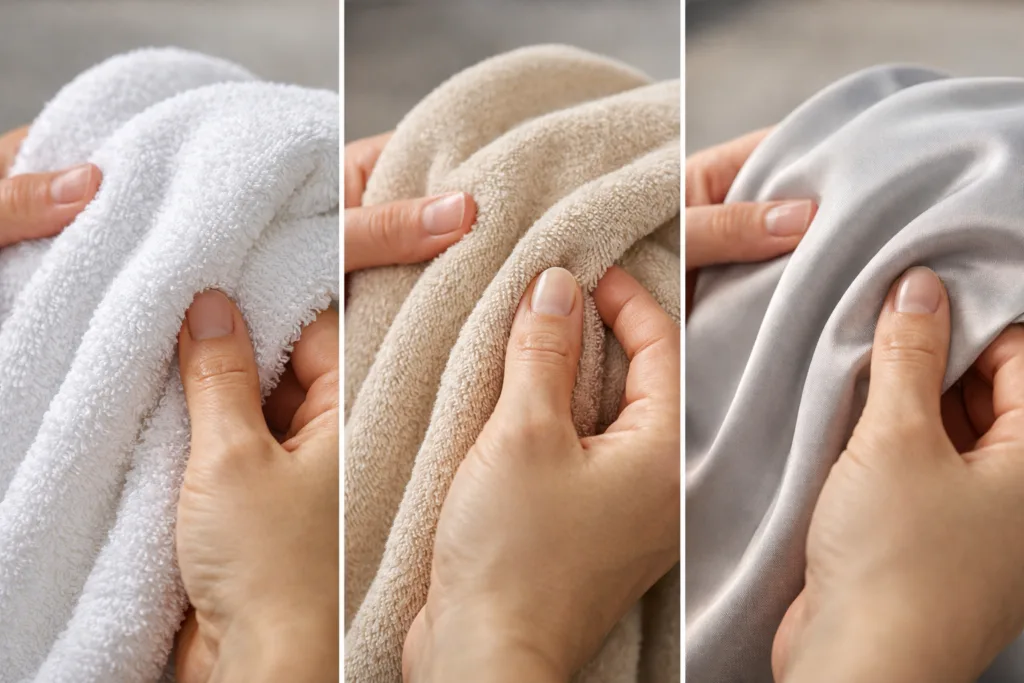
When sourcing private label towels, always request full test reports and consider third-party inspection before shipment. Circe Towel recommends consistent laboratory testing and detailed pre-shipment review for brands building a reliable towel program. Explore the full process in How to Audit a Towel Supplier.
Industry Fit: Appropriate Applications for Each Sourcing Option
Understanding which model—oem towels, private label towels, wholesale towels, or custom towels—aligns with your industry helps streamline sourcing. Different industries prioritize factors like speed, brand visibility, and customization flexibility.
Gyms, sports clubs, and fitness chains often select custom towels or wholesale towels depending on need. Wholesale towels ensure reliable supply for locker rooms and frequent replacement, while custom towels highlight branding, sponsor logos, or event identities. Explore options for gym towels and sports towels.
In hotels and resorts, private label towels offer a path to signature experiences and guest loyalty. Here, branded woven borders, custom colors, or specific sizes create a distinct impression. Some chains turn to OEM towels for maximum control over every design aspect. Retail and specialty brands may alternate between OEM and private label depending on their capacity for design and logistics management.
Promotional agencies favor wholesale towels for speed and budget, but campaign-driven events choose limited-edition custom towels with brand icons, event dates, or unique artwork.
- Summer/holiday: Custom beach towels often trend, with vibrant graphics and packaging tailored for gifts or promotions. See examples at beach towels.
- Sports events: OEM towels with embroidered or jacquard logos stand out on the field or as fan merchandise.
- Corporate events: Custom towels with logo printing make memorable giveaways with practical appeal.
Seasonal changes may drive bulk purchases of quick-dry towels for pools, or heavier bath towels for luxury winter offerings. Matching the towel sourcing model to the industry ensures both supply stability and maximum brand or operational impact.
Customization Options and Branding Implications
Customization is the sharp edge that sets your towel offering apart. Especially for private label towels and custom towels, design freedom extends from the logo method to packaging, with major implications for user perception and brand recall.
Logo techniques include embroidery (rich texture, premium feel), jacquard weaving (subtle and durable, best for patterns or larger scale designs), and digital/reactive printing (photorealistic graphics, vibrant colors, best for promotional campaigns). Your method impacts upfront cost, minimum order quantity, and washing durability. For a comparison, check out Logo Towels 101.
Border and edge treatments can be customized with contrast bands, decorative stitches, or woven branding. This detail-oriented approach is especially valued by high-end hospitality clients keen on differentiation.
Label and packaging customization are essential for private label towels entering retail. Choices range from simple swing tags and size labels to fully designed boxes, bag wraps, or banding—each adding to customer experience and perceived value.
For example, Circe Towel has produced limited-edition promotional towels combining digital prints and embroidered logos for sporting events, balancing visual impact with durability. Successful projects start with clear artwork, thoughtful branding placement, and early discussion of manufacturing capabilities and limits.
Customization establishes unmistakable market identity, so best practice involves pilot samples, feedback rounds, and end-user focus in both towel design and branding strategy.
Common Mistakes to Avoid When Sourcing Towels
Even seasoned buyers make mistakes when sourcing wholesale towels or oem towels. The most frequent issues stem from overlooked technical details or a mismatch between towel attributes and their intended application.
Wrong GSM selection often results in towels that are too thin for luxury users or too thick and slow to dry for high-turnover settings. Always match GSM to usage and laundry frequency.
Poor material choices can yield towels with rough hand-feel, weak absorbency, or high shrinkage. Request test reports and physical samples before large orders—especially with oem towels where specs are unique to you.
Color fading indicates subpar dyeing or improper washing procedures. Specifying colorfastness testing is essential, particularly for dark or vibrant tones needed in hotel or promotional towels. For more detail, see quality testing for towels.
Loose stitching and unchecked edges are common flaws that shorten towel life. Insist on double-stitching for edges and test seam strength. Choose decoration methods that fit your actual budget and end-user washing realities—for instance, favor embroidery for institutional towels and screen printing for one-off events.
- Test for lint shedding with initial washes
- Prioritize sampling with your real end use in mind
- Discuss branding methods and packaging with your supplier in detail
Avoiding these mistakes usually comes down to transparency, detailed technical specs, and collaborative sampling—especially with wholesale towels and oem towels where the room for adjustment is limited after bulk production starts.
Ordering Guide: Key Considerations for a Smooth Process
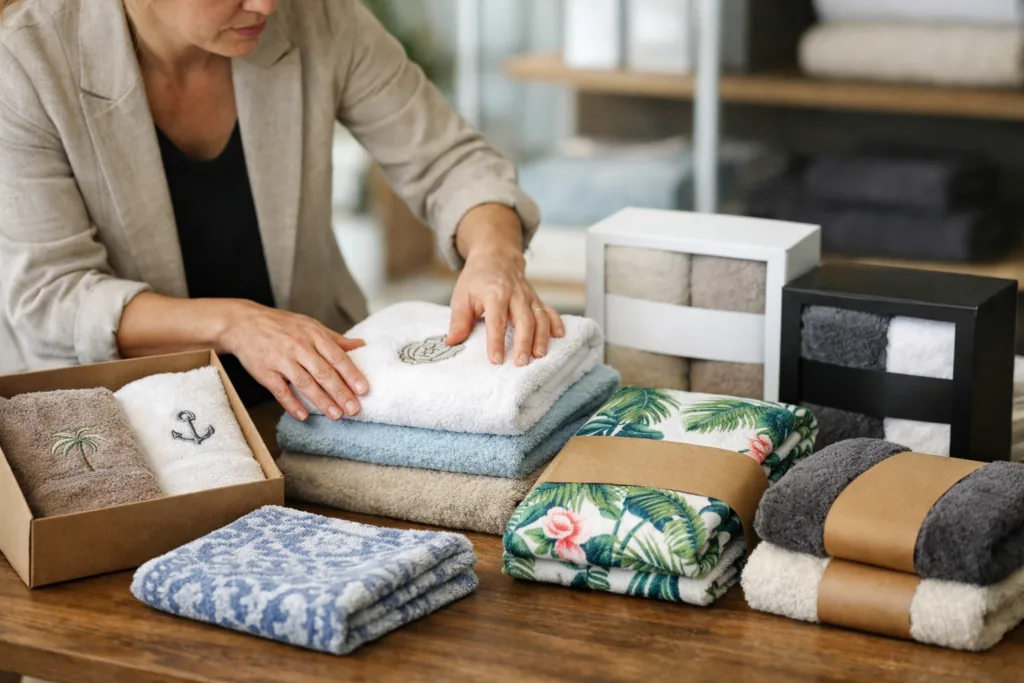
A smooth towel order depends on understanding minimums, timelines, and communication steps—especially with custom towels and private label towels.
Minimum order quantities (MOQs): OEM and custom towels usually have higher MOQs (500–1000 units per design), reflecting the unique setup involved. Private label towels may offer mid-tier MOQs (200–500 units), while wholesale towels are often available in smaller cases (50–100 units).
Lead times vary: Custom and OEM orders average 30–60 days (including sampling and approvals), with private label and wholesale orders faster due to existing inventory. Sampling and artwork preparation are essential up front—never skip this even for repeat orders.
Key proofing and packaging checklist:
- Approve pre-production samples for color, size, GSM, logo placement, and edge finish
- Check packaging options (bulk, polybag, retail pack, band wrap) to ensure branding consistency
- Finalize shipping marks and carton details early to avoid customs delays
- Discuss shipping timelines and preferred freight mode (air vs sea) up front
Strong supplier communication and a clear production schedule keep surprises to a minimum. For further advice, see our guide Complete Guide to Towel Manufacturing: MOQ, Sampling, Quality, and Lead Time Explained.
Frequently Asked Questions
What is the main difference between oem towels and private label towels?
OEM towels are made from your detailed specifications—complete control over design and manufacturing—while private label towels are pre-designed by the manufacturer, allowing you to apply your own branding for quicker market entry and lower development costs.
Are custom towels and oem towels the same thing?
Not always—oem towels are always custom, but some custom towels allow partial adjustments to existing products while OEM projects are fully created from scratch to your exact requirements.
What quality tests should I request for private label towels?
Request tests for absorbency, colorfastness, wash durability, shrinkage, and lint control so you can be sure your private label towels meet your performance and branding standards.
How do minimum order quantities differ with each sourcing model?
OEM and custom towels typically require higher MOQs for efficiency, private label towels are moderate, and wholesale towels offer the lowest, which is best for small or fast-turnover buyers.
What are the lead times for oem towels compared to private label towels?
OEM towels usually take longer due to custom development and sampling (often 40–70 days), while private label towels are faster because the products already exist (about 15–30 days after sample approval).
Can I request eco-friendly or special materials for my private label towels?
Yes, many private label suppliers offer eco-friendly choices like organic cotton or bamboo blends, but these options can require higher minimums and extended lead times for sourcing.
Related Reading
- 12 Deal-Maker Criteria for Choosing a Reliable Wholesale Towel Supplier
- Quick Guide to Picking the Right Logo Application for Towels
- How to Audit and Approve Your Towel Supplier—A Step-by-Step Quality Approach
- Master MOQ and Sampling in Custom Towel Manufacturing
- Increase Gym Value with High-Performance Custom Gym Towels
- Unlock Branding Power with Jacquard Towel Manufacturing