
Introduction to Private Label Towels
Private label towels open doors for brands to express their identity while meeting unique customer demands. By having your logo, colors, and packaging, you can offer products that truly differentiate your business in crowded markets. Hospitality groups, gyms, retailers, and promotional agencies rely on private label towels to blend both branding and function.
When starting a project, it’s vital to tackle two central questions: What is the minimum order quantity (MOQ) for private label towels? What cost structure should you expect? Manufacturing costs go far beyond generic price ranges—think about materials, GSM (grams per square meter), construction, branding methods, packing, and logistics. Understanding this breakdown gives you control over budgeting and product positioning.
In this guide, you’ll discover a detailed cost structure for private label towels moq, explore fabric choices, weave types, decoration techniques, and find a roadmap to efficient ordering and mistake avoidance. Whether you’re sourcing custom towels bulk or managing a new product launch, this article will help B2B buyers build realistic and informed expectations.
Defining Key Terms: MOQ and Cost Structure
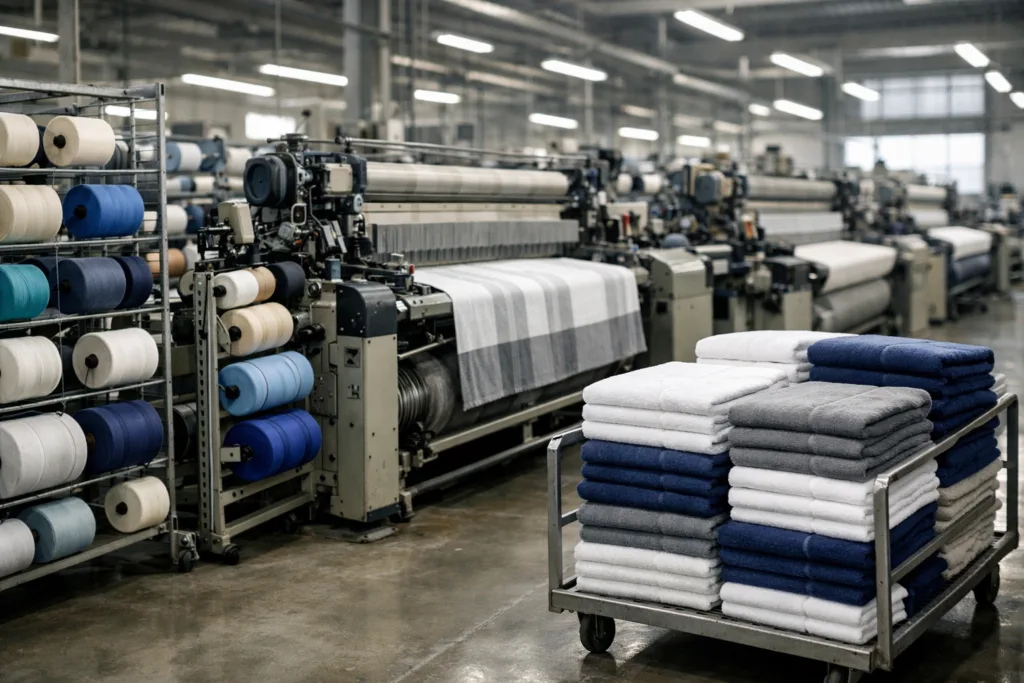
Minimum Order Quantity (MOQ) refers to the smallest number of units a manufacturer will produce in a single run. For private label towels moq, this number varies based on the complexity of your order—simple white cotton towels may have lower MOQs compared to printed or embroidered designs, where setup costs are higher.
Understanding the towel project cost structure involves dissecting every stage and their costs:
- Material cost: Price of cotton, microfiber, or blends per kilogram or meter.
- GSM: Weight and thickness, directly linked to both feel and raw material cost.
- Construction/process: Weaving (terry, jacquard), printing, embroidery, edge finishing.
- Decoration: Logo method, placement, and additional colors add complexity.
- Labels/packaging: Branded labels, gift boxes, poly bags, or export cartons.
- Sampling/proofing: Setup, prototype, and approval rounds.
- Logistics: Inland transport, export packing, shipping to your location.
- Loss/Yield: Allowance for material waste, rejects, or shrinkage during mass production.
The cost splits into fixed costs (setup charges, dyeing/printing/embroidery templates, sample development) and variable costs (raw materials, labor per towel, packaging per unit). Higher MOQs allow fixed costs to be divided over more units, lowering per-towel pricing.
GSM (grams per square meter) and construction method—like terry vs jacquard—directly impact both cost and minimums. Shipping fees depend on volume and weight, making bulk orders more cost-effective per piece.
Material Comparison: Choosing the Right Fabric
The fabric you select for custom towels bulk production drives both cost and consumer satisfaction. Most private label towels are either cotton, microfiber, bamboo, or blends. Here are the key differences:
| Material | Properties | Cost | Recommended For |
|---|---|---|---|
| Cotton | High absorbency, softness, breathable, traditional feel | Medium to high (premium in long-staple types) | Hotel, spa, retail, home use |
| Microfiber | Very fast drying, lightweight, excellent cleaning, less bulk | Low to medium | Fitness, sports, cleaning, travel |
| Bamboo/Blends | Softer feel, antimicrobial, sustainable, retains color | Medium to high | Wellness, eco-retail, luxury spa |
| Poly-cotton | Quick-dry, flexible, lower shrinkage | Low | Promotional, budget hospitality |
Material costs are sensitive to market fluctuations—cotton price spikes will raise your base cost, while microfiber offers more stable pricing but a different tactile experience. Higher GSM usually means more cotton used, which increases both absorbency and expense.
Luxury hospitality clients may favor Egyptian or Turkish cotton for superior softness; gyms and sport facilities often choose microfiber for its quick-drying benefits. The choice of fabric also affects your private label towels moq—higher-cost yarns often raise the manufacturer’s minimums to recover investment in raw materials and setup.
Across the board, it’s smart to align towel fabric selection with both your market’s functional needs and your branding objectives. Circe Towel notes that discussing realistic trade-offs between feel, absorbency, and pricing helps avoid misaligned expectations between buyers and manufacturing teams.
Construction Methods and Their Cost Implications
Wholesale custom towels are built using various construction techniques, each influencing price and performance. The major methods include:
- Terry weave: Classic looped pile, maximizes absorbency and softness for bath or spa towels.
- Velour: Loops sheared for a smooth finish, excellent for bold printing and a plush look—slightly less absorbent.
- Waffle: Textured, lightweight, dries quickly, ideal for gym, kitchen, or guest towels.
- Jacquard: Patterns woven directly for upscale branding, supports complex logos, higher setup and MOQ.
Complex methods like jacquard or border embroidery mean longer production times, higher fixed costs, and minimums. Jacquard weaving, for example, only becomes cost-efficient at moderate to large order volumes due to loom setup and yarn color changeovers. This drives up the private label towels moq compared to basic terry styles.
For gyms and sports merchandising, waffle or velour options balance price with quick-dry performance. For high-end hospitality, thick terry or jacquard signals luxury but requires a higher per-piece investment. Each method’s complexity—from the number of border colors to edge stitching type—feeds directly into both budget-building and MOQ calculations.
Refer to our expert insights into jacquard towel manufacturing for a deep dive on this premium construction approach.
Design & Spec Checklist for Private Label Towels
A clear specification checklist is foundational for cost control and getting exactly what you want from your private label towels project. Assessing needs up front prevents surprises in both pricing and final result. Here’s a practical guide:
- Size: Choose standard dimensions for easier production or custom for unique branding. Consider region-specific preferences (e.g., bath towels in the US vs Europe).
- GSM: Match towel weight to purpose—300–400 GSM for lightweight sports towels, 500–700 GSM for plush hospitality towels.
- Material: Pick cotton for spa feel, microfiber for athletic versatility, or bamboo blend for eco-luxury.
- Edging: Double-stitched, piped, or decorative borders impact the appearance and lifespan.
- Logo method: Embroidery for prestige, printing for colorful designs, or woven jacquard for patterns within the towel itself.
- Packaging: Whether bulk polybags, retail boxes, or gift sets, choices here affect both cost and consumer impression.
Always balance features with budget. Each customization (multi-color logo, custom edging, retail-ready packing) can nudge both costs and minimums upward. Use the following sample checklist for quick reference:
| Spec | Option | Impact |
|---|---|---|
| GSM | 400, 500, 650 | Higher GSM – more cost, softer, heavier |
| Edge Style | Standard, piped, decorative stitch | Better durability and branding |
| Logo | Embroidery, print, woven, label | Cost, sharpness, MOQ |
| Packing | Bulk, roll, box, set | Unit cost, consumer value |
| Labeling | Sewn label, printed, hangtag | Professional finish, extra labor |
For more tips, our step-by-step guide to building a branded towel business covers planning specs and branding essentials.
Quality Assurance and Testing Criteria
Quality can make or break your custom towels bulk initiative. Both you and your manufacturer need clarity on testing standards and what to check—before and after production. Focus on these main criteria:
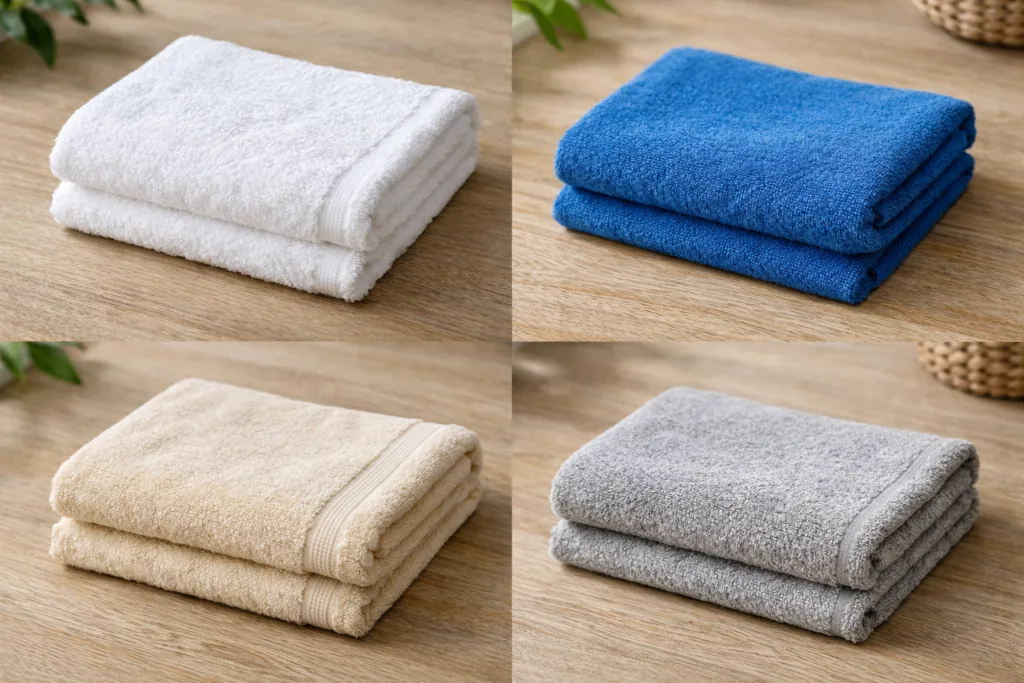
- Absorbency: Should meet end-use demands (e.g., faster for cleaning, higher for bathing). Overly soft towels can sometimes reduce water uptake due to finishing agents.
- Wash durability/shrinkage: Expect 3-7% shrinkage for cotton; pre-washing or special finishing controls excessive changes. Multiple washes should not lead to color fade or visible dullness.
- Colorfastness: Towel should maintain original color—reactive dyeing for cotton enables better results, especially for dark shades.
- Stitching/lint control: Tight, consistent hem and edge stitching prevents unraveling, while combed or ringspun cotton helps mitigate linting problems.
Recommended tests include water drop tests for absorbency, multi-cycle wash tests, color rub (for fade resistance), and edge pulling for stitching strength. Cut corners on testing, and long-term complaints (like loose loops or fraying) will hurt brand reputation and future sales.
Circe Towel utilizes sample approval rounds and third-party lab checks for high-volume orders, ensuring that custom towels bulk standards are met across every shipment. Investing in quality control upfront, even at a slightly higher cost, ultimately safeguards brand trust and reduces costly after-sales issues.
Industry Applications for Private Label Towels
The uses for private label towels are as diverse as their buyers. Hospitality groups outfit hotels, resorts, and spas with plush, absorbent towels that reflect luxury. Gyms and wellness centers require quick-dry, durable options in custom colors—often favoring microfiber for its functional edge and reduced weight in laundry cycles.
For retailers and e-commerce brands, design flexibility is paramount. Eye-catching packaging or unique forms, like round beach towels or waffle weave kitchen cloths, can accelerate sell-through. Promotional and event companies focus on mass appeal with budget-friendly options, where logo visibility and lead times take precedence over long-term durability.
Market trends—like sustainability or digital printing—impact both fabric selection and MOQ planning. Eco-conscious buyers increasingly request bamboo, recycled cotton, or custom packaging made from recycled materials. Meanwhile, technological advances allow for sharper logos and faster sampling at scale.
Ultimately, the ideal towel spec aligns with your industry’s use-case, buyer profile, and distribution needs—hospitality might prioritize launderability and neutral colors, while retail might chase seasonal prints and specialized packaging.
Customization Options: Branding Your Towels
Branding potential for private label towels moq extends far beyond the simple addition of a logo. Diverse decorative methods allow buyers to tailor visual identity, functionality, and perceived value:
- Embroidery: Luxurious look, suitable for logos or monograms, works best on thicker towels (higher GSM). Embroidery costs more per unit and may necessitate higher MOQs due to setup expenses.
- Printing: Options like screen, digital, or reactive printing offer vivid color for complex designs. Ideal for beach or promotional towels where design coverage matters most.
- Jacquard weaving: Integrates patterns into the towel itself, a premium technique for upscale branding—generally commands the highest MOQ due to loom setup time.
- Label customization: Woven sewn-in labels, printed tags, or hangtags complete the custom presentation and reinforce brand identity.
Every customization option influences both unit cost and minimums. Retail-ready packaging—such as gift boxes, sets, or eco-friendly wraps—adds value, but increases per-unit and shipping costs as well. We recommend discussing with your towel partner early to optimize branding impact within your budget. For method specifics, our custom logo towel decoration guide lays out pros and cons of each technique.
Common Mistakes and Troubleshooting Tips
Sourcing wholesale custom towels presents several pitfalls. The most frequent misstep is rushing GSM or fabric selection—choosing a heavier towel for gym use can result in high laundry and shipping costs, while opting for a lightweight promotional towel for a boutique hotel can underwhelm guests.
Decoration errors—like oversized or misplaced embroidery—lead to distortion post-wash, while improper color selection can create fading or uneven appearance. Loose stitching or open hems cause durability issues, especially after repeated laundering cycles.
Troubleshooting strategies include requesting pre-production samples, performing wash tests, and providing a detailed tech pack with logo dimensions, Pantone colors, and placement guidelines. Lean on resources such as our stitching and edge durability tips and shrinkage control guide to avoid preventable setbacks.
Ordering Guide: From MOQ to Logistics
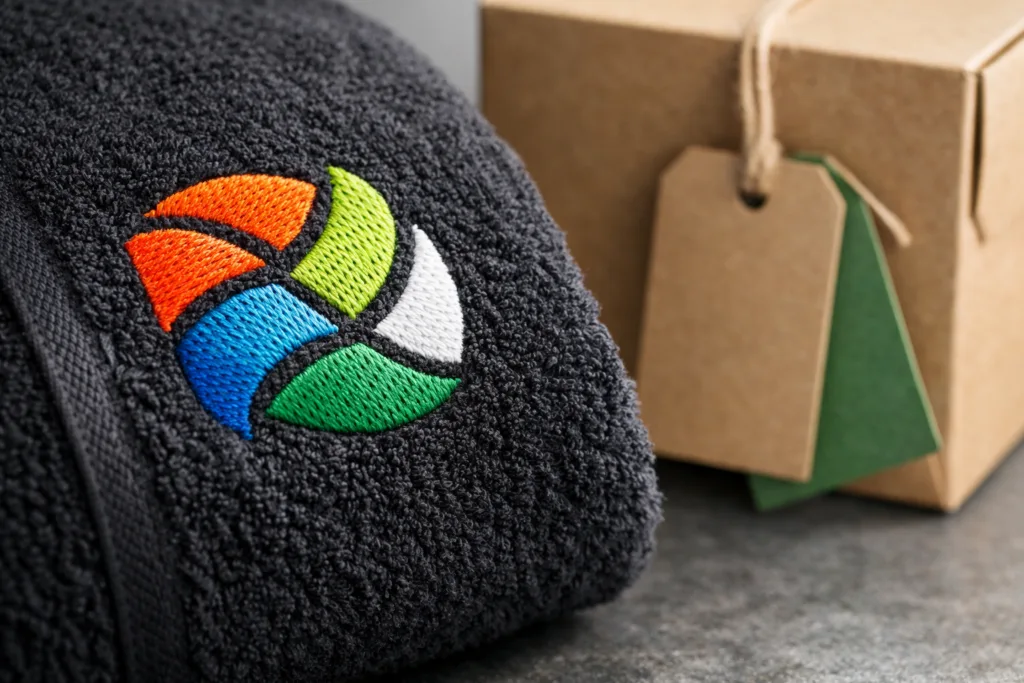
Setting your private label towels moq is a balance of budget, product scope, and factory requirements. Small, straightforward orders (like mono-color cotton towels with standard labels) may allow for MOQs as low as 300–500 pieces, while highly customized jacquard or all-over prints may require 1,000+ units per style to achieve cost efficiency.
Here’s a typical ordering process for custom towels bulk:
- 1. Define specs: Finalize your material, GSM, size, and decoration needs.
- 2. Calculate MOQ: Check minimums with your supplier; factor in setup and yield loss (usually 3–5%).
- 3. Sampling: Approve pre-production or digital sample for colors, logo clarity, and finishing.
- 4. Production order: Place order including reviewed sample feedback; clarify packing and labeling details in the contract.
- 5. Quality checks: Inspect production run—either on-site or via lab—before shipment.
- 6. Logistics planning: Decide on shipping method (sea freight for economy, air for speed), confirm export documentation, and arrange delivery to your distribution hub.
Lead times vary: sampling may take 7–14 days, with standard production around 30–45 days. Add shipping transit (2–6 weeks) plus customs clearance. Early, clear communication with your manufacturer—like specifying carton dimensions, pallets, and labeling—prevents last-minute snags and reduces costs. For a robust process overview, our manufacturing process guide offers further detail.
Frequently Asked Questions
What is the typical private label towels moq?
MOQs vary based on material, technique, and customization, but most projects begin at 300–1,000 pieces per size or design for bulk custom towels.
How do material and GSM choices affect cost?
Higher GSM and premium fabrics like Turkish cotton increase both material and shipping costs, while lightweight microfiber offers savings but a different product feel.
Which logo methods work best for private label towels?
Embroidery is preferred for luxury and durability, printing allows for colorful or large designs, and jacquard is ideal for woven-in logos; each has specific cost and MOQ implications.
What quality standards should custom towels bulk meet?
Key standards include strong absorbency, minimal shrinkage after washing, high colorfastness, and secure edge stitching to ensure long-lasting performance.
How long does the production and shipping process take?
From sample approval to delivery, total lead time can range from 30 to 60 days, depending on order quantity, customization level, and shipping method chosen.
What factors influence total order cost for private label towels?
Total cost depends on fabric type, towel size, GSM, branding method, packing style, logistics, and yield loss; larger MOQs often lower per-unit cost.
Related Reading
- Roadmap: Launching Your Own Private Label Towel Brand
- Top Criteria for Choosing a Reliable Wholesale Towel Supplier
- Deciding Between Private Label, OEM, and Custom Towels for Your Brand
- Expert Tips to Select the Right Towel Manufacturer for Your Success
- Complete Guide to Towel Manufacturing: MOQ, Sampling & Lead Time