
Introduction to Custom Towels
Custom towels are specialized textile products designed to showcase unique branding, logos, patterns, or specifications tailored for hospitality, retail, sports, wellness, promotional, and private label markets. Customization empowers brands and organizations to differentiate their offerings, strengthen identity, and create practical products that exceed basic commodity standards.
The demand for customizable towels is strong in hotels, spas, gyms, golf clubs, retail chains, and event promoters—anywhere branded textile quality matters. The types of custom towels available span bath towels, gym towels, beach towels, golf towels, and kitchen towels. Manufacturing flexibility allows for adjustments in size, GSM, weaving, patterns, edge finishing, and even packaging, accommodating a broad range of business needs and budgets.
Understanding the main ways to customize towels—including embroidery, jacquard weaving, digital or reactive printing, border options, logo labels, and packaging—is critical for B2B buyers. The choices made have significant implications on cost, manufacturing complexity, lead time, and finished product performance. In this guide, we’ll break down the pathways to create custom towels, helping you make informed choices for your next order.
Understanding Towel Materials
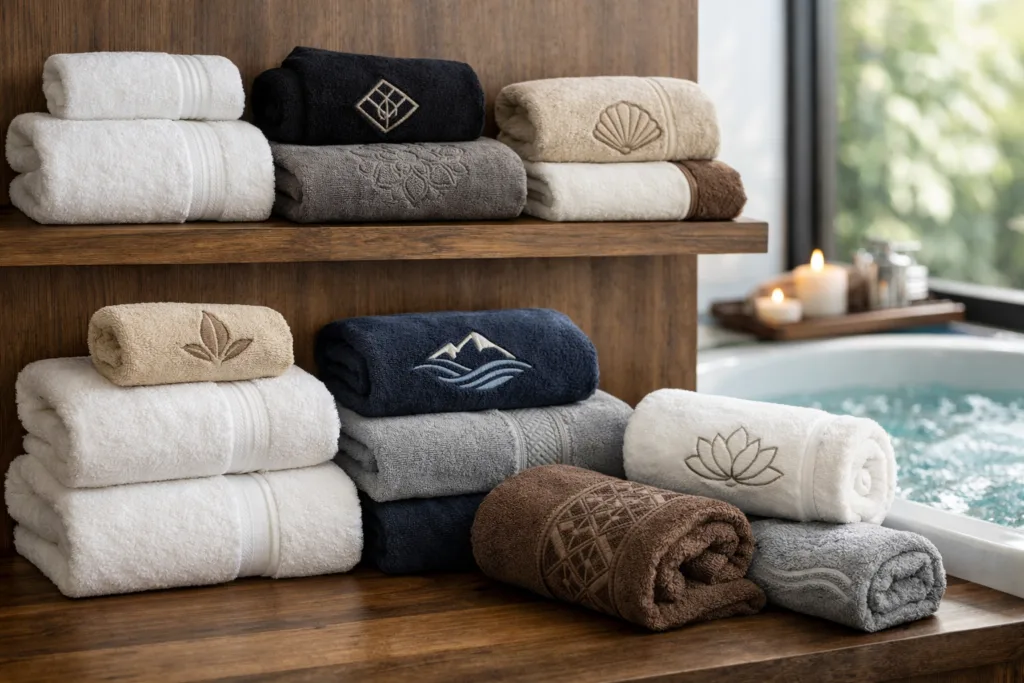
Material selection is a foundational decision when sourcing custom made towels or wholesale custom towels. The primary materials are cotton, microfiber, bamboo, and blended fabrics, each offering distinct performance characteristics and price points.
| Material | Pros | Cons | Best For |
|---|---|---|---|
| 100% Cotton | Soft, highly absorbent, classic feel | May dry slower, can shrink | Hotels, spas, retail bath towels |
| Microfiber | Lightweight, quick-drying, durable | Less traditional feel, may hold odors | Sports, gym, cleaning, promotions |
| Bamboo Blend | Eco-friendly, antibacterial, soft | Often pricier, lower color choice | Wellness, eco-retail, boutique hotel |
| Cotton-Poly Blend | Increased durability, cost-efficient | Less absorbent, can feel synthetic | Promotional, high-turnover hospitality |
Cotton towels are prized for absorbency and softness, but higher GSM means longer drying time and heavier freight. Microfiber excels in quick-dry and durability, perfect for gym towels or cleaning cloths, and less prone to linting. Bamboo blends appeal to brands focused on sustainability, offering natural antibacterial properties with a luxuriously soft hand feel. Blends can balance cost with usable life, particularly in high-usage environments.
For brands prioritizing eco-credentials, consider organically certified cotton or recycled microfiber options. Look for recognized certifications such as GOTS, OEKO-TEX, or Global Recycled Standard to validate textile safety and environmental stewardship. Product performance, hand feel, and customer experience will always trace back to the material foundation you choose.
For more about eco-friendly choices, see Eco-Friendly Towel Production: From Organic Cotton to Recycled Yarn.
Towel Construction and Manufacturing Methods
Towel construction impacts everything—from appearance and hand feel to absorbency and cost. Four core construction styles feature in custom towels: terry, velour, waffle, and jacquard.
- Terry towels: Feature loops on both sides, offering maximum absorbency and plushness. Ideal for bath, spa, and hospitality where comfort is key.
- Velour towels: Sheared on one side for a velvet-like finish, often used in promotional beach or sports towels due to their vibrant printability.
- Waffle weave: Lightweight with a textured pattern, quick to dry, and popular for gym towels or travel kits.
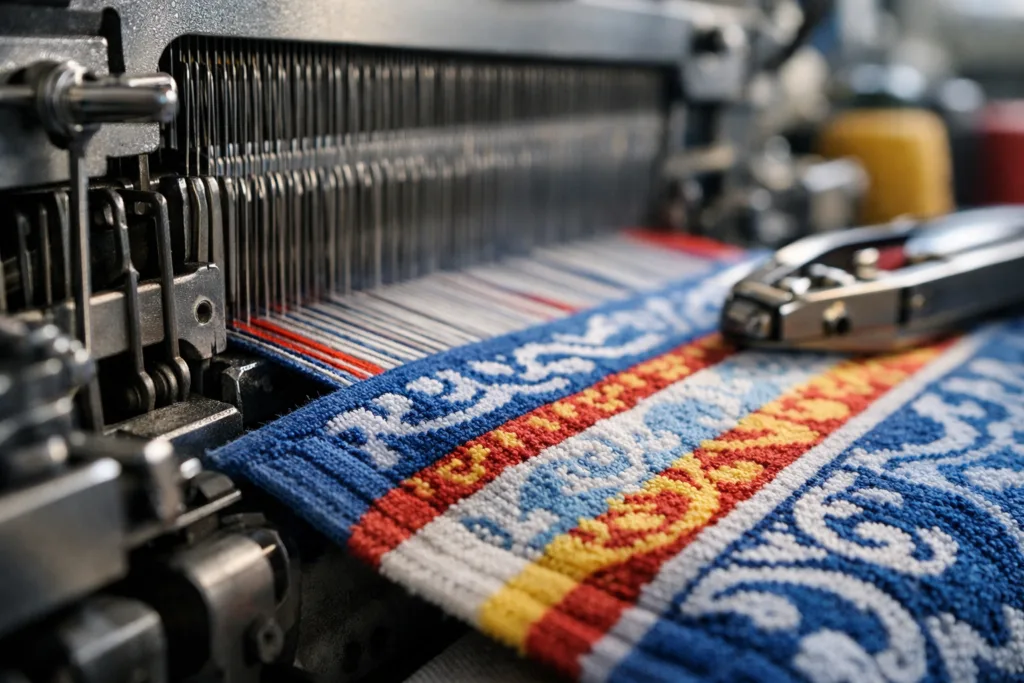
- Jacquard towels: Woven to display complex patterns or logos, delivering high-end, durable branding that won’t fade or wash out.
The choice between woven and printed designs is a practical one. Woven jacquard integrates the design into the fabric, great for long-lasting premium brand impact, but with higher minimum order and cost. Digital and reactive printing allow for full-color, edge-to-edge graphics, making them ideal for trendy retail or event towels with lower MOQs.
GSM (grams per square meter) is your guide to towel thickness—a higher GSM means a heavier, more absorbent towel but comes with increased drying time and cost. Circe Towel helps clients balance GSM to the target use, from lightweight gym towels to plush hotel bath sheets, always considering how construction affects user experience and downstream logistics.
Explore Jacquard Towel Manufacturing Explained for more detail or review How Digital Printing Is Changing the Towel Industry for print advances.
Design and Specification Checklist for Customization
Before you reach out for quotes on custom made towels or wholesale custom towels, clarify your needs using a practical checklist. This streamlines sourcing, minimizes surprises, and ensures your order aligns with brand requirements:
| Specification | Common Options | Impacts |
|---|---|---|
| Size | 30x60cm – 100x180cm | End-use, unit price, packaging |
| GSM | 250 – 700 GSM | Softness, absorbency, shipping cost |
| Material | Cotton, microfiber, bamboo, blends | Touch, durability, eco-grade |
| Edge Finish | Hem, piping, double stitching | Durability, visual detail |
| Logo Method | Embroidery, printing, jacquard | Budget, design complexity, MOQ |
| Packing | Polybag, box, tie band, custom labels | Branding, shelf appeal, shipping |
- Choose the logo application method—embroidery for upscale, tactile branding or printing (reactive/digital) for colorful patterns.
- Consider specific industry needs: higher GSM for luxury hospitality, lightweight and portable for events or gyms.
- Factor in wash performance expectations—hotel towels must withstand frequent laundering, requiring attention to stitching and colorfastness.
- Packaging is part of the brand story—private label sleeves or retail boxes add value in consumer channels.
Establish these specifications early and share with suppliers for accurate quoting and sampling. Begin with your customers’ experience and intended application to avoid costly revisions or mismatched inventories.
See Private Label Towels: Your Complete Guide to MOQ and Cost Structure for deeper insights into cost drivers.
Ensuring Quality and Performance Testing
Securing quality across custom towels is non-negotiable. Key metrics, such as absorbency, wash durability, shrinkage, and colorfastness, determine how long towels maintain their look and feel in real-world settings.
Performance testing ensures your towels withstand daily rigors. Test for:
- Absorbency—amount of water a towel can hold and how rapidly it draws moisture.
- Wash durability & shrinkage—ensure minimal shrinkage and consistent performance over repeated washes.
- Colorfastness—prevent fading and bleeding (especially for logo or printed designs).
Stitching consistency and finishing details like hems, borders, or piping must be checked. Weak seams often lead to unraveling or reduced lifespan. Lint control is especially important in hospitality, as excess lint can degrade guest experience and cleaning logistics.
Circe Towel recommends third-party lab testing, pre-shipment inspections, and reviewing control samples before final production. Establishing a practical test-and-approve cycle should be standard practice for B2B buyers sourcing at scale.
For expert tips, reference Towel Quality Testing: What Brands Check Before Shipping and 7 Ways Hemming & Stitching Shape Towel Edge Durability.
Industry Applications and Use Cases
Custom towels serve specialized purposes across industries, reflecting diverse performance and branding requirements. Hospitality leaders such as hotels and spas demand towels with luxurious softness, high absorbency, and durable color, ensuring consistent guest experiences even after hundreds of wash cycles. Gym owners might opt for quick-dry microfiber options like the Microfiber Gym Equipment Towel for hygienic, portable solutions that withstand frequent laundering.
Sports clubs, like golf courses or tennis centers, often select branded jacquard towels or heavy-duty embroidered promo items. For events and promotions, bright digital prints and lightweight designs—such as the Microfiber Quick-Dry Printed Beach Towel—offer high-impact branding with manageable costs and minimums suitable for giveaways or campaign launches.
The shift towards sustainability is evident, with more brands requesting recycled materials, organic cotton, or biodegradable packaging. Tailored features might include snap hooks (for gym or golf towels), antimicrobial treatments (for wellness settings), or special child-safety certifications (for baby towels).
B2B buyers should tailor their custom towel orders to sector trends and usage volumes—luxury hotels value durability and touch, while promotional markets may prioritize artwork and turnaround speed over wash life.
Customization Options: Beyond the Basics
Today’s B2B buyers are offered a robust menu of customization techniques for custom made towels or wholesale custom towels:
- Logo Applications: Embroidery (premium look), digital/reactive/screen printing (full-color graphics), or woven-in jacquard (fade-resistant branding).
- Border & Edge Design: Satin bands, colored piping, or decorative hems literally frame your branding message.
- Patterns & Motifs: From full-bleed prints to intricate woven designs, unique patterns attract retail attention or reinforce themes for hotels and spas.
- Label & Tag Customization: Add brand, care, or campaign labels via sewn-in logos or printed tags.
- Private Label & Packaging: Custom bags, boxes, sleeves, or eco-friendly wrap bolster brand integrity for retail and gift applications.
Order volume and target market drive the best customization path: embroidery and jacquard suit higher MOQs and enduring use (hospitality, retail), while printed logos enable smaller runs and colorful retail or promotional visibility. Circe Towel offers design support to convert your artwork into print-ready, production-proof files—ensuring quality control from sample to shipment.
Artwork quality is critical for printing outcomes: submit high-res vector files and work with suppliers to match Pantone colors where necessary. For further detail, see Custom Logo Towels: Embroidery, Jacquard, and Printing Methods.
Common Mistakes and Troubleshooting
Custom towels offer significant rewards—but sourcing pitfalls can undermine results. One of the most common mistakes is mis-selecting the GSM: too high increases cost and drying times, too low can feel insubstantial or cheap. Picking the wrong fabric (e.g., polyester when softness is required) is another frequent error leading to user dissatisfaction.
Logo issues frequently arise when low-quality artwork is provided or when the chosen branding method (e.g., screen print on thick, high-pile towels) blurs fine details. Absorbency failures are often due to overused finishing agents or low-grade fibers. Color fade can result from improper dyeing or insufficient colorfast testing. Weak stitching is a red flag for poor-quality manufacturing; check samples for even, locked seams.
If you receive custom towels with defects, first review your spec sheet versus delivered product, photograph any anomalies, and raise issues promptly with your supplier. Working with an experienced manufacturer like Circe Towel helps preempt these issues through tight sampling and QC controls. Always maintain proactive communication during production, and don’t hesitate to request updated samples or corrective action reports before approval.
Read more about supplier assessment in Expert Guide: Auditing Your Towel Supplier for Quality B2B Orders.
Ordering Guide for Custom Towels
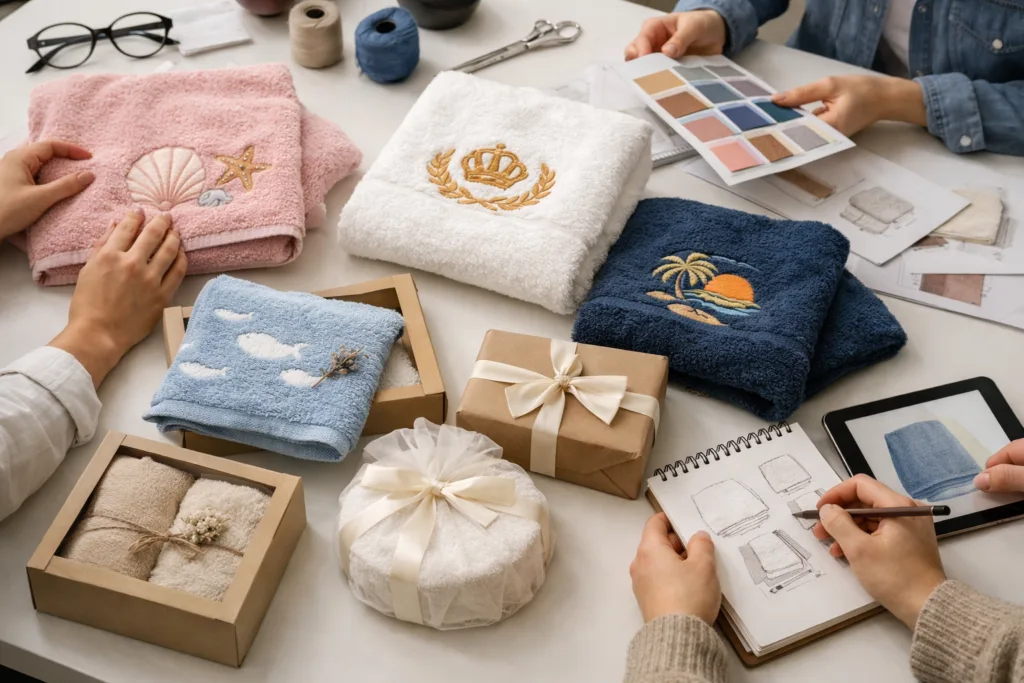
Efficient ordering ensures custom made towels meet your budget and timeline. Start by reviewing the minimum order quantity (MOQ)—printed towels often start at 100–300 units, but jacquard or embroidery may require higher MOQs (500–1000+ units). Lead times vary: from 21–45 days for standard orders to longer for peak seasons or highly custom specs.
- Request finished samples before full production—review hand feel, color, and branding accuracy.
- Plan for artwork submission: vector files, color codes, and proofs streamline sign-off and reduce errors.
- Pre-production approvals are critical—always check “final” physical or digital proofs, as corrections post-production are expensive.
- Coordinate packaging preferences early, especially for retail or promotional projects—custom bags, sleeves, or eco-wraps add processing time.
- Consider air vs. sea freight for bulk shipments, balancing delivery needs with budget.
Managing your budget? Clarify all inclusions (surcharges for special dyes, custom packaging, or QC inspections). Transparent quotations minimize surprises during production or shipping. For industry insights, review Complete Guide to Towel Manufacturing: MOQ, Sampling, Quality, and Lead Time Explained.
Frequently Asked Questions
What is the average minimum order quantity (MOQ) for custom towels?
MOQs vary by method: printed custom towels may start at 100–300 pieces, while embroidered or jacquard options often require 500 or more to ensure cost efficiency and production feasibility.
How do I choose between printing, embroidery, or jacquard for my logo?
Choose based on budget, design complexity, and target market—printing allows vivid designs on smaller runs, embroidery provides luxury feel but costs more, while jacquard is ideal for premium bulk branding with highest durability.
Which material is best for high-absorbency hotel towels?
100% ring spun or combed cotton is the top choice for high-absorbency hotel towels, balancing softness, thickness, and wash performance for repeated commercial laundering requirements.
How can I ensure my custom towels won’t fade?
Request lab-tested colorfastness from your supplier, use high-quality reactive or digital printing, and confirm dyes are fixed correctly through pre-shipment wash trials and sample checks.
What factors affect custom towel pricing the most?
Material (cotton vs. microfiber), GSM, branding method, packaging, and order volume all drive final pricing—logo complexity and special finishes can also add to cost.
Can Circe Towel help with artwork and technical specs?
Yes, Circe Towel assists in reviewing artwork, converting logos into manufacturer-ready files, and advising on technical details so projects meet both quality and branding requirements.
Related Reading
- Launch with Confidence: Your Ultimate Factory & Brand Setup Checklist for Towel Sourcing
- Choose the Perfect Towel Sourcing Model: OEM vs Private Label vs Wholesale vs Custom
- Unlock Success: Your Roadmap to a Custom Private Label Towel Brand
- 20 Crucial Questions Every Buyer Must Ask When Sourcing Towels in Bulk
- Master Towel Absorbency: Loops, Yarn Twist & Fiber Science Explained Simply