
Introduction to Beach Towels
Beach towels are more than just oversized bath towels—they are purpose-built textiles designed for sun, sand, and outdoor activity. The hallmark of a true beach towel lies in its size, absorbency, and construction. While a standard bath towel measures around 70x140cm, beach towels often start at 75x150cm and can go up to 100x180cm or larger, ensuring full body comfort against hot sand or poolside surfaces.
A quality beach towel must balance plushness with efficient drying. Factors such as GSM (grams per square meter) and material (like cotton or microfiber) influence softness, weight, and quick-dry abilities. These choices are not just aesthetic: they directly affect traveler satisfaction in hospitality or branding success in promotional events. The right beach towel manufacturer must understand these core product traits to serve both retail and high-volume bulk clients well.
Recent trends show heightened demand in vacation destinations and among lifestyle brands, especially as beach towels serve as souvenirs, resort essentials, and impactful promotional merchandise. Their broad application—retail sales, hospitality turnovers, seasonal events, or marketing campaigns—demands flexible and reliable production expertise. The evolution of vacation and promotional travel has put increased pressure on factories to deliver not just any towel, but ones that excel in print quality, drying speed, and durability. This is why choosing the correct beach towel manufacturer is key for every B2B buyer entering or scaling in the summer textile market.
Material Comparison for Beach Towels
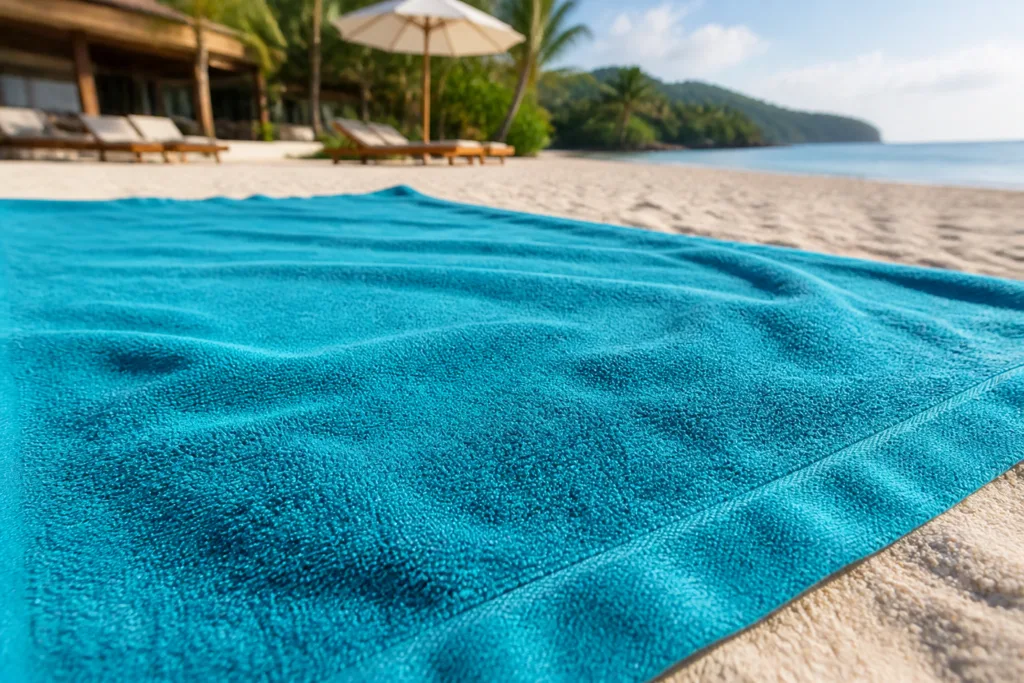
Every beach towel starts with material choice, shaping its performance, print clarity, and sustainability profile. Cotton towels are traditional, prized for their softness, high absorbency, and familiar hand-feel. Microfiber options, by contrast, deliver outstanding quick-dry performance and lightweight handling—perfect for compact travel kits or outdoor sports promos. Bamboo blends—or viscose-bamboo composites—present an eco-friendlier alternative with antimicrobial benefits, though they’re less common in mass promotions.
Blended fabrics (cotton+polyester, for example) are a go-to for companies wishing to strike a compromise between cost, color vibrancy, and laundry speed. These blends also improve colorfastness for reactive and digital prints, a big plus for vibrant, custom beach towels intended for promotional distribution. Since beach towels often serve as branded backdrops on holiday, this point matters for visual impact and long-term ROI.
- Cotton: Best absorbency, traditional softness, heavier, retains sand less efficiently.
- Microfiber: Ultra-fast drying, lightweight, lower bulk, highly customizable in shape and print, but less plush than cotton.
- Bamboo/Blends: Eco and skin-friendly, moderate absorbency, niche but growing for eco-conscious markets.
- Blends (Cotton/Poly): Improved cost efficiency, color retention, and crease resistance—especially for bulk beach towels.
Environmental factors are increasingly pressing for B2B buyers; OEKO-TEX® or Global Recycled Standard certifications add trust and marketing value, especially for brands sending custom beach towels to eco-focused audiences. Material selection impacts not only tactile experience but also the factory’s ability to deliver on print definition, fade resistance, and order lead times. Evaluating both use case and environmental requirements ensures an optimal fit for each project.
Construction and Manufacturing Techniques
Construction methods greatly impact both performance and the look/feel of wholesale beach towels. Terry is the industry default: its looped yarns maximize absorbency and softness, making it ideal for luxury resort towels or comfort-focused retail buyers. Velour, achieved by shearing one side, delivers a smoother, more vibrant print surface—essential when custom designs or detailed branding are central to your project.
Waffle and jacquard constructions offer unique tactile experiences and design possibilities. Waffle weaves produce a lightweight, faster-drying towel with a textured, trendy look, prized in wellness and eco-oriented sectors. Jacquard towels use complex woven patterns (not prints), providing unmatched colorfastness and durability—perfect for high-end branding. Circe Towel, for example, notes that intricate jacquard patterns require precise loom control which, although time-intensive, delivers a distinct, premium finish for wholesale beach towels intended as luxury gifts or high-impact promotions.
The core challenge in mass production comes from complex patterns or blended manufacturing (like hybrid print/embroidery). Intricate decorations can increase production time, requiring highly skilled labor and stringent quality systems. Quick reference:
| Technique | Key Benefit | Typical Application | Production Difficulty |
|---|---|---|---|
| Terry | Absorbency, plush feel | Hotel/Resort, retail | Low |
| Velour | Vivid prints, soft finish | Promotional, custom | Medium |
| Waffle | Lightweight, quick-dry | Eco, wellness | Low-Medium |
| Jacquard | Pattern durability, unique look | Luxury, gifts, branding | High |
Decoration methods—screen printing, digital printing, embroidery, or jacquard weaving—influence time frames and costs. Large, reactive-printed designs need precise registration for color accuracy, while embroidery may limit design complexity but offer superior durability. The strongest beach towel manufacturer balances these elements, providing rapid scale-up without quality dips, and transparent communication about the production trade-offs tied to your chosen technique.
Spec Checklist for Beach Towels
B2B buyers should begin every project with a spec checklist. Below are the critical choices for high-performing custom beach towels, applicable whether targeting retail, hospitality, or events.
- Dimensions: Most popular: 75x150cm, 80x160cm, 90x180cm. Round towels (Ø150cm) are trending for luxury boutique brands.
- GSM: 300–400 GSM for promotions, 400–500 GSM for premium retail and hospitality, 200–300 GSM for ultra-light, quick-dry models.
- Edge Finishing: Double stitched hems enhance durability. Decorative borders or fringes suit retail/luxury, while basic hems serve bulk beach towels for value promotions.
- Logo Application: Screen printing for budgets; embroidery and jacquard for durability; digital print for photorealistic, full-color custom beach towels.
- Absorbency & Colorfastness Testing: Always request wash and fade test documentation; batch samples should pass EN/ISO or AATCC standards where possible.
| Spec | Recommended Range | Notes |
|---|---|---|
| Size | 75x150cm, 80x160cm, 100x180cm, Round Ø150cm | Choose by end-user profile |
| GSM | 300–500 | Balance weight and packability |
| Edges | Double stitch, piping, fringes | Impacts bulk and aesthetics |
| Decoration | Screen/digital/embroidery/jacquard | Choose for purpose & quantity |
| Testing | EN/ISO, AATCC pass | Request reports for large projects |
Developing effective specs for custom beach towels minimizes miscommunication and helps align prototype expectations with final production—especially valuable in large-scale or multi-brand campaigns.
Quality Standards and Testing Procedures
High-performing wholesale beach towels must clear rigorous quality testing. Leading factories undertake absorbency checks (typically per EN or AATCC methods), wash durability trials, and shrinkage tests after repeated laundering. Shrinkage is particularly vital for beach towels with borders or custom prints: an overly aggressive washing cycle can distort designs or cause seam tension that leads to quick fabric failure.
Colorfastness, tested to both washing and sunlight standards, becomes essential for custom-printed towels destined for sunny, outdoor use. Subpar dyeing, especially on reactive or digitally printed surfaces, can fade quickly—dampening the impact of premium branding efforts. Likewise, well-constructed edges—double-needle hems or reinforced stitching—are proven to reduce fraying and extend towel service life in both hospitality and promotional channels.
Certain certifications—like OEKO-TEX® for material safety, or BSCI for social compliance—provide additional assurance, particularly for global buyers sourcing at scale. Circe Towel advises incorporating lint control and stitch integrity checks into batch testing, as these are common points of failure on larger bulk orders. A single missed step can mean headaches post-delivery, especially for promotional buyers who need every towel to be presentable right out of the box.
Spot-testing batches before shipment is a best practice, as is requesting third-party inspection reports documenting compliance to agreed standards. Ultimately, robust quality procedures minimize returns and protect your end-user’s experience in the field.
Industry Applications and Use Cases
Beach towels serve a wide array of industry needs, each bringing unique requirements. In the retail sector, bold designs and premium textures help drive sales—consumers often treat beach towels as a summer style accessory or keepsake. Hospitality buyers, such as resorts and spas, place a premium on bulk beach towels that resist fading, endure repeated wash cycles, and dry quickly for high guest turnover.
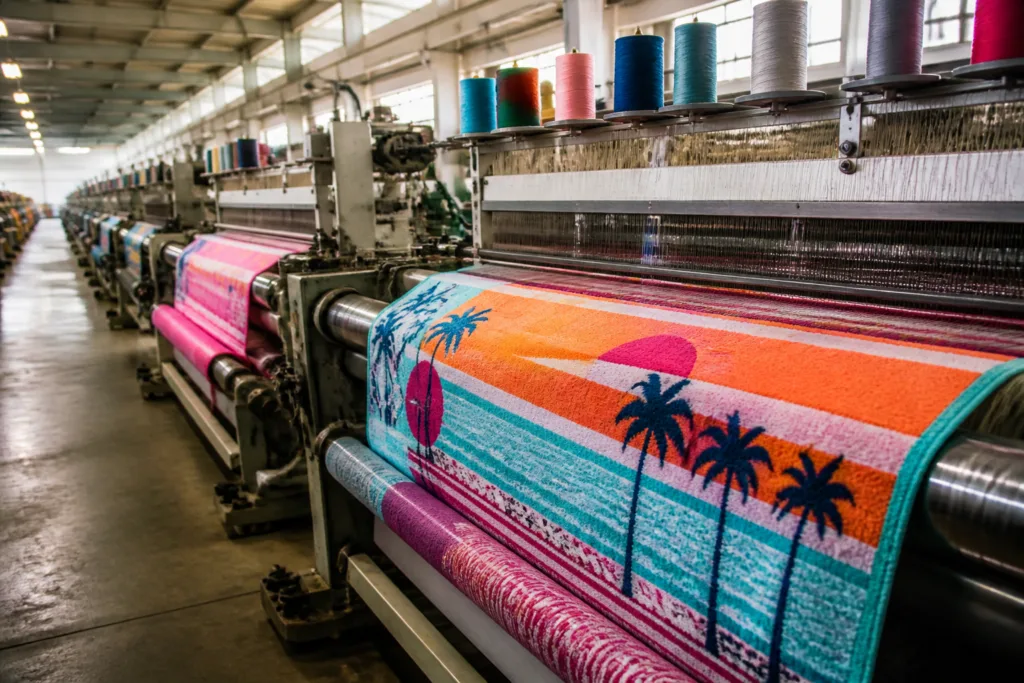
Promotional product companies view custom beach towels as revenue-generating billboards—large-format logo printing and vivid colors maximize event visibility and marketing ROI. The ability to scale up for festivals, corporate giveaways, or holiday resort events puts stress on manufacturing systems to deliver consistent color and finish at higher-than-retail volumes.
In recent years, eco-friendly demand has spiked, especially among European and North American buyers. Recycled fibers, certified dyes, and minimalist packaging are all trending, forcing beach towel manufacturers to upgrade supply chains for sustainability compliance. Design-wise, cultural motifs, seasonal prints, and destination branding are highly localized—knowing your target demographic’s tastes pays dividends in sell-through and user impact. For a deeper dive on private labeling and market-specific options, see the Private Label Towel Certifications Guide.
Customization Options with a Beach Towel Manufacturer
When partnering with a beach towel manufacturer, buyers have a full spectrum of customization choices. Logo printing is the most common—screen print is fast and cost-effective for bulk beach towels, while digital print allows full-surface, photographic detail. Unique pattern placement, specialty gradients, bespoke shapes like round or oversized towels, and specialty finishes (e.g., fringes, piping, tassels) are increasingly popular for both retail and high-end hospitality projects. Border and label customization allows buyers to embed branding and add tags for identification or care instructions, vital for private label rollouts.
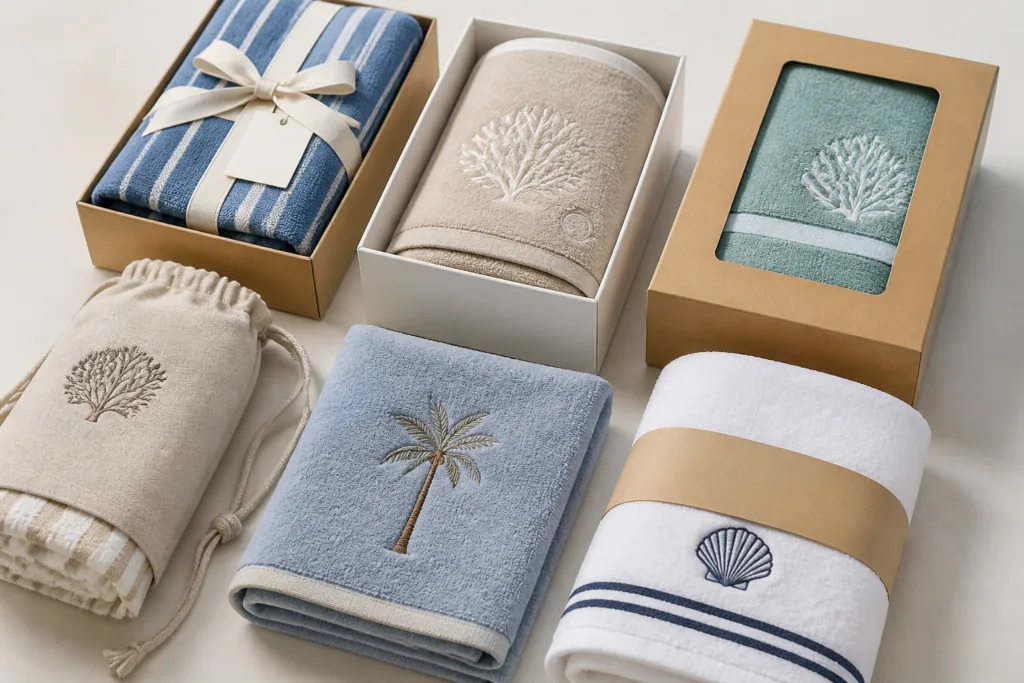
Packaging decisions—like custom pouches, removable retail sleeves, or multi-pack gift sets—significantly boost on-shelf and event-site appeal. Circe Towel regularly advises clients on the branding impact of these packaging choices, based on past project outcomes across hospitality and promotional segments. It’s important to note: more elaborate customization often means longer lead times, additional approvals, and higher unit pricing, especially with multiple logo placements or matched custom color requirements.
Examples include multi-color digital prints for beach festivals, yarn-dyed jacquard for high-value loyalty programs, or eco-themed bundles for resort openings. Communication with your factory about final application, timelines, and display expectations ensures your custom solution delivers on all fronts.
Common Mistakes in Sourcing Beach Towels
Even experienced buyers sometimes misstep when selecting a beach towel manufacturer. A frequent error is choosing an inappropriate GSM—low GSM towels may save on shipping, but they might lack perceived value and underperform on absorbency. Similarly, relying on suboptimal fabrics can sabotage bulk beach towels in hospitality or active travel applications, leading to disappointingly low customer retention rates.
Another pitfall: ignoring colorfastness testing, particularly for vibrant custom beach towels destined for sun and repeat washing. Fading and dulling are difficult to reverse post-shipment. Improper edge finishing or weak stitching can quickly lead to seam failure, ruining the towel’s professional look. Defects like rough hand-feel or excessive linting—often due to rushed finishing or unchecked supply chain substitutions—reduce brand reputation and prompt costly returns.
Solutions include clearly specifying GSM, asking for certified material reports, performing pre-production tests, and communicating intended end use. A robust sourcing SOP, combined with a responsive manufacturing partner, dramatically reduces the risk of these common mistakes, ensuring project success and long-term buyer satisfaction.
Ordering Guide for Bulk Beach Towels
Bulk orders follow a logical sequence, and understanding these steps prevents costly miscommunications. Factories typically set a minimum order quantity (MOQ) that balances fabric sourcing, machine setup, and impactful cost breaks. For custom beach towels, MOQs often start between 300–500 units per design, but higher volumes reduce per-piece costs and allow more elaborate customization layers.
Lead times average 25–45 days for production, with faster service possible for simpler repeats or stock colors. Sampling is crucial: supply clear artwork files, Pantone color references, and trim expectations for prototypes. Ideally, buyers should proof physical samples—either standard or full-size pilots—before final approval. This is a key risk-management stage when ordering bulk beach towels for branded events or hospitality rollouts.
After confirmation, packaging options (bulk in cartons, single polybags, gift presentation) must be locked for both branding and logistics. For more on prepping efficient artwork and sample reviews, see How to Order Beach Towels in Bulk with Your Own Logo. Stay communicative with your chosen beach towel manufacturer and factor in customs or shipping lead time, especially during peak summer or holiday seasons.
Frequently Asked Questions
What’s the typical turnaround time for custom beach towels?
Standard production time ranges from 25 to 45 days after approval of pre-production samples; rush service may be possible for repeat designs or simple colorways.
How do I ensure my logo prints well on various materials?
Supply vector artwork and specify Pantone colors, and select printing technique (screen, digital, or embroidery) based on towel material and target quantity for optimal results.
What are the benefits of private labeling beach towels?
Private labeling lets you feature your branding, care instructions, and unique packaging, increasing perceived value for retail, hospitality, or promotional use cases.
Can I get eco-friendly options for bulk orders?
Yes, many factories—including Circe Towel—now offer organic cotton, recycled microfiber, OEKO-TEX® certified dyes, and plastic-free packaging for sustainable bulk beach towels.
What are the differences in absorbency among materials?
Cotton towels absorb more but dry slower; microfiber offers faster drying but may feel less plush; bamboo blends provide moderate absorbency and natural antibacterial properties.
What’s the best way to maintain and care for beach towels?
Wash before first use, avoid fabric softeners, dry on low or hang outside, and separate by color to extend durability, vibrancy, and absorbency through repeated use.
Related Reading
- Unlocking Jacquard Towel Manufacturing for Standout Branding
- Mastering Towel Packaging: Practical Tips for Retail & Hospitality Brands
- Bulk vs. Print-on-Demand: Your Guide to Towel Branding Control & Cost
- How to Audit Towel Suppliers for Reliable B2B Quality
- Pro Strategies for Controlling Towel Shrinkage and Laundry Results
- Selecting Certified Private Label Towels with Credibility