
Bulk purchasing of beach towels is a strategic decision for retail, hospitality, and promotional buyers. If you’re searching for wholesale beach towels suppliers or a beach towel supplier, you’ll need solid guidance to navigate category complexity, design trends, and logistics. Below, we outline key considerations that help buyers confidently select bulk beach towels while avoiding common pitfalls.
Understanding Beach Towels: The Essentials
A beach towel is not just a larger bath towel—it’s a purpose-designed textile that balances absorbency, vivid design, and durability for outdoor use. Buyers seeking a beach towel supplier should recognize these critical elements.
Most beach towels measure between 140–180 cm in length and 70–100 cm in width, offering ample space for comfort, but custom sizing is increasingly common for unique branding. Materials typically include cotton, microfiber, and blended fibers, each offering a distinct balance of softness, absorbency, and drying speed. Designs are often vibrant and bold, setting beach towels apart in retail and promotional environments.
Key features buyers should look for:
- High absorbency and quick drying
- Softness for direct skin contact
- Durable construction for repeated washes
- Colorfastness—resists fading from sun and water
- Customizable patterns and branding options
Popular beach towel types include classic terry, printed microfiber, velour, waffle weave, and jacquard styles. The quality standard for bulk orders is especially vital—defects or inconsistency in a shipment can disrupt retail launches or event supply.
Branding is a central factor, whether for promotional giveaways or hospitality amenities. Effective logo placement and lasting pattern vibrancy help towels serve as portable brand ambassadors during summer events and resort stays.
Material Comparison for Beach Towels
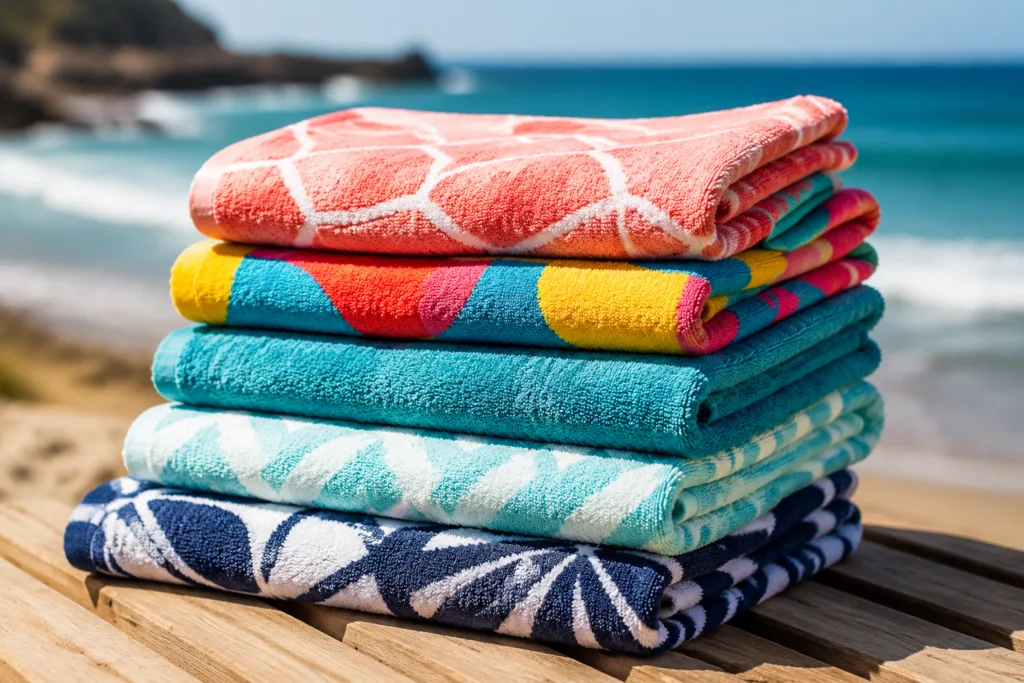
Selecting the right material when working with wholesale beach towels suppliers dramatically influences user experience, price, and logistics. Let’s compare main options:
Cotton: Favored for its absorbency, comfort, and durability. Premium long-staple cotton, such as Turkish or Supima cotton, elevates softness and longevity, making it ideal for hospitality and premium retail. Cotton’s natural fiber offers high skin feel and sturdy performance after many washes, but it’s heavier and bulkier for shipping.
Microfiber: Lightweight and quick-drying, microfiber towels excel for sports, travel, and promotional use. They offer compact storage and vibrant digital printing capabilities. However, they can feel less plush than cotton, and product quality can vary by fiber thickness and weave. Microfiber is also less absorbent in bulkier profiles but ideal for high-volume giveaways due to minimized logistics volume.
Bamboo Blend: Combining cotton with bamboo fibers creates towels with enhanced eco-friendliness, softness, and natural antibacterial qualities. Bamboo blends offer improved sustainability, but availability may be limited compared to pure cotton or microfiber.
Blended Fabrics: Multiblend towels combine cotton, polyester, or bamboo for hybrid advantages: moderate absorbency, shorter drying times, and increased colorfastness. These are often selected for promotional towels with complex patterns or volume pricing.
Material suitability depends on end use:
- Leisure & Resort: Premium cotton for maximum comfort and branding
- Sports & Fitness: Microfiber for quick dry and portability
- Retail: Artistic cotton or blended fabric for eye-catching design
- Promotional: Lightweight microfiber or blended for cost and logistics
Circe Towel offers precise GSM customization and material selection, adapting to the buyer’s intended application and budget constraints. For deeper material trade-off comparisons, see Premium Turkish and Supima Cotton Towels: The Ultimate Factory Sourcing Guide.
Construction Types: What Matters?
Manufacturing technique heavily shapes towel quality, tactile feel, and branding possibilities. Buyers choosing a beach towel supplier must understand construction trade-offs:
Terry Cloth: The industry standard for beach towels, terry cloth has looped yarns that maximize absorbency and softness. It withstands frequent washing but tends to be bulkier for shipping.
Velour: Velour turns terry cloth loops into a sheared, plush surface, offering exceptional softness and vivid color display. However, velour is less absorbent than terry and requires careful colorfastness control during production.
Waffle Weave: Lightweight with a textured pattern, waffle weave towels are compact and dry rapidly. They may lack the plush feel expected in luxury hospitality but are perfect for volume events or active sports.
Jacquard Construction: Enables intricate woven designs or custom brand patterns (not printed), making towels visually impressive and resistant to fading. Jacquard towels require factory expertise in weaving and bring higher unit costs.
Decoration considerations:
- Reactive or digital printing suits graphic, multicolor designs but may fade over time
- Embroidery is ideal for premium branding but affects towel softness
- Jacquard weaving delivers enduring patterns at a higher price point
Edge stitching and border finishing are also crucial in preventing fraying and extending product life. For detailed insights on hemming and durability, check 7 Ways Hemming & Stitching Shape Towel Edge Durability.
Spec Checklist for Bulk Beach Towel Orders
Bulk beach towels purchases require precise specification to avoid costly mistakes. Here’s a practical checklist for buyers:
- Size: Standard (e.g., 70×140 cm, 80×160 cm) or custom based on the market segment
- GSM: 300–500 for microfiber, 400–650 for cotton; impacts feel, absorbency, and shipping weight
- Material: Cotton, microfiber, blends—choose according to your buyer persona and climate
- Edge Finishing: Double hemmed, piped, or reinforced borders for durability
- Logo Application: Embroidery for premium branding, screen printing or heat transfer for budget and volume
| Spec Criteria | Option 1 | Option 2 | Option 3 |
|---|---|---|---|
| Size | 70x140cm | 80x160cm | Custom sizing |
| GSM | 350 (microfiber) | 500 (cotton) | 650 (premium cotton) |
| Material | Microfiber | Cotton | Bamboo blend |
| Edge Finishing | Standard hem | Double hem | Piped border |
| Logo Method | Screen print | Embroidery | Heat transfer |
Careful attention to GSM selection can optimize towel softness and wash durability, while edge finishing and logo methods impact long-term brand visibility. Circe Towel supports detailed spec adjustments throughout the order process for a tailored result. For further guidance, evaluate How to Choose a Beach Towel Manufacturer: Bulk Sourcing, Materials & Customization Explained.
Quality Assurance and Testing Protocols
Reliability is paramount in bulk towel purchasing. Wholesale beach towels suppliers should offer transparent quality assurance—here’s what high-volume buyers can request:
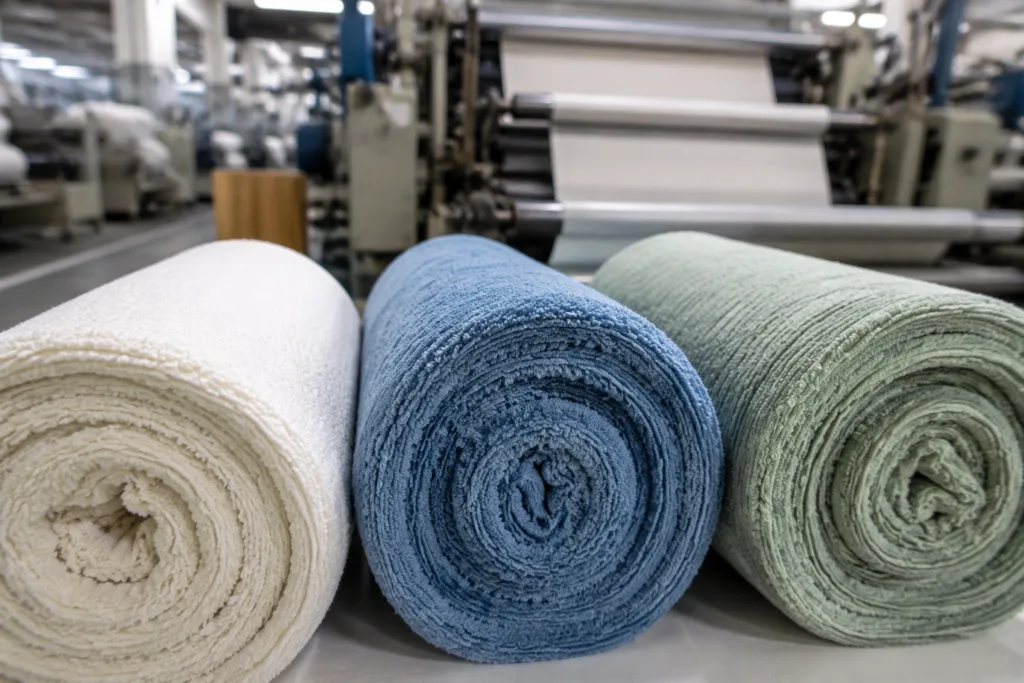
Absorbency Testing: Towels are measured for water pick-up under controlled conditions. Industry benchmarks vary by GSM and fiber type but a standard beach towel should absorb at least 3x its weight.
Wash Durability: Samples are laundered multiple times to monitor shrinkage, fading, and texture stability. Hospitality towels require strict wash performance standards to avoid guest complaints and excessive turnover.
Shrinkage: Acceptable shrinkage is <2% for cotton, often <1% for microfiber blends. Pre-washing and finishing agents can help control shrinkage across mass production.
Colorfastness: Testing against pool water, saltwater, and UV exposure ensures towels maintain vibrancy after repeated use. Color matching consistency between batches protects brand integrity during peak season launches.
Stitching and Lint Control: Quality control includes inspecting stitch density and technique (lockstitch, hemmed, piped) to minimize loose threads and lint shedding.
For buyers evaluating factories, Circe Towel recommends reviewing supplier QC protocols or requesting independent third-party audits. Get expert guidance in Expert Guide: Auditing Your Towel Supplier for Quality B2B Orders.
Industry Applications and Use Cases
The flexibility of beach towel supply creates unique opportunities across multiple industries. A beach towel supplier may serve:
- Retail: Trend-driven designs and custom shapes drive impulse and seasonal purchases. Merchandising with varied patterns or bundle sets can boost sales.
- Hospitality: Resorts and hotels emphasize tactile comfort and lasting colorfastness. Branded towels often include custom embroidery and robust edge finishing.
- Corporate Gifting: Companies use custom beach towels for employee appreciation or high-visibility promotional gifts, maximizing brand exposure at public venues.
- Sports Events: Portable, lightweight towels support athlete comfort and offer branding space. Quick dry material suits warm-weather competitions.
- Promotional Product Campaigns: High-volume orders favor microfiber or blended towels due to lower transportation costs and digital printing flexibility.
For specialized sports towel inspiration, visit tennis sports towel and waffle microfiber gym towel with hook.
Customization Options Explored
Custom beach towels distinguish brands, reflecting unique market differentiation. Buyers seeking custom beach towels should evaluate diverse customization features:
- Logo Placement: Edge, corner, center, or full pattern for maximum visibility and impact
- Pattern Design: Artistic graphics, bespoke motifs, or seasonal themes using digital or jacquard methods
- Border Customization: Contrasting colors, fringed edges, or piped hems for upscale visual effect
- Label and Packaging Modifications: Private label branding, gift wrapping, and eco-friendly packaging to suit retail or hospitality profiles
- Private Label Advantages: Greater control over design and presentation, fostering brand loyalty and market positioning
For further expertise on logo and branding mastery, consult Custom Logo Towels: Embroidery, Jacquard, and Printing Methods and How to Create Custom Towels with Logo for Your Brand: Material, Design & Buying Guide.
Common Mistakes in Sourcing and Troubleshooting
Ordering bulk beach towels demands careful decisions. Here are frequent missteps—and how to avoid them:
- Wrong GSM Selection: Low GSM may reduce softness and durability; high GSM increases cost and logistics volume. Match GSM to market segment and seasonality.
- Poor Material Choice: Selecting a material unsuited for climate or intended use can affect customer satisfaction. For events, quick-drying microfiber may beat plush cotton.
- Colorfastness Errors: Failing to request testing for colorfastness can lead to rapid fading and weak branding. Run pre-shipment color checks, especially for reactive printing.
- Absorbency Misjudgment: Insufficient absorbency compromises towel function and user comfort. Always review absorbency test data from suppliers.
- Stitching Quality Oversight: Weak edge finishing and inconsistent stitching cause premature fraying and linting. Specify double hemmed or piped edges for long-term durability.
Circe Towel recommends identifying season-specific requirements to avoid overstocking or mismatched designs. For deep troubleshooting, see How to Evaluate Bulk Towel Suppliers for Hotels, Gyms, and Retail: The Essential B2B Sourcing Guide.
The Ordering Process: A Step-by-Step Guide
Navigating orders from wholesale beach towels suppliers is easier with a clear roadmap:
- MOQs: Minimum Order Quantities (usually 300–1,000 pieces) directly impact per-unit pricing and budgeting. Quantities may vary by material or customization depth.
- Lead Times: Typical production periods range from 25–40 days, influenced by custom design complexity and peak season demand. Plan ahead for events or launches.
- Sample Requests: Always secure samples before confirming bulk orders. Samples reveal hidden quality variables and allow for spec verifications.
- Artwork Preparation & Proofing: Provide vector artwork, Pantone color references, and detailed size specs. Review digital proofs and confirm sample accuracy before mass production.
- Packaging & Shipping Logistics: Choose export packaging (compressed, boxed, or rolled) to optimize shipping volume and reduce freight costs. Bulk beach towels orders benefit from streamlined logistics, especially for global events.
Circe Towel recommends comprehensive pre-production approval to limit risk and ensure spec congruence. For more workflow tips, see Complete Guide to Towel Manufacturing: MOQ, Sampling, Quality, and Lead Time Explained.
Frequently Asked Questions
What is the ideal GSM for beach towels?
The ideal GSM depends on material and end use: Cotton towels are best between 400–650 GSM for plushness, while microfiber towels suit 300–500 GSM for lightweight quick drying. Match GSM to your market’s expectation.
How do I choose the right fabric?
Choose cotton for softness and absorbency, microfiber for fast drying and compact storage, and bamboo blends for sustainability. Consider local climate and user preferences for the best fit.
What customization options are available?
Custom beach towels can feature embroidered logos, printed graphics, jacquard patterns, special border finishes, private label tags, and unique packaging designs, depending on supplier capabilities.
How long does it take to receive my order?
Typical lead times are 25–40 days from design approval to shipment. Peak seasons and complex customization may extend timelines—request a production schedule from your beach towel supplier.
What are the shipping options and costs?
Shipping methods include air, sea, or express courier. Costs depend on order volume, packaging, and destination. Wholesale beach towels suppliers can advise on cost-efficient logistics based on your requirements.
What if the towels arrive damaged?
Report damages immediately with photos. Reputable suppliers will offer replacements or credits. Always check QC protocols and insurance terms prior to bulk orders for risk mitigation.
Summary and Next Steps
Sourcing bulk beach towels calls for careful evaluation of material, sizing, design, and supplier quality controls, especially during peak seasons. Buyers must balance absorbency, softness, durability, and colorfastness against logistics volume and branding needs.
Choosing the right GSM and manufacturing method improves usability and longevity, while robust customization creates differentiators for retail, hospitality, and promotional campaigns. Review testing protocols and order processes to protect your investment.
Need help choosing the right towel material and GSM for your market? Circe Towel can recommend practical options based on your project.
Related Reading
- Step-by-Step Hotel Towel Supplier Selection: Quality, Procurement, and Bulk B2B Guidance
- Master Microfiber Towel Sourcing: Compare Materials and Boost Branding Impact
- Bulk Beach Towel Manufacturer Checklist: Materials, Customization, Logistics
- Brand Launch Checklist: Custom Towel Sourcing and Private Label Setup Simplified
- How to Audit Your Towel Supplier for Consistent Quality in Large Orders
- Jacquard Towel Manufacturing: Design Opportunities and Quality Details Explained