
Understanding Hotel Towel Supply Needs
When sourcing hotel towels, the procurement process demands a clear framework to ensure reliable hotel towel supply. Sourcing and purchasing professionals must evaluate many factors to guarantee towels suit hotel requirements, from room and spa to poolside use.
Hotels typically need a range of towel types: bath towels for guest rooms, hand towels for restrooms, face towels, pool towels, bathmats, and sometimes gym or spa towels. Each type must comply with internal quality policies and brand guidelines.
- Consistent supply and reliable delivery timelines are critical for seamless hotel operations, especially in high-occupancy periods or across hotel chains.
- Standard specifications—defined sizes, weights (GSM), and white color consistency—are essential to ensure batches from hotel towel supply match house standards.
- Cost-effectiveness matters, but not at the expense of quality. Subpar towels raise guest complaints, add operational headaches, and lead to faster replacement cycles.
- Eco-conscious purchasing is now central, so evaluating suppliers for certified organic, OEKO-TEX, or other eco-label options is highly recommended.
Operators should prioritize partners who understand hospitality’s need for rapid restock, colorfast white shades, and wash durability—especially when scaling up for projects or during high seasons. For further reading on supplier fit, see Hotel Towel Manufacturers: The Ultimate B2B Guide to Bulk Sourcing, Specifications & Quality.
Material Comparison for Hotel Towels
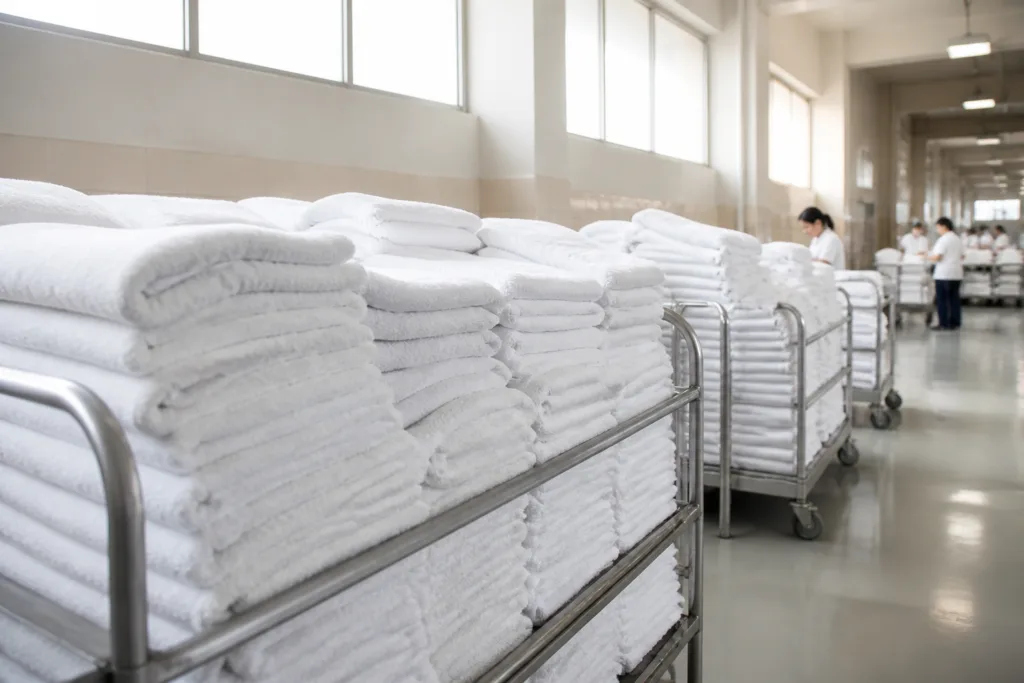
The choice of towel material shapes hotel towels wholesale performance, guest experience, and long-term costs. High-quality cotton remains the classic option, prized for absorbency, softness, and robust wash life.
Cotton towels—especially combed, ringspun, or Turkish/Egyptian grades—excel in softness and water absorption. Their durability makes them suitable for repeated industrial washes. Organic cotton is ideal for sustainability-focused hotels, while conventional types offer cost flexibility. Explore more on premium Turkish and Supima cotton towels for deeper material insight.
Microfiber towels are valued for their lightweight design, quick-drying ability, and budget-friendly price points. They’re increasingly popular for poolside and gym applications, but may lack the plushness that guests expect for bath use. Color retention and shrinkage control in microfiber are generally strong, but buyers should watch for poly-blend pilling over time. For detailed microfiber sourcing tips, refer to Master Your Microfiber Towel Sourcing.
Bamboo towels offer a sustainable advantage, with excellent softness and anti-bacterial properties, but typically cost more and may not match the absolute absorbency of cotton for high-usage zones.
Blended fabrics—such as cotton with bamboo or polyester blends—can balance durability, price, and fast drying. Each blend comes with trade-offs: blends are tougher but may lose some plushness; pure cotton scores highest for guest satisfaction but needs stricter quality testing for shrinkage and lint.
| Material | Absorbency | Softness | Durability | Eco-Option | Typical Application |
|---|---|---|---|---|---|
| Cotton (combed/ringspun) | Excellent | Luxurious | High | Available | Room, spa, bathmat |
| Microfiber | Good | Medium | Very High | Depends | Pool, gym |
| Bamboo | Medium-High | Very Soft | Medium | Yes | Spa, boutique |
| Cotton/Polyester Blend | Good | Medium | High | Limited | Bulk, promotional |
Whichever material is selected for hotel towels wholesale, ensure the supplier demonstrates a clear understanding of care requirements and long-term performance in mass hotel laundering.
Construction and Manufacturing Techniques
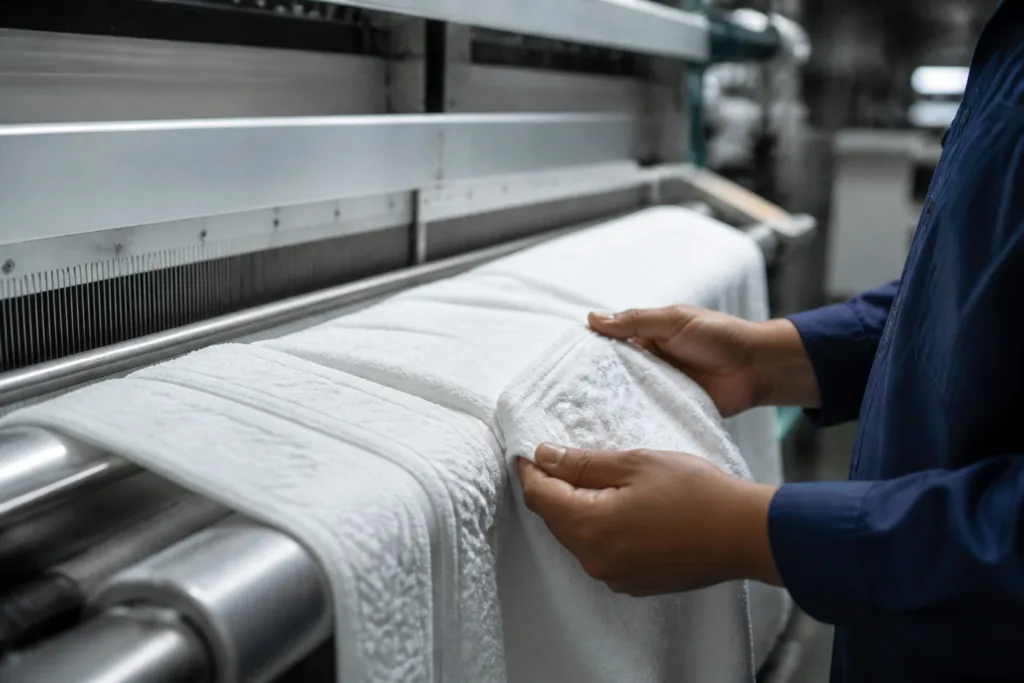
The structure and construction method affect towel feel, durability, and visual appeal—key in hotel towels bulk orders. Understanding weaving and finishing processes helps buyers avoid performance pitfalls and select the right product for each application.
Terry weave, notably, is the hospitality industry’s favorite for bath towels, offering excellent loop absorbency and a familiar plushness. Velour is a sheared, velvety surface perfect for decorative use or high-end suites but often less absorbent than classic terry. Waffle weave delivers fast-drying performance and a contemporary look for poolside or gym towels.
- Jacquard weaving supports durable, woven-in logo or pattern branding—long-lasting and fade-resistant, ideal for premium branding identity.
- For graphic designs or on-demand branding updates, digital printing is flexible and supports vivid colors; traditional reactive printing is more economical for large, single-color runs.
- Edge finishing—options like double-stitched hems or bound edges—ensures longevity and helps maintain the towel’s neat appearance, reducing fraying and extending service life.
Common mistakes include under-specifying GSM (resulting in flimsy towels), selecting decorative finishes that compromise wash durability, or omitting proper edge reinforcement. Buyers should prioritize manufacturing partners willing to share quality certificates, full process transparency, and in-depth expertise on construction trade-offs. More details on jacquard advantages can be found at Jacquard Towel Manufacturing Explained.
Essential Design and Specification Checklist
Before evaluating hotel towel suppliers, buyers should confirm their specification checklist covers all critical factors. Choosing the right size, material, GSM, and branding approach keeps the guest experience consistent and supports operational needs. The table below provides a practical overview of common hotel towel specs to streamline decision-making.
| Towel Type | Suggested Size (cm) | Recommended GSM | Typical Material | Customization |
|---|---|---|---|---|
| Bath Towel | 70 x 140 / 80 x 160 | 450–650 GSM | Cotton, Bamboo-blend | Embroidery, Jacquard, Label |
| Hand Towel | 40 x 70 / 50 x 90 | 350–500 GSM | Cotton, Microfiber | Label, Embroidery |
| Pool Towel | 80 x 160 / 90 x 180 | 400–550 GSM | Microfiber, Cotton | Logo Print, Jacquard |
- Choose material for target absorbency and customer feel—classic ring-spun cotton for room towels, microfiber for high-volume poolside.
- Insist on tested colorfastness (especially for colored trims or logos) to withstand repeated hotel laundering.
- Edge finishing should reinforce longevity; opt for double-stitched or bound edges that reflect your hotel’s branding (subtle piping, logo tags, etc.).
- Consider guest experience consistency—avoid size and weight deviation across batches or properties.
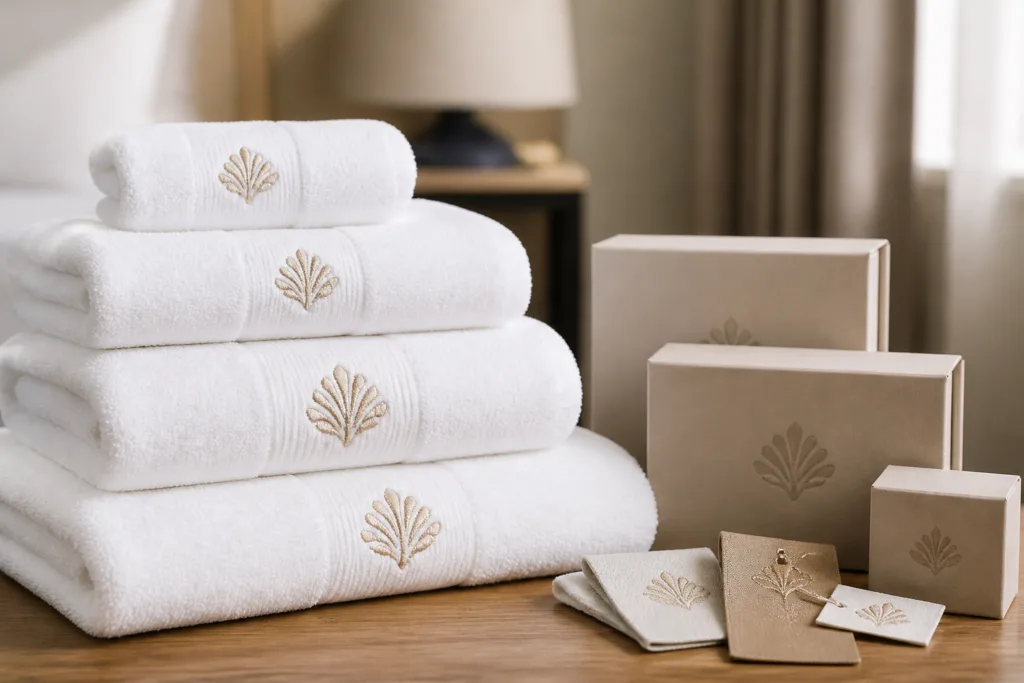
Custom packaging, from monogram sleeves to private label boxes, can also reinforce a cohesive hotel identity. Circe Towel frequently collaborates with hospitality clients to align technical specs with brand expectations for every detail from labeling to edge finish. For packaging strategies, review Mastering Private Label Towel Packaging.
Quality Assurance and Testing Requirements
Hotel towels wholesale procurement relies on strict quality testing to ensure product longevity. Buyers should demand confirmed results for absorbency (grams of water per gram of towel), shrinkage rates (after multiple washes), and resistance to color migration. Reputable suppliers share certified test results or offer in-house laundry simulations.
- Frequent industrial laundering tests can highlight colorfastness issues early; this is especially critical for signature white towels favored by most hotels.
- Careful examination of stitching—uniform density, straight seams—prevents premature unraveling and preserves the towel’s neat look after hundreds of cycles.
- Lint shedding can trigger operational complaints and increase cleaning costs, so ensure selected towels pass lint control standards.
Relevant certifications, such as OEKO-TEX Standard 100 and ISO 9001, reinforce supplier credibility and process consistency. For more detailed checks, see Towel Quality Testing: What Brands Check Before Shipping. Consistently high wash durability means less frequent replenishment and improved total lifecycle value.
Industry/Application Fit for Hotel Towels
The application environment defines what makes an effective hotel towels bulk order. Upscale hotels often demand heavyweight, ultra-soft combed cotton towels for premium guest satisfaction, plus logo-branded sets for suites.
Budget or mid-range accommodations may prioritize cost and simplified specs—medium GSM, resilient blends, and basic packaging—scaled for large-occupancy and quick turnaround.
- Spas and wellness zones often require specialty towels: lightweight, quick-drying, hypoallergenic, and ultra-soft, sometimes supplied in spa-only colors or formats.
- Swimming pool and gym towels should focus on moisture absorption, rapid drying, and high colorfastness ratings to withstand sun, chlorine, and frequent washing. Microfiber is often well-suited for these needs; see microfiber gym equipment towel options for examples.
- Hotels serving active or sports clientele may opt for promotional giveaways—custom-branded towels for events, branding, or retail sales. Practical ordering guides can be found at How to Evaluate Bulk Towel Suppliers for Hotels, Gyms, and Retail.
- Seasonality can impact towel choice: lighter, fast-drying towels in summer or heavy plush varieties for winter promotions and suites.
Matching the right towel spec and format to the operational context makes hotel towels bulk programs successful and sustainable. Overspecifying for budget rooms adds unnecessary cost, while underspec’d towels in luxury zones lower guest satisfaction and trigger negative reviews.
Customization Options for Hotel Towels
Well-chosen customization sets top hotels apart in a crowded market. Hotel towel suppliers can offer a range of branded solutions—some boosting luxury appeal, others delivering flexible, budget-friendly options for multi-property chains.
Branding can be achieved with embroidered or digitally printed logos suitable for bath, hand, or pool towels. Embroidery offers high durability and a tactile feel ideal for boutique hotels or executive suites, while digital printing suits vibrant, large-scale artwork or frequent design updates. Jacquard weaving embeds the logo in the towel structure for maximum fade-resistance and subtle elegance—details are available at Custom Logo Towels: Embroidery, Jacquard, and Printing Methods.
- Pattern, border, and piping options allow further color or theme integration; suppliers like Circe Towel support everything from classic white with tonal borders to full-color statement graphics.
- Custom labels—woven, printed, or heat-sealed—reinforce hotel branding in guest-facing and operational touchpoints.
- Packaging, from branded wraps or boxes to sustainable banding, completes the brand presentation for both guest rooms and retail applications.
- Hotels pursuing private label programs should clarify artwork and packaging specs upfront to streamline approvals and production.
Common Mistakes in Hotel Towel Procurement and Troubleshooting
Mistakes in hotel towels wholesale procurement can lead to supply chain headaches, excess costs, and negative guest feedback. One common mistake: selecting the wrong GSM—too low means towels feel thin and lack absorbency; too high takes too long to dry, especially in humid climates or without high-capacity dryers.
Choosing low-quality fabrics to cut costs results in towels that fade, pill, or stiffen after a few washes. Skipping proper wash testing creates risk: towels that shrink, lose their hand feel, or shed excess lint shorten their lifespan and increase replacement frequency.
- Poor attention to edge finishing and stitching is often overlooked but can lead to early fraying and unprofessional presentation.
- Neglecting to specify packaging details causes missed branding opportunities and inconsistent hotel presentation.
Troubleshooting: For absorbency issues, review both the material type and finishing process—over-finishing may block water absorption. For color fading, confirm supplier tests with industrial detergents and high-temperature cycles. Consistent stitching defects indicate inadequate QC control; reputable suppliers offer defect rate reporting and inspection transparency. For a deeper troubleshooting and evaluation process, see Expert Guide: Auditing Your Towel Supplier for Quality B2B Orders.
Ordering and Sourcing Guide for Hotel Towels
Sourcing from hotel towel suppliers efficiently requires planning and process knowledge. Most suppliers have a minimum order quantity (MOQ)—often expressed in pieces or kilograms—that influences unit pricing and customization options. Being clear about target order volume speeds up quotation and production scheduling.
- Estimate lead times with suppliers, which can range from 20 to 70 days depending on customized specs, logo applications, and packaging requirements. Urgent timelines may increase costs or limit branding options.
- Always request samples—ideally in the final spec—for hands-on quality verification before a hotel-wide rollout.
- Artwork preparation should follow supplier guidelines, considering logo scale, border restrictions, and colorfastness demands. Ask about digital vs. embroidered mock-up proofs to spot issues early.
When booking hotel towel suppliers for international shipments, review INCO terms (FOB, CIF) and clarify customs documentation needs to prevent delivery delays. Managing transit and restock is especially important for openings or renovations; engage suppliers who can support phased delivery and stock management. Circe Towel, for example, provides staged shipping and supports both OEM/ODM and private label logistics for complex hotel projects.
Frequently Asked Questions
What is the typical lead time for hotel towel orders?
Lead times for hotel towel supply range from 20–40 days for standard orders and 40–70 days for custom designs or large bulk projects, depending on manufacturing schedule and customization complexity.
How do I determine the right GSM for hotel towels?
Match GSM to usage: 450–550 GSM offers good absorbency and dry time for standard rooms, while 600+ GSM suits luxury suites and 350–450 GSM works for spa and pool areas needing faster drying.
What is the best fabric for pool towels?
Microfiber is ideal for pool towels due to its quick-dry properties and lightweight feel, though cotton is chosen for a plusher touch and higher absorbency in premium poolside setups.
Are there sustainable options for hotel towels?
Yes, many suppliers offer organic cotton, bamboo, and recycled microfiber options; look for OEKO-TEX or GOTS certifications to ensure true sustainability credentials for your hotel towel supply.
What customization options are available for hotel towels?
Customizations include embroidery, jacquard, digital or reactive printing for logos, color borders, custom labels, and bespoke packaging to match hotel branding across towel types.
How can I ensure colorfastness in my towels?
Request certified test reports for colorfastness to washing, sunlight, and chlorine; specify required standards and verify using pre-production samples from your supplier.
Related Reading
- Insider’s Bulk Sourcing Guide for Reliable Hotel Towel Manufacturers
- Brand-Enhancing Towel Packaging Solutions for Hospitality Pros
- Demystifying Jacquard: Prestige Customization for Hotel Towels
- How to Evaluate Bulk Towel Suppliers for Hotels, Gyms, and Retail
- What to Watch for: Microfiber Towel Sourcing Pitfalls and Performance