
Introduction to Private Label Bath Towels
Private label bath towels are premium products manufactured by a specialist and branded under the buyer’s label. As private label models gain popularity, more brands and distributors recognize their power to tailor inventory while strengthening market presence.
The towel industry is filled with options, making branding and clear product differentiation key to standing out. Customers—whether retail shoppers, hospitality chains, or promotional buyers—increasingly look for bath towels that offer consistent quality, personal comfort, and a unique look or feel. Modern buyers also demand transparency about materials and trust in supply chains. That’s why suppliers with robust sourcing, quality control, and bulk customization are so important to successful private label towels, especially for brands aiming to launch diverse product lines.
Current market trends are shifting toward sustainable fibers, higher quality standards, and a mix of entry-level and luxury offerings within one brand. Having the flexibility to select fiber (cotton, microfiber, bamboo), adjust towel GSM (weight), choose custom colors, or add embroidery means you can target different retail niches and applications. Leveraging expert bath towel manufacturers lets you access advanced weaving, dyeing, and finishing processes—saving both R&D time and costs. These manufacturing capabilities make curating a strategic range of private label bath towels easier than ever.
Brands planning a line of private label bath towels now have more tools and support than ever before—from sample prototyping to flexible bulk export packaging. As you read ahead, you’ll learn practical strategies to plan, launch, and optimize your bath towel product selection for both quality and market fit.
Defining Product Tiers: Basics, Upgraded, and Premium
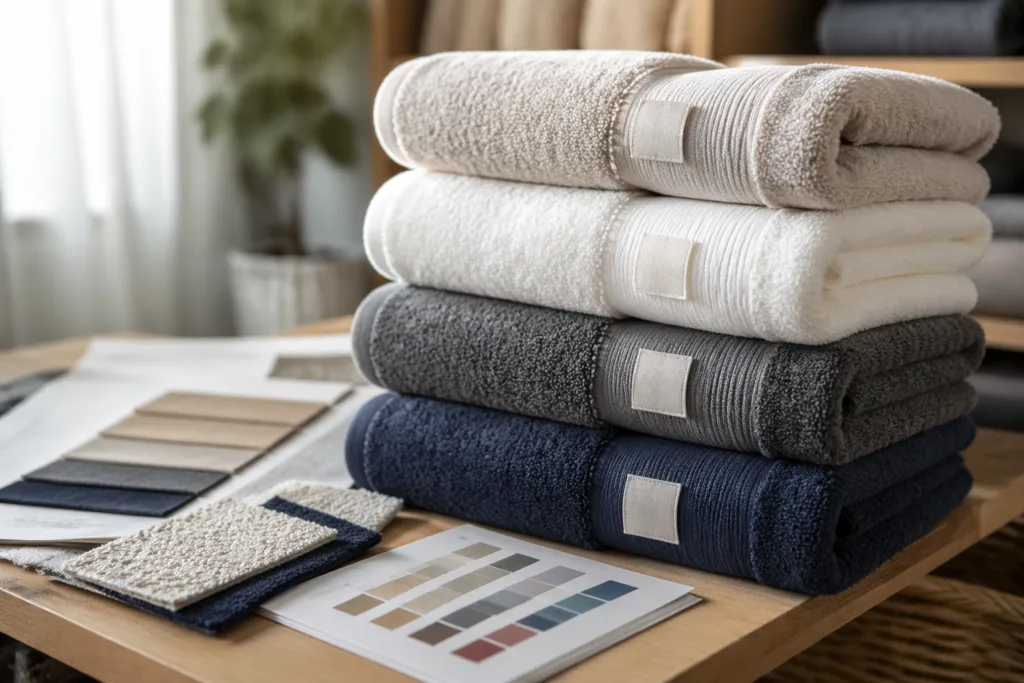
A successful bath towel product line isn’t just about choosing a fiber or color. Careful segmentation helps buyers create clear value ladders—so every customer finds the right fit. Let’s break down how to distinguish basic, upgraded, and premium bath towels, and why this distinction is crucial for SKU planning and brand positioning.
The main criteria include material quality, GSM (grams per square meter), color palette options, construction details, and retail presentation. Basic towels usually feature lower to mid GSM (sometimes 350–450 GSM), ring-spun cotton or fiber blends, and limited color choices. They’re ideal for budget-driven hospitality, gyms, or promotional events where cost and steady supply trump luxury. The branding message for basics centers on reliable “hotel quality” and easy care.
Upgraded towels step up softness, absorbency, and visual detail. Expect combed cotton or bamboo blends with GSM in the 450–600 range, advanced edge finishing, and a wider color or pattern selection. These towels suit mid-market hotels, wellness centers, or retailers aiming for above-average comfort and style. The branding message: “everyday indulgence” with durable, easy-wash performance.
Premium towels offer the densest combed or long-staple cotton, Turkish peshtemal, or innovative fibers like zero-twist yarn. GSM typically exceeds 600, colors are custom-dyed, and enhancements such as jacquard borders or fine embroidery are common. These towels are built for boutiques, spas, or luxury hospitality. The branding message is all about exclusive, soft, and long-lasting comfort.
- Basic: Ring-spun cotton, 350–450 GSM, simple stitching, core colors, bulk-friendly pack.
- Upgraded: Combed or bamboo blend, 450–600 GSM, wider color selection, elegant edge finish, custom embroidery possible.
- Premium: Long-staple/zero-twist cotton, 600+ GSM, custom dye, intricate details (jacquard weave, high-end packs), eco certifications sometimes included.
Your selection of quality bath towels in each tier has direct impact on how you set pricing, control costs, and execute marketing—basic for volume and accessibility, premium for branding and margin. Brands like Circe Towel often guide clients to balance their assortment so they cover key needs while maximizing basket value per customer.
Material Comparison: Cotton, Microfiber, Bamboo, and Blends
One of the most vital choices in private label bath towels is the material selection. Not every towel material is right for every usage or brand image. Here’s a practical guide to the main options and how the right bath towel manufacturers help you decide.
| Material | Pros | Cons | Best for |
|---|---|---|---|
| Cotton (Ring-spun/Combed) | Soft, highly absorbent, classic feel, widely available | Slower to dry, can shrink, may lint if not well made | Home, boutique hotels, retail, basics and premium lines |
| Microfiber (Polyester/Polyamide) | Ultra-fast drying, lightweight, strong, durable, less shrinkage | Less plush feel, can lack absorbency for some applications | Gyms, sports, travel, cleaning, quick-dry use |
| Bamboo & Cotton Blends | Eco-friendly, naturally anti-bacterial, soft touch, good absorbency | Higher cost, color options can be more limited | Eco brands, spas, wellness, retail with green strategy |
| Custom Blends (e.g., Modal, Tencel) | Performance tailoring, quick-dry or extra soft, branding appeal | Often higher price, MOQs can be higher for specialty fibers | Niche retail, premium/bespoke lines |
Cotton remains the gold standard for comfort and is what customers expect for their everyday towels. When better absorbency is the goal, choose higher GSM and combed varieties. Microfiber is unbeatable for drying speed and lightweight performance, perfect for athletic and hospitality towels that require frequent washing. Bamboo offers both a soft hand feel and green credibility, which more eco-aware consumers now demand.
Some bath towel manufacturers, such as Circe Towel, help clients blend fibers for the ideal trade-off between plushness, cost, durability, and look. For example, adding modal to cotton can extend softness and make a towel more resilient after repeated washes. Choices ultimately depend on your target markets—from quick-dry gym towels and spa towels to classic plush retail offerings. For further material insight, see the Buyer’s Guide: Custom Towel Options, Materials, and Branding Strategies.
Towel Construction: Key Techniques and Their Effect
How a towel is constructed influences its hand feel, performance, and visual appeal. Understanding these differences is essential when planning your range of quality bath towels.
Terry cloth towels, made with uncut loops, are famous for absorbency and a soft grab. They’re classics for bath and hospitality. Velour is sheared, creating a smooth, shiny surface—great for print clarity but less absorbent than terry. Waffle weaves are lightweight and quick-drying, while jacquard weaving delivers intricate patterns that won’t fade or peel, offering long-term branding impact (explained in more detail in Jacquard Towel Manufacturing Explained).
Decoration methods add further dimension. Embroidery provides a luxury touch and tactile branding but adds cost; it’s excellent for premium spa or boutique towels. Reactive or digital printing enables colorful, custom graphics, ideal for promotional or retail lines looking for eye-catching shelf appeal (see Your Ultimate Guide to Selecting and Specifying Custom Printed Towels).
- Weight & thickness: Higher GSM means a heavier, more substantial towel that feels plush. Lighter towels dry faster but may feel less luxurious.
- Stitch quality & finishing: Double-stitched or hemmed edges reduce fraying. Rounded or piped corners on premium lines add to shelf and user appeal—for more on edge selection, try 7 Ways Hemming & Stitching Shape Towel Edge Durability.
Link your SKU strategy to these construction differences. For example, a simple white terry towel for low-cost hospitality use versus a colored jacquard towel with custom borders for a high-end gym or spa. Always match the construction to the target customer and intended application for longer product life and better brand reputation.
Design and Specification Checklist for Bath Towels
Setting clear specifications at the planning stage ensures reliable production and a faster path to market for your private label towels. Use the following practical checklist to guide your towel SKU creation.
- Size: Standard bath towel (70x140cm), bath sheet, hand towel, washcloth—select based on venue and market.
- GSM (weight): Decide your absorbency-luxury trade-off (see comparison table above).
- Material: Choose the fiber that fits your application best (cotton, microfiber, bamboo, blends).
- Edge finishing: Double hemmed, piped, decorative border—critical for product lifespan.
- Logo application: Embroidery (luxury), Jacquard (integral design), Printing (colorful, bold branding).
- Absorbency & softness: Balancing these comes from correct GSM and fiber selection.
- Colorfastness: Dyeing process should meet OEKO-TEX or similar standards.
- Packaging: Polybag, band roll, custom box, or eco-packaging depending on retail strategy—see How Towels Are Packed and Prepared for Export.
For more inspiration, you can browse Circe Towel’s product templates or check reference designs in the market category closest to your needs. Always align choices with your overall private label towels branding plan for maximum cohesion across the range.
Ensuring Quality and Testing Criteria
Buyers of private label bath towels should never overlook structured quality testing. Quality assurance ensures your brand’s reputation and helps manage costs due to returns or claims.
Key tests include absorbency checks (how quickly a towel soaks up water), repeated wash durability (how well it performs after multiple laundering cycles), and shrinkage testing. Colorfastness, particularly after exposure to washing, sun, and chemicals, is essential for both colored and white towels. Consistent, tight stitching and attention to edge finishing directly affect tear resistance and fraying.
Lint control is another must-have for quality. Poor-quality towels shed fibers, leading to a negative user experience and shorter life. Reputable bath towel manufacturers employ practices like pre-washing and quality audits (learn more from 8 Expert Ways to Master Towel Shrinkage Control and Towel Quality Testing: What Brands Check Before Shipping).
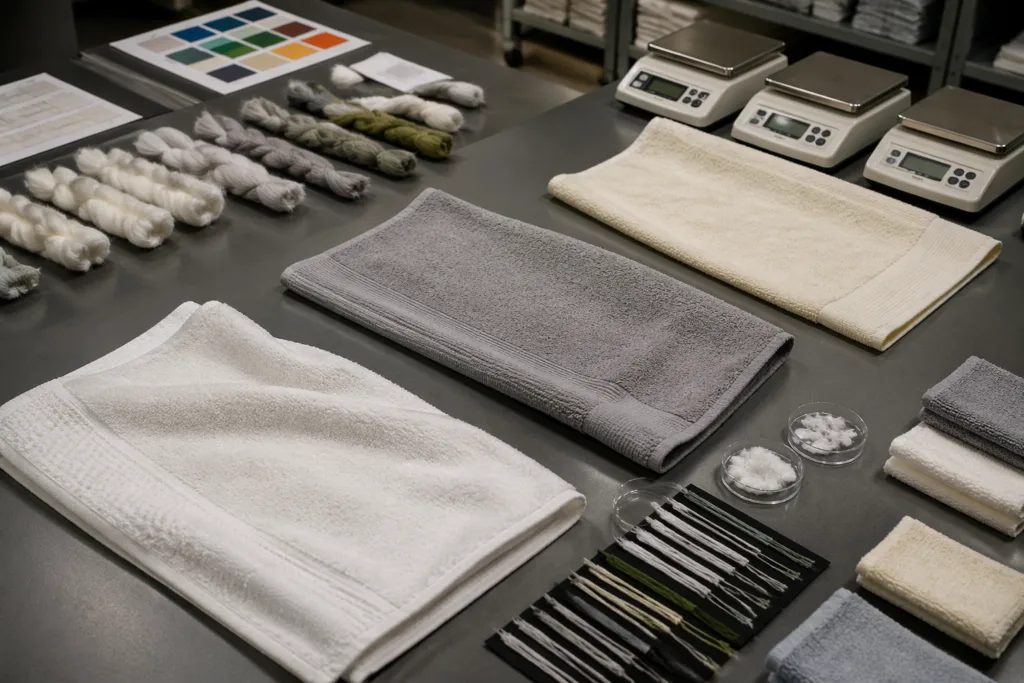
Industry-standard certifications include OEKO-TEX, GOTS (for organic), and ISO. These help assure both buyers and end-users regarding fiber safety, colorfastness, and social compliance. Circe Towel, for example, advises buyers to request and review test reports at the sample phase and before final shipment, ensuring that both basic and luxury private label towels deliver on expectations every time.
Industry/Application Fit: Identifying Use Cases
Private label bath towels can be strategically developed for multiple end uses. Each application influences material and construction choices, as well as branding and packaging direction.
- Hospitality: Hotels and resorts require large quantities of soft, durable white or pastel towels, usually cotton, with steady supply and simple labeling. Edge stitching must withstand frequent hot washes.
- Gyms and Sports: Lightweight, quick-dry microfiber towels with compact packaging suit athletic and locker room use, where easy storage and hygiene are top priorities.
- Promotional & Events: Cost-effective towels with vibrant prints or simple embroidery work for giveaways and branded merchandise. GSM is often lower for budget and volume flexibility.
- Retail & Home: Both entry-level basics and luxury premium towels with eye-catching colors, textures, and sustainable packaging options appeal to retail buyers.
- Niche Markets: Spa and wellness towels favor ultra-soft, plush high-GSM picks; eco-focused brands may prefer bamboo or recycled-fiber options.
Understanding these differences helps you fine-tune SKUs and avoid overcomplicating inventory. For real-world examples and B2B advice, the guide How to Evaluate Bulk Towel Suppliers for Hotels, Gyms, and Retail is a useful resource. Building a diverse range of quality bath towels ensures each distribution channel sees relevant, on-brand options—maximizing both efficiency and growth potential for your private label line.
Customization Options for Private Label Bath Towels
Customization is what sets private label towels apart from generics on the shelf. Not only does it reinforce your brand identity, but it also adds perceived value for end-users. Buyers have more tools than ever to make towels distinct.
Logo placement can be done via embroidery (for a classic, raised design), jacquard weaving (for permanent tone-on-tone effect), or color printing (for standout visuals). Borders may be piped, woven with custom patterns, fringed, or color-contrasted to suit your brand image. Label choices—woven, printed, removable—amplify your long-term branding, especially for premium retail or boutique lines.
Packaging can be customized from basic sleeves to fully branded boxes or eco-packs. With consumer preferences trending toward personalization and sustainability, offering unique packaging or custom monogramming options makes your private label towels even more desirable, whether for gifts, spas, or retail sales.
For advanced techniques and their buying implications, reference Custom Logo Towels: Embroidery, Jacquard, and Printing Methods.
Common Mistakes and Troubleshooting in Towel Development
Sourcing and developing private label bath towels is a significant investment—avoiding common errors will save time, money, and customer dissatisfaction in the long run.
One frequent pitfall is selecting an inappropriate GSM. Too low and towels feel thin and lack absorbency; too high and drying time increases, impacting user convenience and laundry efficiency. Also, choosing the wrong fabric blend can result in towels that fade, lose shape, or shed excessively—compromising both performance and brand perception.
Colorfastness issues, such as fading after a few washes, often stem from budget dyeing rather than proper reactive or vat techniques. Subpar stitching leads to loose hems and quick wear, which can be prevented with strong manufacturing QC and periodic factory audits (find practical QC steps in Expert Guide: Auditing Your Towel Supplier for Quality B2B Orders).
Poor decoration method selection also harms branding. For instance, cheap printing may crack or peel, while excessive embroidery can affect towel performance if not properly stabilized. Use tools like pre-production samples, clear tech packs, and close communication with your supplier throughout the process to avoid these errors. Learning from these troubleshooting tips is crucial to smooth, successful launches in private label bath towels.
Ordering Guide: From Sourcing to Delivery
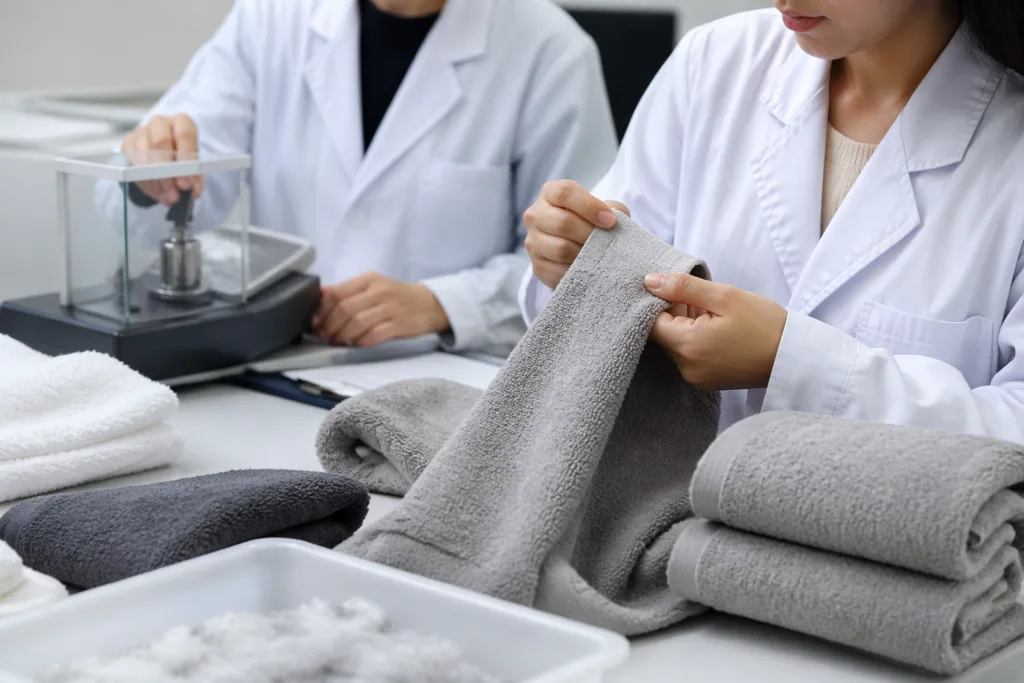
Effective planning and communication are the backbone of successful ordering when working with bath towel manufacturers. Start by confirming minimum order quantities (MOQ) and realistic lead times—MOQ for custom towels often ranges between several hundred to several thousand units, based on complexity and tier.
Sampling is an industry norm and an essential step. Request samples to validate look, feel, color, and packaging before moving to mass production. Prepare your artwork files and technical specifications clearly to avoid confusion at the factory—a good manufacturer will provide digital proofs and sometimes physical pre-production samples for your approval.
Packaging choices matter for both retail display and freight efficiency. Decide if you want individual bags, band rolls, branded boxes, or eco-pack solutions. Factor in labeling and compliance needs (fiber content, country of origin, wash instructions). Shipping considerations—how towels are packed for pallets or cartons, eligibility for sea or air freight, and understanding shipping schedules—can affect cost structure and delivery windows (for further insights, see How Towels Are Packed and Prepared for Export).
Summary ordering sequence for bath towel manufacturers:
- Define specifications clearly (size, GSM, material, branding method).
- Agree on MOQ and lead times with your supplier.
- Request and review samples.
- Confirm artwork and approve production proof.
- Select and confirm packaging type.
- Organize bulk production; monitor production schedule.
- Plan for final inspection and arrange shipment.
Meticulous planning, especially on artwork, sample review, and packaging, ensures your private label towel order arrives on spec, on time, and ready to impress your clients.
Frequently Asked Questions
What is the typical GSM range for quality bath towels?
Most quality bath towels range from around 400 to 700 GSM; lower GSM feels lighter and dries faster while 600+ GSM delivers extra plushness and absorbency suited for luxury applications.
How can I ensure my private label towels meet quality standards?
Work with manufacturers who offer structured absorbency, colorfastness, and stitching tests—request test reports, review sample performance, and review international certifications like OEKO-TEX or ISO for peace of mind.
What customization options are available for bath towels?
You can choose embroidery, jacquard weaving, or printing for logos, select custom colors, unique borders, labels, and a range of packaging styles to fully match your brand strategy in private label towels.
How do I choose the right material for my target market?
Choose cotton for classic softness and versatility, microfiber for athletic and fast-dry needs, and bamboo or blends for eco or wellness brands; align this choice with your buyers’ preferences and application needs.
What are the factors affecting towel price and sourcing decisions?
Material quality, GSM, construction method, decoration type, packaging, customization complexity, and order volume all influence unit price and minimum order requirements when sourcing private label bath towels.
How long does production typically take?
Bulk production can range from 3 to 8 weeks after sample approval, depending on project complexity, current factory workload, and whether custom fibers or colors are being developed.
Related Reading
- Understand MOQ and Cost Structure for Private Label Towels
- How to Build a Private Label Towel Brand from the Ground Up
- Choosing the Right Branding Method: Printed, Embroidered, or Jacquard Towels
- Crucial Criteria for Selecting a Towel Manufacturer
- How to Audit Your Towel Supplier for Reliable Quality