
Sourcing gots certified towels and organic towel products for hospitality, retail, or wellness brands is more than a simple purchase—it’s a strategic choice that shapes your product quality, sustainability commitment, and customer trust. Today, procurement teams and brand managers face growing expectations for proof of eco-friendly sourcing and strict certification, making the selection of an organic bath towel or organic cotton hand towel supplier a process that demands both knowledge and diligence.
Understanding GOTS and Its Importance
The Global Organic Textile Standard (GOTS) is internationally recognized as the gold standard for organic fibers. For buyers, GOTS certification directly signals that their towels—whether bath, hand, or face—are not only made from organic cotton but also processed in facilities that adhere to environmental and ethical norms.
GOTS-certified towels must meet strict requirements, from organic fiber content to responsible chemical usage, wastewater treatment, and fair labor practices. It’s more rigorous than most eco-labels, as the entire manufacturing chain must be audited—spinning, dyeing, finishing, and labeling.
- GOTS covers both material and process: organic content, no hazardous chemicals, worker welfare.
- Certification is annually renewed with factory site audits.
- Final towels must carry a GOTS hangtag or label, allowing full traceability.
Comparing GOTS to OEKO-TEX®, for example, the key difference is focus. OEKO-TEX® highlights safety of end products (no harmful substances), while GOTS guarantees organic origin plus environmental processing. Many buyers combine certifications for maximum reassurance.
Sourcing gots certified towels isn’t just about compliance. It’s a powerful signal for consumer trust and brand loyalty—buyers and end-users alike now expect tangible proof of sustainability. Brands that showcase GOTS can credibly tell their sustainability story, attract mindful customers, and respond to ever-stricter regulations in international markets.
In the textile industry, sustainable manufacturing is no longer optional. Choosing a factory with GOTS credentials means making a commitment to thoughtful sourcing and thorough quality assurance—both critical for resilient, transparent supply chains.
Defining Organic Towels: Materials and Advantages
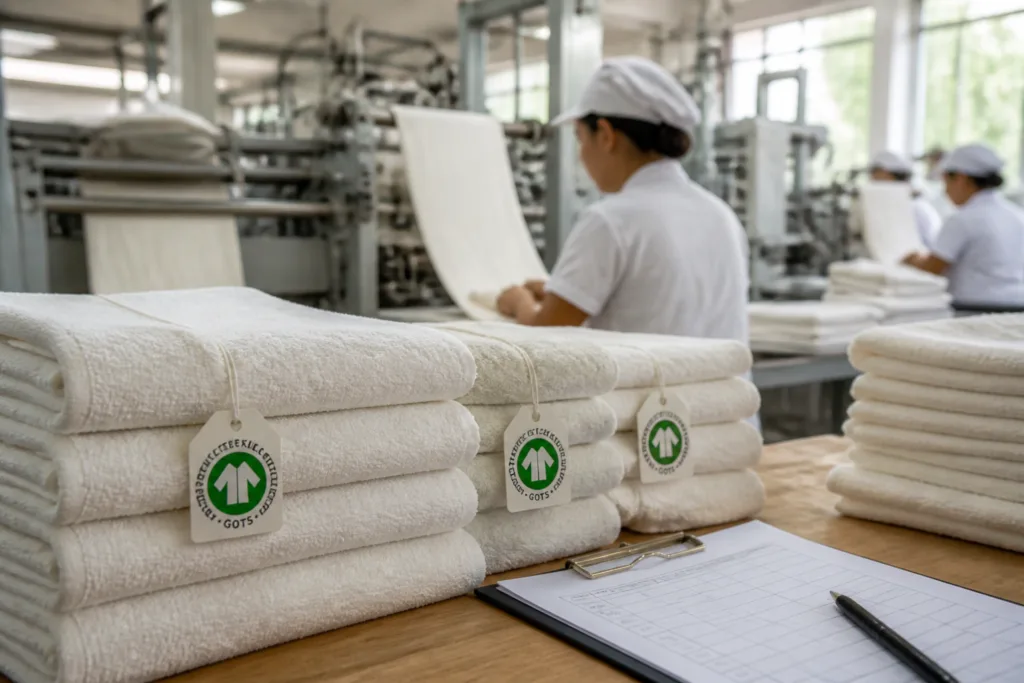
An organic towel starts with organic cotton, usually grown without synthetic pesticides or fertilizers. Organic cotton farms must protect soil health and water resources, and farmers need to follow crop rotation and biodiversity guidelines. GOTS traces organic cotton through every stage, from field to finished towel.
Organic bath towels and organic cotton hand towels offer tangible advantages over conventional options. First, organic fibers are free from residues that may cause skin irritation. Second, organic cotton feels softer and retains its plushness after repeated washes—excellent for spas, hotels, or wellness brands targeting a premium customer segment.
When comparing organic cotton to conventional and synthetic fabrics, organic versions win on health and environmental grounds. Conventional cotton may be heavy on chemicals and water usage, while synthetics, like polyester, often lack breathability and feel harsh to the touch. Buyers looking for a price-quality balance can refer to Circe Towel’s experience: organic towel production requires a more deliberate material selection and stricter controls, but the result is a higher-performing product for sensitive markets.
The main target demographic for organic towels includes eco-conscious hospitality clients, wellness brands, premium retail shoppers, and parents seeking safe textiles for babies. With luxury and wellness trends sweeping the industry, organic bath towel offerings are now a sign of quality and responsibility—making them a smart fit for upscale spas, boutique hotels, or private label lines.
Comparing Towel Materials for Sustainable Manufacturing
Material selection is a fundamental decision in producing organic cotton hand towels and other eco-conscious towel types. Here’s how major towel fabrics compare for functionality and sustainability:
| Material | Absorbency | Softness | Durability | Environmental Impact | Ideal Use | Pricing |
|---|---|---|---|---|---|---|
| Organic Cotton | Excellent | Very Soft | Strong, retains plush | Low chemicals, sustainable farming | Luxury, wellness, hospitality | Mid-high |
| Regular Cotton | Good | Soft | Strong | Higher water/chemical use | Hotels, retail | Mid |
| Microfiber | Very High | Silky or plush | Excellent for fast drying | Petrochemical origin | Gyms, sports, cars | Low-mid |
| Bamboo & Blends | High | Smooth | Moderate | Semi-renewable, chemical-intensive | Baby, spa, retail | Mid-high |
For buyers seeking organic cotton hand towel solutions, the difference is often in both touch and long-term performance. Organic cotton absorbs water efficiently, feels gentle on skin, and handles repeated laundering—ideal for hospitality and luxury wellness.
Bamboo towels are marketed for softness, but true organic standards are harder to guarantee due to manufacturing chemicals. Microfiber towels perform well in absorbency and quick drying, making them a favorite in gyms and sports, but are not organic.
Sourcing organic towels means working closely with factories who can trace raw material back to certified fields, control cotton blending ratios, and apply eco-friendly dyeing and finishing. Pricing reflects these steps: while organic options cost more upfront, buyers benefit from repeat business and lower warranty claims.
For procurement teams balancing performance, sustainability, and cost, selecting the right material for each use case is critical. Circe Towel’s manufacturing expertise shows that organic cotton hand towel specifications can be adjusted for GSM, softness, and edge finishing without sacrificing eco-values—providing practical flexibility for diverse markets.
Towel Construction and Manufacturing Techniques
The construction of a towel affects not only its feel but also its absorbency, durability, and visual appeal. Key techniques used in manufacturing include terry, velour, waffle, and jacquard weaving, each offering distinct functional and aesthetic qualities.
Terry towels are characterized by looped piles that maximize surface area for water absorption, making them a preferred option for bath and spa environments. Velour towels are sheared to create a smooth, plush surface, ideal for personalization through embroidery.
Waffle towels, with their textured weave, are lightweight and quick-drying, suitable for travel, gyms, or promotional uses. Jacquard towels allow for intricate designs woven directly into the fabric, perfect for custom branding or luxury hotel settings.
Finish options, such as combed or ringspun cotton, influence softness and longevity. Buyers can also choose border styles, edge stitching, and other customizations—these not only reinforce the towel’s structure but provide brand distinction.
Sustainable practices in towel manufacturing include enzyme washing, low-impact dyes, and closed-loop water recycling. Review our guide to jacquard towel manufacturing for deep customization tips.
Design and Spec Checklist for Buying Organic Towels
When buying organic towels, the specification checklist ensures you meet both quality and sustainability standards. Below are crucial elements:
- Size: Standard options—bath (70x140cm), hand (40x80cm), face (30x30cm); custom sizes possible.
- GSM (grams per square meter): 400–600 GSM for plush, highly absorbent towels; 300–400 GSM for lighter options.
- Edge Finishing: Double-stitched, piped, or hemmed for durability and aesthetics.
- Logo Application: Embroidery, screen or digital printing, jacquard weave—select based on budget and visibility needs.
- Absorbency & Softness: Specify fiber content and yarn type; request test data.
- Colorfastness & Durability: Vital for repeated laundering, especially in hotels and gyms.
- Packaging: Options include recycled materials, private label boxing, or bulk export bundles.
| Spec | Hospitality | Retail | Promotional |
|---|---|---|---|
| Size | Bulk standard | Customizable | Small, easy-pack |
| GSM | 450–650 | 400–600 | 300–350 |
| Edge Finish | Reinforced | Styled | Cost-effective |
| Logo | Embroidery/jacquard | Print/jacquard | Printed |
| Packaging | Bulk or private label | Retail display | Gift/eco pack |
For sustainable packaging correlating to product story, see Circe Towel’s reference guide on private label towel packaging.
Quality Assurance and Testing Standards
Quality assurance is fundamental to organic towel sourcing. Key parameters include absorbency (grams of water held per gram of towel), softness, wash durability, and colorfastness.
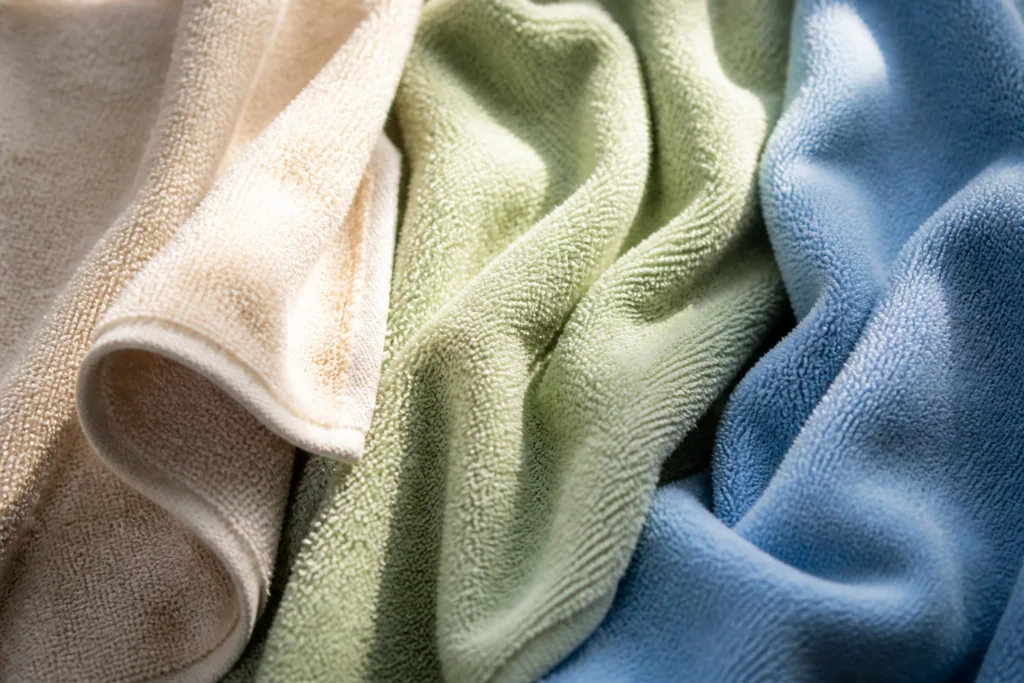
Absorbency and wash durability are tested using industry benchmarks. Colorfastness—ensuring towels stay vibrant after repeated washing—is essential for branded collections. Shrinkage and edge stitching quality prevent the towel from losing shape or fraying, both critical for hospitality and gym use.
Lint management is another factor. High-quality organic towels should produce minimal lint, especially after the first few washes. Always verify factory QC reports and request test samples reflecting real batch production.
Trusting certifications like GOTS helps. Review proof of certification, audit reports, and clear batch documentation. Buyers also benefit from guides such as towel quality testing before bulk shipping.
Industry Fit: Use Cases for Organic Towels
Organic towels serve a range of industry applications. In hospitality—hotels and spas—organic bath towels reinforce luxury, guest wellbeing, and brand credibility. Guests increasingly expect organic cotton hand towel options as a standard for premium stays.
For gyms and sports brands, organic towels support a wellness narrative and differentiate from synthetic fabrics. Sports towels can be tailored for quick-dry and washable features using organic blends, backed by ethical production.
Retail and promotional giveaways benefit from the perceived value of organic towel products. Brands offering organic towels in gift boxes or private label packs are seen as responsible and forward-thinking. Corporate gifting with organic towels marks a shift towards sustainable marketing and employee care.
Real-world examples include boutique hotels showcasing organic bath towel lines with custom embroidery, wellness studios using personalized organic face towels, and eco-conscious brands building loyalty through certified products. Explore Circe Towel’s range for reference.
Customization Options for GOTS-Certified Towels
GOTS-certified towels offer broad customization for branding and private label development. Logo placement can be applied through embroidery, jacquard weave, or digital printing—each method has its trade-offs in cost, durability, and appearance.
Border customization, including colored piping, woven labels, and decorative stitching, adds distinction and aligns with brand aesthetics. Packaging goes from simply recycled wrap to specialty gift boxes, supporting retail presentation or eco goals.
Private label options enable brands to create unique towel lines, with custom hangtags and exclusive packaging. Successful custom projects often combine branded patterns, ethical production, and story-driven messaging. For deeper insights, consult private label towel certifications.
Common Mistakes in Sourcing Organic Towels
Even experienced buyers can make sourcing errors. One of the most common is choosing an inappropriate GSM—too thick means slow drying, too thin means poor absorbency and feel.
Poor fabric selection is another risk, leading to fading, rapid wear, or rough hand feel not suited to hospitality or retail. Stitching quality and edge finishing can make or break a towel’s life span—don’t accept shortcuts.
Decoration methods also matter. For example, large-format screen printing on thick towels may cause wash fading, while embroidery on lightweight towels might stiffen the hand feel. Matching branding to the material and towel type is crucial.
Troubleshooting tips include sampling towels before bulk ordering, reviewing real production test reports, and auditing certifications and factory practices. Explore more troubleshooting advice in supplier auditing guides.
Ordering Guide for GOTS-Certified Towels
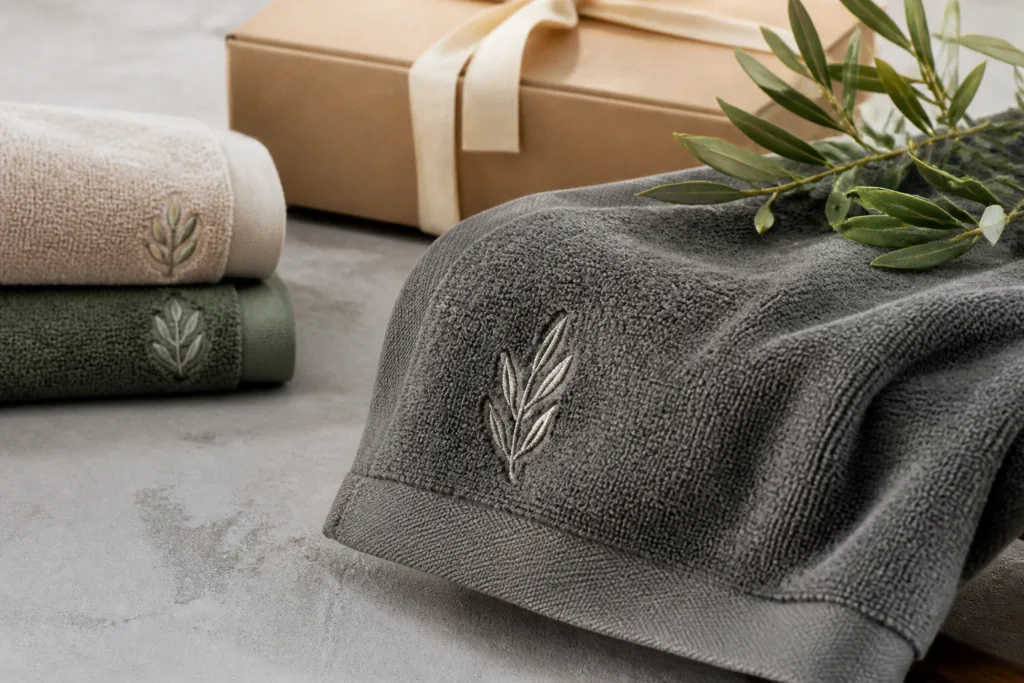
The buying process for GOTS-certified towels follows a series of steps. Minimum order quantities (MOQs) depend on towel type and customization, usually ranging from 500–2000 units.
Lead times are 4–8 weeks, factoring in material sourcing and certification processes. Artwork preparation—logos, patterns, and packaging—should be finalized before sampling. Factories provide physical samples for quality and finish verification; this step is essential for avoiding costly errors in bulk orders.
Proofing and final approvals must confirm all specifications, including absorbency, color, and softness. Shipping and logistics planning ensure timely delivery, and buyers can mitigate delays by clarifying import/export documentation early.
For more on efficient towel ordering workflows, refer to tips on MOQ and cost structure and sample order management.
Frequently Asked Questions
What is the lead time for GOTS-certified towel orders?
Lead times typically range from 4 to 8 weeks, depending on material availability, customization extent, and factory certification status. Early planning reduces delays.
How can I verify a manufacturer’s GOTS certification?
Request the factory’s GOTS certificate and check its validity through the official GOTS database; authentic manufacturers provide batch and audit documentation.
What are the differences in towel absorbency among materials?
Organic cotton absorbs water efficiently but stays soft, microfiber dries quickly and holds more water per gram, while bamboo blends balance softness and moisture retention.
Can I source towels with a custom design in small quantities?
Most factories offer custom designs with MOQs as low as 500 units, but specialty features may require higher quantities; sampling enables testing before full production.
What is the environmental impact of using organic towels?
Organic towels reduce chemical input, lower water consumption, and support responsible farming; their production leaves less environmental impact than conventional alternatives.
How do I choose the appropriate GSM for different uses?
Select GSM by application: 400–600 GSM for bath and hotel use, 300–400 GSM for hand and gym towels, and adjust for desired softness and drying performance.
Related Reading
- Discover expert strategies to source high-quality bath towels in bulk
- Master towel certifications and branding for your private label range
- Get a step-by-step breakdown of custom towel manufacturing and QC
- Learn which towel logo method fits your budget and branding goals
- See how eco-friendly towel production—from cotton fields to finished goods—works