
Introduction to Personalized Hand Towels
Personalized hand towels have become essential for hotels, spas, restaurants, gifts, and home branding projects. They go beyond basic function by incorporating unique touches like names, initials, or small logos. The shift to personalized hand towels is driven by businesses and brands wanting to deliver memorable experiences and reinforce their identity at every touchpoint.
Hotels use monogrammed towels to create a luxurious and exclusive environment for guests, while spas often deploy custom hand towels with embroidered initials for enhanced ambiance. Restaurants upgrade their washrooms with small logo towels, showcasing subtle, refined branding. In the gifting and home market, monogrammed towels and custom towels with name details add a special, thoughtful flair—improving perceived value and supporting family branding traditions.
The trend toward customization is strong and growing. B2B buyers look for ways to combine brand recognition, quality, and comfort in one package. Reliable stitching, rich absorbency, and visually crisp personalization all tell the customer that a hotel, spa, or brand pays attention to details—which boosts loyalty and return rates. For brands, personalized hand towels work as both utility and advertisement: every time the towel is used, the brand’s message is gently reinforced.
The key is selecting quality products. Thin, scratchy, or poorly finished towels undermine the investment. When personalized hand towels are made well, their value lasts far beyond the first use—making them a smart choice for organizations serious about their professional image.
Material Comparison for Custom Hand Towels
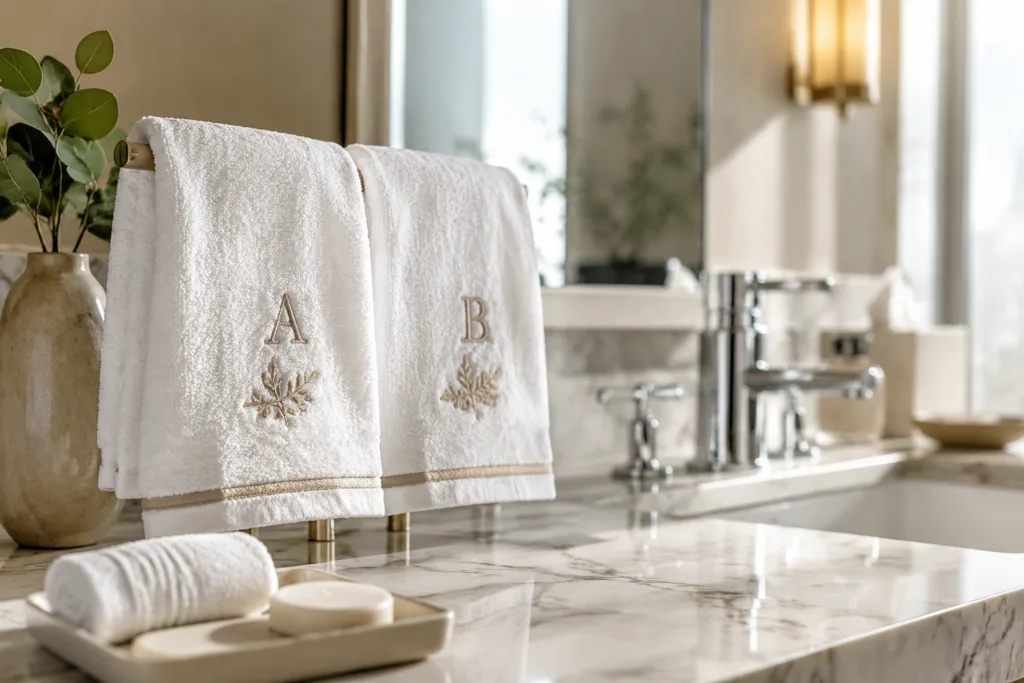
Material selection is the foundation for producing custom hand towels with logo that balance comfort, performance, and brand expression. Each fabric type impacts touch, durability, absorbency, and the appearance of personalization.
| Material | Absorbency | Softness | Durability | Branding Suitability |
|---|---|---|---|---|
| 100% Cotton | High | Very Soft | Long-lasting | Excellent for embroidery, jacquard |
| Microfiber | Moderate-High | Silky/Smooth | Strong & Quick Drying | Best for printing, vibrant colors |
| Bamboo Blend | High | Ultra-soft (natural sheen) | Good (with some care) | Ideal for eco branding, embroidery |
| Blended Fabrics | Varied | Soft to Moderate | Balanced | Depends on blend and use |
Pure cotton remains the top pick for luxury and hospitality brands prioritizing absorbency, softness, and traditional feel. Cotton towels perform extremely well with embroidery and jacquard, supporting detailed, lasting logos and text. Microfiber hand towels are lighter and dry quickly, often preferred for fitness, spa, and cleaning applications, with the added advantage of vivid digital or reactive printing.
Bamboo blends add a natural, eco-friendly angle—perfect for wellness-oriented brands or venues with a sustainability pledge. They boast natural antimicrobial properties and an unmistakably silky hand. Blended fabrics (cotton-poly, bamboo-cotton) offer balanced cost, performance, and durability, but may require careful vendor evaluation to avoid compromises on absorbency or how logos will appear.
- Cotton: High absorbency, easy embroidery, classic brand feel
- Microfiber: Fast drying, brilliant print colors, modern touch
- Bamboo Blend: Sustainable image, soft and silky, health-centric
- Blends: Value-driven, but check branding compatibility
Market preference for custom hand towels with logo varies by region and end use. Premium hotels often specify Turkish or Egyptian cotton, while sports and gym projects choose performance microfiber for sweat resistance and durability. The hospitality sector is seeing rising interest in organic and recycled yarns, which align with growing ESG reporting requirements. Sourcing with environmental considerations in mind is not only responsible but increasingly expected.
Circe Towel often helps clients balance performance and cost by recommending suitable blends or upgraded cottons for challenging branding designs, factoring in anticipated washing frequency and venue profile.
Construction Techniques and Methods
The construction of personalized towels significantly influences feel, absorption, and how well branding features like names and logos are displayed. Understanding available options helps buyers make decisions that impact performance and long-term appearance.
Terry is the classic construction for custom towels with name details. Its looped pile delivers plush softness and superior absorbency. Terry texture is best for substantial embroidery—letters and small logos remain clear and tactile over time. However, loops must be tight and uniform to prevent snagging.
Velour offers a sheared, smooth surface, perfect for high-end hospitality and upscale branding. It feels luxurious, makes printed designs appear vivid, and is ideal when logo clarity is a priority. However, velour is more prone to flattening and shows wear faster after frequent washing.
Jacquard weaving enables the towel itself to incorporate branding elements directly into the fabric. It’s highly durable, colorfast, and can feature names or initials as a permanent part of the design. Jacquard is costlier for small orders but beloved by designers for its premium look.
Waffle knit towels stand out with a unique, textured surface. They dry faster, are lightweight, and hold compact logos neatly with less distortion. Waffle weave is increasingly popular in boutique spas or wellness centers seeking a modern or organic look.
- Embroidery: Ideal for names, initials, and small logos thanks to excellent durability. Works best on thicker, lower-pile terry or cotton towels, retaining crispness through many washes.
- Reactive/Digital Printing: Suits detailed or multicolor designs, especially on microfiber or velour towels. Offers creative flexibility but may fade faster if not properly finished.
Stitching quality matters—tightly bound edges and reinforced hems prevent fraying, even after high-frequency use. For hotels, opt for double-stitched hems; retail-oriented towels may allow more decorative edges if wash cycles will be gentler. Circe Towel often advises luxury clients on construction trade-offs, especially when balancing logo clarity and handfeel for different hospitality segments.
Design and Specification Checklist
Building a clear, thorough spec is crucial for any monogrammed towels project. Consider these parameters while collaborating with your supplier.
| Specification | Recommendation | Notes |
|---|---|---|
| Size | 30x50cm / 16x32in (typical) | Adapt for market, venue, or client |
| GSM | 400–600 for hospitality; 300–450 for retail/gifts | Higher GSM = more plush; lower = faster drying |
| Material | Cotton, Microfiber, Bamboo blend | Choose per application (see earlier table) |
| Edge Finishing | Double-stitched / decorative border | Critical for durability and appearance |
| Logo Placement | Corner (classic), edge (discreet), center (bold) | Align with overall design/branding needs |
| Decoration | Embroidery or Print | Embroidery for durability, print for color/pattern variety |
| Absorbency | Above 350% (industry measure) | Impacts guest comfort and drying speed |
| Colorfastness | Grade 4 or above (ISO/CNAS) | Prevents fading, especially for branded towels |
| Packaging | Custom sleeve, box, or bulk bundle | Branding consistency & presentation for gifts or retail |
When specifying monogrammed towels, ensure the size fits practical use (guest washrooms vs household gifting) and GSM matches desired plushness or drying speed. Softness, absorbency, and appearance must all meet brand standards, particularly for higher-value hospitality and private label projects. Well-finished edges prevent unraveling and preserve the towel’s look, even after many washes.
Custom packaging should be discussed early—whether you need ribbon-wrapped hand towels for a spa launch or bulk-packed logo towels for hotel restocking. Packaging can reinforce brand image, safety for transit, or create a premium unboxing experience.
Quality Assurance and Testing Considerations
Quality control is at the heart of trustworthy custom towels with name features. Hotels, spas, and brands need towels that perform through repeated daily use without fading or falling apart, especially when branding is involved. Successful projects start with the right tests and checks.
Testing for absorbency ensures the towel dries hands quickly and feels comfortable after multiple launderings. Wash durability tests measure how well the product holds up to frequent cycles, an especially important point for hotel and spa procurement. Shrinkage tests verify the towel keeps its shape, and colorfastness assessments confirm that logos and monogrammed designs don’t bleed or fade—a frequent pain point with low-quality printing.
Stitching is evaluated for evenness and strength, especially at the edges where fraying or unraveling can ruin the towel’s appeal within weeks. Lint control tests are also essential: high-lint towels are less professional, and excessive fiber shedding will reflect poorly on the brand. Leading suppliers perform these checks at multiple stages—before shipment and after lab simulation washes.
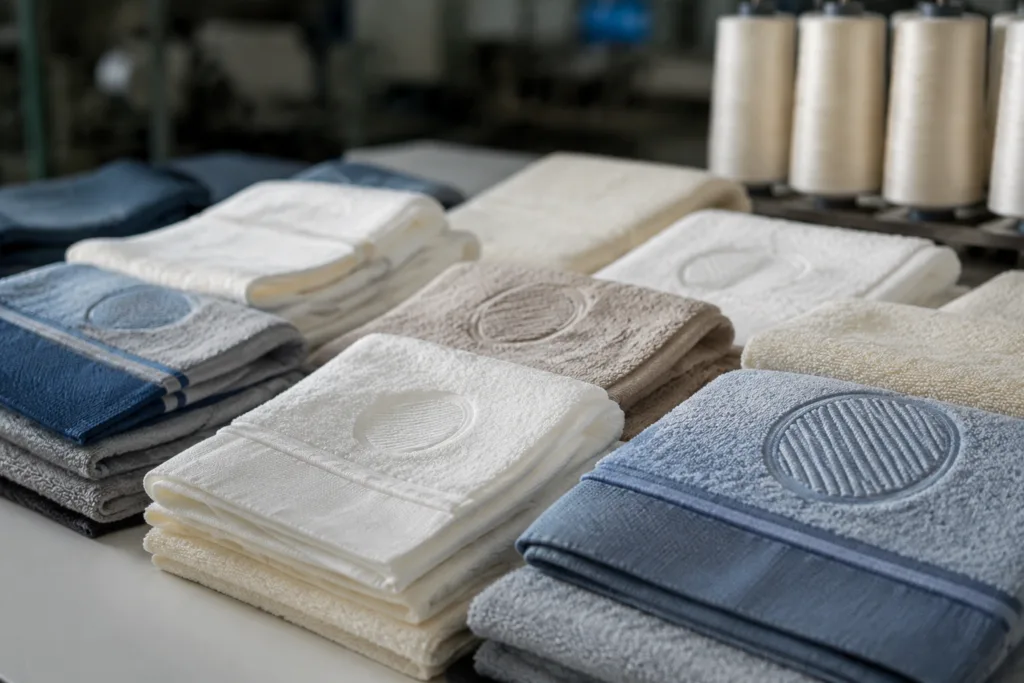
Establishing a testing schedule with your supplier (e.g., every new batch or color run) supports consistent standards. Feedback loops—where you collect staff or customer input on the real-world towel experience—should be part of your ongoing process, making it easy to resolve any issues before the next major order.
Industry Applications for Personalized Towels
The versatility of personalized hand towels makes them a branding powerhouse across hospitality, wellness, foodservice, and even home applications. Hotels leverage personalized hand towels to elevate the guest bathroom experience—tailoring names or initials for VIP visits or providing logo towels with subtle, high-end branding for regular guest use.
Spas use custom towel designs to reinforce their unique ambiance and clientele connection, often transitioning seasonally with colors or embroidered details that align with updated décor. In restaurants and cafes, small logo hand towels for washrooms offer a polished, thoughtful detail that patrons remember, quietly reinforcing brand identity at a moment of comfort and cleanliness.
Personalized towels excel for gifting and promotions, especially during holidays or company milestones. Embroidered towels with family names or business insignias make memorable, premium gifts that communicate care and quality. Gyms and sports facilities have also adopted branded hand towels—often with quick-dry microfiber and bold logos tailored for high-frequency use.
- Hotels: Guest comfort, VIP treatment, lasting brand impressions
- Spas: Wellness branding, seasonal adaptability, luxury ambiance
- Restaurants & Cafes: Washroom branding, subtle upscale statement
- Gifting & Promotions: Custom logos, family branding, premium feel
- Home: Monogrammed towels as part of interior style or family brand
The opportunities to use personalized hand towels are growing as buyers seek ways to add value and distinctiveness for every budget and application.
Customization Options for Branding Success
Choosing the right customization options for custom hand towels with logo is the key to branding success and perceived value. The options available let each brand, hotel, or business tell its own story with every towel.
Embroidery remains the most durable and premium method for featuring names, initials, or small logos—it conveys sophistication and resists cleaning chemicals or high-temperature washes. For brands needing full-color designs or gradients, advanced digital and reactive printing methods on microfiber or velour towels unlock bold, eye-catching patterns. Jacquard weaving offers a unique style by integrating patterns directly into the fabric, a technique cherished by heritage or high-end properties.
- Patterns, borders, and accent colors can transform a simple product into a brand showpiece. Choose from ribbed edges, piped trims, or custom weaves for a tactile, tactile finish.
- Custom packaging (ribbon, sleeve, branded box) is now standard practice for retail, gifting, or premium hospitality towels—solidifying consistent brand messaging right from unboxing.
- Private label initiatives unlock deeper control: you can specify thread counts, packaging formats, hang tags, or even provide your unique decoration method.
Pay attention to the latest trends in personalization—raised embroidery, negative space initials, tonal logo treatments, or eco-friendly packaging. Circe Towel routinely reviews these options with B2B clients, providing realistic trade-offs (such as print vibrancy versus laundering durability), so the finished towels embody both brand vision and operational practicality.
Common Mistakes and Troubleshooting Tips
Launching monogrammed towels projects can be straightforward, but some avoidable pitfalls may undermine results. Choosing the wrong GSM is a frequent issue: overly thick towels feel great but dry slowly and add to laundering burdens, while ultra-light towels can appear flat, less luxurious, or lack desirable absorbency for hospitality use.
Fabric missteps are also common. Microfiber is ideal for print vibrancy and sweat management but may not deliver the plush luxury guests expect in high-end resorts. On the flip side, cotton excels in softness but, if GSM is too low, doesn’t give a premium feel—always match material and weight to use-case requirements.
- Decoration techniques should align with expected wear and branding goals. Printing methods may fade or bleed if care isn’t taken to specify colorfastness and washing protocol. Embroidery, though long-lasting, can affect towel handfeel if done on overly dense fabrics.
- Trustworthy suppliers always share stitch count, logo proof, and sample approvals.
Look out for weak stitching at edges—early unraveling signals quality issues. Lint-prone towels are frustrating for both guests and staff; tightly twisted yarns and proper pre-washing minimize this risk.
To avoid branding mismatches, request pre-production proofs or test batches. Address any misplacement or sizing issues before bulk order sign-off. Consistent communication about Pantone colors, thread types, and packaging details ensures the final order aligns with expectations.
Ordering Guide for Custom Towels
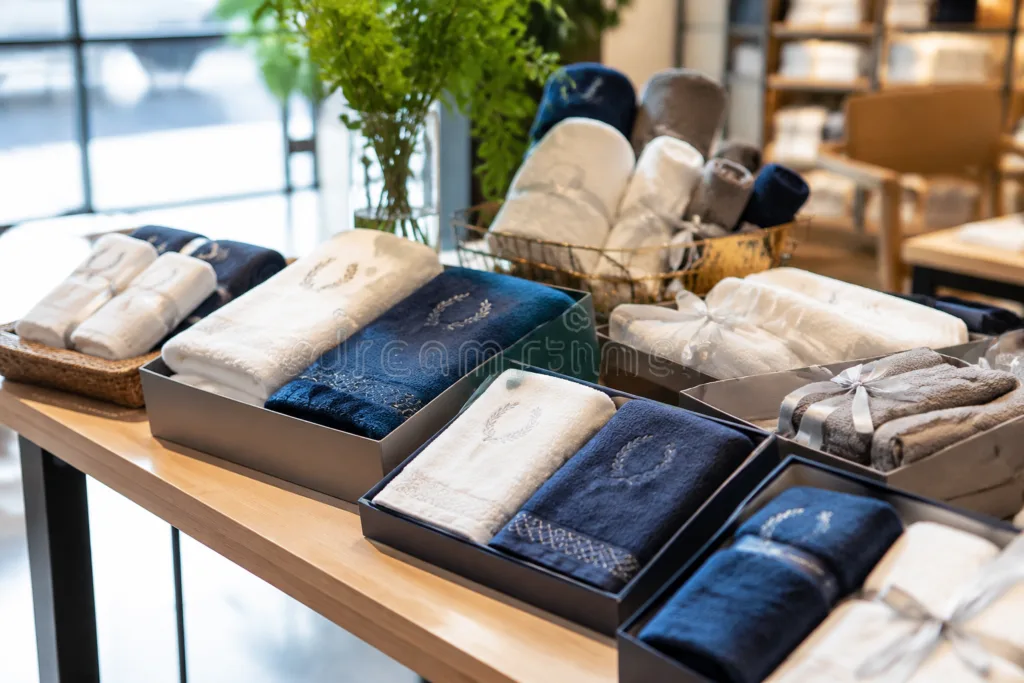
Ordering custom towels with name details involves several concrete steps for smooth and predictable results. Minimum Order Quantities (MOQ) vary by method—embroidery and jacquard often require 300–500 pieces, while printed towel processes may start lower or allow small-batch sampling (as described in Small-Batch Success: The B2B Guide to Ordering Personalized Face Towels That Impress).
Lead times usually range from three to six weeks after design approval. Prepare your artwork in high-resolution vector files (AI, CDR, or PDF), especially for logos. Always confirm a digital or stitched proof before full production starts to ensure color accuracy and placement.
Packing can be specified from bulk polybags (for hotel restocking) to custom-printed sleeves or eco boxes for gifting and retail. Shipping choices—sea freight, air courier, or warehouse delivery—affect timelines and cost; clarify incoterms and related responsibilities upfront (see further supplier guidance in the Complete Guide to Towel Manufacturing).
Be clear about payment structure (usually 30% deposit, 70% on completion or shipment), final confirmation requirements, and any needed documents for customs or compliance. Ongoing, open communication with your supplier will prevent delays and ensure all parties are aligned throughout the process.
Frequently Asked Questions
What materials are best for personalized hand towels?
100% cotton is most popular for luxury and hospitality use due to absorbency and softness, while microfiber is chosen for sports or quick-dry needs; bamboo blends are ideal for eco and wellness-focused brands.
How can I ensure my logo looks good on towels?
Work with high-resolution artwork, request embroidery or print proofs, choose the right construction (like terry or velour), and confirm colorfastness with your supplier before mass production.
What’s the ideal GSM for different towel uses?
For hotels and premium settings, 400–600 GSM is preferred for plushness; for sports or fast-dry applications, a lighter 300–400 GSM ensures performance and quicker turnaround between uses.
Can I get samples before placing a bulk order?
Yes, reputable manufacturers offer pre-production samples to confirm design, material, and finish, ensuring you can review branding and performance ahead of committing to a large order.
How does the embroidery process affect towel quality?
Proper embroidery strengthens a towel’s premium appeal but increases fabric density in branding areas; this is mitigated by using appropriate base materials and balanced stitch count for comfort and durability.
What lead times should I expect for custom orders?
Typical lead times for personalized hand towels are 3–6 weeks post-approval, influenced by customization complexity, order volume, and the time needed for sample confirmation and shipping logistics.
Related Reading
- Unlock the Full Branding Potential of Custom Logo Towels—From Material to Design
- Is Embroidery Right for Your Towels? A Buyer’s Guide to High-End Branding
- Building a Gym Towel Program: Tips for Private Label and Bulk Buyers
- Essential Audits: Ensuring Your Towel Supplier Delivers Quality Every Time
- Master Bath Towel Sourcing: Key Specs, Quality, and Supplier Selection