
Introduction to Towel Manufacturing Options
Choosing the right manufacturing location is crucial for towel sourcing projects, whether you’re seeking towels made in usa or looking for towels made in america for your brand, hotel, or retail business. Procurement teams must weigh differences in pricing, quality, and logistics as they consider American towel manufacturers versus overseas production partners.
Both US and overseas factories offer unique benefits, with the former often excelling in high-touch customization and quality control, while the latter may deliver cost efficiencies and larger production volumes. Every towel project comes with its own priorities—some buyers demand rapid replenishment, others focus on luxury branding, and many balance budget constraints against durability and absorbency.
This article walks you through the decisive factors: unit price, MOQ, lead time, certifications, communication, and customization. By understanding these trade-offs, buyers can confidently match sourcing strategy to specific project needs, whether for bath towels made in usa, branded merchandise, or bulk hospitality orders.
Definitions: US vs Overseas Manufacturing
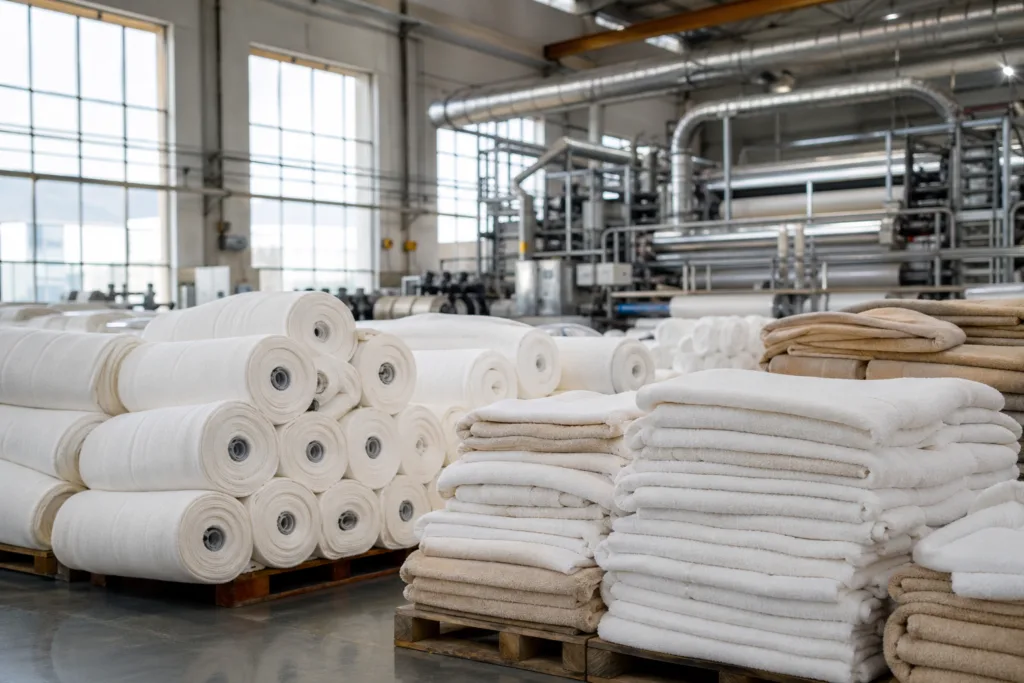
It’s essential to clarify the terms as you compare american towel manufacturers to their overseas counterparts. American towel manufacturers are factories based within the United States, producing towels made in america. Overseas manufacturers are located in countries such as China, Turkey, India, or Pakistan, offering global-scale production.
Key industry terms include Minimum Order Quantity (MOQ), the smallest batch a factory will produce; Lead Time, the duration from order placement to delivery; and Certification, which verifies compliance with standards such as OEKO-TEX or GOTS. US factories must meet rigorous domestic regulations, while overseas facilities often conform to international standards, though transparency varies.
Labor costs are higher in the US, affecting towel pricing, while lower wages and large-scale infrastructure abroad can reduce unit cost. Production geography also influences textile quality, with US producers typically favoring premium cotton for bath towels made in usa, and overseas suppliers offering both value and engineered microfiber options. Thorough understanding of each approach allows buyers to match manufacturing location with market quality demands.
Cost Comparison: Price Per Unit
When sourcing bath towels made in usa from local factories, expect higher price per unit due to labor, regulation, and premium materials. For towels made in america, prices often range from $4 to $12 per bath towel, depending on GSM and cotton grade. Overseas factories—especially those operating at scale—may offer similar towels at $2 to $7 per unit, with additional savings for larger volumes.
Fabric selection plays a big role: combed cotton, organic cotton, microfiber, or blends dictate both final price and tactile qualities. Higher GSM means thicker, more absorbent towels, but adds cost. Overseas suppliers can provide competitive pricing through material flexibility or lower-grade options for budget projects, but hidden costs like import tariffs, fluctuating shipping fees, and potential customs delays must be considered.
Price elasticity varies: hospitality groups often prioritize durability, accepting higher spend on bath towels made in usa, while promotional buyers may favor lowest unit cost for branded giveaways. It’s vital to assess total landed cost, including logistics and duties, and not just quoted factory price. Circe Towel has observed that buyers focused solely on sticker price sometimes overlook added costs of restocking and quality failures, which can erode initial savings.
| Manufacturing Location | Typical Bath Towel Price Range (USD) | Material Options | Hidden Costs |
|---|---|---|---|
| US Factory | $4–$12 | Premium cotton, organic cotton | None (for domestic buyers) |
| Overseas Factory | $2–$7 | Cotton, microfiber, blends | Shipping, tariffs, customs |
For more detailed strategies on cost-efficient towel sourcing, see the guide on Print on Demand or Bulk? The Ultimate Cost and Control Guide for Custom Towels.
Minimum Order Quantity (MOQ) Considerations
MOQ is a crucial factor for buyers. American towel manufacturers usually offer lower MOQs—sometimes as few as 100–300 units for custom projects. This flexibility aids boutique brands, new ventures, or rapid test runs. Overseas factories typically require higher MOQs, such as 500–2,000 pieces, leveraging economies of scale to support bulk pricing.
Small batch needs are best served by US suppliers, ideal for high-end launches or limited edition runs. However, higher MOQs mean larger upfront investments, risk in inventory, and cash flow implications. For long-term projects with consistent demand (like hotels or gyms), overseas MOQs are less of a burden, and prices can be favorable.
- US factories often accommodate small orders and custom options.
- Overseas suppliers excel in large batch, cost-driven projects.
- Short-term brand tests may benefit from low MOQ; seasonal or promotional projects must balance budget vs inventory.
For deeper insight into MOQ strategy, review Private Label Towels: Your Complete Guide to MOQ and Cost Structure.
Lead Time and Communication Efficiency
Lead time—the period from order placement to delivery—varies significantly. Towels made in usa often reach buyers within 3–6 weeks, thanks to local logistics and proximity. Overseas lead times may stretch to 6–12 weeks or more, particularly during high season or global supply chain disruptions.
Communication is typically faster and more direct with American towel manufacturers. Time zones, language barriers, and differing workweek schedules can complicate exchanges with overseas suppliers. Quick reorders, real-time adjustments, and urgent sampling are easier with US partners, supporting projects that require dynamic changes.
Preferred communication tools matter: US factories often utilize email, phone, and even site visits; overseas suppliers rely heavily on messaging apps like WhatsApp or WeChat, which may help or hinder clarity. Circe Towel advises buyers with recurring replenishment needs to account for the communication efficiency and lead-time responsiveness offered by local producers.
Learn more about optimizing lead times and sampling workflows in 20 Must-Ask Questions for Smooth Towel Sourcing: From Samples to Shipping and Restocking.
Certification and Quality Standards
Certifications provide assurance on material safety, environmental impact, and manufacturing ethics. Towels made in america frequently meet domestic standards, such as compliance with Consumer Product Safety Commission regulations, and popular textile certifications like OEKO-TEX Standard 100 and GOTS for organic cotton.
Overseas factories may be certified, but buyers should verify authenticity and traceability. Compliance gaps can expose brands to risk—non-compliant towels may fail market tests or harm reputations, especially in hospitality or wellness sectors.
Transparency in material sourcing is expected of american towel manufacturers, and buyers demand consistent quality assurance. Lack of certification can threaten brand credibility, particularly for eco-conscious or luxury buyers. Always request certificates before finalizing orders, and check for alignment with your organization’s standards.
For techniques and certifications in private label towel sourcing, see How to Source Compliant Private Label Towels: Certifications, Material Choices & Buyer Guidance.
Material and Construction Comparison
Material selection impacts end product performance and cost. Bath towels made in usa often feature long-staple cotton for supreme softness and durability, while overseas factories might offer cotton, microfiber, bamboo blends, or engineered fabrics to meet a range of price points.
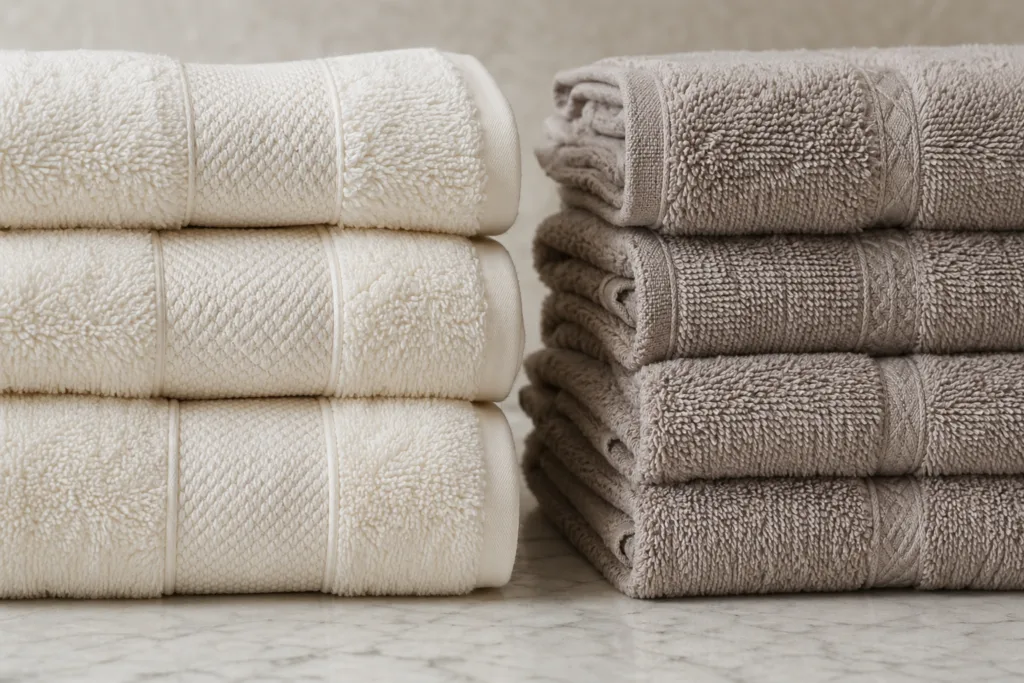
Construction styles—like terry, velour, waffle, or jacquard—define texture, absorbency, and visual appeal. GSM (grams per square meter) is a numerator for towel thickness: high GSM (600+) suits luxury hotels, mid GSM (400–500) is best for retail and sports, lower GSM (300–399) targets quick-drying or promotional needs.
Absorbency is crucial in hospitality and spa towels; softness is prized in baby towels or luxury retail. Sports towels may favor microfiber for lightweight, rapid drying, and high colorfastness. Quality indicators like stitching, lint control, and shrinkage resistance matter across all markets.
- Cotton: Superior softness, great absorbency, classic hospitality choice.
- Microfiber: Light, quick-dry, ideal for sports and promotions.
- Bamboo blends: Soft, eco-friendly, niche luxury appeal.
- Jacquard/Velour: Brand visibility, retail shelf impact.
Circe Towel often recommends material choice based on target market expectations, balancing feel, longevity, and budget.
Design & Spec Checklist for Buyers
Before placing your towel order, review these critical specs:
- Size: Standard bath towel (27″x54″), hand towel, face towel, or custom dimensions
- GSM: 300–600+, matching absorbency and softness needs
- Material: Premium cotton, microfiber, blends
- Edge Finishing: Double-stitched, hemmed, decorative borders
- Branding: Embroidery, jacquard, printing, logo placement, label type
- Packaging: Bulk, retail box, custom wrap
- Colorfastness: Consistent quality after wash cycles
- Durability: Resistance to lint, shrinkage, fading
These elements directly influence final pricing and utility. For more details, see How to Create Custom Towels with Logo for Your Brand: Material, Design & Buying Guide.
| Specification | US Factory | Overseas Factory |
|---|---|---|
| Minimum Order (MOQ) | 100–300 | 500–2,000 |
| Material Types | Premium cotton, organic | Cotton, microfiber, blends |
| Branding Options | Embroidery, jacquard, digital | Printing, jacquard, embroidery |
| Packaging | Custom boxes, retail-ready | Bulk, polybag, export cartons |
| Lead Times | 3–6 weeks | 6–12 weeks |
Common Mistakes in Towel Sourcing
Sourcing pitfalls can undermine a towel project—especially for those unfamiliar with american towel manufacturers or overseas partners. One frequent error is mismatching GSM to the intended application, resulting in towels that are too thin or too thick for the job.
Material choice matters: using a low-grade cotton for high-end hospitality leads to poor guest experiences; picking microfiber for luxury retail can disappoint customers seeking plushness. Fading and wash durability issues often stem from inferior dyes or inadequate color fastening.
Stitching must stand up to repetitive laundering. Loose edges or weak border-finishing increase lint and short product lifespan. Decoration errors (e.g., printing on fluffy terry that hides logos) can dilute branding and create negative impressions. Reviewing these factors through a supplier’s sample can prevent costly surprises.
For more on avoiding sourcing mistakes, check Expert Guide: Auditing Your Towel Supplier for Quality B2B Orders.
Industry/Application Fit for Towel Projects
Towel needs differ by industry. Hotels and spas demand towels made in america with high GSM, premium cotton, and consistent white color for easy laundering. Fitness clubs and sports brands prioritize rapid-dry microfiber, durability, and custom logo options.
Promotional or gifting projects may opt for cost-effective overseas sourcing and focus on printing or embroidery for brand visibility. Retail towels require packaging sophistication, shelf appeal, and compliance with US safety standards. Merchandise projects often need fast turnaround, making US factories valuable for replenishment or urgent launches.
Aligning towel specs with target audience is vital. Circe Towel recommends custom approaches: luxury hospitality leans toward bath towels made in usa; brands targeting large, budget projects (e.g., trade show promotions) can tap into overseas scale for value.
- Hospitality: Softness, absorbency, white/neutral tones, durability
- Gyms/Sports: Lightweight, fast drying, logo visibility
- Retail: Packaging, color vibrancy, compliance
- Promotional: Low cost, branding method flexibility
To see towel type fit for different industries, read 12 Criteria for Choosing Reliable Wholesale Towel Suppliers: A Buyer’s Guide to Lasting Partnerships.
Customization Options for Towel Projects
Customization is a main draw for bath towels made in usa, supporting deep logo, pattern, and border personalization. US factories enable intricate embroidery, digital printing, and jacquard weaving for premium branding impact. Overseas suppliers offer bulk customization, favoring printed logos, bright colors, and cost-efficient label sewing.
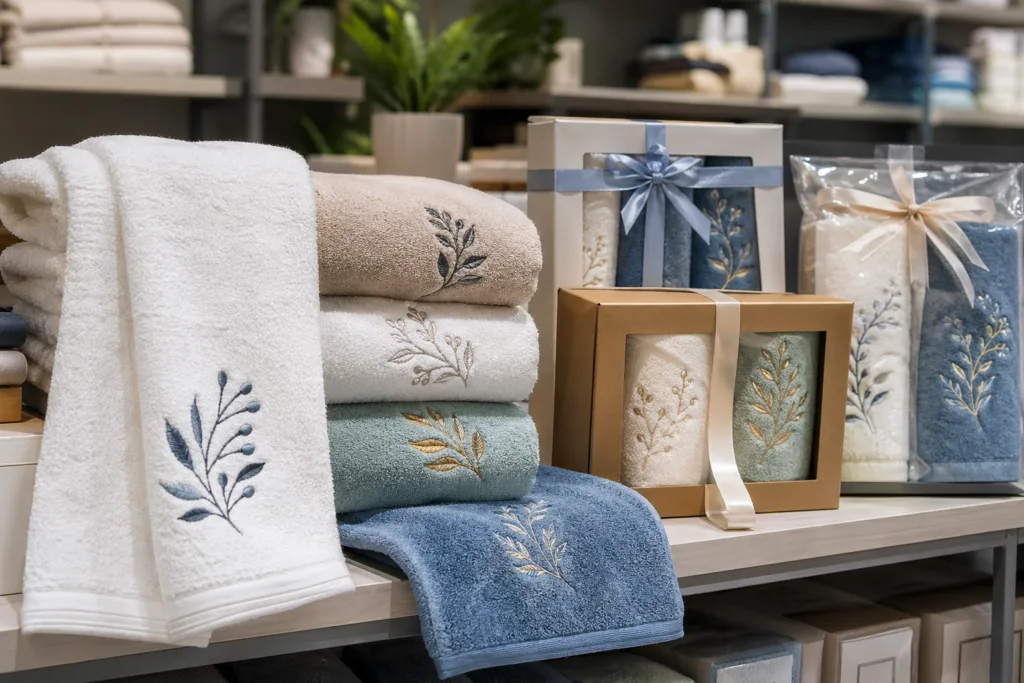
Buyers can choose between private label branding, custom packaging (boxes, ribbons, wraps), and hangtags. Circe Towel observes that large retailers often seek market-driven options—varied packaging and presentation—while promotional buyers focus on recognizability at scale. Customization depth should match both order quantity and final audience expectations.
- Logo options: embroidery (durable, upscale), printing (bright, budget-friendly), jacquard (woven-in, exclusive)
- Labeling: custom woven labels, sewn logo tags
- Packaging: retail boxes, polybags, gift wraps
- Borders: decorative hems, color contrasts
Explore the full range of custom towel possibilities in Buyer’s Guide: Custom Towel Options, Materials, and Branding Strategies.
Ordering Guide for Towel Projects
Successful towel sourcing starts with a clear ordering plan. Begin by confirming the MOQ, lead times, and sample policies with your chosen factory. Prepare artwork (logo files, Pantone colors), confirm proofs, and review prototypes for colorfastness and tactile quality.
Packaging must be decided early, balancing brand impact and logistics costs. Shipping modes—air for speed, sea for savings—determine total project timeline and risks. American towel manufacturers streamline initial inquiries into sampling, contract review, and production, with clear checkpoints for adjustments. Overseas partners may require more up-front negotiation on terms and final specifications.
For startup brands, transitioning from inquiry to bulk order requires careful tracking of specifications, especially in private label projects. Circe Towel recommends a stepwise approach: sample approval, design confirmation, production launch, quality audit, shipping, and after-sales feedback.
To review comprehensive ordering steps, study Your Step-by-Step Factory & Brand Launch Checklist: Towel Sourcing Made Simple.
Frequently Asked Questions
What are the main differences in towel quality from US vs overseas?
US factories often use premium cotton and tighter quality controls, yielding softer, longer-lasting towels, while overseas suppliers vary by material and can offer budget-focused options that may not match American softness or durability.
How can I ensure my project meets certification standards?
Request certification documents like OEKO-TEX or GOTS from your supplier, confirm they match your requirements, and perform random testing on samples to verify safety and compliance before mass production.
What is the average lead time for custom towel orders?
US manufacturers typically deliver in 3–6 weeks, while overseas production can take 6–12 weeks or longer, depending on batch size, customization complexity, and global shipping logistics.
How does order size affect pricing and customization options?
Larger orders lower the per-unit price and unlock deeper customization, especially overseas; US factories allow small-batch customization but at higher costs per towel due to labor and setup.
Discuss the durability of towels produced in both regions.
American-made towels usually feature tighter weaving and premium cotton for durability through multiple washes, while overseas towels vary widely; some match US standards, others may lint or fade after several wash cycles.
What should I look for in terms of fabric types for sports towels?
For sports, prioritize microfiber for quick-drying properties, consider balanced GSM (350–450), and check for colorfastness, edge reinforcement, and logo visibility through embroidery, print, or jacquard.
Conclusion and Next Steps
Sourcing towels requires thoughtful consideration of manufacturing location, material choices, unit pricing, lead times, and customization depth. US factories deliver premium quality and fast communication, ideal for small-batch, high-end launches and urgent replenishment. Overseas options suit large-scale, cost-sensitive projects and those willing to trade time for value.
Evaluate the specific needs of your towel project—quality, branding, order size, and logistics—before making a decision. Need help choosing the right towel options for your project? Circe Towel can guide you through your choices with clear, detail-oriented advice.
Related Reading
- Elevate Your Brand with Smart Private Label Towel Packaging Choices
- Transform Your Towel Line with Innovative Logo Customization Options
- Simplify Compliance: Certification and Material Sourcing for Private Label Towels
- Balance Cost and Flexibility: Print on Demand vs Bulk Custom Towel Orders
- Streamline Launches: Essential Towel Ordering and Factory Selection Guide
- Achieve Lasting Quality: Expert Tips for Auditing Towel Suppliers